REVIEW · MEXICO CITY
Trekking Through The Volcanoes
Book on Viator →Operated by México Travesías · Bookable on Viator
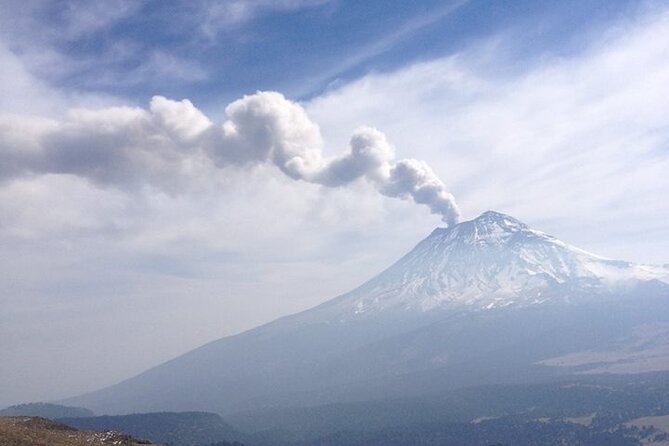
Volcano views before you blink. A guided hike in Iztaccíhuatl and Popocatépetl National Park puts you face-to-face with active-volcano scenery, from forests to smoking fumaroles. You’ll spend the morning walking off the main routes, then refuel with snacks and a proper local lunch in a traditional market.
I love the small group size (13 max) because it feels personal without turning into a chaotic scramble. I also really like the built-in comforts: trekking poles and a backpack with your water and trail food, plus lunch that’s included—not an overpriced add-on.
The main consideration is effort. This is a real trek at high altitude, with sections that can feel slippery and dusty, so you’ll want a solid hiking baseline and good pacing.
In This Review
- Key things you should know before you go
- The ride out of Mexico City: why that early start matters
- Entering the national park from Paso de Cortés
- Cerro Alzomoni: where the Popocatépetl views get serious
- The ravine section around Amalacaxco and what you might see
- The loop feeling: getting two volcanoes in one morning
- Equipment and the included lunch: what’s actually in your backpack
- How hard is it, really? Altitude, footing, and pacing
- Drive time, bathroom reality, and car-sickness tips
- Guides and group dynamics: what to expect from people leading you
- Value check: is $133.34 worth it?
- Who this trek is best for
- Should you book this volcano trekking day?
- FAQ
- What time does the trekking tour start?
- Where is the meeting point in Mexico City?
- How long is the experience?
- How many people are in a group?
- What’s included for food and drinks during the day?
- Are trekking poles and a backpack provided?
- Is there an option for a shorter hike distance?
- How challenging is the hike with altitude?
- Are there restroom facilities on the trail?
- What happens if weather is poor or I need to cancel?
Key things you should know before you go
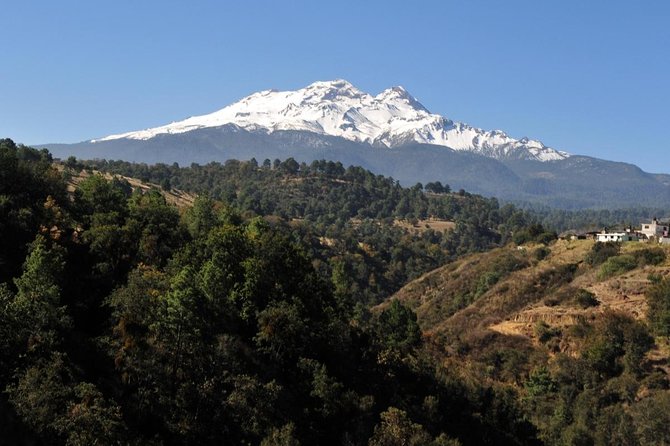
- Small group experience (max 13 people) keeps the pace human and the logistics calm.
- Gear is included: trekking poles and a provided backpack with your lunch and snacks.
- You’ll target view points from Paso de Cortés up toward Cerro Alzomoni, then down through ravine terrain.
- Popocatépetl isn’t just scenery: the route is designed for fumarole views (with safe guidance).
- Altitude is the real boss: expect thinner air and plan on taking it slow uphill.
- Lunch is part of the deal: roadside market tacos and quesadillas, not a snack bar cop-out.
The ride out of Mexico City: why that early start matters
The day kicks off at 7:00 a.m. from Av. Vicente Suárez 38 in the Condesa area. Mexico City traffic can be unpredictable, and starting early is what makes it possible to hike while the weather still has a chance to cooperate.
You’ll go by private transportation to the Iztaccihuatl–Popocatépetl area, and most of your total day will be split between the drive and the trek. Plan for roughly 9 hours on the schedule, though in real life it can run closer to 10 when you include the drive time and meal stop.
One more practical note: the roads can be winding. If you get car sick, bring your usual remedy, because you’ll be sitting for a while.
You can also read our reviews of more tours and experiences in Mexico City.
Entering the national park from Paso de Cortés
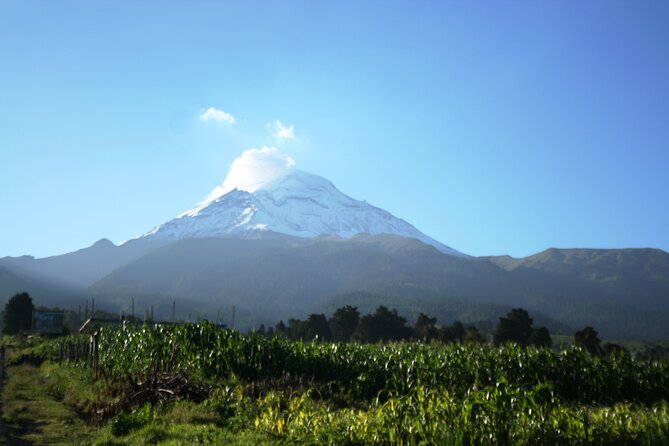
Your hike starts at Paso de Cortés, a launch point that works well for people who want volcano views without doing a multi-day expedition. From here, you walk into forest terrain with Iztaccihuatl in front of you, so the scenery feels immediate instead of delayed.
This opening stretch is also where you’ll get your rhythm. Many people find it easier to settle in early—before the altitude and the steeper climbs start doing their thing. Your guide keeps the group together and helps you manage pace, breaks, and footing.
What I like about this setup is that it doesn’t waste your energy. You’re not just marching uphill for hours. You’re also getting that slow-building payoff: forests, changing textures underfoot, and view moments that keep you motivated.
Cerro Alzomoni: where the Popocatépetl views get serious
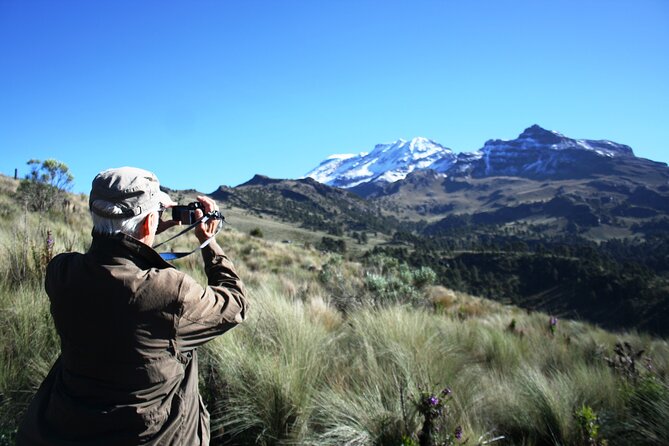
As you move up toward Cerro Alzomoni, the hike turns more vertical. This is where you’re heading for the most impressive sightlines of Popocatépetl and its fumaroles.
The altitude will likely feel noticeable here. Reviews of the experience often call out the need to hike steadily and not treat the climb like a normal urban walk. If you’re used to flat sidewalks, shorten your steps and slow your breath—your body will thank you.
Also, bring a warm layer. Even when the hike warms up later, mornings can start cold, and wind at altitude can cut through quickly. A hat and sunglasses are worth it too, since glare and dust can team up against you.
The ravine section around Amalacaxco and what you might see
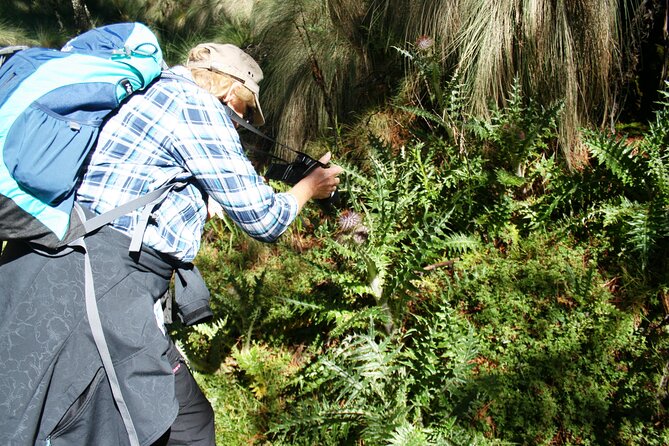
After the view-heavy climb, you descend toward ravine Amalacaxco. This is the part of the route that tends to feel more varied: different ground textures, changes in vegetation, and opportunities to notice flora details you’d miss on a faster hike.
It’s also where people sometimes get lucky with wildlife sightings. You shouldn’t plan your day around it, but the terrain and timing can make it possible to spot fauna if you’re paying attention.
One more thing: dust. Several hikers note that parts of the ground can look sandy but act like ash, and it can kick up as you walk. If you’re dust-sensitive, consider bringing something to cover your mouth and nose.
The loop feeling: getting two volcanoes in one morning
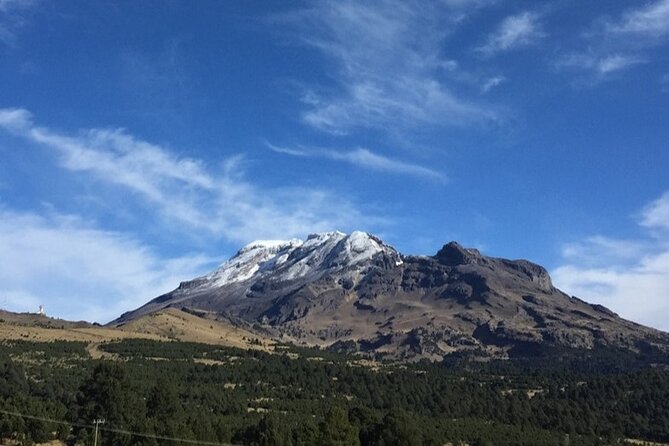
The whole route is designed to balance exertion with payoff. You start in lower park areas, move up to a main viewpoint, then come back through another terrain zone—so you don’t feel like you’re doing the same stretch twice.
You’ll also likely get more than one “wow” moment, because the hike isn’t just about reaching a top spot. It’s about walking along a route that keeps giving you new angles on both volcanoes, including the contrast between forest sections and the glaciated-looking peaks in the distance.
If your goal is photos, this is a good plan. The route builds natural stops where you can pause, catch your breath, and frame shots of the volcanoes without turning it into a constant stop-and-go grind.
Equipment and the included lunch: what’s actually in your backpack
This tour is practical about supplies. You’ll receive trekking poles and a backpack that includes your trail food and drinks, so you’re not juggling water bottles in your hands or paying for snacks midway.
Your provided lunch includes:
- 1 liter of water
- 600 ml of energy drink
- chocolate energy bar
- peanuts
- fruit snack
Then, you’ll eat again after the hike at a traditional market/roadside stop with tacos and quesadillas. That matters. A lot of day hikes in big cities give you a small snack and call it lunch. Here, you’ll likely feel like you actually ate like a human when you’re done.
If you’re picky about food timing, the built-in structure helps. You’ll have energy for the climb, then a satisfying meal afterward when your legs are begging for it.
How hard is it, really? Altitude, footing, and pacing
Let’s talk difficulty in plain terms. This is not a stroll. It can be strenuous, especially uphill, and the altitude is part of the challenge—not optional trivia.
Some hikers describe the elevation as around 13,000 feet, and others note a start around 3,600 meters (11,800 feet). Either way, oxygen is thinner than you’re used to. That means the uphill effort feels bigger than it would at sea level.
Footing can also be a factor. A few people mention slippery rocks at times. Trekking poles help a lot, and so does a conservative pace. If you push too hard early, you’ll pay for it later on the descent.
Also, plan for weather swings. Rainy conditions can sometimes reduce visibility, so you might get less dramatic volcano views on a gray day. On clear days, the views tend to be the main reason you’ll remember the whole trip.
Drive time, bathroom reality, and car-sickness tips
The hike day includes transportation both ways, and you’ll spend a meaningful chunk of time in the van. Some people report the drive is about two hours each way, which helps explain why the whole experience runs long even though you’re hiking only part of the day.
Restrooms are limited. One helpful tip: there are no facilities on the trail or at the trailhead, and there may be a restroom stop midway during the drive. If you want to be safe, bring some cash for restroom access and toilet paper.
If you’re prone to motion sickness, consider taking medication beforehand. The roads are winding and the ride is long enough that it can catch up to you.
Guides and group dynamics: what to expect from people leading you
This tour emphasizes professional guidance and group management, with groups capped at 13 for a more personal feel. In practice, that usually means you’re not getting yanked around by a large herd, and you’re more likely to have time for questions.
Different guides have different communication styles. Some hikers highlight guides like Bernardo and Carlos as especially attentive and informative about geography, flora, and fauna. Others note that in at least one instance, commentary wasn’t as talk-heavy as they wanted. Either way, your guide should keep safety and pacing front and center.
If you’re traveling solo, that small group limit can make the day feel easier. You’re still responsible for your own pace, but you’re not hiking alone.
Value check: is $133.34 worth it?
At $133.34 per person, you’re paying for three big things you’d otherwise need to figure out yourself: transport out of the city, professional guided hiking, and included gear plus lunch.
Here’s the value breakdown:
- You get private transportation, which saves you from arranging bus/taxi logistics for a hike day.
- You get trekking poles and a loaded backpack, which reduces what you need to carry (or rent).
- You get included lunch plus multiple snacks and drinks. If you’ve ever hiked in cold or high terrain, you know hunger at altitude is not a minor problem.
Where you may want to be honest with yourself is time and effort. If you’re not comfortable with altitude hikes or long walking with steeper bits, a cheaper option won’t help you enjoy the day. In that case, the value turns into regret fast.
But if you want an organized, small-group volcano trek with real food and gear included, the price looks fair for what’s bundled.
Who this trek is best for
This tour suits people who:
- Want a day trip from Mexico City that feels like it actually leaves the city
- Enjoy hiking in varied terrain (forest, viewpoints, and descent sections)
- Are comfortable with high altitude walking and can maintain a steady pace
It also works well if you like having structure. The route plan gives you a mix of viewpoint time and practical pacing, so you’re not just guessing your way through a national park.
If you’re very new to hiking or you know altitude hits you hard, you might still do it, but you should go in with extra caution and a plan to take breaks early and often.
Should you book this volcano trekking day?
Book it if your priority is a guided, well-fed hike that delivers views of both Iztaccihuatl and the active Popocatépetl area without you having to plan gear, snacks, or transport. The small group size (max 13) and included poles/backpack are strong reasons to choose this format over DIY.
Skip it (or pick a gentler alternative) if you’re not comfortable with altitude and you don’t want a physically demanding morning. Also be aware that some routes can include less scenic sections on roads near the end, so enjoy the day’s big-picture goal—views and the overall hike experience—not perfection at every step.
If you’re the type who loves volcano country, appreciates a real hike, and wants your lunch waiting at the end, this is a very solid call.
FAQ
What time does the trekking tour start?
The tour starts at 7:00 a.m.
Where is the meeting point in Mexico City?
The meeting point is Av. Vicente Suárez 38, Colonia Condesa, Cuauhtémoc, 06170 Ciudad de México, CDMX, Mexico.
How long is the experience?
It lasts about 9 hours on average.
How many people are in a group?
The maximum group size is 13 travelers.
What’s included for food and drinks during the day?
You get a lunch included in the price, plus trail snacks and drinks packed in your backpack. The lunch support includes 1 liter of water, 600 ml of energy drink, a chocolate energy bar, peanuts, and fruit, and you eat tacos and quesadillas at a traditional market afterward.
Are trekking poles and a backpack provided?
Yes. Trekking poles and backpacks are provided as part of the tour.
Is there an option for a shorter hike distance?
Yes, there is an option to choose between a 9 km hike and a 13 km hike.
How challenging is the hike with altitude?
The hike can be strenuous due to high altitude (around 13,000 feet is mentioned in feedback). You should be prepared for thinner air, uphill effort, and uneven footing.
Are there restroom facilities on the trail?
There aren’t facilities on the trail or at the trailhead. There may be a restroom stop midway during the drive.
What happens if weather is poor or I need to cancel?
If the experience is canceled due to poor weather, you’ll be offered a different date or a full refund. If you cancel, you can get a full refund if you cancel at least 24 hours before the experience starts.