REVIEW · GANDAKI ZONE
Mardi Himal Trek -5 Day Short Trek From Pokhara
Book on Viator →Operated by Himalayan Recreation Treks & Expedition Pvt.Ltd · Bookable on Viator
Mardi Himal packs big mountains into 5 days. This short trek takes you toward Mardi Himal views and the dramatic presence of Machhapuchhre, while you pass through forested stretches and quieter village life in the Annapurna region.
I love the strong payoff for such a compact schedule: sunrise and sunset views over the Annapurna massif, Hiunchuli, and Gangapurna. I also like the cultural contact points, especially the chance to walk into places such as Siding, a traditional Gurung village where you can see daily rhythms up close.
The main consideration is effort and timing. You’ll be walking at demanding altitudes (the operator flags around 11,588 ft / 3,532 m) and the descent can be tough on tired legs, so take the steep parts seriously and pace yourself.
In This Review
- Key things that make this trek worth your time
- Mardi Himal in plain terms: why this trek feels different
- The pace you’ll likely feel in 5 days (and how to plan for it)
- Price and logistics: what $499 buys you (and what to budget beyond)
- The real altitude question: how demanding is this trek?
- Day 1: Pokhara Lakeside kickoff and getting set up
- Day 2: Low Camp (2,970 m) and the early climb rhythm
- Day 3: High Camp views when you leave the forest behind
- Day 4: Mardi Base Camp day and the upper viewpoint option
- Day 5: Downhill into Siding and real Gurung village life
- Guides and safety: why having the right person on your side helps
- What to expect from the included meals and overnight rhythm
- Who should book this trek (and who should reconsider)
- Should you book the Mardi Himal 5-day short trek from Pokhara?
- FAQ
- Where do we meet for this trek in Pokhara?
- How long is the Mardi Himal trek?
- What’s the maximum group size?
- What’s included in the price of $499 per person?
- What is not included?
- Do I need travel insurance?
- Is there an age requirement or anything about service animals?
- What altitude concerns should I know about?
- Can I leave extra luggage during the trek?
- What’s the cancellation policy?
- Do I need a visa for Nepal?
Key things that make this trek worth your time
- Serious mountain views in a short format that targets Mardi Himal area viewpoints plus Machhapuchhre
- High Camp scenery with big Annapurna faces when you leave the forest trail behind
- A culture day at Siding with a downhill walk into a traditional Gurung settlement
- Small group, private feel with a maximum of 10 people per booking, so it’s easier to move and adjust
- Guide support that can matter more than you think (including help with practical trail issues like leeches reported by past trekkers)
- Meals and lodging handled on the trek with breakfast/lunch/dinner included across multiple days
Mardi Himal in plain terms: why this trek feels different
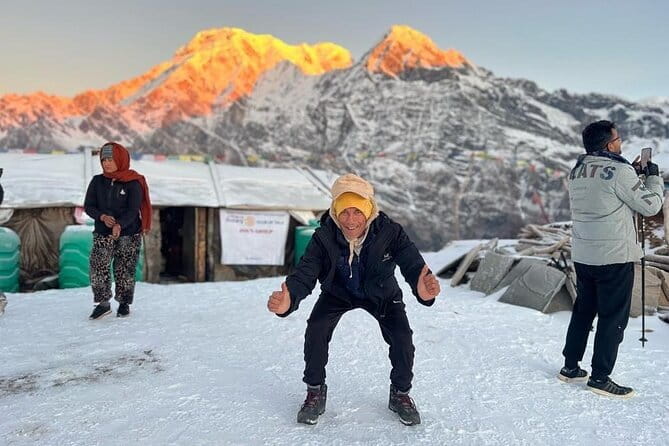
Mardi Himal is the kind of trek that rewards curiosity. You’re not just ticking off a summit goal. You’re walking through changing terrain—forest to open grass, then into viewpoints where the big peaks suddenly feel close enough to touch.
What makes it especially compelling is the mix of mountain scale and human scale. Over the route, you’ll get views of Annapurna massif, Mt. Hiunchuli, Mt. Gangapurna, and Mt. Machhapuchhre. And between those mountain moments, you pass through places where Gurung and Magar culture still shapes everyday life.
This is also a good trek if you like the Annapurna region but don’t want a weeks-long commitment. The schedule is built around hitting key altitude points—Low Camp, High Camp, and a Mardi Base Camp day—without dragging on forever.
The pace you’ll likely feel in 5 days (and how to plan for it)
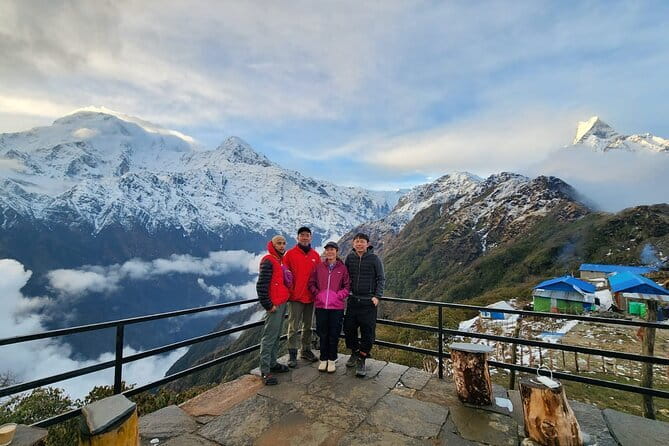
This trek is short on paper, long on walking. The days are marked around 12 hours each, which is a reminder that “5 days” doesn’t mean “easy.” Your best move is to treat each day like a separate mini-expedition: start steady, stop for water and short rests, and don’t turn the trek into an endurance race.
You’ll also see a pattern of climbing and then a hard-earned payoff. Early days build you up to Low Camp (2,970 m) and High Camp, and later you get the uphill push toward the Mardi Base Camp area. Day 4 starts early, which is smart in mountain time—you’re moving before conditions fully warm up.
Then comes the day many people remember: the descent into Siding. Since Day 5 is mostly downhill until you reach the village, it can feel “easier” at first. But downhill is deceptive. It can turn into a leg-burning workout if you hit steep stone steps or let speed take over.
Price and logistics: what $499 buys you (and what to budget beyond)
$499 per person is covering the core structure that makes a trek run smoothly. Included are private transportation, a tour guide, trekking permits, accommodation on the trek, and multiple meals: 4 breakfasts, 5 lunches, and 4 dinners.
That’s solid value if you’re comparing it to the real cost of piecing things together yourself—especially the permits and guiding. Also, the operator notes include features like pickup offered, group discounts, and a mobile ticket, which can reduce hassle once you’re in Nepal.
What’s not included is also clear: personal expenses. And you should add two “real-world” necessities not folded into the trek price:
- Travel insurance that covers medical expenses and emergency repatriation (proof must be shown on day one)
- Any visa costs or photos for visa processing if you handle it at Tribhuvan International Airport
So yes, you’re paying for a guided package—but you still need to budget for insurance and your own spending.
The real altitude question: how demanding is this trek?
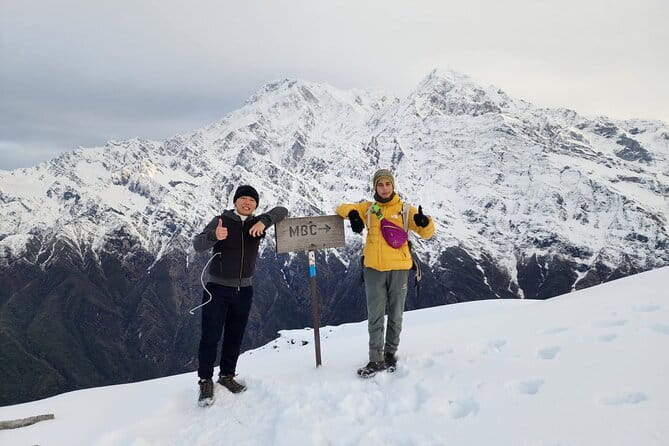
Altitude is the one topic you should take seriously, even if you’re fit. The operator’s health note flags demanding altitudes of about 11,588 ft / 3,532 m, and also warns about extreme weather variations that can affect health regardless of age or gender.
Here’s the practical way to read that: you should come prepared for uncertainty. Weather can shift fast, and colder nights at higher camps mean you’ll sleep differently than you do at home. If you’ve never trekked above 2,000–3,000 meters before, this trip may still be manageable—but it’s not a casual hike.
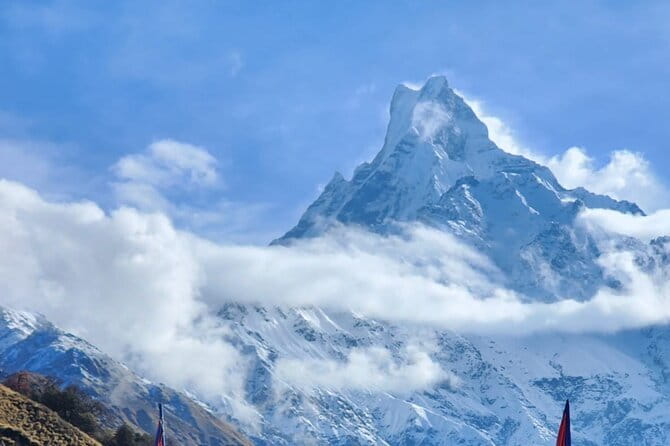
Also, the route includes viewpoints associated with Mardi Himal (5,553 m) and Machhapuchhre (6,997 m). Even if you’re not climbing to the absolute top, the mountain “presence” is part of the deal, and that comes with thinner air and big effort.
Day 1: Pokhara Lakeside kickoff and getting set up
You start from Pokhara Lakeside at 7:45 am. That matters more than people think. A morning start gives you time to meet your guide, confirm details, and settle into trekking rhythm without rushing.
Day 1’s listed stop is Lakeside, which usually signals a transfer day before the full walking begins. Expect a day that’s more about logistics and preparation than peak views.
One smart perk: you can leave extra luggage in Kathmandu or Pokhara, and the operator handles it so you can travel lighter. You pick it up when you return.
Day 2: Low Camp (2,970 m) and the early climb rhythm
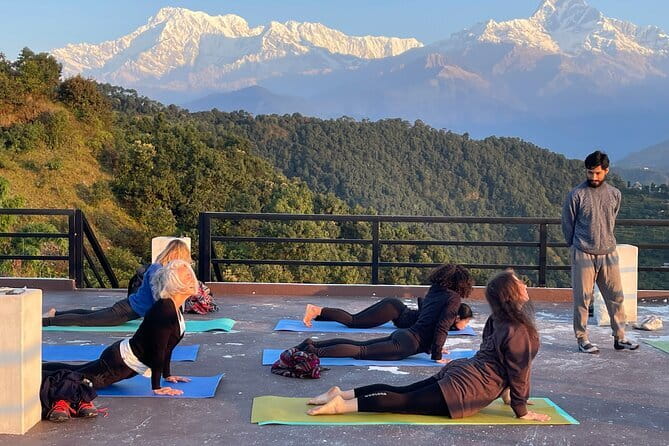
Day 2 brings the first big move: trekking to Low Camp (2,970 m). It’s marked as a 12-hour day, so I’d treat it like the baseline workout of your trip—steady pace, consistent hydration, and no hero moments.
This is also where the trek’s “Annapurna mix” often begins to show up. The overall route is described as moving through lush rhododendron forest and passing through hills and hidden villages. If you’re the kind of person who likes small scenery changes—light filtering through trees, then opening views—you’ll probably enjoy this day.
There’s also an entry-cost detail: the day notes admission ticket free. You don’t need to get stuck on it. Your guide will handle what applies, and your job is simply to keep moving safely.
Day 3: High Camp views when you leave the forest behind
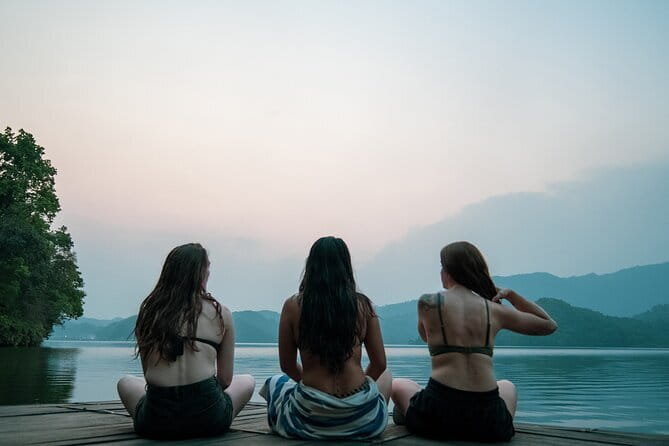
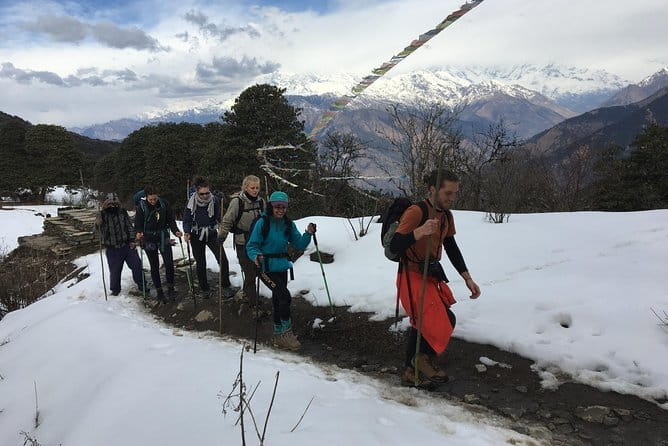
On Day 3, you head toward High Camp, and the experience shifts. You leave the forest trail behind and move into open fields and grasslands, where the mountain views tend to feel more direct.
The key promise here is visual. The view of the Annapurna Himalayas from High Camp is highlighted as one of the most spectacular parts of the journey. Also, the walk on this day is described as shorter than previous days, which is unusual for a high-stakes trek schedule. It gives you more time to actually enjoy the camp area rather than just arrive and collapse.
If you like altitude moments that feel calm, Day 3 is often where they happen: you’ve climbed enough to feel it, but you’re not spending the whole day grinding uphill.
Overnight is at High Camp, so you’ll be sleeping at elevation—bring layers and be ready for cold.
Day 4: Mardi Base Camp day and the upper viewpoint option
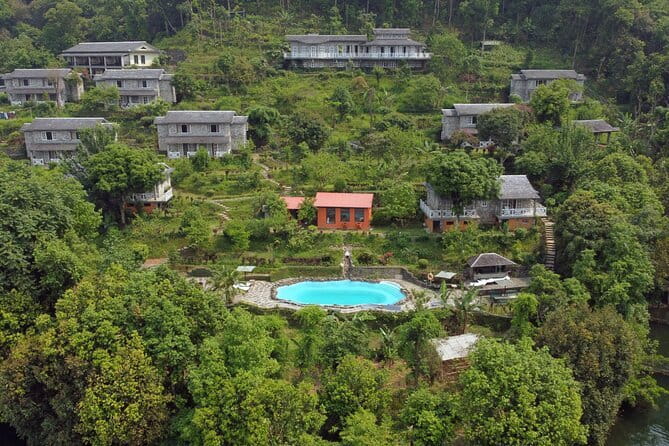
Day 4 is the big mountain day. The hike starts early and climbs to Mardi Base Camp from High Camp. The description emphasizes an uphill walk to a top area where the views can include Mardi Himal (5,553 m), Annapurna I (8,091 m), Annapurna South (7,219 m), Hiunchuli Peak (6,441 m), Baraha Shikhar (7,647 m), Machhapuchhre (6,997 m), and Lamjung Himal (6,983 m).
That’s a lot of major names packed into one viewpoint day. And that matters because you get to “connect the map” with your eyes. Instead of vague silhouettes, you can identify multiple peaks across the horizon.
You also have an important choice: you can hike up to an upper viewpoint only, and it’s described as providing equally beautiful views. If your legs are tired, or you’re sensitive to altitude effort, this option can help you get the payoff without overreaching.
After the viewpoints, you return toward High Camp for the overnight stay. There’s also the option to trek further to Badal Danda or Low Camp, but the standard pattern keeps you at High Camp overnight.
Day 5: Downhill into Siding and real Gurung village life
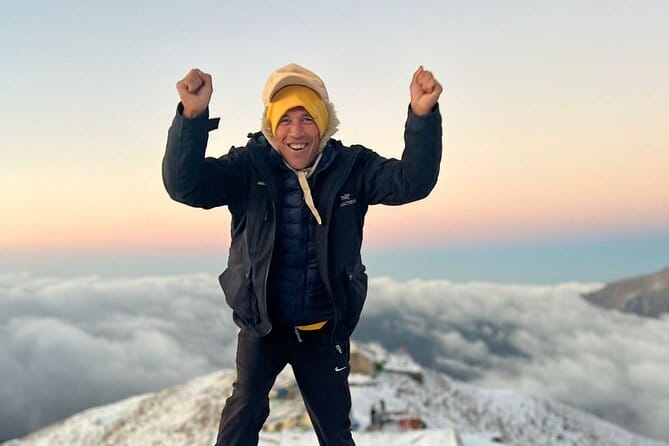
Day 5 ends with a different kind of treasure: village life. You descend to Siding, described as a traditional Gurung village. The walk is mostly downhill until you reach the settlement.
This is where you’ll likely feel the emotional contrast between mountain and home. Your feet may be tired, but the payoff is a more human pace—seeing daily routines, traditions, and the settlement patterns that have shaped this region for generations.
A practical note: that downhill can be rough on muscles. One past experience from this trekking operator’s circle mentioned a day of steep stone steps that was especially hard on muscles, and it matches the kind of descent Day 5 is set up to include. If you have knee sensitivity, slow down on the steps and use trekking poles if you can.
You end with an overnight in Siding.
Guides and safety: why having the right person on your side helps
On a trek like this, a guide is more than a map reader. It’s also someone who helps you stay calm when weather shifts, when you’re tired, or when the trail throws curveballs.
The operator notes that all leaders have basic first aid training and are aware of the closest medical facilities. That’s a baseline you want on any demanding altitude trek.
Past trekkers have also praised the “small help” stuff. For example, a guide named Sim was credited with helping remove leeches and easing someone into mountain life—exactly the kind of practical support that turns an uncomfortable moment into a manageable one. Other guide names mentioned include Raj, Varat, and Mr. Subas, with descriptions of safety, support, and a friendly approach.
Also, one review-style story mentioned a booking coordinator named Bishnu keeping communication smooth. That matters if you’re the type who hates uncertainty before you even step onto the trail.
What to expect from the included meals and overnight rhythm
Food and rest are part of the trek quality, not an afterthought. You’ll get breakfast on 4 mornings, lunch on 5 days, and dinner on 4 evenings, with accommodation on the trek included throughout.
That meal schedule means you won’t be scrambling for snacks at every turn. Still, your energy management is on you: eat what’s offered, drink when you can, and don’t ignore small aches early.
Overnights happen at High Camp and Siding (with Low Camp involved earlier). Expect basic comfort and mountain temperatures, especially at night.
Who should book this trek (and who should reconsider)
This trek is a strong match if you want a real Annapurna-region experience but don’t want a long trek. It’s also a decent choice for first-timers if you’re honest about effort, because the operator says most travelers can participate and the program is designed for a short, structured route.
It’s also worth considering if you like small-group dynamics. With a maximum of 10 people per booking and a private activity setup for your group only, you’ll usually find it easier to set your pace and ask questions.
Consider reconsidering if you have knee issues or if steep descents are a problem. Day 5’s downhill into Siding can test legs. You’ll also want a medical conversation if you’ve been advised to avoid altitude.
Should you book the Mardi Himal 5-day short trek from Pokhara?
If you want big Himalayan views, culture contact, and a structured plan that doesn’t eat up your whole vacation, I think this trek makes sense. The value is in the combo: permits + guide + meals + camps are covered, while the mountains you’ll see include Mardi Himal and the Machhapuchhre area.
Book it if you can handle long walking days (around 12 hours on multiple days) and you’re willing to manage altitude and weather with common sense. I’d especially like it for travelers who enjoy a mix of mountain drama and village reality—forest mornings, open grassland viewpoints, and a final day stepping into Gurung community life.
Don’t book it if you need lots of time for recovery, or if steep downhill terrain would likely put you out of commission for your next day.
If you book, do one thing that pays off fast: start the trek slow, plan for cold nights, and respect the downhill.
FAQ
Where do we meet for this trek in Pokhara?
You start at Pokhara Lakeside (Lakeside Rd, Pokhara 33700, Nepal), with the start time listed as 7:45 am.
How long is the Mardi Himal trek?
The duration is about 5 days.
What’s the maximum group size?
The trek allows a maximum of 10 people per booking. It’s also described as private, meaning only your group participates.
What’s included in the price of $499 per person?
The price includes private transportation, a tour guide, trekking permit, accommodation on trek, and meals: 4 breakfasts, 5 lunches, and 4 dinners.
What is not included?
Personal expenses are not included.
Do I need travel insurance?
Yes. Travel insurance that covers medical expenses, including emergency repatriation, is required, and proof must be shown to the tour leader on the first day.
Is there an age requirement or anything about service animals?
The minimum age is 5 years, and service animals are allowed.
What altitude concerns should I know about?
The operator notes demanding altitudes of about 11,588 ft (3,532 m) and warns that extreme variations in weather are possible. They recommend discussing the trip with your doctor before departure.
Can I leave extra luggage during the trek?
Yes. You can leave extra luggage in a Kathmandu or Pokhara hotel, and the operator will handle it and help you retrieve it upon your return.
What’s the cancellation policy?
Cancellation is free up to 24 hours in advance for a full refund. If you cancel less than 24 hours before the experience’s start time, no refund is provided.
Do I need a visa for Nepal?
You must confirm and obtain any visa requirements yourself. Visas are obtainable from embassies abroad or on arrival at Kathmandu’s Tribhuvan International Airport, and multi-entry visas at the airport can mean long lines and require 2 passport photos.