REVIEW · ULAANBAATAR
Mongolia Nomad Trek • On-Foot & Horseback ~ 15 Day
Book on Viator →Operated by Tusker Trail Kilimanjaro Adventures · Bookable on Viator
A cold hard truth about Mongolia: it’s huge, and you feel that fast. This 15-day on-foot and horseback trek led by Eddie Frank takes you deep into the Altai Mountains on the western border with China, where river valleys, mountain passes, tundra, and steppe all roll past like one long story. I love how the trip mixes real riding instruction with serious walking, so you get skills, not just a ticket. I also love the cultural texture—Kazakh and Tuvan encounters, nomadic horse games, and the chance to see eagle hunting lore up close. One consideration: this is not a sit-and-stare tour; you should come in with strong fitness and a comfort level for long days in remote terrain.
I really liked the pacing between physical effort and breathing room. You spend real time in places like the Khoton Nuur lakeshore area, then build toward higher country like the Potanin Glacier and Khuiten Peak region, and you even get a rest day to catch your breath. My only caution is practical: the schedule can include days with snow and steep descents, and the altitude terrain means you’ll need good boots and a steady head.
In This Review
- Key Things That Make This Trek Worth Your Time
- Ulaanbaatar Prep Time: The City Before the Wild
- Where Eddie Frank Takes Over: Gear, Camps, and the Pace Shift
- Flying West and Meeting Western Altai Country
- Riding Skills First: How They Teach You to Actually Ride
- Khoton Nuur Lakeshore: Forest Rides and Nomad Horse Games
- River Valleys on Foot and Horseback: Tsagaan Us to Tsagaan Gol
- The High Pass Moment: Snow, Steep Inclines, and Big Views
- Tsagaan Gol Community Visit: Shaman Traditions and Ancient Petroglyphs
- Rest Day on the Plateau: Laundry, Slow Hike, and Recovery Time
- Potanin Glacier and the Khuiten Peak Region: Tough Terrain, Real Scale
- Finishing the Trek: Ranger Station, National Park Gate, and a Horse Run
- Price and Value: What $8,250 Buys in Real Terms
- Who Should Book This, and Who Might Feel Miserable
- Should You Book the Mongolia Nomad Trek?
- FAQ
- Where does the trek start and how do I meet the guide?
- What’s included in the tour price?
- Do I need prior horseback experience?
- What kind of accommodations are used during the trek?
- How physically demanding is this trek?
- Is the tour private?
Key Things That Make This Trek Worth Your Time
- Eddie Frank’s riding focus: he gives you riding basics and clinics so you can actually feel confident in the rider’s seat
- Horse and foot balance: you’ll trek on foot and also ride portions, using pack animals for gear when needed
- Altai culture that still lives: Kazakh nomads, Tusker Nadaam horse games, and Tuvan shaman traditions you can see firsthand
- Big geography in a small time: river gorges, a high pass around 10,350 ft, and glacier country near Potanin Glacier
- Petroglyph stop with deep age: Mongolian Altai rock art with images dating back as far as 11,000 years
Ulaanbaatar Prep Time: The City Before the Wild
Most Mongolia trips start with a plane ride, but you start this one in Ulaanbaatar with time to reset. You land and meet your Mongolian guide, then you stay at the Tuushin Hotel for two nights while Eddie handles logistics in the west. That matters because it lets you arrive without the whole tour feeling like one nonstop sprint.
UB is also your cultural warm-up. You get a guide-led discovery day with options like museums, shops (cashmere is a big deal here), and street food stands. In the evening, you go to the national theater for a performance at the State Academic Theatre of Opera and Dance—colored costumes, music tied to ancient Mongolian traditions, and a useful change of pace before the road turns rugged.
If you like travel that feels anchored—some history and everyday city life before the big trek—this “city first” setup works well. If you hate cities and want to flee them immediately, you’ll still have enough time to do it, because the trek portion moves fast once you’re headed west.
You can also read our reviews of more tours and experiences in Ulaanbaatar.
Where Eddie Frank Takes Over: Gear, Camps, and the Pace Shift
There’s a clear handoff as the trip moves west. Eddie has already gone out to set up camp for your arrival in the coming days, and the trip starts to feel more like a working expedition than a standard package tour. You’re not just passively transported—you’re part of the flow of crew, horses, camels, and camp routines.
One detail I liked a lot is the way gear gets handled. After you reach the Bayan Ulgii area, you shift your belongings and clothing into waterproof Tusker duffels, designed to pack more easily onto camels for the expedition. That’s practical in a place where weather can change quickly and you’ll want your clothing dry and reachable.
You should also expect that days will run long. This isn’t the kind of tour where you get a tidy half-day, then a spa. It’s more like: good breakfast, travel, walking or riding, camp life, then sleep.
Flying West and Meeting Western Altai Country
After Ulaanbaatar, you fly west to Bayan Ulgii (a 3-hour flight is listed). The first shock is how quickly the feel changes. One day you’re dealing with city rhythms; the next you’re in a different Mongolia altogether.
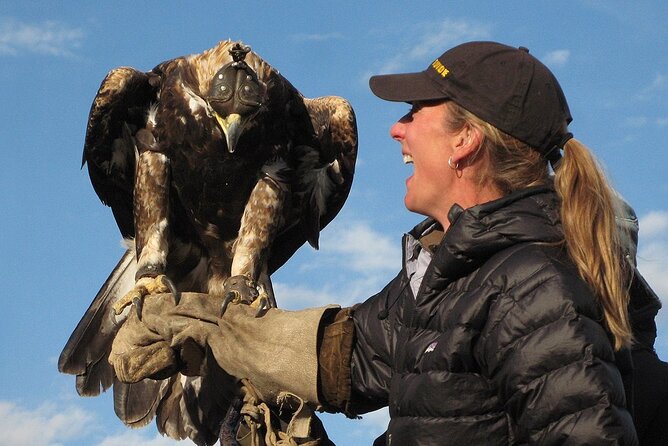
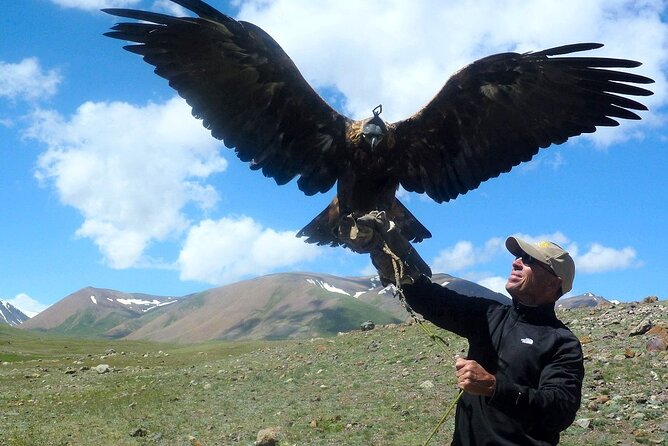
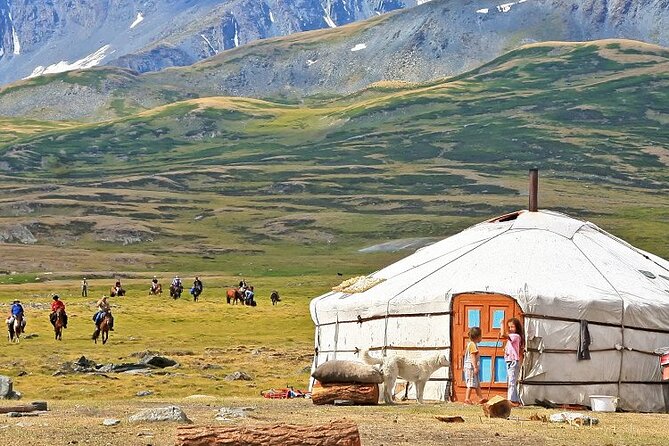
In Ulgii, you drop your gear at a ger camp—so you get that Mongolian tent-camp feel right away. Then you explore the outdoor market and look for Kazakh eagle hunters for an up-close encounter with their magnificent birds of prey. This is one of those experiences that isn’t just scenic. It’s about living knowledge—skills and practices that have real continuity in the region.
This is also the point where I’d tell you to pack smart for changing plans. When you’re in remote country, you don’t always get to control the order of things, and having clothing and essentials in a system (not scattered in five bags) helps you stay calm.
Riding Skills First: How They Teach You to Actually Ride
Not everyone arrives knowing how to ride. That’s why I appreciate that Eddie provides regular riding clinics and that the trek starts with basics. On the first lakeshore riding day, you get instruction using Australian saddles, then you ride at a slow pace through a forested area above Khoton Nuur Lake.
This is the difference between riding as a photo-op and riding as a skill. You learn how to hold yourself, how to work with the horse, and how to avoid making every moment awkward. Even if you’re an experienced rider, the clinic rhythm can be useful because local horses and local saddle setups can feel different.
A practical note: if you plan to ride, you’ll want to wear comfortable layers and grip-focused footwear. Mongolia riding days can involve dust, cold snaps, and long hours in the saddle, so clothes that you can move in matter.
Khoton Nuur Lakeshore: Forest Rides and Nomad Horse Games
This part of the trek gives you a softer landing into the Altai life. You travel to the Khoton Nuur area (Hoton Nuur is listed as the stop), cross the Khovd River, and set up camp on the lakeshore for two days. That’s a big deal because you get time to breathe. You’re not sprinting from waypoint to waypoint; you’re settling into the land.
You spend one full day with local Kazakh nomads in their gers (tents). You learn about traditions that have continued for generations and you get a chance to attend traditional nomadic horse games. The event is called Tusker Nadaam, and after the games, local women bring out handmade crafts—great for gifts if you like taking a piece of the trip home.
What I like here is the balance: you’re seeing daily life, not just a performance. You’re also getting a little of everything—riding, cultural exchange, and camp time—before the trek turns more strenuous.
River Valleys on Foot and Horseback: Tsagaan Us to Tsagaan Gol
Once the trek begins in earnest, you start moving through alpine forest and then into broader river-valley country. After the lakeshore days, the crew loads camels and you begin trekking through an alpine forest northward. The area has glacial clues—horizontal benches in the lake basin that point to ancient lake levels. It’s the kind of geology you can almost read with your eyes if you pay attention.
You’re also following the logic of water—rivers guide the route and shape the daily rhythm. The Tsagaan Us River is a tributary of Khoton Lake, flowing south from the Tavn Bogd glaciers. Then you cross toward the east side of the Tsagaan Gol River and continue up the valley, setting up camp on Cheben Hill with grassy plains below and goats nearby.
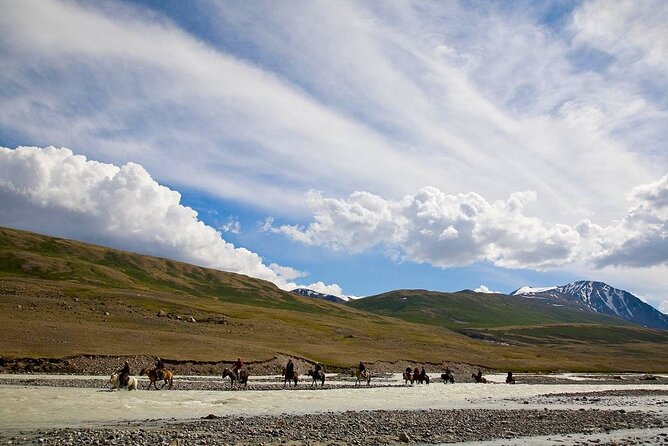
On riding days near Tsagaan Gol, the terrain shifts into gorge walls and riverbank travel. When the river floods in places, hikers go higher while riders continue along the banks. You can feel the planning that went into route choices—this isn’t random wandering.
If you like hikes with a reason—terrain, water, and passes—you’ll enjoy these days a lot.
The High Pass Moment: Snow, Steep Inclines, and Big Views
This trek doesn’t hide the hard days. At around the time you’re approaching the mountain pass ahead, you trek out of the river gorge and ascend up to a pass listed at about 10,350 ft. From there, views stretch across the Sheveet Uul gorge on the other side.
There’s also a real possibility of snow if precipitation hits. The route notes mention that you might hike through snow and need to dig a path through. That’s not something to fear—just something to respect. Bring the right footwear and accept that progress can slow on steep, icy ground.
After the pass, you descend a steep incline on foot and set up camp at Sheveed Uul Gorge. This is one of those stretches where you’ll be tired, and then later you’ll look back and realize you just crossed country most people never see. It’s not glamorous work, but it’s meaningful work.
Tsagaan Gol Community Visit: Shaman Traditions and Ancient Petroglyphs
A turning point comes when you stop at a small ger community to visit Tuvan people who follow traditional shamanistic beliefs. It’s a reminder that this is not just geography and weather—human culture lives here too.
Then you reach one of the most striking stops on the trip: ancient petroglyphs. The Petroglyphs of the Mongolian Altai are described as among the largest, oldest, and most pristine concentrations of rock art in North Asia, with images dating back to around 11,000 years ago and extending into the 9th century. These aren’t random carvings; they represent ancient cultural landscapes.
For me, this is where the trek clicks intellectually. You’re sweating in cold air today, but the land has carried symbols and meaning for thousands of years. If you like having a deeper anchor for a place, don’t skip paying attention here.
Rest Day on the Plateau: Laundry, Slow Hike, and Recovery Time
You do get a rest day. The plan is a scenic hike to a beautiful blue lake hidden on a plateau a few miles from camp. You also have time to do laundry and just relax.
This matters. When your body is working at altitude and you’re walking and riding, rest isn’t a luxury. It’s what keeps you from turning the rest of the trek into damage control.
If you’re traveling with friends or family, this is also a good day for bonding because your energy levels even out. You can enjoy the view instead of constantly focusing on your legs.
Potanin Glacier and the Khuiten Peak Region: Tough Terrain, Real Scale
The most challenging day in the provided schedule is the trek toward Potanin Glacier. It’s listed as a frost-heave uphill push that takes you up to about 10,100 ft. You’re walking toward Potanin Glacier of the Altai Tavn Bogd, described as lying at the foot of Khuiten Peak (listed at 14,350 ft.).
This is also where the trip gets international in a physical way. Nairamdal Peak marks the triple border area for Mongolia, Russia, and China. Above the treeline, the notes emphasize harsh conditions with tundra, lichen-covered rocks, alpine meadows, and high mountain swamps—few animal species adapt here.
You can’t fake this day. You’ll feel small next to the terrain, but that’s exactly why it’s worth doing. If you’ve been dreaming of glacier country and high-altitude walking that tests you in a good way, this is the day.
Finishing the Trek: Ranger Station, National Park Gate, and a Horse Run
As you leave the Tavn Bogd peaks behind, the last day on foot takes you north and east to a Ranger station gate to the national park. Then you meet vehicles and return toward Bayan Ulgii, overnighting again at the ger camp.
Before you fully transition out, you get one last horseback moment. The plan notes that you can give your horse its head and have a nice run. It’s a fun payoff after days of training, cautious trekking, and careful route following.
Then comes the flight back toward Ulaanbaatar (a short flight from Ulgii is listed), one more night at the Tuushin Hotel, and onward transfer to Chinggis Khaan International Airport.
Price and Value: What $8,250 Buys in Real Terms
$8,250 per person is a serious chunk of money, so here’s how I’d judge value based on what’s included.
You’re paying for:
- A private group setup (only your group participates)
- Guiding that’s hands-on, especially with riding instruction from Eddie Frank
- Transportation over multiple segments inside Mongolia, including internal travel and vehicles between camps
- Full meal support across most days: 13 breakfasts, 13 lunches, and 13 dinners are included
- A long-format expedition over roughly 15 days with multiple ecosystems and multiple ride-and-walk styles
What’s not included is also part of the value equation. Travel fees from your home to and from Mongolia aren’t included. Also, the listed onward plans include an airport transfer, and the specific details of what is or isn’t covered beyond the tour end can matter depending on your final arrangements.
If you want a cheap Mongolia holiday with minimal effort, this isn’t it. If you want a structured, guided wilderness trek with real riding lessons and cultural access, the price can start to make sense. You’re buying time, expertise, and logistics in a place where doing it independently would be a big undertaking.
Who Should Book This, and Who Might Feel Miserable
This trek fits best if you:
- Want a true adventure rhythm with walking plus horseback riding
- Are comfortable working steadily over many days and handling cold or snow chances
- Like authentic cultural contact tied to daily life, not just staged performances
- Value a guide who teaches skills, not just points out views
You might think twice if you:
- Want fully predictable comfort every day (this terrain and altitude can be demanding)
- Don’t like long days and would rather do short hikes with frequent town breaks
Should You Book the Mongolia Nomad Trek?
I’d book it if your idea of a perfect trip is learning to ride properly, trekking through Altai river valleys, and ending up in glacier-scale country that feels remote because it is. The big praise points in the experience make sense for a reason: Eddie Frank’s leadership, the mix of riding clinics with real terrain work, and the way camp life and nomad encounters turn into more than just checkpoints.
But if you’re shopping for something easy, or you can’t handle long days with steep inclines and possible snow, pick a different Mongolia style.
If you do book, go in with solid boots, patient lungs, and a willingness to follow the crew’s rhythm. This isn’t a trip you finish and forget. It’s the kind you remember when regular life starts asking you to slow down.
FAQ
Where does the trek start and how do I meet the guide?
You start at Buyant Uhaa Airport in Ulaanbaatar, Mongolia. The meeting start time is listed as 12:00 am, and you’ll meet your Mongolian guide after you land.
What’s included in the tour price?
The tour includes private transportation plus 13 breakfasts, 13 lunches, and 13 dinners. It also offers a mobile ticket, and pickup is listed as offered.
Do I need prior horseback experience?
No. Eddie Frank provides riding clinics and you’ll start with basics on horseback, including riding instruction using Australian saddles.
What kind of accommodations are used during the trek?
You stay at the Tuushin Hotel in Ulaanbaatar at the beginning and end of the trip, and you’ll also sleep in ger camps during parts of the expedition. The rest of the time you’ll be camping as you trek.
How physically demanding is this trek?
The trip notes call for strong physical fitness. The route includes long trekking days, mountain passes, steep descents, and a challenging day toward Potanin Glacier that’s described as uphill and affected by frost-heave conditions.
Is the tour private?
Yes. It’s listed as a private tour/activity, so only your group participates.