REVIEW · LANZAROTE
Timanfaya National Park Trekking with a Typical Canarian Snack
Book on Viator →Operated by Curioseety SRLS · Bookable on Viator
Volcanoes here feel close enough to touch, and this trek is built to help you notice why. You follow the Route of El Cuervo on a 9 km circular path through Timanfaya’s most iconic volcanic stops, with a guide explaining what you’re looking at. Before the main hike, there’s a volcanic tunnel visit in Masdache, then you finish with sunset views over Pico Partido.
I especially love the way the day mixes geology with real human details. You’re not just passing scenery—you’re learning how volcanic layers, cones, and lava fields shaped what’s around you. And the experience includes a short break for a Canarian aperitif with local wine while you take in a fallen palm tree, a clear symbol of resilience in this harsh land.
One thing to plan for: this is a walk with rocky volcanic ground and sun. You’ll want solid shoes, water, and a hat, because weather can be adapted for safety, but the environment is still, well, Lanzarote.
In This Review
- Highlights at a glance
- Timanfaya National Park’s Route of El Cuervo: 9 km that feels like a story
- Masdache volcanic tunnel: the pre-hike moment that makes everything click
- Ortiz Volcano layers: spotting the rock like a pro
- Colorado Volcano and the red strombolian cone look
- Volcán Negro and malpaís: where harsh land meets practical adaptation
- The fallen palm tree aperitif: a snack stop with meaning
- Entering the El Cuervo crater: the big wow moment
- Sunset over Pico Partido: your ending should be slow, not rushed
- Price and logistics: does $75.86 feel like value?
- What to bring and how to handle volcanic walking
- Who this trek is best for
- Guide energy: friendly, informative, and fun with real info
- Should you book this Timanfaya trek with a Canarian snack?
- FAQ
- Where is the meeting point for this Timanfaya trek?
- How long is the experience?
- How long is the walking route?
- Is the tour offered in English?
- What food or drink is included?
- How many people are in a group?
- What should I bring?
- Can I cancel for free?
Highlights at a glance
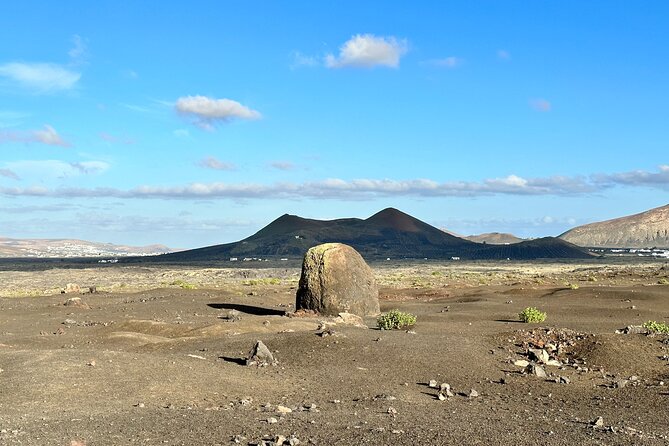
- 9 km circular route through Ortiz, Colorado, Volcán Negro, and El Cuervo
- Masdache volcanic tunnel stop before the main hike
- Aperitif break with local wine plus a view of the fallen palm tree
- Walking into the El Cuervo crater for a dramatic interior moment
- Sunset over Pico Partido with golden-red light at the end
- Small group size (max 10) and English-led guiding
Timanfaya National Park’s Route of El Cuervo: 9 km that feels like a story
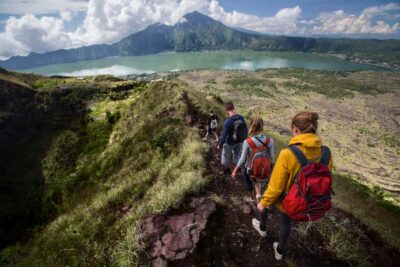
This trek is designed like a guided walk through Lanzarote’s volcanic “chapter by chapter.” The full route is about 9 km and runs roughly 3 hours 30 minutes. That time matters because it keeps the day moving, but still leaves room for pauses where the guide can connect the dots between what you see and how the island was formed.
You start near the Ortiz Volcano area and work your way through a sequence of volcanic shapes: layered ejecta, a red-toned cone, and then rugged lava fields. The best part is that the route doesn’t treat those stops like separate photos. The whole walk feels connected, so you begin to recognize patterns in the rock and terrain as you go.
If you like trips where you learn while walking (instead of being stuck in one viewpoint), this format is a good fit. You get a sense of scale too—Timanfaya is big, and being on foot is one of the few ways to feel that without a long bus ride.
You can also read our reviews of more tours and experiences in Lanzarote.
Masdache volcanic tunnel: the pre-hike moment that makes everything click
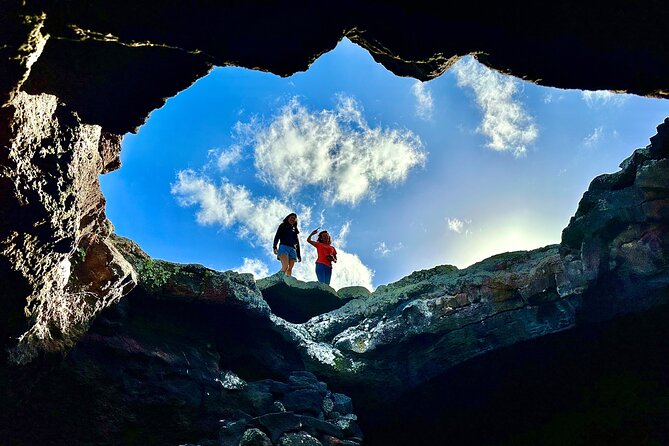
Before you begin the main loop, you stop in Masdache to explore a fascinating volcanic tunnel. Even without overhyping it, this is a clever warm-up. It gives your brain a “volcano lens” before you step out onto the open lava fields.
Think of it as your heads-up for the rest of the day: once you’ve seen how volcanic processes create hollow spaces and passages, the outside shapes start making more sense. It also breaks up the day so you’re not only walking from the first minute.
A practical note: tunnels can feel cooler and more enclosed than the outdoor heat, so expect a little contrast in temperature and light. Good shoes still matter here because you’ll be moving between spots.
Ortiz Volcano layers: spotting the rock like a pro
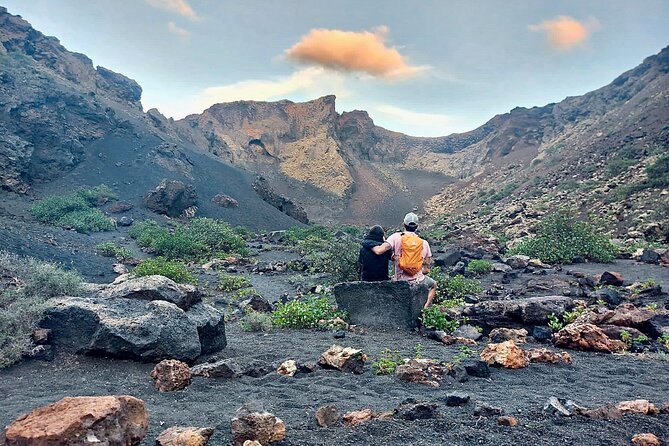
The hike begins near the Ortiz Volcano, where you’ll observe dramatic layers of ejected volcanic material. This is the point where the guide earns their pay. When someone explains what you’re looking at—layers, textures, and how volcanic material was thrown out—it turns random rock into a readable page.
Why this matters for you: volcanoes can look similar in snapshots. But on a guided walk, you start noticing differences—how the layers stack, where the ground changes, and how the terrain hints at the island’s violent past. It’s the kind of detail that turns a “nice view” into something memorable.
You’ll also get the most out of this stop if you keep your phone handy for photos, but your eyes open for the explanations. The route is short enough that you don’t want to spend the day filming. Watch first, then capture.
Colorado Volcano and the red strombolian cone look
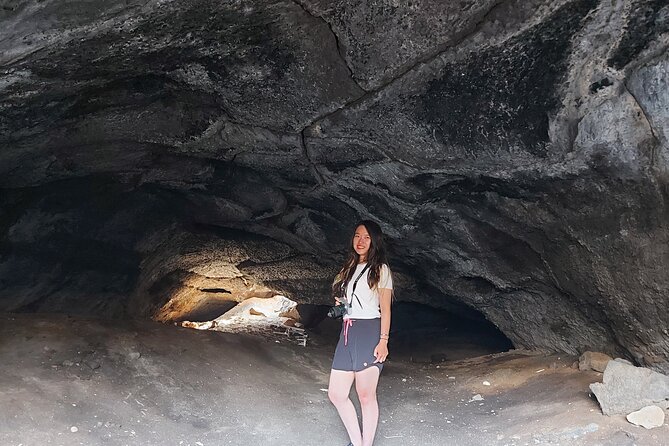
Next comes the Colorado Volcano, described as an impressive strombolian cone with striking red tones. That red matters. It’s the kind of color cue that makes the geology visible even to non-experts.
This is also a great stretch for pacing. The terrain is volcanic, and the walk keeps you gently moving forward while you take in new viewpoints. If you’re the type who likes variety—different shapes, different ground—you’ll feel it here. Ortiz and Colorado don’t blend together. They each bring their own look.
One thing I’d watch for: red volcanic rock and sun can be a bright combo for photos. If your eyes feel like they’re squinting, shift your angle a bit rather than forcing the shot straight on.
Volcán Negro and malpaís: where harsh land meets practical adaptation
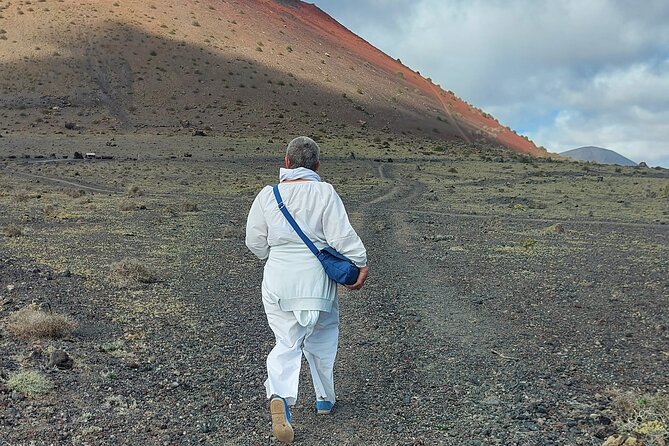
The route continues around the Black Volcano, Volcán Negro, surrounded by rugged lava fields known as malpaís. This is where Timanfaya starts to feel real and lived-in, even though it’s still wild.
The highlight here is the idea of adaptation: you’ll discover how locals learned to use and work with these “barren-looking” lands. That cultural layer is valuable. It turns the hike from just spectacular scenery into a lesson about how people make life possible in tough conditions.
A quick reality check for your body: lava fields can be uneven and rough, so you’ll want careful footing. Go slow through the rocky sections. This isn’t the time to show off athletic confidence.

The fallen palm tree aperitif: a snack stop with meaning
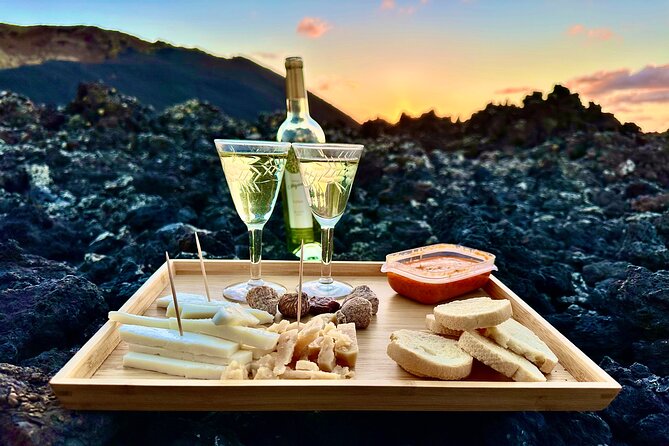
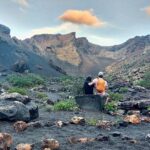
Around the middle of the trek, you take a short break to relax and enjoy a Canarian aperitif paired with local wine. This is not just a food moment. It’s also a scene-setting pause with a symbol.
You’ll admire the fallen palm tree, described as a symbol of resilience in a harsh environment. That’s a powerful way to break the hike. You’ve been walking through volcanic leftovers. Then you stop and notice what still grows, what still matters, and what humans have built around the landscape.
For you, the best part is that this snack break gives you a mental reset. You can recharge without losing the rhythm of the walk. And since it’s short, it won’t drag out the day.
If you’re sensitive to heat, use this pause wisely. Drink water, put sunscreen back on if needed, and then keep going while the group is still in a steady pace.
Entering the El Cuervo crater: the big wow moment
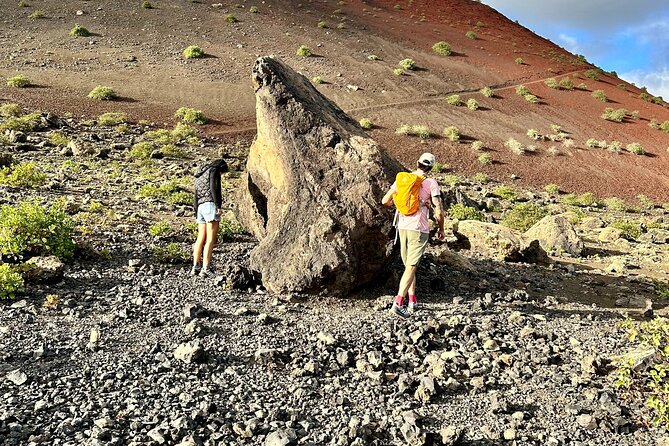
The emotional high point is entering the crater of El Cuervo Volcano. This is where the experience shifts from outside views to an up-close, inside-the-land moment.
Walking inside a crater changes your sense of scale fast. Outside, you can see the shapes from a distance. Inside, you’re surrounded by the volcanic “heart” that shaped Lanzarote’s past. The guide’s explanations make this even better, because you’re not just seeing a hole in the ground. You’re moving through a space that tells a story with its contours and walls.
This crater stop is also one reason the trek feels worth it. Many tours give you a viewpoint. This gives you a transition—an experience that has depth.
A practical consideration: crater interiors can feel different in temperature and light. Wear sunglasses if you use them. And keep your footing steady—this is still a walk on volcanic terrain.
Sunset over Pico Partido: your ending should be slow, not rushed
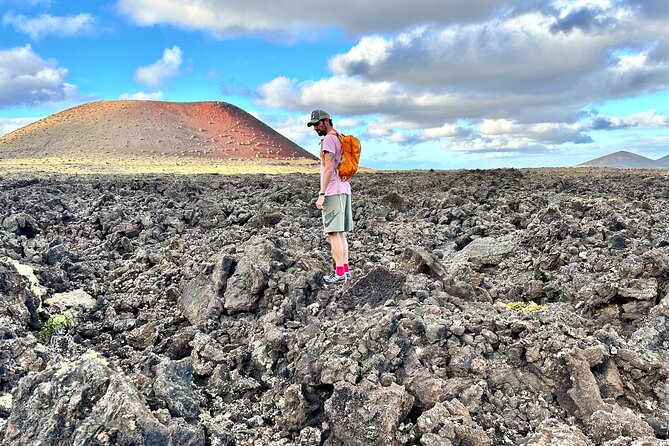
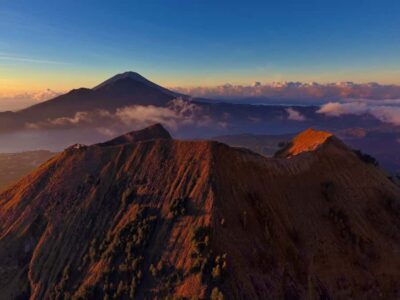
As the tour concludes, you’ll witness sunset over Pico Partido. This is one of those rare “timed naturally” experiences where the end of the hike lines up with the day’s most forgiving light.
Golden and red hues over volcanic ground can look almost unreal. Even if you’re not a professional photographer, you’ll feel the difference. The rocks don’t just look dramatic—they look dimensional.
For best results, don’t spend the final minutes sprinting for the perfect angle. Stand, breathe, and let the light shift. If you’re with a small group, you’ll also be able to move gently as the colors change without chaos.
Price and logistics: does $75.86 feel like value?
At about $75.86 per person for roughly 3.5 hours, the price isn’t low. But it also isn’t paying for a “quick photo stop and done” day.
You’re paying for several things that add up:
- A guided route through multiple volcanic highlights
- The Masdache volcanic tunnel stop
- Access to an inside crater experience
- A Canarian aperitif with local wine
- A small group size (max 10), which helps you ask questions and actually hear the guide
That small group number is a big deal for value. In a crowd, guides rush. Here, the day can stay calmer, and the explanations can land.
English is offered, and the tour uses a mobile ticket. Those little logistics details matter too, especially if you want to keep your planning simple and show up ready.
If you’re deciding between doing this solo and booking with a guide, I’d choose the guided option for the crater and the geological storytelling. Timanfaya can be impressive on your own, but the guide is what turns it into an informed experience.
What to bring and how to handle volcanic walking
The essentials are straightforward and worth listening to:
- Comfortable walking shoes
- Hat and sunscreen
- Water
The terrain is described as rugged lava fields, so treat that as your cue for careful steps. You don’t need hiking boots that look like they belong on a mountain expedition, but you do need footwear that grips and supports.
Also plan for weather. The experience may be adapted depending on conditions for safety. That’s a sensible way to run an outdoor trek, and it means you should dress in layers if the forecast changes.
A simple mindset helps: go at a steady pace. This is a 9 km walk, and the goal is to enjoy it, not race through it. Your legs will thank you, and your photos will be better too.
Who this trek is best for
This hike fits best if you want:
- A guided walk focused on geology and the island’s volcanic story
- A mix of walking and a food-and-drink break
- A crater moment plus a sunset finish
Most travelers can participate, and the time window is manageable for a half-day. If you’re the kind of person who likes asking questions, you’ll likely enjoy the small-group pace and the guide-style explanations.
Where I’d think twice: if rocky terrain is a problem for you or if you don’t handle sun well. The tour provides guidance on what to bring, and that’s your hint that conditions matter.
Also, if you’re expecting a lounge-style excursion, this isn’t that. It’s a trek. You’ll walk. You’ll look. You’ll learn.
Guide energy: friendly, informative, and fun with real info
The day is led by a professional local guiding team, and the feedback is strong on one theme: friendliness plus information that makes the scenery make sense. Guides like Sandra and Eric are specifically praised for keeping the hike upbeat while sharing lots of useful context.
That combo matters because Timanfaya can feel like a single giant “wow.” A good guide helps you break it into parts you can actually understand. Then, at the crater and sunset stops, the experience hits harder because you’re not just watching—you’re interpreting.
It’s also worth noting the tour has a max of 10 travelers. That setup makes it easier for the guide to keep everyone together and for you to hear the story without shouting across a crowd.
Should you book this Timanfaya trek with a Canarian snack?
Yes, if you want your Timanfaya time to feel meaningful, not just scenic. Booking makes extra sense for three reasons: you get the Masdache tunnel stop, you enter the El Cuervo crater, and you finish with sunset over Pico Partido, all while enjoying a Canarian aperitif with local wine.
Book it sooner rather than later if your schedule is fixed. It’s commonly booked about 11 days in advance, which suggests popular dates fill up.
But if you’re unsure about walking on rugged volcanic ground or you’re very heat-sensitive, you might want to wait for a day with calmer conditions and plan your gear carefully. Weather adaptations can happen, and you’ll feel better if you’re ready for the outdoor reality.
If your idea of a great excursion is walking, learning, and eating a little something in the middle, this one is built for you.
FAQ
Where is the meeting point for this Timanfaya trek?
The tour starts at Ermita de Santa María Magdalena, Carr. El Centro, 28, 35572 Tías, Las Palmas, Spain, and it ends back at the same meeting point.
How long is the experience?
It lasts approximately 3 hours 30 minutes.
How long is the walking route?
The trek follows a 9 km circular trail through Timanfaya’s volcanic landscapes.
Is the tour offered in English?
Yes, it is offered in English.
What food or drink is included?
You’ll enjoy a Canarian aperitif paired with local wine during a short break.
How many people are in a group?
The tour has a maximum of 10 travelers.
What should I bring?
Wear comfortable walking shoes, and bring a hat, sunscreen, and water.
Can I cancel for free?
Yes. You can cancel up to 24 hours in advance for a full refund.