REVIEW · LANZAROTE
Costa Teguise : Underwater Sea Trek Experience
Book on GetYourGuide →Operated by Native Diving Lanzarote · Bookable on GetYourGuide
Walk underwater without scuba gear. This Costa Teguise sea trek turns the seabed into a walking scene, with a panoramic helmet and a surface air supply that creates that zero-gravity moon-walk feeling, surrounded by marine life.
I really like how the setup keeps you supported and comfortable once you’re in the helmet and on the sea floor. I also like the small-team approach from Native Diving Lanzarote guides like Jose Luis, plus instructors Victor and Danny, who focus on clear safety steps and staying close. One possible drawback: cameras aren’t allowed, so if you want photos and videos, you’ll be looking at the optional package at the end.
In This Review
- Key Takeaways Before You Book
- What the Underwater Sea Trek Setup Really Feels Like
- Gear Up With Confidence: Helmet, Wetsuit, and Clear Instructions
- From Surface to Sea Floor: How the Trek Flow Works
- On the Trek: Walking “On the Moon” With Fish All Around
- The Underwater Photo Plan: What You Can Buy and Why Cameras Are Banned
- Price and Value: Is $88 for 30 Minutes a Fair Deal?
- Who This Is Best For in Lanzarote (and Who Should Skip It)
- Practical Tips to Get the Most From Your Sea Trek
- Should You Book Native Diving Lanzarote’s Underwater Sea Trek?
- FAQ
- Where is the Underwater Sea Trek experience offered?
- How long does the sea trek last?
- What is the minimum age to participate?
- Are cameras allowed during the activity?
- Is the group size small?
- What languages do the instructors speak?
- Is this suitable for pregnant women or people with recent surgeries?
- Does the price include equipment and guides?
- Can I cancel and get a full refund?
- Should I expect to pay extra for photos or videos?
Key Takeaways Before You Book
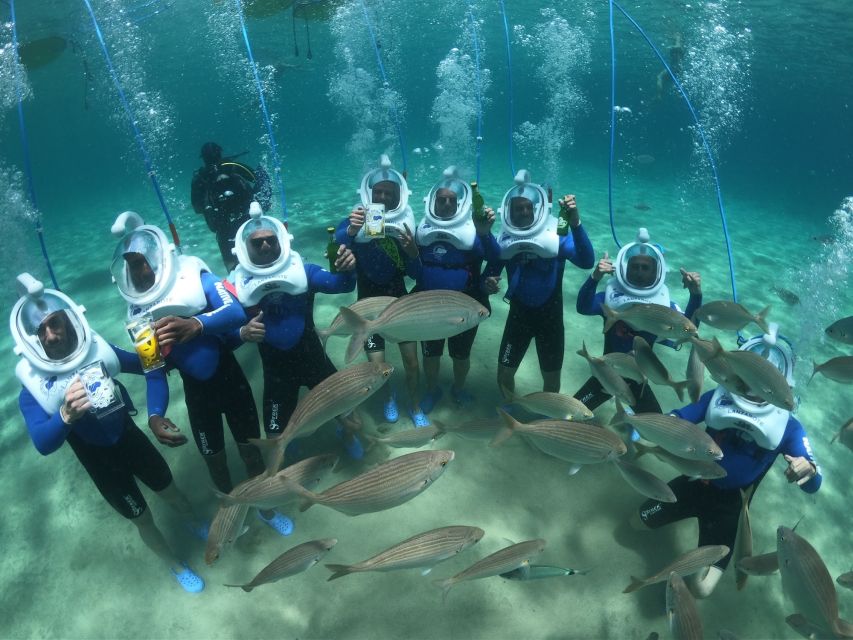
- Zero-gravity feel: the water helps support the helmet so walking feels surprisingly natural
- Panoramic vision helmet: you get a wide view while you move along the seabed
- Small group size (max 8): easier for guides to watch you closely
- No cameras permitted: you rely on the team’s photos/videos afterward
- Weather matters for visibility: clear days are better, especially after storms
- Beginner-friendly for many people: non-swimmers and anxious first-timers can still feel at ease with good instruction
What the Underwater Sea Trek Setup Really Feels Like
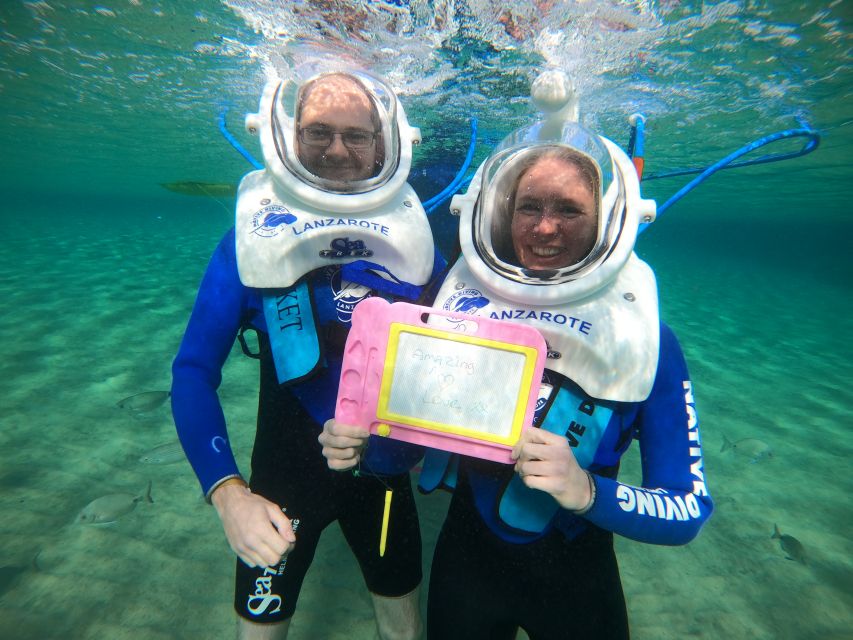
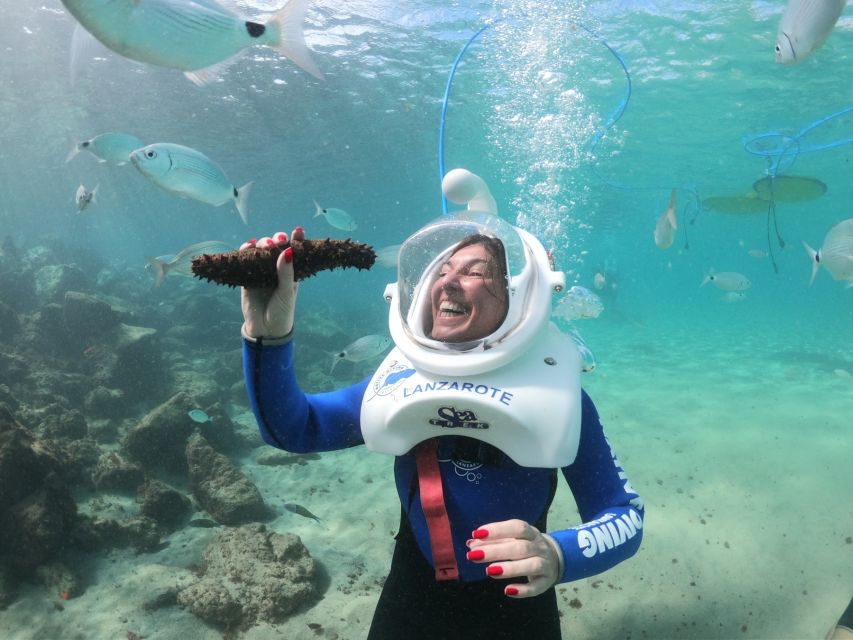
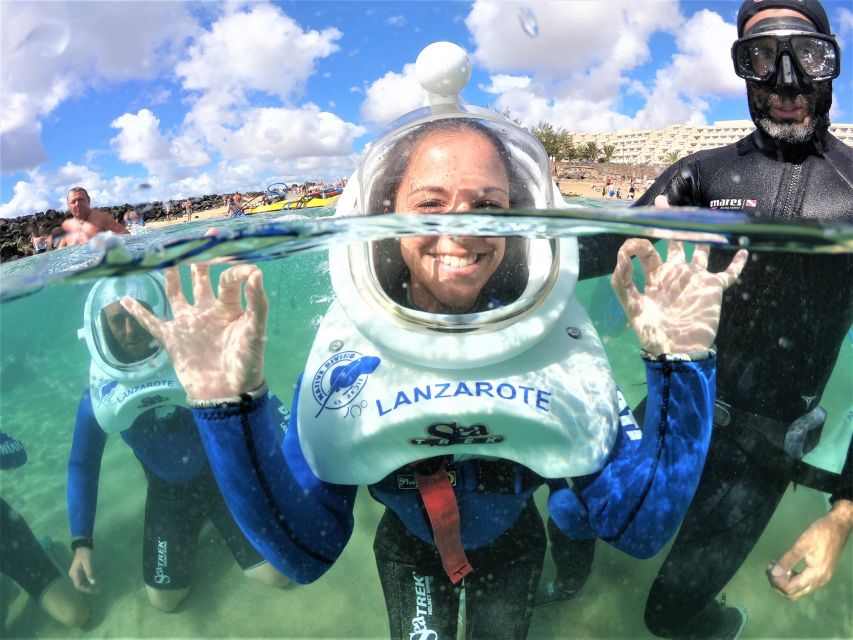
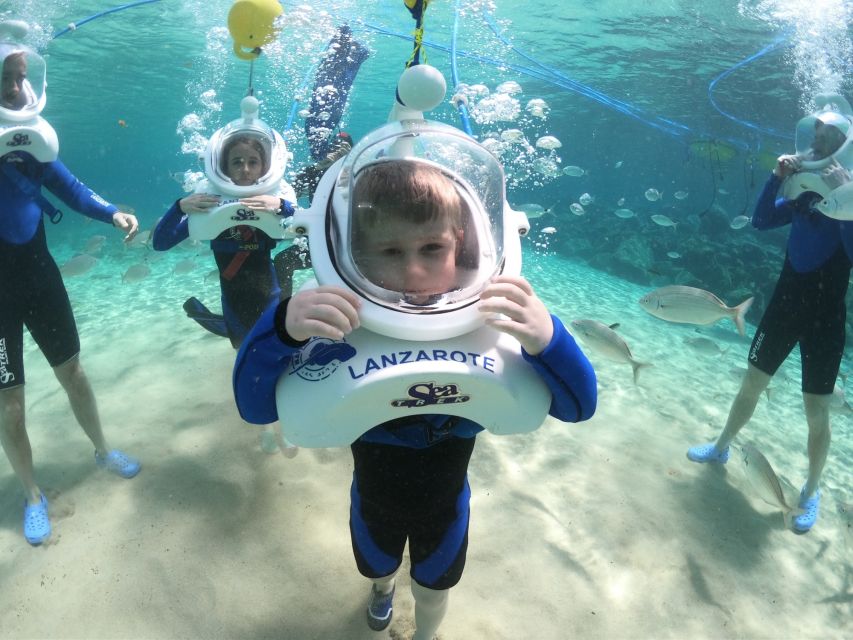
This is not snorkel. It’s not scuba either. A sea trek uses a helmet with a wide, panoramic window, plus air that comes from a small boat on the surface. A hose connects the air source to your helmet, so your job is basically to listen, breathe normally, and follow the guide’s pace.
The headline experience is that moonlike, weightless feeling. The water supports the helmet’s weight, so it doesn’t feel like you’re hauling heavy gear around underwater. The result is that you can focus on where you are—on the seabed—while marine life drifts into your view.
And yes, you are actually walking. That sounds simple, but it changes everything. Instead of floating above the action, you move through it at sea-floor level, so fish and other creatures seem closer and more “real” than they do from the surface.
You can also read our reviews of more tours and experiences in Lanzarote.
Gear Up With Confidence: Helmet, Wetsuit, and Clear Instructions
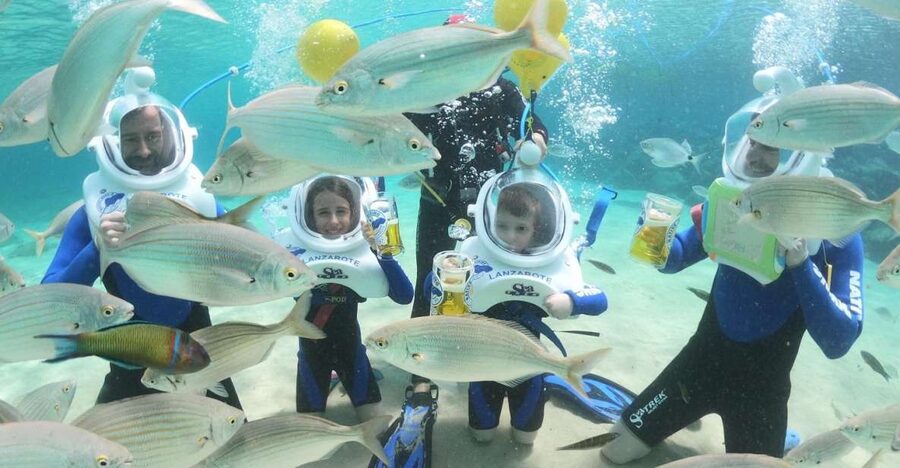
Your trek starts with a proper briefing and equipment fitting. You’ll get the equipment you need, and guides are part of the whole process (not just a quick handoff). In practice, that means you learn how the system works before you go down, so the experience feels controlled rather than stressful.
Expect wetsuits too. They’re not about style; they help with comfort because you’ll be in chilly water for a short but real stretch. People rave about the quality of the wetsuits, especially for staying warm before and after you’re on the bottom.
A big comfort detail: the helmet isn’t supposed to feel “heavy.” Water helps support it, so it stays stable as you take steps. That matters for first-timers because the gear is what usually makes people nervous. Here, the design does the heavy lifting.
From Surface to Sea Floor: How the Trek Flow Works
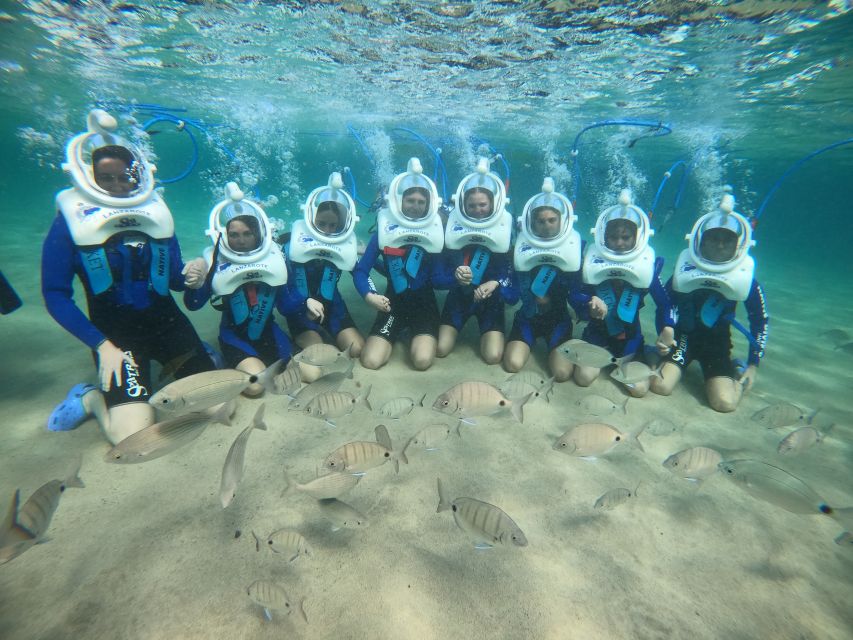
Here’s the rhythm you should picture once you arrive at Native Diving Lanzarote in Costa Teguise:
1) Arrive early and get ready
You’ll want to be at the meeting point 15 minutes before the starting time. That buffer lets the team fit equipment and run through safety steps without rushing.
2) Get fitted and coached
Guides explain how to move, how to stay oriented, and what to do if you need reassurance. In many bookings, the guides are described as funny and warm, which helps—because nerves melt faster when you’re laughing.
3) Connect to the air system
The surface boat holds the air bottle, and the hose connects to your helmet. The key for your brain is knowing you’re not managing breathing like scuba. You’re following the system the team provides.
4) Step onto the seabed
Once you’re on the bottom, you walk along as the guide keeps your group together. Movement is slow and deliberate, because the goal is comfort and close viewing.
There’s also a useful reality check: if visibility is limited after bad weather, you may still see plenty of fish, but the scene can look less “crystal clear.” That doesn’t ruin it—it just changes the vibe.
On the Trek: Walking “On the Moon” With Fish All Around
When people call this a moon-walk, they mean the sensation of floating and stepping with support from the water. It’s not a stunt. It’s a practical design choice: the helmet and water buoyancy make your movement feel lighter than you’d expect.
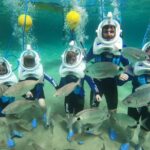
The best part is being surrounded by marine life. Since you’re at sea-floor level, fish appear at eye height, and you get that wow moment of looking down and realizing you’re in their world. Guides also do a lot of work to make sure you get close enough to really appreciate what’s around you.
Many participants love the “close encounter” feeling: you’re not just watching from afar, and you don’t need advanced skills. Some bookings mention the chance to hold certain sea life during the experience, guided closely by the team. If that’s part of your session, the important thing is that you follow instructions exactly—this is a controlled activity, not a free-for-all.
The Underwater Photo Plan: What You Can Buy and Why Cameras Are Banned
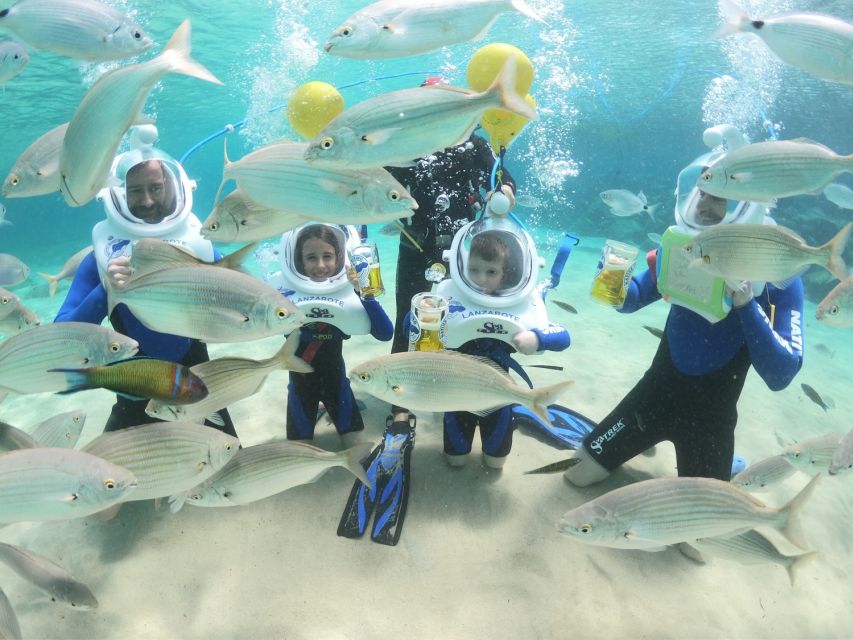
One thing to know up front: cameras aren’t allowed during the sea trek. That’s actually part of the experience flow. Your attention stays on walking, looking, and following the guide.
Instead, the team takes photos and videos for you. You can purchase them afterward, and the optional photo package has been mentioned as around €25. People who bought the package often say it’s worth it because the shots capture what you can’t easily film yourself while wearing the helmet system.
A couple of practical notes from the vibe people describe:
- Photo time can feel like a bigger focus than you expected. If you really want to spend every second just looking, go in knowing that the team may stage shots along the route.
- If you dislike being photographed, that’s fine—you can skip the package. The photos are optional, not mandatory.
Also, expect fun elements. Some sessions include playful underwater props, which can make the photo portion feel more like an activity than an interruption.

Price and Value: Is $88 for 30 Minutes a Fair Deal?
At about $88 per person for roughly 30 minutes, this isn’t a “cheap thrill.” But it is a unique one. You’re paying for a specialized system (helmet + air supply), trained guides, and controlled access to the sea-floor experience in Lanzarote.
Here’s where the value comes from:
- You don’t need prior scuba training. That’s a big deal if you’d rather not do a course just to see underwater life.
- Small group size (max 8) often means more attention per person. That matters when you’re learning a new way of moving underwater.
- Guided safety and comfort reduce the main risks that can make people hesitate—especially for first-timers and nervous first-time snorkelers.
The main cost “gotcha” is photos/videos. They’re not included, and you may want to add them if you want a keepsake. If you’re okay traveling light and skipping the package, your base cost stays straightforward. If you like documenting the moment, plan for the extra.
Who This Is Best For in Lanzarote (and Who Should Skip It)
This is a good match for people who want a first taste of underwater life without the complexity of scuba.
You’ll likely enjoy it if you:
- want a beginner-friendly way to experience being underwater
- like guided, structured adventures
- enjoy close-up animal encounters
- prefer small groups over big crowds
It may not be for you if you:
- have limited mobility or recent surgeries
- are pregnant
- can’t comfortably participate under the activity rules
- are under the minimum age of 8 (children under 8 aren’t permitted)
One more human factor: people have described the experience as not scary at all, even for non-swimmers. But that doesn’t change the rule that you must feel comfortable following instructions while wearing the helmet system.
Practical Tips to Get the Most From Your Sea Trek
A few small choices can make a real difference:
- Arrive early so you’re not rushing through the briefing. Even 10 minutes of calm can help your brain settle.
- Leave your own camera behind. Cameras aren’t allowed, so your best plan is to decide in advance whether you want the optional photo/video package.
- Plan for conditions. If the water is less clear (for example, after storms), your experience can still be great, but the visuals may be softer.
- Wear something easy to get under a wetsuit. You’ll be glad you didn’t show up in anything fussy.
- Listen to the guide’s pace. Walking underwater is controlled, and moving as a group helps you see more without getting tired or disoriented.
If you’re celebrating a birthday or doing this as a family memory, you’ll appreciate how much attention guides put into keeping things fun and relaxed, not just technical.
Should You Book Native Diving Lanzarote’s Underwater Sea Trek?
I’d book this if you want a different Lanzarote activity—one where you’re walking on the seabed with panoramic vision, not just watching from above. The small group setup, the supportive helmet/water design, and the focus on friendly, attentive guidance (with instructors like Jose Luis, Victor, and Danny) make it feel safer and more personal than many “adventure” tours.
Skip it if any of the listed “not suitable” situations apply (pregnancy, recent surgeries, mobility limits). Also skip if you know you hate being photographed, because the whole system nudges you toward buying the team’s photos/videos to get lasting memories—though you can choose not to.
If you’re 8+ and you’re comfortable following instructions, this is one of the most memorable ways to see marine life in Costa Teguise—30 minutes that feels like much more.
FAQ
Where is the Underwater Sea Trek experience offered?
It’s in Costa Teguise, in the Canary Islands, Spain, run by Native Diving Lanzarote.
How long does the sea trek last?
The experience duration is about 30 minutes.
What is the minimum age to participate?
The minimum age is 8. Children under 8 are not permitted.
Are cameras allowed during the activity?
No. Cameras are not allowed.
Is the group size small?
Yes. It’s a small group limited to 8 participants.
What languages do the instructors speak?
Instructors are available in English, Spanish, French, Italian, Portuguese, and German.
Is this suitable for pregnant women or people with recent surgeries?
No. It is not suitable for pregnant women or people with recent surgeries.
Does the price include equipment and guides?
Yes. Equipment use and guide service are included.
Can I cancel and get a full refund?
Yes. Free cancellation is available up to 24 hours in advance for a full refund.
Should I expect to pay extra for photos or videos?
Pictures and videos are not included. If you want them, there is an optional photo/video package you can purchase afterward.