REVIEW · SIDEMEN VILLAGE
Sidemen Trekking: A Walk from Different Perspective
Book on GetYourGuide →Operated by SIDEMEN TREKKING · Bookable on GetYourGuide
Mount Agung frames a walk through working rice. This Sidemen trekking tour shows you village life up close, with rice fields, temples, and irrigation paths all built into one easy 2-hour route. You start at the market, then move step-by-step toward viewpoints that feel like they’re meant for a camera, yet still real and lived-in.
I especially like the way the guide explains the traditional irrigation system called Subak as you pass the water channels. And I love the small-group pace, limited to 10 people, which makes it easier to ask questions instead of just following along. You’re not just looking at rice terraces—you’re learning how people grow food here, day after day.
One consideration: parts of the route can feel narrow and uneven, including walking close to rice paddies and across a hanging wooden bridge. If you don’t do well with balance, plan for slower steps, closed hiking shoes, and a calm attitude.
In This Review
- Key highlights worth planning for
- Sidemen trekking is about perspective, not just scenery
- Price and time: what $14 really buys you
- Pasar Sidemen start, Ogang finish, and how to handle transport
- From UPA BOGA to the market: your first taste of Sidemen
- Stop-by-stop: how the day flows
- Hidden viewpoints and the trail’s “up, down, repeat” reality
- Stop 3: the scenic pause
- Jembatan Kuning and Subak of Ogang: the irrigation lesson you’ll remember
- Stops 4 and the Subak focus
- Dukuh village lanes and Babakan Dukuh rice terrace viewpoints
- Stop 5: Dukuh village
- Stop 6: Babakan Dukuh rice terrace
- Mount Agung views: when they happen and why they’re worth it
- Guides can make or break this kind of walk
- What to bring (and what not to wear) for a smooth trek
- Who should book this Sidemen walk
- Should you book Sidemen Trekking: A Walk from Different Perspective?
- FAQ
- How long is the Sidemen trekking tour?
- What does the $14 price include?
- How big is the group?
- Is the tour guide available in English?
- Where do I meet the guide?
- Where does the tour end?
- Do I need transport after the tour ends?
- What should I wear or bring?
- Is the traditional market visit included?
- Is the tour suitable for children?
Key highlights worth planning for
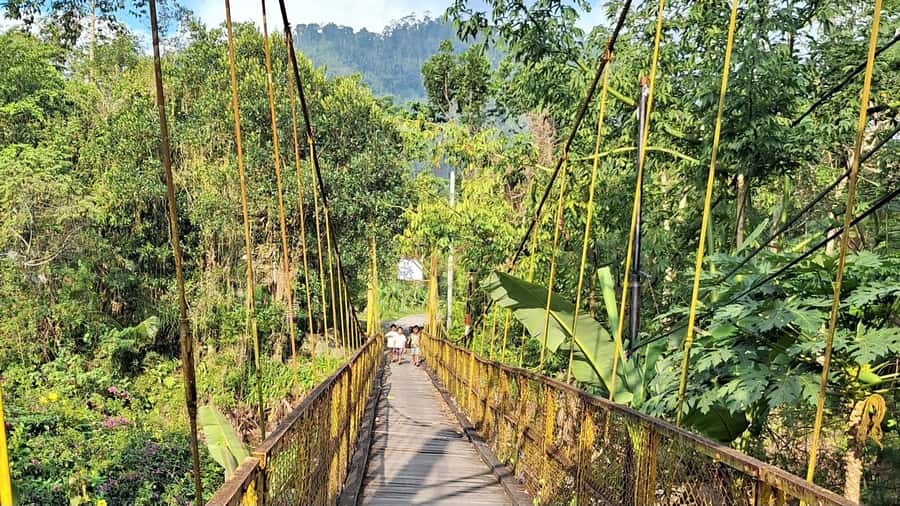
- Subak irrigation explained while you walk, including the Subak of Ogang
- Rice-terrace photo points with views toward Mount Agung when the sky cooperates
- Market-to-fields route that starts at Pasar Sidemen (and includes a short food market stop)
- Jembatan Kuning Tukad Yeh Unda, a hanging wooden bridge built for motorbikes and humans
- Finish at Warung Ume Anyar in Ogang Village so you can cool down with a meal right after
Sidemen trekking is about perspective, not just scenery
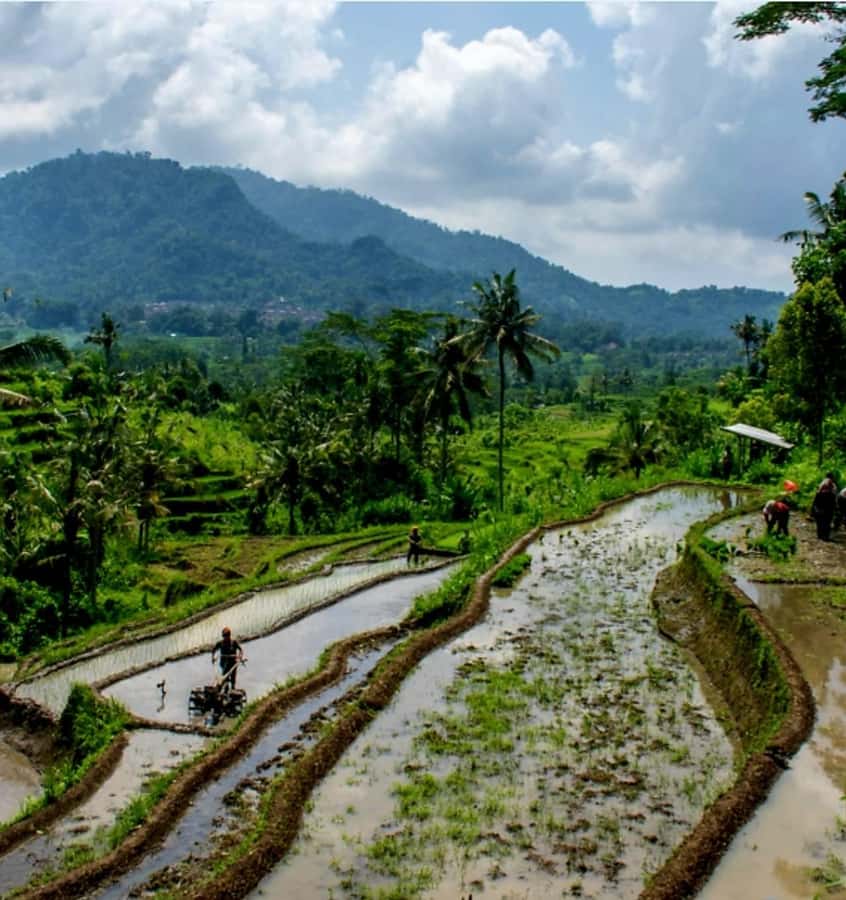
Sidemen is one of those Bali places where the best moments don’t come from spotting a famous landmark. The payoff here is perspective: you see the village from the same pathways locals use, and you watch how farming shapes daily life.
On this walk, you’ll go through areas with different plantings—not just one uniform green view—and you’ll notice how the fields fit into the villages, temples, and lanes. That mix is what makes the trek feel more meaningful than a quick viewpoint stop.
And yes, the terraces and viewpoints are stunning in the practical sense: you get multiple chances to look out, take photos, and then turn around to see villagers working in the fields below you.
You can also read our reviews of more tours and experiences in Sidemen Village.
Price and time: what $14 really buys you
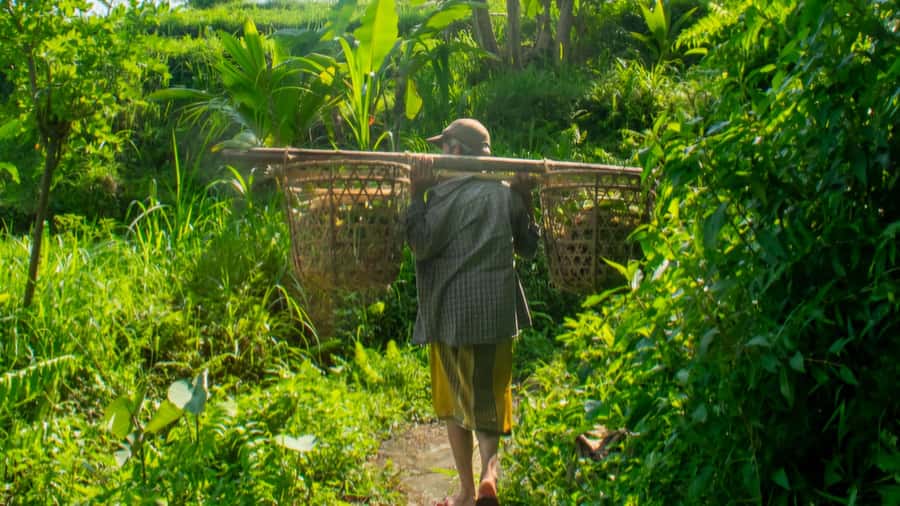
At about $14 per person for a roughly 2-hour experience, the value is mostly in the human parts. Your tour includes a live English guide and bottled water, and the guide’s job is to connect what you’re seeing to how the system works—especially the Subak irrigation.
Two hours is long enough to feel like you left the road, but short enough that most people can do it without a big logistics headache. That matters in Bali, where you can burn a lot of time getting around.
The trade-off is that you won’t have an all-day deep hike. If you want a full-day trek with big elevation and stops every 30 minutes, this isn’t that. But if you want a smart, guided “agriculture and village life” window, it’s a great fit.
Pasar Sidemen start, Ogang finish, and how to handle transport
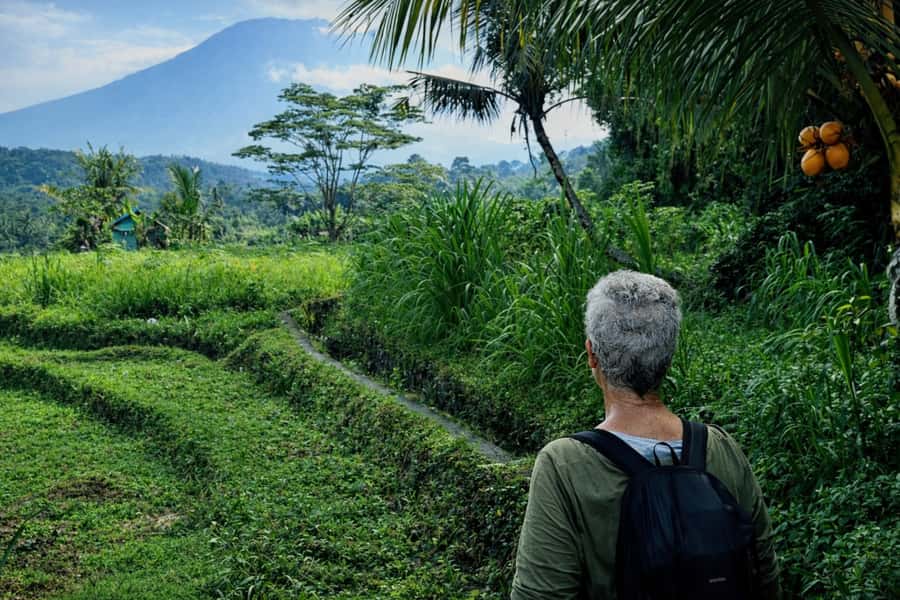
The meeting point is on the main street at Pasar Sidemen, near a shop with the sign UPA BOGA. When you arrive, the guide comes to meet you, which is handy when you’re not local and directions can get messy.
You also get an easy anchor for your trip rhythm: start at the market area, end at a restaurant. The finish is at Warung Ume Anyar in Ogang Village. The nice part is that you can take a break immediately after trekking.
Here’s the logistics bit you should plan for: returning to the start point is about 3 km, and it takes around 30 to 40 minutes on foot along the main road. If you have a driver, you can arrange pick-up from the finish point about 2 hours after the start time.
Also note a transport limitation: Grab/Gojek bike isn’t available in the Sidemen area. The guide info recommends Grab/Gojek car for the ride from the finish point. If you’re counting on a quick bike, double-check your plan in advance.
Finally, if you’re booking a time that lines up with the market, the traditional market is typically open around 5 AM to 10 AM. A market visit is optional, but if you care about that morning feel, choose accordingly.
From UPA BOGA to the market: your first taste of Sidemen
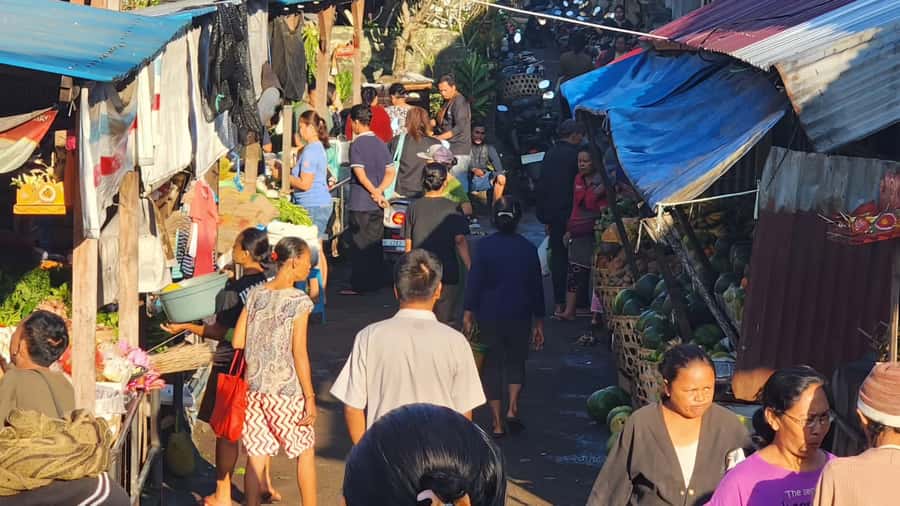
Your walk begins around Toko Upa Boga Pertenunan and then shifts into the market area at Pasar Sidemen. This first section isn’t just a warm-up—it sets expectations for what you’ll later see in the fields.
The market stop includes a 15-minute food market visit. Even if you skip buying anything, it’s a useful “orientation moment” for how locals eat, trade, and live. It’s also a smooth way to start the trek instead of jumping straight into rice paths.
Stop-by-stop: how the day flows
- Stop 1: Toko Upa Boga Pertenunan
- You’re gathering at the start area and meeting your guide near the shop sign UPA BOGA.
- Stop 2: Pasar Sidemen (Traditional Market)
- A short visit focused on the food market scene.
Then the route moves into a guided stretch where you’ll stop for photos and scenic views before continuing deeper into Sidemen’s village fabric.
Hidden viewpoints and the trail’s “up, down, repeat” reality
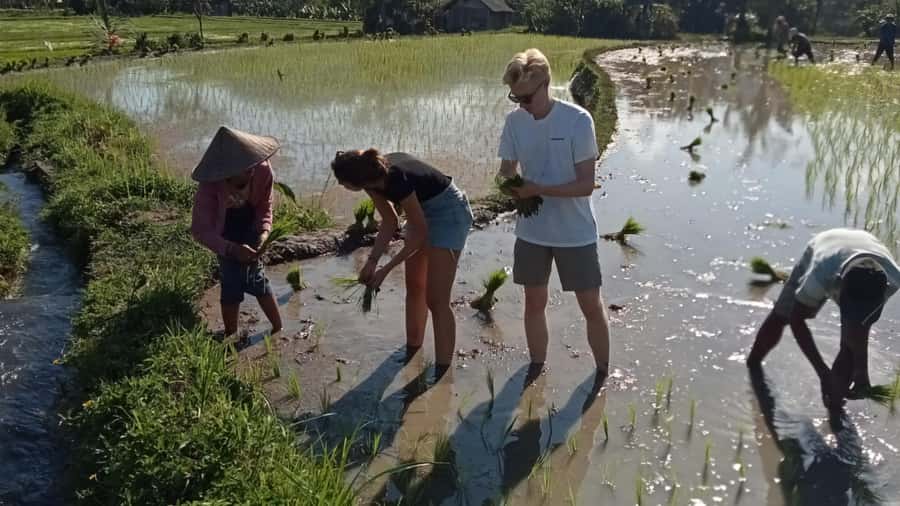
After the market, you’ll reach a hidden viewpoint-style photo stop. This is a good transition point: you get a scenic angle, your guide sets the context, and then you start moving through the village lanes with small rises and dips.
The trek description includes plenty of practical village walking—up-and-down street sections, then back toward the rice fields again. That pattern is exactly why this tour feels “real.” You’re not on a manicured trail the whole time; you’re moving like a person who lives here.
This is also where your guide’s English matters. You’ll want explanations as you move through village spaces and toward farming areas. A clear guide makes the route feel understandable rather than like a string of photo stops.
Stop 3: the scenic pause
- Stop 3: Hidden gem photo stop
- Expect guided walking plus photo time and scenic views on the way.
Jembatan Kuning and Subak of Ogang: the irrigation lesson you’ll remember
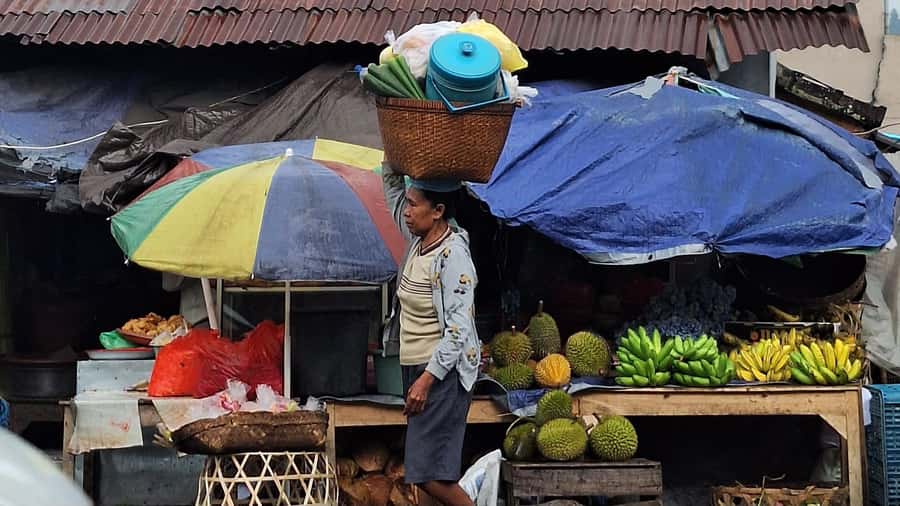
One of the most memorable moments on this trek is crossing Jembatan Kuning Tukad Yeh Unda. It’s a hanging wooden bridge designed for both motorbikes and humans, which gives you a sense that this isn’t just a tourist walkway. It’s part of how people move and how water routes connect to daily work.
Right before and after this bridge, the route focuses on the path of the water—how irrigation channels feed the rice fields. This is where you’ll learn about the traditional irrigation system known as Subak, including the Subak of Ogang.
Why this matters: rice terraces don’t “just look nice.” They’re maintained by infrastructure and timing. When your guide explains the system as you walk alongside it, you start noticing details you’d normally ignore—where the water seems to go, how the channels align, and how the fields fit into the irrigation logic.
Stops 4 and the Subak focus
- Stop 4: Jembatan Kuning Tukad Yeh Unda
- A short photo stop and pass-by moment, then you continue toward farming areas.
Dukuh village lanes and Babakan Dukuh rice terrace viewpoints
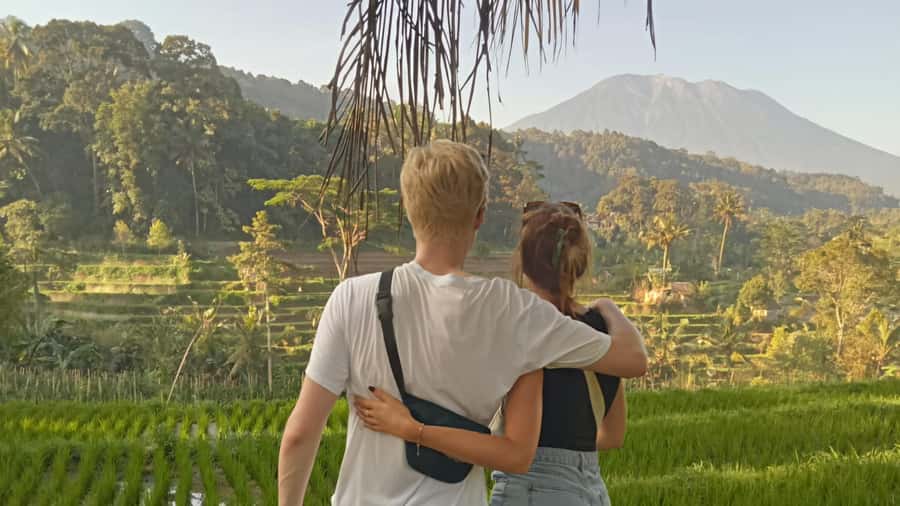
After the bridge and irrigation route, the tour enters the Dukuh village area. This is less about big attractions and more about how communities organize space—where you see people working, praying, and living alongside the fields.
You’ll also pass a temple used for local praying during the walk. That matters because it reminds you the farming story here isn’t only agricultural; it’s spiritual and social too.
Stop 5: Dukuh village
- Stop 5: Dukuh village
- You’ll get some time for visiting and walking through the area, with guided context along the way.
From there, the route returns to the rice terraces for one of the main “look out and take photos” segments.
Stop 6: Babakan Dukuh rice terrace
- Stop 6: Babakan Dukuh Rice Terrace
- Expect photo stops, sightseeing, and scenic walking through the terrace area.
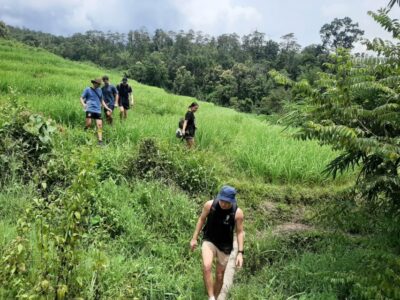
This is also where you should watch your footing. One practical note from the trek experience descriptions: you may end up walking on narrow rice-field walls, so a little balance helps. Also, you might encounter grass and insects, and some people report getting bitten by ants during the trek. If you want to be comfortable, wear closed shoes and consider long pants for extra protection.
Mount Agung views: when they happen and why they’re worth it
The trek is designed with views toward Mount Agung in mind. When skies are clear enough, you can look out and connect what you’re walking through with the wider Balinese geography.
When clouds roll in, you don’t “lose the trek,” because the terraces, the village movement, and the irrigation lesson still carry the experience. But if Mount Agung views are the reason you’re here, try to pick a time when the weather tends to be clearer—often mornings are a safe bet in Bali.
A useful mindset: treat the view as a bonus, not the whole goal.
Guides can make or break this kind of walk
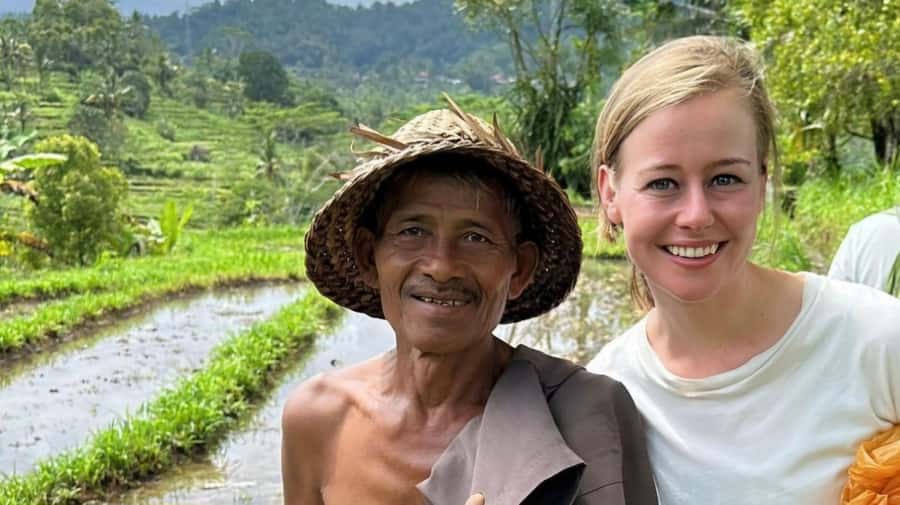
This is a trekking tour, but it’s also an education walk. That’s why the guide matters.
In the feedback, Darya, Gede, and Adi show up as names associated with strong English and a teaching style that covers farming, culture, and even how local life ties into bigger social questions. People also mention the guide being funny, friendly, and careful about explaining what you’re seeing.
You can also get small human moments that add warmth to the day. For example, one experience included fresh papaya offered by a local farmer, and another included a coffee moment connected to the guide’s home or local connection. You shouldn’t count on a specific snack, but it’s the kind of thing that can happen when you’re walking through working communities rather than just sightseeing.
What to bring (and what not to wear) for a smooth trek
The tour is outdoors and sun-exposed, with rice paths that demand traction. Pack like you’re walking through a working farm, not a theme park.
Bring:
- Comfortable shoes or hiking shoes with good grip
- Sunglasses and sunscreen
- A hat
- Anything that helps you stay cool without sacrificing foot support
Don’t wear:
- Sandals or flip flops (not allowed)
One more practical tip: keep your pace steady. The route includes up-and-down walking and narrow sections near rice areas, so rushing makes it less fun and more stressful.
Who should book this Sidemen walk
This is ideal if you:
- Want a small-group experience (max 10 people)
- Care about agriculture and village life, not just scenery
- Enjoy guided explanations as you walk—especially about Subak and daily farming rhythms
- Like photo stops, but also want more than just standing still
It’s less ideal if you:
- Need a flat, easy path the whole time
- Get uncomfortable with insects and narrow footing near rice paddies
- Are traveling with very young kids (it’s not suitable for children under 5)
If you’re a confident walker who’s comfortable with uneven ground, you’ll likely find it manageable and satisfying.
Should you book Sidemen Trekking: A Walk from Different Perspective?
If your goal is to understand Sidemen the way locals do—through rice fields, irrigation, small villages, and short stops for viewpoints—this is a solid pick. The price is low for what you get: a guided English walk, key cultural context, and multiple chances to see terraces and Mount Agung views.
I’d book it if you value real farming insight, like learning about the Subak irrigation system while you’re physically near the channels. I’d think twice if you want a long, challenging hike or if you need very easy footing throughout.
If you can, choose a start time that helps you catch the market atmosphere. And definitely bring closed shoes—you’ll feel more confident the moment the route gets narrow.
FAQ
How long is the Sidemen trekking tour?
The tour duration is listed as 2 hours, and starting times can vary, so check availability for the specific slot you want.
What does the $14 price include?
The tour includes a guide and bottled water. Hotel pick up and drop off are not included.
How big is the group?
The group is small, limited to 10 participants.
Is the tour guide available in English?
Yes, the live tour guide speaks English.
Where do I meet the guide?
You meet at Pasar Sidemen (Sidemen Traditional Market) on the main street near the shop with the sign UPA BOGA.
Where does the tour end?
The tour ends back at the meeting point area after approximately 3 km of walking, but the trek itself finishes at Warung Ume Anyar Restaurant in Ogang Village.
Do I need transport after the tour ends?
A driver pickup can be arranged from the finish point around 2 hours after the start time. If you need to get back, Grab/Gojek car is recommended, and Grab/Gojek bike is not available in the Sidemen area.
What should I wear or bring?
Bring comfortable shoes (no sandals or flip flops), plus sunglasses, a hat, and sunscreen. Hiking shoes are recommended.
Is the traditional market visit included?
A visit to the traditional market food area is included for about 15 minutes. The market itself is open around 5 AM to 10 AM, and visiting it depends on timing.
Is the tour suitable for children?
It is not suitable for children under 5 years old.