REVIEW · LANZAROTE
Volcano Trekking Tour (Timanfaya eruptions)
Book on Viator →Operated by Geotrekking Lanzarote · Bookable on Viator
Timanfaya feels unreal when you walk it. What I like most is the hotel pickup (so you don’t worry about getting to the start) and the small group size that keeps the pace comfortable. The only real drawback: there’s a bit of uphill, so you’ll want decent shoes and basic fitness.
This is a guided trek through Timanfaya National Park’s volcanic terrain, with stops that explain what you’re seeing. You climb la Rilla Volcano, check out crater views, and walk past lava fields while your guide ties the scenery back to Lanzarote’s eruption history.
Logistics are pretty straightforward: a 3-hour circular walk covering about 7 km with roughly 50 m of altitude gain, departing around 9:30 am. Pickup is available from major areas like Costa Teguise, Arrecife, Puerto del Carmen, and Playa Blanca, and the tour runs in English with a maximum group size of 10.
In This Review
- Quick highlights to know before you go
- Why Timanfaya by foot beats the quick look
- Getting there: pickup zones and the 9:30am start
- The walk in numbers: 7 km, 3 hours, ~50 m up
- Entering la Rilla Volcano: craters, rims, and close lava views
- What the guide actually does (and why it makes the hike worth it)
- Small-group pacing: how comfort works on uneven ground
- Terrain changes you’ll notice as you circle back
- Price and value: about $50.81 for a guided volcanic walk
- Who should book this Timanfaya trek
- Weather and what to pack for a volcanic morning
- Should you book this volcano trekking tour?
- FAQ
- How long is the Volcano Trekking Tour in Timanfaya?
- How far do you walk, and is it difficult?
- Is hotel pickup available, and where does it pick up from?
- Where is the meeting point, and what time does it start?
- What equipment is provided during the tour?
- What happens if the tour can’t run due to poor weather?
Quick highlights to know before you go
- Pickup from key resort areas: Costa Teguise, Arrecife, Puerto del Carmen, Playa Blanca, plus center and south of the island.
- Low-difficulty circular route: 7 km, about 3 hours, ~50 m elevation gain, paced for most people.
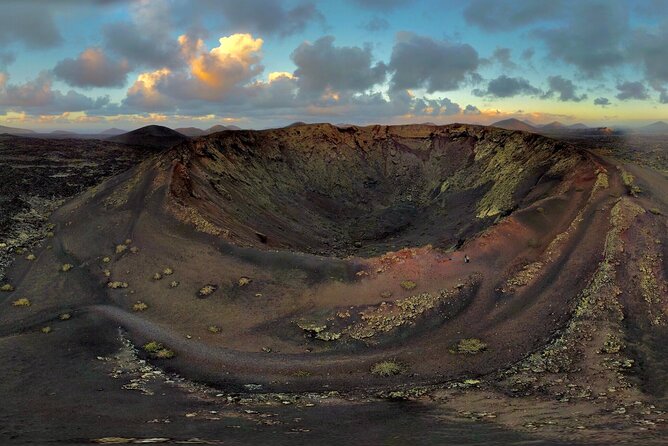
- La Rilla Volcano access: you’ll reach the craters/rim views and walk through lava fields.
- Useful gear included: walking poles and rain jackets are provided.
- Small group, big talking points: frequent short stops for questions, photos, and geology explanations.
Why Timanfaya by foot beats the quick look
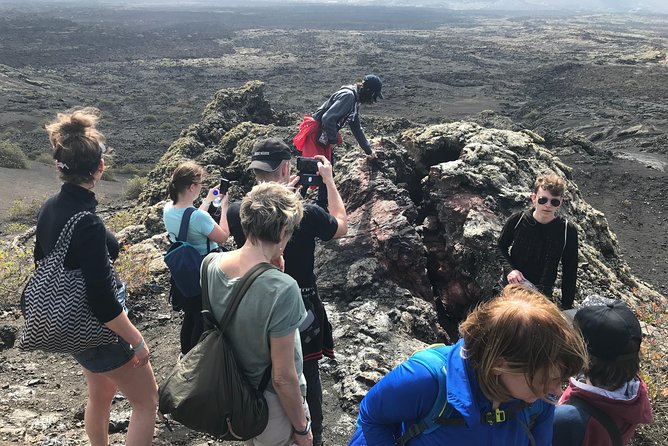
Timanfaya is famous for a reason: the ground looks sculpted by another planet. The difference on foot is that you actually move through the volcanic shapes rather than just seeing them from a distance. The footpaths in Timanfaya National Park can be hard to find on your own, and that’s where a guide really pays off.
I especially like that the walk is structured around “see it, then understand it.” As you climb la Rilla Volcano and reach the crater areas, the guide connects the colors and formations to how Lanzarote’s eruptions built the terrain. That turns random gray and ochre rock into something you can picture in your head later when you’re exploring the island on your own.
One practical note: this isn’t a strenuous hike. But it’s also not a flat stroll. Expect some uphill sections, and plan for uneven volcanic ground even if the “difficulty” is rated low.
You can also read our reviews of more tours and experiences in Lanzarote.
Getting there: pickup zones and the 9:30am start
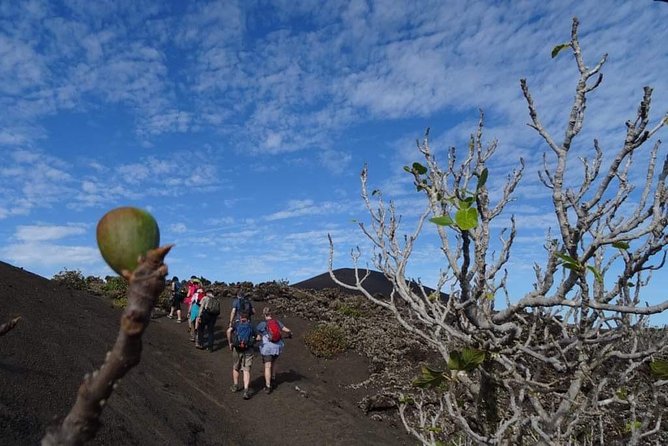
The tour meets at LZ-56, 48, 35560 Tinajo, Las Palmas, Spain and starts at 9:30 am. It ends back at the same meeting point, which makes the day feel less complicated when you’re planning the rest of your Lanzarote time.
If you’re staying in the island’s center or south, pickup can save you stress. Pickup is offered for:
- Costa Teguise
- Arrecife
- Puerto del Carmen
- Playa Blanca
For many people, that’s the whole point: you’re not trying to cross volcanic roads with limited parking while also figuring out where the trailhead starts.
Two small logistics details that help: you’ll get a mobile ticket, and you should receive confirmation at booking time. Also, service animals are allowed, which is good to know if that matters for your trip planning.
The walk in numbers: 7 km, 3 hours, ~50 m up
Here’s the math that helps you decide if it fits your day.
- Distance: 7 km
- Duration: about 3 hours
- Elevation gain: around 50 m
- Route type: circular
- Difficulty: low
That “low” rating makes sense when you think about the altitude difference. Fifty meters isn’t huge, but it still adds up across an out-and-back-style feeling—especially if the trail twists over volcanic unevenness.
If you want a mental picture: you’ll climb toward la Rilla’s higher points, then loop back across lava fields and crater viewpoints, guided at a pace that works for the group. The tour also includes multiple photo and explanation stops, so the walk time isn’t just constant motion.
Entering la Rilla Volcano: craters, rims, and close lava views
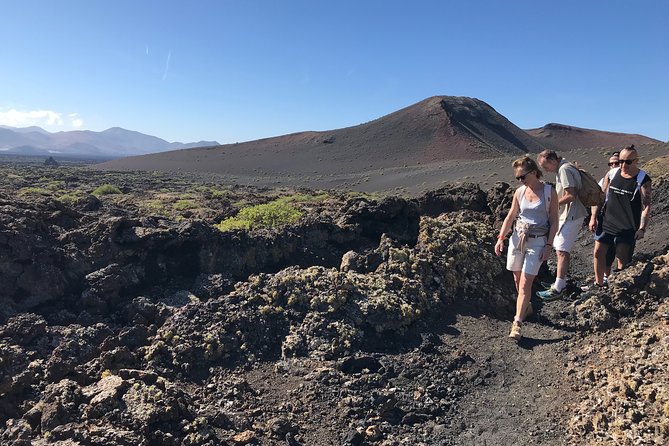
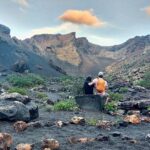
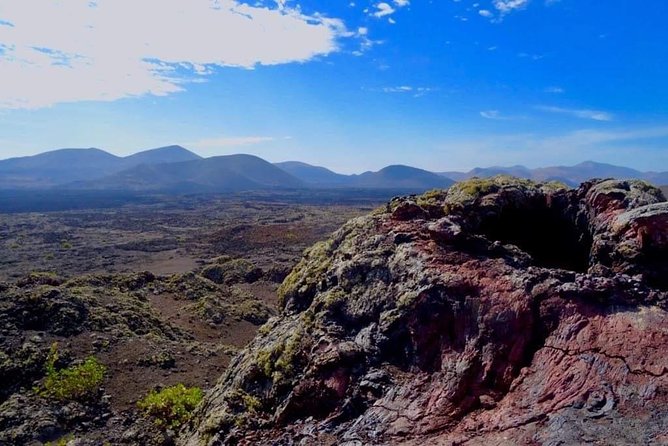
The star moment is the ascent to la Rilla Volcano, including craters and the rim/top views. From there, you get the big “wow” factor that Timanfaya delivers—wide volcanic views and a real sense of scale.
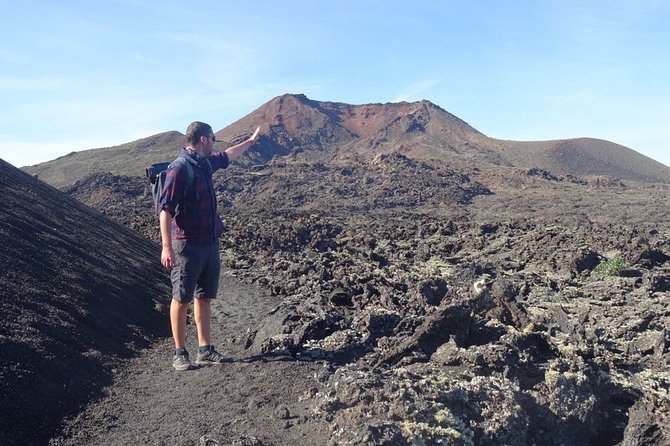
This is also where the geology talk becomes most useful. Instead of only pointing at shapes, the guide explains what you’re seeing as the hike progresses: how volcanic activity carved out the terrain, how the rock looks different in different zones, and why the colors can shift from one area to the next.
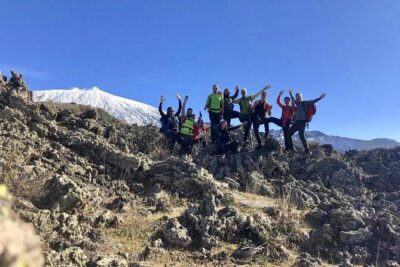
And yes, you walk through lava fields. That matters because lava areas don’t just look dramatic—they feel different underfoot. You’ll notice the texture and how the ground forms channels and ridges, which helps you understand why certain footpaths exist the way they do.
If you love photography, plan to pause. There are photo-friendly moments built into the pacing, and seeing the craters from the right angle is one of the highlights for people who go.
What the guide actually does (and why it makes the hike worth it)
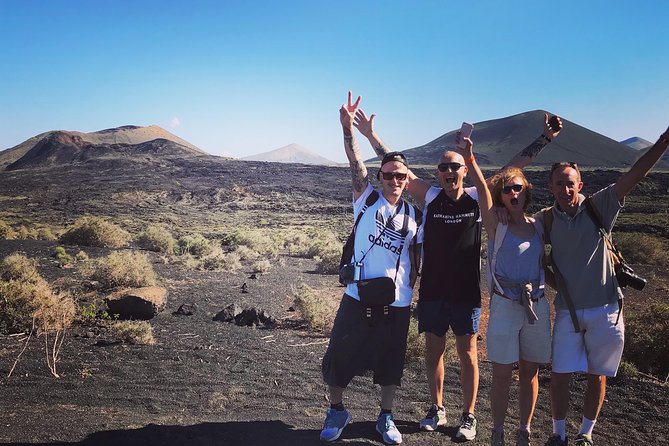
A guided volcanic walk is only as good as the explanation, and this one is structured around teaching without dragging. Guides like Alejandro, Sabrina, and Ula are repeatedly described as friendly and able to answer questions, with English that’s easy to follow.
The best part is the way the guide links three things:
1) what’s in front of you (craters, lava fields, formations)
2) what it looks like (colors, shapes, texture)
3) what caused it (volcanic history of Lanzarote)
You can feel this as you move. At the start, you’re mostly orienting yourself. As the walk climbs and you near crater views, the explanations snap into focus. By the time you’re walking across lava terrain again, you’re no longer just “seeing rocks.” You’re seeing a story.
Also, the tour is described as relaxed and paced for everyone in the group, with the walk broken into segments with stops. That’s a big deal on volcanic ground, because it’s not only about speed—it’s about balance, footing, and comfort.
Small-group pacing: how comfort works on uneven ground
This tour caps at 10 travelers, which helps in two ways.
First, it’s easier for the guide to manage the group on uneven volcanic paths. Second, you’re less likely to feel like you’re racing to keep up.
The pacing is described as adjustable, with breaks if someone needs it. That doesn’t mean the hike turns into a long sightseeing bus stop. It means you can breathe, take a photo, and still stay on track to finish within about three hours.
You’ll also get support through included equipment:
- walking poles
- rain jackets
Even if it’s sunny when you set out, Lanzarote weather can change fast enough that a jacket is useful. Walking poles help a lot on rocky or irregular footing. If you don’t use poles often, this tour is a gentle introduction—low difficulty, but still enough terrain variation to make poles feel handy.
Terrain changes you’ll notice as you circle back
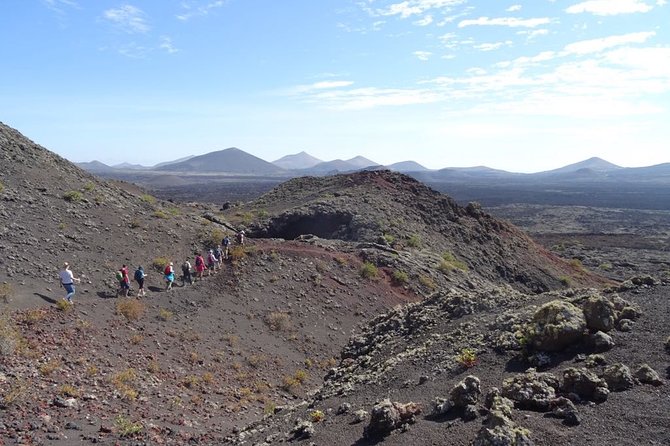
One of the subtle pleasures of a circular route is how it helps your brain compare zones. People highlight seeing areas with different qualities, including changes in vegetation along the way. That makes sense: volcanic terrain can support surprising pockets of life depending on exposure and conditions.
As you loop through the park, you get repeated chances to reframe what you’re looking at. The first crater or lava section tells one story; the next one tells another. Because the walk returns in a circle, you also get a clearer sense of direction and layout versus a one-way trek.
Price and value: about $50.81 for a guided volcanic walk
At $50.81 per person, this isn’t a “just show up and wander” activity. You’re paying for:
- a guide who explains the geology and volcanic history
- access to footpaths that are difficult to find alone
- included equipment (walking poles and rain jackets)
- hotel pickup from major resort areas
- a small group limit (max 10)
- a structured route (7 km, about 3 hours)
Value is strongest if you don’t have a car. Pickup takes away a whole layer of friction. Value is also strong if you care about understanding what you’re seeing—because the explanations are a core part of the experience, not a last-minute add-on.
One more practical note: some go with confidence because people mention water and snacks being included. Even if you’re not starving at 9:30 am, having something small during a hike helps you stay comfortable without turning the day into a snack hunt.
Who should book this Timanfaya trek
This tour fits best if you want a guided volcano walk that doesn’t eat your whole day.
You’ll likely love it if:
- you want crater views and lava fields up close
- you prefer a low-difficulty hike with short stops
- you like having a guide to explain terrain and volcanic history
- you want pickup instead of driving to the start point
- you enjoy small-group tours (max 10)
It might not be ideal if:
- you want a purely flat walk (there’s some uphill)
- you’re very sensitive to rocky footing, even with poles
- you’re expecting extreme hiking duration or a long, remote trek (this is about 3 hours)
Weather and what to pack for a volcanic morning
The tour is weather-dependent, since it requires good weather. If conditions are poor, you’ll be offered a different date or a full refund.
For your own comfort, plan for volcanic ground and changing conditions. At minimum, bring:
- sturdy closed-toe walking shoes with decent grip
- a light layer (and trust that rain jackets are provided)
- sunscreen and sunglasses, especially for crater rim viewpoints
- a water bottle if you prefer extra hydration, even though water is mentioned as included
If rain comes down hard, the provided jacket becomes more than “nice to have.” And since the walk is only about three hours, you’ll stay focused instead of dragging wet clothes for half a day.
Should you book this volcano trekking tour?
If your goal is to experience Timanfaya as more than a quick photo stop, I’d book it. The biggest reasons are practical: pickup, a small group, walking poles and rain jackets, and a guide who helps you read the geology while you walk.
Choose this tour when you want the crater rim and lava fields, but you don’t want a long, punishing hike. At around 7 km and 3 hours, it’s a solid way to add real substance to a Lanzarote morning—especially if you’re staying outside Tinajo and would rather not figure out the trailhead on your own.
If you’re debating between this and a self-guided option, the guided part is the difference-maker. Getting the path right, pacing correctly, and understanding what you’re seeing all matter here.
FAQ
How long is the Volcano Trekking Tour in Timanfaya?
It lasts about 3 hours.
How far do you walk, and is it difficult?
You walk about 7 km, rated low difficulty, with roughly 50 m of altitude difference.
Is hotel pickup available, and where does it pick up from?
Yes. Pickup is available for Costa Teguise, Arrecife, Puerto del Carmen, and Playa Blanca, plus the center and south of the island.
Where is the meeting point, and what time does it start?
The meeting point is LZ-56, 48, 35560 Tinajo, Las Palmas, Spain, and the start time is 9:30 am.
What equipment is provided during the tour?
Walking poles and rain jackets are provided.
What happens if the tour can’t run due to poor weather?
This experience requires good weather. If it’s canceled due to poor weather, you’ll be offered a different date or a full refund.