REVIEW · MOUNT ETNA
Mount Etna: Summit Trek with Cable Car and snack included
Book on GetYourGuide →Operated by Kemedia · Bookable on GetYourGuide
Mount Etna is Europe’s loudest volcano experience. This summit trek starts with a cable car ride, then you hike with an alpinist guide through volcanic craters that can be spewing and smoking when conditions are right. I like that the tour builds in real time on the active crater zone with guide-led geology, plus a no-stress fuel stop (a brioche and water) so you can keep your energy. One thing to plan around: it’s weather- and volcano-conditions dependent, and the hike asks for reasonable fitness.
What you’ll really notice is the guiding style. Guides like Vicenzo and Pietro are mentioned as professional, patient, and calm—exactly what you want when you’re walking on uneven volcanic ground with an active mountain overhead. The other big plus is the structure: cable up, hike the summit areas, then walk down through crater features before finishing with a scenic cable car ride back.
The main trade-off? The terrain can be steep and rocky, and the descent is mostly on loose stones—great for views, not great for timid feet. If you have heart issues, high blood pressure, are pregnant, or have mobility limitations, this is not set up for you.
In This Review
- Key points before you go
- Why Etna’s Cratere Centrale is the whole point
- The cable car ride: faster start, better odds for clear views
- The hike: steep enough to earn it, structured enough to manage it
- What your alpinist guide teaches you on an active volcano
- The snack stop: tiny, but timed perfectly
- Eastern Sicily views: what you should look for
- What’s actually included (and how extras can change your total)
- Price value check: is $109.89 good for Etna access?
- Timing and meeting point flow: start easy, finish in the same place
- What to bring (and what to wear when Etna gets windy)
- Who should book this, and who should skip it
- Should you book the Mount Etna summit trek with cable car and snack?
- FAQ
- How long is the Mount Etna summit trek?
- Where do I meet the guide?
- What does the tour include?
- Do I need to arrange my own transport to the meeting point?
- How does the cable car work during the tour?
- Is the tour always guaranteed to reach the summit craters?
- What language is the live guide?
- What should I bring?
Key points before you go
- Cratere Centrale dell’Etna focus: your guided walking time centers on Etna’s central crater area, not just a quick viewpoint stop.
- Cable car cuts the grunt work: you start hiking from around 2,500 meters after the short ascent by cable.
- You’re kitted out: trekking shoes and a helmet are included, plus insurance coverage for the activity.
- A real snack break: a brioche and small bottle of water help you reset during the hike.
- Expect a workout: the tour requires reasonable fitness; it’s demanding on the way down.
Why Etna’s Cratere Centrale is the whole point
This experience is built around getting you into the Etna summit area where the volcano’s active features are closest and most visible. You’ll spend guided time around the Cratere Centrale dell’Etna area, with a focus on the volcano’s colors, formations, and the way craters change after eruptions.
I like that the tour doesn’t treat Etna like a single photo stop. Instead, you’re moving through the terrain and learning what you’re seeing in real time. When visibility is good and conditions are calm, your guide can help you read the signs of recent activity—smoke plumes, crater edges, and the “moonlike” volcanic textures that make Etna feel unreal.
Also, you’re not just looking out. The walk is close enough that you’ll get a strong sense of scale—how large these summit craters are, and how the mountain’s surface tells the story of eruptions past and present.
You can also read our reviews of more tours and experiences in Mount Etna.
The cable car ride: faster start, better odds for clear views
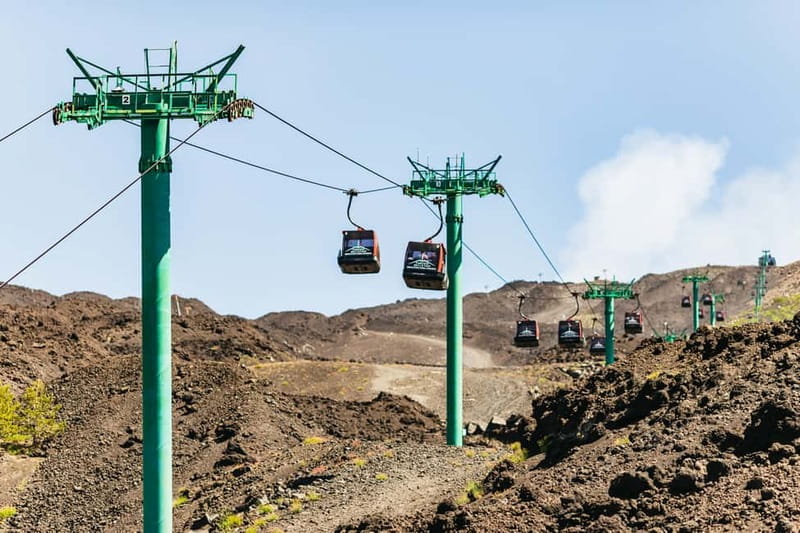
The day begins at the Euro Etna Tourism chalet (Etna Quad area), then you head for a round-trip cable car ride. The cable car segment is short—about 30 minutes each way—but it matters because it gets you to the hiking start high on the volcano without spending your whole energy on the first climb.
Starting the trek from roughly 2,500 meters changes everything. The air feels different, the ground becomes more volcanic and broken, and the views start earlier. On a clear day, the cable car “sets the stage” with long looks toward eastern Sicily before you commit to the crater zone.
One small practical note: the tour includes skipping the ticket line, which helps you avoid wasting time at the base while weather and visibility are deciding your day.
The hike: steep enough to earn it, structured enough to manage it
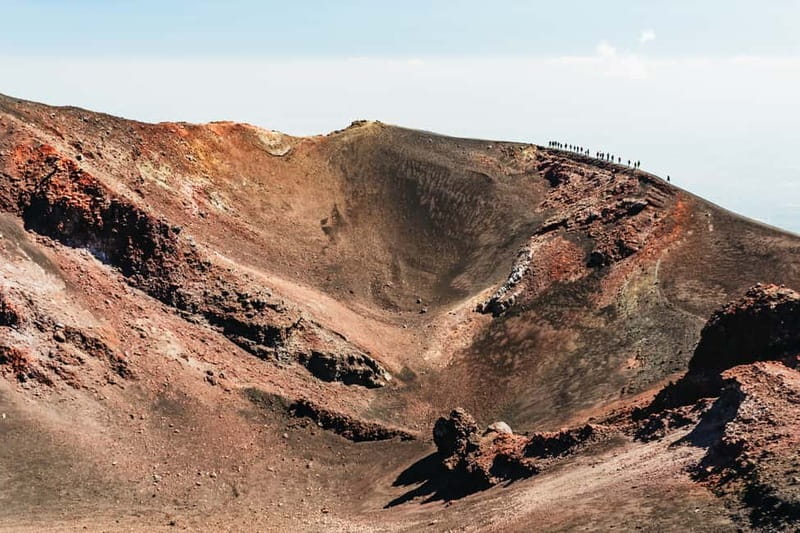
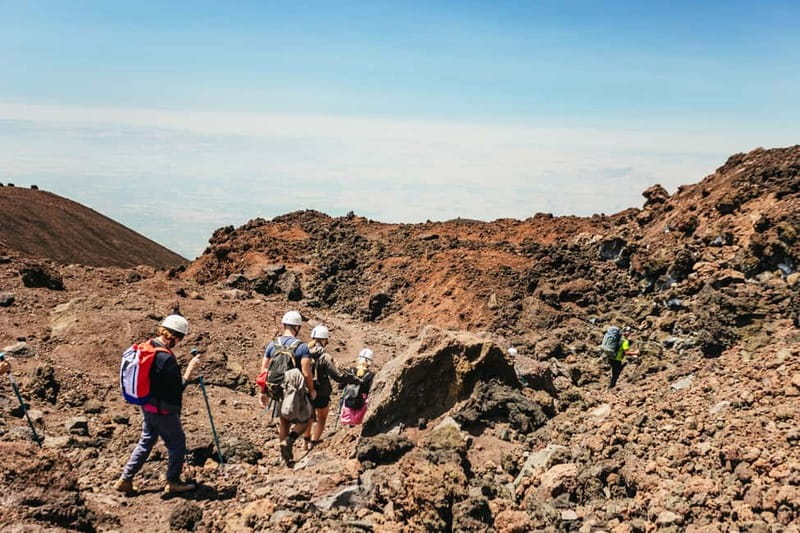
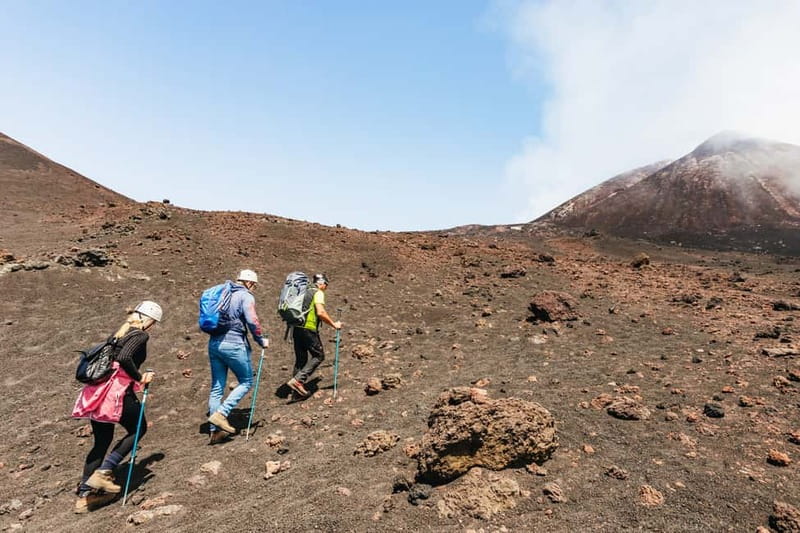
The hiking portion is guided and centered on the summit area, with about 4 hours of hiking time. That doesn’t mean it’s one long grind nonstop. It’s paced with stops for the views and for explanations, plus a break with food and water.
Expect a route on volcanic ground that can be rocky and uneven. A recurring theme from experiences is that the hike can be steep and demanding, and the descent can feel harder than the climb because you’re walking mostly down on rocks and loose stones. If your knees hate downhill walking, take it seriously: plant your feet carefully, keep your weight controlled, and don’t rush.
Good news: the group structure is designed to work for different speeds. Guides typically manage pacing so people can keep moving without feeling left behind. If you’re an average hiker, you’ll still finish feeling you did something real—just plan to take your time.
What your alpinist guide teaches you on an active volcano
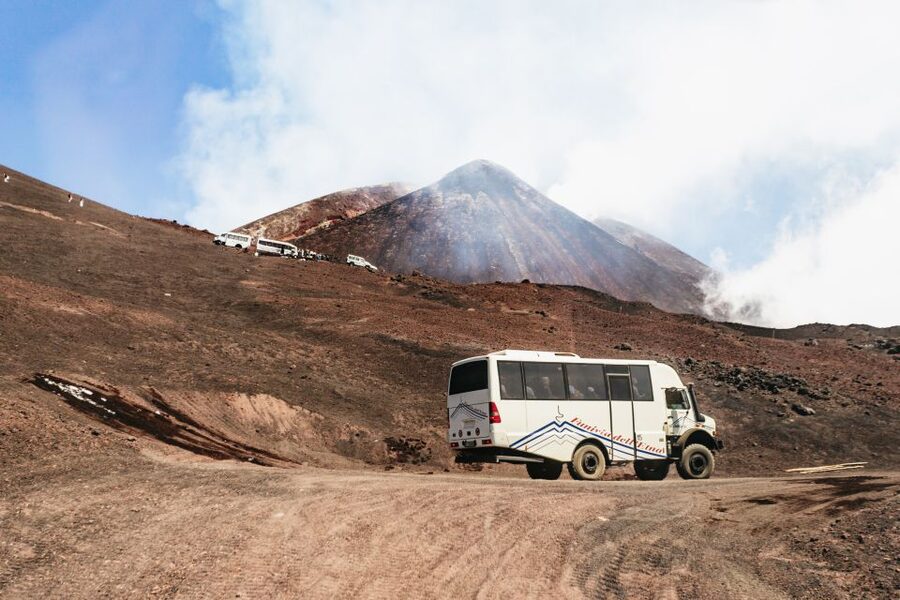
This is an alpinist-led tour, and that shows in the “why” behind what you see. Your guide explains Etna’s geology and history while you’re standing on the kinds of surfaces that formed during eruptions.
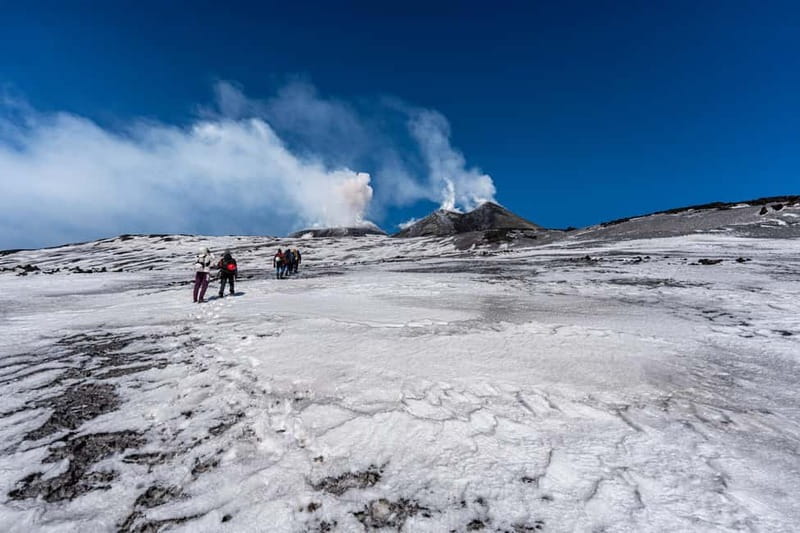
When conditions allow, the tour can include close looks at crater activity—things like rumbling sensations, intermittent spewing, and strong smoke plumes have been part of successful outings. Even if you don’t catch active spewing, you’ll still get a solid education from the way the crater terrain is laid out and how different volcanic formations relate to eruptions.
Guide language availability is Italian and English, so you’ll be able to follow the explanations in at least one of those languages. The experience quality often depends on matching your expectations: if English is your only option, pick a time slot that explicitly lists English for the guide.
Names that stand out from firsthand comments include Vicenzo and Pietro, both noted for professionalism and patience—exactly the traits you want when you’re dealing with uneven footing and an active environment.
The snack stop: tiny, but timed perfectly
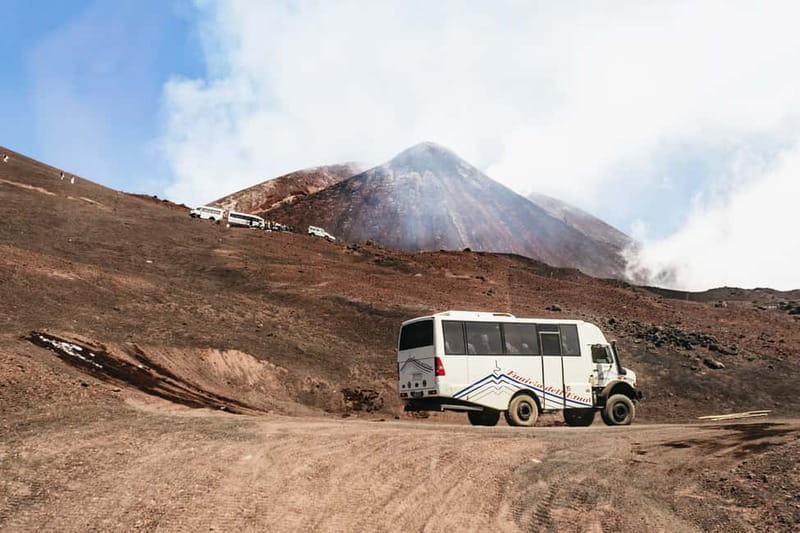
Etna can mess with your rhythm if you don’t eat. That’s why I’m glad this tour includes a practical break: a brioche plus a small bottle of water.
It’s not a full meal, and you shouldn’t treat it like one. But it’s enough to keep energy steady while you’re out at altitude and walking for hours on rugged ground. It also gives you a moment to reset your breathing and check how you’re doing before the descent.
Also, if you’re the type who gets cold fast at elevation, that snack break is a good time to warm up—use your windbreaker and keep your hat on.
Eastern Sicily views: what you should look for
Once you’re high enough, Etna becomes a viewing platform. The tour includes admiration of eastern Sicily from the summit area, and on a clear day the combination can be unforgettable: crater terrain in the foreground, then long sightlines toward the coast and countryside.
Here’s what helps you get better pictures and a better mental map:
- Look for the crater edges and how they step down. Etna’s active areas aren’t flat; they’re layered.
- Pay attention to smoke direction. It’s often the quickest clue about what’s happening below.
- Watch light and contrast. Volcanic ground shows color changes—dark crusts, lighter ash, and mixed textures—especially when the sun hits at an angle.
If visibility is limited, don’t panic. The crater explanations and the structure of the hike still make it worthwhile. But if you’re chasing dramatic views, your best friend is flexibility—choose good weather and stay hopeful.
What’s actually included (and how extras can change your total)
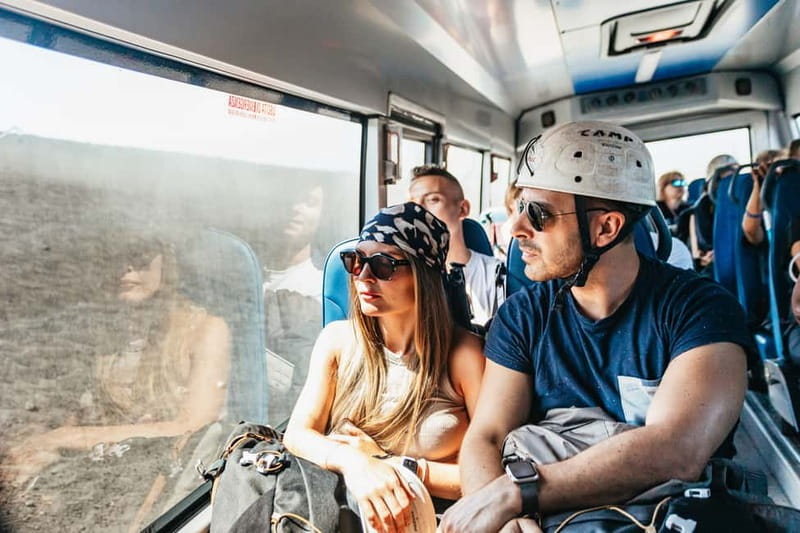
For the base tour price, you get the essentials:
- Alpine/volcano guide and a hiking tour
- Trekking shoes and a helmet
- Insurance
- Cable car ticket (round trip)
- Snack: a brioche and small bottle of water
You do not get:
- Hotel pickup and drop-off
- Other food and drinks
So you should plan to cover yourself for things like extra water or lunch beyond the included snack.
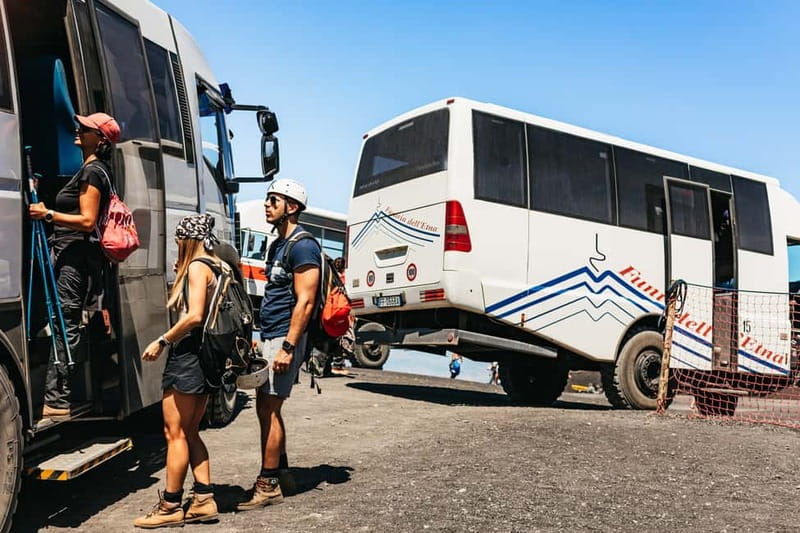
Now, one caution from real-world experience: sometimes an extra charge shows up depending on what’s offered on your day. One person noted an additional €33 per person for cable cars and a 4×4 bus, and another noted that the advertised price wasn’t the whole final total. I can’t say that applies to every booking, but it’s smart to check what you’re paying for in the final confirmation before you go.
Net: the included cable car is a real value, and the included snack helps. But verify whether your ticket is truly all-in or if there are optional add-ons.
Price value check: is $109.89 good for Etna access?
At about $109.89 per person for a summit trek with cable car access, the value mostly comes from two things: you’re paying for guided time in a high-volatility environment, and you’re paying for elevation access without a full day of climbing from the base.
If you compare this to self-guided hiking, the difference is huge. Self-guided hiking can be risky and requires real local expertise. Here, you’re paying for equipment support (shoes and helmet), insurance coverage, and expert guidance that’s designed to keep you oriented and safe.
Where value can drop a bit is if you end up needing extras for full transport coverage or add-ons not clearly included in your final total. That’s why I recommend you confirm two details before purchase: that the cable car included matches what you’ll actually ride, and whether any optional vehicle rides are separate.
Timing and meeting point flow: start easy, finish in the same place
The tour starts and ends back at the same meeting point: the Euro Etna Tourism chalet at Etna Quad. That’s convenient because you don’t need to coordinate a second pickup later.
There’s no hotel pickup/drop-off, so plan your own way to the chalet area. Also, the duration is listed as 4 to 6 hours depending on conditions and start times, so don’t schedule tight connections right after.
Because the volcano activity and weather can change fast, the operator runs this as a conditions-first day. You’ll feel that when you arrive: the plan assumes the volcano is calm and visibility works with you.
What to bring (and what to wear when Etna gets windy)
This is where you can make the biggest difference in how much you enjoy the day. Bring:
- Windbreaker
- Hat
- Water
- Weather-appropriate clothing
Also, use common sense for altitude and cold wind. Even in warm months, you can feel chilly at summit elevations. Several comments recommend winter-style layers even in summer, and good long socks for comfort during rocky walking.
If you’re sensitive to smells, consider that volcanic conditions can come with sulfur-like odors on some days. One suggestion included bringing a paper mask for sumporium-type exposure. If that sounds relevant to you, it’s easy enough to pack.
Footwear matters. Even though trekking shoes are provided, you’ll want socks that protect you from friction and help with uneven foot placement.
Who should book this, and who should skip it
This tour is a strong fit if you:
- Are a regular hiker or at least comfortable with steep terrain
- Want a guided, high-focus Etna experience (not just a quick viewpoint)
- Prefer having equipment and safety coverage included
- Enjoy geology talk while you walk through real volcanic terrain
This tour is not suitable for:
- Pregnant women
- People with mobility impairments
- People with heart problems
- People with high blood pressure
- Anyone who can’t handle a reasonable level of fitness requirements
Also note: pets are not allowed.
If you’re traveling with kids, the steep hike and loose stones are real. Make sure they have hiking terrain experience and come prepared.
Should you book the Mount Etna summit trek with cable car and snack?
Book it if you want the best shot at a true summit-crater experience with guidance, equipment, and a day plan that gets you high fast. The value is strongest when you trust the setup: cable car access, a guided hike centered on Cratere Centrale dell’Etna, and a mid-activity snack that keeps you going.
Skip or look for an easier Etna option if downhill rocky terrain is a problem for you, if you need high accessibility support, or if you’re in a health category where this activity isn’t appropriate. And for everyone else: dress for wind, expect a workout, and keep your schedule flexible because Etna’s mood and the sky’s clarity decide a lot.
If your main goal is Etna beyond the postcard stage, this is one of the most practical ways to do it.
FAQ
How long is the Mount Etna summit trek?
The duration is listed as 4 to 6 hours, and starting times depend on availability.
Where do I meet the guide?
You meet your guide at the Euro Etna Tourism chalet (Etna Quad – Euro Etna Tourism). You return to the same meeting point at the end.
What does the tour include?
It includes an alpine/volcano guide, hiking tour, trekking shoes, helmet, insurance, a round-trip cable car ticket, and a snack (brioche and a small bottle of water).
Do I need to arrange my own transport to the meeting point?
Yes. Hotel pickup and drop-off are not included, so you’ll need to get yourself to the meeting area.
How does the cable car work during the tour?
You take the cable car from the starting side as part of the day (about 30 minutes each way), and it’s included as a round-trip ticket.
Is the tour always guaranteed to reach the summit craters?
The tour is dependent on weather conditions and the volcano being calm.
What language is the live guide?
The guide is available in Italian and English.
What should I bring?
Bring a windbreaker, hat, water, and weather-appropriate clothing.