REVIEW · MOUNT ETNA
Mount Etna: Summit Trekking Tour
Book on GetYourGuide →Operated by Luca Cosma · Bookable on GetYourGuide
Etna doesn’t do background scenery. I love the summit craters up close and the no-tourist-routes feel on the north side, but keep in mind Etna can change the plan fast. One day you’ll be hiking toward the highest active craters in Europe; another day the route adjusts for volcanic activity and weather.
You’ll get a real guide-led experience with a small group, limited to 10, and the team provides core safety gear like a helmet. I also like that the guides are set up for safety checks before you start hiking, not just a quick handoff at the start.
The only drawback to budget for: the off-road ride has an extra ticket. The tour includes the summit hike and guiding, but the Unimog 4×4 round trip ticket is listed as 50 EUR paid in cash on the spot.
In This Review
- Key points at a glance
- Meeting at Sole-neve Souvenirs: where your Etna day begins
- From Piano Provenzana to the trail start: the 4×4 jump to 2,900m
- Hiking to the summit craters: why this Etna route feels different
- Cratere Centrale dell’Etna: your guided look at the active heart
- The picnic break: what you’ll actually do in the middle
- Valle del Bove and Pizzi Deneri: the descent that earns its reputation
- What’s included, what costs extra, and why the price still makes sense
- Weather, safety, and fitness: how to know if this is the right challenge
- Who should book this Mount Etna summit trek (and who should skip)
- Should you book this Etna summit trekking tour?
- FAQ
- Where is the meeting point?
- How long is the tour?
- What hiking and crater activities are included?
- What equipment is included?
- What costs extra during the experience?
- Do I need cash?
- What languages are available for the guide?
- Is this tour suitable for people with health issues or pregnancy?
- Is alcohol allowed?
Key points at a glance
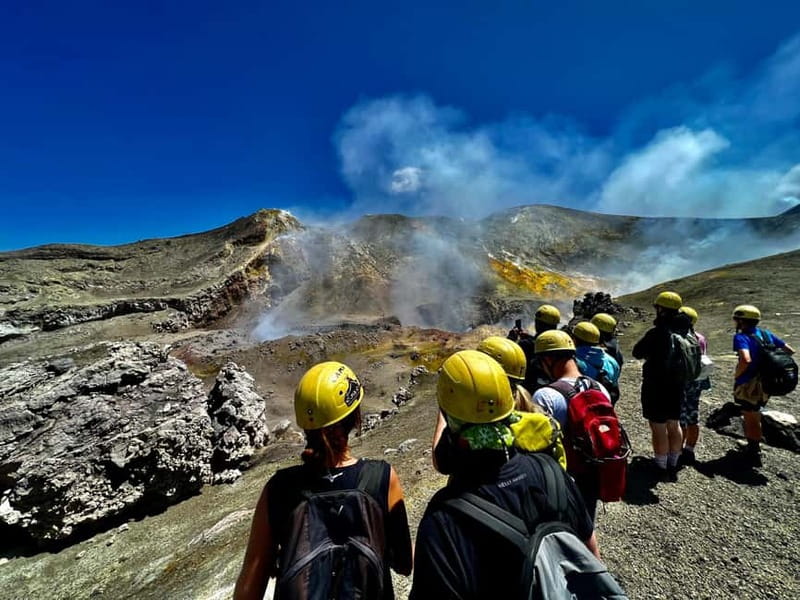
- North side access: you start from Piano Provenzana Etna North and trek from about 2,900m
- Summit views at altitude: sights of Sicily, the Aeolian Islands, and the Italian coast from around 3,400m
- Cratere Centrale visit: a guided walk in the central crater area with scenic viewpoints
- Valle del Bove route: a descent that leads toward Pizzi Deneri and the Valle del Bove views
- Small-group guiding: maximum 10 participants plus an experienced volcanological or alpine guide
- Gear included: helmet, jacket, and hiking boots, with additional clothing sometimes helpful for wind and cold
Meeting at Sole-neve Souvenirs: where your Etna day begins
This trek starts at Sole-neve Souvenirs, right by the parking area. It’s a practical setup: you arrive, meet the small group, and get oriented before climbing begins. If you like starting your hiking day without complicated transfers, this part is straightforward.
After check-in, you’ll do a short safety briefing and equipment check before anything “real” starts. That matters on Etna, where wind, sand, and ash can make surfaces feel different than they do at ground level.
You can also read our reviews of more tours and experiences in Mount Etna.
From Piano Provenzana to the trail start: the 4×4 jump to 2,900m
After briefing and gear checks, the off-road portion brings you up to roughly 2,900 meters, where the hiking begins. You’re not grinding uphill for hours just to reach the volcanic zone—this is the point of the rugged 4×4 access.
Here’s the practical detail: the day includes off-road time both before and after the hike (there’s an off-road segment early, and another one on the way back). That saves your legs for the summit terrain, which is the part most people really came for.
One thing to keep straight: the Unimog 4×4 round trip ticket is not included in the listed tour price. Plan to have cash ready for the 50 EUR fee on site.
Hiking to the summit craters: why this Etna route feels different
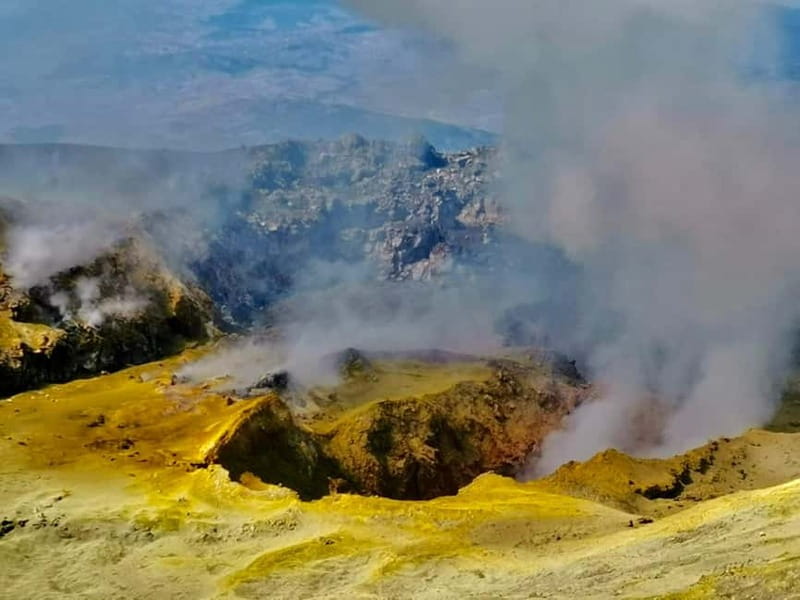
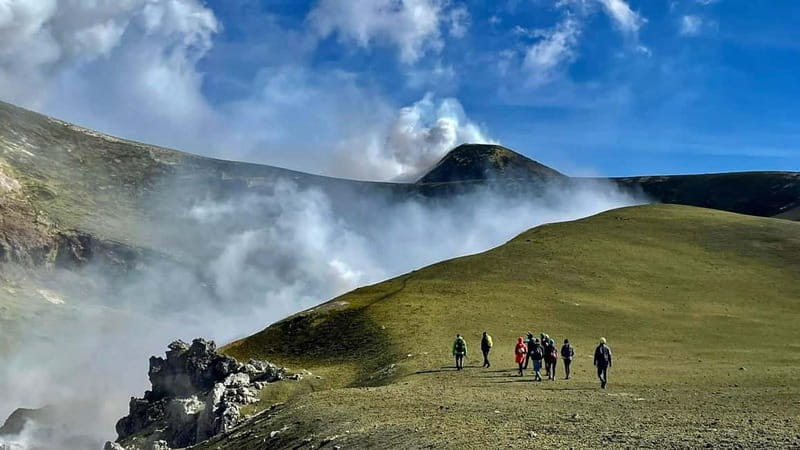
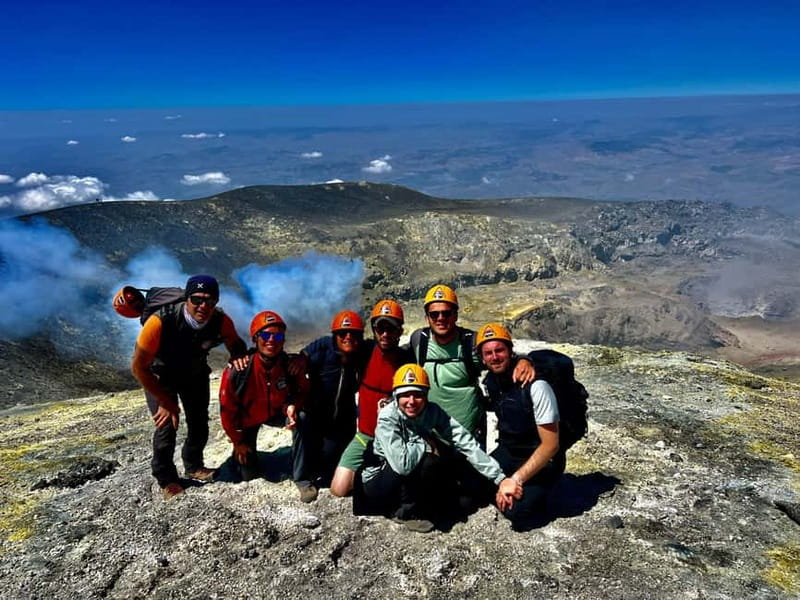
The trek is designed for the north side of Mount Etna, far from the most common tourist circuits. You’ll cross volcanic terrain with views opening toward north and east Sicily, the Aeolian Islands, and the Calabrian coast. From the summit area—around 3,340m, with views described near 3,400m—you’re seeing Etna in the way it looks to locals and guides: big, active, and slightly intimidating.
The best part is also the nature of the route: it’s tied to what Etna is doing. The operator notes that the stay and the trekking can be modified based on volcanic activity and meteorological conditions, because summit access isn’t always the same. So your “plan” is really a “best possible plan,” adjusted for safety.
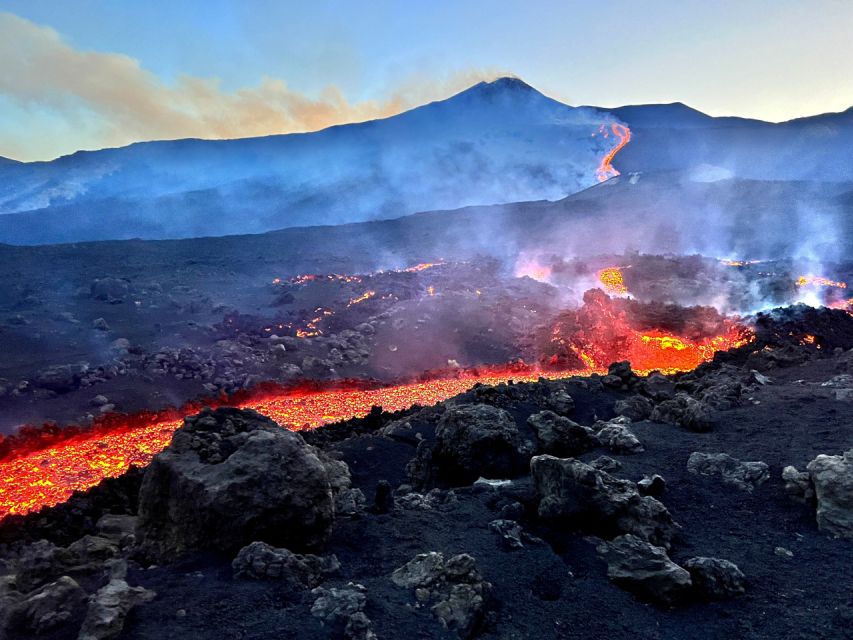
Expect varied walking surfaces as you move through the volcanic zone. One useful way to think about it: this isn’t a smooth trail. It’s a guided hike over real volcanic ground—lava fields and loose surfaces—where good footing matters more than speed.
Cratere Centrale dell’Etna: your guided look at the active heart
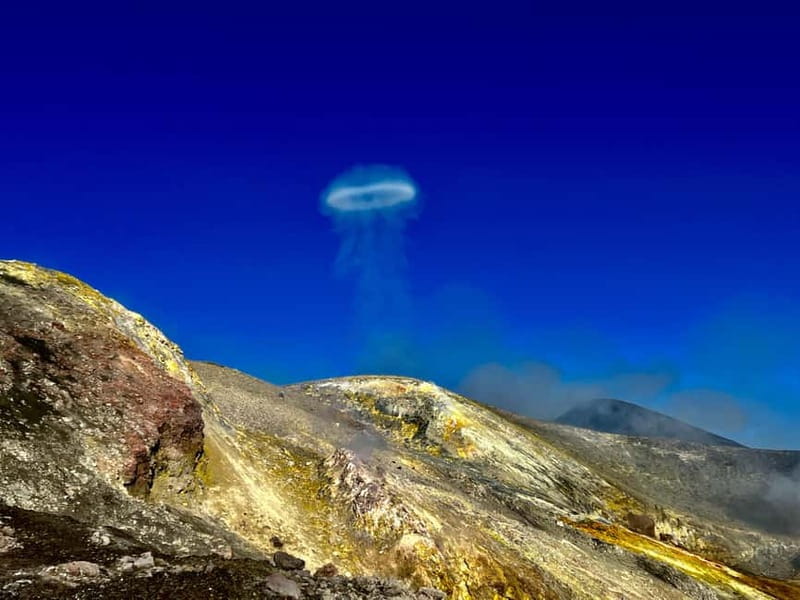
You’ll reach the central crater area and spend about an hour visiting it with guidance. This is where the tour shifts from hiking-only to crater-time: guided explanation, a walk through the volcanic area, and scenic viewpoints along the way.
Why this stop is worth your energy: you’re not just looking at Etna from far away. You’re getting close enough to understand why this volcano has earned the reputation of being Europe’s most active one. The guides focus on the volcanological background, and the vibe is equal parts awe and instruction.
Bring your eyes and your patience. Wind can be strong up here, and you’ll want to keep your hat and sunglasses protected. The gear list includes sunglasses and a sun hat, which tells you the light at altitude can be intense—even when it feels cold.
The picnic break: what you’ll actually do in the middle
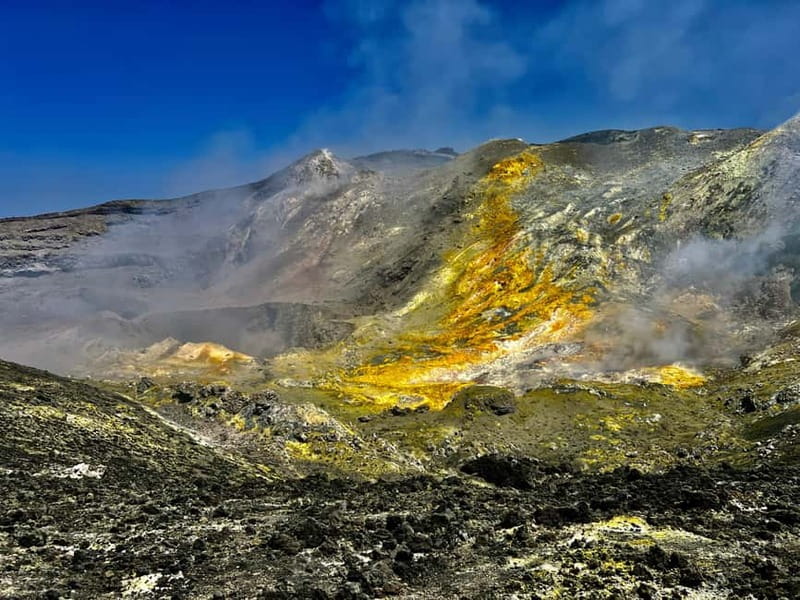
At some point you’ll hit a break time with sightseeing and a picnic-style pause. Food and drinks aren’t included, so you’ll want to carry your own lunch and water/snacks.
This mid-tour break is more than a breather. It’s also the moment to reset your clothing for the wind and cold. Many people underestimate how quickly temperature changes at altitude, even in Sicily.
If you packed a daypack with weather-appropriate layers, this is where you’ll feel prepared rather than rushed. You’ll have a short walk as part of the break window, so it helps to eat before you start moving again.
Valle del Bove and Pizzi Deneri: the descent that earns its reputation
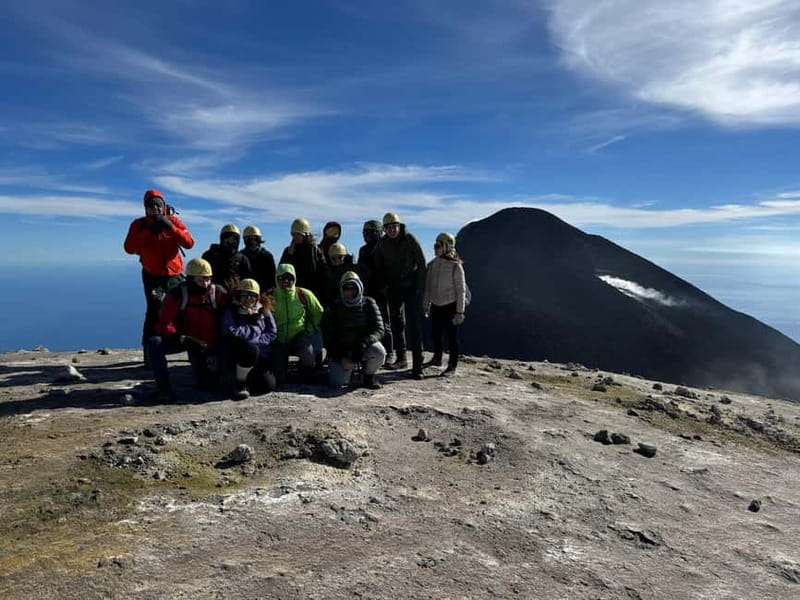
After the crater visit and break, you move toward the Valle del Bove area. The route includes a descent through sand gullies that leads toward Pizzi Deneri, where you can enjoy a majestic view of the Valle del Bove.
This is the “big payoff” segment for people who like contrast. The summit zone can feel raw and harsh; then the view begins to open up into wide-scale geography—another reminder that Etna isn’t just a peak, it’s a whole system.
You’ll then do a further hike (about 30 minutes) in the Valle del Bove area. This part tends to stick because you’re watching the volcano’s impact from angles most day trips don’t reach.
What’s included, what costs extra, and why the price still makes sense
The listed tour price is $62.63 per person, and it covers several things that add up fast: a summit tour, volcanological or alpine guide, hiking boots, a jacket, insurance, and a helmet. That’s a solid bundle for a summit trek, especially because gear quality is a big deal on volcanic terrain.
The parts you should budget separately:
- Food and drinks (not included)
- Hotel pickup (not included)
- Unimog 4×4 round trip ticket (50 EUR paid in cash on the spot)
So the real “all-in” number isn’t only the $62.63. If you’re trying to plan your day tightly, count on adding the 50 EUR cash fee for the off-road vehicle.
Still, I think the value works for the right traveler. You’re paying for guided summit access with safety gear and insurance, plus the off-road approach that takes you high enough to make the hike meaningful rather than endless.
Weather, safety, and fitness: how to know if this is the right challenge
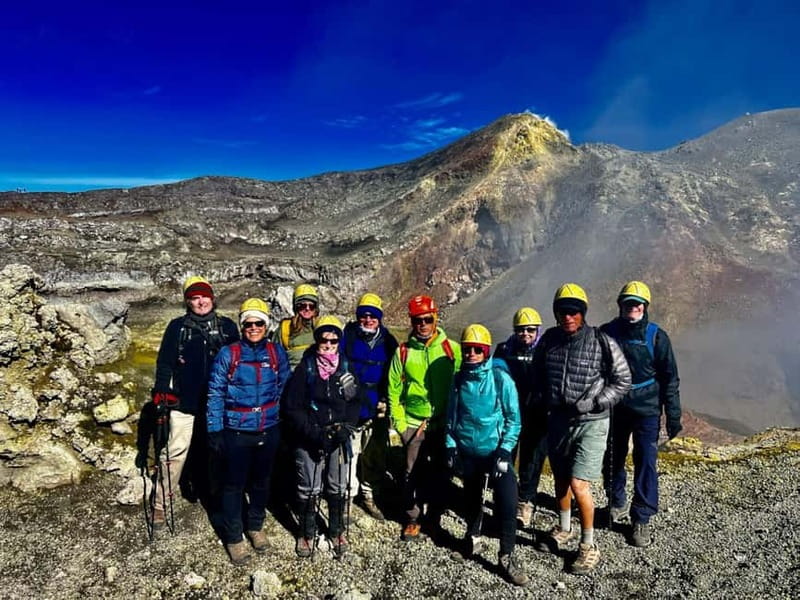
Etna doesn’t always cooperate. The route can be adjusted due to volcanic activity and weather, and that can affect how long you spend near the craters. It’s not something to fear, but it is something to accept. The staff is clearly operating under summit trekking rules, so your experience is designed to be safe first.
What to do on your end:
- Wear a jacket and layers suited for wind and cold
- Bring sunglasses and a sun hat even if it feels chilly
- Have a daypack for food, drinks, and layers
- Follow guide instructions closely in sand/loose ground zones
Fitness matters here. The activity isn’t suitable for people with low fitness levels, heart problems, respiratory issues, or for pregnant women. If you’re unsure, treat that label as a serious clue, not an administrative note.
One more practical angle: some days the wind can be intense enough that you’ll feel it in your hands and face. The good news is that your guide and equipment setup are built for this kind of environment.
Who should book this Mount Etna summit trek (and who should skip)
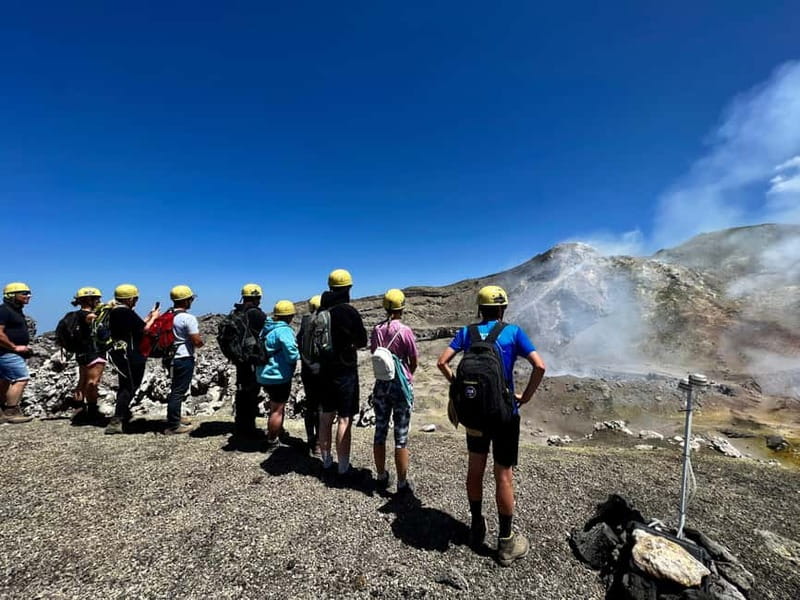
I’d book this if you want a real summit experience on Etna’s north side, not just a scenic viewpoint. It’s best for people who:
- enjoy guided hikes on uneven volcanic terrain
- want close crater time at the Cratere Centrale area
- like learning as you walk, with a guide who explains what you’re seeing
- can handle wind, cold, and altitude for a few hours
Skip it if you need a gentle stroll, if you have medical limitations listed by the operator, or if you’re not comfortable with loose surfaces and shifting conditions.
If your travel style is “go where most people don’t,” this route has that energy. The whole thing feels like you’re working your way into the volcano’s real geography.
Should you book this Etna summit trekking tour?
Yes, if you’re aiming for an informed, safety-forward summit trek with real crater views and a route that goes beyond standard day-trip stops. The included gear (helmet, jacket, boots) and the small group limit help keep it focused and practical.
Book with two expectations in mind:
1) Etna can change the route depending on activity and weather.
2) Your budget should include the 50 EUR cash Unimog 4×4 ticket and your own food and drinks.
If that fits your plan, you’ll leave with the kind of memory that’s hard to replace—standing at the summit of one of Europe’s most active volcanoes, with the view stretching over Sicily and the islands far below.
FAQ
Where is the meeting point?
You meet at Sole-neve Souvenirs, which has parking. The tour ends back at the same meeting point.
How long is the tour?
The duration is listed as 4.5 hours. Starting times vary based on availability.
What hiking and crater activities are included?
You’ll hike from about 2,900 meters, visit the Cratere Centrale dell’Etna area with guided time, spend break/picnic time, then hike toward the Valle del Bove area.
What equipment is included?
The tour includes hiking boots, a jacket, a helmet, and a volcanological or alpine guide with insurance.
What costs extra during the experience?
Food and drinks are not included. Also, an Unimog 4×4 round trip ticket is 50 EUR paid in cash on the spot, and hotel pickup is not included.
Do I need cash?
Yes. You should bring cash for the Unimog 4×4 round trip ticket fee paid on site.
What languages are available for the guide?
The live tour guide is offered in English, Italian, and French.
Is this tour suitable for people with health issues or pregnancy?
No. It is not suitable for pregnant women, people with heart problems, respiratory issues, or people with low level of fitness.
Is alcohol allowed?
No. Alcohol and drugs are not allowed on the tour.