REVIEW · KATHMANDU
Manaslu Circuit Trek:
Book on Viator →Operated by Nepal High Trek & Expedition Pvt. Ltd · Bookable on Viator
Manaslu Circuit feels off-the-map for good reason. This 14-day trek threads terraced fields, rhododendron forests, and Tibetan-influenced villages around Mount Manaslu and the big moment at Larkya La Pass (5,106m). I love the way the route steps you through totally different climates—from sub-tropical Arughat to thin, dry air near the pass—and I love the chance to slow down in local villages rather than just pass through; the trade-off is that weather can blunt the views, so you need to be ready for cold wind and changing skies.
A well-run team makes a huge difference here. In the planning stage, the organizer Anjan shows up fast with answers, and on the trek you’ll often hear praise for guides like Suraj, Suman, Surya, and Rajan Gole, plus porters such as Kami, Bardan, and Dambar Lama—people who manage the pace with acclimatization breaks and careful day planning. The goal is simple: help you keep moving safely without turning the trek into a daily sprint.
In This Review
- Key highlights worth knowing before you go
- Manaslu Circuit: the real reason people come (Manaslu + a high pass)
- Kathmandu arrival and the group briefing you actually need
- Day 2: from Kathmandu to Arughat, then onward to Machha Khola
- Days 3–4: Tatopani hot springs and the early village rhythm (Jagat, Philip, Deng)
- Days 5–7: from Numrung to Samagaon, with Manaslu views getting closer
- Day 8 rest in Samagaon: the altitude insurance day
- Day 9: Samdo, the last village before the high pass world
- Day 10: Larke Phedi area and Dharmasala for the night
- Day 11: Larkya La Pass day (5,160m top) and the long downhill rhythm
- Day 12: downhill into forests, terraced climbs, and Tilje into Dharapani junction
- Day 13: return drive to Kathmandu, with time to breathe
- Day 14: flying home
- Price and value: what the $1,099 includes (and why it’s not just a number)
- Guides, porters, and the pace that keeps you safe at altitude
- What to expect day-by-day in a quick reality check
- Who this trek suits best (and who should be cautious)
- Should you book this Manaslu Circuit tour?
- FAQ
- What is the highest point on this trek?
- How long is the Manaslu Circuit trek on this tour?
- Is pickup from the airport included?
- What permits are included?
- Where do you stay during the trek?
- Are meals included while trekking?
- Does the package include gear like a sleeping bag or down jacket?
- What’s included in Kathmandu at the start and end?
- What’s not included?
- Is it easy to cancel?
Key highlights worth knowing before you go
- Larkya La Pass at 5,106m is the signature moment, with panoramic peak views on clear days and serious altitude on the calendar.
- Real village days in places like Jagat, Deng, Numrung, Samagaon, and Samdo give you culture you can actually experience, not just glance at.
- Tatopani’s natural hot springs break up the monotony of cold trekking days with a warm reset.
- A rest day in Samagaon helps you acclimatize before the high crossing, which matters more than it sounds.
- Teahouse trekking with included meals keeps logistics straightforward, so you spend energy on walking.
- Guides and porters are consistently praised for making the route manageable at altitude, not just for driving the schedule.
Manaslu Circuit: the real reason people come (Manaslu + a high pass)
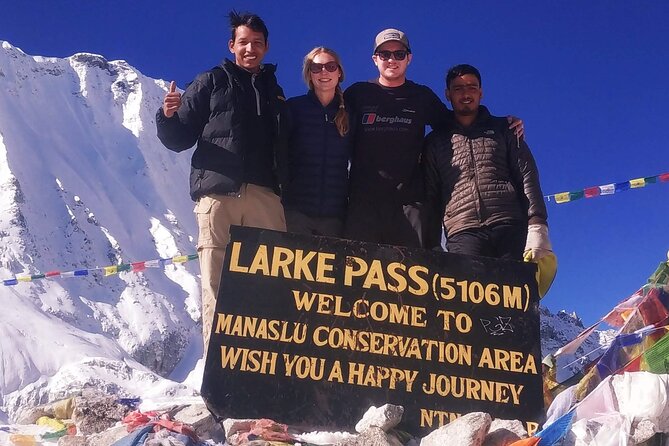
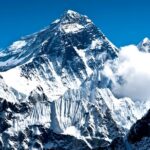
This trek is famous for two things: Mount Manaslu and the crossing of Larkya La Pass (5,106m). Manaslu itself is the mountain you’ll keep returning to visually as the trail climbs through villages and forests. Then, at Larkya La Pass, you get the kind of alpine reward that makes the whole circuit feel worth it—especially when skies are clear and you can see the surrounding peak walls.
The best part, though, is that this trek isn’t only about the highest point. The circuit gives you a long arc of experiences: river valleys, farm terraces, bamboo and bamboo-adjacent forests, and settlements with architecture and daily life shaped by Tibetan culture. You’ll notice the change in people, food, and even the overall rhythm of the days as you gain altitude and approach the Tibetan border.
One practical note up front: this is a restricted-feeling trek where conditions can shift quickly. Even when the schedule looks clean on paper, fog, wind, or snow can change what you see from day to day—especially near the pass. If you go in expecting perfect photos, you’ll be disappointed. If you go in ready to work with the weather, you’ll feel like you got the full experience.
You can also read our reviews of more tours and experiences in Kathmandu.
Kathmandu arrival and the group briefing you actually need
Your trip starts in Kathmandu, with an airport pickup and transfer to a hotel. You’ll get checked in and then join a group briefing focused on the Manaslu Circuit with key do’s and don’ts, plus a group dinner at a typical Nepalese restaurant.
This early setup matters more than people think. By the time you’re standing on the trail, altitude planning, trekking etiquette, and basic timing make the difference between a smooth start and a messy first week. The included hotel nights with breakfast also help you avoid that common first-day problem: arriving tired, hungry, and scrambling to find information.
Also, the included team communication is a big deal for first-timers. Stories tied to this operator repeatedly mention Anjan for clear answers and steady coordination before departure, which can calm your nerves when you’re dealing with permits, schedules, and a route that doesn’t have the same tourist density as some other Nepal treks.
Day 2: from Kathmandu to Arughat, then onward to Machha Khola
After the Kathmandu days, you’ll leave the city by overland route. The journey takes you to warmer areas in the Gorkha district, reaching Arughat (a moderate-sized town with sub-tropical conditions), then continuing by dirt road toward your first overnight stop in Machha Khola.
What I like about this approach is that it gives you a gentle mental transition. You’re not immediately thrown into high-altitude walking on day one. You’ll get time to settle, adjust to Nepal travel realities, and then start the trek with your legs still feeling human.
The drawback is basic but real: overland travel can be bumpy. If you’re sensitive to motion or rough roads, bring what you need (comfort items) because the trek will ask for your focus starting the next morning.
Days 3–4: Tatopani hot springs and the early village rhythm (Jagat, Philip, Deng)
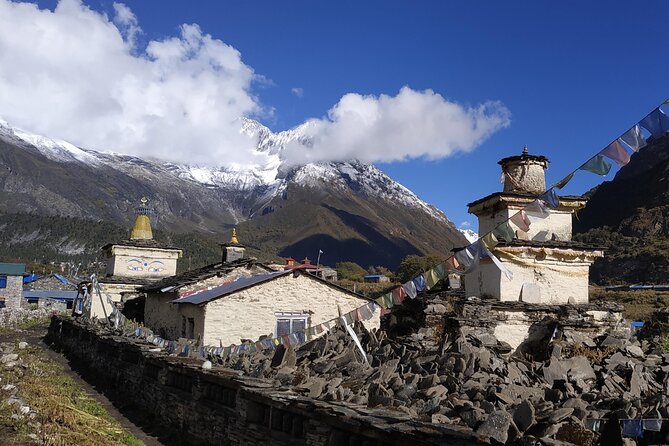
On day 3, you’ll walk from Machha Khola along the upstream banks of the Buri Gandaki River to reach Khorla-Beshi, then continue to Tatopani, a village known for natural hot springs. If time allows, you can soak in warm water before continuing the hike to Jagat for the night.
This is a great day to understand what the circuit is about. The valley walking beside a major river gives you constant movement without always feeling like you’re climbing hard. Then Tatopani adds a very human break—hot springs make sense here because your body will start to feel the day-to-day cold and altitude even when you’re not at the highest elevations yet.
Day 4 pushes higher. The route moves past rural farm villages and includes a bridge crossing to Nugget, then continues to Philim, a larger village in this remote farm area. You’ll see terraced wheat and barley fields, then climb through a bamboo forest to Deng for an overnight stop.
Long climbs through forests and ridge transitions can feel slow, but that’s part of the deal on a circuit this long. You’re building altitude gradually while keeping your overall route variety high.
Days 5–7: from Numrung to Samagaon, with Manaslu views getting closer
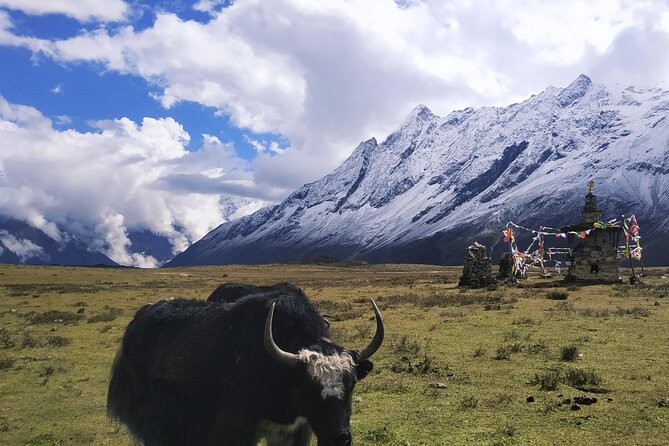
Day 5 includes a climb into cooler terrain. You’ll move from Dyang down to reach Bihi Bazaar, then follow the Buri Gandaki River through cultivated fields of barley, wheat, and millets. As altitude rises, the trail passes smaller settlements and continues to Numrung, then Shrimp village, and finally to Lo Gaon for excellent views of the Manaslu north face.
This is one of those stretches where the trek starts to feel like a story, not just a checklist. You’re noticing how vegetation changes, how the air feels different, and how the mountain grows more dominant. If you like seeing a big destination become real in steps, this day tends to land well.
Day 6 gradually shifts again—tree lines fade into smaller bushy vegetation before you reach Sama-Gaon (Samagaon), one of the largest villages in the region and a key stop on routes toward Manaslu base camp, Larke-la pass, and the Tibet border.
Day 7 is an even more scenic push toward Samagaon’s orbit: you hike around 6 to 7 hours, stopping at places like Lho and Syala for strong panoramic views of Manaslu. You’ll feel the mountain’s presence in a more immediate way now—especially when skies cooperate.
Day 8 rest in Samagaon: the altitude insurance day
Day 8 is a rest day in Samagaon. It’s specifically positioned for acclimatization before higher terrain toward the Manaslu base camp area (around 4,800m).
You might think a rest day means you’ll lose momentum. Instead, it often saves you from problems later. Higher altitudes can slow you down dramatically, and if you arrive exhausted, every future day feels harder. Acclimatization days turn the trek from a grind into something you can actually enjoy—because you’re not fighting your body as hard.
Day 9: Samdo, the last village before the high pass world
From Samagaon, you’ll trek toward Samdu (Samdo). The climb takes time in dry air, even when the distances aren’t huge. Samdo is the last village before the Larke-la pass area, and it carries strong Tibetan influence because of proximity to the border.
This day is important because you’re not just moving toward the pass—you’re moving into a different cultural zone and a colder, drier trekking atmosphere. It helps to think of Samdo as your staging point: you’re preparing yourself mentally for the next day’s altitude push.
Day 10: Larke Phedi area and Dharmasala for the night
Day 10 follows a downhill walk to the Budhi Gandaki River, then crosses and continues upward toward Larkya Bazaar and the Salka Khola valley, finishing at Dharmasala (also called Larke Phedi), where you stay overnight.
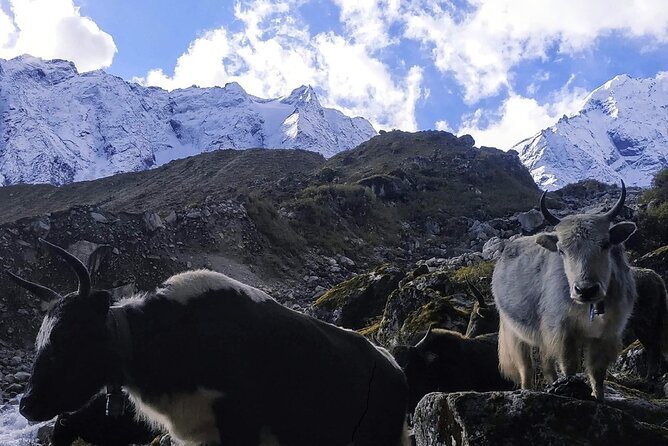
The route also has a high chance of blue sheep sightings. Even if animals don’t show up on your day, it’s still a good sign that you’re in the right kind of habitat—this is conservation-area trekking territory.
Dharmasala is described as an easy place to stay for a night, about a 4-hour walk from the 7km distance marker in normal conditions. Either way, plan to treat it as prep time: short, efficient walking and an early night help you handle the pass.
Day 11: Larkya La Pass day (5,160m top) and the long downhill rhythm
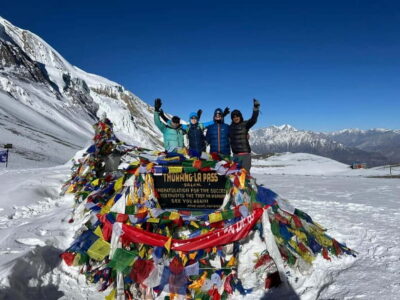
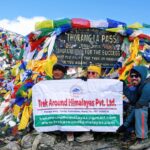
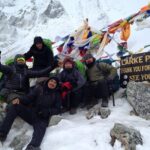
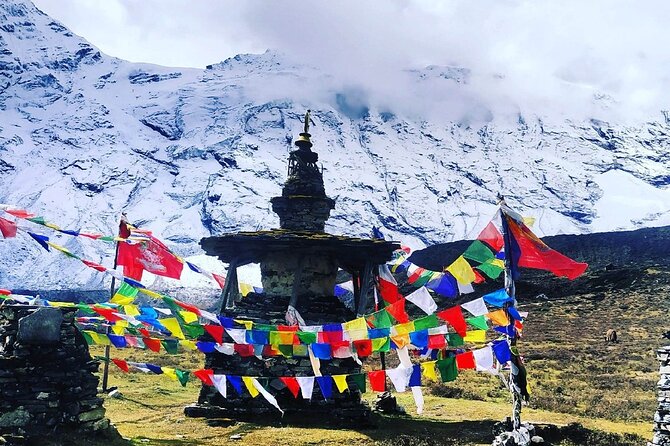
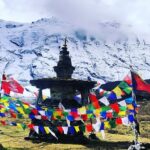
This is the day you’ve been building toward. You start much earlier morning to reach the top of Larke-la Pass above 5,160m. The climb starts gradual and winding, then turns steeper as you approach the highest point of the adventure, marked by colorful prayer flags and stacked stones.
From the pass, you can get views of Himlung, Cheo Himal, Kang Guru, and Annapurna II when the sky is clear. Then the day continues with a long downhill: walking over snow and scree to reach the valley area at Larcia, then to Tambuche (around 3,900m) and on to Bhimtang for overnight.
The practical consideration: pass day is hard not just because of altitude, but because it demands steady concentration. Even strong trekkers slow down quickly here. This is also where the acclimatization pacing from earlier days pays off. If your guide has you taking consistent breaks and keeping your effort controlled, the pass feels more doable.
Day 12: downhill into forests, terraced climbs, and Tilje into Dharapani junction
After Bhimtang, day 12 takes you downhill into the forest, passing small summer settlements. You then climb on terraced fields toward Karche La, descend toward the Marysangdi River, and continue onward to Tilje by following the Dudh River downstream.
The day includes passing villages like Thonje, then finishing with a bridge crossing and joining the main trail of the Annapurna circuit in Dharapani. After arriving in Dharapani, you take a sharing jeep to Besisahar, roughly 4 hours.
What I like about the jeep connection is that it saves energy after the high pass. You’re still getting the satisfaction of finishing the circuit on foot, then using transport to help you recover for the drive back to Kathmandu.
Day 13: return drive to Kathmandu, with time to breathe
Day 13 is the transition back to city life. You drive from the Besisahar area toward Kathmandu on a good road, passing farm villages and terraced fields. The day ends with an afternoon free for rest and leisure after your walking days.
This is where you’ll feel the cumulative effect of altitude and cold. Don’t treat this as a sightseeing day unless you feel energetic. A long hot shower, good meal, and sleep do more for your recovery than one extra viewpoint.
Day 14: flying home
Your last day lines up with your international flight time: transfer from the hotel to the airport and depart.
If you’re prone to feeling drained after altitude, try not to schedule anything important right after landing. Your body will still be adjusting for a few days.
Price and value: what the $1,099 includes (and why it’s not just a number)
The price listed is $1,099 per person for about 14 days. What makes it feel more like value than just a trek quote is that many of the bulky items are bundled:
- permits included: TIMS (trekking permit), Manaslu special permit, and ACAP permit
- guided support with a government-registered expert guide
- all ground transportation
- two nights in Kathmandu with breakfast
- 11 nights in local tea houses on a twin-sharing basis
- trekking meals: breakfast, lunch, and dinner during the trek period (and three times tea or coffee during trekking)
- and practical gear support if you need it: down jacket and sleeping bag
In other words, you’re paying for the parts that tend to become messy if you book them separately: permits, coordinated lodging, meals, and the logistics of getting to trailheads. The tour’s high rating and the repeated praise for careful guides and helpful porters suggest you’re not just buying miles—you’re buying day-to-day management.
One realistic caveat: what’s not included is travel and rescue insurance, plus personal expenses, tips for guide and porter, and meals in Kathmandu. So you’ll want to budget for the extras that travel always adds.
Guides, porters, and the pace that keeps you safe at altitude
The human side shows up repeatedly in participant stories: people mention the organizer Anjan for pre-trip clarity and smooth coordination, and they name guides such as Suraj, Suman, Surya, Indako, Buddhi, Laku, and Rajan Gole for making the route manageable. Porters also get called out by name, including Kami, Bardan, Dambar Lama, and others.
That matches what works on a difficult circuit. A good guide keeps the day plan realistic, pushes acclimatization pacing, and helps you stop before you’re fully drained. Many treks on paper are similar; the difference is how the schedule feels once you’re breathing thin air.
What to expect day-by-day in a quick reality check
Here’s the practical rhythm you should visualize:
- Early days (Machha Khola to Deng/Numrung): river walking, village life, terraces, and gradual altitude gain.
- Mid trek (Samagaon area): the big mountain presence grows; forests thin; rest and acclimatization become the focus.
- Final approach and pass (Samdo to Dharmasala to Larkya La Pass): early starts, cold nights, and altitude concentration.
- After the pass (Larcia to Bhimtang onward): recovery-style downhill days, then jeep transfer to the lower trail network.
- Finishing (Besisahar to Kathmandu): driving back with time to decompress.
If you like structure and clear progression, this itinerary style suits you. If you hate early mornings, pass day will test your attitude—plan for it.
Who this trek suits best (and who should be cautious)
This is for people with at least moderate physical fitness. It also tends to fit travelers who enjoy long walks, want cultural village time, and don’t mind that the mountain is the main character.
It’s especially good if you:
- want a restricted-feeling route in Nepal with fewer easy shortcuts
- like meeting Tibetan-influenced communities near the border zone
- prefer guided pacing over self-guided uncertainty
- want the big day at Larkya La Pass with strong support around it
It might be a tough match if you:
- need guaranteed sunshine views (weather can impact visibility)
- struggle with altitude and prefer frequent urban comforts
- don’t handle long travel days well (the overland start and long drive back are part of the experience)
Should you book this Manaslu Circuit tour?
If your dream trek includes Manaslu, a high pass crossing, hot springs, and long stretches through real communities, this package makes sense. The included permits, tea house nights, meals, and Kathmandu hotels remove a lot of friction, and the repeated praise for guide and porter care is the right kind of signal for a trek with real altitude risk.
I’d book it if you can handle cold nights, early starts, and the weather lottery near Larkya La Pass. I’d hesitate only if altitude stress or changeable skies make you anxious, or if you’d rather travel totally independently without a planned structure.
FAQ
What is the highest point on this trek?
The trek’s signature high crossing is Larkya La Pass, listed at about 5,106m to 5,160m (the itinerary notes 5,160m on the pass day).
How long is the Manaslu Circuit trek on this tour?
It’s listed as 14 days (approx.).
Is pickup from the airport included?
Yes. The tour includes a transfer from Tribhuvan International Airport to your Kathmandu hotel, and you’ll be received by the guides and staff.
What permits are included?
The trek includes TIMS card/trekking permit, the Manaslu special permit, and the ACAP permit.
Where do you stay during the trek?
You stay in local tea houses for 11 nights on a twin-sharing room basis.
Are meals included while trekking?
Yes. During the trek you get meals three times (breakfast, lunch, and dinner), plus tea or coffee three times during the trek and seasonal fruit.
Does the package include gear like a sleeping bag or down jacket?
It includes Nepal High Trek down jacket and sleeping bags if you need them.
What’s included in Kathmandu at the start and end?
It includes two nights in Kathmandu with breakfast, plus a group briefing and a group dinner in a typical Nepalese restaurant at the beginning.
What’s not included?
Not included are travel and rescue insurance, food in Kathmandu, extra mountain expenses beyond the itinerary (like delays), extra Kathmandu hotel nights if your schedule changes, personal expenses (phone, laundry, battery recharge, water, hot water, shower), and tips for the guide and porter.
Is it easy to cancel?
Free cancellation is listed, with a full refund if you cancel at least 24 hours in advance, and no refund if you cancel within 24 hours.