REVIEW · KATHMANDU
Everest Base Camp Trek with Helicopter Return from Gorakshep to Lukla
Book on Viator →Operated by Ace the Himalaya · Bookable on Viator
Everest starts with one sharp flight. This Everest Base Camp trek with helicopter return from Gorakshep to Lukla blends classic Khumbu hiking—prayer flags, suspension bridges, and glacier walking—with a quick helicopter shortcut to finish strong. It’s a popular route for a reason, and the format keeps the focus on the mountains instead of long backtracking.
I love the acclimatization rhythm, especially the planned pause days around Namche Bazaar and the hike up toward Nangkartshang Peak. I also like that most of what matters on trek is handled: a licensed English-speaking guide, porters (one for every two people), guesthouse stays with attached toilets in key villages, and daily meals included.
The only real drawback is the mix of altitude plus weather. You’ll face demanding high days toward Everest Base Camp and Kala Pattar, and the helicopter timing depends on flying conditions, so you should keep expectations flexible.
In This Review
- Key things to know before you go
- The Gorakshep helicopter return is the whole trick
- Kathmandu setup: pickup, hotel nights, and your guide team
- From Lukla to Phakding and Namche Bazaar: the Khumbu entry ramp
- Everest View Point acclimatization and the Tengboche monastery stop
- Dingboche and Nangkartshang Peak: the stop that keeps Base Camp realistic
- Lobuche and Everest Base Camp: glacier walking at 5,365 m
- Kala Pattar and the heli finish from Gorakshep to Lukla
- What the $3,000 price really covers (and what it doesn’t)
- Meals, toilets, water, and oxygen checks: the practical comforts that matter
- Small risks and the kind of traveler this will (and won’t) fit
- Should you book this Everest Base Camp trek with helicopter return?
- FAQ
- How long is the Everest Base Camp trek with helicopter return?
- What is included in the price?
- Does the tour include airfare and the helicopter flight?
- What’s the group size limit?
- Are meals included during the trek?
- Is water provided or filtered on the trek?
- What are the altitude highlights on the trek?
- What happens if poor weather affects the helicopter?
Key things to know before you go
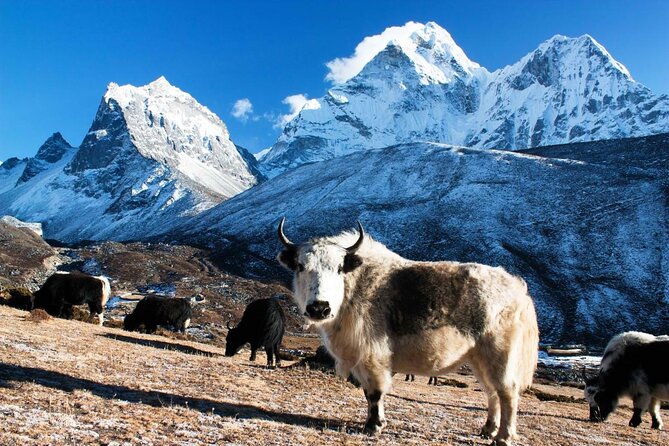
- Helicopter return from Gorakshep to Lukla: roughly a 20-minute shared flight that helps you skip the long hike back.
- Real acclimatization built in: Namche Base adjustments and a separate hike to Nangkartshang Peak before pushing higher.
- Trek support that feels organized: first-aid trained local guide, porters, and a kit that includes an oxymeter.
- Meals and water are covered on trek: breakfast, lunch, dinner, plus a Katadyn Pocket water filter on the trails.
- You’ll still earn every view: Base Camp and Kala Pattar are the hardest days in the plan.
The Gorakshep helicopter return is the whole trick
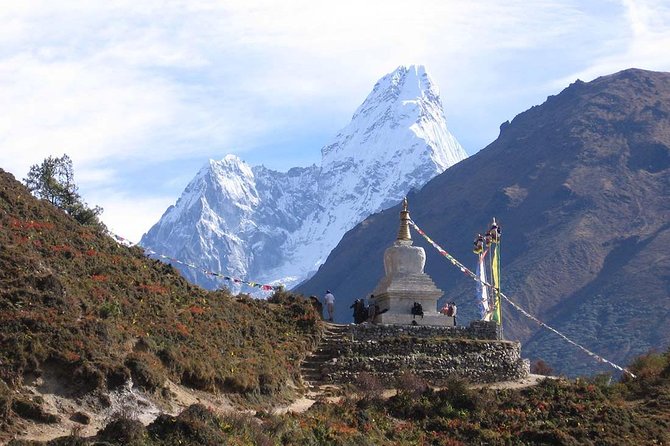
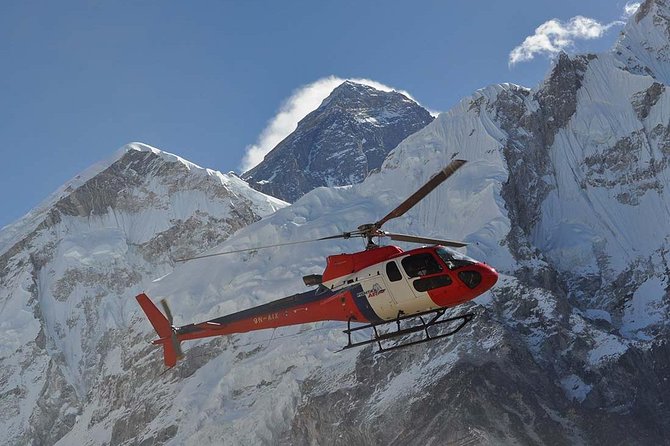
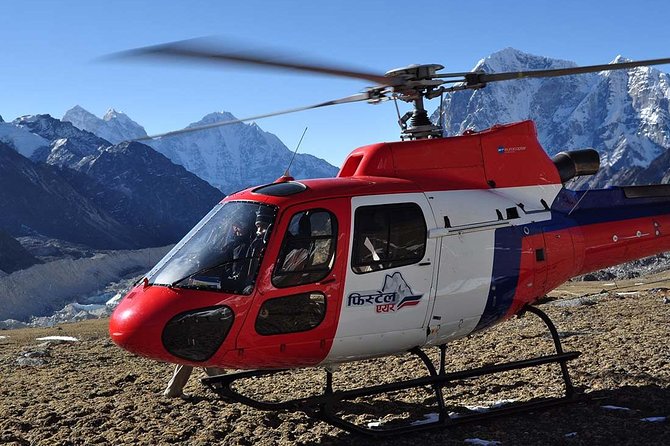
If you’re doing Everest Base Camp for the experience, you’ll appreciate what this route chooses to save you from. Instead of trekking all the way back down from the high point by foot, you’re flown from Gorakshep to Lukla by helicopter, typically around 20 minutes.
That matters because it changes the energy math. The hike to Everest Base Camp at 5,365 m and the climb to Kala Pattar (5,555 m) take a lot out of your legs and lungs. A helicopter return gives you a controlled finish, so you can still enjoy Lukla and the Kathmandu transfer without turning the last day into a grind.
One practical note: because it’s shared, the ride can follow an operator schedule and flying conditions. The good part is that it reduces your time in the most exhausting stretch. The reality is that your timing can’t be forced if visibility or weather is poor.
You can also read our reviews of more tours and experiences in Kathmandu.
Kathmandu setup: pickup, hotel nights, and your guide team
Your trip starts in Kathmandu at Tribhuvan International Airport. You’ll be greeted, transferred to a three-star hotel in a private tourist vehicle, and meet your guide for a pre-trip briefing.
On the Kathmandu side, the plan includes two nights of twin-sharing accommodation in the hotel, plus breakfast. Lunch and dinner in Kathmandu aren’t included, so you’ll want to plan a bit of cash or payment strategy for those meals.
What I like here is that the trek begins with less uncertainty. You’re not figuring out domestic flights, permits, or first-day logistics alone. The trek team includes a local Ace the Himalaya licensed English-speaking trekking guide who’s first-aid trained, and that shows up again later with the altitude monitoring kit.
Also, in feedback tied to this provider, names like Raj, Ram, and Madan show up as guides, with porter teams including Bishal, Girija, Pesal, Jit, and Sher. You shouldn’t expect the exact same pairing, but you can see a pattern: people-focused support matters here.
From Lukla to Phakding and Namche Bazaar: the Khumbu entry ramp
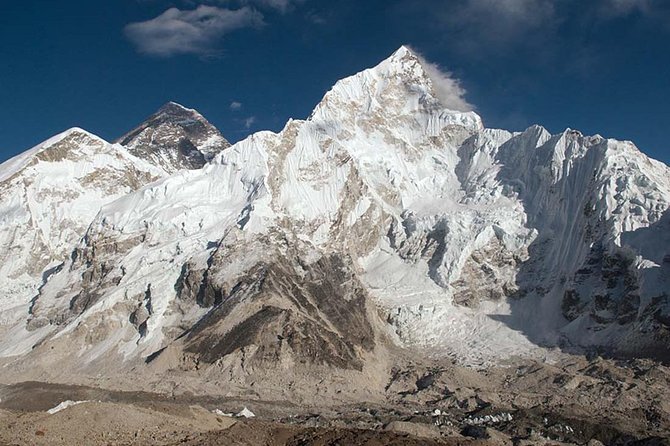
The trekking part kicks off right after your flight to Lukla. After an early start, you fly from Kathmandu to Lukla on a short, scenic domestic flight (about 35 minutes), arriving at Lukla airport at roughly 2,804 m.
Day two then takes you from Lukla to Phakding. It’s a classic ramp-in day where you’re warming up your pace and getting used to thin air without hitting the hardest terrain immediately. Guesthouse stays in Phakding are included, and this route specifies attached toilets in Lukla, Phakding, and Namche—an underrated comfort when you’re tired.
Day three is the longer day to Namche Bazaar, with a total hiking time around 6 hours. You’ll follow the Dudh Koshi river corridor and cross multiple suspension bridges strung with prayer flags. That river-and-bridge rhythm is one reason people love this part of the trek: it’s scenic, and it keeps your mind busy when your body is working.
Namche is where you’ll feel the altitude shift. You’re not just walking higher—you’re breathing differently. The good news is you don’t have to guess what to do next. The plan builds in acclimatization right after you arrive.
Everest View Point acclimatization and the Tengboche monastery stop
On day four, you’ll spend time at Everest View Point to acclimatize. The schedule includes a short hike in and around Namche Bazaar, with rewarding Himalayan views, including sunrise moments when conditions allow.
This day is valuable because it breaks the common mistake of rushing upward too fast. You get time to adjust before pushing higher to villages like Tengboche. If you’ve ever felt fine on day one and then paid for it two days later, this is exactly how you prevent that.
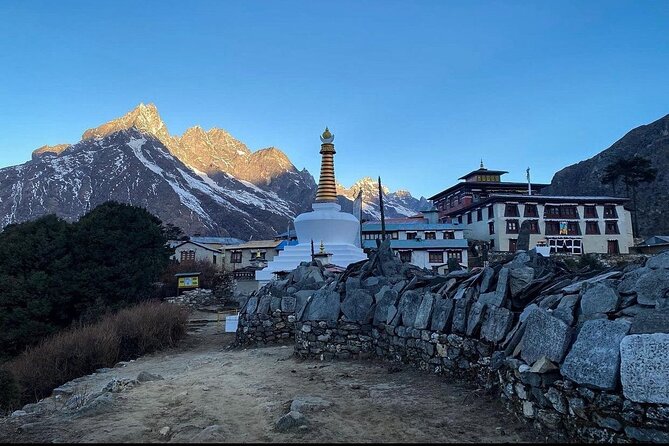
On day five, trekking continues toward Tengboche at about 3,860 m. The trail tracks the rushing Dudh Kosi glacial waters and stays full of big-mountain sights as the valley opens up. Tengboche’s monastery visit is part of the day, and it adds a calm, human-scale stop to balance the bigger drama of the route.
The drawback? Days like this still ask for consistent effort. There’s no “easy day” on Everest. You’re walking in cold air, and the best strategy is steady pacing and enough rest at each stop.
Dingboche and Nangkartshang Peak: the stop that keeps Base Camp realistic
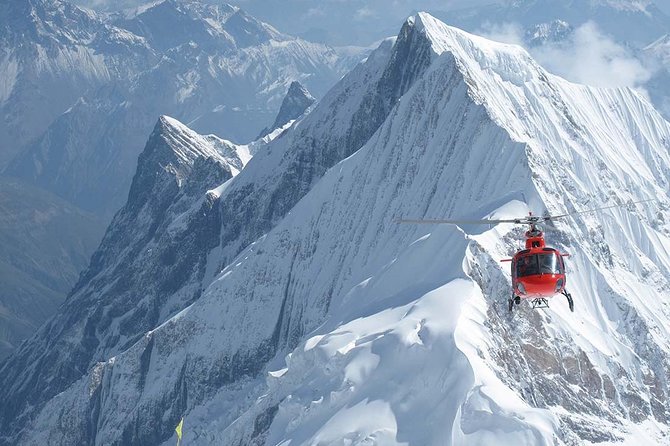
Day six moves toward Dingboche, using a route that includes a drop toward Debuche and another suspension bridge crossing over the Imja Khola, then uphill travel through Pangboche with mani stones. You’re gaining altitude while still switching terrain and patterns, which helps your body settle into a routine.
Day seven is a true acclimatization day. You won’t push toward Everest Base Camp today. Instead, you’ll hike to Nangkartshang Peak, just above Dingboche, for an excellent viewpoint—built specifically to help you handle the higher elevations ahead.
This is one of the most practical parts of the entire itinerary. You’re not just being cautious. You’re doing targeted altitude practice, in a way that fits the rhythm of the Khumbu villages. It’s also a morale boost: you can feel the mountains more clearly without the stress of a big summit-style effort.
If you’re the type who hates waiting, this day can still feel like a pause. But it’s the right pause.
Lobuche and Everest Base Camp: glacier walking at 5,365 m
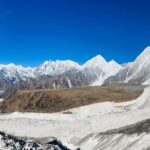
Day eight takes you to Lobuche. The trek follows the lateral moraine of the Khumbu Glacier and passes stone memorials for climbers who have perished in the region. That’s heavy context, but it’s also part of the real story of Everest. You’re not just chasing photos; you’re walking through the geography of hard decisions.
Day nine is the centerpiece: Everest Base Camp at 5,365 m. This is described as a big and difficult day walk along the Khumbu Glacier and up to Base Camp without mountaineering equipment.
Here’s the practical way to think about it. You’re not climbing a summit, but you are working at altitude where exertion costs more. Your pace may slow. Your breathing may feel more noticeable. You’ll likely want to stop often, not because you’re failing, but because altitude rewards patience.
If you’re arriving at Base Camp, enjoy the fact that you’re there. The trek is famous, yes, but being physically present at that altitude is a different kind of moment than watching videos from home.
Kala Pattar and the heli finish from Gorakshep to Lukla
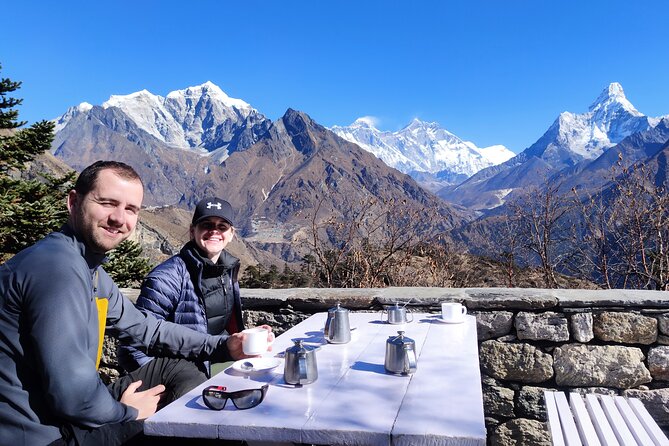
Day ten focuses on Kala Pattar. Most of the morning is spent climbing to the peak at about 5,555 m, and it’s described as one of the most difficult yet rewarding days of the trek.
This is where you’ll feel how high the trail really gets. Whether you go for the views early or save energy for a steadier climb, the goal is the same: keep moving without burning everything you have.
After that, the experience switches gears. The trek includes a helicopter flight from Gorakshep to Lukla so you can return without repeating the entire hike back down. Then you fly from Lukla back to Kathmandu on the domestic flight (about 35 minutes), and you’ll be transferred back to your hotel.
Day eleven is that wrap-up glide: last glimpses of the mountains, then the return to Kathmandu. Day twelve is departure from Tribhuvan International Airport.
What the $3,000 price really covers (and what it doesn’t)
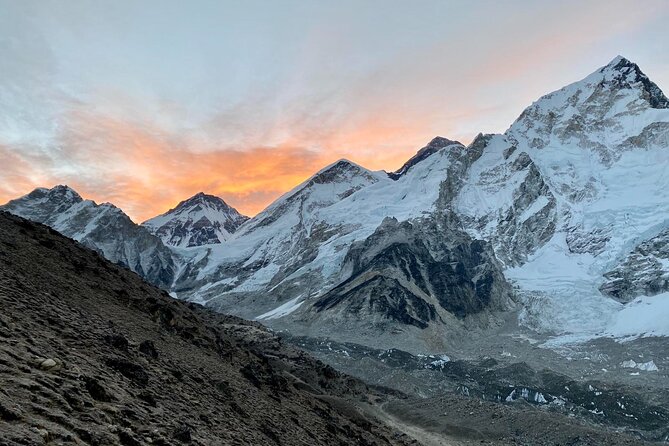
At $3,000 per person, this is not a bargain-style trek. But it’s also not “just guiding.” For many people, the value comes from how much of the expensive, hard-to-organize stuff is already included.
What you get includes:
- Airfare from Kathmandu to Lukla and back
- Shared helicopter ride from Gorakshep to Lukla
- Everest National Park permits and TIMS permit
- All standard meals during the trek (breakfast, lunch, dinner)
- Trek lodging in twin-sharing guesthouses, with attached toilets in key villages
- Porters for luggage (one porter for every two people)
- A guide team with first-aid training and an oxymeter in the first-aid kit
- Filtered water on the trails using a Katadyn Pocket Water Filter
- Small extras like a duffel/kit bag, trekking map, and sun hat (yours to keep)
The biggest things not included are also clear:
- Nepal entry visa, and international airfare
- Travel insurance that covers emergency rescue and evacuation
- Lunch and dinner in Kathmandu
- Alcohol and personal drinks
- Tips for trekking staff and driver (tipping is expected)
- Personal trekking equipment
For value, I look at two big-ticket items: the helicopter and the flights. If you were to arrange those on your own, they’re not cheap, and getting the timing right can be stressful. Here, it’s bundled into a plan with permits, meals, and staffing.
Still, you should treat it as a premium expedition. Plan for insurance costs on top, and budget for Kathmandu meals and tips.
Meals, toilets, water, and oxygen checks: the practical comforts that matter
Everest Base Camp trips can sound like a pure fitness test. In real life, the comfort details decide whether you enjoy the day or just survive it.
This trek includes:
- Breakfast, lunch, dinner during the trek, with a farewell dinner on the last night
- Filtered water using a Katadyn Pocket Water Filter
- Seasonal fruits along the way
- Guesthouse stays with attached toilets in Lukla, Phakding, and Namche
Those attached-toilet villages won’t make Everest easy, but they do reduce the misery factor after a long day. It’s a small thing until you’re standing there on a cold evening, and then it matters a lot.
On the health side, you’ll have a comprehensive first-aid kit with an oxymeter to check oxygen saturation. It’s not magic. But it’s useful for making smart decisions and keeping the trip grounded in reality.
Finally, the staffing is part of your comfort system. You’re paired with a guide and porters, and you’re not expected to carry everything yourself. If you want a trek that feels organized at the ground level, this is that kind of setup.
Small risks and the kind of traveler this will (and won’t) fit
This route is built around a classic Everest schedule, with the added twist of the helicopter return. So the potential downsides mostly fall into two buckets.
First: weather. The helicopter ride requires flying conditions. If the experience can’t fly due to poor weather, the provider states you’ll be offered a different date or a full refund. That means you should book with enough flexibility in your overall Nepal time window.
Second: effort level. Everest Base Camp at 5,365 m and Kala Pattar at 5,555 m are demanding days. You’ll need moderate fitness and a willingness to walk steady, not sprint.
Who this suits best:
- People who want the Everest Base Camp experience but don’t want to spend the whole return trip on foot
- Folks who like a structured plan, with acclimatization built in
- Travelers comfortable with guesthouse living and cold-weather conditions at altitude
Who might rethink it:
- Anyone who struggles with high-altitude walking or can’t handle long hiking days
- People who need guaranteed helicopter timing as part of an inflexible schedule
Should you book this Everest Base Camp trek with helicopter return?
If you want Everest Base Camp plus a smart, time-saving finish, I think this plan is a strong choice. The biggest reason is the pairing of acclimatization days with the Gorakshep to Lukla helicopter return, which makes the last stretch feel less punishing.
Book it if you value:
- Guided organization and support from a first-aid trained, English-speaking team
- Included permits, flights, trek meals, and filtered water
- A finish that doesn’t turn your trip into a long slog back down
Hold off if:
- Your schedule is too tight to tolerate weather changes
- You’re not ready for the high, hard days toward Everest Base Camp and Kala Pattar
FAQ
How long is the Everest Base Camp trek with helicopter return?
The duration is listed as about 12 days.
What is included in the price?
The price includes Kathmandu airport transfers by private tourist vehicle, two nights in a three-star twin-sharing hotel with breakfast, trek accommodations in guesthouses with attached toilets in Lukla, Phakding, and Namche, a licensed English-speaking guide, porters (one for every two people), meals during the trek, permits (Everest National Park and TIMS), domestic flights Kathmandu–Lukla–Kathmandu, and the shared helicopter ride from Gorakshep to Lukla.
Does the tour include airfare and the helicopter flight?
Yes. Airfare from Kathmandu to Lukla and back is included, along with a shared helicopter ride from Gorakshep to Lukla.
What’s the group size limit?
This tour has a maximum of 14 travelers.
Are meals included during the trek?
Yes. All standard meals during the trek are included (breakfast, lunch, and dinner), plus a farewell dinner on the last night.
Is water provided or filtered on the trek?
Yes. The trails use a Katadyn Pocket Water Filter for filtered water.
What are the altitude highlights on the trek?
Key high points include Everest Base Camp (5,365 m), Kala Pattar (5,555 m), plus an acclimatization hike to Nangkartshang Peak and viewpoints around Namche Bazaar and Tengboche.
What happens if poor weather affects the helicopter?
The experience requires good weather. If it’s canceled due to poor weather, you’ll be offered a different date or a full refund.