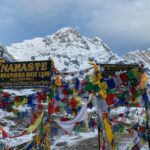
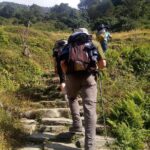
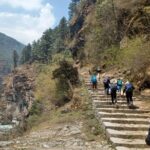
This trek is where the Himalaya slows down. You get a guided, permit-covered circuit built for real trekking days, with overnight tea houses and daily views that keep changing as the Budhi Gandaki valley narrows.
I particularly like the way the route mixes river gorges, suspension bridges, and Tibetan-influenced villages like Samagaun, so you’re not just grinding uphill—you’re moving through places with character. I also love that the package takes the weight off the planning: lodging, meals, and transport are handled, and you can borrow down jackets and sleeping bags if you need them. One thing to consider: it’s not a casual walk, and the itinerary includes long, early trekking days and a big high-pass effort toward the end.
In practice, this is one of those treks where a good guide changes everything. People often mention guides by name—Raman, Raj, Suresh, Santosh, and CK Gurung all show up in past trip feedback—and the consistent theme is help, pacing, and safety when the trail gets steep or exposed.
The best fit is for you if you want a less crowded-feeling Himalayan circuit, and you’re comfortable taking your days one step at a time. If you’re hoping for a lot of comfort upgrades or very predictable daily walking length, you’ll want to set expectations before you go.
In This Review
- Quick Hits: What I’d Tell a Friend
- Why the Manaslu Circuit Feels Different From Big-Tour Routes
- Price and Logistics: Where the $1,499 Per Person Holds Up
- The Trek From Machha Khola to Besishar: Your 12-Day Story
- Day 1: Kathmandu to Machha Khola (and the first road rumble)
- Day 2: Khorlabesi coffee, cliff paths, and ending in Jagat
- Day 3: Jagat to Deng via suspension bridges and the long-bridge claim
- Day 4: Waterfalls, Ekle Bhatti, and arriving at Namrung
- Day 5: Landslide careful steps, pine-oak-rhododendron forest, and Lho
- Day 6: Old houses near Sho, Manaslu views, and Samagaon’s gompa
- Day 7: Rest day in Samagaon
- Day 8: Samdo confluence day, glacier moraine remnants, and strong winds
- Day 9: Larke Phedi staging point
- Day 10: Larkya La (slow ascent) and the long descent to Bimthang
- Day 11: Jeep or bus to Besishar, and your last night
- Day 12: Besishar back to Kathmandu or Pokhara and hotel time
- Tea Houses, Borrowed Gear, and Daily Comfort That Actually Matters
- Guides, Safety, and the Human Side of the Circuit
- Who This Trek Suits Best (and Who Might Want a Different Plan)
- Should You Book This Manaslu Circuit Trek?
- FAQ
- How long is the Manaslu Circuit trek?
- Where does the trek start and end?
- What’s included in the price?
- Do I need to bring a sleeping bag or down jacket?
- How do you get to and from the trek?
- Are insurance and rescue services included?
- How many people are in a group?
- Is a porter included?
- Are there any extra costs for personal items?
Quick Hits: What I’d Tell a Friend
- Tea house stays and 3 meals a day take a lot of the daily decision-making off your plate.
- Permits and overland transport included, so you don’t have to juggle paperwork while traveling.
- Borrowable gear (down jacket, hiking poles, sleeping bag if needed) helps you travel lighter.
- Coffee at Khorlabesi and village-to-village culture keeps the early days from feeling monotonous.
- Larkya La and the long descent are the big payoff, with dramatic views when you’re moving well.
- Small group size (up to 12) makes it easier for your guide to manage pace and stay organized.
Why the Manaslu Circuit Feels Different From Big-Tour Routes
The Manaslu Circuit has a quality I look for on trekking trips: it doesn’t feel like a conveyor belt. You’re moving through valleys and villages that are very much part of local life—Tibetan-influenced culture shows up in places like monasteries and trading-station history around Samagaon. That matters because the trek becomes more than scenery; it becomes a slow education in how people live with the seasons, weather, and terrain.
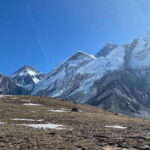
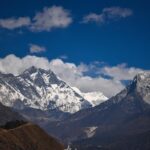
Another reason this circuit stands out is the trail character. Early on, you’re working with the shape of the Budhi Gandaki valley—narrowing, opening, and narrowing again—so your day feels like a story with chapters: bridges, cliff-hugging paths, waterfall sections, and steep climbs that don’t last forever but do demand respect.
And since this trek is guided with permits handled for you, you get to focus on the trail rather than the chaos of logistics. I’d rather spend my energy on foot placement and breathing than on trying to figure out paperwork or connections while at altitude.
You can also read our reviews of more tours and experiences in Kathmandu.
Price and Logistics: Where the $1,499 Per Person Holds Up
At $1,499 per person, this trek isn’t cheap, but it’s also not “pay for nothing” pricing. What you’re really buying is a built-in support system: government-licensed guide, tea house accommodations on trek, and daily breakfast/lunch/dinner while you’re hiking. Add in all required permits plus overland transport, and you start to see the value for what it is—less friction, fewer moving parts.
Here’s what I consider the biggest value points:
- Guide + permits + tea house nights are the heart of this price. That’s the stuff that’s hard to recreate on your own without serious planning.
- Transport is included for the main overland legs, so you’re not scrambling for the right bus at the wrong time.
- You also get borrowable trekking gear, which can save you the cost and stress of buying bulky items before you arrive.
There is one place where you should do your own math: meals and bedding help you keep costs predictable, but personal spending isn’t included. Think phone calls, laundry, battery recharges, extra bottled/boiled water, showers, and any snacks you want beyond the plan.
Also, the trip mentions an extra cost option for using a jeep instead of a local bus on the early transfer. If you hate long bus rides, consider paying it. If you don’t mind time, the bus is usually easier on the budget.
The Trek From Machha Khola to Besishar: Your 12-Day Story
You’ll start with a Kathmandu transfer and then step into the trail rhythm. Expect a mix of river-level sections (sometimes exposed), steep climbs, and long days broken up by tea house overnights.
Day 1: Kathmandu to Machha Khola (and the first road rumble)
You’ll depart Kathmandu and drive toward Machha Khola, with a choice of local bus or jeep (jeep costs extra). The route runs through parts of the Kathmandu valley and toward Dhading Besi, and you may deal with slow roadwork sections. The point is simple: you’re trading a smooth start for a head start on getting into trek mode.
What to expect: you’ll be tired, but you’ll also be set up to hit the trail the next day.
Day 2: Khorlabesi coffee, cliff paths, and ending in Jagat
After breakfast, you move into Khorlabesi, where coffee grows right in the village. Then the valley narrows and you pass Dovan, followed by a climb up toward Yaruphant. One of the best parts early is that your views often open right when you’re moving into new terrain, not only when you’re exhausted.
You’ll traverse a walkway hugging the cliffs above the river, cross a suspension bridge, and then reach Jagat for the night.
Why it works: you get variety in one day—walking, river views, and culture stops.
Day 3: Jagat to Deng via suspension bridges and the long-bridge claim
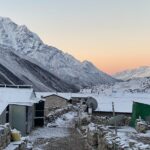
You cross another long suspension bridge and drop toward near river level on an exposed trail. You’ll pass Saleri and then climb toward Siridibas and Philim. Then the day does what mountain valleys do: you lose altitude, climb again, and descend again.
You’ll reach a stretch described as the longest suspension bridge in Nepal, then ascend a steep path to Deng.
Consideration: exposed trail sections mean you’ll want steady footing and a calm head.
Day 4: Waterfalls, Ekle Bhatti, and arriving at Namrung
You start with breakfast and climb outside of the village. The Budhi Gandaki runs below you through a narrow gorge, with wild grasses and waterfalls along the way. You’ll ascend toward Ekle Bhatti, then do a steep descent to a short suspension bridge.
After a final push, you pass through a village archway and arrive at Namrung.
What to watch: your legs will feel it here. This is a day that rewards pacing, not speed.
Day 5: Landslide careful steps, pine-oak-rhododendron forest, and Lho
You check out early, cross a bridge, and climb toward BihiPhedi. Then comes a section destroyed by a landslide, where you cross carefully. After that, you move into forests of blue pine, oak, and rhododendron.
You cross the river two more times, face a relentless uphill climb, and then descend into Lho.
Good sign: forest days can help you regulate your effort because it can feel more shaded and steady.
Day 6: Old houses near Sho, Manaslu views, and Samagaon’s gompa
You wake up in Lho’s lush surroundings and start walking. You pass Lihi and then Sho, a village noted for very old traditional houses and residents still in traditional clothes.
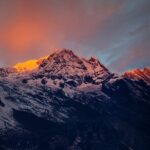
If the signature summit cloud isn’t present, you can get clear views of Manaslu’s twin peaks framed by millet fields around Lho. Then you continue through oak forests past Shyala, and stroll into Samagaon.
Samagaon is described as an ancient Tibetan trading post with a centuries-old gompa, and that makes it a special stop for culture and atmosphere.
Day 7: Rest day in Samagaon
This is a true rest day. You’ll have time to recover and acclimatize rather than just stacking distance. If you want short walks, this is typically when you do them—keep it gentle, listen to your breathing, and let your body adjust.
Day 8: Samdo confluence day, glacier moraine remnants, and strong winds
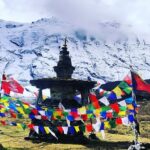
Today you walk mostly on an easier valley trail with the Budhi Gandaki accompanying you as it’s now much smaller. You pass remnants of the east Manaslu glacier moraine, then cross a bridge and climb to a chorten marking arrival in Samdo.
Samdo sits at a confluence of valleys, and it’s known for strong winds from the Tibetan Plateau. This is one of those days where layering and wind protection matter.
You can do afternoon hikes if you have energy, but don’t force it. Save your legs for what’s coming next.
Day 9: Larke Phedi staging point
The day ends at Larke Phedi. Think of this as your move-in point for the high-pass day. You’re building toward the final push, so your priority is getting good rest, eating what you can, and keeping your pacing conservative.
Day 10: Larkya La (slow ascent) and the long descent to Bimthang
You start early and make a slow-going ascent to Larkya La, the high pass. When you reach it, you get views of your successful effort. Then the day turns into a long descent into the meadow area of Bimthang, which is described as one of the most spectacular viewpoint days of the trek.
What to expect: this is the classic “heart rate up, then legs work nonstop” day. Trekking poles and careful downhill technique are your friends.
Day 11: Jeep or bus to Besishar, and your last night
After breakfast from Dharapani, you take a jeep or bus to Besishar (about 4–5 hours). You spend your last night at Besishar, which helps you transition out of trek mode without immediately jumping back into full travel.
Day 12: Besishar back to Kathmandu or Pokhara and hotel time
You’ll have a final breakfast and then transfer back to Kathmandu or Pokhara based on your preference. Overnight in a hotel.
Reality check: this is when you remember that trekking meals and beds were pretty great.
Tea Houses, Borrowed Gear, and Daily Comfort That Actually Matters
This trek uses tea houses for overnight accommodation. That means you’ll be sleeping in simple rooms, usually with limited comfort amenities, but the upside is that you can focus on walking instead of carrying everything.
The package includes 3 meals per day during the trek. This is a big deal because it keeps your nutrition more consistent on days that can be physically demanding. I also like that the trek provides sleeping bag and down jackets (and hiking poles can be borrowed if needed). Even if you travel with your own gear, it’s reassuring to know you have backup options.
One practical note: if you tend to get cold easily, treat the wind day at Samdo seriously. Layers are not optional at altitude.
Guides, Safety, and the Human Side of the Circuit
A guided trek isn’t just about direction on the map. It’s about pacing, decision-making, and knowing what matters when conditions shift.
Across past trips, guides like Raman, Raj, Suresh, Santosh, and CK Gurung are repeatedly mentioned for being attentive, calm under pressure, and helpful on strenuous sections. You’ll want a guide who can read your pace and keep you moving safely on exposed trail bits and long climbs.
This trip includes a first aid medical kit, plus it’s set up with permits and logistics handled. Still, the important thing to know is that travel and rescue insurance isn’t included, so plan that separately. Mountain travel can turn into a fast-moving situation, and insurance is what you rely on when things go beyond your control.
Who This Trek Suits Best (and Who Might Want a Different Plan)
You’ll probably love this trek if:
- You want a Himalayan circuit with real village culture and Tibetan-influenced sites.
- You’re okay with tea house basics and want the trade-off of fewer carried items.
- You want a guided trip where help is there when trail sections get exposed or steep.
- Your fitness is solid enough for long days early in the trek and a high pass later.
If you’re new to trekking, this still might work, but you should be ready for the fact that early days can be long. One couple noted about 14 miles on the first couple of days, and that lines up with the way valleys like this eat up distance even when the route doesn’t look dramatic on paper.
Should You Book This Manaslu Circuit Trek?
If your priority is authentic trekking with included permits, meals, tea house nights, and a real guide, this is a strong booking choice. The price feels more reasonable when you consider what’s included: daily food, overland transport, and the hard-to-organize parts like permits. The borrowing of down jackets and sleeping bags also reduces pre-trek shopping.
I’d book this if you can handle a high pass day and you want a quieter-feeling circuit where villages like Samagaon and Samdo feel tied to the landscape rather than staged for tourists. I’d think twice only if you want lots of comfort upgrades, very short hiking days, or you’re not comfortable with exposed trails and long descents.
If you’re ready for that mix of effort and payoff, this trek is the kind of Nepal experience that stays with you.
FAQ
How long is the Manaslu Circuit trek?
It’s listed as 12 days (approx.).
Where does the trek start and end?
It starts at Adventure Bound Bahati Pokhari, Kathmandu 44600, Nepal. It ends back at the same meeting point.
What’s included in the price?
The package includes hotel in Kathmandu and tea house accommodation on the trek, 3 meals per day while trekking, a government-licensed guide, all required permits, overland transport, airport pickup, a first aid kit, and required taxes/office service charge.
Do I need to bring a sleeping bag or down jacket?
You can borrow a sleeping bag and down jacket (and hiking poles) if needed.
How do you get to and from the trek?
You’ll have overland transport included. After the trek, you’ll take transport back to Kathmandu or Pokhara based on your preference. For the early transfer to Machha Khola, you can use a local bus or jeep (jeep costs extra).
Are insurance and rescue services included?
No. Travel and rescue insurance is not included.
How many people are in a group?
The tour is for a maximum of 12 travelers.
Is a porter included?
A porter is optional, not included by default.
Are there any extra costs for personal items?
Yes. Personal expenses like phone calls, laundry, bar bills, bottle or boiled water, showers, and battery recharge are not included.