REVIEW · KATHMANDU
12 Day Everest Base Camp Guided Trek
Book on Viator →Operated by Outfitter Himalaya Holidays P. Ltd · Bookable on Viator
Everest Base Camp is the kind of trip that changes your idea of distance. This 12-day guided trek routes you through classic Khumbu villages, includes teahouse lodge nights and Lukla flights, and builds in the altitude reality with acclimatization days in Namche Bazaar and Dingboche.
I love how much is handled for you on the ground: permits paper work, national park entry and TIMS, domestic transfers, and a guide who can keep your day-to-day pace sensible. I also like the practical support theme that shows up in past groups, like Rajan and Bir looking after safety and logistics, and guides using a slow-and-steady rhythm when people get hit by altitude.
One consideration: this is still a hard, high-altitude trek. You need solid fitness, and you should expect cold nights, basic lodge conditions, and days where walking feels like work even when the views are winning.
In This Review
- Key things I’d circle before you book
- The Big Picture: what this guided EBC trek really does for you
- Kathmandu to Lukla: the short flight that sets the whole mood
- Phakding to Namche Bazaar: river crossings and a steady climb
- Namche Bazaar rest day: acclimatization with real comforts
- Rhododendron to Tengboche monastery: panoramas and forest air
- Imja Khola suspension bridge to Pangboche and Dingboche
- Dingboche acclimatization day: Ama Dablam and the ridge drama
- Toward Lobuche: mani stupa views and glacier-country legs
- Gorakshep to Everest Base Camp: the moraine walk to the glacier world
- Kala Patthar sunrise: the highest-feeling day at 5,545m
- Coming down to Namche and Lukla: rhododendron descents and final river crossings
- Guides, meals, and gear: what’s included (and what you still pay for)
- Price and value at $1,300: what you get for the money
- Small group size and the “smoothness” factor
- Who this EBC trek fits best
- Should you book this Everest Base Camp trek?
- FAQ
- What time does the trek start in Kathmandu?
- How long is the Everest Base Camp trek?
- Where does this tour begin and end?
- Is a guide included?
- Are meals and lodge stays included?
- What about gear like a sleeping bag and down jacket?
- Do I need travel insurance?
- How high do you go on this trek?
- What if the trek is canceled due to weather or I cancel?
Key things I’d circle before you book
- Lukla flights + guided routing reduce the stress of getting to the start line
- Two real acclimatization stops (Namche Bazaar and Dingboche) help you move smarter above 3,000m
- Kala Patthar sunrise is your big visual payoff day at 5,545m
- Gorakshep base-camp logistics include lunch there and moving light for the final push
- A small group size (max 14) usually means less crowding and more attention
- Meals + lodge nights included (11 breakfasts, lunches, dinners) keeps budgeting simpler
The Big Picture: what this guided EBC trek really does for you
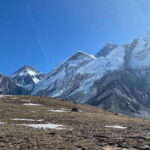
This is the classic Everest Base Camp story arc: you fly into the Khumbu area, walk river valleys and pine forests, pass Sherpa villages, then climb toward the glacier world. The difference with a guided version is that you’re not left stitching it together day-by-day. You’re given a plan, a pace, and a team that knows what matters at altitude—especially when weather shifts or someone in the group starts to feel off.
Most importantly for your comfort: the route is designed to give you time to acclimatize before you keep pushing higher. You spend a proper rest day in Namche Bazaar (3,440m) and a second acclimatization day in Dingboche. That doesn’t make altitude easy—but it often makes it survivable and calmer.
You can also read our reviews of more tours and experiences in Kathmandu.
Kathmandu to Lukla: the short flight that sets the whole mood
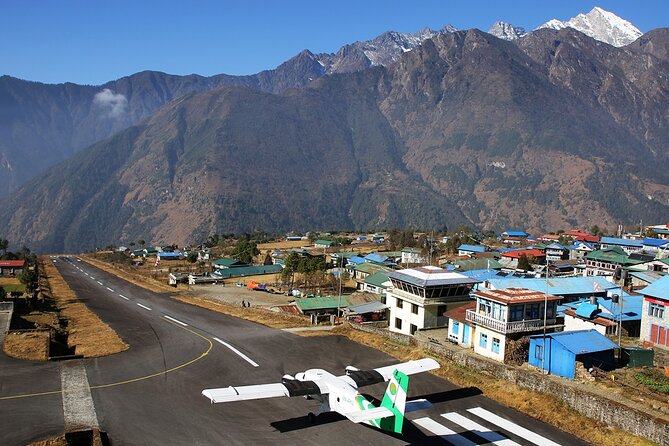
Your morning starts early in Kathmandu with a driver pick-up from the Outfitter Himalaya Holidays meeting point in Thamel. The day then hinges on a scenic, early flight to Lukla, about 35 minutes. That’s not just transportation. It’s the switch from city schedule to mountain schedule, and you’ll feel it right away.
Once you land, your guide introduces you to the porters, then the trek begins along the left bank of the Dudh Koshi River. The first leg is meant to feel manageable—roughly 3–4 hours to Phakding—so you can get your legs moving without overcooking day one.
Practical tip: treat the first day as a warm-up, not a race. If you go hard in the beginning, you pay for it later.
Phakding to Namche Bazaar: river crossings and a steady climb
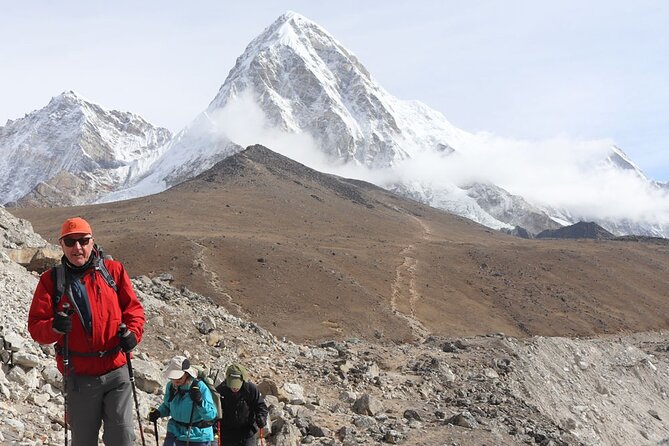
From Phakding, the trek follows the Dudh Koshi with crossings along the way. You’ll stop for lunch around Jorsale and enter the park area. Expect a mix of walking along river edges and segments that gently build elevation until the mountains start feeling larger than you expected.
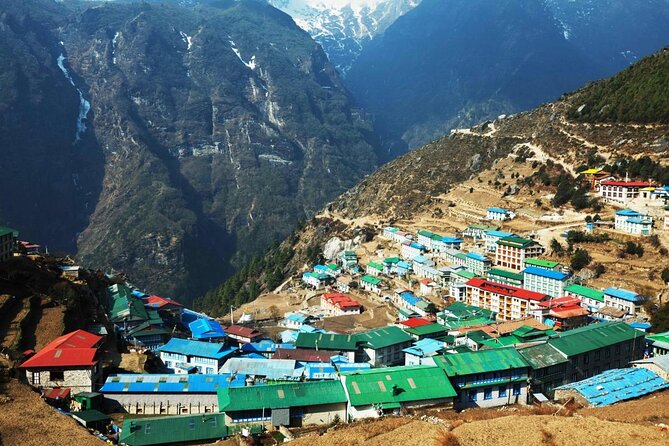
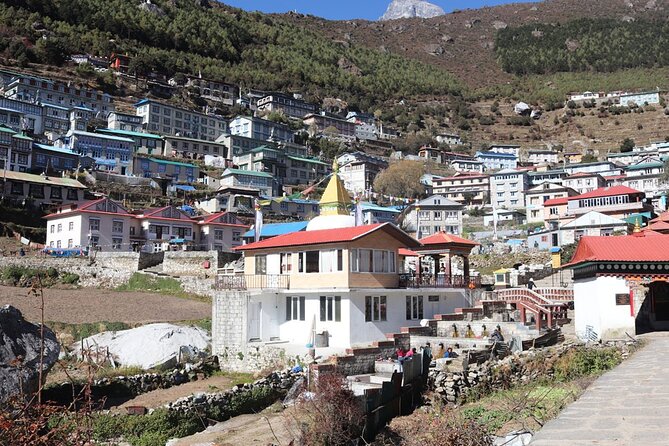
Then comes the Namche moment: the town appears ahead as you walk through pines and pass a plateau area connected with the Saturday bazaar. You arrive in Namche Bazaar at 3,440m, tucked between mountain ranges and open mainly toward where the Dudh Koshi side opens up.
What you’ll actually notice here is the change in infrastructure. Namche is loaded with lodges, tea shops, and souvenir shops, which means you have options for hot drinks, simple meals, and gear adjustments. It’s also a place you’ll appreciate being guided through, because at altitude the “easy” decisions—like how fast to walk and when to rest—matter.
Namche Bazaar rest day: acclimatization with real comforts
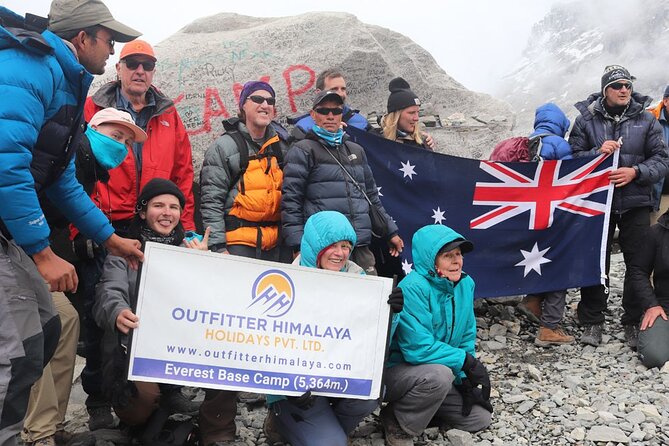
Your Namche day isn’t just sightseeing. It’s an acclimatization day—exactly what you want before you push deeper into the Khumbu.
Namche sits above the river and is surrounded by giant peaks. That geography matters: it gives you dramatic views while you take the time to let your body catch up. In practical terms, you’ll use this day to:
- slow down your pace
- get settled at a lodge
- recover between climbs
- plan your next movement north and higher
If you’ve ever wondered whether rest days are “wasted” while everyone else is walking, this is where you’ll get the answer. A good rest day usually makes the next couple of days feel less brutal.
Rhododendron to Tengboche monastery: panoramas and forest air
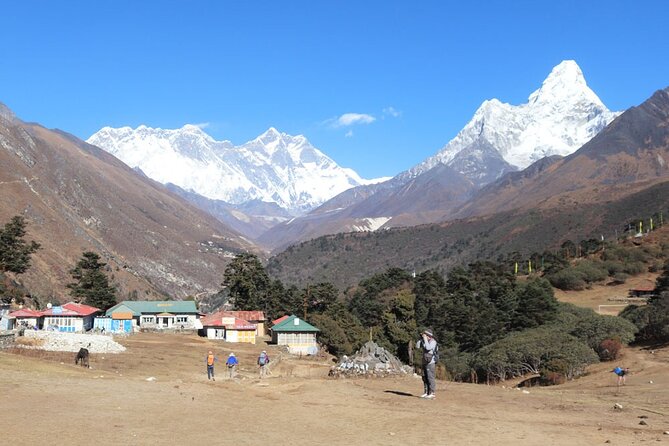
After Namche, you move toward the Tengboche monastery area. The route gives you classic ridge walking and flat stretches with excellent panorama views, including views of Thamserku, Kantega, and Kusum Kangrib. Then you drop toward the river, reach Phunki Tenga, and climb through rhododendron forest up to Tengboche.
This is a big “feel” day. Forest trekking often helps because the walking can be more rhythm-based and less exposed. And when you reach Tengboche, the monastery setting turns your day into something cultural as well as scenic—plus it’s a natural place to pause, eat, and reset.
If you get cold easily, plan to layer up before the forest climb. The temperature swings can be sneaky.
Imja Khola suspension bridge to Pangboche and Dingboche
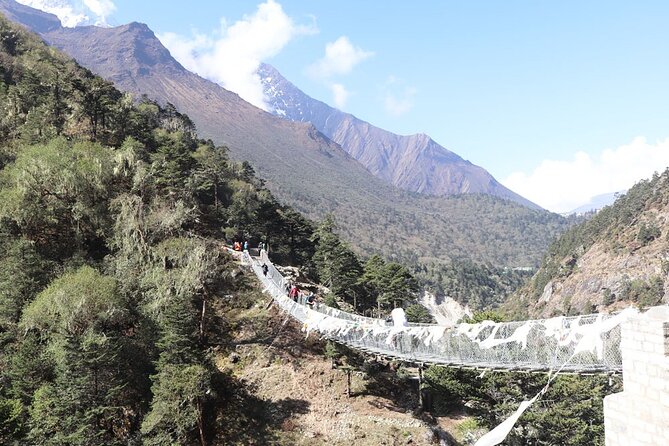
Next you descend through rhododendron forest to the Imja Khola, then cross a suspension bridge. After that, you’ll pass a long Mani stone wall, a reminder you’re not just hiking through scenery—you’re moving through a living community landscape.
You’ll enter Pangboche, continuing through summer pastures on the way to Dingboche.
This portion of the trek matters because it’s where the walking becomes more “high-alpine.” The air feels thinner. The villages feel smaller. And the views get more intense without needing a huge change in distance.
Dingboche acclimatization day: Ama Dablam and the ridge drama
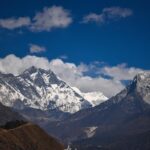
Dingboche is your acclimatization day again, and it’s a strong one. The walk is shorter, leaving you time to relax and do optional side trips. You get some of the best “big mountain walls” angles around here, including Ama Dablam and the Lhotse–Nuptse ridge.
That’s the value of this day: you’re not only resting—you’re also seeing the Himalaya in a new way before you go toward places like Island Peak-adjacent terrain and higher glacial areas.
How to use the time: don’t over-plan. One side walk for views is enough. Save energy for the days when you’ll be walking longer and feeling higher.
Toward Lobuche: mani stupa views and glacier-country legs
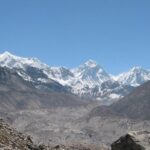
From Dingboche, you head north up to a mani-prayer stupa, then you take a gentle-looking descent toward Pheriche. Along the way you get views of Mt. Tawache, Ama Dablam, and peaks including Pokalde and Kongma-tse, plus the big Nuptse wall.
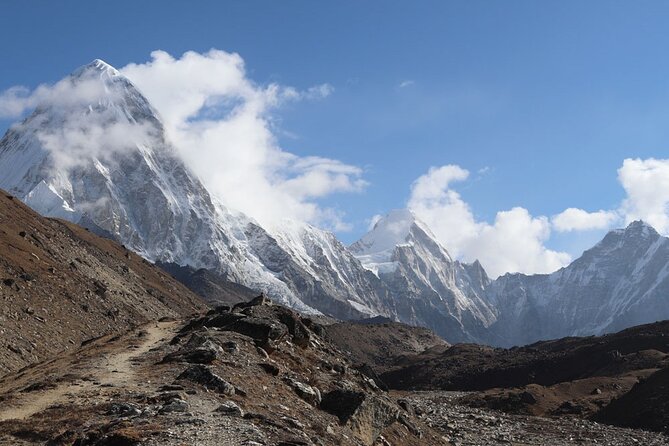
Then the day builds again. After roughly two hours, the trail joins near Dugla and crosses by a small wooden bridge over the river of the Khumbu glacier. After that, there’s about an hour of a steep hill up to a top viewpoint area with views of Mt. Pumori and west-of-Everest peaks.
From there you continue on to Lobuche.
This is the kind of day where a guide’s pacing makes a difference. If you’ve got even mild altitude symptoms, you want constant check-ins and a plan for slowing down. Based on how past groups describe their guide support, that care is a key strength here.
Gorakshep to Everest Base Camp: the moraine walk to the glacier world
This is the day the trek flips from “approach” to “arrive.”
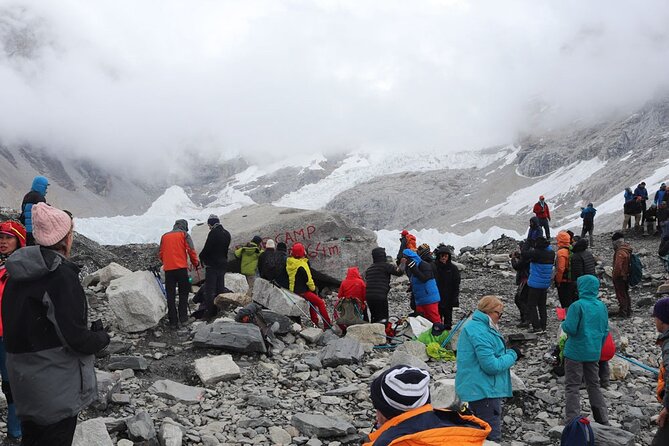
You start after breakfast and take the route toward Base Camp along a rocky moraine path. You’ll see glacial pond icebergs below the Khumbu glacier. After the last rocky moraine dunes, there’s a short downhill to Gorakshep where you’ll stop for lunch.
Then comes a smart logistics step: you leave extra stuff at the lodge in Gorakshep, because Gorakshep is the last place with lodge options on this route.
After lunch and a lighter load, you make the final hike to Everest Base Camp. Once you’ve spent time there and around the area, you return to Gorakshep for the night.
Practical tip: at Base Camp, expect wind and cold. Dress like you’re going outside longer than you think. You’ll thank yourself when you slow down for photos.
Kala Patthar sunrise: the highest-feeling day at 5,545m
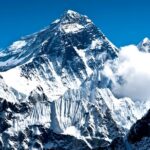
Early morning is for Kala Patthar (5,545m). This is the sunrise climb, designed for panoramic views of Mt. Everest and many surrounding peaks—Pumori, Lingtren, Khumbetse, Nuptse, Lhotse, Ama Dablam, Thamserku, and more.
This is where you’ll understand why people keep coming back even after calling it impossible at the start. The payoff isn’t only Everest itself. It’s the way the whole region lines up under early light.
After the sunrise views, you trek back to Gorakshep for breakfast, then descend toward Pheriche. The downhill here is “easy” in the sense of energy—still watch your knees and don’t let speed replace control.
Coming down to Namche and Lukla: rhododendron descents and final river crossings
The return route is different from the outbound route, and that matters. It’s not just the same trail in reverse. You’ll walk back toward Namche via rhododendron forest, again passing Tengboche, where you stop for lunch and take in the Ama Dablam view again from the monastery area.
Then you continue back to Namche.
Your final trekking day is “pleasant” compared with the hardest sections, but it still includes climbs and a lot of walking. You pass Bhote-Koshi River crossings a few times and finish with a last 45-minute uphill to Lukla.
Then you’re back to aircraft time: early breakfast, walk to Lukla airport, and fly to Kathmandu.
If you want the most comfortable last day, plan to drink enough and eat enough at each stop. Descent fatigue is real, and it can sneak up on you.
Guides, meals, and gear: what’s included (and what you still pay for)
A lot of value here is in the “quiet stuff.” You get:
- a guide
- paperwork for National Park entry and TIMS permit
- domestic airport transfers
- flight tickets Kathmandu ↔ Lukla ↔ Kathmandu with airport tax
- 11 nights in trekking lodges
- breakfasts (11), lunches (11), dinners (11)
That means your biggest day-to-day costs on the trail are handled, and you can focus on walking, resting, and acclimatizing.
Gear-wise, if you need it, the trip provides a sleeping bag, down jacket, and duffel bag (then you return these items after the trek). That’s helpful if you don’t want to buy high-end gear just for one trip.
Emergency planning is also included in a specific way: there’s an arrangement for emergency helicopter service, but it’s stated as being paid by your travel insurance company. So the trip requires travel insurance, and you should make sure your policy actually covers this kind of rescue.
Price and value at $1,300: what you get for the money
At $1,300 per person, this package feels most “fair” when you look at what’s included. You’re not just buying a view. You’re buying:
- flights into the Lukla system (expensive and hard to replicate easily)
- lodge nights for 11 nights
- all trail meals
- guide time plus permit paper work
- an emergency helicopter arrangement linked to insurance
What you should budget separately:
- Nepal entry visa fee
- anything in Kathmandu before/after the trek (hotels and meals)
- travel insurance (compulsory)
- drinks like water, hot/cold drinks, bar bills
- tips for the guide
- porter help (optional, and not included if you need one)
- laundry, telephone, hot shower, and internet charges
This structure usually works well if you want your trek to feel predictable. It’s less ideal if you love customizing everything yourself or you already have every piece of gear and want to self-arrange permits.
Small group size and the “smoothness” factor
The tour notes a maximum group size of 14 travelers. In real terms, that can mean you’re not dealing with a huge crowd on narrow trails or at pinch points like suspension bridges and viewpoints.
The guide-and-team theme also shows up in past experiences shared by different groups. People describe guides like Rajan, Arjun, Dhana, and Suraj/Suraz as watchful and supportive, including when someone gets sick and the group has to adjust. One common idea you’ll benefit from is the slow-and-steady approach—basically the mindset that keeps you moving without getting punished by altitude.
Who this EBC trek fits best
This is a strong match if:
- you have a strong physical fitness level
- you want a guided plan rather than piecing together logistics
- you like classic tea house trekking with real villages along the way
- you want the structured acclimatization (Namche + Dingboche + careful ascent)
You might think twice if:
- you’re not comfortable with cold nights and basic lodge conditions
- you’re expecting a gentle walk with no altitude challenge
- you’re not able to keep a steady walking pace on steep segments
Should you book this Everest Base Camp trek?
I’d book it if you want the Everest Base Camp experience with structure, included meals and lodge nights, and guides who handle the moving parts. The Lukla flights, permit paper work, and acclimatization timing do a lot of the heavy lifting for you—so you can spend your energy where it counts.
I’d pass or at least ask a lot of questions first if you’re unsure about your fitness level or your plan for cold gear and insurance.
If you’re ready to work for it, this trek is a classic route for a reason.
FAQ
What time does the trek start in Kathmandu?
The start time listed is 6:15 am, with the meeting point at Outfitter Himalaya Holidays, Thamel Marg, Kathmandu 44600.
How long is the Everest Base Camp trek?
The duration is 12 days (approx.).
Where does this tour begin and end?
It begins at the meeting point in Thamel, Kathmandu and ends back at the same meeting point.
Is a guide included?
Yes. A guide is included.
Are meals and lodge stays included?
Yes. You get 11 nights in trekking lodges and breakfast (11), lunch (11), and dinner (11).
What about gear like a sleeping bag and down jacket?
Sleeping bag, down jackets, and a duffel bag are included if necessary, and they are returned after the trek.
Do I need travel insurance?
Yes. Travel insurance is listed as compulsory, and the emergency helicopter service arrangement is described as being paid by your travel insurance company.
How high do you go on this trek?
You climb to Kala Patthar (5,545m) for sunrise.
What if the trek is canceled due to weather or I cancel?
The experience requires good weather. If canceled due to poor weather, you’ll be offered a different date or a full refund. For cancellations by you, a full refund is available if you cancel at least 6 days in advance, with reduced refunds if you cancel 2–6 days in advance.