REVIEW · KATHMANDU
Everest Base Camp & Gokyo Ri Trek
Book on Viator →Operated by Explore Himalaya Travel and Adventure · Bookable on Viator
High ridges, big skies, no shortcuts. This trek strings together Khumbu villages, Gokyo Ri’s 360-degree views, and Everest Base Camp in one sharp, high-altitude story. You start with a dramatic flight into the region, then you earn the best viewpoints the slow way, with real acclimatization days.
I especially like how Cho La is worked into the route, because that’s the day where the mountains stop being scenery and start being the main character. I also like the “mixed” feel of the trip: Gokyo’s alpine lakes one day, then straight into glacier terrain and the Everest icefall zone the next.
One consideration: the schedule includes a long, ice-glazed Cho La pass crossing day that can feel intense, especially if you don’t love steep, exposed footing.
In This Review
- Key things that make this trek special
- Kathmandu and the Lukla flight: the moment altitude starts talking
- Phakding to Namche Bazaar: acclimatize with suspension bridges and market energy
- Khumjung, Thame, and Khunde: Sherpa culture you can walk through
- Machhermo and the Gokyo lakes: where the colors sharpen at altitude
- Gokyo Ri at dawn: the 360-degree morning hike that earns its reputation
- Thangnag to Cho La: the toughest day is also the most real
- Lobuche, Kala Patthar, and the Everest Base Camp excursion
- Down from the ice zone: Tengboche, Namche, and Lukla
- Kathmandu cultural days: Boudhnath, Pashupatinath, and Patan
- Price, value, and who should do this trek
- What to expect day to day: pace, lodges, and the “feel” of the route
- Should you book Explore Himalaya’s Everest Base Camp & Gokyo Ri trek?
- FAQ
- What’s included in the Everest Base Camp & Gokyo Ri trek price?
- What isn’t included?
- How long is the trek?
- Where do the start and pickup happen?
- How physically demanding is the route?
- Can I get a full refund if I cancel?
Key things that make this trek special
- Lukla flight start: a cliff-hanging airport day one, then straight into the Dudh Koshi Valley
- Namche Bazaar acclimatization: suspension bridges, a park entry, and time to adjust before you climb higher
- Khumjung + Thame culture stops: prayer flags, mani stones, Thame Gompa, and Khunde hospital tied to Sir Edmund Hillary
- Gokyo Ri at dawn: steep climb early morning for big panoramic payback over Everest-region peaks
- Cho La glacier day: steep pass walk plus glacier traverse across icy rock and crevasse terrain
- Kala Patthar + EBC sequence: the classic viewpoint build-up, then the Everest Base Camp excursion
Kathmandu and the Lukla flight: the moment altitude starts talking
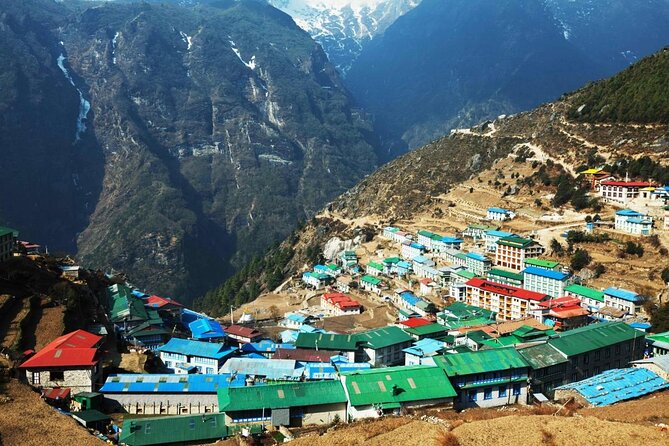
Your trip kicks off with the Kathmandu connection and a meet-and-greet. On a clear day, the flight experience is a highlight by itself, with mountain views spreading below as the plane drops toward Tribhuvan International Airport.
Then comes the big transition: you fly from Kathmandu to Lukla, about a 30-minute hop that feels like a gateway to the entire Everest region. Lukla isn’t just convenient—it’s dramatic, because the airstrip sits right on the side of the Khumbu, and you’ll feel that “starting point” energy as soon as you step out.
From there, you’re not wasting time. You move into the Dudh Koshi Valley on a well-marked route, and you settle into lodge life in Phakding. This is the smart way to start: you get your legs working early, while the altitude is still ramping up slowly.
You can also read our reviews of more tours and experiences in Kathmandu.
Phakding to Namche Bazaar: acclimatize with suspension bridges and market energy
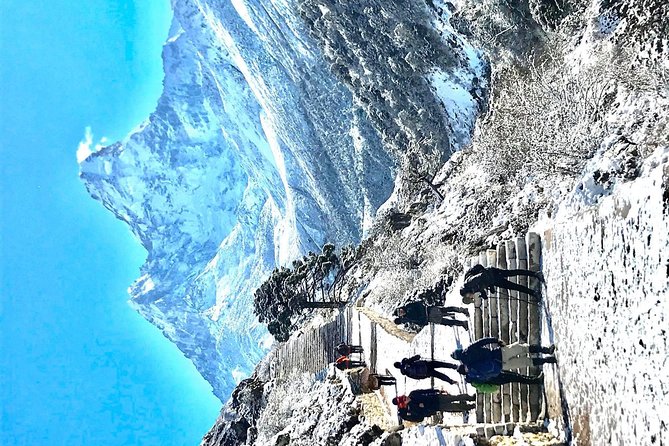
Phakding is your first real trekking village stop, and it’s a good launch pad for what comes next. You’ll cross and re-cross rivers on high suspension bridges, so you’ll get a taste of Khumbu trail rhythm without jumping too high too fast.
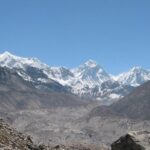
Day three pushes upward to Namche Bazaar with a steep hike after Monjo, where you enter Sagarmatha National Park. If the weather is clear, you may catch your first glimpse of Everest, and even when you don’t, the mountain shapes start locking into your head.
Namche is also the “human scale” moment. It’s the main trading village in the Khumbu, full of lodges, tea shops, and souvenir stops, plus the Saturday market buzz where locals, lowland traders, and yak caravan routes all meet.
Your rest day in Namche matters. You’re here to acclimatize before climbing again, and that buffer can make a difference when you later face steep days, early starts, and glacier terrain.
Khumjung, Thame, and Khunde: Sherpa culture you can walk through
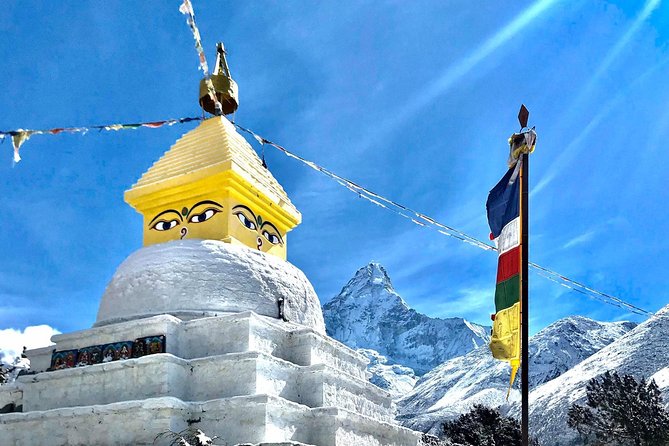
This trek turns west toward the Bhote Koshi Valley and spends time around Khumjung and Thame, not just “from point A to point B.” You’ll see Tibetan Buddhist touches right on the trail—prayer flags and mani stones—plus the sense that these villages have their own routines and rituals.
Thame is quieter than Namche, and that’s part of the appeal. The Thame Gompa sits above the village and is tied to spring celebrations of the Mani Rimdu festival, so you’re not only looking at the culture—you’re walking through the areas where it lives.
Khumjung adds another layer. You’ll head toward it through the Bhote Koshi route, pass along steep sections, and enjoy valley views that frame peaks like Teng Kangpoche and Kwangde. One of the most meaningful stops is Khunde Hospital, set up by Sir Edmund Hillary—because it’s a reminder that the Khumbu story isn’t only about summits.
When you climb up and out of this zone toward Dole, the trail shifts into rhododendron and birch forests with hanging mosses and lichens. That’s when the walk starts feeling like trekking through a living museum—no pressure, just steady altitude work.
Machhermo and the Gokyo lakes: where the colors sharpen at altitude
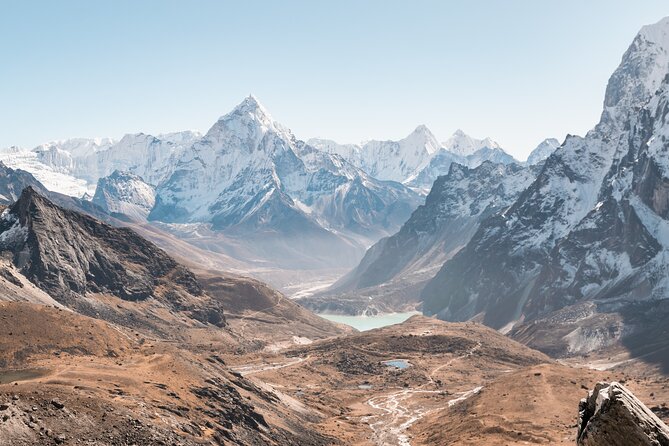
After Dole, the route climbs steadily and the vegetation changes as altitude increases. You’ll move from rhododendron into scrub juniper, and the trail passes summer grazing settlements, including yersa where yaks are taken for seasonal pasture use.
This part of the trek is good if you like gradual effort. You’re moving up with breaks, and the views keep improving—Cho Oyu is mentioned ahead, and you also get recurring outlooks back toward Kantega and Thamserku.
Then you reach the Gokyo area—one of the trip’s signature chapters. The approach to the lakes is scenic and you’ll walk past melting rivers along the Ngozumpa Glacier. You’ll cross paths connected to the glacier routes, and you’ll visit the holy lakes in sequence, including Dudh Pokhari (Milk Lake).
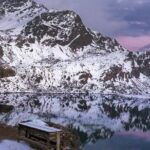
The payoff is the water reflecting big peaks. The description calls out Cho Oyu and Gyachung Kang reflected in emerald-green waters, and you can expect a calm, otherworldly feel here that’s different from the Everest ice zone.
By the time you settle in around Gokyo, you’re also positioned for the best “big view” decision of the whole trek: Gokyo Ri at dawn.
Gokyo Ri at dawn: the 360-degree morning hike that earns its reputation
Gokyo Ri is one of those climbs where the timing matters as much as the summit. You leave early, just after first light, and you hike a steep path up from the village on the northern edge of the lake.
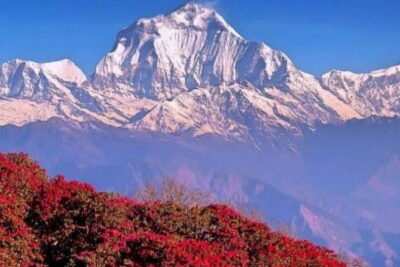
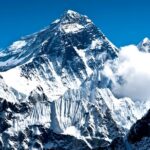
As you gain height, Everest-region peaks slowly come into view. The trek notes Everest, Lhotse, and Makalu in the build-up, and the panorama from Gokyo Ri itself is described as a top view in the region—so much so that it’s sometimes compared to Kala Patthar.
This is the moment I’d tell you to protect. Go slow on the climb, stay hydrated, and keep your breathing steady; this is not the day for hero pacing. If the weather cooperates, the “everything in one sweep” feeling sticks with you longer than a single mountain photo.
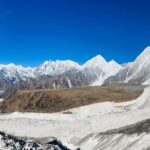
Afterward, you walk to Na, at the foot of the Ngozumpa Glacier. It’s a good transition day because you can take in the terrain around you without always being on the steepest part of the schedule.
Thangnag to Cho La: the toughest day is also the most real
Thangnag is a short hike day designed to set you up for what’s next. You’ll trek through the Ngozumpa Glacier area and cross toward the mountain on the other side, then traverse along the edge before dropping into Thagnak/Thangnag.
The description highlights sunrays hitting Everest and the dramatic feel of the morning light. Even if visibility isn’t perfect, the route itself makes you pay attention to footing and rhythm.
Then comes Cho La pass—called out as one of the toughest days of the trip. The key issue isn’t just steepness; it’s the glacier traverse on the eastern side, with vertical icy rock surfaces and glazed steps that can become slippery.
This is the day where “moderate fitness” becomes “seriously calm and careful.” Your job is to stay focused: step placement, spacing from other hikers, and avoiding rushing. The route goes over frozen-lake-side terrain and includes passing crevasses before reaching Dzongla.
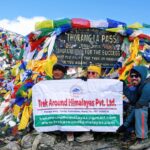
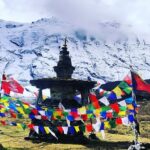
When you reach the top, you’re rewarded with the pass decorated with prayer flags, and the mountain views expand out around you—Ama Dablam to the south is specifically mentioned, with Cholatse and peaks in the Lobuche area framing the scene.
Lobuche, Kala Patthar, and the Everest Base Camp excursion
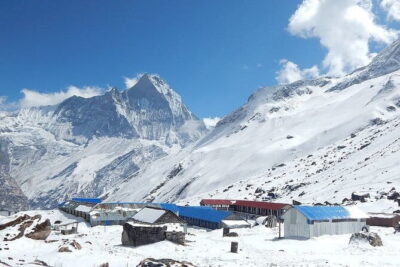
After Cho La, the route moves into the Lobuche area. You pass teahouses at Duglha and then climb onto the terminal moraine of the Khumbu glacier. There’s also a line of stone monuments remembering Sherpas who died on mountaineering expeditions—powerful, sobering markers you’ll notice as you walk through the glacier zone.
Sunset from here is described as spectacular on Nuptse, which gives you a useful target for timing if skies clear later in the day. After that, the trip leans hard into the classic viewpoint sequence: Gorak Shep and Kala Patthar.
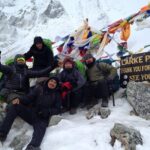
Kala Patthar needs an early start. The trail rises to cross a tributary glacier and sets you up for one of the finest viewpoint experiences in the Everest region. The climb is around 5,554m in the description, and you’ll feel it in your lungs even if you’ve acclimatized well.
Then you return to Gorak Shep and go for the Everest Base Camp excursion. This part is not a “walk to a viewpoint.” You go into the Base Camp trail area, with ice pinnacles and crevasses along the route, plus a note that you can take a higher route on the return leg for an expanded view of the icefall and the South Col route.
This is where the trek becomes emotional. Base Camp isn’t a summit, but it’s the frontier of the Everest world—and you reach it after walking through the terrain that makes expedition life possible.
Down from the ice zone: Tengboche, Namche, and Lukla
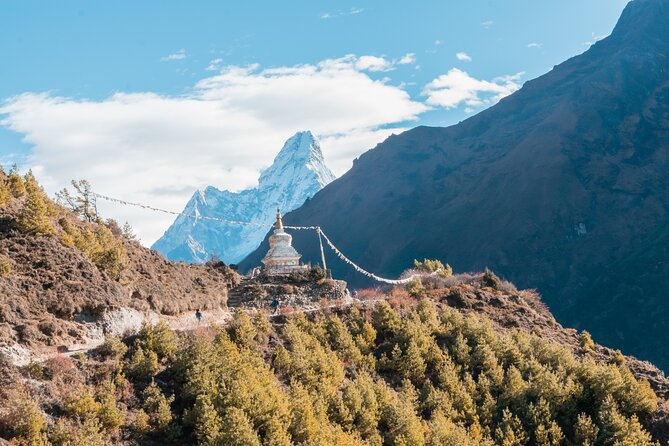
After the Base Camp day, you start to close the loop. The route descends toward Tengboche and crosses the bridge over Dudh Koshi River, then continues to Kyanjuma, described as a junction linking the Gokyo Valley, Khumjung village, and Namche Bazaar routes.
This section is also where wildlife and forest walking get more noticeable in the description. Dense rhododendron forest is mentioned, along with species such as pheasants, griffons, musk deer, and wild goat. Even if you don’t see animals every day, the habitat shift makes your eyes look differently.
Day seventeen heads down through rhododendron and juniper trees, again crossing the prayer-flag festooned bridge over the Dudh Koshi River. Views of Ama Dablam, Thamserku, and Nuptse come into focus from Sansa before the path drops back toward Namche.
Finally, you’re back to Lukla on the last trekking day, following the Dudh Koshi back down. And the trip gives you a proper send-off: a farewell party with Sherpa guides and porters, plus chang (local beer) and Sherpa dancing—exactly the kind of closing ritual that makes the hard days feel worth it.
Kathmandu cultural days: Boudhnath, Pashupatinath, and Patan
When you return to Kathmandu, the altitude part is done, and the trip switches to Nepal’s culture. You’ll have time for your own day after the return flight, then a guided tour covering major spiritual sites.
The plan includes Boudhnath, the largest Buddhist stupa in Nepal, then Pashupatinath, one of the most popular Hindu shrines dedicated to Lord Shiva. After that, you visit Patan (Lalitpur), including Patan Durbar Square and architectural highlights from the Malla era.
The square visit also lists Mahaboudha Temple, Kumbeshwor Temple, Krishna Temple, and the Golden Temple. It’s a good contrast after weeks of mountain scenery: you’ll start seeing Nepal as more than the Everest region.
On the final day, your Nepalese support team takes you to the airport for your flight home.
Price, value, and who should do this trek
At $2,800 per person, the biggest value move here is what’s included that you’d otherwise have to line up yourself. You get Kathmandu/Lukla/Kathmandu airfare, plus trekking lodge accommodation and meals (listed as breakfast 20, lunch 17, dinner 17). You also get an English-speaking local expert guide, porters with a stated ratio of 2 members to 1 porter, and the permits needed for the trek.
You’re also not left alone on the logistics side. The tour includes private vehicle airport transfers, Kathmandu sightseeing with a guide, and equipment clothing for porter and staff, plus insurance coverage for those staff.
What’s not included matters for budgeting. You’ll need to plan for international flights, tips for guide/porters/drivers, emergency evacuation costs if something goes wrong, and personal expenses like drinks and snacks, plus hot showers and internet at the lodges. You’ll also need your own travel insurance and medical expenses.
This is best for hikers who are comfortable with altitude and who accept that the Cho La day is the stress test. The trek is described as requiring moderate physical fitness, but the route includes long hiking days (including a 9-hour Cho La-focused day) and early starts for Kala Patthar and Gokyo Ri.
If you like structured guidance, steady pacing, and big viewpoint rewards, this works well. If you hate cold, icy footing, or you freeze when exposed, I’d think twice about Cho La and plan extra caution.
What to expect day to day: pace, lodges, and the “feel” of the route
Most nights are in local lodge or tea house rooms with standard setup and non-attached bathrooms, so you’re signing up for comfort that’s functional, not luxury. In return, you get a reliable base each night and meals that keep energy up for the next climbing day.
Early starts are part of the program—Gokyo Ri and Kala Patthar both require leaving before first light. The upside is you get better light for the views and you avoid some of the later-day fatigue.
Group size has a cap of 100 travelers, so your exact group feel can vary. In practice, the trail still spreads people out, and lodge choices usually shape the “crowd level” more than the official maximum.
Finally, note the support style. The operator’s reviews for similar routes highlight staff who stay responsive—guides who act like a walking encyclopedia, and crews that help with being safe and well cared for. If you’re lucky, you’ll get a guide like Bibek, Rom, Tiger, Anuj, Bal, or Sureman as named in past Everest-region trekking feedback, and that kind of local knowledge tends to make hard days feel more manageable.
Should you book Explore Himalaya’s Everest Base Camp & Gokyo Ri trek?
I’d book it if you want the full Everest-region story: Namche acclimatization, Khumjung and Thame culture, Gokyo lakes and Gokyo Ri, then the serious mountain day over Cho La, ending with Kala Patthar and an Everest Base Camp excursion.
I wouldn’t book it if your top priority is comfort and easy days. This trek has cold passes, long hiking days, and at least one part of the route that asks for calm focus on icy, steep ground.
If you’re fit enough, plan to take altitude seriously, and you’re excited by real mountain travel rather than shortcuts, this is a strong value package for what you get. It’s not just a list of sights—it’s a route that makes the scenery earn its place in your memory.
FAQ
What’s included in the Everest Base Camp & Gokyo Ri trek price?
The package includes trek accommodation in local lodge/tea house standard rooms with meals, Kathmandu/Lukla/Kathmandu airfare, an English-speaking local expert guide and porters (with a stated ratio of 2 members to 1 porter), permits, airport transfers in a private vehicle, and 3 nights’ accommodation in twin sharing with breakfast only in Kathmandu. It also lists equipment clothing for porter and staff and insurance.
What isn’t included?
International flights and any other airfares are not included. Tips for the guide, porters, and drivers are also not included, along with any emergency evacuation or expenses due to road blocks or other reasons. Personal expenses like drinks, snacks while walking, hot shower, and internet aren’t included, and your own insurance and medical expenses are also not included.
How long is the trek?
The duration is listed as approximately 21 days.
Where do the start and pickup happen?
The start point is Tribhuvan Airport in Kathmandu, Nepal. Pickup is offered, and the listed start time is 12:15 am.
How physically demanding is the route?
The trek notes a moderate physical fitness level, but it also highlights some hard moments—especially the Cho La pass day, which involves steep glacier traverse on icy rock surfaces. There are also early starts for viewpoint hikes like Gokyo Ri and Kala Patthar.
Can I get a full refund if I cancel?
Yes. The policy says free cancellation is available if you cancel up to 24 hours in advance of the experience start time for a full refund. If you cancel less than 24 hours before, the amount paid won’t be refunded.