REVIEW · KATHMANDU
Everest Base Camp Trek with Helicopter Flight Back
Book on Viator →Operated by Bold Himalaya Treks and Travels Pvt Ltd · Bookable on Viator
Kathmandu to Everest Base Camp is already a big deal, and the helicopter return makes it smarter. You’ll fly to Lukla, follow the Khumbu trail through classic Sherpa towns, then trade the long downhill back for time-saving air once you’ve done the highlights like Kala Patthar. I especially like how the plan covers the key altitude steps (with a dedicated prep day) while keeping things logistically tight with pickup, domestic flights, and a guide who stays organized.
The second thing I like is the comfort angle for a trek at this altitude: you get a real guide and supported food and lodging along the way, plus trekking gear like a sleeping bag and down jacket if you need them. One review also flagged hot water and comfort in Kathmandu and the lodges, even when conditions forced a couple of route or plan adjustments.
One drawback to think about before you book: the helicopter part is described as part of the Day 10 experience, but it also appears as not included in the fine print list. That means you should confirm exactly what you’re paying for in your exact package and dates, especially since weather can affect flight schedules.
In This Review
- Key reasons this Everest Base Camp plan works
- Why the helicopter return changes Everest Base Camp for real
- Day 1 in Kathmandu: pickup, briefing, and getting set up
- Flights to Lukla: quick altitude jump, big views, real logistics
- Phakding to Namche Bazaar: Sherpa villages and suspension bridges
- Namche rest time: Everest View Hotel and a Sherpa museum stop
- Tyangboche: mountain views plus a cultural moment
- Dingboche and the acclimatization day that makes sense
- Lobuche: higher terrain, memorials, and glacier closeness
- Everest Base Camp day: Gorak Shep, gear drop, icefall views
- Kala Patthar sunrise and the helicopter back to Kathmandu
- Lodges, hot water, and comfort you can actually use
- Price and logistics: what $446.50 covers and what you should verify
- Who this Everest Base Camp plan suits best
- Should you book Bold Himalaya’s Everest Base Camp with helicopter return?
- FAQ
- How long is the Everest Base Camp trek with the helicopter return?
- Where does the tour start in Kathmandu?
- Do you fly to Lukla or walk there from Kathmandu?
- What’s the highest viewpoint on the program?
- What gear is included for the trek?
- Are meals included during the trek?
- Is international travel insurance included?
Key reasons this Everest Base Camp plan works
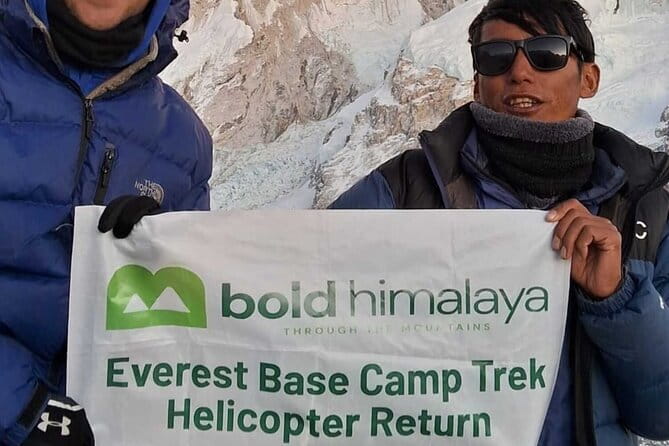
- Helicopter return after Kala Patthar: you keep the wow moments and skip the slow backtracking.
- Acclimatization built into the route: a preparation day in the Dingboche area helps you handle altitude more safely.
- Guide + systems, not chaos: experienced trekking support, private transportation, and a clear multi-day flow.
- Fees and paperwork handled: TIMS and Sagarmatha National Park-related fees are listed as included.
- Comfort-supported trekking: you’ll have lodge nights, meals, and some seasonal extras along the way.
Why the helicopter return changes Everest Base Camp for real
Everest Base Camp is famous for its back-and-forth grind. This version keeps the iconic parts but reduces the long return by adding a helicopter hop back to Kathmandu right after your Kala Patthar sunrise hike.
That changes the whole feel of the trip. Instead of saving energy for a full second trek down (when your legs may be tired and your altitude recovery is still ongoing), you finish strong, see the big views at first light, and then let the ride handle the mileage.
It also helps if your vacation window is tight. The trek is still demanding, but the schedule focuses on moving forward and hitting the key viewpoints, rather than turning your body into a repeated shuttle between the same valleys.
Just be smart about the one catch: helicopters are weather-dependent. This plan is explicitly described as requiring good weather. So you’ll want buffer time in your own travel plans and make sure you know what happens if a flight needs to shift.
You can also read our reviews of more tours and experiences in Kathmandu.



Day 1 in Kathmandu: pickup, briefing, and getting set up
Your experience starts at Tribhuvan Airport in Kathmandu, with pickup included. After transfer to your Kathmandu hotel, you’ll have time to settle in and then get an evening briefing to walk through how the trek will run.
Two practical wins here. First, you’re not guessing what comes next. Second, you can use that night to sort essentials—layering, gloves, and keeping your paperwork and money in the right places—before the early flight days.
In your package, you also get things that make the transition smoother:
- a cultural show and dinner program in Kathmandu
- a hotel stay for the first night (listed as Thrive or similar) with breakfast
- trekking support staff coordination and trip service coverage
If you like having a plan with fewer moving parts, this early structure matters.
Flights to Lukla: quick altitude jump, big views, real logistics
On Day 2, you fly from Kathmandu to Lukla. The flight is positioned as Kathmandu → Lukla, with a backup option described as Ramechap → Lukla. Either way, you’ll land at Lukla Airport and start trekking downhill toward Phakding.
This is one of the most important days in the whole trip, because it’s where you feel the shift from city life to mountain life. You’re not just walking—you’re adapting to a high-altitude environment fast.
The trek portion on this day is described as passing through alpine forests and crossing into the Phakding area. It’s a classic on-ramp: long enough to get into rhythm, not so punishing that you’re immediately cooked.
Practical tip (based on how these routes behave): plan to take the flight day seriously. Stay calm in the process, double-check what’s in your daypack vs. what goes in your duffle, and treat the first trail hours as settling-in, not speed-walking.
Phakding to Namche Bazaar: Sherpa villages and suspension bridges
Day 3 is about getting to Namche Bazaar, trekking from Phakding through Sherpa villages and crossing the Dudhkoshi River on suspension bridges.
Namche is where this trip starts to feel like Everest Base Camp is no longer a destination on paper. It’s also where you’ll likely notice the “tiny town at altitude” effect: lots of movement, lots of trekkers, and that mix of Tibetan/Sherpa culture you’re here to experience, not just your personal view.
A big plus is the route’s built-in variety: bridges, village sections, and steady climbs. That kind of route helps you pace your breathing and not overdo it.
Namche rest time: Everest View Hotel and a Sherpa museum stop
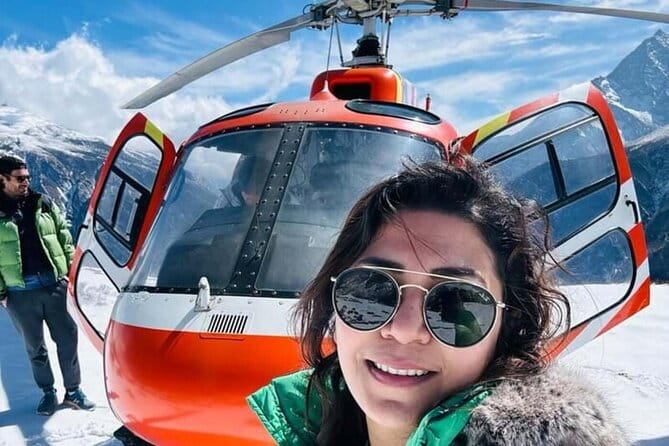
Day 4 adds a rest-explore day with two parts. You can explore Namche Bazaar, including a visit to the Sherpa Museum, and then you hike up to the Everest View Hotel for panoramic views of Mount Everest.
This day is valuable because it connects the trek to people and history. You’re not only chasing altitude—you’re learning what the Sherpa community has built around the mountain and the climbing era.
Then you still get the big scenery payoff. The Everest View Hotel hike is a good “reward day”: not a total recovery day, but not the grinding days either.
If you’re the type who needs both culture and viewpoints to feel like you got your money’s worth, this is a strong stop.




Tyangboche: mountain views plus a cultural moment
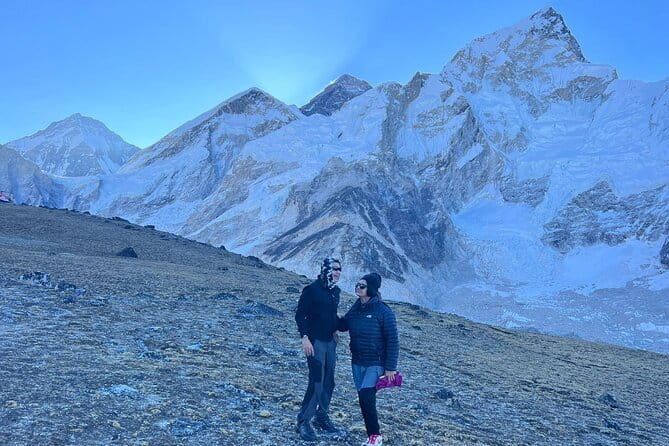
Day 5 continues from Namche’s higher hub toward Tyangboche. Along the way, you’ll have lunch at Phungi Thanga and then keep trekking toward the Tyangboche area. You also get time for a well-known cultural stop in Tyangboche.
Why I like this day: it’s a bridge between the busier Namche stage and the higher, quieter altitudes. You get mountain scale moments, but you’re also shifting into a slower rhythm.
The notes highlight views of Everest, Lhotse, and surrounding peaks. Even if you’re not a photographer, this matters. It makes the climb feel purposeful because you can actually see what you’re working toward.
Dingboche and the acclimatization day that makes sense
Days 6 and 7 are where altitude management shows up in a practical way.
Day 6 treks to Dingboche through villages such as Pangboche and Somare, crossing a suspension bridge over the Imja Khola. You also pass through rhododendron forests described in the route notes. The mix of trail surfaces and scenery makes the day feel less repetitive.
Day 7 is a preparation day for higher altitudes. You’ll explore the Dingboche Valley and hike up to Nagarjun Peak, described as helping with acclimatization and offering 360-degree views.
That’s the kind of structure that helps your body adapt. Instead of stacking summit-style days back-to-back, you get a controlled climb and a panoramic reward. If you’ve ever felt that altitude trips fail for one reason—trying to go too fast—this is built to prevent that.
Lobuche: higher terrain, memorials, and glacier closeness
Day 8 treks to Lobuche (about 4,940m) via Thukla Pass, which includes memorials to climbers. Then you arrive with close-up views of surrounding glaciers and overnight in the Lobuche area.
This is an emotional and visual day. The memorials keep the mountain from feeling like a video-game level. And the glacier proximity puts you right on the edge of the Everest Base Camp zone’s “serious” altitude world.
The note says the overnight segment is relatively short, with trekking time around six hours. That pacing fits the reality here: you don’t want to turn every day into a marathon when you’re already operating at thin air.
Everest Base Camp day: Gorak Shep, gear drop, icefall views
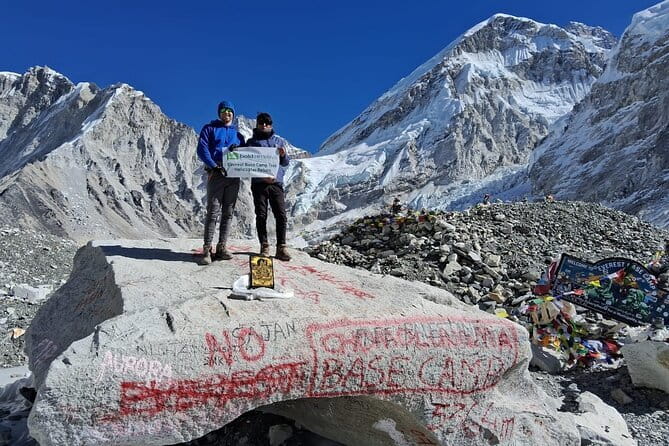
Day 9 is the big target day: Trek to Everest Base Camp (5,364m) and overnight in Gorak Shep (about 5,170m). You’ll trek to Gorak Shep and leave your gear, then continue onward to Everest Base Camp to savor views of the Khumbu Icefall.
This approach is practical. Leaving extra weight behind helps you move more comfortably for that forward push.
Also, the base camp itself is only part of the story. The notes call out views of the Khumbu Icefall. Whether you’re into mountaineering history or just love big geology, you’ll feel why the region is so dramatic. It’s not just a white mountain—it’s an active system.
If you’re sensitive to cold or fatigue, this is the day to watch your pace and take breaks early rather than waiting until you feel desperate.
Kala Patthar sunrise and the helicopter back to Kathmandu
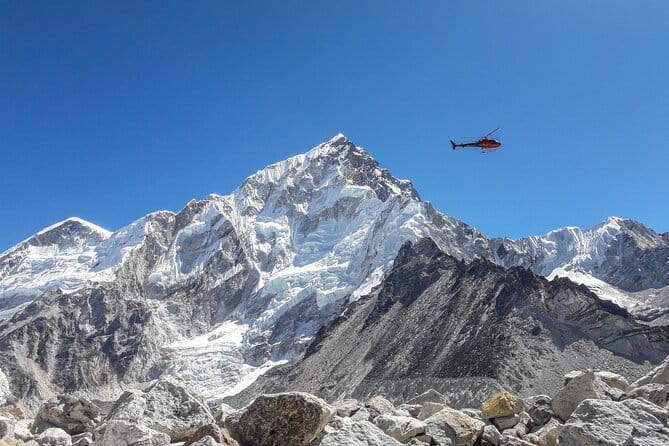
Day 10 starts with an early morning hike to Kala Patthar (about 5,550m) for sunrise and panoramic views. After the morning hike, you return to Gorak Shep and board a helicopter back to Kathmandu, followed by transfer to where you need to be.
Kala Patthar is one of those “even if you do everything else right” payoff moments. Sunrise timing at this altitude is usually when the sky turns crisp and the views feel sharp enough to make you stop talking.
Then the helicopter does what it promises: it turns the return trip from a long trek into a single flight. That’s a real value if you want Everest to be a once-in-a-lifetime experience without spending the last day fighting exhaustion.
Do confirm the helicopter details for your exact booking, because the included/not included lists can conflict. You want zero surprises on the money and zero stress on the timing.
Lodges, hot water, and comfort you can actually use
One of the strongest praised aspects is comfort support. A review specifically mentioned that Bold Himalaya delivered top-notch accommodations in Kathmandu and on the trek, with hot water and comfort even amid remnants of a cyclone. That same review noted that there were a couple of changes due to unexpected circumstances.
That kind of feedback matters because Everest-area trekking is not a lab experiment. Weather, trail conditions, and local logistics can shift. A good operator doesn’t just plan the perfect day—it handles the imperfect ones without turning your trip into a scramble.
In your package, you also get sleeping and cold-weather gear support (sleeping bag and down jacket listed, plus trekking poles). That can save you from buying or renting gear in Kathmandu, and it reduces “what did I pack wrong?” stress.
You’ll also have meal coverage listed for breakfasts, lunches, and dinners across the days on trek, plus some seasonal fruit and dry nuts. Those little energy details add up on high-altitude trail days.
Price and logistics: what $446.50 covers and what you should verify
At $446.50 per person, this package is not just paying for hiking. It wraps several expensive and time-sensitive parts into one offer: guide support, domestic flights to Lukla (or Ramechap), private transportation, lodge nights, and key entry fees.
Included items worth noting:
- Experienced trekking guide with salary, insurance, food, and accommodation
- Domestic flight Kathmandu → Lukla (or Ramechap → Lukla)
- Private transportation and Kathmandu hotel (twin sharing, breakfast included)
- TIMS plus Sagarmatha National Park and Pasang Lhamu Rural Municipality entrance fees
- Gear items like sleeping bag, down jacket, trekking poles (if you need them return after trekking)
- Duffle bag, cap, and trip certificate
- Meals listed for the trekking portion (breakfasts, lunches, dinners in set counts)
- Cultural show and dinner program in Kathmandu
What’s not included (as listed):
- International air ticket and travel insurance
- Tips for trekking crew
- Porters (listed as not included)
- Dessert and bar bills
- Helicopter flight from Gorak Shep to Kathmandu appears in the not-included list, even though Day 10 describes it as part of the experience
That contradiction is the one thing I’d treat as a red flag to clarify before you pay the final balance. If the helicopter is meant to be included, it should be clearly included in the final invoice or confirmation.
Who this Everest Base Camp plan suits best
This trek fits best if you:
- want the classic Everest Base Camp route segments, including key checkpoints like Namche and the higher staging areas
- value guided acclimatization rather than trying to self-manage at altitude
- like a structured plan with private pickup, domestic flights, and support staff
- have a moderate fitness level and want an operator that emphasizes safety and pacing
It may be a tougher fit if you:
- get nervous about flight/weather uncertainty (helicopters and Lukla flights both depend on conditions)
- hate paying extra at the end (tips, dessert/bar bills, and possible gear or porter choices)
Also, since this is a private tour activity where only your group participates, it’s a good match if you want less mix-and-match energy with strangers.
Should you book Bold Himalaya’s Everest Base Camp with helicopter return?
If you want a high-impact Everest experience that doesn’t force you to spend your last days crawling back down the same way, I think this plan makes sense. The biggest selling points are the built-in acclimatization structure, the strong support system, and the time saved by cutting the return trek with a helicopter flight after Kala Patthar.
But make one move before you commit: confirm the helicopter is included in your exact package and date, and ask what happens if weather affects flight timing. If the operator confirms clearly and you’re comfortable with the mountain’s reality, this is the kind of Everest plan that feels efficient without skipping the emotional highlights.
FAQ
How long is the Everest Base Camp trek with the helicopter return?
It’s listed as about 10 days.
Where does the tour start in Kathmandu?
The meeting point is Tribhuvan Airport in Kathmandu, Nepal.
Do you fly to Lukla or walk there from Kathmandu?
You fly from Kathmandu to Lukla (with an alternative listed as Ramechap to Lukla).
What’s the highest viewpoint on the program?
Kala Patthar is listed at about 5,550m, and it’s done early morning for sunrise.
What gear is included for the trek?
Sleeping bag, down jacket, and trekking poles are listed as included (if you needed them return after trekking).
Are meals included during the trek?
Yes. Breakfast is listed as 9, lunch as 8, and dinner as 8 in the included items.
Is international travel insurance included?
No. International air ticket and travel insurance are listed as not included. Tips for the trekking crew are also not included.