REVIEW · KLEIDONIA
Trekking day at Vikos Gorge for all
Book on GetYourGuide →Operated by Epirus Traveller · Bookable on GetYourGuide
One walk in Vikos Gorge, and you get the best kind of switch-up: shade, river sounds, and stone landmarks. This is a gorge trek in Epirus that runs along the Voidomatis River, inside a UNESCO-recognized world geopark, with historic bridges and small sacred stops along the way.
I particularly like how the route stays easy for all while still feeling wild and special, thanks to the riverside forest and the centuries-old plane trees. I also love the built-in “place stories” at the Aristi/Papigko Bridge and the finish at Kleidonia—so you’re not just walking, you’re learning what you’re seeing.
The one thing to consider is that it’s not for everyone: the trek isn’t suitable for wheelchair users or people with certain health conditions, and it’s still a real hike for 4 hours even if the pace is gentle.
In This Review
- Key highlights you should know
- A shaded walk inside Vikos Gorge geopark
- Your 4-hour route: Aristi/Papigko to Kleidonia
- Voidomatis River: the coldest river in Europe (and why that matters)
- Aristi/Papigko Bridge: your first landmark moment
- Spiliotissa monastery on a rock: seeing faith in the middle of geology
- Agioi Anargyroi church (1658): a small stop with big context
- Kleidonia stone bridge (1853): the payoff finish
- Plane trees, shade, and how to dress for this trail
- Price and what you actually get for $100
- Who this trek suits best (and who should skip it)
- Practical tips to make the day smoother
- Should you book Vikos Gorge for all?
- FAQ
- How long is the Vikos Gorge trek?
- Where does the route start and where does it end?
- Is the trail shaded and easy to walk?
- When is the best season to swim in the river?
- What’s included in the price?
- What should I bring for this experience?
Key highlights you should know
- UNESCO world geopark setting inside Vikos–Aoos National Park
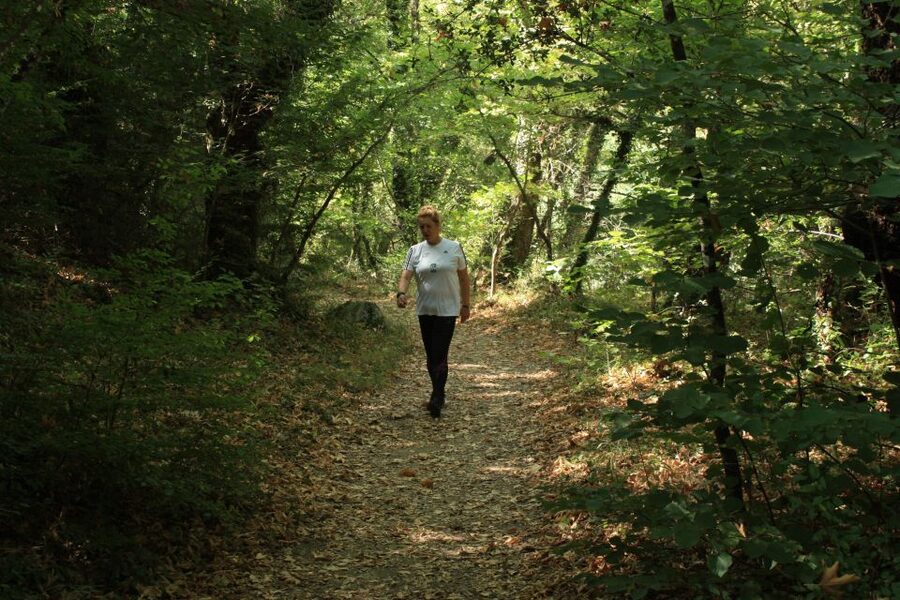
- Shaded riverside trail with ancient plane trees along the Voidomatis
- Cold-water realism: the Voidomatis is known as Europe’s coldest river, and summer swimming is the payoff
- Aristi/Papigko Bridge plus the historic Kleidonia stone bridge at the end
- Agioi Anargyroi church (1658) and the rocky Spiliotissa monastery stop
- Traditional-area meal by the river after the walk
A shaded walk inside Vikos Gorge geopark
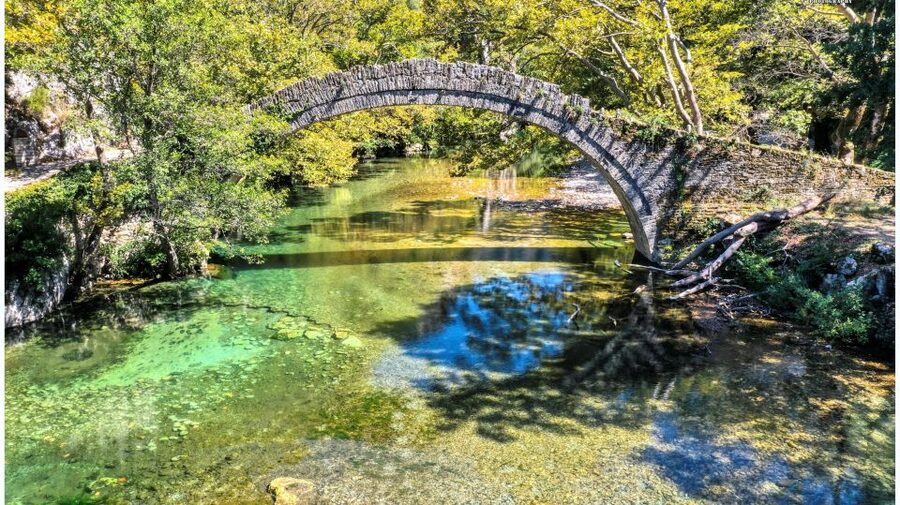
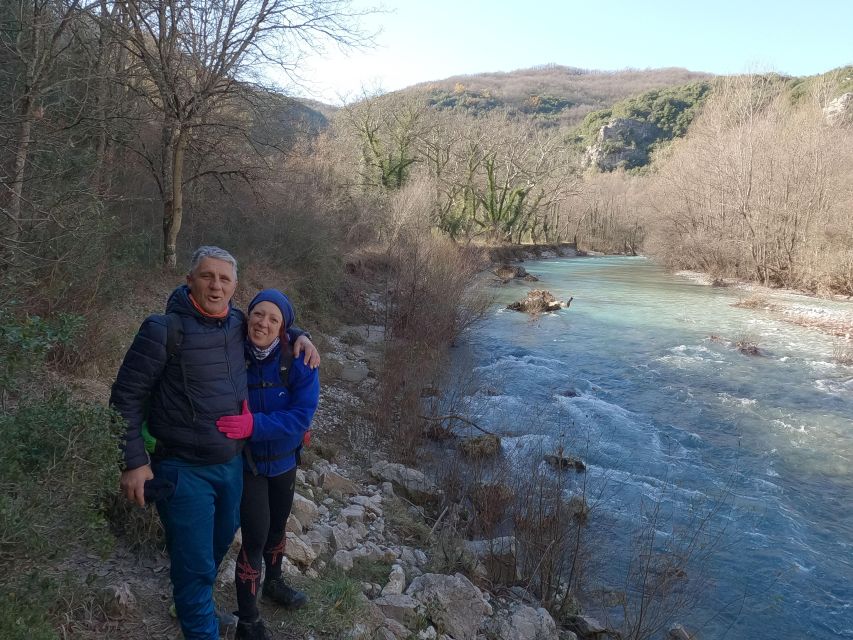
Vikos Gorge is one of those places where the scenery is impressive, but it’s the experience rhythm that really works. You’re walking beside the Voidomatis River in a unique riverside forest, mostly shaded, so you don’t feel like you’re baking for four hours. The trail also sits within a protected natural zone: the Vikos–Aoos National Park (since 1973) and a UNESCO geopark designation.
What I like most is that the route is truly practical. This is described as an easy route for all in the third part of the gorge, which matters because you can focus on breathing, watching birds or birds of interest, and taking photos without constantly thinking about footing. Also, it’s accessible all year, so you’re not trapped into one narrow travel window.
If you’re the type who usually skips hikes because you don’t want a big-buffet of suffering, this one is built for you. Just remember it’s still a guided trek: wear proper shoes and expect a steady walking pace, even if it’s not steep or technical.
Your 4-hour route: Aristi/Papigko to Kleidonia
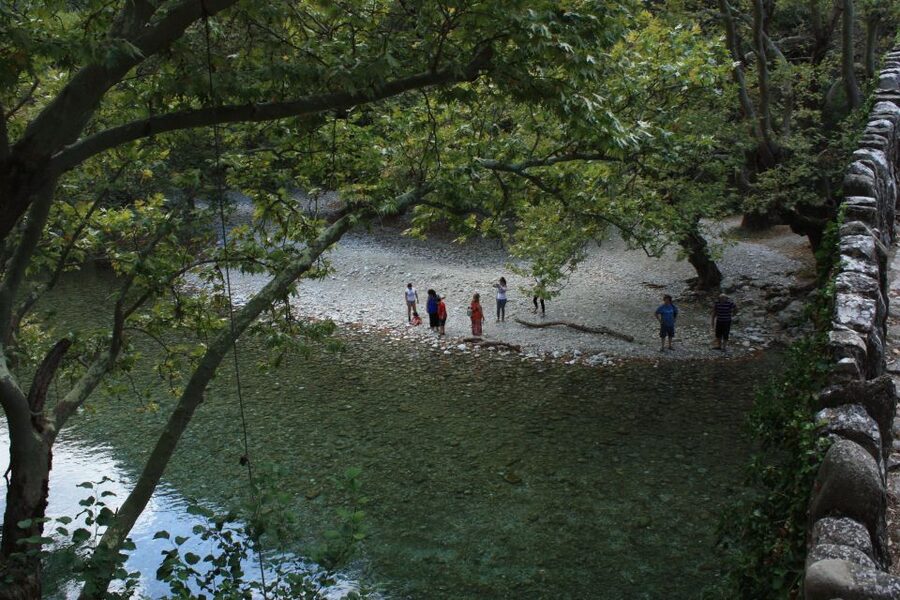
The walk starts at Aristi or Papigko Bridge in northwestern Zagori. From there, you follow the third part of Vikos Gorge—an easy route designed to be approachable. If you’re wondering how “easy” it is, think “manageable walking in nature,” not “strolling on flat pavement with no effort.”
The route ends at Kleidonia single arched stone bridge, which is a smart way to structure a gorge hike. Instead of doing an out-and-back and watching the same bend in the river twice, you get a natural one-way feel. And you’ll be picked up again: there’s private transportation back from Kleidonia Bridge to Aristi Bridge, so you don’t have to worry about your ride after you finish.
At the end, you can enjoy a meal with traditional recipes of the area beside the river. Meals aren’t listed as included, but the fact that it’s offered as part of the experience is a big deal for value and convenience. After four hours in cool water air and shade, local food beside the river tends to taste better than it has any right to.
Voidomatis River: the coldest river in Europe (and why that matters)
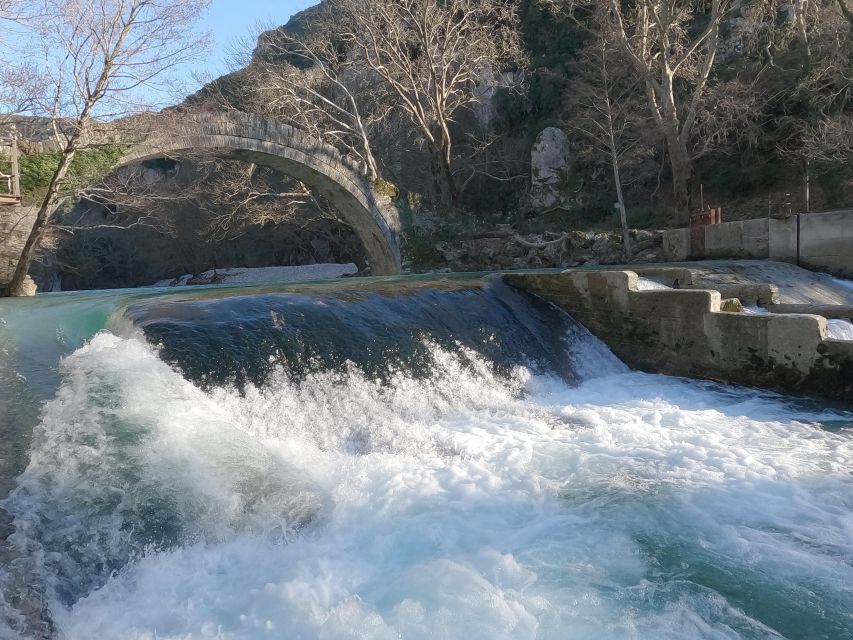
The Voidomatis has a name that goes back through time. It comes from a Slavic origin—described as Bode–Mat—meaning good water. That’s a small detail, but it changes how you experience the place: you stop thinking of the river as background and start noticing it as the reason the gorge is memorable.
Then there’s the cold-water reality. The Voidomatis is noted as the coldest river in Europe, and that has a practical side. In warmer months (May through September), the water turns into an actual highlight, not just a scenic detail, and the route timing is best for people who want a swim.
If you travel outside summer, don’t assume you’ll be wading or swimming—just enjoy the chill air, the river rhythm, and the shaded comfort along the bank. Either way, bring what makes your day easier: comfy shoes for the walk, breathable clothes, and if you’re in the May–September window, bring swimwear and sandals or flip-flops so you’re not scrambling when you see the water.
Aristi/Papigko Bridge: your first landmark moment
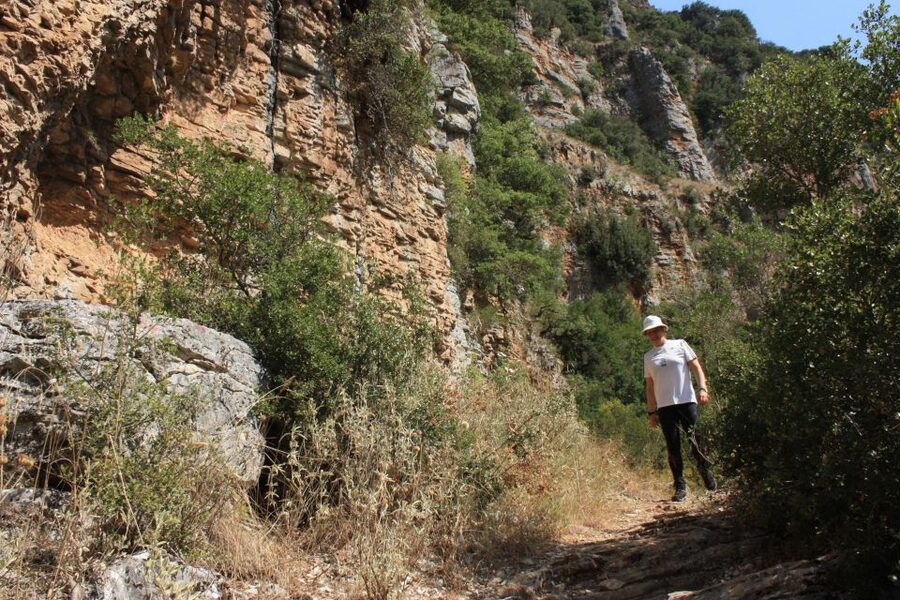
The first big “wow” stop is the bridge itself—Aristi or Papigko Bridge. Bridges in this part of Greece aren’t decoration. They’re infrastructure, built to connect villages and routes in terrain that otherwise makes travel slow and risky.
This matters on a trek, because you’re not just crossing a pretty scene. You’re arriving at a point that local life has relied on for generations. And because you’re walking with a certified English guide, you don’t have to guess at the meaning behind what you see.
Even better: this starting point makes the day feel like you’ve arrived somewhere real, not like you’re being dropped at a random trailhead. Once the gorge path begins, the bridge is less of a photo-op and more of a reference point for the rest of the walk.
Spiliotissa monastery on a rock: seeing faith in the middle of geology
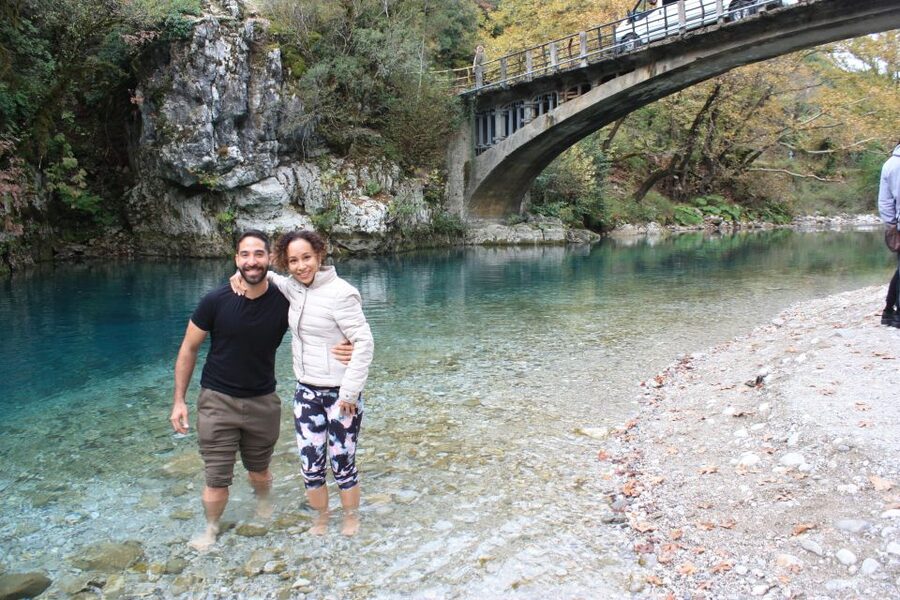
On the way, you can observe the monastery of Spiliotissa, built on a rock. That detail is exactly why a gorge trek with stops is more interesting than a straight trail. You’re not just watching water flow through stone; you’re seeing how people used the terrain—especially dramatic rock—to build places of worship and community.
Because Spiliotissa is observed rather than described as a ticket stop in the provided info, I’d treat it as a “look and appreciate” moment. Bring your camera, or at least stop long enough to frame the view from where your guide tells you to stand. Rock-built monasteries always look different depending on the angle, and gorge light can shift quickly.
Agioi Anargyroi church (1658): a small stop with big context
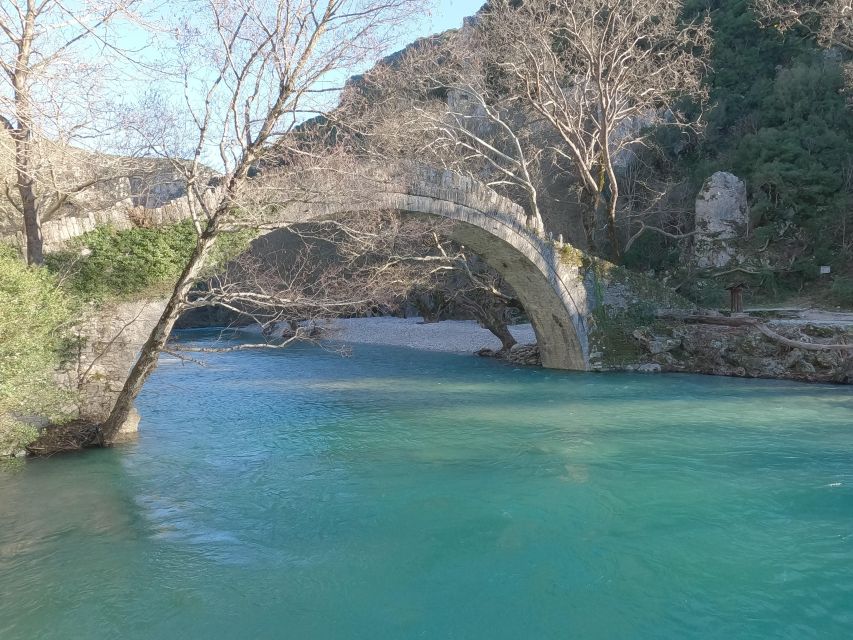
Another stop is the old church of Agioi Anargyroi, built in 1658. Churches like this are where the trail becomes more than nature. They connect you to the human timeline layered on top of the gorge’s natural forces.
It’s also a nice break in a 4-hour day. You get movement along the river, then a pause for something slower: materials, age, and the feeling that a community has tended this spot for a long time. Even if you’re not a church-person, the date helps. A building from 1658 means you’re looking at a place that has outlasted empires, wars, and changes in roads.
I find this kind of stop especially valuable when the hike itself is short. It keeps the day from feeling like only “walking + photos.” You end with a story, not just an image.
Kleidonia stone bridge (1853): the payoff finish
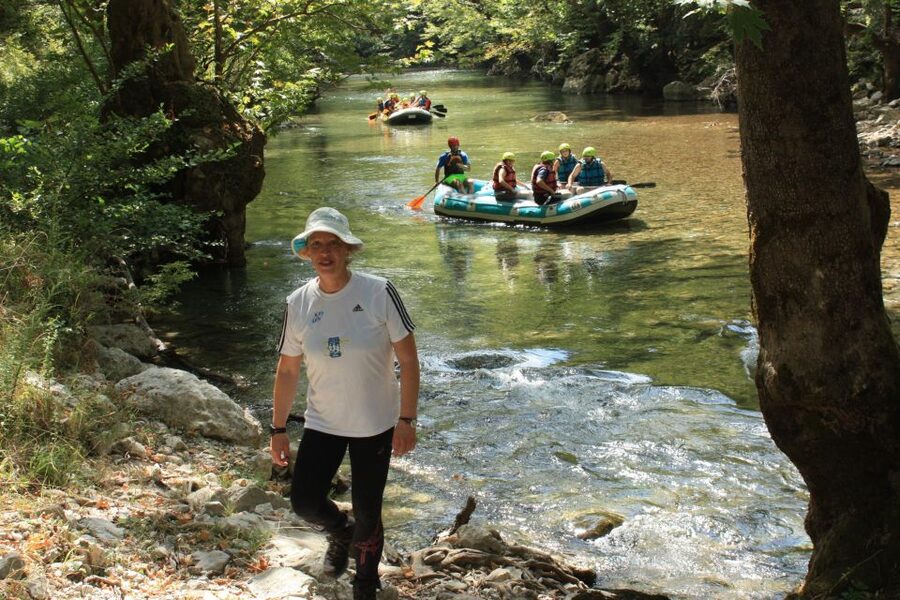
The final destination is Kleidonia single arched stone bridge, built in 1853. This bridge also has a practical purpose described for the region: it connected locals from the villages of Agios Minas and Aristi towards the Konitsa plain, and also helped connect people from Konitsa town toward Ioannina city.
That kind of detail changes your last minutes. Instead of focusing only on the arch and the view, you understand the bridge as a route in motion. The gorge is beautiful, but it’s also a corridor—bridges and paths make the difference between a difficult journey and a doable one.
When you reach the bridge, you’ll be close to the end of the trek, so pace yourself during the earlier sections. If you sprint every photo stop, you’ll feel it by the final stretch. Save your energy for the final views and the meal afterward.
Plane trees, shade, and how to dress for this trail
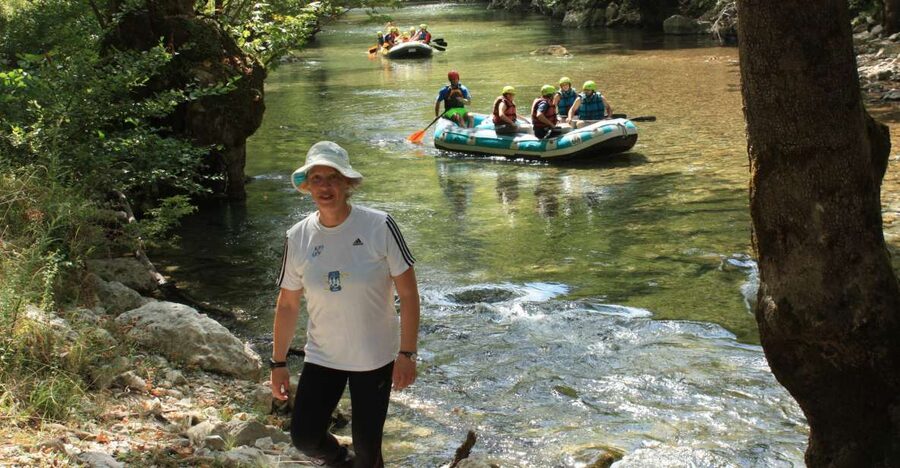
One of the best descriptions here is how the route is shaded and runs through a riverside forest with centuries-old plane trees. That means the day feels cooler and calmer than you might expect from gorge walking. It’s also a gift if you’re traveling in summer: you still get the gorge atmosphere, without the sun constantly beating down.
What to wear and bring is pretty clear, and I’d follow it closely:
- Comfortable shoes you can trust
- Breathable clothing and a T-shirt
- If you’re in May–September: swimwear plus sandals/flip-flops
- Camera-ready clothes, because bridge-and-church stops are photo-heavy
One small practical tip: don’t pack only one shoe type. Bring what you can walk in easily, but if you plan to swim, you’ll also want footwear that’s safe near slick river edges. Flip-flops work great for river access as long as you’re careful getting in and out.
Also, while the route is described as accessible all year, weather can still change the feel of walking in a gorge. Dress in layers when you can, and keep your clothes breathable so you’re comfortable during shaded sections and any open moments.
Price and what you actually get for $100
At $100 per person for a 4-hour experience, this isn’t a “cheap and casual” add-on. But it’s not random pricing either. The value is built on the included support: hotel pickup and drop-off, private transportation, a certified English guide, and bottled water.
You’re also getting extra structure for the route: private transportation from Kleidonia Bridge back to Aristi Bridge. That matters because gorge walks are often one-way, and without that transfer you’d spend time, energy, and money on logistics.
There’s also photographic and video material included. That’s a small line item, but it can be worth a lot if you don’t want to spend the whole day passing your phone around and hoping everyone’s faces look natural.
If you’re traveling solo and you’d otherwise pay for transport or struggle with planning, the $100 can feel fair. If you’re comfortable navigating on your own and you just want views, you might find cheaper options elsewhere. Still, for most people, the mix of guide storytelling, transport, and a tidy 4-hour timeframe is what makes it feel like a well-spent half day.
Who this trek suits best (and who should skip it)
This is labeled as for all, but that doesn’t mean it fits everyone. It’s not suitable for children under 5, pregnant women, people with mobility impairments, wheelchair users, people with heart problems, people with epilepsy, people with recent surgeries, and people over 70 years. It’s also capped by weight: not suitable for people over 254 lbs (115 kg).
So who will enjoy it? You’ll likely have a great day if you’re:
- Comfortable walking for around 4 hours
- Want an easy pace without losing the sense of “real place”
- Interested in bridges, churches, and local geography stories
- Traveling in May–September and planning to swim in the river
If you’re unsure, treat the exclusions seriously. A gorge can be beautiful and still not be the right environment for certain medical needs. If you want something gentler or fully step-free, look for a different format rather than trying to force this one.
Practical tips to make the day smoother
A short list I’d follow:
- Wear comfortable shoes from the start; don’t rely on sandals for the walk.
- Bring swim gear if you’re traveling in May–September, since this is where the crystal waters shine.
- Bring flip-flops or sandals for river-edge moments.
- Bring a camera, because the bridge finishes and the church stop are natural “pause and frame” moments.
- Don’t forget a breathable layer even in warm months—gorge shade can feel cool.
Because the route is shaded, it can be tempting to pack too lightly. I like breathable clothing, but I also like having a light extra layer in case the air feels cooler near the water.
Should you book Vikos Gorge for all?
Yes, I think you should book it if you want an easy 4-hour gorge walk with real context—bridges that connected villages, a church built in 1658, and a rocky monastery viewpoint. The strongest reasons to choose this are the shaded riverside forest, the UNESCO geopark setting, and the fact that the day includes transport and a guide so you can focus on the experience.
Skip it if you fall into the listed unsuitability categories, or if you’re looking for a long hike or a self-guided adventure with no structured stops. This is built as a guided, well-timed half-day: calm pace, meaningful stops, and a river-focused ending.
If your travel style is “see the important things without wasting time,” this fits nicely. And if you’re in the May–September window, the chance to swim in the Voidomatis waters is the kind of moment you’ll remember long after the photos are backed up.
FAQ
How long is the Vikos Gorge trek?
The activity lasts about 4 hours.
Where does the route start and where does it end?
It starts at Aristi or Papigko Bridge and ends at Kleidonia single arched stone bridge.
Is the trail shaded and easy to walk?
Yes. The route is shaded and described as an easy route for all.
When is the best season to swim in the river?
The best season to swim is from May up to September, when the waters are described as crystal.
What’s included in the price?
Included are hotel pickup and drop-off, private transportation, a certified English guide, bottled water, photographic and video material, all taxes & VAT, and private transportation from Kleidonia Bridge back to Aristi Bridge.
What should I bring for this experience?
Bring comfortable shoes, breathable clothes, and a camera. If you plan to swim, bring swimwear, sandals, and flip-flops.