REVIEW · ZAGORA
4 Day Private Desert Trek from M’Hamid to Chegaga
Book on Viator →Operated by Sahara Peace · Bookable on Viator
The Sahara does something to your pace and your head. This 4-day private trek from M’Hamid to Chegaga trades sightseeing boxes for days on foot, bivouac living, and that jaw-dropping moment when the Chegaga dunes turn gold at sunset. You’ll walk about 5 hours per day (around 20 km), then settle into camp with the guide and cook setting things up properly.
I especially love how food and comfort are handled well for a remote trip: breakfasts, lunches, dinners, snacks, coffee or tea, and even bottled water are included, plus mattresses, blankets, and tents. My second favorite part is the feel of a true private experience—you’re not squeezed into a crowd, and the guides adapt to your group’s pace. One consideration: it’s not for anyone who struggles with walking, since the days are built around sustained time on foot.
In This Review
- Key things to know before you go
- Why This M’Hamid to Chegaga Trek Feels Like the Real Sahara
- The 9:00 Meeting and Camel-Loading Start: Where Your Trip Really Begins
- Days 1–3 on Foot: 20 km a Day, Camp Work, and Meal Timing That Keeps You Going
- What you’ll actually feel during the walk
- Camp and meals: the “comfort system” of the desert
- Night in the Bivouac: Sleeping With the Stars Without Getting Caught Off Guard
- Chegaga Dunes at Sunset: The Moment You Came For
- A small tip to enjoy sunset more
- Day 4 by 4×4: Shorter Travel Time, Reverse Views, and a Hot Shower
- Price and Value: What $406.51 Covers (and What It Doesn’t)
- How to judge if this is worth it for you
- Who Should Book This Private Trek (And Who Should Skip It)
- Practical Packing: The Desert Basics You’re Responsible For
- Should You Book This Trek From Sahara Peace?
- FAQ
- How long is the 4 Day Private Desert Trek from M’Hamid to Chegaga?
- What time does the tour start?
- Where does the tour start and end?
- Is this a private tour?
- How much walking is included each trekking day?
- What meals and drinks are included?
- What’s included for sleeping in the desert?
- Is there a hot shower during the return?
- What should I bring since some items aren’t included?
- What happens if weather is poor or I need to cancel?
Key things to know before you go
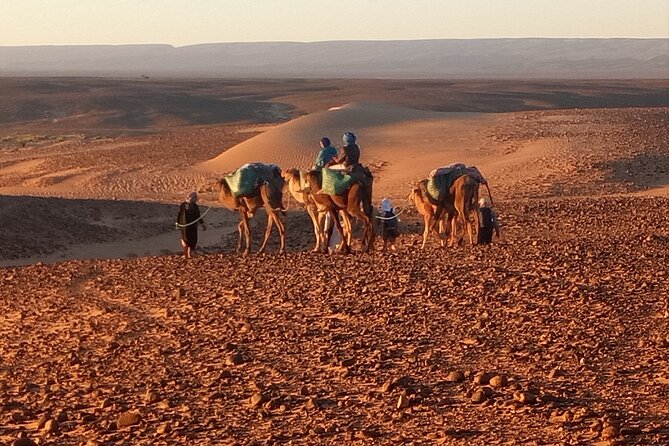
- Private group, your pace: only your group participates, and the team adapts to you.
- Camels at the start: you meet at 9:00, organize loading, and the caravan sets off.
- Daily walking time: about 5 hours walking per day (around 20 km).
- 3 nights in bivouacs: cook and guide handle camp setup and substantial meals.
- Sunset at Chegaga: you reach the dunes on the third evening and climb for sunset views.
- Return by 4×4 + hot shower: day four is a shorter trip by vehicle, with a hot shower at the end.
Why This M’Hamid to Chegaga Trek Feels Like the Real Sahara
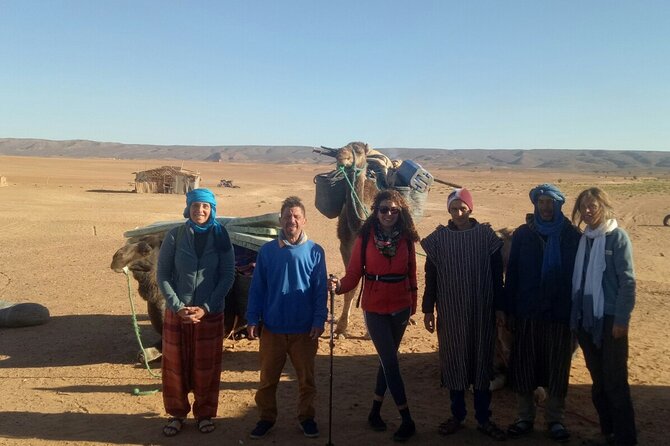
If you want the Sahara as a place to live for a few days, this trip makes sense. You’re moving through wide-open terrain by foot, then sleeping in a bivouac where the work of camp matters and the rhythm is simple. The goal is not just photos. It’s quiet, effort, stars, and that reset you only get when you stop managing details for a change.
What I like most is the operator’s clear mindset: the bivouac isn’t presented as a stage set. It’s described as a community/work space, and the team asks to share knowledge and love for the land. That comes through in the way the itinerary is built—walking days, then real camp nights where you can actually slow down.
Also, you get a strong sense of people behind the experience. The names that show up in guides’ stories around this camp system include Moubarak, Mubarak, Atman, Hassan, and Brahim, plus Pascale. In one account, the guides were described as fluent in French and English and also using Berber GPS. Even if you don’t speak French or Arabic, that kind of competence matters because it reduces the guesswork out in the dunes.
You can also read our reviews of more tours and experiences in Zagora.
The 9:00 Meeting and Camel-Loading Start: Where Your Trip Really Begins
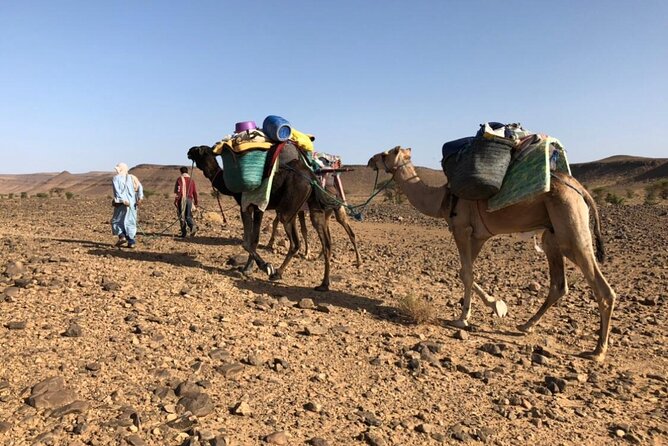
The morning starts at 9:00 am at the meeting point: Agence de voyages spécialisée en randonnée et trekking SAHARA PEACE, Moulay Rachid, Rue Sebta n249, Zagora 45900, Morocco. From there, you get your first feel for the group and the plan, and you organize the logistics for the camel loading before the caravan sets off.
This matters more than it sounds. Camel loading is not just a cute detail. It determines how much you carry and how smooth the first walking day feels. You’ll be walking around 5 hours (about 20 km), so the less you have on your back, the more you can enjoy the terrain and keep a steady rhythm.
A good sign from the accounts you provided: people describe a calm, welcoming vibe at the camp before trekking begins. One review highlighted the warm welcome at the fixed bivouac before an overnight trek, calling the place remote and magical. That kind of first-day energy sets the tone. You arrive, you meet the team, then you move out of town life and into the desert schedule.
Practical note: this trip includes pickup offered, but the exact pickup coverage isn’t spelled out in your data. If you’re staying outside the meeting area, ask your operator which pickup points they can cover and the expected arrival time.
Days 1–3 on Foot: 20 km a Day, Camp Work, and Meal Timing That Keeps You Going
These are your main trekking days. The plan is built around about 5 hours of walking per day, typically around 20 km, plus a lunch break that gives you time to rest and eat. The description also points out that walking is paired with a kind of inner reset: wide open space, bivouac simplicity, nature silence, and that feeling of being challenged by the desert’s emptiness.
One useful detail from guide-style reviews is the rhythm of movement. A walk schedule described as morning and late afternoon shows up in the experience stories. Even if the exact times shift with heat and conditions, you can assume the trip won’t run like a marathon from sunrise to sunset. You’ll have breaks, and the team will keep camp functioning so you don’t spend evenings scrambling.
What you’ll actually feel during the walk
- Distance adds up fast in sand and uneven terrain, so pace matters.
- Being steady beats being fast. The desert doesn’t reward sprint energy.
- Your lunch stop isn’t just fuel. It’s also a mental reset.
Camp and meals: the “comfort system” of the desert
Every evening, the guide and cook set up camp and prepare a substantial meal. Included are breakfast, lunch, dinner, coffee and/or tea, snacks, and bottled water. You also get camp basics: mattresses, blankets, dishes, and tents are provided, so you’re not showing up to solve camping gear problems.
A lot of trekking disappointment comes from underestimating camp needs. This is one of the stronger sides of this trek: camp is not an afterthought. It’s part of the schedule. That means you’re more likely to wake up ready to walk again, instead of surviving the night.
If you love social travel, you’ll still get time to talk with your guides and share the camp evenings. But if you’re looking for solitude, this also supports that. The desert nights you’ll experience are described as star-filled and quiet, with people appreciating that there isn’t a constant parade of others around the camp setting.
Night in the Bivouac: Sleeping With the Stars Without Getting Caught Off Guard
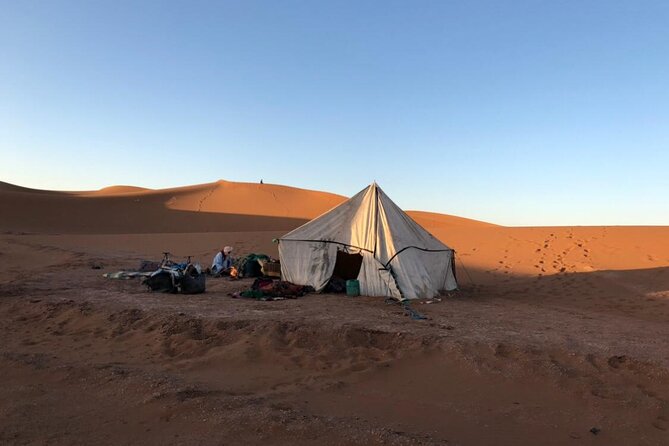
This is a 4-day trip with the main trekking happening across three days, which means you’ll spend three nights in bivouacs as the walking continues. The evening flow is consistent: after arriving, you set camp, eat, then slow down.
What’s included makes those nights less stressful:
- Tents provided
- Mattresses and blankets provided
- Camp kitchen equipment provided
- Bedding setup likely makes a real difference for sleep quality
That last point matters. In cold desert temperatures, the difference between a bed and a thin mat is huge. Your package includes mattresses and blankets, which is exactly what you want.
One more thing: toiletries and sun and wind protection are not included. That doesn’t mean the camp lacks “comfort,” but it does mean you should plan for the realities of dust, dry air, and sun. More on packing below.
Chegaga Dunes at Sunset: The Moment You Came For
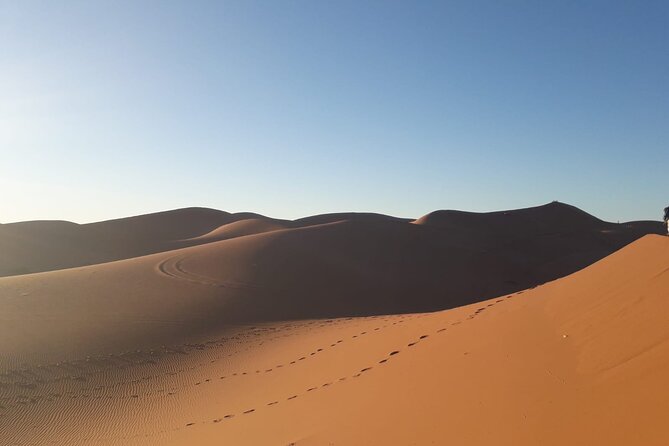
On the evening of the third day, you reach the magnificent site of the large dunes of Chegaga. The plan includes time to climb to admire the sunset. This is where the trip turns from “nice adventure” into “I’ll remember this forever” material.
Why sunset at Chegaga hits so hard:
- The scale changes your sense of distance. Dunes don’t look like dunes once the light hits.
- Wind and shadow make the colors shift quickly, so you’ll want to take your time.
- You’re arriving after days of walking. Your body is ready for awe.
The review highlights around this stop describe it as remote and magical, with people staying focused on the desert experience rather than tourist crowds. One account specifically mentioned watching stars and feeling like the Sahara was real, not staged.
A small tip to enjoy sunset more
Bring the right mindset: you’ll likely be tired from the day’s walking. So instead of trying to “capture everything,” plan to do one slow climb, one pause, and one long stare at the horizon. Trust me, the best part won’t be the camera framing. It’ll be the silence.
Day 4 by 4×4: Shorter Travel Time, Reverse Views, and a Hot Shower
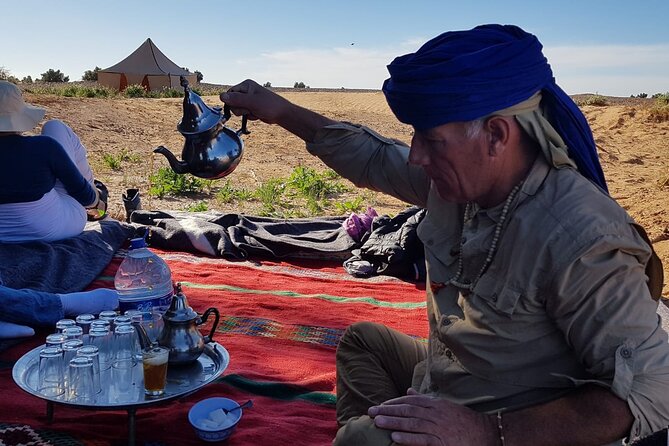
The next day, a 4×4 picks you up for the return trip. The schedule says it takes about 3 hours to cover the route from your three walking days in the opposite direction. That’s a smart way to get variety without paying for extra sand-trudging with your legs.
Then comes the practical win: back at the bivouac, you’ll have a hot shower and a last midday meal. For a trip like this, that’s not just a comfort perk. It’s what lets you feel human again before leaving the desert zone.
If you’re the type who worries about washing on multi-day treks, take this as a green flag. Plenty of adventures handle hygiene like an afterthought. Here, they explicitly include the hot shower on the final day.
Price and Value: What $406.51 Covers (and What It Doesn’t)
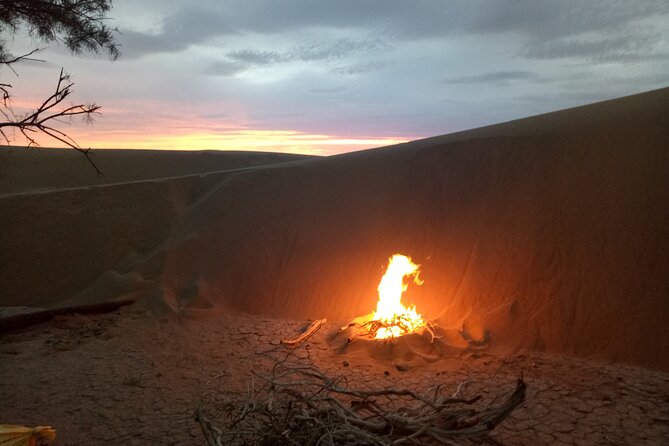
At $406.51 per person for about 4 days, the big question is: are you paying for logistics, or are you paying for the real experience? In this case, you’re paying for a package that includes a lot of moving parts.
Here’s what’s included:
- Breakfast, lunch, dinner
- Snacks, coffee and/or tea
- Bottled water
- Private transportation
- All bivouac and kitchen equipment: mattresses, blankets, dishes, tents
- Private trek format (only your group participates)
What’s not included:
- Alcoholic beverages and soda/pop
- Toiletries
- Sun and wind protection
So the value is in the “make it work out there” items: food, camp gear, and transport. That’s usually the stuff that costs real money on desert adventures because you’re moving people and supplying comforts in a low-infrastructure environment.
Also, the operator’s private setup matters. If you’re traveling as a small group or as a family with teenagers (some accounts mention bringing kids), a private trek can feel safer and calmer than squeezing into a larger group schedule.
How to judge if this is worth it for you
This trek is a good value if:
- You want camping style reality, not a comfort-first tour bus.
- You like walking long days and want the desert to be the main event.
- You’ll actually use the included meals and camp equipment instead of expecting upgrades.
It’s less worth it if you want short walks, lots of amenities, or minimal physical effort. The plan is built around moderate fitness and sustained trekking time.
Who Should Book This Private Trek (And Who Should Skip It)
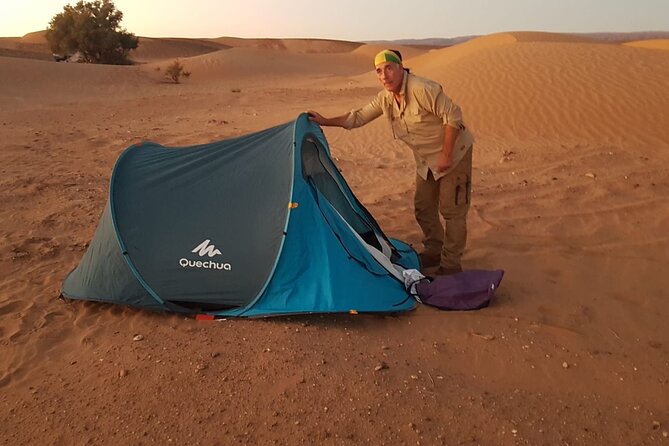
This is best for people with moderate physical fitness. You should be comfortable with walking for about 5 hours a day and handling around 20 km in desert conditions. The trip is clearly labeled as not recommended if you have difficulty walking.
It’s also a strong match if you:
- Want a private experience where the team can adapt to your pace.
- Enjoy learning how nomads and desert life works, not just taking photos.
- Appreciate guides who connect with locals and understand the land. Your provided stories specifically mention involvement with local cooperatives and a guide communication style that works well in French and English.
If you’re traveling with family, this could work too. One account described a trek with four teenagers and praised the team’s professionalism and welcome.
If you hate dust, sand in your socks, or long stretches with no shops, then you’ll want a different style of desert trip. But if you want quiet and effort that pays off, this is the kind of plan that delivers.
Practical Packing: The Desert Basics You’re Responsible For
Because toiletries and sun and wind protection are not included, you’ll want to pack the desert essentials yourself. Even if the camp provides mattresses, blankets, and tents, you still need your personal comfort items.
A simple packing checklist for this specific trek:
- Toiletries (your preferred basics)
- Sun and wind protection (sunscreen, sunglasses, scarf/buff)
- A way to manage dry air (lip balm, if you use it)
- Comfortable walking layers for long days
And don’t ignore the “small” things:
- Wear footwear that can handle sand and uneven ground.
- Bring a hat or cover that stays put while walking.
- Plan for dust. It’s part of the deal.
Also, since bottled water is provided, you don’t need to haul your own water supply. But bring your own personal habit items for drinking comfort if you have preferences.
Should You Book This Trek From Sahara Peace?
If your goal is to experience the Sahara with walking, bivouac life, and real quiet, I’d say this trek is a strong choice. The setup is built around what most people want most: time on foot, camp meals, starry nights, and the Chegaga sunset payoff—then a thoughtful return with a hot shower.
I’d tell you to book if:
- You’re comfortable walking about 5 hours a day.
- You like the idea of private desert time rather than a crowd.
- You want the included meals and camp equipment to handle the heavy lifting.
I’d tell you to reconsider if:
- Walking for several hours daily is hard for you.
- You want a tour where comfort and schedule certainty outweigh effort and simplicity.
If you do book, set your expectation that this is a desert rhythm trip. When you let the day’s pace be what it is, you’ll get the best out of it.
FAQ
How long is the 4 Day Private Desert Trek from M’Hamid to Chegaga?
It runs for about 4 days.
What time does the tour start?
The start time is 9:00 am.
Where does the tour start and end?
It starts at the SAHARA PEACE agency meeting point in Zagora (Moulay Rachid, Rue Sebta n249). The experience ends back at the meeting point.
Is this a private tour?
Yes. It’s private, and only your group participates.
How much walking is included each trekking day?
You can expect about 5 hours of walking per day, around 20 km.
What meals and drinks are included?
Breakfast, lunch, dinner, snacks, and coffee and/or tea are included, along with bottled water.
What’s included for sleeping in the desert?
The package includes tents plus bivouac and kitchen equipment, including mattresses, blankets, and dishes.
Is there a hot shower during the return?
Yes. On the final day, after the 4×4 return, there’s a hot shower at the bivouac.
What should I bring since some items aren’t included?
Toiletries, plus sun and wind protection, are not included.
What happens if weather is poor or I need to cancel?
The experience requires good weather. If it’s canceled due to poor weather, you’ll be offered a different date or a full refund. Cancellation can be free if you cancel at least 24 hours in advance for a full refund.