REVIEW · PARO
Best of Bhutan Tour( Culture- Hikes- Short Trek- Monastic Stay)
Book on Viator →Operated by Bhutan Best InBound Tour · Bookable on Viator
Bhutan feels personal fast. This 5-day Paro-based trip mixes classic sights with calmer moments—temples, monastery prayers, and a couple of short hikes that still give your legs a reason to work. I especially like the practical pacing (not a marathon), and the way the route hits both famous landmarks and quieter monastery stops.
Two specific highlights I’d book for: the Tiger’s Nest (Paro Taktsang) early hike and a monastery-focused day with morning prayer at Dodeydra. One possible drawback: the itinerary is weather-sensitive, so if skies are poor you may have to adjust plans (the experience requires good weather).
If you want Bhutan that feels lived-in—not just photographed—this kind of itinerary is a strong fit.
In This Review
- Key Things That Make This Tour Worth Your Time
- Paro to Thimphu to Punakha: How This Route Actually Feels
- A note on the “approx. 5 days” timing
- Your Daily Rhythm: Short Hikes, Monastery Mornings, and Moderate Fitness
- Why the “good weather” requirement matters
- Day 1 in Paro and Thimphu: Prayer Flags, Fortress Views, and a Busy Farmers Market
- Tachogang Lhakhang Bridge: a gentle start with prayer flags
- Simtokha Dzong: Bhutan’s oldest fortress on a ridge
- Buddha Dordenma at Kuensel Phodrang: the big-sitting statue stop
- Wangdi-tse Monastery hike: easy, scenic, and practical
- Centenary Farmers Market: end the day with everyday Bhutan
- Day 2: Pangri Zampa’s Astrology College and the Hilltop Walk to Dodedrak
- Pangri Zampa Monastery: astrology and a 21 Tara Devi temple
- Dodedrak Buddhist Monastery: a longer uphill day with big calm
- Day 3: Morning Prayer at Dodeydra, Dochula Pass, and Punakha Dzong
- Morning Prayer at Dodeydra: show up early for the sound of devotion
- Dochula Pass: 108 shrines and possible big mountain views
- Chimi Lhakhang Temple: short hike from Sopsokha Village
- Punakha Dzong: two-river junction and winter monastery residence
- Day 4: Paro Taktsang (Tiger’s Nest) Early Hike From Paro
- What makes this hike special
- The weather angle again
- Day 5: Paro Airport Drop-Off and a Clean Ending
- Cultural Payoff: Local Farm Dinner and Monastic Stay Style
- Dinner at a local farm and meeting a family
- Monastery stay feel, not just monastery photos
- Human service that matters
- Price and Value: What $1,370 Covers (and When It’s a Good Deal)
- Practical Trail and Packing Tips (Based on This Itinerary’s Reality)
- How to plan your body for the walking
- Bring patience for weather
- Respectful behavior at religious sites
- Who Should Book This Bhutan Culture + Short Trek Tour
- Should You Book This Tour or Look Elsewhere?
- FAQ
- Is pickup offered for this tour?
- Where does the tour start and end?
- How long is the tour?
- What fitness level do I need?
- Is this a private tour?
- What meals are included?
- Does the price include the Bhutan visa?
- Are admissions included for sites on the route?
- Is alcohol included?
- What happens if weather is bad?
Key Things That Make This Tour Worth Your Time
- Paro Taktsang (Tiger’s Nest) timed for the early-morning effort, with admission included
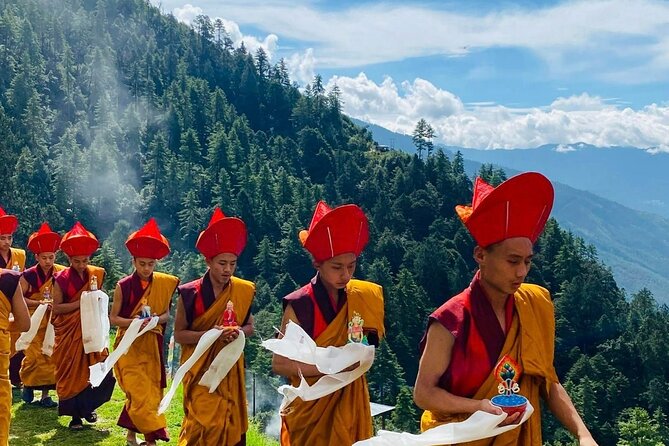
- Dodeydra Monastery morning prayer, which turns your visit into a lived ritual, not a quick stop
- Short hikes that stay manageable for people with moderate fitness
- A local farm dinner and meeting a family, bringing Bhutan’s daily life into the trip
- Well-structured days that balance driving with walking and gives you time to enjoy the views
- Private tour format, so you’re not stuck waiting on a large group
Paro to Thimphu to Punakha: How This Route Actually Feels
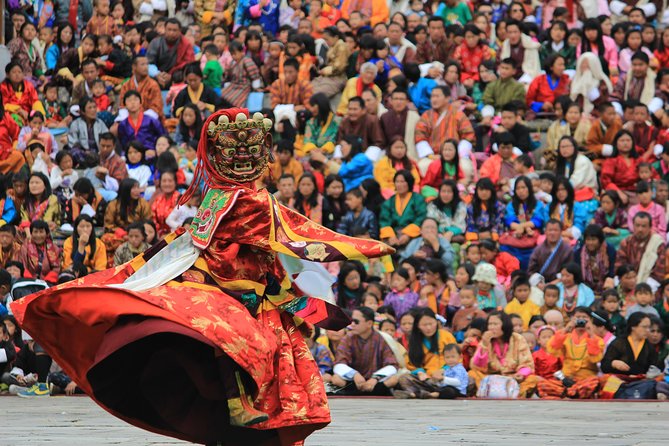
This tour is built around Bhutan’s classic triangle—Paro, Thimphu, and Punakha—with enough driving to connect the dots and enough walking to feel like you’re seeing the country on foot.
You start at Paro International Airport (and the meeting point is listed right there), and the tour ends with a drive back to Paro for your airport transfer. Pickup is offered, and because it’s a private tour, you’re only traveling with your group—no herd energy, no split-second “everyone follow me” chaos. The tour also notes mobile ticket and you’ll have a guide with you for the key cultural stops.
The thing I like about this setup is that it lets you focus on the sacred places without constantly recalculating logistics. Bhutan travel can be slow and winding; having private transportation plus a guide helps you keep your brain on the experience.
You can also read our reviews of more tours and experiences in Paro.
A note on the “approx. 5 days” timing
The itinerary is presented as 5 days (approx.) with meals listed across 5 breakfasts, 4 lunches, and 4 dinners. In Bhutan, small schedule shifts happen, so plan for that mental flexibility. What you gain is a trip that doesn’t feel rushed every single day.
Your Daily Rhythm: Short Hikes, Monastery Mornings, and Moderate Fitness
The tour is clearly geared toward people who can handle moderate physical fitness. That doesn’t mean it’s easy-easy. It means you can do steady uphill walking for short stretches and you’ll likely be on foot for a few hours at a time on certain days.
A big reason I’d pick this itinerary style: it balances active time with quiet time. You’re not just walking to a viewpoint; you’re walking through places that matter to people—temples, monasteries, and hill shrines.
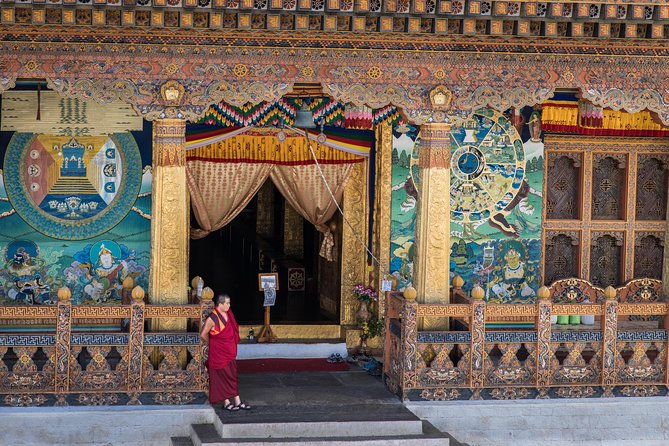
And one of the most memorable parts is the monastery morning. The day at Dodeydra Buddhist Monastery includes morning prayer with monks assembled, which is the kind of experience that changes how you watch everything else on the trip.
Why the “good weather” requirement matters
The tour specifies that it requires good weather. That’s especially relevant for the big cliffside hike toward Tiger’s Nest, and it can also affect the clarity of views from pass points like Dochula Pass. If conditions aren’t ideal, expect the guide to work with what’s possible.
Day 1 in Paro and Thimphu: Prayer Flags, Fortress Views, and a Busy Farmers Market
Day 1 is a strong mix: a river bridge walk, an old fortress, a major Buddha statue, then a lighter cultural finish in Thimphu.
Tachogang Lhakhang Bridge: a gentle start with prayer flags
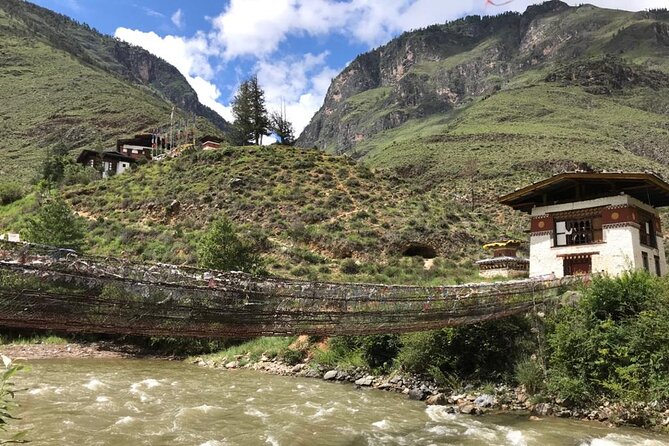
You begin with a stop at Tachogang Lhakhang Bridge, across the Paro River. This is one of those Bhutan moments where the walk matters as much as the destination. The bridge is described as lined with prayer flags, and the stroll toward the temple gives you a calmer warm-up before the bigger day ahead.
Tip for you: take your time here. It’s short, but it sets the tone. Slow down so you can notice details like how prayer flags are used as daily spiritual signals.
Simtokha Dzong: Bhutan’s oldest fortress on a ridge
Next comes Simtokha Dzong, described as the kingdom’s oldest fortress, positioned on a ridge overlooking the Thimphu Valley. You get admission included, and the stop is timed for about 40 minutes.
What I like about a place like this early in the trip is the “orientation value.” Even if you don’t know Bhutan geography yet, the ridge location helps your brain map where the valley sits.
Buddha Dordenma at Kuensel Phodrang: the big-sitting statue stop
Then you hit Buddha Dordenma, noted as the tallest sitting Buddha statue at 51.5 meters, located at Kuensel Phodrang. This stop has free admission and is listed as 30 minutes.
This is the kind of stop that’s easy to see and hard to forget. You get a sense of Bhutan’s scale of devotion—so if you like monumental religious art, you’ll appreciate this.
Wangdi-tse Monastery hike: easy, scenic, and practical
After that, the itinerary moves into the “walking portion” with Wangdi-tse Monastery. The hike is listed as about 1.5 hours and described as easy, with crossing through areas that include apple farms and houses. Admission is free here.
For you, the value is simple: this is the first hike that feels like real countryside, not just temple hopping.
Centenary Farmers Market: end the day with everyday Bhutan
Day 1 closes at Centenary Farmers Market in Thimphu, listed as a weekend-style market with regional vendors. It’s shown as Thursday to Sunday and your time here is about 1 hour with free admission.
This is a great balance to the sacred stops: food smells, spices, incense, and small everyday items. It also makes your trip feel less staged.
Day 2: Pangri Zampa’s Astrology College and the Hilltop Walk to Dodedrak
Day 2 leans more spiritual and more hike-friendly.
Pangri Zampa Monastery: astrology and a 21 Tara Devi temple
You drive up into countryside on the way to Pangri Zampa Monastery. The stop includes the Buddhist College of astrology and the temple of the 21 Tara Devi.
This is a unique pairing because it connects faith with learning. Even if you’re not a scholar, it gives you a different way to understand Bhutanese Buddhism—structured, taught, and practiced.
Dodedrak Buddhist Monastery: a longer uphill day with big calm
Then comes the main walking stop: Dodedrak Buddhist Monastery, reached via a soul-stirring hike with the time listed as 4 hours. Admission is free.
This is where you should remember the tour’s “moderate fitness” note. Four hours isn’t a casual stroll. But it’s also not the kind of suffering hike that drains your whole trip. It’s more about steady effort and letting the quiet land on you as you climb.
Day 3: Morning Prayer at Dodeydra, Dochula Pass, and Punakha Dzong
Day 3 is the monastery day you’re hoping for when you pick this tour style.
Morning Prayer at Dodeydra: show up early for the sound of devotion
You rise early and join morning prayer at Dodeydra Monastery. The itinerary indicates a morning prayer session with the monks assembled, and it’s listed as about 1 hour.
This is the part you’ll remember later because it changes your pace for the rest of the day. After that kind of ritual, even the scenic stops feel different—you’re not “consuming” Bhutan; you’re sharing a moment of it.
Dochula Pass: 108 shrines and possible big mountain views
On the way to Punakha, you stop at Dochula Pass at 3,100 meters, marked by 108 Buddhist shrines. The time is 30 minutes, and it’s free.
The listing notes that if skies are clear, the Himalayan peaks toward the north east can be seen. Even if clouds don’t cooperate, this spot still works because the shrine count gives you a reason to slow down and look around.
Chimi Lhakhang Temple: short hike from Sopsokha Village
Next is Chimi Lhakhang Temple, reached by a hike of about five minutes walk from Sopsokha Village. It takes about 1 hour total and has admission included.
This stop is worth it because it’s close and focused. It also keeps the day from feeling like nonstop uphill time.
Punakha Dzong: two-river junction and winter monastery residence
Finally, you visit Punakha Dzong, described as a massive structure at the junction of two rivers. Punakha was Bhutan’s capital until 1955, and Punakha Dzong still serves as the winter residence of the central monk body. Admission is included, and the stop is about 1 hour.
If you love architecture and sacred geography, this is a highlight. Dzongs aren’t just buildings—they’re built into how power, worship, and weather all interact in Bhutan.
Day 4: Paro Taktsang (Tiger’s Nest) Early Hike From Paro
Day 4 is your big signature day. It’s timed as an early morning drive to Paro, then a hike up to Tiger’s Nest (Paro Taktsang).
You’re looking at roughly 4 hours for the hike, with admission included. Tiger’s Nest is described as the monastery perched on a cliff at about 3,120 meters.
What makes this hike special
The best part is the way the monastery appears as you climb—this is one of those spiritual landmarks that you feel as much as you see. It’s also a practical test of whether this tour fits you: if you can handle a steady uphill effort, you’ll appreciate the payoff.
The weather angle again
Because the overall experience requires good weather, you should expect the guide to be mindful about visibility and safety. If the day is misty or rainy, plan to adjust expectations. You’ll still get the walking and the religious context; just don’t count on perfect sightlines.
Day 5: Paro Airport Drop-Off and a Clean Ending
Day 5 is mostly about finishing well: you end back in Paro, and the team drives you to the airport. It’s listed as about 1 hour, with free admission.
This is good planning on the operator’s part. You don’t want your last day to be another heavy hike. You want time to breathe, check your photos, and get your head straight for departure.
Cultural Payoff: Local Farm Dinner and Monastic Stay Style
The tour’s theme is culture, and it doesn’t just rely on famous monuments. It builds in human moments.
Dinner at a local farm and meeting a family
One highlight in the description is dinner at a local farm where you meet the family. That’s exactly the kind of experience that turns Bhutan from “places I visited” into “people I met.” It’s also scheduled as part of the overall meals you’re getting across the trip.
Monastery stay feel, not just monastery photos
The tour is specifically labeled with monastic stay focus, and one account of the experience described a unique mix of a monastery stay plus a home stay feel. Even if your exact lodging rhythm differs, the key takeaway is consistent: this itinerary tries to treat spirituality as part of daily life, not a performance.
Human service that matters
One of the strongest signals from the accounts is how the team handled the day-to-day. A solo traveler described being guided by Tandin Dorji with a driver named Pema around the Paro area, and said they went above and beyond the schedule. Another note praised friendly, well-organized service that felt like traveling with family.
That matters because Bhutan’s best experiences often depend on how someone explains what you’re seeing and how they help you keep the day moving at a comfortable pace.
Price and Value: What $1,370 Covers (and When It’s a Good Deal)
The headline price is $1,370 per person for this 5-day Bhutan experience in Paro.
Here’s why I think you should evaluate it as a value package, not just a sightseeing ticket:
- Visa, accommodation, private transportation, and a guide are listed as included
- Meals are included: 4 lunches, 5 breakfasts, and 4 dinners
- Bhutan SDF is included at USD 100 per person per night
- Taxes, fees, and charges are listed as included
- Admission tickets are included for key sites on the route, while others are free
In other words, you’re paying for the infrastructure that makes Bhutan function—transport, licensed guidance, and the daily “how do we do this” part that can get expensive if you do it all DIY.
Two cost notes for you:
- Single Supplement is USD 300 if you need your own room
- Alcohol and other beverages are not included
So the price tends to make sense if you want a smooth, guided itinerary with multiple included meals and transport. If you only want one or two big sights, a custom shorter trip could be cheaper. But for a culture + hikes + monastery rhythm, this is the kind of package that avoids budget surprises.
Practical Trail and Packing Tips (Based on This Itinerary’s Reality)
This tour includes multiple temple visits plus hikes ranging from short to a longer climb.
How to plan your body for the walking
You should expect:
- Moderate fitness as a baseline requirement
- A longer hike day (Dodedrak is listed as 4 hours)
- Another significant hike for Tiger’s Nest (listed as about 4 hours)
If you’re unsure, err on the side of comfortable walking shoes and layers. Bhutan mornings can feel crisp, and temple sites often require you to move in and out of cool indoor spaces.
Bring patience for weather
Because the experience requires good weather, you should keep your expectations flexible—especially for high viewpoint moments like passes and Tiger’s Nest. In practice, your guide should help you manage what can be done each day.
Respectful behavior at religious sites
This is Bhutan, and you’ll be visiting monasteries and dzongs. That means dress and behavior matter. Your guide will set the tone, but you’ll want to show up ready to be quiet, respectful, and mindful.
Who Should Book This Bhutan Culture + Short Trek Tour
This itinerary fits best if you want:
- A structured Bhutan overview without a rushed feel
- Cultural depth through monasteries, dzongs, and learning-focused stops like Pangri Zampa
- Short hikes that don’t consume your entire trip
- A private guide experience, where you can ask questions and move comfortably
It’s especially appealing for solo travelers who value personal attention. One account of a solo trip highlighted that the guide and driver experience felt very close to traveling with family, not just being processed through a checklist.
Couples and small groups will also like the private format. If you’re chasing only the most famous photo spots, you might not need a five-day itinerary like this—but if you want the mix, it’s a solid match.
Should You Book This Tour or Look Elsewhere?
Book it if you’re excited by the idea of monastery mornings, a real hiking day or two, and cultural stops that include both big-name landmarks and calmer places. You also get strong value signals from how much is listed as included: guide, accommodation, transport, meals, admissions for major sites, plus the Bhutan SDF.
Consider a different option if:
- You dislike hikes and would rather do flat sightseeing only
- You’re traveling at a time when you’re not willing to handle possible weather-driven changes
- You want a lighter schedule with fewer walking days
If you want Bhutan that balances devotion, countryside walking, and everyday culture—this is the kind of route that feels made for you.
FAQ
Is pickup offered for this tour?
Pickup is offered, and the tour meeting point is listed at Paro International Airport.
Where does the tour start and end?
It starts at Paro International Airport and ends back at the meeting point in Paro.
How long is the tour?
It’s listed as 5 days (approx.).
What fitness level do I need?
The tour notes that travelers should have a moderate physical fitness level.
Is this a private tour?
Yes. It’s listed as private, and only your group will participate.
What meals are included?
The tour includes 5 breakfasts, 4 lunches, and 4 dinners.
Does the price include the Bhutan visa?
Yes, Bhutan visa is listed under included items.
Are admissions included for sites on the route?
Some sites include admission and others are free, and the itinerary lists which stops have admission included vs free.
Is alcohol included?
No. Alcohol and other beverages are listed as not included.
What happens if weather is bad?
The experience requires good weather. If it’s canceled due to poor weather, you’ll be offered a different date or a full refund.