REVIEW · PETRA
Petra to Wadi Rum Trek – 6 Days
Book on Viator →Operated by Experience Jordan Adventures · Bookable on Viator
Petra to Wadi Rum is a classic Jordan route, but this version is for people who like dirt under their boots. You leave the main Petra tracks early, then hike a remote stretch of the Jordan Trail linking Petra and the Wadi Rum Protected Area. Expect rugged desert mountains, dry valleys, sandstone formations, and big skies that make silence feel loud.
Two things I really like about this trek are the way it balances guided direction with a truly wild feel, and how smoothly it handles the “logistics you don’t want to think about.” You get a local English-speaking hiking guide, plus hotel-to-start and jeep transfers at key moments, while the hiking itself stays front and center. The other standout is the pacing: after a tough start, most days settle into manageable chunks that let the scenery do the talking.
One drawback to consider: this is remote and physically demanding, especially day one. The itinerary also notes there’s a section with no waymarking, so you’ll want to take navigation cues seriously and avoid “shortcut thinking.”
In This Review
- Key things that make this Petra-to-Wadi-Rum trek work
- Walking the Jordan Trail: how the route feels in real life
- Price and value: what $995 covers (and what it doesn’t)
- Day 1 (start 7:30 am): leaving Petra behind and dropping toward Wadi Musa
- Day 2: rural desert mountains, rocky valleys, and the “no waymarking” reality
- Day 3: wild desert valleys toward the Jordan Valley edge
- Day 4: colorful canyons, rock formations, and ending in campsite comfort
- Day 5: long climb out of the Jordan Valley, then Abassiya to Wadi Rum by jeep
- Day 6: Wadi Rum Protected Area morning, then your choice of next stop
- About the people behind the trail: guides and support that make remote easier
- Who should book this trek (and who should think twice)
- Practical tips that will save you energy on this route
- Should you book Petra to Wadi Rum Trek – 6 Days?
- FAQ
- What is the duration of the Petra to Wadi Rum trek?
- Where does the trek start and what time?
- What is the maximum group size?
- Is pickup offered?
- Does the tour include meals?
- What transfers are included?
- Is Wadi Rum entry included?
- How physically demanding is it?
- Is the route always well marked?
- What happens at the end of the trek?
Key things that make this Petra-to-Wadi-Rum trek work
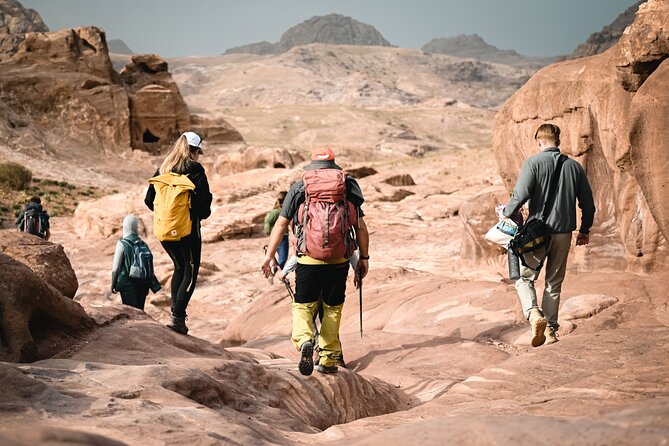
- Small group size (max 14), so your guide can actually manage pace and questions
- Day-by-day camping with planned meals (5 breakfasts, 5 lunches, 5 dinners)
- A difficult first day that drops you out of Petra’s area into a remote campsite
- Real off-trail vibes on parts of the route, including at least one stretch marked as not waymarked
- Jeep transfer on day five from Abassiya into the Wadi Rum protected area
- A flexible end point in Wadi Rum, with help arranging an extension if you want Aqaba or the Dead Sea
Walking the Jordan Trail: how the route feels in real life
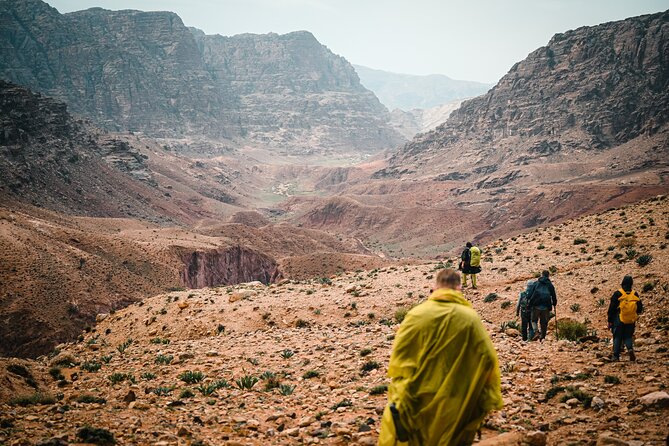
This trek is built for the in-between places, not just the postcards. Yes, you’re connecting two UNESCO heavyweights. But the magic is how you spend your days far from crowds, moving through the southern desert mountain range and the Wadi Araba region, then into the high-elevation desert that defines Wadi Rum.
What surprised me in the planning details is how clearly the days are shaped by terrain. Day one is mostly downhill from Petra’s Nabatean settlement area, day two transitions into rural desert mountains and rocky valleys, and then you build toward the Jordan Valley before climbing back out and up onto the Wadi Rum plateau.
This matters because it changes what you’ll feel on your body. You’re not doing constant steep climbs every day. You’re getting a rhythm: a hard push early, calmer hiking mid-trek, then a longer climb out of the Jordan Valley near the end.
Price and value: what $995 covers (and what it doesn’t)
At $995 per person for an approx. six-day trek, you’re paying for more than “someone to walk with you.” The included support is the core value: accommodation for 5 nights, a local English-speaking hiking guide, transfers (including from your hotel in Wadi Musa to the start point on day one), and the Hummeima-to-Wadi-Rum transfer on day five.
On top of that, you’re covered for meals: 5 breakfasts, 5 lunches, and 5 dinners. In a remote part of Jordan, that’s not a small thing. It means you’re not hunting food each day, and it keeps the trekking schedule predictable.
What you’ll need to plan yourself is mostly the stuff that can’t be bundled cleanly: travel insurance, airfare, and personal expenses. Also pay attention to entry fees. The itinerary notes Jordan Pass covers Wadi Rum entry, and Wadi Rum admission is explicitly called out as not included—so don’t show up there without the right pass.
If you want one simple takeaway: this is good value for travelers who want adventure without arranging every vehicle, meal, and campsite detail.
Day 1 (start 7:30 am): leaving Petra behind and dropping toward Wadi Musa
You begin at Petra Museum in Wadi Musa at 7:30 am. If you’re thinking you’ll start the trek with relaxed views inside Petra, this is the opposite. You turn off the main trail and move south, leaving the tourist crowd behind while still being within Petra’s larger historical area.
The hike is listed as 24 km, taking about 6–8 hours, with “difficult” physical and trail challenge. The route includes an ascent of 380 m and a descent of 740 m. That descent number is a clue: your legs will feel it. Plan for downhill strain, not just total distance.
You also pass Sabra Amphitheatre, then keep mostly downhill until you reach a remote campsite. Nights like this are part of the point of the trek—less about hotel comfort, more about being out where the night sky and temperature changes matter.
Practical consideration for day one: because you’re starting from a high-visibility area and transitioning into remote trails, you’ll want to be ready the moment you step off the main path. Tighten your packing rhythm the night before so you’re not scrambling in the morning.
Day 2: rural desert mountains, rocky valleys, and the “no waymarking” reality
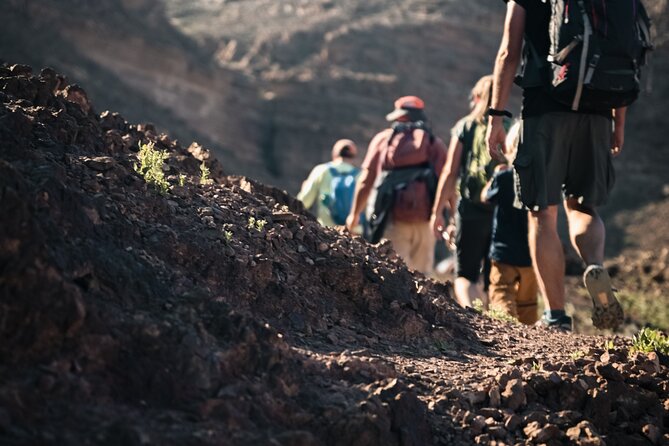
Day two moves south again and into rural desert mountains with rocky valleys. The itinerary also mentions passing oleander plants, which is a small detail but a useful one. It signals you’re not just hiking in pure sand-and-rock emptiness; there’s vegetation along the route that changes how the trail feels and how exposed you are to sun.
Distance is 15 km with about 4–5 hours of hiking. Physically it’s rated easy, but the trail challenge is moderate, and you climb 290 m while descending 320 m. That means it may not be “hard cardio,” but your footing and energy levels still matter.
The big note here is waymarked: no. That doesn’t mean the route is random, but it does mean you should follow your guide’s cues instead of expecting clear markings. If you like independent navigation, this day will still feel guided, but it will also remind you that deserts don’t always provide obvious trail breadcrumbs.
Why this day is valuable: it keeps you moving through Jordan’s outer desert life instead of only hitting dramatic canyons and sand dunes. You get the texture—valleys, rock types, and long views.
Day 3: wild desert valleys toward the Jordan Valley edge
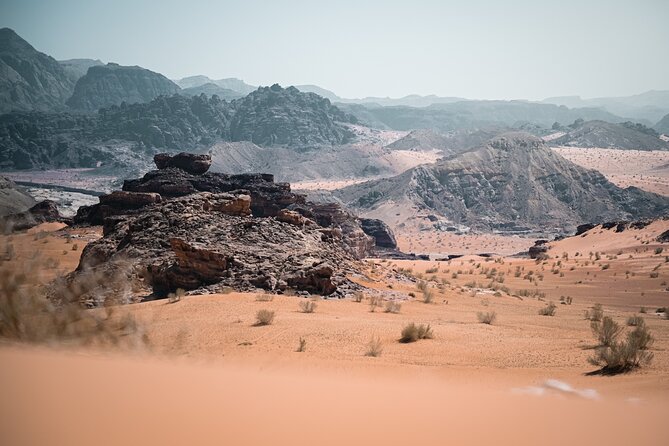
Day three is where the trek starts to feel more like “Jordan Trail” and less like “two landmarks on a map.” You continue south through wild desert mountains and desert valleys, moving past a cluster of mountains and then heading down to camp near the Jordan Valley.
The itinerary doesn’t list distance for day three in the details provided, but it does emphasize direction and terrain: mountain-to-valley change. Expect that day’s challenge to show up in your energy, especially if you’re coming off day two’s navigation-less feel.
This is also the day where you likely understand what remote trekking means for your schedule. Your timing is set by hikes and camps, not by restaurants or transport. When the day is long or the heat is high, you’ll care more about shade breaks and steady pacing than about “pushing to finish.”
Day 4: colorful canyons, rock formations, and ending in campsite comfort
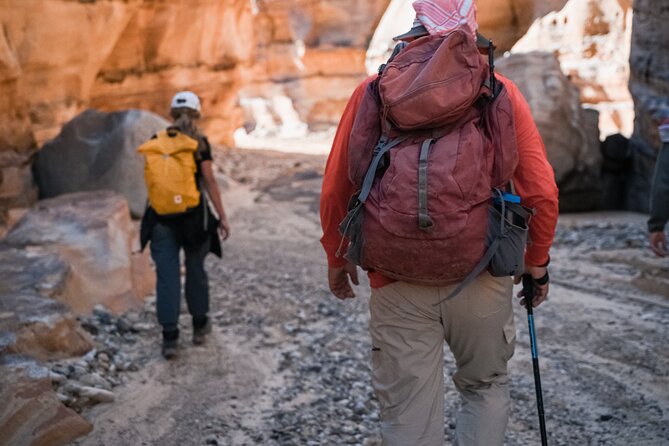
Day four is the payoff for people who love geology. The route includes colorful canyons, rock formations, beautiful vistas, and sand dunes. You also get a mix of up and downhills, so it won’t be a flat walk followed by a simple finish.
The day ends at a campsite in a beautiful location. That “end at a campsite” part matters because day four’s scenery can be mentally tiring in the best way. You’ll want downtime where you can eat, stretch, and reset without planning anything.
If you’re the type who remembers details like rock color and how light changes shadows, day four is likely to stick with you. The canyon-and-dune combination also means your body gets different terrain surfaces in a single day, which changes how your feet fatigue.
Day 5: long climb out of the Jordan Valley, then Abassiya to Wadi Rum by jeep
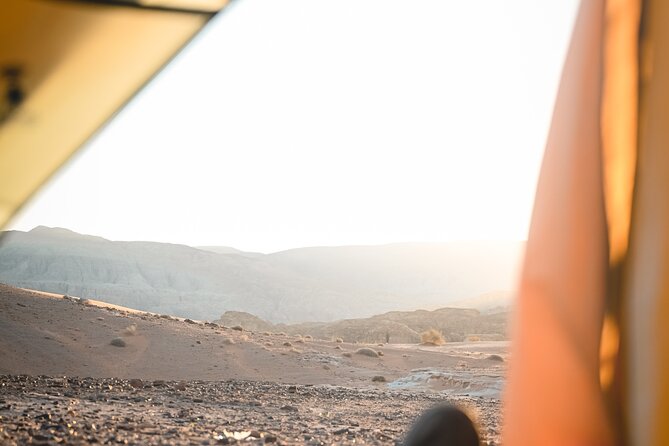
The last hiking day has a clear theme: effort up, then arrival into Wadi Rum. You face a long, gradual ascent as you hike out of the Jordan Valley, then reach the desert plateau in the Wadi Rum area.
A key milestone is reaching the Bedouin village of Abassiya. From there, you take a jeep transfer into the Wadi Rum Protected Area. That transfer is included, and it’s also listed in the included section as part of the day five plan (transfer from Hummeima to Wadi Rum).
Why that sequence feels smart: you get the physical win of climbing up and out, and then you stop sweating the logistics of how to cross into the Wadi Rum protected zone. It also helps you avoid wasting your final evening’s energy on complicated transport.
One more entry-fee detail to keep straight: Wadi Rum admission is not included, and the tour notes that Jordan Pass covers your Wadi Rum entry. If you’re paying attention now, you’ll avoid a last-minute scramble later.
Day 6: Wadi Rum Protected Area morning, then your choice of next stop
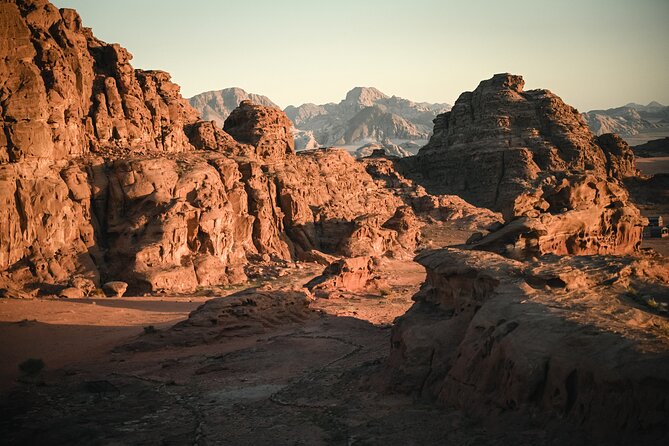
The trek ends in the morning after the hike at the Wadi Rum campsite. Day six is essentially waking up in Wadi Rum and absorbing it with a slower pace.
This is the kind of place where red sand dunes, sandstone mountains, and rock formations don’t need hype. The itinerary’s promise is “serene” and that’s consistent with how Wadi Rum generally feels: fewer people, more space.
After the trek ends, you have options. Some people continue to Aqaba and the Red Sea, some go to the Dead Sea, and others head straight back to Amman. The provider says they’re happy to arrange a private extension or help you decide what to do next.
That last bit is part of the value of booking: you’re not left staring at the next step alone.
About the people behind the trail: guides and support that make remote easier
What keeps this kind of trek from feeling stressful is the human system around it. In past trips organized by this company, I’ve seen strong praise for the guide role—people who explain what you’re walking past, not just where to step next. Names that pop up in that context include Mahmood Attal, Furat Mai, Raja, and history-minded guides like Motaz/Mutaz. I’ve also seen praise for drivers such as Abed, and for the support crews that make camps work, including people named Hussain (abu Thayir) and Eid.
You don’t need every name, but you do need the pattern: you’ll want a guide who pays attention to plants, plants and landforms included. The itinerary hints at this style with details like oleander plants and specific Petra-area landmarks, and that’s the kind of thing a good guide turns into a story you can remember.
Who should book this trek (and who should think twice)
This is not an easygoing walk. The tour info is clear that travelers should have strong physical fitness. The challenges are rated “difficult” on day one, and day two still has moderate trail challenge even though it’s labeled easy physically.
This trek is best for you if:
- You like long days and can manage downhill strain
- You’re comfortable hiking with a guide in remote terrain
- You want a real desert trek that connects Petra to Wadi Rum without skipping the in-between
You might want a different option if:
- You prefer clearly marked trails all the time (day two notes no waymarking)
- You don’t want to deal with rugged, remote conditions
- You’re unsure about your ability to handle a tough first day out of Petra’s area
Practical tips that will save you energy on this route
Here’s how I’d prep if I were walking this again.
1) Pack for sun and temperature swings
Desert days can roast, and nights can feel cooler. Bring layers you can adjust, and keep sun protection practical.
2) Take downhill seriously
Day one includes major descent, so plan for knee-friendly pacing and sturdy footwear.
3) Keep your day-one schedule calm
The start is early (7:30 am). If you rush breakfast or sleep poorly, day one punishes you fast.
4) Trust the guide on unmarked stretches
Day two explicitly notes no waymarking. That’s your reminder to follow instructions and not rely on guessing.
5) Sort your Wadi Rum entry plan before you arrive
Jordan Pass covers Wadi Rum entry, and Wadi Rum admission isn’t included. If you’re on the fence, fix it early.
Should you book Petra to Wadi Rum Trek – 6 Days?
If you want a desert hike that feels like Jordan’s back roads—not just a highlight parade—this trek makes a lot of sense. The value is strong for what you get: guided hiking, 5 nights of accommodation, meals daily for 5 days, and transfers at the points that would otherwise be annoying (hotel-to-start and jeep into Wadi Rum).
I’d book it if you can handle a tough day one and you’re happy with remote camping as part of the deal. The “no waymarking” note on day two is not a dealbreaker, but it is a sign you’ll want to stay attentive.
Skip it if you want easy navigation every step or if your fitness level isn’t ready for downhill strain and multi-day trekking. This route rewards people who show up ready.
FAQ
What is the duration of the Petra to Wadi Rum trek?
It’s listed as approximately 6 days.
Where does the trek start and what time?
The start is at Petra Museum in Wadi Musa, with a start time of 7:30 am.
What is the maximum group size?
The tour has a maximum of 14 travelers.
Is pickup offered?
Yes. Transfer from your hotel in Wadi Musa to the start point on day one is included.
Does the tour include meals?
Yes. It includes 5 breakfasts, 5 lunches, and 5 dinners.
What transfers are included?
You get a transfer from Wadi Musa hotel to the hike start on day one, plus a transfer from Hummeima to Wadi Rum on day five.
Is Wadi Rum entry included?
No. The tour notes that Jordan Pass covers Wadi Rum entry fee, and Jordan Pass is not included.
How physically demanding is it?
Day one is rated difficult (physical challenge: difficult; trail challenge: difficult). Travelers should have a strong fitness level overall.
Is the route always well marked?
No. Day two is noted as not waymarked.
What happens at the end of the trek?
The tour ends in the morning after the hike at the Wadi Rum campsite. The provider can help arrange a private extension to places like Aqaba/Red Sea, the Dead Sea, or back to Amman.