REVIEW · SANTO ANTAO
Santo Antão: Trekking Cova de Paúl Volcano Crater – Ribeira de Paúl
Book on Viator →Operated by Bu Country Tours · Bookable on Viator
That crater rim view is the whole deal. From the extinct Cova de Paúl volcano you drop into Santo Antão’s famous green corridor and come away with scenes you won’t forget. This is a guided trek with transport from Porto Novo and the kind of descent that turns a half-day outing into a real experience.
I love how the hike centers on Cova de Paúl’s crater world—it’s not just a viewpoint, it’s a step-by-step look at how farming lives inside volcanic terrain. I also love that you’re walking with a local guide and get the practical kind of info that makes the valley’s plants, terraces, and land-use feel understandable instead of random.
One thing to know up front: the route is steep in places and involves loose gravel over stone in a zigzag descent. And if heights make you uneasy, this tour is simply not for you.
In This Review
- Key highlights worth knowing
- Cova de Paúl: where the hike starts and why the altitude matters
- The rim view at the crater edge gives you the payoff
- The zigzag descent toward Paul Tal: your main workout
- Paul Tal and the Green Valley of Paúl: agriculture as a living backdrop
- Plants, flora and fauna: why a guide changes everything
- Rum-making stop at Paul Tal: grogue is optional and seasonal
- Porto Novo drive-in, village passing, and the return loop
- Pace, fitness, and heights: be honest with yourself
- Price and value: what $99.97 covers (and what it doesn’t)
- Should you book the Cova de Paúl crater-to-Ribeira de Paúl trek?
- FAQ
- What time does the tour start?
- How long is the overall experience?
- Is pickup included, and where does it happen?
- What about entrance fees for the main sites?
- How physically demanding is the hike?
- Is the tour safe for people afraid of heights?
- Is grogue included in the price?
Key highlights worth knowing
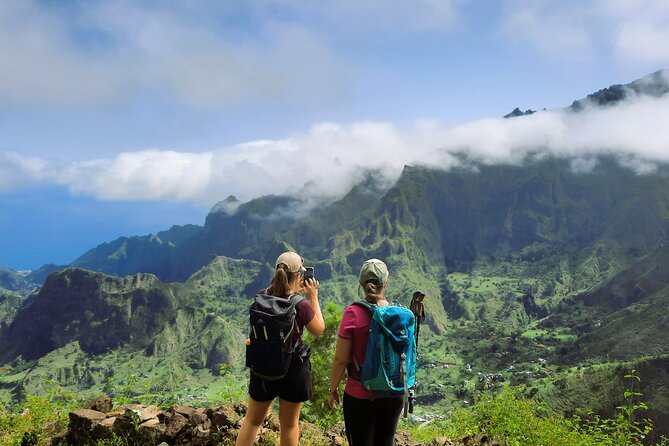
- Crater-to-valley views from well over 1,000 meters down toward the Paúl basin
- A guided 3–3.5 hour hike focused on the most famous trail segment on Santo Antão
- Agriculture you can actually see: vines, sugar cane, banana, plus mango, avocados, and coconut trees
- Optional grogue tasting during the rum-making stop (not included in the price)
- Small group size (maximum 15), which helps with pace on a downhill route
- Pickup and drop-off in Porto Novo area, so you’re not figuring out the logistics yourself
Cova de Paúl: where the hike starts and why the altitude matters
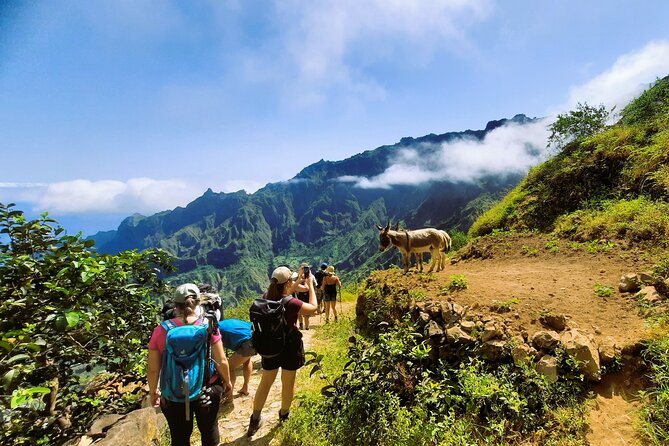
The day begins with pickup around Porto Novo. You drive up through the mountains to Cova Natural Park, and right away you feel that Santo Antão is built for hikes—dry slopes outside, then a different world waiting below.
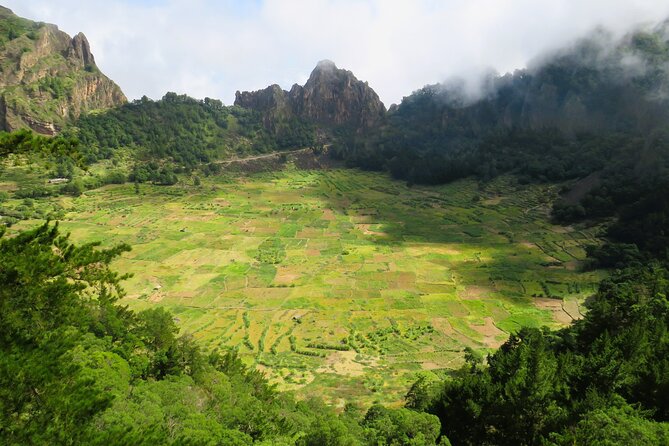
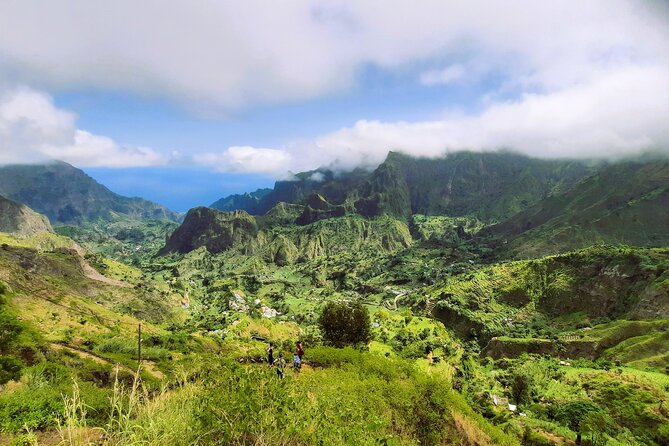
At Cova de Paúl, you’re standing at a big extinct volcanic crater. The view isn’t vague. You can see the huge round plain inside the crater, used for agriculture, with greenery that looks almost surprising given the island’s rugged reputation. The best part is that you’re already earning your views before the main walking starts.
From here, your hike drops you into the crater’s interior and then heads toward the Green Valley of Paúl. Starting at around 1,100 meters above sea level means the scenery is crisp and wide, and the sense of scale builds quickly.
The rim view at the crater edge gives you the payoff
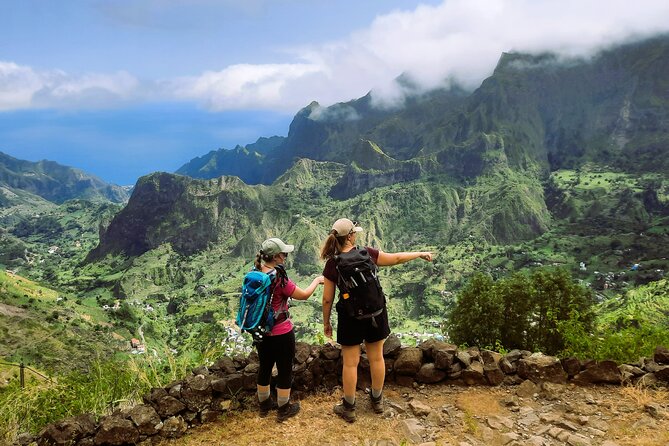
The crater portion isn’t just walking in the middle of it. You reach the edge with the kind of view that makes you stop without being asked. From the rim, you look down over the impressive green valley of Paúl, and on clear sightlines you can also see the ocean about 10 kilometers away.
This is the moment that makes the rest of the route make sense. The hike goes from awe to context: you’re not only seeing beauty, you’re seeing why people farm here, why the valley looks the way it does, and how the island’s volcano shaped everything.
The crater area also includes free admission, which is a nice bonus for value. You don’t need to budget extra for the main landmark, and it helps keep the day focused on walking and views instead of paperwork.
The zigzag descent toward Paul Tal: your main workout
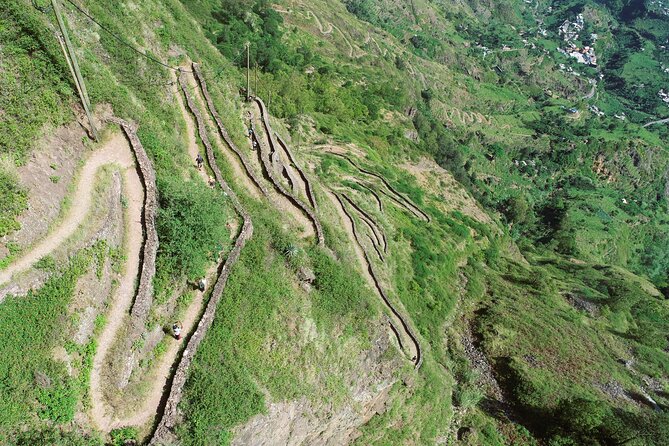
After the crater section, you start the part with the zigzagging descent along a stone path. This is the core hiking time—about 3 hours downhill. Expect that downhill pace to feel more challenging than flat trekking, even if the distances don’t sound huge on paper.
A practical tip: downhill hiking burns your legs in a different way than uphill. If you’re the type who usually breezes through walks, don’t underestimate this one. Loose gravel over stone can be slippery, especially if your footwear isn’t grippy.
The upside is that the descent is where the valley’s personality shows up. You move from crater edge openness into narrower terrain with plants and land-use you can observe step by step. It’s the kind of walk where you start noticing details—terraces, abandoned plots, and how vegetation grows where water and soil allow it.
Paul Tal and the Green Valley of Paúl: agriculture as a living backdrop
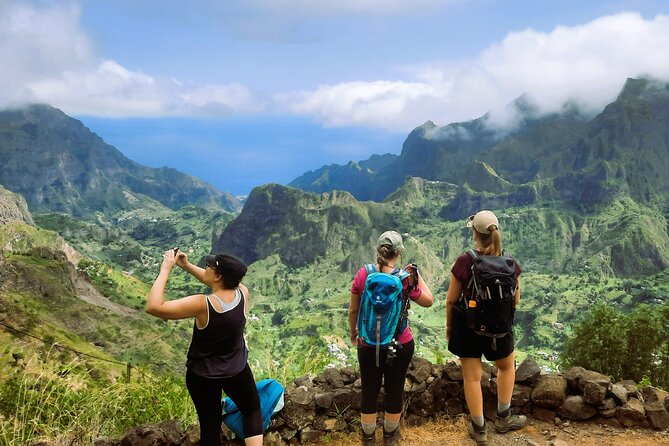
One of the best things about this trek is that you don’t only chase views. You also learn what makes Santo Antão’s Paúl area famous: it’s considered the island’s greenest valley, and the trail gives you repeated chances to see why.
As you descend, you may pass by or see signs of abandoned vineyards and working sugar cane and banana plantations. And it’s not just one crop. There’s a mix that includes mango, avocados, and coconut trees—so the valley feels productive rather than ornamental.
This kind of scenery lands better than generic “scenic valley” talk. You can look at how plots are arranged and how vegetation changes along the slope. That’s why a good guide matters: they connect what you’re seeing with how locals use the land.
Plants, flora and fauna: why a guide changes everything
The route is guided, and that guidance isn’t limited to timing and safety. Your guide helps you spot native flora and fauna along the way, which turns the hike from a photo session into a learning walk you can actually retain.
If you’re hoping for a hike where you understand what you’re looking at, you’ll appreciate this. The crater view gives scale, but the vegetation talk gives meaning. You start to notice what grows where, and you stop asking Why is it green here? because you get a clearer picture while walking.
One more good point from the experience style: the guide keeps pace in mind. There’s mention of a guide named Edson who adjusts to the group’s rhythm and shares informative context without turning it into a lecture. That balance helps, especially on a downhill day when you want a steady flow.
Rum-making stop at Paul Tal: grogue is optional and seasonal
Near the Paul Tal area, the experience includes a stop connected to local rum-making. You’ll have the chance to taste grogue, Santo Antão’s well-known rum. The important detail: grogue tasting is optional and not included in the base price.
Also note the timing clue you can plan around: the rum production season runs January 1 to May 31. Even if you visit outside that window, you’ll still be on the route with the distillery stop included, but the tasting situation may differ based on seasonal operations.
If you like spirits, consider budgeting a little extra for the tasting so you don’t feel stuck saying no. If you don’t, you can still enjoy the cultural stop and keep moving without worrying that the whole day revolves around alcohol.
Porto Novo drive-in, village passing, and the return loop
The hike itself is the headline, but the drive matters too. You’ll be picked up in Porto Novo (and other listed locations), then driven to Cova Natural Park through mountainous roads.
On the way back, the route doesn’t just teleport you home. You pass sites including Sinagoga, Vila das Pombas, and Janela Village, giving you a bit of extra island texture without turning the day into a long sightseeing bus tour.
This is a good structure if you want your time focused. You’re not spending hours between sights; you’re using the transport time to reposition and then getting straight into the walking and the viewpoints.
Pace, fitness, and heights: be honest with yourself
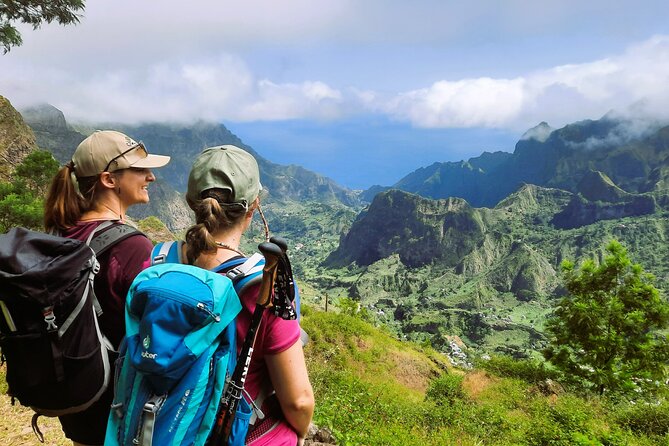
This experience is best for people with moderate physical fitness. The hiking time is meaningful, and the descent can feel demanding because of steep sections and footing (stone path, loose gravel in spots).
There’s also a clear caution: it’s not recommended for those who are afraid of heights. Even if you don’t freeze, the rim areas and crater edge views can trigger anxiety. If heights make you tense on stairs, you’ll want to skip this one and choose a less exposed trail.
What to bring matters, too. You’ll want shoes with grip for stone and gravel, and I’d plan on sore legs after—especially in the days following. The best way to enjoy this is to treat it like a real hike and show up ready.
Price and value: what $99.97 covers (and what it doesn’t)
At $99.97 per person for about 5 hours total, this is priced like a guided, transport-included half-day trek—not a long tour with extra stops. For the money, you’re getting:
- transportation
- a guiding service
- the main hike in the crater-to-valley corridor
- free admission for the highlighted sites
Group size is capped at 15, which usually helps the guide manage pace and attention on a walking route with variable footing.
What’s not included? Alcoholic beverages, and specifically the grogue tasting is optional. So if tasting is your priority, you should assume additional cost. Still, the core hike is complete without it, and you’re not forced to spend extra just to get the experience.
One more value note: this is typically booked about 27 days in advance on average. If you’re aiming for a specific date, I’d secure it sooner rather than later—Santo Antão hikes don’t always have unlimited availability.
Should you book the Cova de Paúl crater-to-Ribeira de Paúl trek?
Book it if you want Santo Antão’s most recognizable hiking storyline: crater rim views, then a long downhill walk through the green valley area where you can see crops, abandoned plots, and native vegetation. This is a great fit if you like guided context and you don’t mind working your legs for a view.
Skip it if you’re uncomfortable with steep downhill terrain or if heights make you anxious. Also, if you want an easy walk with minimal foot challenge, this route isn’t built for that style. It’s a “focus on the trail” hike, not a casual stroll.
My rule of thumb: if you can handle downhill stone paths and want a guided route with real scenery rewards, this is a strong choice for the time you have.
FAQ
What time does the tour start?
It starts at 9:00 am.
How long is the overall experience?
Plan for about 5 hours total.
Is pickup included, and where does it happen?
Pickup is offered at accommodation in Porto Novo (and other listed locations), and the tour ends with drop-off back at your accommodation.
What about entrance fees for the main sites?
Admission tickets for the key stops listed are free.
How physically demanding is the hike?
It’s meant for people with moderate fitness. There is a significant downhill portion, and footing can include loose gravel over paving stones.
Is the tour safe for people afraid of heights?
It’s not recommended if you’re afraid of heights.
Is grogue included in the price?
No. Grogue tasting is optional and not included in the tour price.