REVIEW · SALERNO
Trekking of the Amalfi Coast – 4 Days / 3 Nights
Book on Viator →Operated by Go in Italy · Bookable on Viator
That first uphill section sets the tone. This Amalfi Coast trek connects villages via old mule paths, lemon groves, and dramatic viewpoints, with support for luggage and meals so you can focus on the walking.
What I like most is the way you get local routes instead of only scenic pull-offs, plus the bonus experiences that feel made for walkers: a lemon garden tasting on the Sentiero dei Limoni and a hands-on stop at the Museo della Carta. One thing to consider is the daily effort: you’ll cover about 8–12 km each day, with both uphill and downhill.
In This Review
- Key Highlights You’ll Feel on Day One
- Why This Amalfi Coast Trek Feels More Real Than a Sightseeing Loop
- Fitness and Footing: What 8–12 km Days Actually Mean
- Small Group Energy (Up to 15) and a Real Guide at the Front
- Day 1: Cava de’ Tirreni Start, Abbey Details, Then Maiori by Foot
- Day 2: Lemon Groves to Ravello, Then Amalfi’s Duomo and Paper Museum
- The Sentiero dei Limoni to Minori
- Ravello: Free Time + Villa Rufolo Views
- Atrani and Amalfi: Small Borgo, Then Big Cathedral Stops
- Day 3: Valle delle Ferriere’s Waterfall Valley and Medieval Mill Remains
- Day 4: Sentiero degli Dei to Nocelle, Positano Time, Then a Ferry Back to Salerno
- Sentiero degli Dei from Bomerano
- Positano and the included panoramic ferry to Salerno
- Price and Value: What $1,446.02 Includes (and What You’ll Still Pay)
- What Makes This Trek Special: The Mix of Work Trails and Big Views
- Who Should Book This Amalfi Coast Trek (and Who Might Skip It)
- Practical Tips to Get More Joy From Every Step
- Should You Book This Amalmi Coast Trek?
- FAQ
- How long is the Amalfi Coast trekking experience?
- Where does the trek start?
- How much walking should I expect each day?
- Is luggage included, and will I carry a suitcase?
- What’s included in the price?
- Are any entrance fees included?
- Do I need a ticket on my phone?
- What are the group size limits?
- Is alcohol included?
- Can I get a full refund if I cancel?
Key Highlights You’ll Feel on Day One
- Old mule paths + working village routes that link Maiori, Minori, Atrani, Amalfi, Ravello, and beyond
- Sentiero dei Limoni with a lemon garden visit and produce tasting
- Villa Rufolo views over the coast (and a ticketed visit if you want it)
- Valle delle Ferriere with waterfalls, ancient stairs, and remnants of medieval mills
- Sentiero degli Dei (Path of Gods) plus a shepherd tasting moment and the descent to Nocelle
- Luggage transfer + daybag-only hiking, so you’re not hauling suitcases around
Why This Amalfi Coast Trek Feels More Real Than a Sightseeing Loop
The Amalfi Coast can be crowded and car-heavy, especially when you’re trying to see more than one village in a day. This trek flips the rhythm: you travel by foot on paths that were used to move goods—food, produce, and supplies—between towns long before tourists arrived.
I also like that you’re not just seeing the coast; you’re getting a sense of how people lived here. You’ll hike between seaside villages, then climb into spots with history tied to paper-making and medieval industry, and finish with the famous Sentiero degli Dei viewpoints over Positano, Praiano, and Capri.
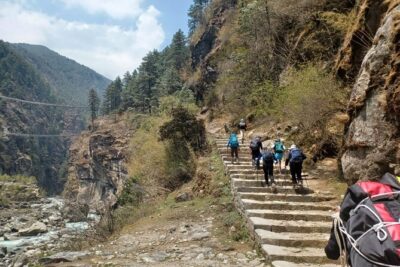
The route design matters for your experience. Instead of rushing to the next photo, you get breathing room—mountain air, real staircases, shaded sections, and long sea views that come in slowly as the trail opens.
Fitness and Footing: What 8–12 km Days Actually Mean
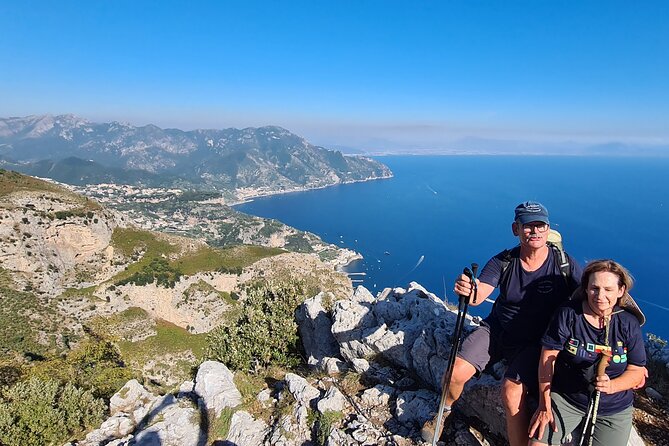
This is a trekking trip, not a casual walking tour. Each day is typically 8 to 12 km, and the course includes both uphill and downhill. That means you’ll feel it in your legs, and you’ll want shoes that can handle stone, steps, and uneven ground.
The good news: you don’t have to carry everything. The itinerary is set up so they move your suitcase from one accommodation to the next, and you only carry a daybag while you hike. That single detail makes a big difference on longer trail days.
You should also expect a moderate fitness level. If you’re comfortable walking for hours, handling stairs, and keeping a steady pace, you’ll be fine. If you usually avoid hills, this one will test you.
Small Group Energy (Up to 15) and a Real Guide at the Front
You’ll travel with a maximum of 15 travelers, which keeps things from feeling like a moving bus. With a smaller group, it’s easier to keep track, pause when you need to, and get practical guidance when the trail gets tricky.
The guide experience matters too. In the one strong highlight I saw repeatedly, the hike guide Gaetano made the whole thing feel like a shared adventure—lots of laughs, plus real competence out on the paths. That blend is exactly what you want on a multi-day trek.
Day 1: Cava de’ Tirreni Start, Abbey Details, Then Maiori by Foot
You begin in Cava de’ Tirreni at Hotel Victoria Maiorino (Corso Mazzini, 4), with the first day starting at 8:00 am. The point isn’t just location—it’s atmosphere. Staying near the historical center puts you close to shops, coffee spots, restaurants, and pizzerias, so your arrival day feels easy, not isolated.
Morning includes a guided tour at Badia della Santissima Trinità, an 11th-century Benedictine Abbey. This isn’t a quick look-and-go stop. You’ll see the church, cloister, catacombs, a small museum, and the chapter room, including a distinctive maiolica floor. It’s a great way to shift from coast-town energy into something slower and older before you start hiking.
By the end of the day, you finish in Maiori, where you stay in a local B&B. Dinner is on your own in town, which I like because you can grab something simple after a travel day and settle in without feeling locked into a fixed group meal.
Day 2: Lemon Groves to Ravello, Then Amalfi’s Duomo and Paper Museum
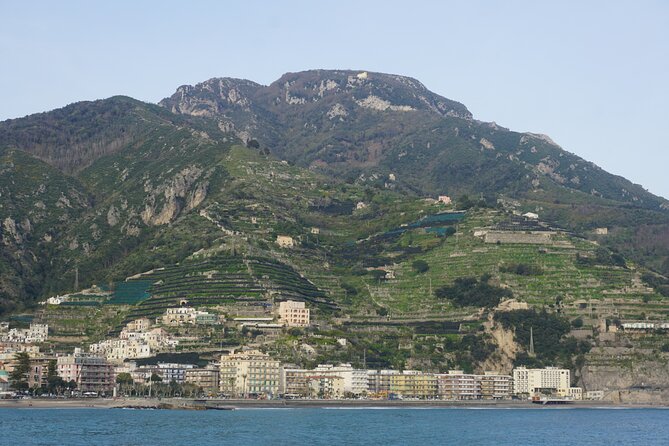
Day 2 is the “variety day,” where the trek switches between sea views, terrace agriculture, and town culture.
The Sentiero dei Limoni to Minori
You start walking from Maiori to Minori on the Lemons’ Trail. This is one of the itinerary’s most “specific to the Amalfi Coast” experiences. You’re not just passing through; you’re moving through areas shaped by lemon cultivation, with viewpoints over both mountains and sea.
Included here is a visit to a lemon garden and a tasting of produce made with lemons. That’s the kind of detail that makes your memories sharper than only looking at scenery.
Ravello: Free Time + Villa Rufolo Views
From Minori, the hike heads toward Ravello along a path locals still use to deliver produce and groceries. That’s a smart design choice: you get a feel for how the hillside towns function daily.
When you arrive, you get free time to visit Ravello’s attractions, and you’ll have a boxed lunch. If you want the standout viewpoint experience, Villa Rufolo is the place to add on. The ticket is €7, and it’s known for summer classical music concerts as well as big coast views and gardens.
Atrani and Amalfi: Small Borgo, Then Big Cathedral Stops
After Ravello, you continue to Atrani, a small hamlet with the smallest surface area of Italy. It’s quick, but the contrast is fun: Ravello’s heights, Atrani’s tight seaside feel, and then Amalfi’s bigger town energy.
In Amalfi, you get time to explore for your own gelato, pastry, or cappuccino—and then the trip recommends two high-value cultural stops:
- Duomo di Sant’Andrea (ticket €3). You can visit the cloister, museum, crypt, and church.
- Museo della Carta (ticket €5). This is special because you get an English-guided look at how medieval paper was made, including the machinery operated by the river Canneto. You can even make a piece of paper yourself using a strainer.
If you like hands-on culture, the paper museum is one of the most practical and memorable additions on this itinerary.
Day 3: Valle delle Ferriere’s Waterfall Valley and Medieval Mill Remains
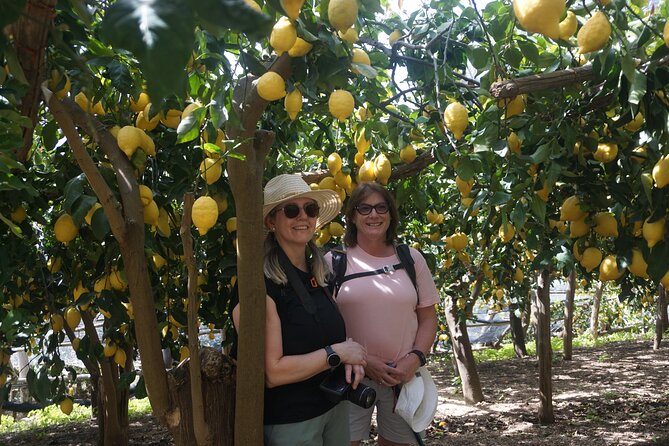
On Day 3 you move into the Valle delle Ferriere. This is a longer-feeling segment because the terrain and the sights change throughout the walk.
You climb ancient stairs and paths amid lemon trees, springs, and waterfalls, all framed by high cliffs. You also get something you won’t see in typical postcard tours: examples of industry from as early as the 10th century, including remains of an aqueduct and ironworks, plus ruins of paper factories. If your brain likes connecting agriculture to craft and trade, this stop clicks.
There’s also a microclimate angle built into the experience. The valley supports plant life that you might not expect on a sunny coast—things like cyclamen, wild orchids, and even a carnivorous plant mentioned in the itinerary details. It’s not just pretty flora; it’s a reminder that this region has conditions shaped by water, shade, and steep walls.
The hike here is included for 2 hours, and after that you finish in Agerola, staying overnight at Hotel Gentile.
Day 4: Sentiero degli Dei to Nocelle, Positano Time, Then a Ferry Back to Salerno
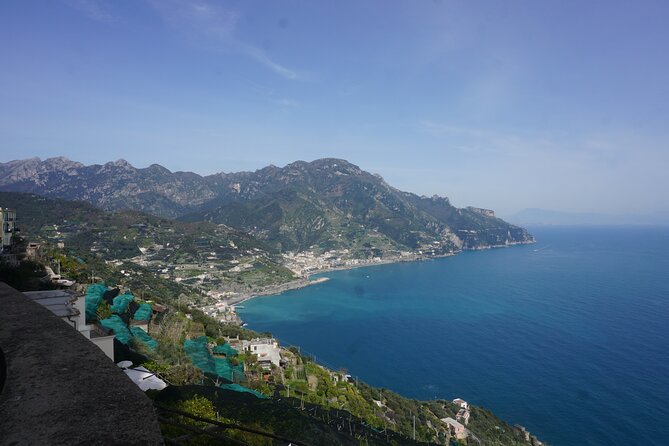
Day 4 is the headline day, and the itinerary is set up to help you earn the views.
Sentiero degli Dei from Bomerano
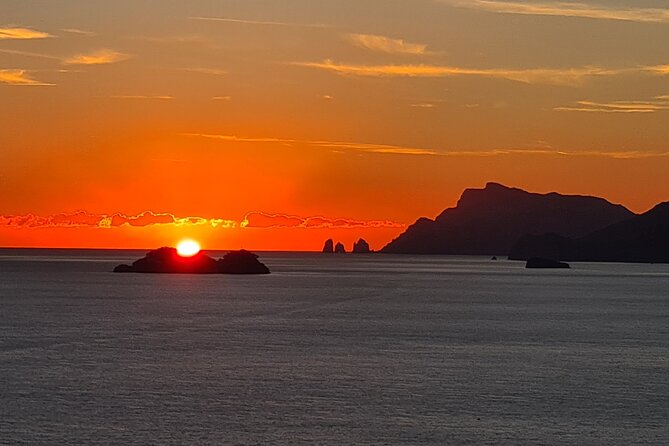
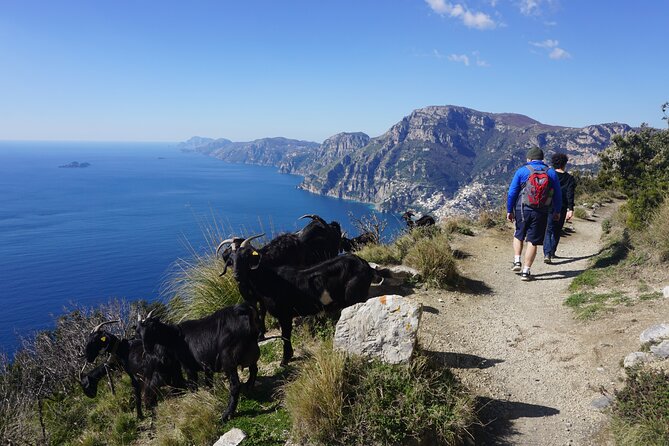
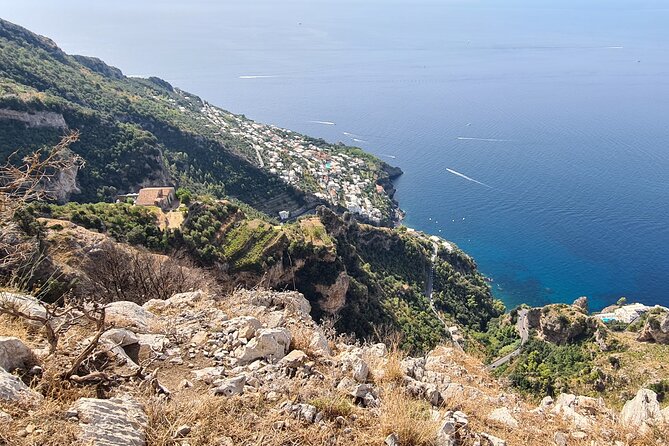
You start the Sentiero Degli Dei from the square in the hamlet of Bomerano, in Agerola. Early on, the views open toward Praiano, Positano, the Li Galli islets, and Capri. This trail has that “slow reveal” quality: you see landmarks popping into view as you gain elevation and the path bends.
Along the way, you pass the Grotta Biscotto, an old shepherds shelter built into rock and inhabited since prehistoric times (as described in the itinerary). You also hike in shade at times under elm and oak, with myrtle and juniper mentioned along the route. Expect little changes in vegetation and ground texture as you move through the hills.
A particularly memorable moment included here: you meet a local shepherd who shares locally sourced produce and a glass of red wine. That kind of simple stop works because it slows the pacing for a moment without breaking the day.
You reach Nocelle in less than 3 hours, then you do about a 1-hour descent to arrive in position for Positano.
Positano and the included panoramic ferry to Salerno
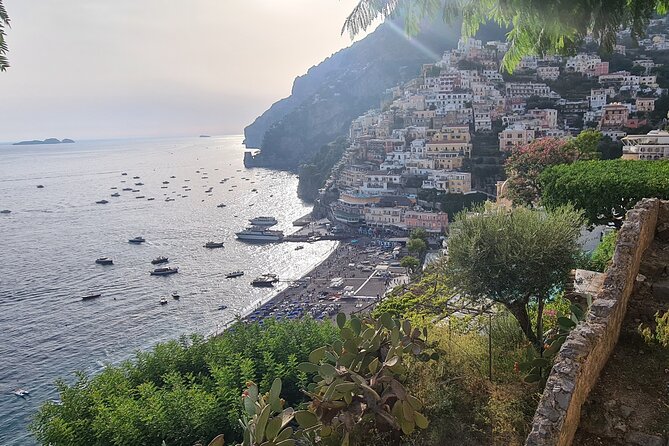
From there, you get 2 hours of free time in Positano—enough for a wander and a snack if you plan your time well.
To close the loop, you take an included panoramic ferry from Positano to Salerno. It lasts about 1 hour 30 minutes, sailing along the coast and passing towns including Positano, Praiano, Amalfi, Atrani, Minori, Maiori, Cetara, Erchie, Vietri sul mare, and Salerno.
When you reach Salerno, you transfer back to Cava de’ Tirreni where your overnight accommodation is located.
Price and Value: What $1,446.02 Includes (and What You’ll Still Pay)
At $1,446.02 per person, this trek isn’t cheap. But you’re not paying just for a route map. You’re paying for multiple days of guided hiking, meals, and the logistics that make hillside trekking manageable.
Here’s what the provided info says is included:
- Lunches (4) and breakfasts (3)
- Accommodation included (note: the summary says 3 nights, while the included section says 5 nights; I’d confirm the exact number with the operator before you book)
- Suitcase transfer between accommodations
- Key segments are marked as included, like the Badia guided visit, lemon trail activities, Valle delle Ferriere, and the Sentiero degli Dei
- A panoramic ferry ride from Positano to Salerno
What isn’t included:
- Alcoholic drinks
- Optional admissions where listed: Villa Rufolo (€7), Duomo di Sant’Andrea (€3), and Museo della Carta (€5)
So the real value question is: does the balance of effort, support, and included meals fit your style? If you hate negotiating transport between towns, dislike carrying bags all day, and want a guided structure, the price makes more sense. If you only want one dramatic viewpoint day, you might feel the cost more sharply.
What Makes This Trek Special: The Mix of Work Trails and Big Views
A lot of Amalfi experiences focus on two things: cliffs and crowds. This trek mixes those with the coast’s working side—paths once used to move produce, markets, and supplies.
You’ll feel it across the days:
- Sentiero dei Limoni turns citrus agriculture into an active walk, not a background.
- Ravello’s path is described as something locals still use, so your hike connects to daily life.
- Amalfi’s Duomo and paper museum give you culture with a clear theme: craft and industry tied to waterways and medieval systems.
- Valle delle Ferriere adds the “wow” factor through water, cliffs, and surviving industrial remnants.
- Sentiero degli Dei supplies the headline panoramas, then finishes with Positano time and a coast-hugging ferry.
That mix is why the experience works as a true trek, not just a string of stops.
Who Should Book This Amalfi Coast Trek (and Who Might Skip It)
This is a great fit if:
- you can handle 8–12 km hiking days with uphill and downhill
- you want a guided multi-day experience with support for luggage
- you care about more than photos and want culture tied to what you’re walking through
You might think twice if:
- you’re looking for a mostly flat stroll
- you want maximum time in just one village (this trip shifts villages several times)
- you get nervous about daily stamina, because the schedule is consistent from day to day
The group size limit of 15 also helps people who prefer a calmer pace and clearer communication.
Practical Tips to Get More Joy From Every Step
You’ll enjoy the trip more if you treat it like a walking vacation, not a sightseeing sprint.
- Wear shoes you trust on uneven ground; don’t count on sandals.
- Bring a small daybag setup that stays comfortable for a long day, since you’ll only carry your essentials.
- Plan for changing weather. This experience requires good weather, and if conditions aren’t right, you’ll need a different date or a refund offered by the operator.
- Budget for the listed admissions if you want the optional adds like Villa Rufolo, the Duomo, and the paper museum.
- If you’re the type who likes to linger, manage your timing during free town windows so you don’t cut out the paid highlights.
Should You Book This Amalmi Coast Trek?
I think you should book it if your idea of a great Amalfi trip includes real walking, village-to-village connection, and at least a couple of culture stops with substance—especially the lemon trail tasting and the paper museum.
I’d pause only if you’re unsure about your ability to do 8–12 km daily on a route with stairs, descents, and climbs. If you can handle that, this trek gives you an efficient, guided way to experience multiple Amalfi Coast towns without turning every day into a traffic-and-timetable puzzle.
In short: if you want Amalfi by foot with smart support, this one is worth serious consideration.
FAQ
How long is the Amalfi Coast trekking experience?
It runs for 4 days (about 4 days total).
Where does the trek start?
It starts at Hotel Victoria Maiorino, Corso Mazzini, 4, 84013 Cava de’ Tirreni SA, Italy, with a start time of 8:00 am.
How much walking should I expect each day?
You’ll walk between 8 to 12 km each day, with both uphill and downhill.
Is luggage included, and will I carry a suitcase?
Your suitcase is transferred from one accommodation to the next, so you carry only a daybag while hiking.
What’s included in the price?
The itinerary includes breakfast (3) and lunch (4), plus accommodation and several included hike and visit segments. A panoramic ferry ride from Positano to Salerno is also included.
Are any entrance fees included?
Some admissions are included, but others are listed as not included: Villa Rufolo (€7), Duomo di Sant’Andrea (€3), and Museo della Carta (€5).
Do I need a ticket on my phone?
Yes. The tour offers a mobile ticket.
What are the group size limits?
The minimum number of participants is 4, and the maximum is 15 travelers.
Is alcohol included?
No. Alcoholic drinks are not included.
Can I get a full refund if I cancel?
You can cancel up to 6 days in advance for a full refund, based on local time cutoff for the experience start.
If you want, tell me your walking comfort level (for example, how many km you do in a normal week), and I’ll help you decide if this match feels right.