REVIEW · ARUSHA
4 Days Mount Meru Trekking
Book on Viator →Operated by Rupia Adventure · Bookable on Viator
Mt. Meru gives you a real workout. This 4-day hike balances wild scenery with smart logistics: you climb with an armed park ranger watching the trail, and the price covers meals and park fees so you’re not doing math on the fly. The possible downside? The mountain lodging can be basic and cold, especially as you get higher.
You start with a pick-up from your Arusha hotel and a scenic drive through Arusha National Park to the Momella gate. The group stays small, with a maximum of 4 travelers, so your guide team can adjust pace and help if someone’s feeling the altitude.
In This Review
- Key things to know before you go
- Arusha-to-Momella Gate: the start that sets the tone
- Day 1 to Miriakamba Hut: grasslands, Maio Falls, and the fig tree arch
- Day 2: from steep wooden steps to Mgongo wa Tembo and Saddle Hut (3,550m)
- Summit night to Socialist Peak: headlamps, crater rim rocks, and sunrise
- Day 4 down the northern route: back to Momella gate and wildlife encore
- Price and logistics: what $1,000 covers, and where value actually shows up
- Wildlife and scenery: where you’ll actually see the mountain change
- Guides and crew: why the team can make or break the experience
- Who should book this Mt. Meru trek (and who should think twice)
- Practical prep that makes the trek easier
- Should you book the 4 Days Mt. Meru trek with Rupia Adventure?
- FAQ
- Where is the trek based and when do we start?
- How long is the Mt. Meru trek?
- How many people are in the group?
- What’s included in the tour price?
- Do we have ranger or guide support on the mountain?
- What route do we take to the summit, and when does the summit happen?
- What wildlife might we see?
- What if the weather is poor?
- Can I cancel and get a full refund?
Key things to know before you go
- Armed ranger supervision keeps the trek feeling secure from the first walk
- All park fees and meals included, so the budget stays sane
- Small group (max 4) means more attention and smoother pacing
- Summit night is a climb-with-a-purpose, with headlamp hiking and a crater-rim route
- You pass multiple ecosystems, from open grasslands to rainforest to moorland
- Food quality gets praised, with cooks like Samual, Samora, David, and Samora’s summit cake showing up in people’s stories
Arusha-to-Momella Gate: the start that sets the tone
The day begins in Arusha with a pick-up and a drive into Arusha National Park. Once you reach Momella gate, you handle the entry formalities and meet the ranger and guide team before walking starts. This matters more than it sounds. Early in the trek, you’re not just burning calories. You’re also getting your footing, your rhythm, and your breathing pattern while the mountain is still warming up.
Right away, the area can feel alive. I’d expect wildlife sightings early on—people have spotted giraffes and buffaloes soon after setting off. The open grasslands give you those quick, magical moments before the path turns steeper and higher.
A lot of trips stumble here: a chaotic start, missing gear, unclear instructions. This one’s built to keep things orderly, and that reduces stress when you’ll later need focus—especially on the summit climb.
You can also read our reviews of more tours and experiences in Arusha.
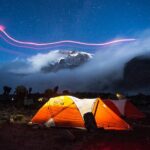
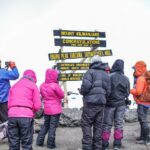
Day 1 to Miriakamba Hut: grasslands, Maio Falls, and the fig tree arch
Day 1 is a steady introduction. You’ll walk through open grasslands where giraffes and buffaloes can show up, and the trail is long enough to feel like day one of a real mountain effort, but not so long that you arrive shattered.
After about two hours, you reach Maio Falls, a logical place to pause. It’s also a smart break point: the scenery gives you a mental reset, and you get the picnic stop before pushing on. Then the trail continues toward the “fig tree arch,” a well-known landmark along the way.
By afternoon you arrive at Miriakamba Hut, which is where you spend the night. People often remember this stage for the small comforts—afternoon tea and snacks—because they help you recover before the altitude starts to feel more serious.
What to watch for on Day 1: don’t rush. The next days are where the altitude and cold tighten the screws. A relaxed Day 1 makes the rest of the trek feel possible.
Day 2: from steep wooden steps to Mgongo wa Tembo and Saddle Hut (3,550m)
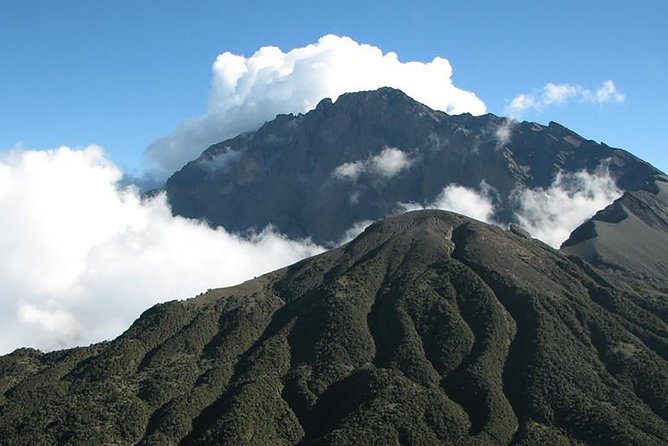
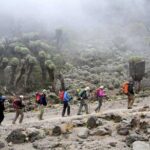
Day 2 is where the trek starts to feel noticeably different. You’ll climb using wooden steps along a steep track, and the altitude makes it cooler. The rainforest can also create a moody feel, especially when clouds hang low around the trees. That atmosphere isn’t just pretty—it changes how your body feels. Cool, damp air can make the climb seem slower, but it still adds up.
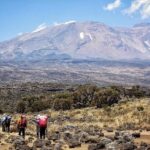
After roughly two hours of uphill walking, you reach Mgongo wa Tembo, also called Elephant Back, at about 3,200m. This is a good “catch your breath” moment. The guide stops you, you refuel, and you look around. Then the vegetation shifts. You move from rainforest into heather and moorland, and that’s when you can start to see the mountain as a whole, not just a series of steps.
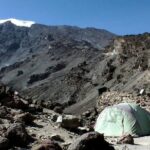
Around midday, you reach Saddle Hut at about 3,550m. Now you’re operating in colder, higher terrain. You’ll have time in the afternoon for an optional hike to Little Meru (around 3,820m), which takes about a half day. This detour is best for people who feel strong and want extra views. If you’re not feeling great, you can skip it and treat Saddle Hut as your recovery base.
Practical angle: Day 2 is a checkpoint. If you pace well here, the summit night won’t feel like a surprise attack.
Summit night to Socialist Peak: headlamps, crater rim rocks, and sunrise
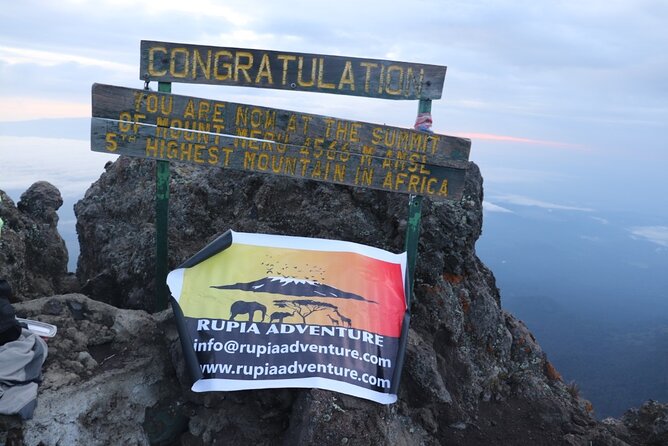
This is the day you’ll talk about for years. After a small snack and tea, you leave camp at night with headlamps lighting the trail. The goal is simple: get to the summit area while the weather window is still favorable and before sunrise turns the climb into a more emotional spectacle than a practical one.
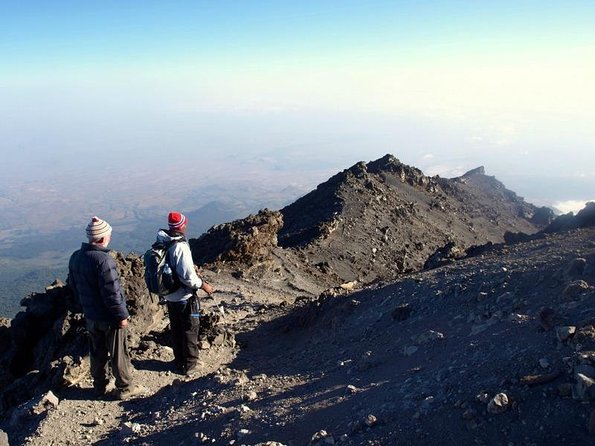
You follow the trail through bush land to Rhino Point (around 3,821m). From there, the path becomes tougher. You may need to climb at spots, and you’re walking over volcanic ash, rocks, and gravel. That surface doesn’t just test your legs. It tests your concentration. One good way to manage it is to keep your steps short and steady, even when others stride out.
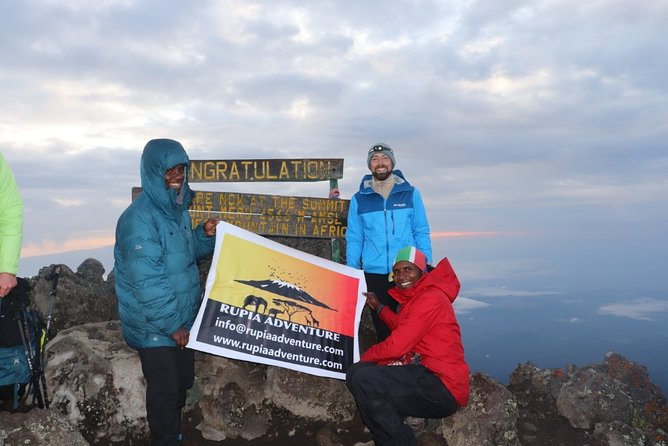
Then comes the crater rim route. You’re not just going up—you’re following the shape of the mountain. After roughly 4 to 5 hours from the earlier start point, you reach the summit at Socialist Peak.
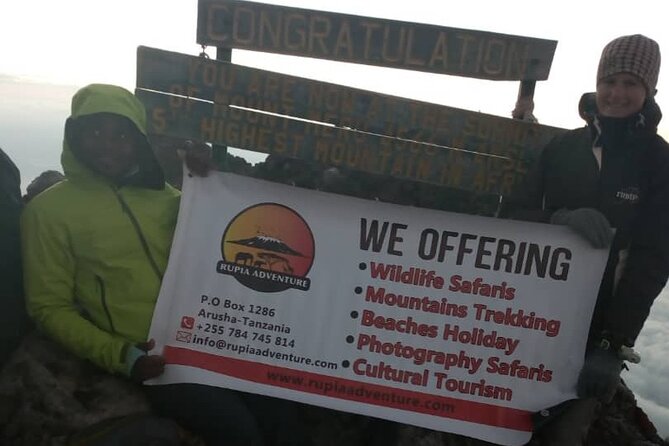
And then: the sun rises. People describe sunrise views above Kilimanjaro, plus a dramatic look into Mt. Meru’s crater with a steep-sided bowl and an ash cone at the center. It’s the kind of view that makes the cold and effort feel fair.
After the summit, you descend back to Saddle Hut (around 3,550m) for a break. This descent is still work. Your body is tired, your hands can feel stiff, and the ground is loose in places. Slow and careful beats fast and brave.
If you’re wondering whether you can handle it: the key factor isn’t just fitness. It’s patience. Guides often use steady pacing for first-time hikers, and stories include summit success with first-timers who weren’t professional mountain walkers.
Day 4 down the northern route: back to Momella gate and wildlife encore
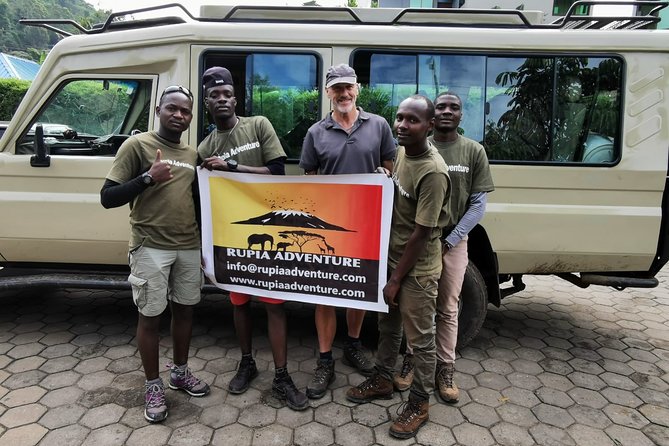
After breakfast, you shift gears to the descent. Day 4 follows the northern route back to Momella gate, which takes about 2 to 3 hours.
Even on the easier-sounding parts of a mountain, expect effort. Your legs are already loaded from earlier days. Still, the descent is shorter than the ascent route, and that’s a relief—especially after the summit night.
Wildlife can show up again on the way down. There’s a decent chance to see elephants and buffaloes, along with giraffes. Some hikers have also noted black-and-white colobus monkeys in the mix.
When you reach Momella gate, you say farewell to your hiking crew. Your driver then takes you back to Arusha to the Aquiline Hotel, where you can celebrate and get a full night’s rest after the hard part is done.
Price and logistics: what $1,000 covers, and where value actually shows up
At $1,000 per person, this is not a budget hike. But it’s also not a bare-bones one.
Here’s what the pricing structure is doing for you:
- Transfers are included: pick-up from your Arusha hotel and return afterward. That eliminates a lot of coordination stress.
- Park fees and meals are included. That matters because park and guiding costs often turn “cheap” trips into expensive ones once you arrive.
- You hike under armed ranger supervision. That’s not a small detail on Mt. Meru. It changes the feel of the trek.
- Small group size (max 4) keeps the experience from turning into a traffic jam. That can be the difference between enjoying the hike and spending your day stuck behind the same two people.
Food is another real value point. Multiple accounts highlight strong cooking—Samual, Samora, David—and even special touches like a cake provided at the top of Socialist Peak. There are also mentions of vegetarian meals and handling dietary requests like gluten-free.
Two cautions to keep your budget realistic:
- Some people found breakfast on summit day to be very light, and they recommend bringing extra snacks of your own for energy. If you’re the type who needs steady fuel, pack a few things you like.
- Tip expectations can feel awkward if they’re not clearly framed ahead of time. If you care about being prepared, ask the company directly about tipping at booking.
Net: you’re paying for safety structure, inclusions, and a guided team that runs the days smoothly.
Wildlife and scenery: where you’ll actually see the mountain change
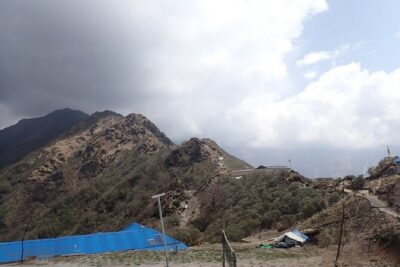
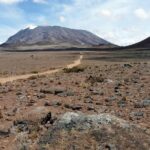
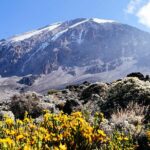
Mt. Meru hits different environments in a short time. You start in open grasslands. Then you climb into forested sections and higher, cooler terrain. After that, the vegetation shifts again into heather and moorland.
That change is why you often get more than one “wow” moment on this trek. It’s not just altitude. It’s variety—different air, different light, and different trail texture.
Expect to watch for animals during transit through various terrain types, including:
- giraffes and buffaloes early on
- elephants and buffaloes on lower-to-mid sections
- black-and-white colobus monkeys during parts of the descent
- monkeys you might see along the way if the timing and habitat align
You won’t be chasing wildlife all day. The main job is the climb. But because the path crosses several habitats, the chance of a sighting stays real.
Guides and crew: why the team can make or break the experience
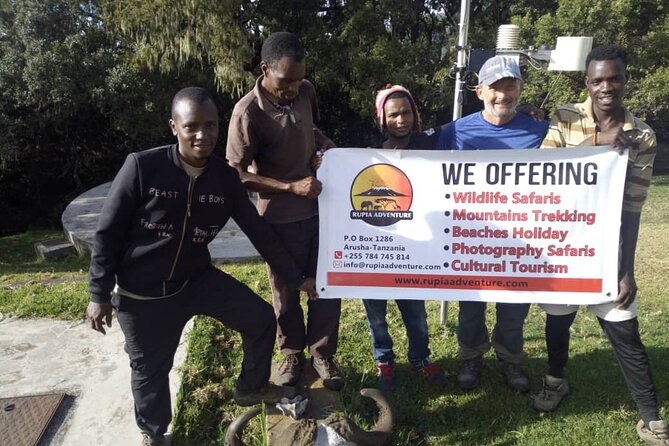
This trek runs or falls based on leadership. The company behind it is Rupia Adventure, and the guide teams appear repeatedly by name.
People have credited guides like Gideon, Emmanuel, Laurent, Frank, Matt, Maziku, and Victor for careful support and professionalism. One guide, Gideon, was described as a first aid user—exactly what you want to hear when you’re heading into altitude conditions.
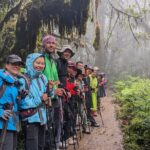
Team dynamics show up too. The crew handles porters and cooks, and the stories emphasize friendliness and care over the whole four days. There are also examples of guides being patient with slower hikers, including someone doing their first mountain hike and still making it up with guidance and encouragement.
A small note for your expectations: mountain huts can be basic. Even when the guiding is excellent, the accommodation reality is what it is—dark, cold, and simple. Go in knowing that comfort is not the main product. The climb is.
Who should book this Mt. Meru trek (and who should think twice)
Most people can participate, but Mt. Meru is still a serious physical challenge. This is for active hikers who can handle steep, uneven ground and a tough summit-night schedule. If you’ve done long hikes before, you’ll feel more confident. If you haven’t, it can still work—but you’ll need patience and a slower pace plan for Day 3.
This trek can suit a broad range of ages as long as the group stays safe and follows guidance. There are accounts of families hiking with kids around 11 years old and getting professional support throughout.
Still, consider your health carefully. One story describes getting ill on Day 2 and not summiting that night, though the person did walk to Little Meru. That’s a reminder: altitude and timing are unforgiving, so take your body seriously.
If you hate cold, basic lodging, or you’re expecting luxury, Mt. Meru will challenge your expectations. If you want a disciplined, scenic climb with real structure, it’s a strong match.
Practical prep that makes the trek easier
You don’t need to be a mountaineer for Mt. Meru. You do need the right mindset and gear.
- Bring warm layers. The climb gets cooler and the huts can feel cold and dark. Day 3 especially tests warmth.
- Make sure you have headlamp access. Summit night walking happens in the dark, with headlamps used to light the trail.
- Pack energy snacks for extra fuel. Some people found summit-day breakfast light, and carrying your own small snacks can help you stay steady.
- Plan for a long Day 3. You’ll be hiking with volcanic ash and rocks, so your legs need to be ready for a slower, careful pace.
- Ask about tipping clearly at booking if that matters to you. Some people described confusion about tip focus or tip policy communication, and it’s best to know before you’re on the mountain.
Should you book the 4 Days Mt. Meru trek with Rupia Adventure?
If you want a well-run, safety-first Mt. Meru climb with inclusions that keep the budget clear, I’d say yes. The armed ranger structure, the included park fees and meals, and the small group size are exactly the kind of practical advantages that turn a tough climb into an experience you’ll feel good about.
Book it if:
- you’re fit and ready for a real summit effort
- you like clear logistics (hotel pick-up, meals, park fees handled)
- you value team guidance and steady pacing, not just taking photos
Skip it or choose another option if:
- you’re expecting comfortable lodging
- you struggle with cold and simple hut conditions
- you want a trip that feels purely relaxed and effortless
Mt. Meru is active travel with a big payoff. Sunrise from Socialist Peak is the kind of moment that makes the climb worth it—especially when the crew is focused on keeping you safe and moving smart.
FAQ
Where is the trek based and when do we start?
The trek starts from Arusha. The meeting start time is 9:00 am, and you’re collected from your hotel in Arusha before heading toward the mountain area.
How long is the Mt. Meru trek?
It’s a 4-day trek, approximately.
How many people are in the group?
The group maximum is 4 travelers.
What’s included in the tour price?
Meals and park fees are included. The price also includes hotel transfer/transport to and from the trekking area, and you hike with ranger and guide supervision.
Do we have ranger or guide support on the mountain?
Yes. An armed park ranger accompanies you from the start, and you’ll also have a guide team for the trek.
What route do we take to the summit, and when does the summit happen?
You leave camp at night on the summit day, with headlamps, and you reach the summit at Socialist Peak after several hours of uphill hiking along the crater rim route.
What wildlife might we see?
Depending on timing and conditions, you might see giraffes, buffaloes, elephants, and black-and-white colobus monkeys.
What if the weather is poor?
The trek requires good weather. If it’s canceled due to poor weather, you’ll be offered a different date or a full refund.
Can I cancel and get a full refund?
Yes. Free cancellation is available up to 24 hours in advance for a full refund. If you cancel less than 24 hours before the start time, the amount paid is not refunded.