REVIEW · LA PALMA
La Palma: Guided Trekking Tour to El Roque de los Muchachos
Book on GetYourGuide →Operated by La Palma Transfer & Tours · Bookable on GetYourGuide
Thin air, big views, sharp air. This guided trek to El Roque de los Muchachos blends a guided hike with plenty of photo chances, and the air-conditioned coach makes the climb and descent less punishing; the trade-off is you do need a solid fitness base for a marked-path trek.
Once you’re up around 2,426 meters, the island feels strangely close to the clouds. You’ll walk parts of an older commercial route between Tijarafe and Santa Cruz de La Palma, then reach the area where the observatory’s telescopes line up with big-sky viewpoints.
If the day is clear, you may see as far as Tenerife from higher points. Just pack for cool wind and sudden weather shifts, and be ready for a bus ride with lots of tight curves.
In This Review
- Key things that make this El Roque trek worth it
- El Roque de los Muchachos: why this tour hits the sweet spot on La Palma
- The “getting there” part: coach ride to Mirador de los Muchachos
- Starting the trek: an ancient route and a national-park border
- Roque de los Muchachos Observatory: telescopes meet wide-open views
- What you’ll spot along the way: flora, exposed terrain, and the feeling of altitude
- Roberto’s Wall and the high-point rhythm of the hike
- The weather reality: visibility can make or break your photos
- Guide quality: what good interpretation looks like here
- Photos and timing: where to focus during the stops
- Price and value: why $38 can feel fair here
- What to bring (and what to skip) for El Roque
- Who this trek suits best
- Should you book the La Palma trek to El Roque de los Muchachos?
- FAQ
- How long is the La Palma guided trekking tour to El Roque de los Muchachos?
- What does the $38 price include?
- Do I need a high fitness level for the hike?
- What should I bring with me?
- Is the tour suitable for children?
- What languages are the live guides available in?
- Can I leave the marked paths during the hike?
- Is the tour accessible for wheelchair users or people with mobility impairments?
- Can I see Tenerife from this tour?
Key things that make this El Roque trek worth it
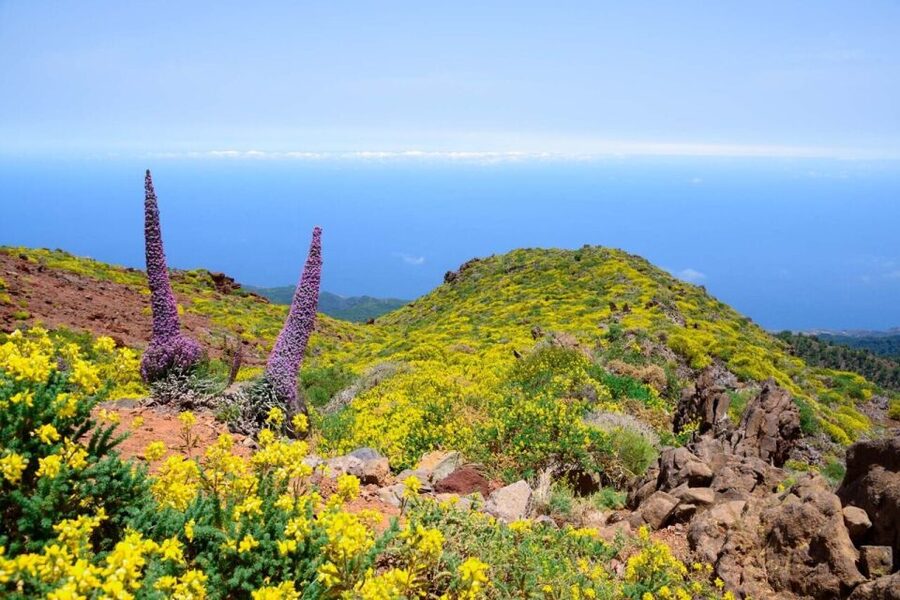
- 2,426 meters of viewpoint power from La Palma’s highest point, with wide views over multiple municipalities
- An old trail with purpose: you’ll trek a route historically used for travel and trade between Tijarafe and Santa Cruz de La Palma
- Observatory-area photo moments near telescopes at Roque de los Muchachos Observatory
- Climb landmarks you’ll actually recognize like Roberto’s Wall, Pico de La Cruz, and Pico de La Nieve
- Clear-day bragging rights: from Pico de La Cruz, you can potentially see Tenerife
- Coach comfort on a winding road plus a small-group guide who explains local traditions and history
El Roque de los Muchachos: why this tour hits the sweet spot on La Palma
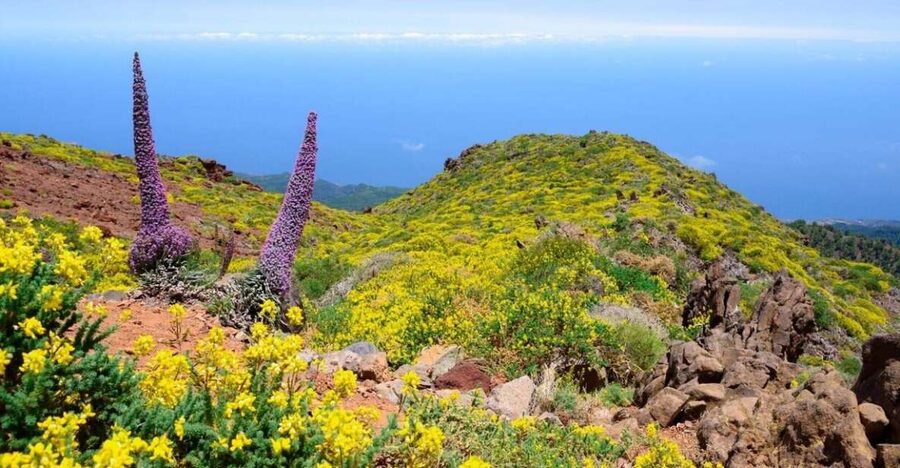
La Palma is one of those places where a short change in altitude can feel like a whole new world. This tour is built for exactly that. In about four hours (including transport), you move from where life is normal to a high, windier zone at El Roque de los Muchachos, the island’s top point at 2,426 meters.
What I like is the balance: you get a real hike, but it’s not a half-day suffering contest. You also get a guided layer you can’t fake with a phone map—your guide connects what you’re seeing to local history and traditions while you’re walking the old paths.
The other big plus is the pacing and logistics. You ride in an air-conditioned coach up and back, which matters here because the road is steep and curve-heavy. The bus ride alone can fatigue you if you’re car-sick. But with the comfort factor and the fact you’re not driving yourself, it’s much easier to focus on the experience when you’re actually outside.
You can also read our reviews of more tours and experiences in La Palma.
The “getting there” part: coach ride to Mirador de los Muchachos
Your day starts with pickup from your accommodation, then you head up by air-conditioned coach. As the road climbs, you’ll go through a winding section that can feel dramatic if you’re sensitive to motion. Plan to sit in the spot that feels most stable for you, and bring a bit of patience. This is the kind of route where people remember the curves.
Once you’re higher up near Mirador de los Muchachos, you’re already in the right mindset for what’s next. The views begin early, before you even step onto the hiking path. This is one of those tours where the scenery isn’t reserved only for the top.
Starting the trek: an ancient route and a national-park border
The main hike follows an old track that was once used as a commercial route connecting Tijarafe to Santa Cruz de La Palma. That detail matters, because it changes how you read the terrain. You’re not just walking for exercise; you’re following a path that historically linked communities across the island.
As you move along, you’ll reach the border area of Caldera de Taburiente National Park. You get that sense of being at the edge of something protected and special, where the terrain gets harsher and the vegetation becomes more altitude-adapted. Even when it’s not sunny, the air and light up there make the views feel crisp and layered.
You’ll also be trekking along marked paths only. This isn’t the time to cut across for shortcuts or better photo angles. You’ll want to stick to the route so the group stays safe and the guide can keep the timing on track.
Roque de los Muchachos Observatory: telescopes meet wide-open views
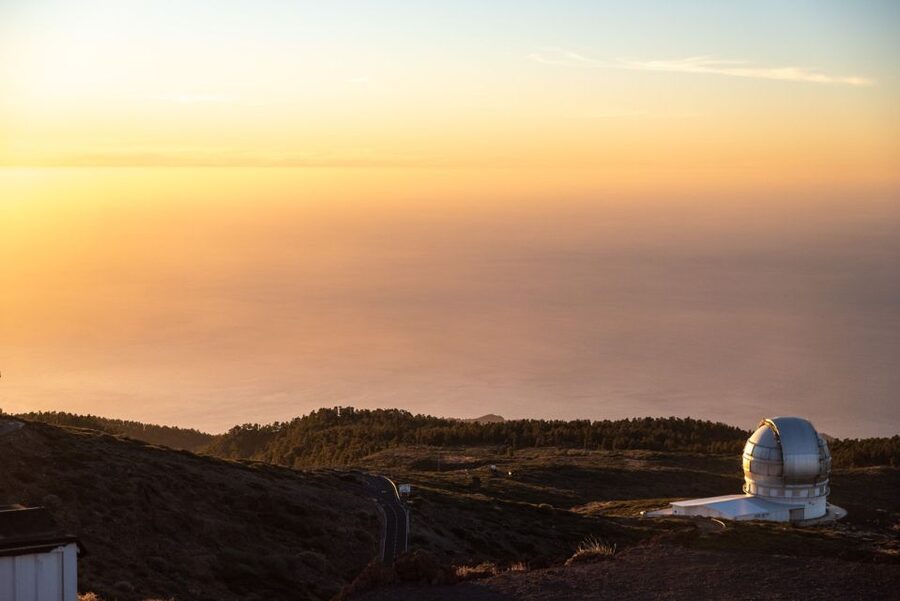
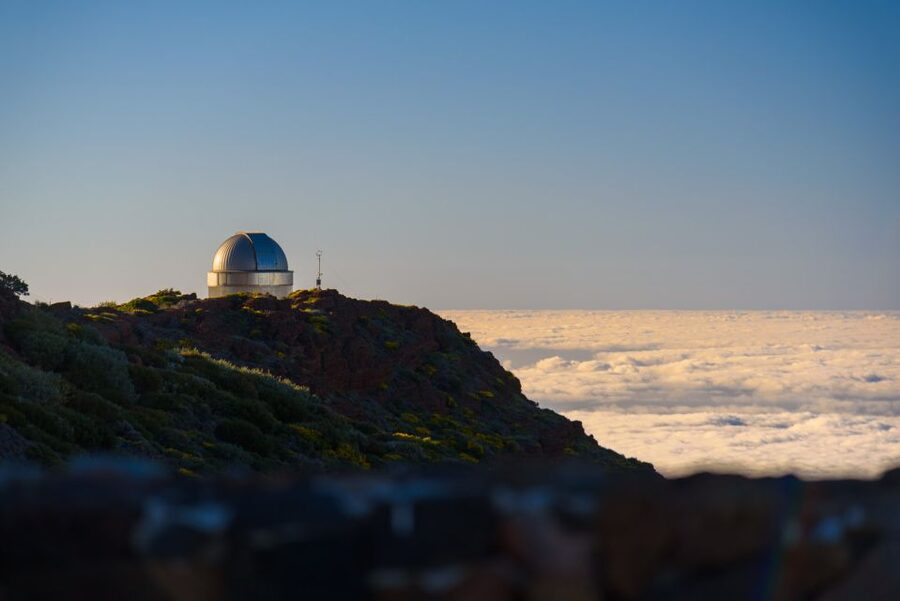
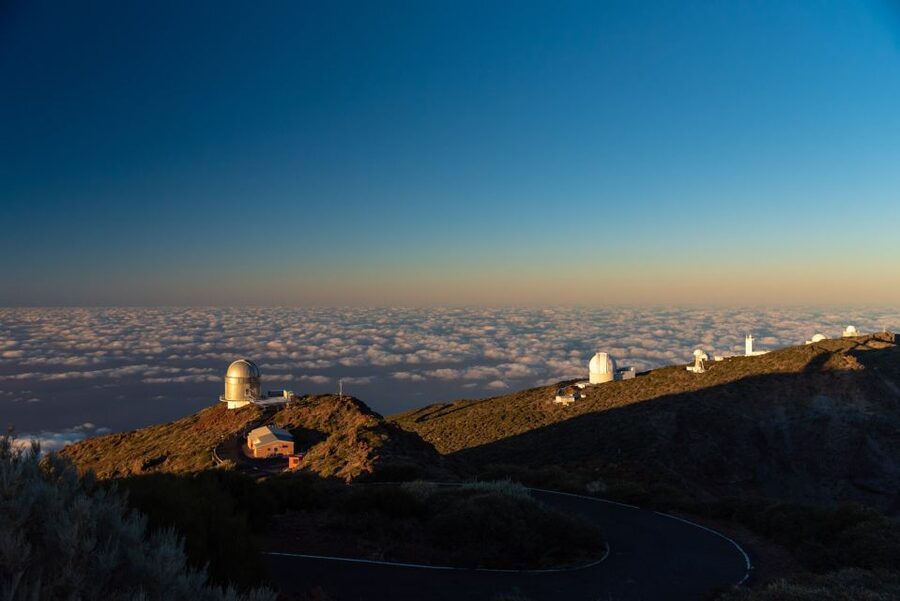
One of the most striking parts of this outing is reaching the Roque de los Muchachos Observatory area, where the route leads you past some of the telescopes. You get to see the observatory in its proper setting, not as a museum exhibit. It’s science in the middle of a high, remote sky.
This section is also about viewpoints. The guide helps you connect what you’re seeing to the island’s geography. You’ll look out toward Cumbre Vieja and Cumbre Nueva, and you’ll be able to pick out several municipalities below, including Los Llanos de Aridane, Tazacorte, and Tijarafe when visibility is good.
On clear days, it feels like the island’s map has been unfolded in front of you. On cloudier days, it can still be impressive, but it becomes more about the changing cloud layers and the way the terrain disappears and reappears.
What you’ll spot along the way: flora, exposed terrain, and the feeling of altitude
The hike doesn’t just go from point A to point B. Along the trail, you’ll pass through areas featuring high-altitude vegetation like cedars and summit pansies before continuing toward Roberto’s Wall.
At these heights, everything happens faster. Light changes, wind hits, and your legs feel the effort. That’s why proper footwear isn’t optional. Hiking shoes with grip make the difference between an enjoyable walk and a stiff, careful shuffle.
Also, dress like a realist. Even when you want to wear just one layer, the top can surprise you—especially in cooler months. One practical tip from experience at this altitude: sun protection still matters. Even when it’s not blazing hot, the brightness at elevation can burn you faster than you expect.
Roberto’s Wall and the high-point rhythm of the hike
As you continue, you reach Roberto’s Wall, a recognizable milestone on the route. It’s helpful psychologically because you can measure progress. When you know you’ve reached a landmark, the rest of the climb feels shorter.
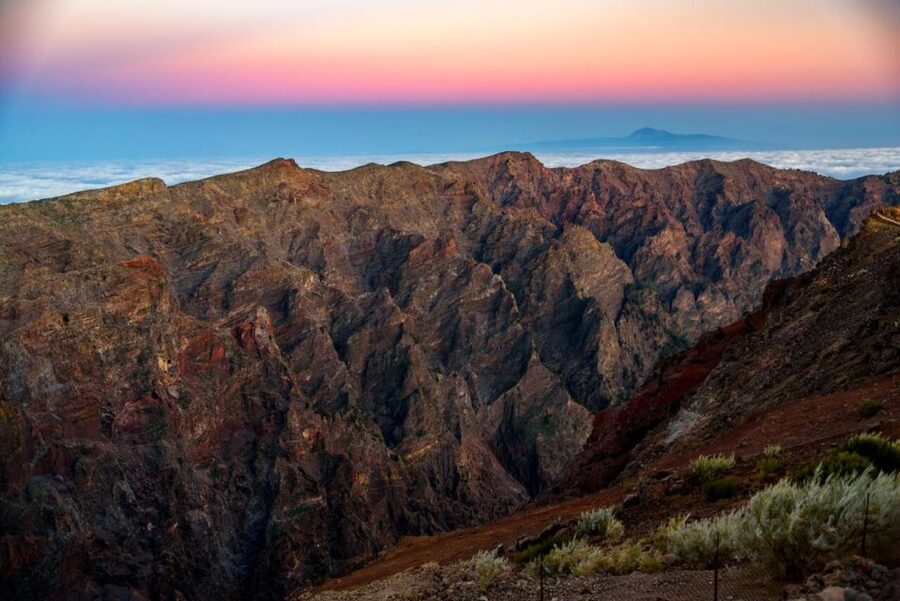
After that, the trail continues toward Pico de La Cruz, another key viewpoint. This is the point where weather really shows itself. If the day is clear, you can see as far as Tenerife. That potential makes this section extra exciting because you’re not just hiking—you’re waiting for that visibility window.
Then the tour leads you onward toward Pico de La Nieve to complete the hike. Once you finish there, it’s time to head back to the coach for the ride down.
The weather reality: visibility can make or break your photos
This tour is all about views, so you should treat weather as part of the plan. On a clear day, you’ll get long-range panoramas and sharper telescope-area photos. With cloud cover or haze, the experience can feel more atmospheric, but you may lose some distance views—especially the Tenerife sightline from Pico de La Cruz.
You also need to plan for temperature swings. Even when the lower areas feel mild, the top can be chilly, windy, and less forgiving. Warm layers and something windproof are your best friends. A sun hat helps, but a jacket and rain gear help more if conditions shift.
Guide quality: what good interpretation looks like here
A hiking tour can be either just walking, or walking plus context. The guides for this route tend to deliver the second kind. The tour runs with live guidance in Spanish, English, and German, and the communication quality matters because you’ll be stopping for landmarks and viewpoint explanations.
Some guides have been noted for being professional and friendly, including names like Arnold and Henry/Henri. What you want from a guide in this setting is simple: clear talk, good pacing, and the ability to explain what you’re seeing in a way that makes the terrain feel meaningful.
You’ll learn local history and traditions tied to the places you pass, which is especially valuable on La Palma, where geography and human movement have always been intertwined.
Photos and timing: where to focus during the stops
This tour is timed for a steady 4-hour experience, so you won’t have hours to linger at every viewpoint. That means you should make your photo moves efficiently:
- At higher lookouts, take a quick wide panorama, then switch to tighter shots toward the observatory area and the valleys.
- Aim to grab your long-range photos near Pico de La Cruz, since that’s the clearest chance for Tenerife visibility when conditions cooperate.
- For Roberto’s Wall and the Pico de La Nieve finish, get a few mid-hike photos that show scale. At altitude, your brain underestimates distances until you see them on camera.
And yes, keep your phone powered. You’re going out with a rule that you must carry a mobile phone with enough battery. Bring a charged device and don’t let it die from constant camera use.
Price and value: why $38 can feel fair here
At $38 per person for a guided hike with transport, this is one of those deals that works when you account for time and effort. The value isn’t just the guide. It’s that you get round-trip coach transfer plus a structured route to a high-altitude area that’s harder to organize on your own in a short window.
You’re also getting an experienced guide to interpret what you’re seeing, which is the kind of add-on that turns a viewpoint into a story. A self-guided hike could be cheaper on paper, but you’d spend more time figuring logistics, timing, and where to focus for the best observatory and viewpoint moments.
One note: food and drinks aren’t included, so your budget should include buying or carrying your own snacks and water. If you treat that as part of your plan, the overall price still makes sense.
What to bring (and what to skip) for El Roque
This tour gives you enough guidance on the essentials that you can pack without overthinking. Here’s what you should bring:
- Hiking shoes with traction
- Water plus food and drinks since nothing is included
- Sunglasses and sunscreen
- Sun hat
- Camera (and a charging mindset for your phone)
- Jacket and rain gear
- Charged smartphone with enough battery
Skip bulky items. You’ll be moving on foot, and you don’t want extra weight when the altitude starts to feel real.
Also, don’t plan on leaving the marked paths. This tour keeps you on the route for safety and timing, and you’ll want to cooperate with that.
Who this trek suits best
This experience is best for people who:
- Enjoy outdoor walking with a good fitness level
- Want guided context, not just a scenic photo stop
- Prefer a structured half-day with transport handled
- Can handle changing temperatures at high altitude
It’s not a match if you have back problems, mobility impairments, or need a wheelchair-friendly setup. Children under 3 years aren’t suitable either. If you’re unsure, think about whether you can comfortably hike on marked paths for a solid portion of the tour.
Should you book the La Palma trek to El Roque de los Muchachos?
If your main goal is a high-impact view of La Palma’s upper world in a short time, I’d say this is an easy “yes.” The combination of guided trail, observatory-area sights, and viewpoints toward Cumbre Vieja/Cumbre Nueva gives you more than a simple summit walk.
I’d only hesitate if you’re not comfortable with a hilly, marked-path hike or if you’re very sensitive to bus rides with lots of curves. For everyone else, pack smart, bring your layers, and treat weather like a variable you can’t control but can respect.
FAQ
How long is the La Palma guided trekking tour to El Roque de los Muchachos?
The tour lasts 4 hours.
What does the $38 price include?
It includes the hiking tour, a guide, and bus transfer. Food and drinks are not included.
Do I need a high fitness level for the hike?
Yes. The tour requires a good level of fitness.
What should I bring with me?
Bring sunglasses, a sun hat, a camera, hiking shoes, sunscreen, water, a jacket, rain gear, and a charged smartphone.
Is the tour suitable for children?
It is not suitable for children under 3 years old.
What languages are the live guides available in?
The live tour guide is offered in Spanish, English, and German.
Can I leave the marked paths during the hike?
No. Participants cannot deviate from the marked paths.
Is the tour accessible for wheelchair users or people with mobility impairments?
No. It is not suitable for people with mobility impairments or wheelchair users.
Can I see Tenerife from this tour?
If the day is clear, you can see as far as Tenerife from Pico de La Cruz.