REVIEW · SICILY
Etna North: Guided trekking to Summit volcano craters
Book on Viator →Operated by Ashàra Etna & Stromboli Guides · Bookable on Viator
The volcano talks back in every step. This guided Etna North hike is built for safe summit access, with expert volcanological/alpine leadership, helmet-and-pole support, and close crater-edge views around the highest points most day trips miss. You’ll climb from about 1,800 m up into the 3,000+ meter zone, then come back down with real explanations for what you’re seeing as you go.
I also like that the experience is genuinely practical: boots, helmets, and walking sticks are included, and you’re kept moving by guides (I’ve seen names like Antonio, Massimo, and Giuseppe come up again and again) who focus on safety and clarity. The only real caution is flexibility. When conditions shift fast—weather, snow, or changing volcanic rules—you may not get the exact same summit outcome, even if you’re prepared.
In This Review
- Key highlights to know before you go
- Mount Etna North: what makes this summit-crater hike special
- Piano Provenzana start at 8:00 am and the 4×4 ride
- Two hours of climbing toward the 3,320 m crater rim
- Walking the Central Crater edge and spotting NE and SE craters
- Top views: gas emissions, volcanic bombs, and sulfur colors
- The descent back to Piano Provenzana: ash, slag, and Sicilian coast views
- Gear, guide style, and safety choices on a living volcano
- Price breakdown: $78.10 plus the €60 4×4 fee
- Who should book, who should skip (asthma and heart conditions)
- Should you book this Etna North summit trek?
- FAQ
- What time does the Etna North summit trek start?
- How long is the experience?
- Where is the meeting point?
- How many people are in each group?
- What’s included in the price, and what costs extra?
- Do you actually walk on the crater rim?
- Is the tour offered in English?
- Who shouldn’t do this hike?
- What happens if weather conditions are poor?
- Can I cancel for a full refund?
Key highlights to know before you go
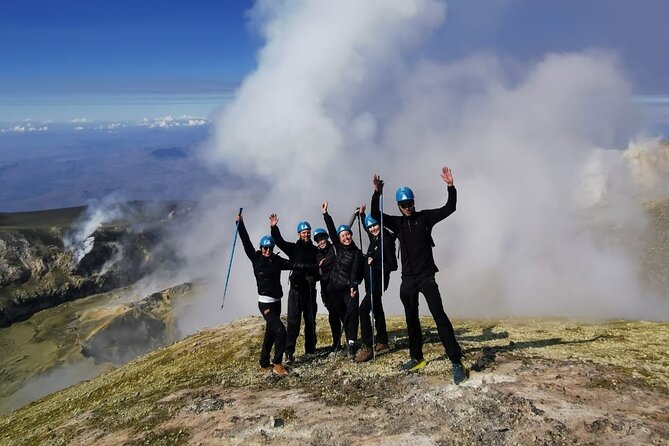
- North-side access to safer summit terrain: you’ll use the slope that currently allows the climb in safe conditions.
- Crater rim at about 3,320 m: you walk on the edge of the Central Crater.
- You’ll face the Northeast Crater and see the Southeast Crater: all from the main rim area.
- All the core hiking kit is included: boots, helmet, and trekking sticks, plus insurance and a trained guide.
- Max group size is 20 people: small enough for real attention, big enough to keep the day moving.
Mount Etna North: what makes this summit-crater hike special
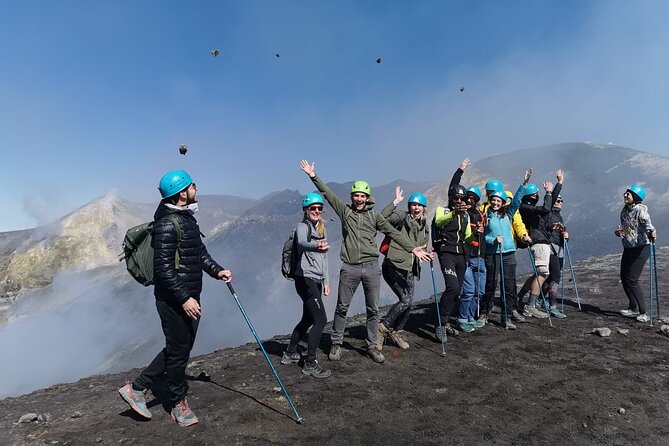
Mount Etna is famous for drama, but this trip is more about precision than spectacle. From the start, you’re routed toward the highest permitted crater-area access, then guided step-by-step so you can reach the rim area without guessing.
The big payoff is the viewpoint. Instead of staring at Etna from a distance, you’re walking along the rim of the Central Crater and looking straight toward the Northeast Crater, with the Southeast Crater in your field of view. That shift—from watching a volcano to standing at its doorway—is what makes Etna feel like a living thing.
Another strong point is the way the guide connects the physical hike to the volcanic details. You don’t just get told that it’s active. You’re shown geothermal features and you get plain explanations for formations, gases, and the ground’s weird colors—especially the sulfur tones that show up as elements sublimate.
You can also read our reviews of more tours and experiences in Sicily.
Piano Provenzana start at 8:00 am and the 4×4 ride
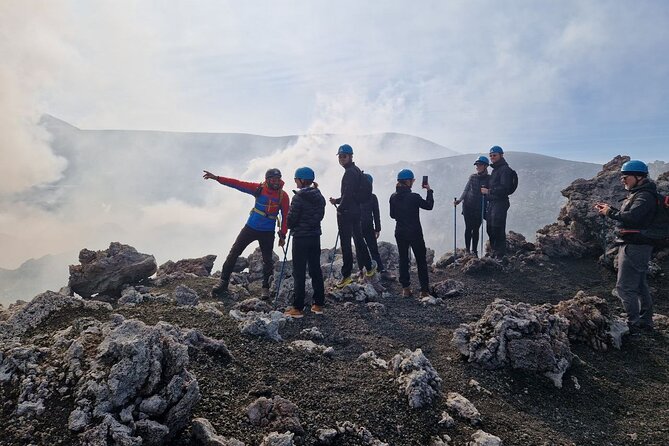
Your day begins at Piano Provenzana on Etna’s north side, with a 8:00 am start. Expect the morning to feel like “get ready now,” because you’ll be meeting on time and then heading up by special 4×4 vehicles before the main climb.
Here’s an important cost detail: the tour price is $78.10 per person, but the 4×4 ride is €60 per person, payable in cash on the spot. The good news is that everything else you need for the hike is included, so you’re not paying extra for helmets and poles. Still, have cash ready so you’re not stuck doing math at the pickup.
The first lift goes from Piano Provenzana (about 1,800 m) up to Piano delle Concazze (about 2,825 m) in roughly 40 minutes. That matters because it means the hike portion focuses on what you came for: the crater area.
Two hours of climbing toward the 3,320 m crater rim
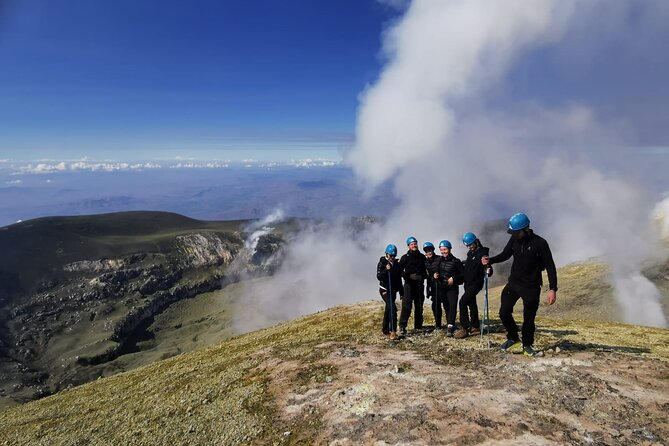
After the 4×4, you begin the ascent along a slope that’s described as the unique route currently allowing summit access in safe conditions. That’s your first hint that Etna isn’t a “one-size-fits-all” mountain. The safest path can change.
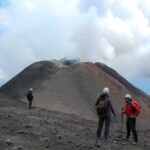
From around 2,825 m, the climb to the main crater rim takes about 2 hours. This is not a long-distance hike, but it’s a steep one at altitude. Plan to use steady pacing, take the guide’s break stops seriously, and focus on breathing. If you tend to rush when you’re excited, fight that habit on Etna—air gets thinner, and your legs need rhythm more than speed.
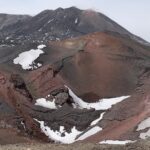
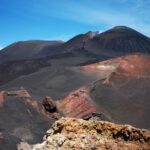
As you go higher, you’ll see geothermal features along the way—steam vents and lava fields are part of the climb. The scenery keeps telling a story: broken rock, ash, and volcanic textures show up in layers, like the ground is writing history in physical form.
Walking the Central Crater edge and spotting NE and SE craters
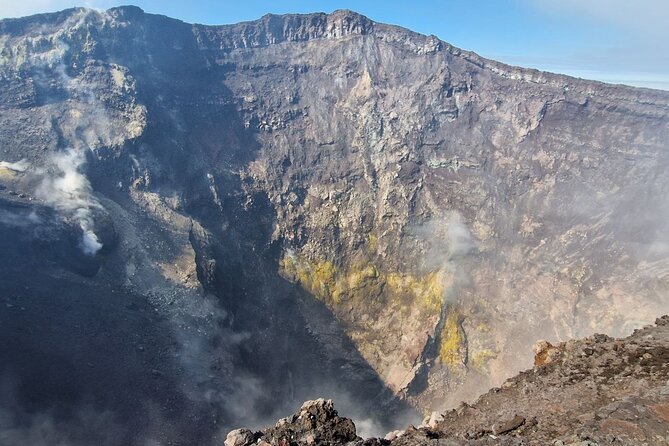
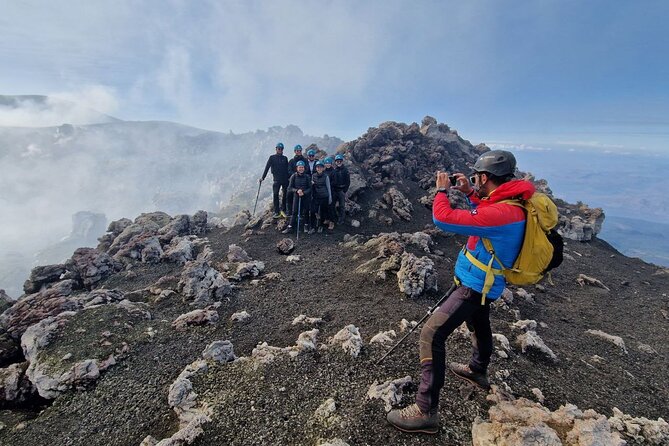
This is the heart of the experience: once you reach the crater rim area at about 3,320 m, you walk on the edge of the Central Crater. That means you’re close enough to feel how big the system is, without it turning into a scary, “look but don’t think” moment. The guide’s job is to keep you oriented and moving safely along the rim.
The route also has a clear set of crater viewpoints. You’ll face the Northeast Crater and admire the Southeast Crater from your side. Seeing two craters from one rim viewpoint helps you understand how the eruptions and activity shape different sections of the volcano.
One practical note: crater-rim walking is exposed. Your helmet is there for a reason, and the trekking sticks help you keep balance on uneven volcanic ground. If you’re prone to feeling dizzy at heights, tell the guide early so they can guide you on pace and positioning.
Top views: gas emissions, volcanic bombs, and sulfur colors
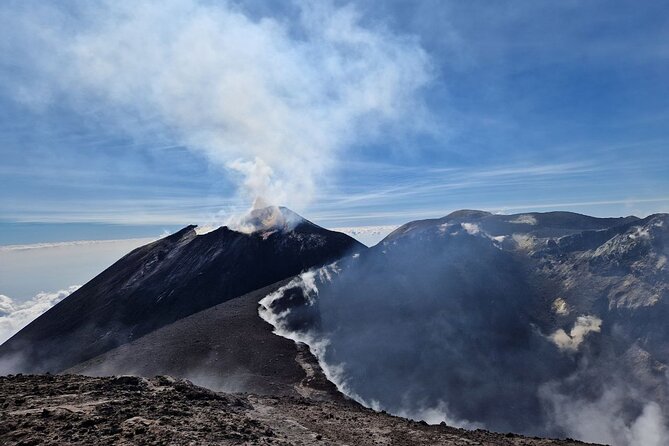
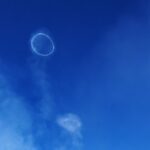
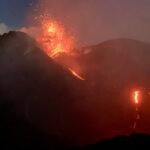
Once you’ve made it to the summit crater area, the experience shifts from “climb” to “observe.” The volcanic environment is the star. You’ll notice gas emissions and other active-looking features, plus volcanic materials like volcanic bombs (large ejecta) scattered in the area.
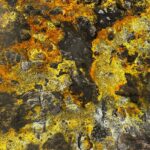
The ground colors are another standout. You’ll see sparkling tones caused by sublimation of different elements—especially sulfur. It’s one of those “wait, the rocks are doing what?” moments that turns the hike into a real education you can’t get from a photo.
This is also where the guide’s storytelling matters most. You’ll get breaks during the day where they explain the volcano’s formation and what you’re looking at in the moment. I like this format because it keeps you from drifting into silence. Even when you’re tired, you’re still learning.
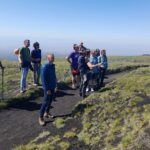
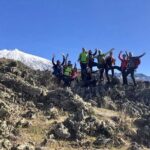
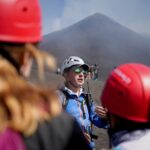
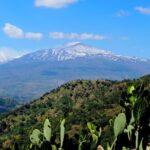
The descent back to Piano Provenzana: ash, slag, and Sicilian coast views
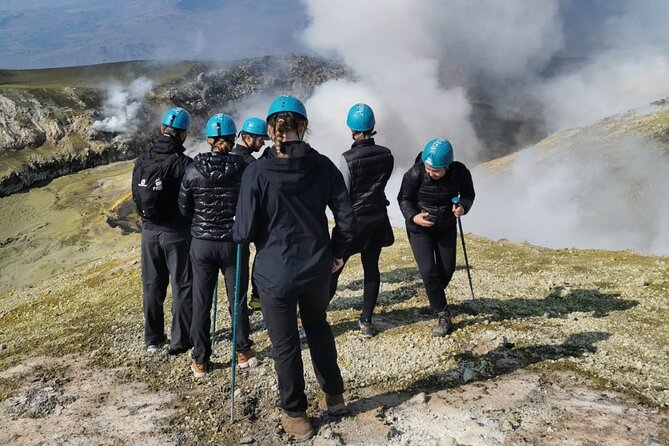
The descent starts after your summit visit and runs until you’re back near 2,825 m, then you take the 4×4 down to return to Piano Provenzana. The walking time is about 2 hours on the way down, and the ground is part of the challenge.
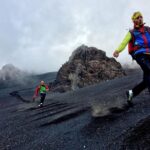
You’ll be stepping over fine volcanic ash and slag. That means footing can feel unpredictable. Slow down slightly compared to what feels normal on a trail. Use the walking sticks, and let your steps land flat instead of bouncing.
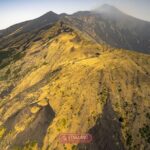
The upside is the views. Even while descending, you’ll get wide, panoramic looks toward the Sicilian coast. That contrast helps. You start the day looking up at a steep climb, and you end with the coast opening up behind you—like Etna is showing you where it connects to everything else.
Gear, guide style, and safety choices on a living volcano
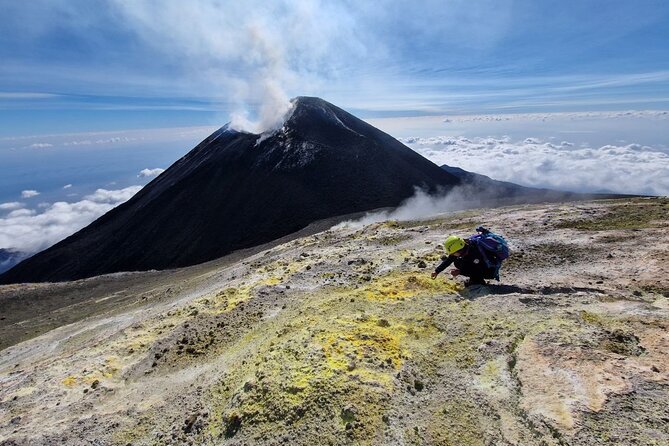
This trip’s safety design is straightforward. Included gear is hiking boots, a helmet, and walking sticks, along with insurance and a volcanological/alpine guide. You’re not expected to show up with climbing-specific equipment, which is a big value win if you’re traveling light.
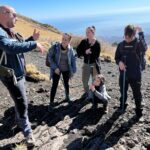
The guides also set the tone with their group management. I’ve seen examples of guides like Antonio and Massimo described as careful, funny, and focused on making everyone comfortable—physically and mentally. I’ve also seen that when conditions get tough (like snow), pace and decision-making become extra important. On Etna, safety decisions can include telling someone to stop or turn back rather than pushing through.
That’s the tradeoff with a group trek. You’re on shared time and shared route constraints, and the guide needs to keep everyone safe. If you prefer ultra-personal pacing, consider that this format is designed for a group of up to 20 people, not a solo experience.
Price breakdown: $78.10 plus the €60 4×4 fee
Let’s do the math in a way that helps you plan. The headline price is $78.10 per person, and what you get inside that price is meaningful: boots, helmet, trekking sticks, insurance, and a trained volcanological/alpine guide. On top of that, admission for the crater-area portion is included during the summit walking segments.
Then you add the extra day-of cost: €60 per person for the 4×4 ride (paid in cash on the spot). So your true all-in cost is more like “$78.10 plus €60,” depending on exchange rates and timing.
For me, the value comes from the combination of three things:
- you’re getting gear you’d otherwise have to rent or buy,
- you’re paying for trained leadership on an active volcano,
- and you’re reaching high crater rim viewpoints instead of a quick bus-style stop.
If you already own good boots and are comfortable at altitude, you might feel tempted to skip the hike fee. But with the included safety gear and insurance, I think it still holds up as a practical way to do Etna’s north summit.
Who should book, who should skip (asthma and heart conditions)
This hike is listed as requiring moderate physical fitness. That usually means you should be comfortable walking for several hours with an uphill component, not just strolling.
Also pay attention to the health restrictions: it’s not recommended for people with asthma or heart problems. If that applies to you, don’t treat it like a “maybe.” Altitude and exertion are real variables here.
Who it suits best:
- you want to see the crater rim and specific craters (Central, Northeast, Southeast),
- you like guided education that connects rocks, gases, and features,
- you’re okay with a small group and altitude pacing.
Should you book this Etna North summit trek?
Book it if you want the real Etna experience: guided crater-edge walking, high-altitude views, and volcanic details that make the hike feel like a live lesson. I’d also book it if you don’t want to stress over equipment, because helmets, boots, and poles are part of the package.
Think twice (or ask more questions) if you need highly flexible pace or you’re worried about changing conditions. This is a mountain where safe routes can shift, and the day can get harder in snow or similar weather. Arrive early, follow guide instructions, and bring a “plan to adjust” mindset.
If you match that style, this is one of the better ways to get up close to Etna’s summit activity from the north side.
FAQ
What time does the Etna North summit trek start?
It starts at 8:00 am.
How long is the experience?
It takes about 5 hours (approximately).
Where is the meeting point?
The meeting point is Piano Provenzana – Etna nord, via Provenzana, 95015 Linguaglossa (CT), Italy.
How many people are in each group?
The tour has a maximum of 20 people.
What’s included in the price, and what costs extra?
Included: hiking boots, a helmet, walking sticks, insurance, and a volcanological/alpine guide. Extra: the 4×4 tickets cost €60 per person, paid in cash on the spot. Admission for the crater part is listed as included in the summit walking segments.
Do you actually walk on the crater rim?
Yes. You climb to the main crater rim at about 3,320 m and walk on the edge of the Central Crater.
Is the tour offered in English?
Yes, it’s offered in English.
Who shouldn’t do this hike?
It’s not recommended for people with asthma or heart problems, and it requires moderate physical fitness.
What happens if weather conditions are poor?
This experience requires good weather. If it’s canceled due to poor weather, you’ll be offered a different date or a full refund.
Can I cancel for a full refund?
Yes. You can cancel up to 24 hours in advance for a full refund. If you cancel less than 24 hours before the start time, you won’t receive a refund.