REVIEW · KATHMANDU
Gokyo Lakes And Renjola Pass Trek – 12 Days
Book on Viator →Operated by Breeze Adventure Pvt Ltd · Bookable on Viator
Renjo La is the detour most skip. This trek takes you deeper into the Khumbu with a route that starts at Lukla Airport, passes the Gokyo Lakes, climbs up to Gokyo Ri, and then crosses the rarely visited Renjo La Pass at 5,345m/17,536ft.
I love the view geometry here. At Gokyo Ri (5,357m) you get a wide panoramic look at Everest, Lhotse, Makalu, and Cho Oyu, plus the massive Ngozumpa Glacier off to the side. I also like how Breeze Adventure puts real attention on the people doing the guiding—one response specifically thanks Mr. Sarki Sherpa for outstanding support.
One thing to take seriously: this is high-altitude trekking, and the Renjo La Pass is not a stroll at 5,345m. On top of that, the experience is weather-dependent, so you’ll want a flexible mindset if conditions aren’t right.
In This Review
- Key highlights to know before you go
- Renjo La Pass: the extra altitude step most people skip
- Starting at Lukla and looping back: the Khumbu travel shape
- Gokyo Lakes and Gokyo Ri: where the Everest skyline makes sense
- Renjo La crossing: early rise, thin air, and glacier drama
- Down via Thame and Namche Bazaar: the relief that comes with context
- Breeze Adventure Pvt. Ltd: small-group support and guide quality
- Price and value: what $1,800.62 buys you (and what to check)
- Weather windows and the refund safety net
- Who should book this trek, and who should pause
- Should you book this Gokyo Lakes and Renjo La Pass trek?
- FAQ
- How long is the Gokyo Lakes and Renjo La Pass trek?
- Where does the trek start and end?
- What is the highest point on the trek?
- How many people are in a group?
- Is pickup provided?
- What fitness level do I need?
- What happens if weather is poor?
Key highlights to know before you go
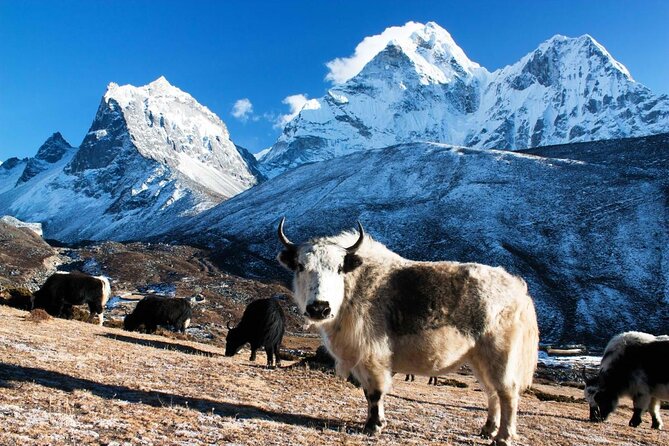
- Renjo La Pass, 5,345m: a dramatic step up after Gokyo Ri, with big glacier-and-peak views on the way.
- Gokyo Ri panoramic lineup: four 8,000+ meter giants in one wide sightline—Everest, Lhotse, Makalu, and Cho Oyu.
- Ngozumpa Glacier views twice: first from the Gokyo Ri area, then again when you rise early for the Renjo La crossing.
- Route includes Thame and Namche Bazaar: your descent isn’t just downhill—it includes cultural stops as you make your way back to Lukla.
- Small group size: capped at 15 travelers, which usually keeps the trekking feel controlled rather than chaotic.
- Guiding support emphasized by the operator: Breeze Adventure highlights experienced team support and safety/comfort in their responses, including thanks to Mr. Sarki Sherpa.
Renjo La Pass: the extra altitude step most people skip
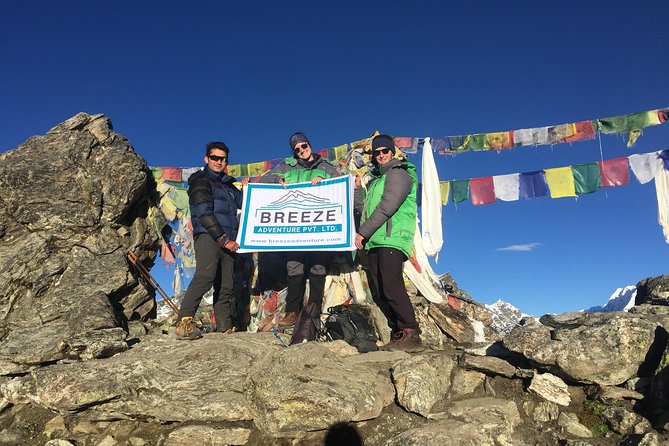
If you’re choosing a Gokyo route, you’re already thinking about views. This one adds a specific twist: instead of turning back down the easier line through the Gokyo Valley, you keep moving onward and upward to cross Renjo La Pass.
Renjo La sits at 5,345m/17,536ft. That number matters. High passes feel similar on paper—cold, steep, short air—but the real difference is how you manage your pacing and how your body reacts after multiple days at elevation. A 12-day plan gives you more time to settle into the rhythm than shorter options, which helps your chances of feeling steady when you hit the pass.
You’ll also get the “why this exists” moment. The itinerary is built around viewpoints: Gokyo Ri the day before, then Renjo La the next morning with another glacier-and-peaks panorama. This is one of those trekking patterns where the effort mostly pays you back immediately. When you’re cold and breathing hard, you’ll care a lot about that payoff.
You can also read our reviews of more tours and experiences in Kathmandu.



Starting at Lukla and looping back: the Khumbu travel shape
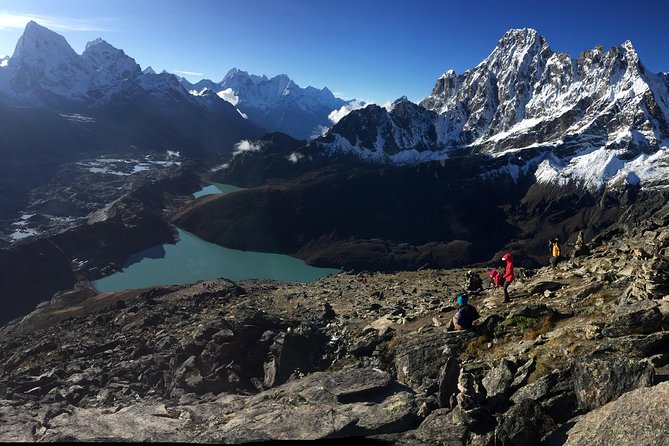
This trek is set up as a loop that keeps you in the Everest region orbit without feeling like you’re only marching between two endpoints. It starts at Lukla Airport, then you work your way through the Gokyo area, and later you return through Thame and Namche Bazaar before ending back at the starting meeting point area in Kathmandu (the activity ends back at the meeting point).
That matters because you get two different “mood” changes:
- The climb into the Gokyo Lakes and Gokyo Ri feels open and high, with wide sightlines.
- The descent via Thame and Namche Bazaar adds village life and local bustle compared with the more quiet, high-glacier trekking zones.
In plain terms: you’re not just doing an altitude challenge. You’re also doing a route that lets you see the region’s rhythm as you move from sky-high viewpoints back toward lower, more inhabited places.
One practical detail I’d plan around: the experience begins in Kathmandu at Breeze Adventure Pvt. Ltd, Thamel Marg and offers pickup. If you like having at least one part of logistics handled, that’s a plus. If you hate waiting around, you’ll still want to confirm timing expectations so your trek day starts cleanly.
Gokyo Lakes and Gokyo Ri: where the Everest skyline makes sense
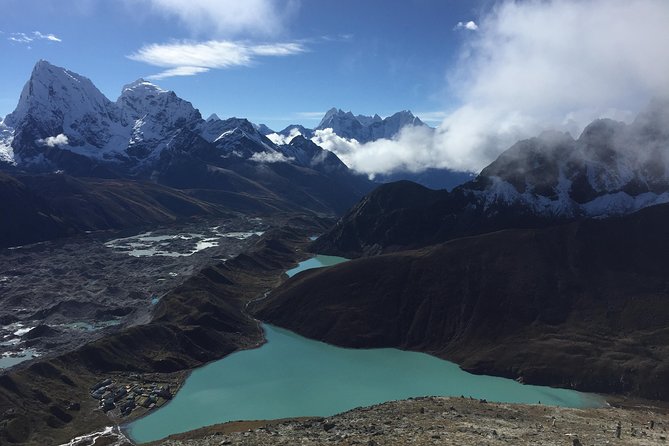
The Gokyo Lakes section is built for people who like water-and-mountain contrasts. The route takes you past six Gokyo Lakes, and that’s not a random number. You’ll get repeated shoreline views and changing angles of the surrounding ridgelines as you move along the chain.
Then you reach Gokyo Ri (5,357m)—and this is the star turn. From here, you get a panoramic view that highlights Everest, Lhotse, Makalu, and Cho Oyu, with the Ngozumpa Glacier nearby. That lineup is a big deal. A lot of Everest-region treks promise views, but this one is explicitly framed around a clear, multi-peak sightline.
Here’s what you can do to enjoy it more once you’re there:
- Go in expecting the cold to be real, not dramatic. Dress for it and move slowly so you don’t burn energy before the view.
- Bring a plan for photos that doesn’t waste your whole rest window. The views are wide; you can take a lot of shots without turning your moment into a production.
One thing I like about this setup is how it turns “altitude suffering” into a predictable rhythm. You gain, you rest, you look, you repeat. It’s the kind of structure that helps you keep your head when you’re tired.
And yes, Everest is part of the payoff. Breeze Adventure’s responses specifically mention someone loving the Mt. Everest view from Gokyo Ri, which fits what this viewpoint is known for.
Renjo La crossing: early rise, thin air, and glacier drama
The day you cross Renjo La Pass starts with an early rise. That’s standard for high passes because weather and cloud timing can turn quickly. But in this specific trek, the early start isn’t just a checkbox—it’s your best chance to get the cleanest line of sight to the Ngozumpa Glacier and the distant massive peaks.
What you’re really stepping into is an altitude test layered on top of fatigue management. Even if you’ve hiked mountains before, 5,345m is a different game. You’re asking your body to work while your oxygen supply is reduced. That’s why the operator lists the trek for people with moderate physical fitness rather than selling it as easy.
So what should you focus on?
- Take fewer “big pushes.” On passes, steady effort beats bursts.
- Keep an eye on breathing and energy. If you feel like you’re spending too much just to move, slow down. You’re not trying to win a race.
- Plan your rest stops with honesty. Short pauses are useful; long pauses can stiffen you up fast in cold air.
Also, remember the weather note. The experience is explicitly described as good-weather dependent, with a promise of a different date or a full refund if it’s canceled due to poor conditions. That means you should assume clouds can change the trek’s feel on the day you’re aiming for the pass.
If you’re the type of person who gets stressed by changing plans, try to pack mental flexibility. High-altitude trekking rewards calm.
Down via Thame and Namche Bazaar: the relief that comes with context
After Renjo La, you descend peacefully to Lukla via Thame and Namche Bazaar. That phrase sounds simple, but it’s where your trip often becomes more enjoyable. You’ve already gotten the major high viewpoints; now you’re moving through the region’s human scale again.
Thame and Namche Bazaar matter for two reasons:
- They break up the physical monotony of pass-to-valley hiking.
- They add culture and everyday life—shops, trails with more foot traffic, and the feeling that you’re returning toward something closer to normal routine.
Namche especially tends to be a key “reset” point in Everest-region trekking. Even without extra details here about timing, the inclusion of Namche Bazaar tells you the route isn’t purely wilderness. You’ll get moments where you can sit, eat, and regroup without staring at only glaciers and rocks.
I also like that the descent path is clearly connected back toward the start. Ending at Lukla keeps the storyline coherent: you’re not wandering into a different itinerary that ends somewhere else far from your origin.




Breeze Adventure Pvt. Ltd: small-group support and guide quality
This trek is run by Breeze Adventure Pvt Ltd with a maximum of 15 travelers. That group size matters more than people think. When you’re moving at altitude, larger groups can turn your pace into a traffic jam, especially around narrow trails or viewpoint areas. A smaller cap generally makes it easier to manage spacing.
The operator’s own communications emphasize safety and comfort through a team described as young, energetic, and well-experienced. That kind of wording is vague on paper, but it aligns with what matters on a trek like this: someone competent has to keep the plan grounded and your pacing realistic.
Two details from the provided text stuck with me because they signal how the team handles real situations:
- They thanked Mr. Sarki Sherpa for guidance and support in a successful Everest-view experience from Gokyo Ri.
- They describe flexibility when timelines get tight. One response mentions a plan being changed on the fly to fit a much shorter schedule.
Now, don’t assume every request will be accommodated. But the takeaway is useful: you’re not hiring a brand-new crew that only works when everything goes perfectly.
If you’re choosing based on “will someone help me when the plan changes,” this operator’s record in the provided text is a good sign.
Price and value: what $1,800.62 buys you (and what to check)
The listed price is $1,800.62 per person for an approx. 12-day trek. That’s not a bargain, and you should treat it like a full-on service package rather than a DIY-style budget hike.
To judge value, focus on what you’re paying for beyond just the trek name:
- Guide/sherpa support and the human ability to manage pace, safety, and route flow.
- Group size control (up to 15), which affects how smooth your days feel.
- Operational support in Kathmandu, including pickup offered and a simple ticketing approach (they note mobile ticket).
Here’s the part I’d verify before you pay: the exact inclusions. The provided details confirm the company, route highlights, group size, and general logistics, but they don’t spell out what’s included in the price (like meals, permits, guide/porter ratios, or accommodation). You’ll want that in writing.
My rule: if you can’t clearly see what the $1,800 covers, ask. On a high-altitude trek, that question is worth a lot more than trying to guess.
Weather windows and the refund safety net
This experience explicitly requires good weather. That’s not just common sense—it’s built into their policy promise: if the experience is canceled due to poor weather, you’ll be offered a different date or a full refund.
They also state free cancellation up to 24 hours in advance for a full refund. Cut-off times are based on local time. I like that kind of clarity because it helps you manage risk if your schedule is tight or your plans change.
What you should do practically: build a buffer in your Kathmandu schedule. Even if your trek dates are set, weather delays can happen in the Everest region. Having breathing room around your flights and return days can save stress.
Who should book this trek, and who should pause
This one is best for people who want more than Gokyo Lakes photos. You’re paying for a specific extra objective: Renjo La Pass after Gokyo Ri. If that pass is on your wish list, the route is a strong fit.
It also suits hikers with moderate physical fitness who can handle long mountain days and early starts. But it’s not framed as a walk in the park. You’re heading to high elevations, and you should be honest about your readiness.
A good fit if you:
- Want a serious Everest-region viewpoint day at Gokyo Ri
- Like the idea of crossing a high pass and seeing the glacier from multiple angles
- Appreciate having a structured team and a capped group size
A pause-and-think fit if you:
- Know you struggle with altitude or you’re not comfortable with cold, thin-air mornings
- Hate the idea of weather-driven changes, even with refund options
Should you book this Gokyo Lakes and Renjo La Pass trek?
I’d book it if your main goal is views plus route variety, and you want the added badge of crossing Renjo La Pass rather than returning the simpler way. The combination of Gokyo Ri’s multi-peak panorama and the follow-up glacier views on the pass day is exactly the kind of “effort with a direct payoff” that makes a trekking trip memorable.
I’d hesitate or at least ask sharper questions if you’re unclear about what your price includes. At $1,800.62, you’ll want the details that affect your daily comfort and logistics to be crystal clear.
If you’re ready for cold mornings, thin air, and the satisfaction of going somewhere many people don’t, this trek has the bones of a strong choice.
FAQ
How long is the Gokyo Lakes and Renjo La Pass trek?
The duration is listed as approximately 12 days.
Where does the trek start and end?
It starts at Breeze Adventure Pvt. Ltd in Thamel, Kathmandu, and the activity ends back at the meeting point.
What is the highest point on the trek?
The Renjo La Pass is listed at 5,345 meters (17,536 feet). Gokyo Ri is listed at 5,357 meters (17,575 feet).
How many people are in a group?
The experience has a maximum of 15 travelers.
Is pickup provided?
Pickup is offered.
What fitness level do I need?
Travelers should have a moderate physical fitness level.
What happens if weather is poor?
The experience requires good weather. If it’s canceled due to poor weather, you’ll be offered a different date or a full refund.