REVIEW · POKHARA
Kathmandu: 10-Day Annapurna Circuit Trek via Thorong La Pass
Book on GetYourGuide →Operated by MTA Trekking Pvt. Ltd. · Bookable on GetYourGuide
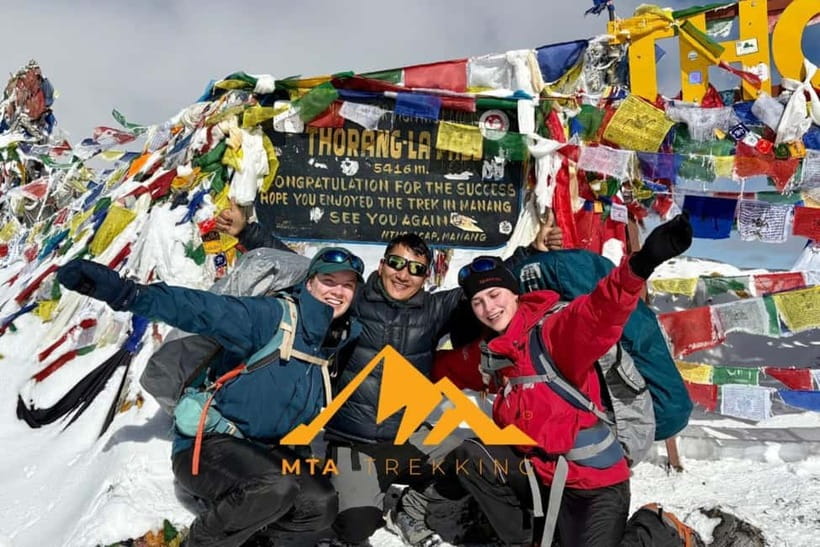
Thorong La is a real headliner. This 10-day trek pushes you up to Thorong La Pass (5,416m) and then drops you into big, varied Nepali terrain, with Tibetan villages and Himalayan peaks in the mix. I like that the route doesn’t just chase altitude; it also threads culture through places like Bagarchhap, Chame, Pisang, and Manang.
Two things I really like: the way the itinerary is built around acclimatization (especially the Manang day), and the focus on local life rather than just scenery. One thing to keep in mind: this is high-altitude trekking, and Acute Mountain Sickness (AMS) risk is real, especially around Thorong La.
In This Review
- Key points that matter before you go
- Why the Annapurna Circuit via Thorong La still feels like a proper trek
- Your 10-day altitude plan: how the pacing is meant to keep you safer
- The full day-by-day route: what each stop gives you
- Day 1: Kathmandu to Besisahar, then onward to Dharapani
- Day 2: Dharapani to Chame (around 6 hours, to 2,670m)
- Day 3: Chame to Upper Pisang (5–6 hours, to 3,200m)
- Day 4: Upper Pisang to Manang (5–6 hours, to 3,540m)
- Day 5: Acclimatization in Manang (around 4,050m)
- Day 6: Manang to Yak Kharka (about 4 hours, to 4,050m)
- Day 7: Yak Kharka to Thorong Phedi (4–5 hours, to 4,450m)
- Day 8: Thorong Phedi to Muktinath via Thorong La Pass (7–8 hours, to 5,416m)
- Day 9: Muktinath to Jomsom via Kagbeni (7–8 hours)
- Day 10: Jomsom to Pokhara by public bus (8 hours)
- Tea houses, meals, and comfort at altitude (the practical stuff)
- Your guide and why “good pacing” is a real skill
- Weather, reality checks, and the one drawback you can’t ignore
- Value check: is $447 a fair deal for this trek?
- Who this trek fits best
- Should you book this Annapurna Circuit trek?
- FAQ
- What is the highest altitude on this trek
- Where do you start the trek
- What’s included in the price
- What accommodations will I have during the trek
- What language will the guide speak
- Is this trek suitable for everyone
Key points that matter before you go
- Thorong La at 5,416m: the toughest day is also the payoff day.
- A full acclimatization day in Manang (around 4,050m): gives you breathing room and optional short hikes.
- Tea houses and lodge nights: simple, warm(ish) stays while you earn your views.
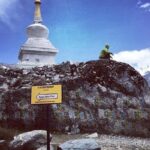
- Local culture stops: Buddhist temple time in Bagarchhap, village walks, and a stupa visit in Manang.
- Experienced government-registered guides: several guides named in participant feedback (Ganesh, Prakash, Chakra, Ghanshyam) show a pattern of safety-first pacing.
- All meals included during the trek: breakfast, lunch, dinner are part of the package—helpful at altitude.
Why the Annapurna Circuit via Thorong La still feels like a proper trek
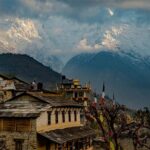
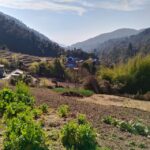
If you want a mountain trip that feels like walking through real Nepal, the Annapurna Circuit is one of the few classics that still delivers. Here, the “wow” isn’t only the pass. It’s the whole climb-and-fall rhythm: green river valleys, orchards and forests lower down, then drier high-altitude scenery as you work your way toward Mustang-style terrain.
I also like the cultural texture. You’re not just passing through villages; you have built-in moments to see how people live along the route—tea-house conversations, Buddhist temple stops, and village exploration in places like Chame and Manang. That’s what turns a checklist hike into a story you’ll remember.
You can also read our reviews of more tours and experiences in Pokhara.
Your 10-day altitude plan: how the pacing is meant to keep you safer
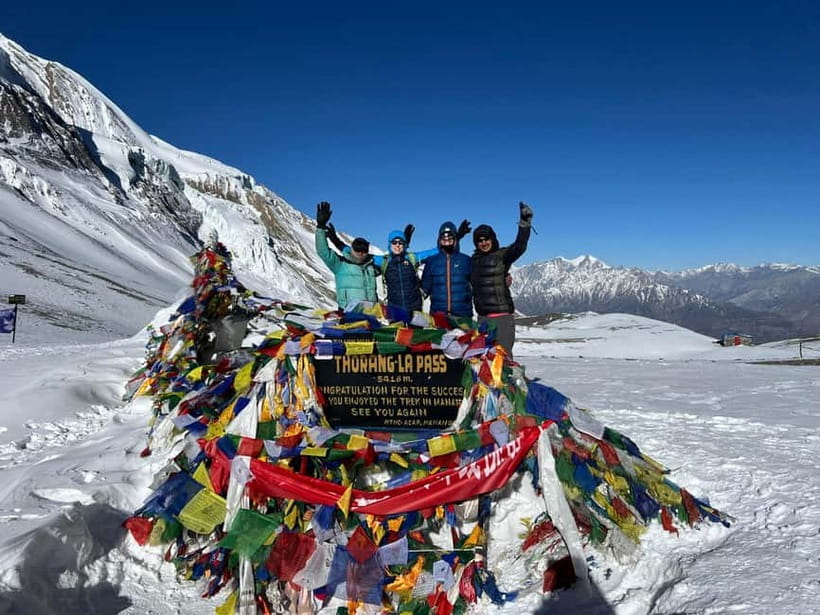
This trek is carefully staged, even though the numbers still get serious. Your highest planned day hits 5,416m at Thorong La, but the route ramps up through a sequence that helps your body adjust.
Here’s the pacing logic you’ll feel in real life:
- Day 2 tops out around 2,670m (Chame).
- Day 3 moves up to about 3,200m (Upper Pisang).
- Day 4 reaches roughly 3,540m (Manang approach).
- Day 5 is an acclimatization day around 4,050m (Manang).
- Day 6 stays around 4,050m (to Yak Kharka), keeping the climb from being a sudden jump.
- Day 7 starts pushing higher to about 4,450m (Thorong Phedi).
- Day 8 is the big one: 5,416m over the pass, then descent toward Muktinath.
That matters because altitude isn’t a switch. It creeps. A slow ramp with a dedicated acclimatization day is one of the strongest predictors of a smoother trip.
The full day-by-day route: what each stop gives you
Day 1: Kathmandu to Besisahar, then onward to Dharapani
You start with a long but useful travel day. The drive from Kathmandu to Besisahar (7–8 hours by bus) lets you watch the countryside change, and then you transfer by sharing jeep to Dharapani.
This day is about setting the tone: you’ll get your bearings, settle in, and avoid wasting energy on a pointless first hike.
Day 2: Dharapani to Chame (around 6 hours, to 2,670m)
Today is a classic “first real trekking day.” You’ll trek from Dharapani to Chame (about 6 hours), climbing to 2,670m.
What you’ll notice:
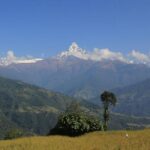
- Grassy fields with Annapurna II views.
- A stop in Bagarchhap, including a Bhote village feel and a Buddhist temple.
- Forest walking through oak and pine before you level out near Chame.
Chame is also a good tea-house base: by the time you arrive, you’ll be ready for warmth and an early night.
Day 3: Chame to Upper Pisang (5–6 hours, to 3,200m)
Upper Pisang is where the terrain starts feeling more “high-altitude” and less “forest walk.” You’ll climb to around 3,200m, pass an apple orchard, and then work through the Bhratang Valley before heading toward Pisang/Upper Pisang.
The practical benefit of this day: it keeps you moving but not grinding you down. It’s a good bridge toward the Manang area, where you’ll need energy for acclimatization.
Day 4: Upper Pisang to Manang (5–6 hours, to 3,540m)
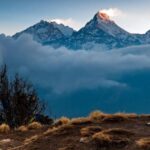
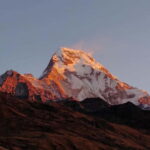
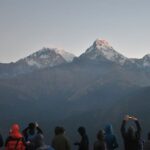
Today’s route is about big views and valley travel. You’ll trek to Manang with max altitude around 3,540m, passing through areas with perspectives toward Tilicho Peak, Annapurna III, and Annapurna IV (weather permitting).
You’ll also cross the Marsyangdi River on a wooden bridge and pass villages including Mungji and Braga. That combination—views plus village streets—helps Manang feel earned, not just reached.
Day 5: Acclimatization in Manang (around 4,050m)
This is one of the best parts of the whole itinerary. Manang sits around 4,050m, and the day is designed for acclimatization rather than distance.
You’ll have options like:
- a short trek with a river crossing to see an icefall area viewpoint
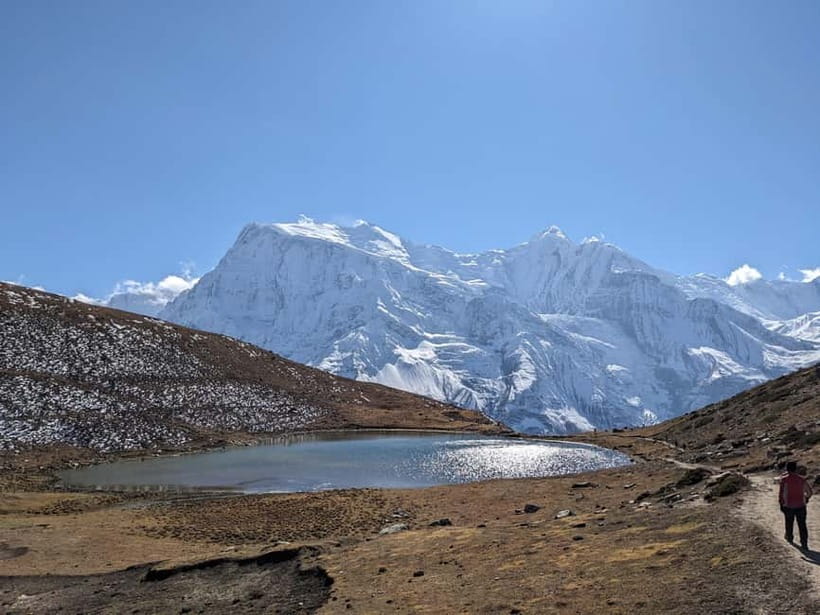
- exploring Gangapurna Glacier Lake
Even if you choose simpler walking, the day’s value is rest with intention. You can eat well, hydrate, and let your body catch up before Thorong La.
Day 6: Manang to Yak Kharka (about 4 hours, to 4,050m)
This day is shorter on paper, but altitude still makes it feel longer. You’ll hike from Manang to Yak Kharka (around 4 hours) with max altitude near 4,050m.
This is a “save your breath” day. You’ll likely move slower than you expect, and that’s correct. Taking it easy here helps you arrive at Thorong Phedi ready for the pass approach.
Day 7: Yak Kharka to Thorong Phedi (4–5 hours, to 4,450m)
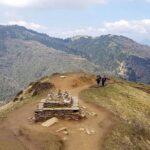
Now you start edging closer to Thorong La’s reality. You’ll trek up to about 4,450m on the way to Thorong Phedi.
The trail details matter because they break the day into smaller pieces:
- a gradual ascent to a hilltop
- descending toward the Marsyangdi headwaters
- crossing a hidden wooden bridge
- following the mountain path on the right bank of the Marsyangdi
This is where the wind can start feeling serious. Pack for cold and expect an early bedtime.
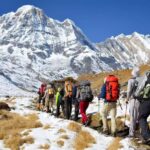
Day 8: Thorong Phedi to Muktinath via Thorong La Pass (7–8 hours, to 5,416m)
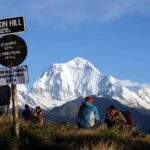
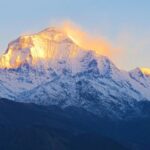
This is the signature day. You’ll head over Thorong La Pass (5,416m) and then descend toward Muktinath, with views down toward the Mustang Valley and Dhaulagiri.
You should plan for effort more than speed. Even if you feel fine at lower altitudes, the pass day is where small symptoms can show up. A strong guide will push steady movement, regular check-ins, and practical decisions like adjusting your pace rather than forcing a time goal.
In participant feedback, experienced guides like Ganesh, Prakash, Chakra, and Ghanshyam are repeatedly described as safety-focused, with an emphasis on acclimatization, rest, and hydration habits. That kind of support tends to be the difference between surviving the day and feeling confident on it.
Day 9: Muktinath to Jomsom via Kagbeni (7–8 hours)
Today blends spiritual stops with trekking legs. You’ll hike from Muktinath to Jomsom, passing through Kagbeni.
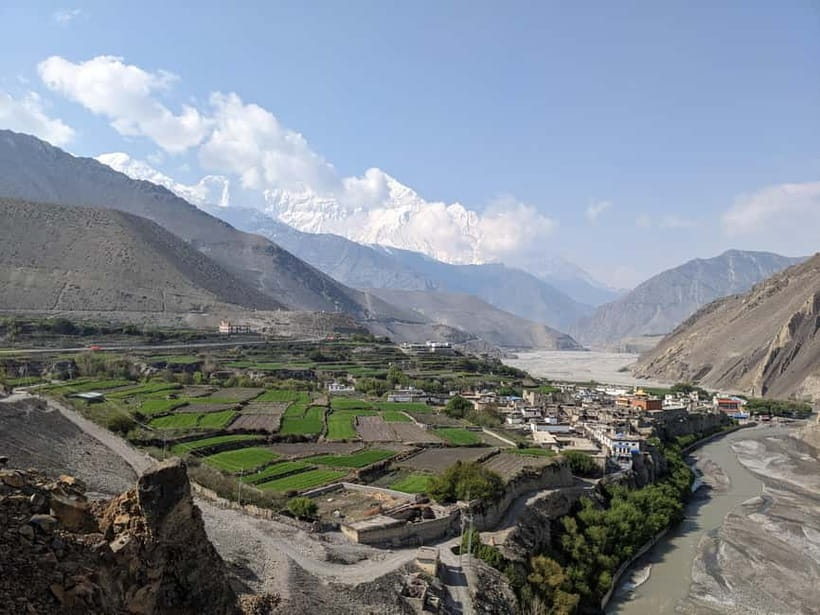
Kagbeni has that arid, Mustang-feeling vibe, and it’s usually a welcome shift after the intensity of Thorong La. It’s still a full trekking day, but it often feels more “scenic walking” than “controlled oxygen management.”
Day 10: Jomsom to Pokhara by public bus (8 hours)
You finish with the long ride back. The plan is public bus from Jomsom to Pokhara, around 8 hours, then you’ll have your one-night hotel stay in Pokhara (Hotel Orchid) plus a farewell dinner after the trek.
It’s an arrival day. Think legs-tired, not heroic. Hydrate, eat something gentle, and let your feet recover.
Tea houses, meals, and comfort at altitude (the practical stuff)
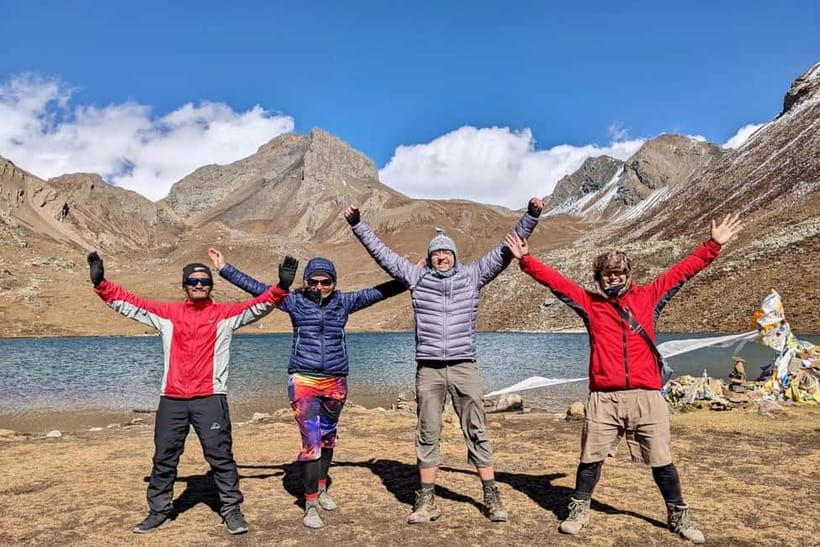
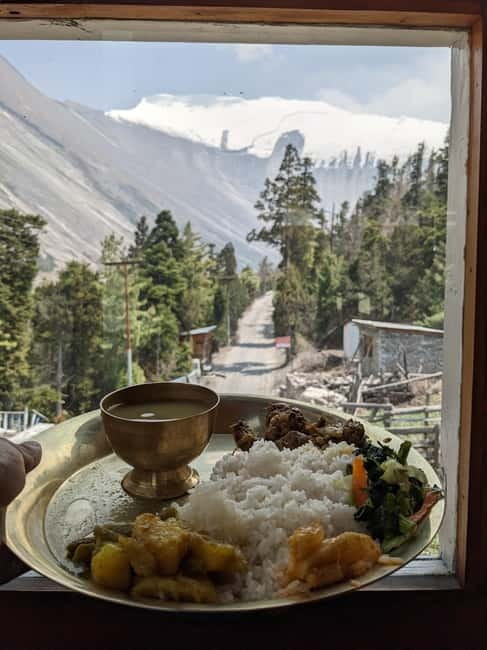
This trek uses tea houses and lodges, which means comfort is functional. You’ll usually sleep warm enough if you pack correctly, and you’ll rely on hot meals to keep you going.
A big value point: the package includes all meals (breakfast, lunch, dinner) during the trek. At altitude, this helps you avoid the common trap of skipping meals because you’re tired. It also makes it easier to follow a consistent hydration-and-energy plan.
You still need to show up prepared. You’re told to bring warm clothing, long pants, sunscreen, sunglasses, and a waterproof bag. Those aren’t fancy suggestions; they’re the difference between enjoying your mornings and feeling miserable in cold wind.
Also note the rules: alcohol and drugs are not allowed. That’s not meant to be strict for strict’s sake; it’s about safety at altitude.
Your guide and why “good pacing” is a real skill
A lot of trekking companies say guide quality matters. Here, the data supports that it really does.
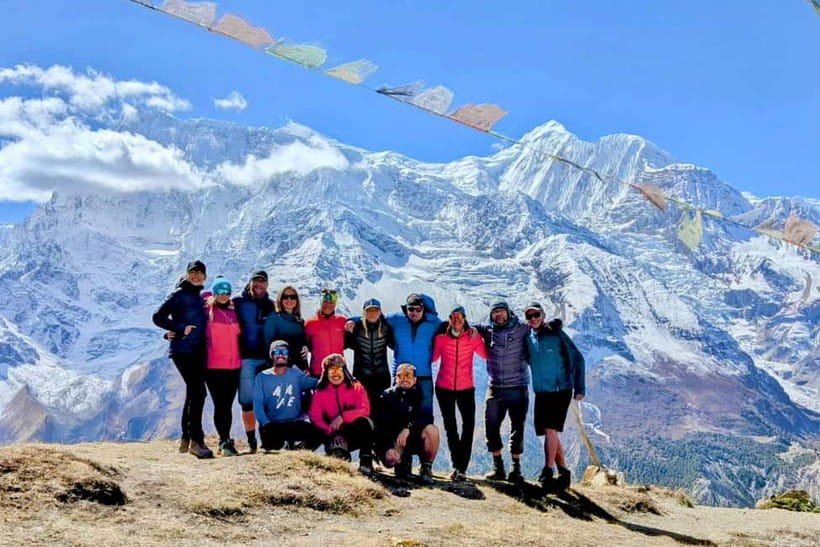
The trek includes an experienced government-registered local guide, and language options are English and Hindi. In participant feedback, guides such as Ganesh, Prakash, Chakra, and Ghanshyam are highlighted for taking care of acclimatization, keeping people hydrated, and choosing safe pacing.
One detail I found especially useful: some guides push practical altitude habits like avoiding junk foods and being cautious with meats at higher elevations. That sort of guidance is about how your body handles digestion when oxygen is lower. It’s not about “taste.” It’s about keeping your system steady.
Another helpful note: a participant described being offered water purifier pills during the trip. That’s not something you can count on every time, but it matches the broader idea—have a plan for safe drinking water and let your guide help where possible.
Weather, reality checks, and the one drawback you can’t ignore
The biggest drawback isn’t the itinerary. It’s the altitude and the uncertainty that comes with mountains.
This trek hits 5,416m, and the operator explicitly warns about Acute Mountain Sickness (AMS). For your safety, comprehensive travel insurance that covers medical care and helicopter evacuation up to 5,400m is strongly recommended.
So yes, you’ll get your Thorong La moment. But you also need to treat this like a serious physical challenge:
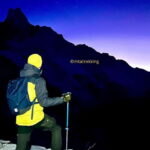
- Expect early starts, especially on pass day.
- Move slowly and don’t “race the view.”
- If you feel altitude symptoms, you listen immediately and adjust.
Also, this trek isn’t for everyone. It’s listed as not suitable for children under 15, people over 70, people with altitude sickness, respiratory issues, and pregnant women. If any of those apply, it’s not worth negotiating with risk.
Value check: is $447 a fair deal for this trek?
At $447 per person, the price lands in the “serious but not crazy” zone for a 10-day Annapurna Circuit route with high altitude. What makes it feel like good value is that the package covers the stuff that usually adds up fast: permits (including TIMS), guide, transport between destinations, all meals, and tea-house/lodge accommodation, plus a hotel night in Pokhara and a farewell dinner.
You do pay extra if you want the usual add-ons:
- drinks (soft and hard)
- travel and rescue insurance
- international flights and Nepal visa fee
- personal expenses like phone calls, laundry, shower items, and battery recharge
- trekking gear
So the value story is this: you’re paying for coordination, meals, permits, and safety support. If you already have gear and you’ve planned your insurance and flights, the trek becomes a very efficient way to do one of Nepal’s classic routes without juggling logistics.
Who this trek fits best
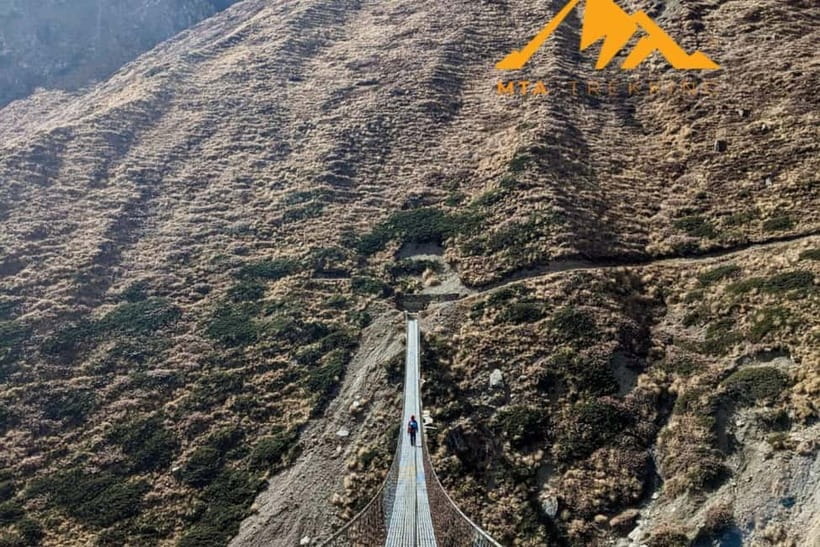
This itinerary is built for adults who want a mix of big pass challenge + village life + acclimatization time.
You’ll probably love it if:
- you enjoy steady hiking days rather than sprinting
- you care about local culture stops (Bagarchhap, Manang village and stupa visit)
- you want a structured plan for altitude, not guesswork
You should think twice if:
- you’re nervous about your fitness for long days (several are 7–8 hours)
- you don’t want to deal with cold mornings and the mental focus required on Thorong La day
- you fall into the listed “not suitable” categories
Should you book this Annapurna Circuit trek?
Book it if you want a classic route done with structure: permits handled, meals included, and a guide who pushes safety-first pacing around acclimatization. The Thorong La Pass day is the headline, but the real win is that you’re given time to adjust in Manang instead of treating altitude like a speed bump.
Skip it (or change plans) if you can’t handle the health reality. This trek is built around reaching 5,416m, and AMS risk is taken seriously for a reason. If your health situation makes altitude risky, it’s better to choose a lower-altitude trek in Nepal where you can still get epic views without the same pass pressure.
FAQ
What is the highest altitude on this trek
The highest point is Thorong La Pass at 5,416 meters.
Where do you start the trek
The itinerary starts in Kathmandu, then you travel to Besisahar by bus (7–8 hours) and continue to Dharapani by sharing jeep before trekking begins.
What’s included in the price
Included are hotel pickup and drop-off in Kathmandu Thamel and Pokhara Lakeside areas, permits (TIMS and trek permits), all transport between destinations, an experienced government-registered local guide, tea house and lodge accommodations during the trek, and all meals (breakfast, lunch, dinner). You also get one-night accommodation in Pokhara (Hotel Orchid) and a farewell dinner.
What accommodations will I have during the trek
You stay in tea houses and lodges during the trekking days, with one night in a hotel in Pokhara after the trek.
What language will the guide speak
The tour includes a live guide who speaks English and Hindi.
Is this trek suitable for everyone
No. It is listed as not suitable for children under 15, people with altitude sickness, people over 70, people with respiratory issues, and pregnant women. The trek is high altitude and there is risk of AMS.