REVIEW · POKHARA
Nepal: Time For Easy Annapurna Base Camp Trek
Book on GetYourGuide →Operated by Travel Guides · Bookable on GetYourGuide
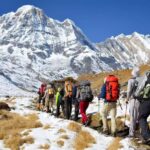
Big mountains, shorter days. That’s the hook of this 5-day Annapurna Base Camp trek from Pokhara—an efficient way to see Annapurna I and Annapurna South plus Machhapuchhre (Fishtail), while moving through rhododendron forests and traditional villages. It’s built as a private group hike with an English-speaking trek guide and planning that keeps the route focused on getting you to the base camp without a long slog.
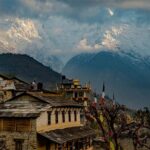
What I like most is the combination of clear guide support and the chance to slow down enough for real moments in local places. You’ll pass terraced fields, small settlements, and forested stretches where daily life looks different than the bustle of the cities. And the big payoff—views of Annapurna I, Annapurna South, Hiunchuli, Machhapuchhre, and even Dhaulagiri from the right angles—feels earned rather than rushed.
One important consideration: the Annapurna Base Camp trail labeled as easy can still feel demanding. The altitude climbs quickly to around 4,130 meters, and steep walking days plus cold air are part of the deal. If you’re prone to vertigo or you haven’t built up stamina, plan for a tougher experience than the word easy suggests.
In This Review
- Key Highlights That Matter on This 5-Day ABC Route
- Why This “Easy” Annapurna Base Camp Trek Still Feels Big
- The Route From Pokhara: What Each Stop Really Adds
- Pokhara to Jhinu, then to Lower Sinuwa (about 5 hours at ~2,300 m)
- Lower Sinuwa to Deurali (about 6 hours at ~3,200 m)
- Deurali to Annapurna Base Camp via Machhapuchhre Base Camp (about 4 hours to ~4,130 m)
- Explore Annapurna Base Camp, then trek to Bamboo (about 6 hours from ~4,130 down to ~2,400 m)
- Bamboo to Jhinu, then drive back to Pokhara with a hot spring stop (about 6 hours; ~822 m)
- Views You’ll Actually Care About (Not Just Peak Names)
- How “Included” Support Changes Your Real Trek Day
- Price and Value: Is $180 a Good Deal for 5 Days?
- What To Pack (So Your Body Doesn’t Complain)
- Who This Trek Fits Best (And Who Should Rethink It)
- Booking Mindset: The Smart Way to Make This Trek Feel “Easy”
- Should You Book This Annapurna Base Camp Trek?
- FAQ
- How long is the Annapurna Base Camp trek on this plan?
- What does the price of $180 per person include?
- Are meals included?
- Do I need a porter?
- What languages are the guides?
- Is this trek suitable for everyone?
Key Highlights That Matter on This 5-Day ABC Route
- Short, intentional route: Designed to reach Annapurna Base Camp on a 4-night, 5-day program, not a 7–10 day classic.
- Stunning signature peaks: Annapurna I, Annapurna South, Machhapuchhre (Fishtail), Hiunchuli, and Dhaulagiri views are on the checklist.
- Guides who manage safety and pace: Your guide prioritizes steady movement with planned breaks and responsive support.
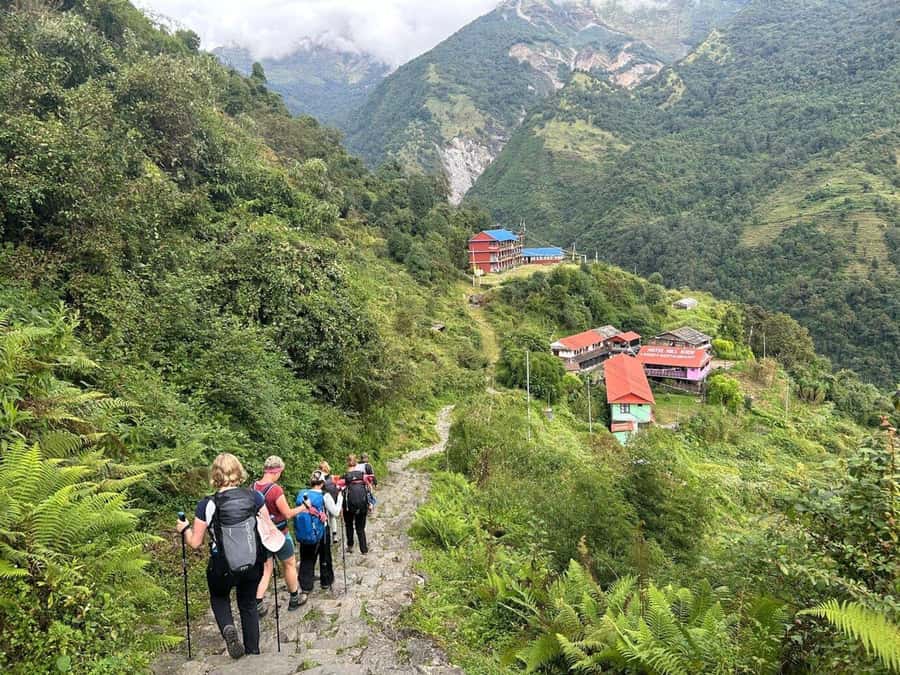
- Rhododendron forests to rocky paths: You get variety—lush lower trails, then more exposed walking as you gain altitude.
- Hot springs at the end: Jhinu-area soaking is part of the drive back toward Pokhara.
- Private group feel: Even with shared transport for pickup/drop-off, hiking is organized for your group.
Why This “Easy” Annapurna Base Camp Trek Still Feels Big
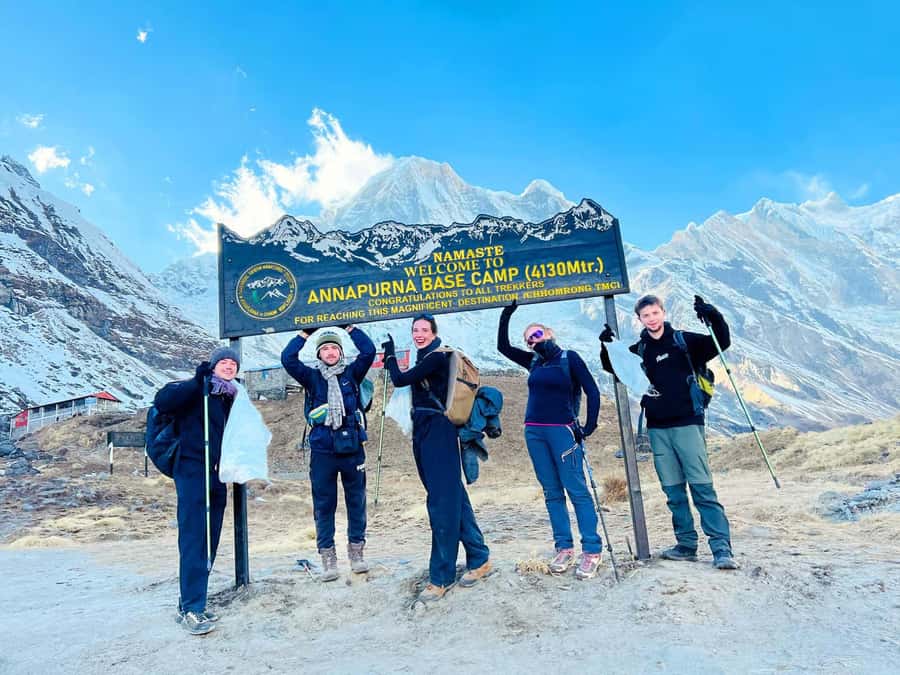
Let’s clear up the mismatch right away. Annapurna Base Camp is a real trek in a real mountain region. Even when a route is marketed as easy, you’re still going uphill day after day in thinner air, and you’re still walking steep trails that can tax your legs.
That said, this specific 5-day format has a smart appeal. Many people want the Annapurna Base Camp experience—base camp views, the feeling of reaching the end of the valley route, the sense of being surrounded by giants—without taking two weeks. Here, you’re given a tight schedule that concentrates the hiking time into five days and uses guides and overnight stays to keep the logistics simple.
If you go into it with the right mindset, the word “easy” becomes less of a promise and more of a clue: this is meant to be manageable for a wide range of trekkers, as long as you train, pace yourself, and take altitude seriously.
You can also read our reviews of more tours and experiences in Pokhara.
The Route From Pokhara: What Each Stop Really Adds
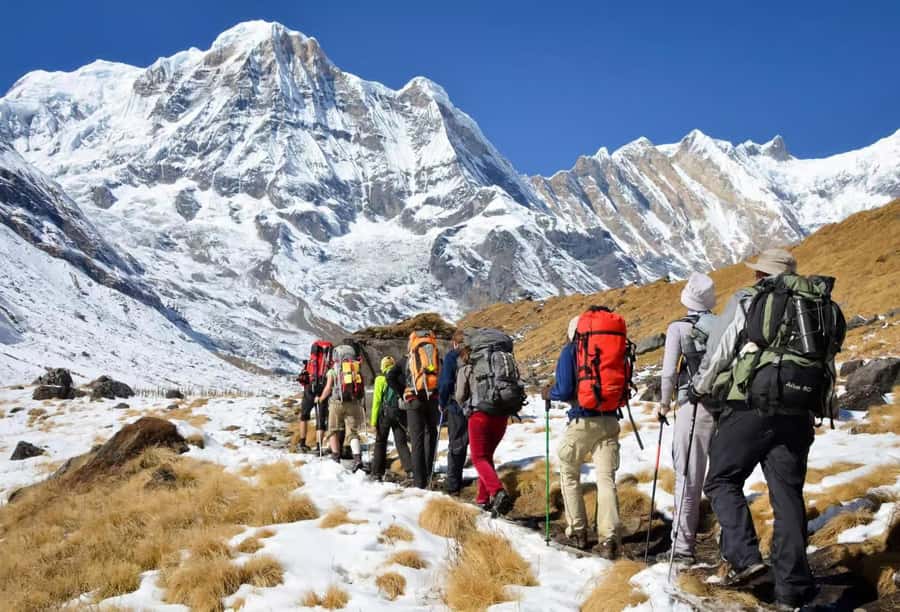
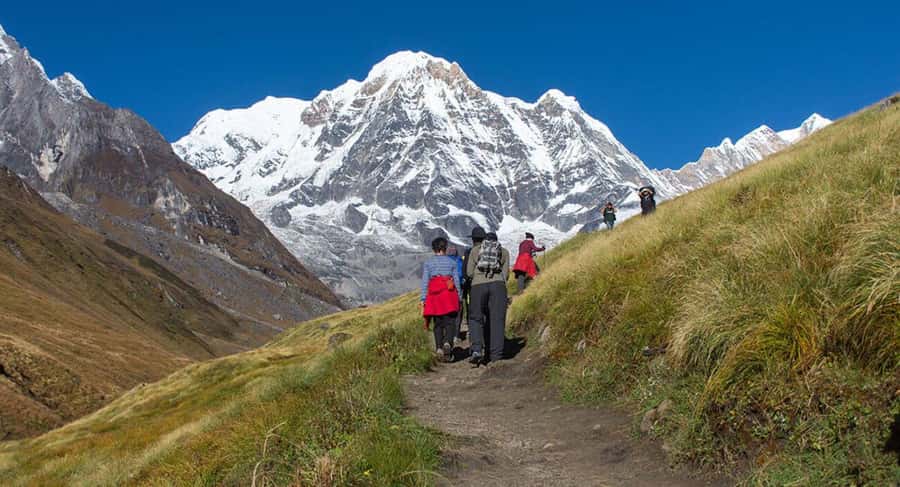
This trek starts with Pokhara to the Jhinu area, then builds height in steps that keep the experience continuous rather than chaotic. You’ll trek through different trail types—forest paths, village routes, and rocky segments—so it’s not just “one long uphill line.”
Pokhara to Jhinu, then to Lower Sinuwa (about 5 hours at ~2,300 m)
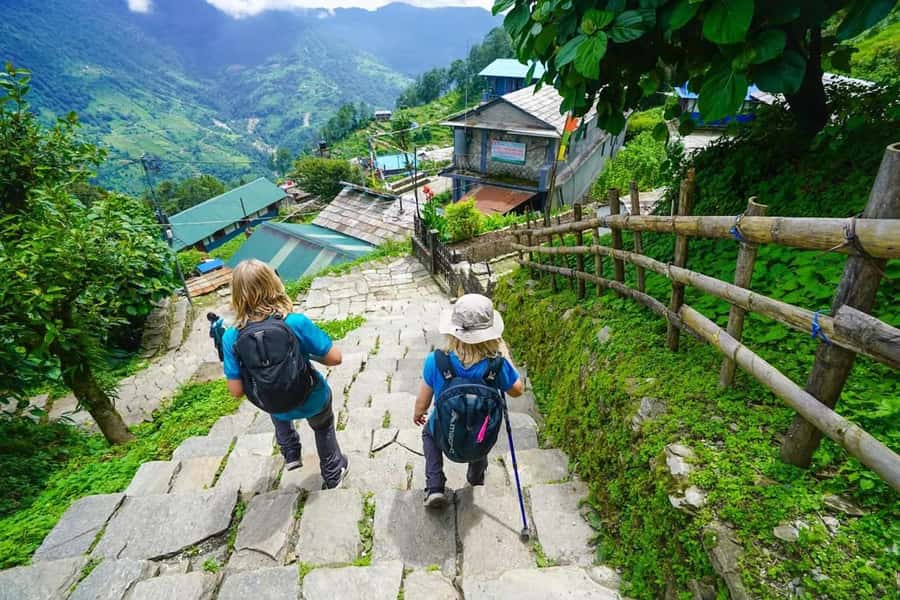
Your first hiking push brings you from the lowland feel toward higher village terrain. You’ll start gaining altitude and transition into a landscape where the rhododendron forests and terraced fields begin to show up more clearly.
Lower Sinuwa is a useful first overnight because it’s high enough to feel like you’ve entered the trekking world, but not so high that you immediately feel wrecked. It’s also the day where you learn the rhythm: how breaks work, how often the guide checks in, and what walking tempo feels sustainable.
Practical tip: on day one, aim for steady effort, not speed. You’re not trying to win the trek; you’re trying to set yourself up for altitude days that come later.
Lower Sinuwa to Deurali (about 6 hours at ~3,200 m)
This is where the trail starts to feel more serious. Deurali sits at a higher elevation, so the air is noticeably thinner and the cold can creep in during breaks. The benefit is that you’re gaining elevation in a controlled way, not in one brutal leap.
Deurali also matters because it’s a staging point. It sets you up for the push toward Annapurna Base Camp, which sits at roughly 4,130 meters in this plan. If you’ve ever heard people talk about acclimatization being crucial, this is where that advice starts to become real—not theoretical.
What to watch for: hydration and breath rhythm. If you catch yourself gasping, slow down immediately. Your guide will likely encourage a steady pace with well-timed breaks, and you should listen.
Deurali to Annapurna Base Camp via Machhapuchhre Base Camp (about 4 hours to ~4,130 m)
This is the “wow” day. You’re moving to the base camp area through the Machhapuchhre Base Camp zone, and that matters because it frames the approach to the Annapurna massif. The walking time can look short on paper, but the elevation makes every step feel bigger.
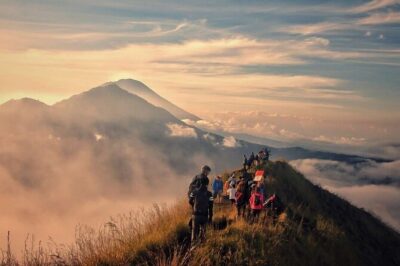
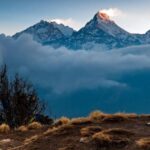
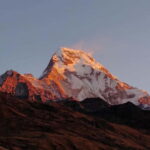
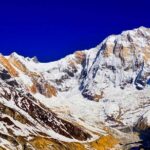
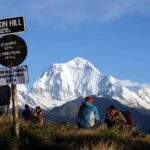
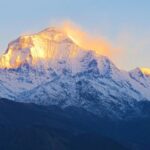
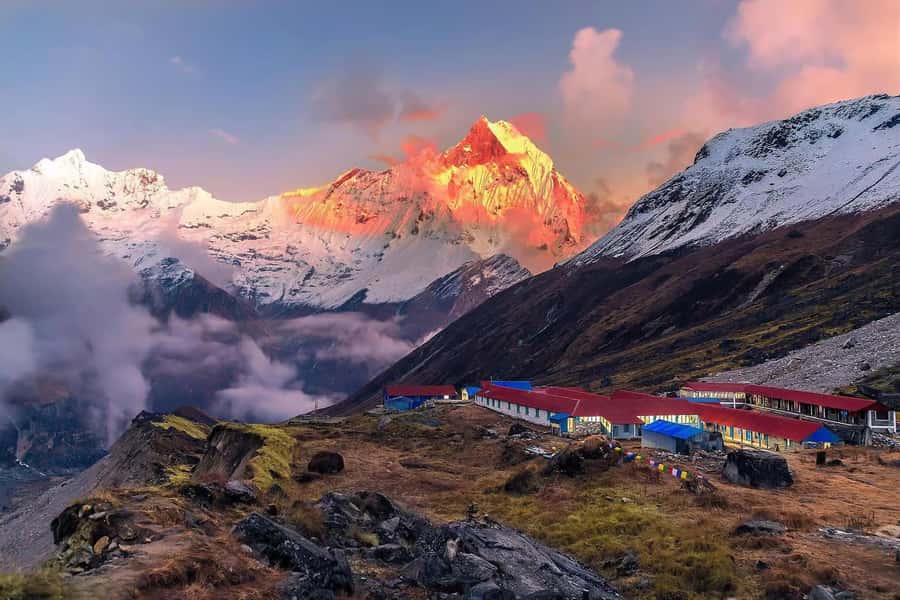
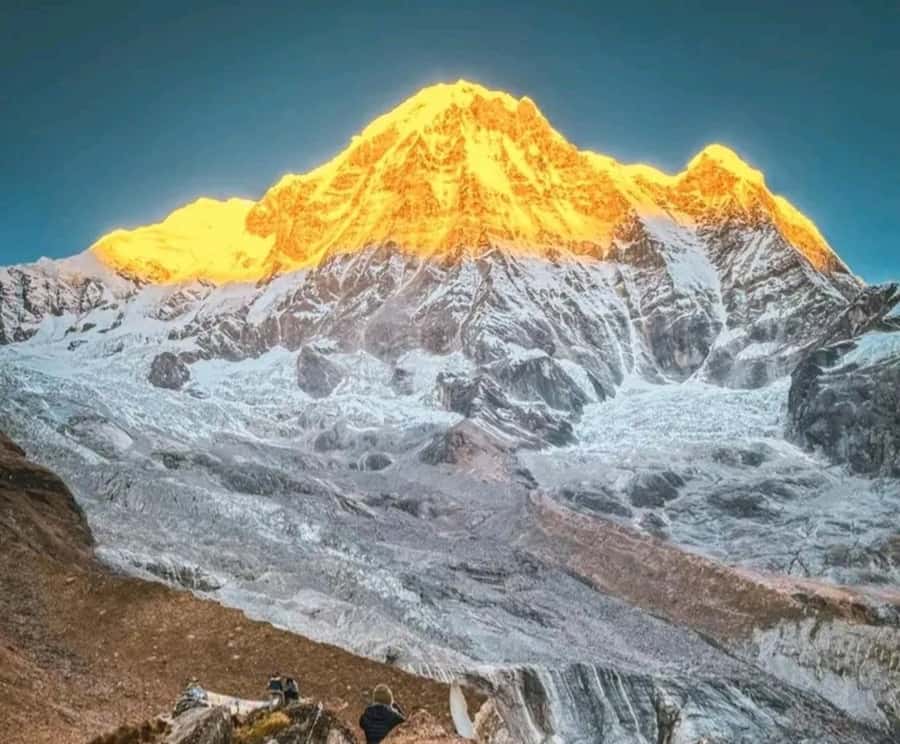
Annapurna Base Camp is where the effort starts paying off visually. You’ll get major views across the Annapurna range—Annapurna I, Annapurna South, Hiunchuli, and Machhapuchhre (Fishtail)—and the sense of being at the foot of the mountains is hard to fake.
One more reality check: the base camp day isn’t just sightseeing. You’re still hiking high, so your body needs good pacing and consistent hydration. Cold air also becomes part of the experience, so you’ll want layers you can manage quickly.
Explore Annapurna Base Camp, then trek to Bamboo (about 6 hours from ~4,130 down to ~2,400 m)
After reaching the summit-feeling moment of base camp, you don’t just turn around and go home. You’ll explore, then continue on to Bamboo for the next night.
This stop-to-stop change is valuable for two reasons. First, it helps you break the day into a reachable pattern: base camp payoff first, then a descent to a more comfortable altitude. Second, it keeps your legs from being completely useless for tomorrow—you’re tired, but not suddenly “done” in a way that turns the rest of the trip miserable.
Bamboo at around 2,400 meters is a big shift from base camp altitude. It can feel like relief after the high point, but don’t get complacent. Descents can be rough on knees and ankles, especially if you go too fast while feeling better.
Bamboo to Jhinu, then drive back to Pokhara with a hot spring stop (about 6 hours; ~822 m)
Finishing with Jhinu hot springs is a smart way to end. You’re going from trekking altitude back down toward a place where you can actually feel your body relax.
Even if you don’t soak for long, the hot spring stop gives you a reset moment after several days of walking. It’s also a nice emotional end to a trek that starts in Pokhara’s energy and ends in warm water and downhill air.
Views You’ll Actually Care About (Not Just Peak Names)
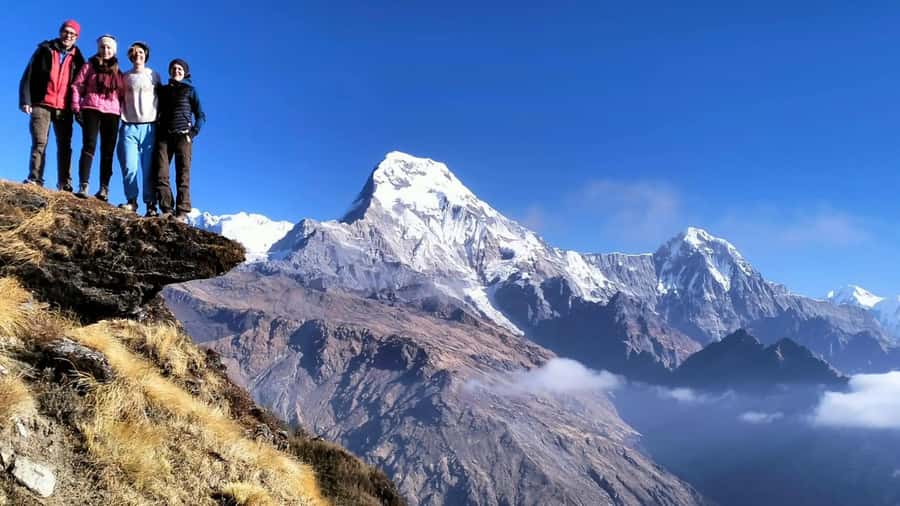
The Annapurna Base Camp area is packed with mountain identities, but what matters is where they land in your brain while you’re hiking.
On this route, you’re set up for big-name views, including:
- Annapurna I and Annapurna South
- Hiunchuli
- Machhapuchhre (Fishtail)
- Dhaulagiri from the broader horizon when conditions allow
What makes these views worth it isn’t only the geography. It’s timing. Each day gives you a fresh angle—then base camp wraps it all together into one central moment. You end up not just seeing peaks, but noticing how the valley and ridgelines shape what you can view from camp areas.
Photo note: keep it respectful. Dress modestly and ask before taking pictures of people.
How “Included” Support Changes Your Real Trek Day
This trek includes the stuff that makes a mountains trip feel safer and less stressful:
- first aid
- an English-speaking trekking guide
- all permits and fees
- hotel rooms during the trekking portion
- sharing vehicle for drop-off and pick-up
That’s a meaningful value package because trekking in Nepal isn’t only about moving your feet. It’s also about paperwork, timing, and having someone who can handle route decisions and on-the-ground issues.
You also get a live guide with language support in Japanese, English, or Chinese (depending on the departure). Even if you mainly speak English, having multilingual options can reduce friction during planning and daily check-ins.
Also, the guide pickup is organized: you’re told to wait about 10 minutes at the hotel lobby for pickup.
Price and Value: Is $180 a Good Deal for 5 Days?
At $180 per person, the headline price looks attractive—especially because it includes the guide, permits, first aid, trekking accommodation rooms, and transfer by sharing vehicle. For a trek environment like the Annapurnas, that’s not a small bundle.
The trade-off is what’s not included:
- personal expenses
- all meals (you can purchase them)
- porter (optional) at $25 per day
In plain terms: the base price gets you the structure and the essential people. You’ll still need to budget for food and snacks every day, and you might want the porter if you’re traveling with heavy gear.
My take on value: this is a good price point if you pack light and you’re comfortable managing your own backpack. If your goal is to focus on breathing and walking—not dragging a heavy load—add the porter cost and it turns into a more “effort-light” trek.
What To Pack (So Your Body Doesn’t Complain)
You’ll want to carry essentials for changing temperatures and long days. Based on the trip info, bring:
- passport or ID card
- hat
- jacket and comfortable breathable clothing
- headscarf
- cash in Nepalese rupees (NPR)
- credit card (in case it’s useful for exchanges, though cash is common)
Also, prepare for cold at higher altitude. The trek info flags wide temperature swings, so plan layers you can add or remove without wrestling your whole wardrobe every time you stop.
Don’t bring things that aren’t allowed:
- weapons or sharp objects
- oversize luggage
- alcohol and drugs
- explosive substances
- nudity
Who This Trek Fits Best (And Who Should Rethink It)
This is not a random hike you stumble into. It’s designed for people who can walk steadily and take altitude seriously.
It is described as suitable for trekkers of all levels of experience, but the same plan also says it’s not suitable for people with altitude sickness. The tricky part is that altitude impacts people differently, so you should be honest about your limits.
This trek makes sense if you:
- want the Annapurna Base Camp goal on a tighter schedule
- can handle cold and some steep segments
- train beforehand with regular cardio and strength work
- are comfortable without a private tailor-made route every step
It may not be the right fit if you:
- have a history of altitude problems
- feel unsafe on steep, tiring trails
- expect the word easy to mean flat and casual (it doesn’t)
There’s also a clear age guidance: it’s not suitable for babies under 1 year, and not suitable for people over 95 years.
Booking Mindset: The Smart Way to Make This Trek Feel “Easy”
If you want this to feel manageable, manage three things.
First: train ahead. Cardio and strength training are specifically recommended. Think “legs and lungs,” not only endurance.
Second: pace and hydration. The trek info stresses that acclimatization is crucial. Follow a gradual ascent and drink enough. If you feel off, slow down and communicate with your guide.
Third: set expectations about difficulty. One participant described the route as extremely strenuous in parts, with a long day of roughly 18 km and over 2,000 meters of descent, plus feeling altitude effects. That doesn’t mean every day is the same for everyone, but it does mean you should treat this as a real mountain challenge, not a casual stroll.
Should You Book This Annapurna Base Camp Trek?
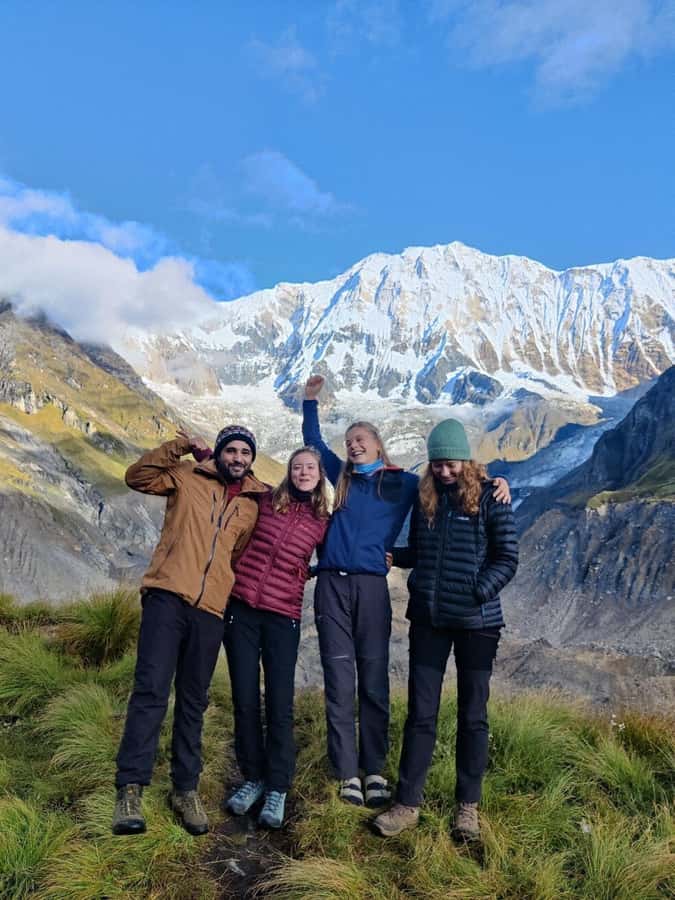
Book it if you want Annapurna Base Camp in a 5-day window, you’re willing to train and pace yourself, and you like the idea of a guided, structured route with key permissions and transfers handled.
Skip it or choose a different format if you’re chasing a truly easy walk, you’re sensitive to altitude, or you don’t have the stamina for long trekking days and steep descents.
If you do book, make your life easier by packing smart, considering a porter if your load is heavy, and treating acclimatization as part of the plan—not a side quest.
FAQ
How long is the Annapurna Base Camp trek on this plan?
It’s a 4-night, 5-day trek, with a total duration of about 5 days.
What does the price of $180 per person include?
The included items are first aid, an English-speaking trekking guide, all permits and fees, hotel rooms during the trekking portion, and a sharing vehicle for drop and pick up.
Are meals included?
No. All meals are not included, but meals are available to purchase on the route.
Do I need a porter?
A porter is optional at $25 per day. If you prefer not to carry a heavy backpack, you can add a porter.
What languages are the guides?
The live tour guide language options are Japanese, English, and Chinese.
Is this trek suitable for everyone?
It’s not suitable for people with altitude sickness, babies under 1 year, or people over 95 years. The trip also mentions it’s important to prepare with cardio and strength training and to acclimatize properly.