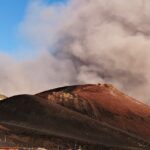
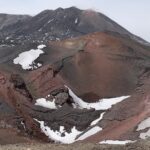
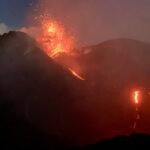
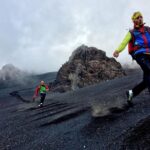
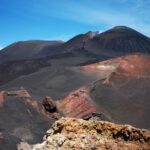
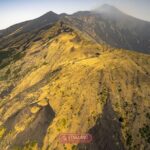
Etna feels like another planet. This trek mixes 4×4 jeeps, the Sapienza cableway, and crater-edge walking across fresh volcanic terrain. What makes it especially interesting is how the route follows real eruption paths, from older lava flows to the 2002 and 2017 zones.
I like how the day is built around big, changing views: black lava like highways, an almost vegetation-free summit feel, and then the wider highland points like Piano delle Concazze and Piano Provenzana. I also really value the small-group setup (up to 10 people) and the chance to get a guide like Cristian, who can explain what Lady Etna is doing and help you notice the sounds and activity you might encounter.
One key planning note: lunch is not included, so you’ll want to bring food or buy something at the local shops near the start so you don’t end up hungry partway through the higher-altitude walking.
In This Review
- Key things you’ll notice
- What You’re Really Signing Up for on Mt. Etna
- Meeting Point, Breakfast, and the Small-Group Advantage
- Up the South Slopes: From Lemon Coast to the First Trail
- Sapienza Cableway to 2500m: The Jump That Changes the Whole Day
- Crater-Edge Walking: A Lunar Feel With Real Smell and Wind
- Valle del Bove: Ox Valley Views Without Losing the Rhythm
- The Descent: Ashy Canyons, Piano delle Concazze, and a Picnic Break
- Crossing Back Through Parco dell’Etna and Ending at the Start
- Price and Value: Is $145.12 a Good Deal?
- Who Should Book This Etna Trek (and Who Might Skip It)
- Tips to Have a Smoother (and Safer) Day on Etna
- Should You Book EtnaWay’s Etna Trek?
- FAQ
- How long is the Etna trekking tour?
- Where do I meet for the tour?
- Is the tour in English?
- What is included in the tour price?
- Is lunch included?
- How many people are in the group?
- What happens if the weather is poor?
Key things you’ll notice
- 4×4 + cableway combo means you’re not hiking from the start line.
- Eruption-path trekking across lava flows tied to the 2002 and 2017 activity zones.
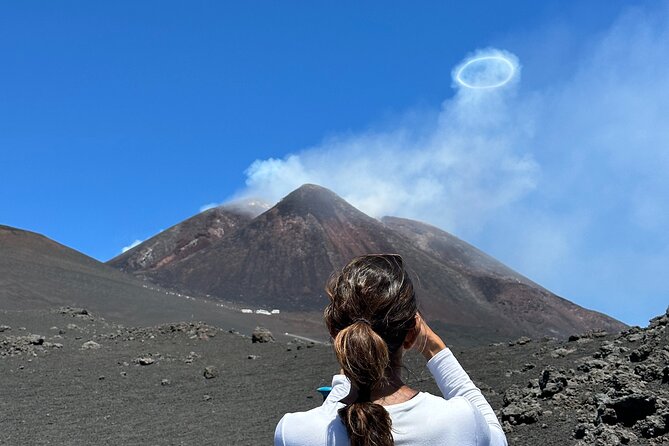
- Summit crater experience with sulfur smell, gas emissions in the wind, and wide visibility on clear days.
- Valle del Bove (Ox Valley) adds a classic Etna viewpoint stop without turning the whole day into just climbing.
- Small group (max 10) keeps it easier to move and ask questions.
What You’re Really Signing Up for on Mt. Etna
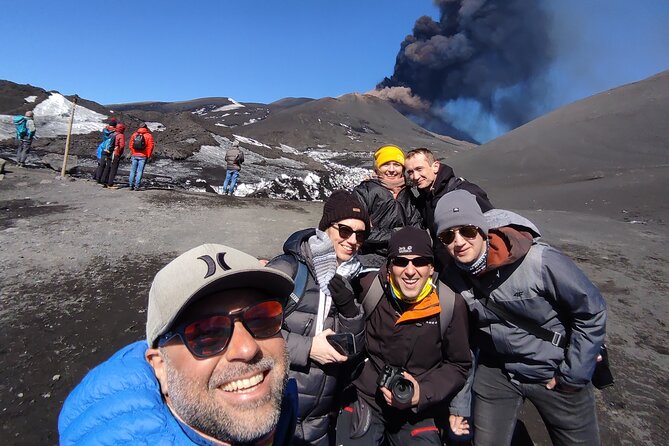
This is not a casual Etna stroll. You’re doing a structured hike that starts with a ride up to Etna, then uses the Sapienza cableway to jump you up to about 2500m before trekking through volcanic ground.
The tour’s heart is the idea of walking through the evidence. You’ll move across old roads (mulattiere and coalmen paths), then into areas shaped by lava flows and crater activity. That makes the day feel more like reading a very loud geology book than just taking photos.
And yes, it’s high altitude. You’ll be on the “world’s rooftop” feel described in the route: windy summit air, little to no vegetation, and constant volcanic smells. If you’re the type who gets impatient on long stairs, this might not be your thing. But if you like active walking with a clear story behind it, you’ll get a lot out of this route.
You can also read our reviews of more tours and experiences in Sicily.
Meeting Point, Breakfast, and the Small-Group Advantage
You meet at Bar & Restaurant Mareneve, Via Mongibello 41, 95010 Fornazzo CT, Italy. The activity window runs 9:00 AM to 9:30 AM (Monday through Sunday), so arrive early enough to get checked in without stress.
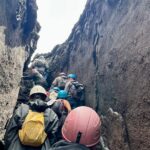
One practical win: breakfast is included, so you start the day with fuel before you’re climbing and switching between jeeps, cableway, and on-foot sections. The tour also provides helmets, and the operator says it can supply hiking poles, backpacks, wind jackets, and hiking boots if you provide your size in advance.
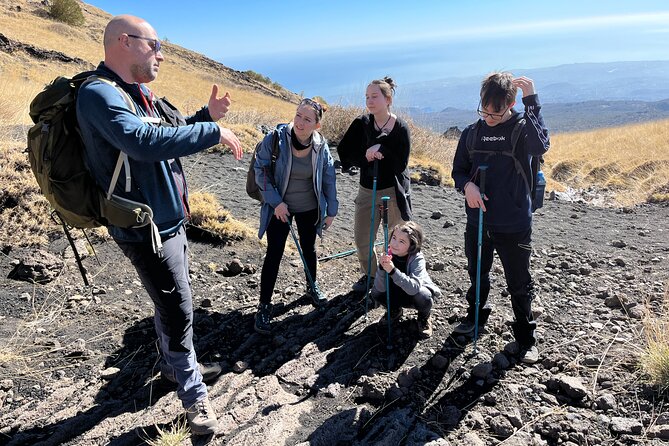
The group size matters here. With a maximum of 10 people, you’re less likely to feel like you’re fighting through the group on sandy, rocky, ash-covered sections. You’ll also get more chances to talk with your guide about what you’re actually seeing—Cristian’s style is the exact kind that turns the walk into a lesson, especially when Etna is active enough to notice.
Up the South Slopes: From Lemon Coast to the First Trail
The day starts with the 4×4 jeeps, leaving the Riviera dei limoni (Lemons’ coast) and heading toward Etna’s villages. The route is designed to get you off the beaten path without spending your whole morning trudging uphill from the base.
As you climb, you’ll cross older mule-driver roads (mulattiere) and paths connected to coalmen. You’ll also reach about 1000m where a protected area of 720km² begins—one of those details that helps you understand you’re not just walking in random terrain. You’re moving through a managed volcanic park area.
You’ll pass cold and dried lava flows that look like black highways cutting across the mountainside. It’s a good warm-up for what’s coming next: the ground gets stranger, looser, and more volcanic as you climb toward the crater zones.
A heads-up for your expectations: this early part is about getting set up for the real walking. It’s interesting, but the “wow” factor really ramps up once you’re in the higher elevation lava-flow sections.
Sapienza Cableway to 2500m: The Jump That Changes the Whole Day
From the south slope ski station area (Rifugio Sapienza), the cableway lifts you from about 1800m to about 2500m. This is a big part of the value of the tour, because it keeps the hike from becoming an all-day grind with less view payoff.
Once you’re at 2500m, your trek starts among the lava-flow features tied to the 2002 eruption, including the route that leads to the Barbagallo Craters at about 2900m. That matters because it’s not random hiking. The guide can point out the eruption story as you move through it.
After that, you continue along lava flows linked to more recent activity from the South East Crater (2017) toward the summit craters. So in practice, you’re walking through different volcanic chapters rather than one repeated type of terrain.
If you like your hikes organized, this setup works well. You’re never wandering without context. And even if you’re not a geology nerd, the route structure makes the terrain easier to understand.
Crater-Edge Walking: A Lunar Feel With Real Smell and Wind
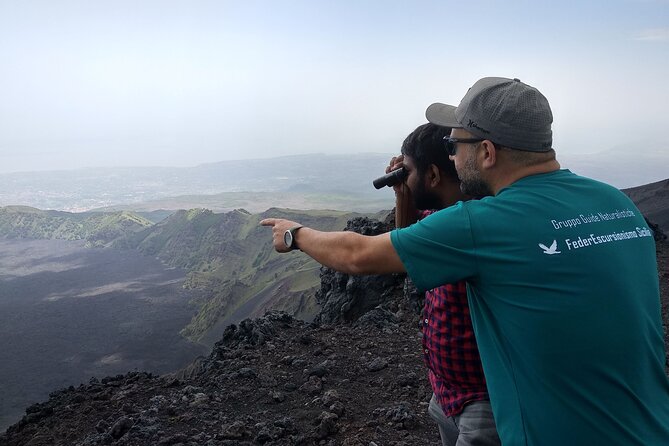
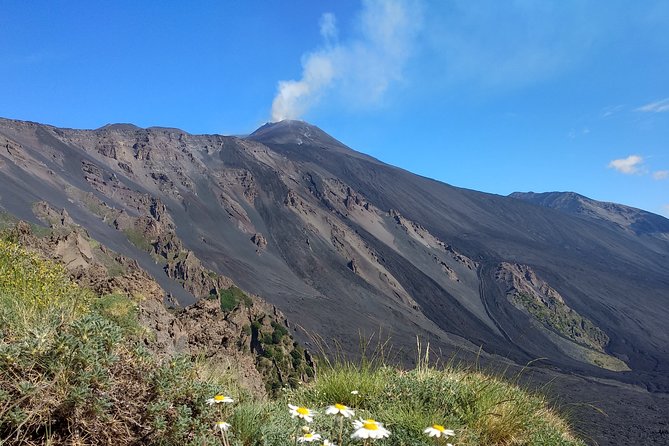
Reaching the top is the moment where the tour description sounds almost too dramatic—until you’re there. The summit area is described as having total absence of vegetation, with sulfur smell and gas emissions blown by wind. That’s one of those experiences that changes your body awareness fast.
On a clear day, the views can stretch far: the route mentions you can even see the Aeolian Islands, the Calabrian coast, and much of the Sicilian hinterland. That wide visibility is often the payoff people hope for when they plan an Etna hike—because the crater areas can look like a different planet, in a very physical way.
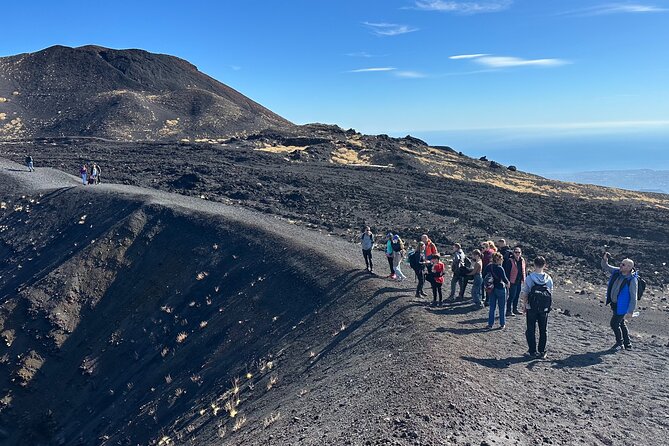
During the walking on the central crater edge, you’ll also be moving over rocks shaped by fire and volcanic ground where your footing changes from firm to sandier sections later in the day. Wear the boots you’re comfortable in. If you’re provided boots in advance, make sure they fit well enough for long walking on uneven surfaces.
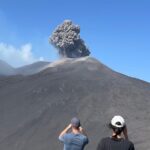
And about the volcanic activity: your chances depend on weather and conditions. The route notes the constant gas emissions and explains the summit experience in practical terms, and one review highlight emphasizes that Cristian helped people notice sounds and activity when Etna was behaving in a way that visitors could detect. You should go in expecting you’ll see dramatic terrain, and you may also get lucky with extra signs of activity.
Valle del Bove: Ox Valley Views Without Losing the Rhythm
After the main Etna hiking portion, the tour includes Valle del Bove, described as a beautiful view of the Ox Valley. This part lasts about 1 hour, with admission listed as free.
Why it’s a smart pause: after intense crater-zone walking, a viewpoint stop can reset your legs and your sense of direction. You also get a different kind of Etna scenery—less about walking across fresh lava texture and more about reading the valley’s form from above.
One practical benefit: the tour isn’t just “up and up.” After Valle del Bove, you move into the descent plan, so the day has a natural flow from climbing to exploring to dropping back down.
If you care about variety in a single day, this stop helps. You’re not limited to just one kind of volcanic terrain.
The Descent: Ashy Canyons, Piano delle Concazze, and a Picnic Break
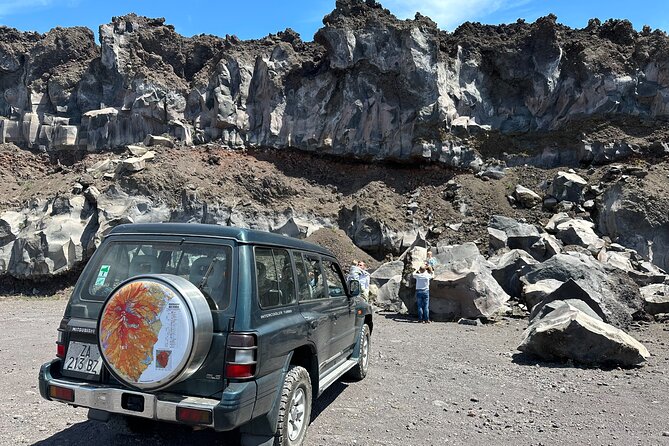
Descending the north slope is where the route shifts from dramatic high-altitude views to hands-on, boots-on-the-ground terrain. You’ll step on rocks shaped by fire, and you’ll likely encounter sections where you sink your boots in volcanic sand.
The itinerary describes walking down sandy canyons covered by ashes and lapilli, then reaching Piano delle Concazze, a wider highland where an observatory is located at about 2800m. This is one of those points that gives the hike more meaning: you’re in a spot connected to scientific monitoring of the volcano.
This is also where the tour schedules a pic-nic stop once there’s a comfortable area to sit. Important practical detail: packed lunch is not included, so you’ll want to plan ahead. Bring your own lunch if you can, or pick up food at the local shops at the beginning of the tour.
After the break, you keep descending and follow a path that meets the 2002 lava flow eruption area again. The route then transitions toward a beech forest and continues to the final step at Piano Provenzana, at about 1900m. That forest element is helpful psychologically too: it signals you’re getting out of the harshest volcanic zone.
Crossing Back Through Parco dell’Etna and Ending at the Start
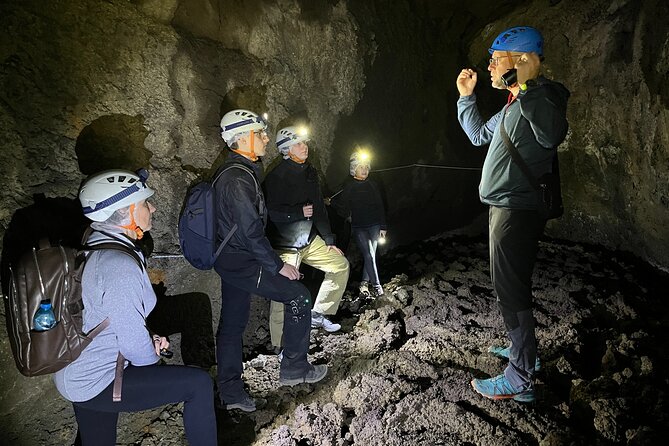
Once you’ve finished the main Etna exploring and reached the lower area, the tour describes crossing Parco dell’Etna again on the way back. You’ll travel across older lava flows to return home tired but satisfied.
The important thing here is timing and energy. Even with jeeps and cableway, this is still a long walking route, and you’ll spend time at elevations where your body feels the pace. If you’re the type who needs frequent breaks, plan to use the pic-nic break well and take it easy during the transitions.
The tour ends back at the meeting point, the same Bar & Restaurant Mareneve location in Fornazzo. That keeps logistics simple: you’re not figuring out a new pickup spot or a complicated return ride.
Price and Value: Is $145.12 a Good Deal?
At $145.12 per person, the value comes from what’s bundled into the day. You’re getting an authorized tour guide, insurance, a helmet, and breakfast. On top of that, you can request gear like hiking poles, backpacks, wind jackets, and hiking boots if you share your sizes in advance.
The cableway and the volcano-area access are handled as part of the experience flow, and the itinerary notes admission ticket as free in the tour description. Even if you don’t focus on the math, the structure matters: you’re paying for coordination so you don’t have to assemble transport, timing, and route context yourself.
The small-group cap (10 people) also affects the experience quality. In practical terms, it can mean fewer delays, more attention on the hike, and a better chance your guide can point things out instead of just managing a crowd.
The main cost-related tradeoff is what’s not included: lunch. You’ll want to budget for food anyway, and I’d treat that as part of the true cost of the day.
Overall, if you want an Etna trek with real route context and help with gear, this price looks fair. If you already plan to handle your own transportation and you pack your own gear and lunch, you might find cheaper independent options—but you’d be giving up the guided eruption-path storytelling.
Who Should Book This Etna Trek (and Who Might Skip It)
This tour is best for people with strong physical fitness, because you’ll be walking on uneven volcanic ground—sand, ash, lapilli, and rocky stretches. You should feel comfortable with the idea of a long day with altitude and changing traction.
You’ll likely enjoy it most if you:
- like guided nature experiences where the guide helps you interpret what you see
- want variety within one outing (crater areas plus Valle del Bove)
- don’t mind sulfur smell and windy, exposed summit conditions
- want a small group and a clear itinerary
You might want to think twice if you’re easily uncomfortable on uneven ground or if you want a short, easy hike. The summit zone and ash-covered sections aren’t built for slow, careful wandering.
Weather matters a lot too. The tour notes it requires good weather. If conditions are poor, you’ll be offered another date or a full refund.
Tips to Have a Smoother (and Safer) Day on Etna
Since the route includes both high-altitude crater areas and descent on volcanic sand, treat footwear and outer layers as serious parts of your plan.
If you’re using the provided gear, message ahead with your boot size and your needs so the guide can bring the right items to the meeting point. Helmets are included, but you still want to be ready with your own comfort essentials.
Because lunch isn’t included, plan food timing so you don’t wait until the moment you’re hungry and then scramble. Bring your lunch if you can, or plan to stop at local shops at the start of the tour.
And one last practical expectation: summit air can be windy and smelly from gas emissions. Even if you’re not worried about science, you’ll appreciate knowing what it feels like so you’re not surprised.
If you’re a photo person, a clear day can bring big visibility as described in the route. If it’s cloudy, you’ll still get the volcanic walking experience, but your range of views may shrink.
Should You Book EtnaWay’s Etna Trek?
I’d book it if you want a structured Mt. Etna trekking tour that actually follows eruption terrain, not just a viewpoint circuit. The combination of jeeps, Sapienza cableway, and guided crater-edge walking makes it efficient, and the small-group setup helps the guide’s explanation land.
I’d think twice if you hate long walking on unstable volcanic ground or if you don’t want to handle lunch planning. The day has real physical demand, and the lack of included lunch means you need to come prepared.
If you book, aim for a weather window that works for you, and be ready for a summit experience where sulfur smell and wind are part of the deal. Then you’ll come away with a very specific kind of Etna memory: walking through the volcano’s recent chapters, step by step.
FAQ
How long is the Etna trekking tour?
The duration is listed as about 6 to 7 hours.
Where do I meet for the tour?
You meet at Bar & Restaurant Mareneve, Via Mongibello 41, 95010 Fornazzo CT, Italy.
Is the tour in English?
Yes, it is offered in English.
What is included in the tour price?
Included items are an authorized tour guide, insurance, helmet, GST, and breakfast. The provider can also supply hiking poles, backpacks, wind jackets, and hiking boots if you share your size in advance.
Is lunch included?
No. Lunch is not included in the tour price. You can bring your own or buy something at local shops at the beginning of the tour.
How many people are in the group?
The tour has a maximum of 10 travelers.
What happens if the weather is poor?
The experience requires good weather. If it’s canceled due to poor weather, you’ll be offered a different date or a full refund.