REVIEW · MARRAKECH
Climb Mount Toubkal – trekking – 3 days
Book on Viator →Operated by Toubkal Guide · Bookable on Viator
Toubkal feels like real mountain Morocco. This 3-day climb from Marrakech to Jebel Toubkal (the highest peak in Northern Africa) is interesting because you get hotel pickup plus a local guide who stays with you from start to summit attempt, while mules handle much of your gear and your meals are sorted. I also like the practical rhythm of the trek and how local cooking keeps you fueled for altitude. One thing to consider: Day 2 includes scree and thin-air effort, so it can feel tough even with a steady pace.
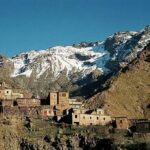
The route is built around pacing, not sprinting. You climb to a high refuge (around 3,206 m) for the night, which helps your body get used to being higher before the early summit push. You’ll also pass through places like Imlil and the shrine area of Sidi Chamarouch, so the walking isn’t just a workout—it’s a tour of how the Atlas Mountains live and move.
In This Review
- Key Highlights You’ll Care About
- From Marrakech to Toubkal: Why This 3-Day Format Works
- Imlil Morning Energy: Starting the Trek in the Atlas Foothills
- Day 1 to the Refuge (Around 3,206 m): Sidi Chamarouch and the Steady Climb
- Summit Morning on Jebel Toubkal: Scree, Altitude, and the Payoff
- Day 3 Back to Imlil: A Long Descent That Still Matters
- The Real Value: Guide, Mules, and Meals You Don’t Have to Think About
- Price Check: Is $337.31 Fair for a 3-Day Toubkal Trek?
- Who Should Book This (and Who Might Want a Different Plan)
- Should You Book This Mount Toubkal Trek?
- FAQ
- How long is the Mount Toubkal climb?
- Where is the meeting point in Marrakech?
- What time does the trek start?
- Is accommodation and food included?
- Do I need a certain fitness level?
- Is this tour private?
- Can I cancel and get a refund?
Key Highlights You’ll Care About
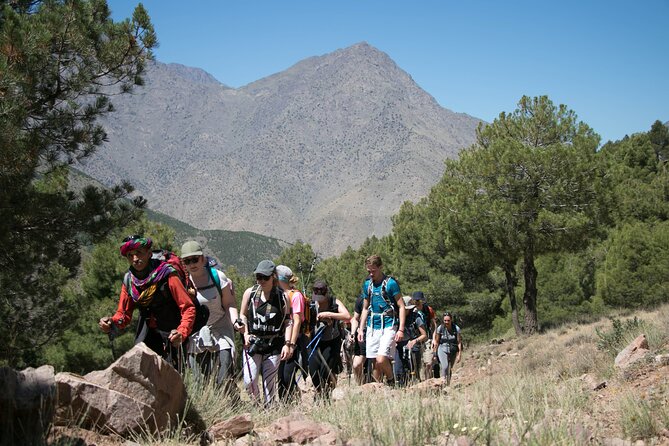
- 8:00 am pickup at Jemaa el-Fna: clean start from central Marrakech, then straight to Imlil.
- Mules carry your gear: you hike more comfortably while your packs move on the trail.
- Day 1 passes through Aremd and Sidi Chamarouch: you’ll see shrines and village tracks in the Mizane Valley.
- Summit attempt early on Day 2: you’re up fast, aiming for clear, dramatic views from the top.
- Big-scope panorama: on a clear day you can look across the Marrakesh Plain, High Atlas, Anti-Atlas, and toward the Sahara.
- Meals + overnight included: you’re not scrambling for food or lodging at altitude.
From Marrakech to Toubkal: Why This 3-Day Format Works
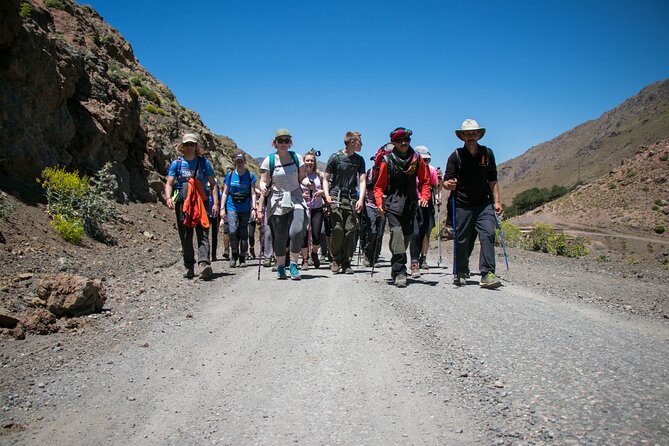
If you want Toubkal, you don’t need to turn your trip into logistics homework. This trek is set up so you’re picked up in Marrakech, transferred to the foothills, and then guided start-to-finish with food and overnight already arranged. That matters because the Atlas Mountains reward good pacing, not overplanning.
The key idea here is simple: you get one full day climbing toward altitude, spend the night at a high refuge, then make your summit attempt early the next morning. That extra overnight at elevation can make a noticeable difference in how you feel on the summit day, especially if you’re not used to hiking at height. It’s also the reason the trek stays at three days instead of stretching into a long training plan.
You’ll still be hiking in mountain conditions. Even with a guide and a steady schedule, you’re dealing with steep trail segments, rocky sections, and the reality of higher altitude. If you’re okay with a workout that builds toward a goal, this schedule fits really well.
You can also read our reviews of more tours and experiences in Marrakech.
Imlil Morning Energy: Starting the Trek in the Atlas Foothills
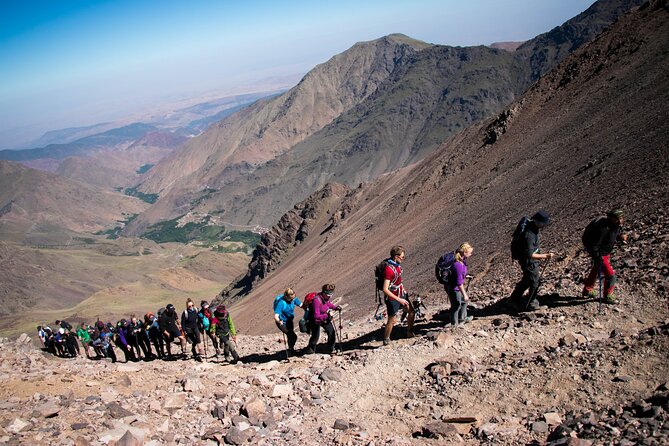
Your morning begins in Marrakech at Jemaa el-Fna, with a start time of 8:00 am. After pickup, you transfer toward Imlil, the gateway village for many Toubkal routes. The transfer is practical—less wasted time, more hiking, and fewer moving parts.
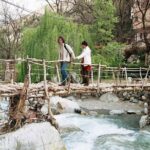
When you start the trek, you ease into the experience along the Mizane Valley. Day 1 isn’t about suffering right away. It’s about finding rhythm: pass through village areas like Aremd, walk by the shrine of Sidi Chamarouch, then keep heading east with the terrain gradually getting steeper. You’re on mule tracks at times, and you’ll cross flood plains before the trail climbs into higher rocky ground.
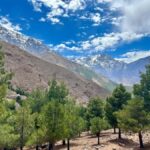
What I like about this opening segment is that it sets expectations. You can feel the Atlas shift from village edges into higher cliffs and open sky. And since your guide is with your group the whole time, you’re not guessing where to go or how fast to push on the first day.
Day 1 to the Refuge (Around 3,206 m): Sidi Chamarouch and the Steady Climb
Day 1 stretches into a full hiking day—about 8 hours on the trail, depending on conditions and group pace. The best part is the variety. One moment you’re walking past pastoral and shrine areas; the next you’re crossing river sections and moving through mule-track paths that climb toward rocky cliffs above the valley.
A standout stop is the shrine area of Sidi Chamarouch. Even if you’re not there for spiritual sightseeing, it’s a useful landmark in the route and a sign you’re moving through a living mountain culture, not a staged trail. The trek also follows natural terrain changes, like crossing flood plains and moving through high, rocky sections toward the snowline.
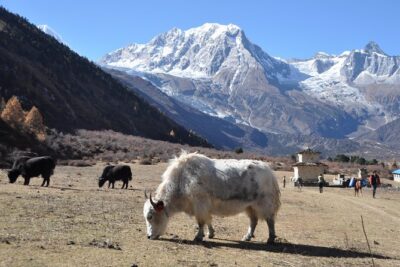
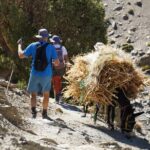
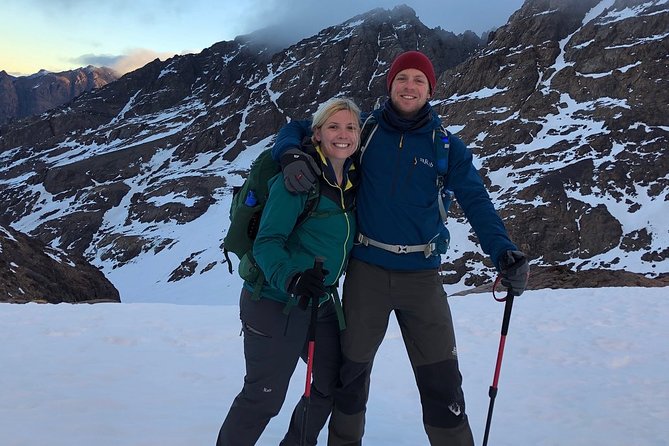
As you snake and zigzag your way upward, you’ll notice how the effort changes. Lower sections feel like sustained walking; higher parts feel like repeated uphill steps where your legs do most of the work and your breathing takes the rest. This is exactly where mule support becomes more than a nice-to-have. Mules carry much of your gear to the refuges, so you can focus on steady footing instead of dragging a heavy pack uphill.
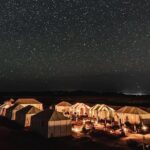
You end Day 1 at the refuge (around 3,206 m) for the night, with meals included (breakfast, lunch, dinner). You’re building toward sunrise energy for the next day, so the day feels like preparation as much as sightseeing.
Summit Morning on Jebel Toubkal: Scree, Altitude, and the Payoff
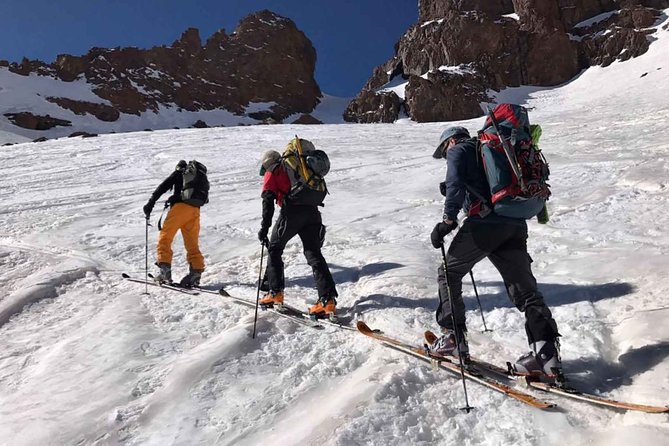
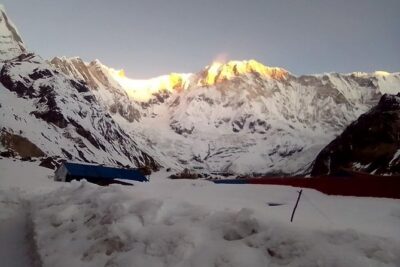
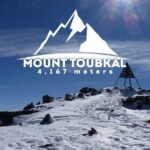
On Day 2, the plan is straightforward: an early attempt on the summit of Jebel Toukbal (Jebel Toubkal). The hike follows the south cirque route and includes crossing a stream above the refuge. Walking can seem relatively straightforward in sections, but the difficulty comes in two forms: scree and altitude.
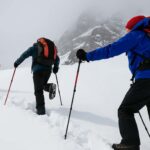
Scree is the mountain’s way of reminding you to stay focused. Rocks shift underfoot, so good foot placement matters more than speed. Altitude adds another layer. Even when the trail isn’t brutally steep, your body still works harder to move each step through thinner air.
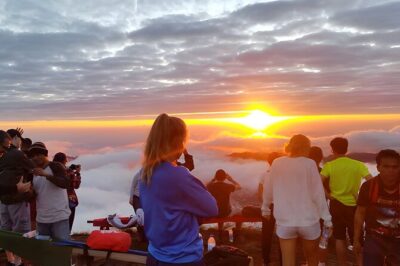
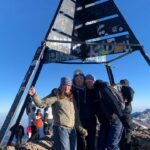
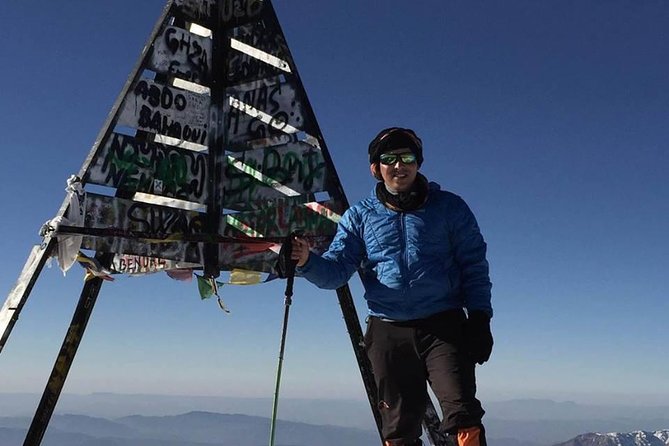
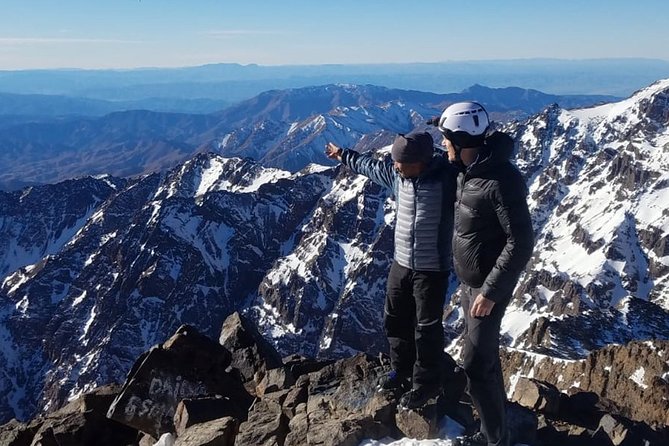
The reward is views you don’t forget. From the summit, you can get unrestricted scenery in every direction—Marrakesh Plain and High Atlas to the north, and as far south as the Anti-Atlas and the Sahara, assuming weather is clear. The experience is often timed so you reach the summit near sunrise, which turns the first light into a real moment, not just a photo break.
After the summit, you retrace your steps back down to the refuge and spend the night again. This is a good design choice. You get the goal, then you return to the same base for recovery rather than trying to reinvent logistics on the fly.
Day 3 Back to Imlil: A Long Descent That Still Matters
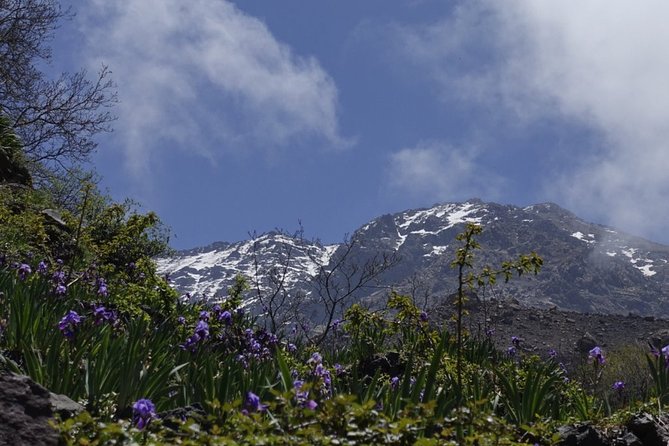
Day 3 is about getting back down to Imlil and then transferring to Marrakech. The day isn’t described in detail here like the first two, but in practice, it’s the wind-down after your summit effort. Expect the terrain to feel slower than you want, but usually less mentally stressful than pushing uphill toward a peak.
Coming down is its own skill. Your pace often speeds up because you’re going downhill, but your knees and ankles still pay attention. This is where your guide’s pace control matters—especially on a mountain route where footing can vary.
Once you arrive back in Imlil, you transfer to Marrakech for the finish. The overall flow keeps you from feeling stranded or stuck in the mountains without a plan. You also avoid the common mistake of treating the descent as a casual stroll; it’s still part of the trek, just in a different mode.

The Real Value: Guide, Mules, and Meals You Don’t Have to Think About
What makes this trek feel like a deal is what it bundles together. You’re paying for more than a path on a map. You’re paying for a team that handles the stuff that usually eats your time.
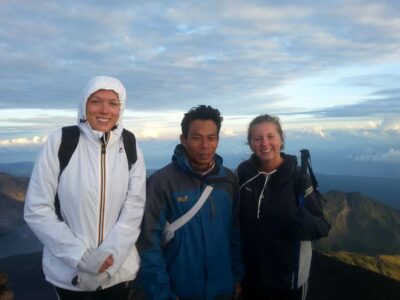
First: the local guide stays with you throughout. That means route decisions, pacing, and safety instincts stay in the hands of someone who knows the terrain and how groups move. Many accounts mention guides such as Mohamed Tsioi and Ibrahim Agafay as attentive, supportive presences, with others like Hamed and Mustafa leading groups smoothly too.
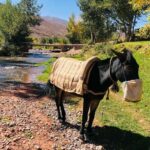
Second: your gear support is real. Mules carry your equipment between areas and refuges. If you’ve ever hiked with a heavy pack, you’ll understand why this changes your energy. You can dress, eat, and walk without turning every step into a battle against your own load.
Third: the cooking is part of the experience, not just fuel. Meals are included (breakfast, lunch, dinner), plus bottled water. Multiple guides and cooks show up in accounts by name, including Omar (muleteer/chef support) and Youssef (cook) and Mohamed Abayen (cook mentioned alongside the best food comment). Even if you don’t remember the chef’s name, you’ll feel the impact—warm meals during cold or high-altitude conditions help your body recover.
One note: drinks are not included. Water is included as bottled water, and drinks beyond that are on you. It’s a small detail, but it’s the kind that becomes annoying if you forget.
Price Check: Is $337.31 Fair for a 3-Day Toubkal Trek?
At $337.31 per person for roughly 3 days, this price makes sense when you look at what’s included. You get hotel pickup and drop-off in Marrakech, a local guide, overnight accommodation at altitude, meals across the trek, bottled water, and the structure of a guided summit attempt.
If you tried to DIY it, you’d still pay for transport, a guide (or risk getting lost and dealing with safety gaps), and food. You’d also need to coordinate refuge stays and plan around altitude timing. This package takes those decisions off your plate.
What about the one potential less-glamorous side? One prior concern shared in accounts is that the operator can be slow to respond to specific questions before the trip. If you have a tight schedule or want exact details, message early and don’t leave questions until the last moment.
Also, this trek has a minimum age of 12 and calls for moderate physical fitness. That doesn’t mean it’s a casual walk. It means the operator expects you can handle a full day of trekking plus an early summit attempt with altitude effects and scree.
Who Should Book This (and Who Might Want a Different Plan)
This trek is a great match for you if you want a guided summit experience without having to manage logistics day by day. You’ll like it if you’re comfortable hiking for several hours, enjoy mountain views as a main event, and want the added cultural and village context of Imlil and shrine areas like Sidi Chamarouch.
You might think twice if:
- You’re new to altitude hiking and your fitness is limited. The Day 2 summit push is the toughest part, with scree and altitude effects.
- You hate early starts. Day 2 is early enough that you’ll feel it, even if you’re motivated.
- You’re sensitive to rocky footing and unstable ground, since scree is part of the route.
If you’ve hiked mountains before, this will feel like a classic challenge: one day of climbing to a refuge, an early summit bid, then a return. If you haven’t, it can still be doable, as long as you respect the pace and listen to your guide.
Should You Book This Mount Toubkal Trek?
I’d book this if your goal is a well-supported, three-day Toubkal climb that includes the hard-to-organize pieces—pickup, guide, refuges, and meals—while still giving you the real mountain experience. It’s also a good value because your biggest risks (routes, pacing, and altitude timing) are handled for you.
Pass or choose another option if you want a very gentle walk, or if you’re not ready for scree and altitude on the summit day. If you do book, pack for cold mountain mornings, take it slow on Day 1, and treat the summit push as an effort you manage, not a race you win.
FAQ
How long is the Mount Toubkal climb?
It’s a 3-day trekking experience, with the trek itself scheduled across Day 1 through Day 3.
Where is the meeting point in Marrakech?
The start point is Jemaa el-Fna, Marrakech 40000, Morocco.
What time does the trek start?
The start time is 8:00 am.
Is accommodation and food included?
Yes. Overnight accommodation and meals are included as per the itinerary (breakfast, lunch, and dinner). Bottled water is also included. Drinks are not included.
Do I need a certain fitness level?
You should have moderate physical fitness level, since there’s a summit attempt and difficult walking parts on Day 2.
Is this tour private?
Yes. It’s listed as a private tour/activity, and only your group participates.
Can I cancel and get a refund?
Yes. You can cancel for a full refund up to 24 hours in advance of the experience’s start time. If you cancel less than 24 hours before, the amount paid is not refunded.