REVIEW · SICILY
Etna 3000 from the south with Cable Car and trekking – Morning or Afternoon
Book on Viator →Operated by EtnaExcursion.it · Bookable on Viator
Etna 3000 is a hike with big, otherworldly payoff. You start with a cable car ride up to about 2,500 meters, then spend hours on foot through lunar-looking volcanic ground, including Pian del Lago and a climb to the 2001 eruption crater. I love that you get an authorized volcanological guide keeping the experience grounded in real science, and I love the way the route layers views—from crater edges to the wide outlook over the Valle del Bove. One drawback to plan for: sections can feel tough if there’s wind, narrow paths, or loose gravel, so you’ll want good footing and calm nerves.
What makes this outing especially compelling is the mix of “wow” moments and practical pacing. You don’t just look at Etna from far away—you’re up high, you’re moving, and you’re seeing how different features of the mountain connect. The max altitude is variable (around 2,750–2,950 m) depending on conditions, so dress for a true mountain day even if the lower slopes feel mild.
In This Review
- Key highlights I’d circle on the map
- Etna 3000 from the south: what you’re really signing up for
- Cable car up: speeding past the easy part and setting the tone
- Pian del Lago: walking on volcanic sand that looks too unreal
- The 2001 crater climb: the best place to understand Etna’s scale
- Valle del Bove from above: the big depression that steals the view
- 2018 lava fronts and the long view over recent activity
- Time on the mountain: 5 hours that feel like a real outing
- Physical demands: moderate fitness, but be ready for wind and footing
- Language options and how the guide keeps it understandable
- What’s included: guide + MontataGrande tasting and Etna wine
- Price and value: $82.89 plus the cable car fee
- Shoes, jackets, and what to bring for a high-altitude volcanic day
- Small group size: why max 20 can actually feel better
- Meeting point and ending where you started
- Should you book Etna 3000?
- FAQ
- How long is the Etna 3000 tour?
- What’s the highest altitude on this tour?
- Is the cable car included in the price?
- What does the tour include?
- Are shoes and jackets included?
- What languages are available?
- How physically demanding is it?
- When should I expect the best experience?
- Where does the tour meet and end?
Key highlights I’d circle on the map
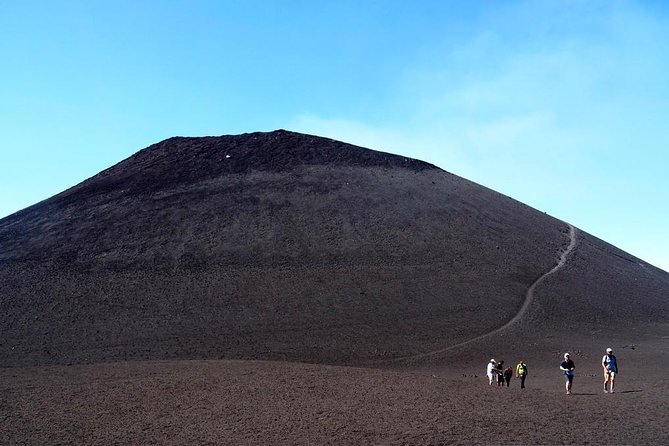
Cable car lift to the high starting zone for an efficient climb with less slog from sea-level approaches.
Pian del Lago’s false plane of volcanic sand gives you that strange, moonlike feeling on foot.
Crater views from the 2001 eruption area where you can take in nearby summit craters and the coast.
Valle del Bove from above for one of Etna’s most dramatic big-picture looks.
Small-group feel (max 20) with an authorized volcanological guide.
MontataGrande tasting stop including typical products and a glass of Etna wine.
Etna 3000 from the south: what you’re really signing up for
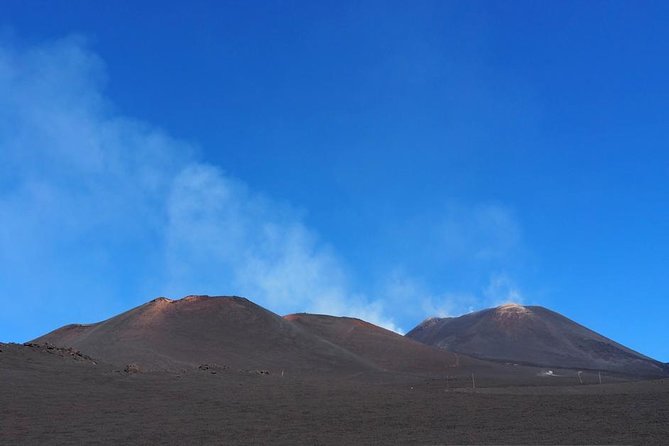
This is an Etna day designed to get you into the “active-looking” world of the mountain without making it a full-on endurance march. The structure is simple: lift up by cable car, then hike for most of the time through volcanic terrain that changes as the day goes on.
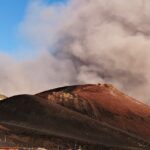
The route hits a few signature Etna features: Pian del Lago, the crater area from the 2001 eruption, and the panoramic zone above the Valle del Bove, ending near the lava fronts connected with the 2018 eruptions. Even if you’ve seen Etna photos before, walking this terrain is a different experience. The ground feels gritty and textured, and your vantage point keeps expanding as you gain height.
Also, the tone of the day matters. With an authorized volcanological guide, you’re not just chasing views—you’re learning what you’re standing on and why it looks the way it does.
You can also read our reviews of more tours and experiences in Sicily.
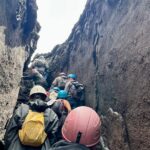
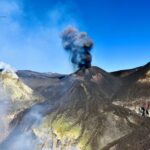
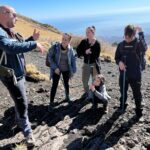
Cable car up: speeding past the easy part and setting the tone
You begin at the south side with a cableway ride from Sapienza refuge (about 1,960 m) to the Etna cable station around 2,510 m. This is not a quick “get on and forget it” segment. That altitude jump matters because it changes how the rest of the hike feels—physically and mentally.
You’ll start trekking after you’re up near 2,500 m, with the highest points later ranging roughly 2,750–2,950 m (it varies). Translation: you should expect cooler air, stronger wind chances, and a need for warm layers even in warmer months.
One small practical point: the cable car ticket is not included in the $82.89 tour price (it’s an extra €52 per person). Plan for that cost so it doesn’t sneak up on your budget.
Pian del Lago: walking on volcanic sand that looks too unreal
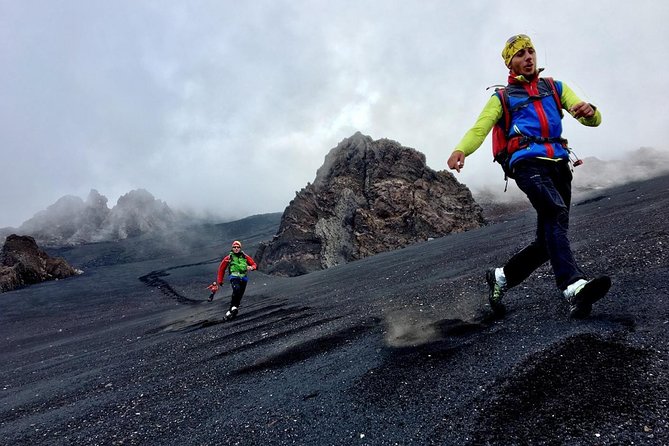
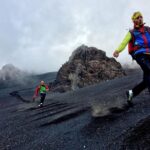
After the cable car, the first major hiking segment takes you to Pian del Lago, described as a false plane of volcanic sand. I like this stop because it’s visually immediate. The ground looks like a scene from another planet—smooth in places, granular in others—so your brain spends the whole time trying to make sense of what you’re seeing.
This is where the tour earns its “surreal” reputation in a way you can feel in your feet. Instead of a normal trail that makes sense on sight, you’re walking across volcanic material that can feel loose underfoot. That’s also where the warning from the field becomes real: if conditions are windy or the path has gravel, you’ll want steady steps.
What makes Pian del Lago valuable isn’t just the photo factor. It gives you a baseline view of how Etna builds and reshapes terrain—sand-like volcanic ground, then increasing drama as you approach crater areas later.
The 2001 crater climb: the best place to understand Etna’s scale
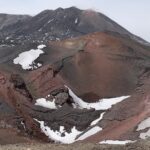
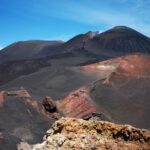
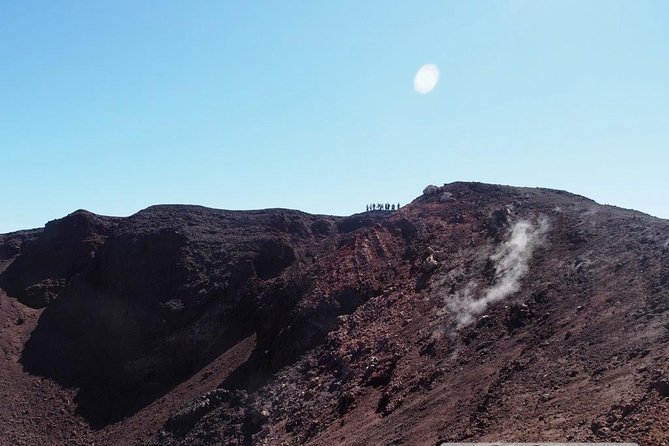
Next comes a climb to the crater of the 2001 eruption. This part is the tour’s “turn your head slowly” segment. From the crater area, you can admire nearby summit craters and look out toward the coast.
I find crater climbs like this teach you faster than any museum label. You can see the shape of the terrain and how the mountain’s features relate to each other at the same time. Standing at high altitude, with a trained guide nearby, the volcano becomes more than a background. It becomes a map.
The challenge is that you’re working at altitude and on volcanic ground. Even with a good pace, you’ll feel the effort. If you’re sensitive to steep climbs or changing footing, keep your expectations realistic and let the guide set the tempo.
Valle del Bove from above: the big depression that steals the view
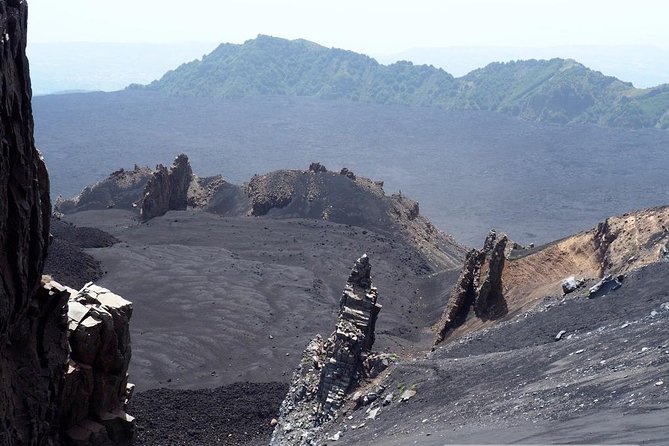
As you continue, you reach a very panoramic area tied to the famous Valle del Bove—a vast depression formed by the collapse of an ancient volcanic structure. The route brings you to areas described as panoramic, and the timing matters because the views open up as you gain position.
This is the part where you stop thinking about the hike as a sequence of stops and start seeing Etna as a system: eruption zones, collapsed formations, and vantage points all in one line of sight.
It’s also why this tour is a good value for people who want more than a single dramatic moment. You get multiple “scale” views: close-up crater geometry earlier, then the wide-open big-picture interpretation here.
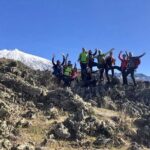
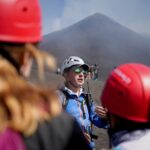
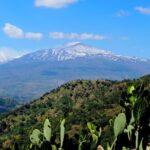
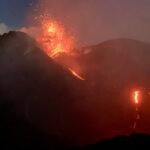
2018 lava fronts and the long view over recent activity
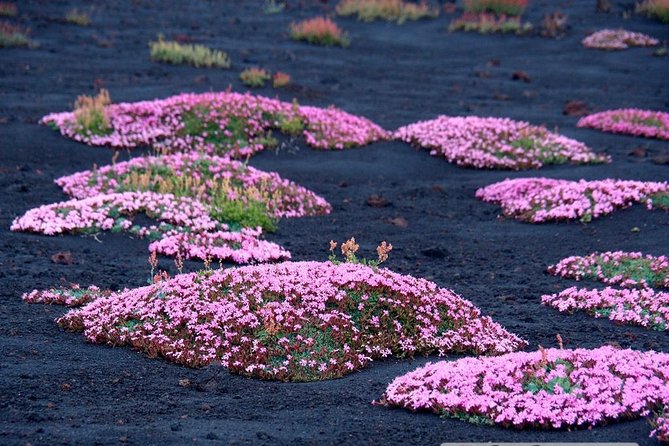
Near the end, you reach lava fronts associated with the 2018 eruptions. Even if you’re not an Earth-science expert, you’ll likely notice the difference between the more sand-like areas and the zones marked by more recent volcanic activity.
Then you land at the day’s most scenic “watch the world from high ground” feeling. You’re not just looking at a peak—you’re looking across a huge volcanic past and present, all connected through terrain you can actually walk on.
This ending also makes the day feel complete. It’s one thing to visit a crater; it’s another to see how older and more recent parts of the volcano connect in the same hike.
Time on the mountain: 5 hours that feel like a real outing
Plan for about 5 hours total. That’s not just “time on the clock”—it’s time moving uphill, stepping across uneven volcanic ground, and stopping long enough to absorb the views and listen to your guide.
The itinerary keeps most of the day hiking-focused. The cable car ride is short, about 15 minutes for the ascent portion, but the rest is on foot. So you’ll want to treat this like a hike, not an easy walk.
One more real-world factor: the route reaches high altitude and the maximum can run around 2,750 to 2,950 m. If you live at sea level or generally avoid altitude, don’t assume you can “power through” without adjusting your pace.
Physical demands: moderate fitness, but be ready for wind and footing
The tour is labeled for people with moderate physical fitness, and that’s fair. But “moderate” doesn’t mean effortless.
The practical risk is not only steepness—it’s conditions. One clear caution point to respect: some sections can be difficult in high wind, on narrow paths, or over loose gravel, and that can make footing feel dangerous. You don’t need mountain-climbing skills, but you do need shoes with grip, attention to your step, and willingness to slow down when conditions turn.
Also remember: Etna weather can change quickly. Good visibility helps you enjoy the crater and coast views; strong wind can make the same viewpoints more tiring than expected.
Language options and how the guide keeps it understandable
You can choose the tour language between Italian and English. If your preferred language isn’t available, the tour will run in English or Italian.
Even without assuming perfect language fluency, I like that the guide is authorized and the focus is on real volcanic explanation. In practical terms, this means the hike should feel more connected and less like a stamp-collecting tour.
If you’re traveling with someone who cares about learning, this is a strong format: you’re not stuck in a bus for long stretches, and the explanations happen right where the evidence is.
What’s included: guide + MontataGrande tasting and Etna wine
The included perks are genuinely part of the experience, not random extras. You get:
- An authorized volcanological guide
- A coupon for a tasting of typical products and a glass of Etna wine at MontataGrande
I like this approach because it gives you a payoff at the end of effort. After hours at altitude, tasting something local in a specific stop location feels more grounded than a generic souvenir refresh.
One caution: the cable car transport ticket is not included, and shoes/jackets can cost extra if you need rentals. So budget for what’s essential for your comfort.
Price and value: $82.89 plus the cable car fee
The tour price is listed at $82.89 per person, and that’s your base for the guide-led hike plus the tasting coupon. But then comes the major add-on: the cable car ticket is +€52 per person.
So the real question is value. Here’s how I’d think about it:
- You’re paying for an organized, guided high-altitude hike through specific Etna zones.
- You’re also getting a guided learning element (authorized guide) and a food-and-wine tasting stop.
- The cable car fee is substantial, but it’s also what allows the day to start at altitude and keep the hiking time focused.
If you’re already planning to use the Etna cable car anyway, the pricing makes more sense. If you’re trying to keep the day ultra-budget-friendly, you’ll want to consider that the add-on is mandatory for this format.
Shoes, jackets, and what to bring for a high-altitude volcanic day
Shoes and weather gear are your biggest comfort variables here. Shoe and jacket rentals are available for €5 each, which is helpful if you forgot, but the better move is to come prepared.
I’d plan for:
- Grippy footwear for volcanic ground and possible loose gravel
- Warm layers for high altitude (even when the base area feels comfortable)
- A plan for wind (windproof layer helps)
- Sun protection, since you can still get strong exposure at altitude
Because the route reaches up near 3,000 meters at times, your clothing choices matter as much as your fitness level. You want to feel stable first, then enjoy everything else.
Small group size: why max 20 can actually feel better
The group size tops out at 20 travelers. That’s big enough that the day won’t feel awkward or stalled, but small enough that your guide can keep an eye on the terrain and keep the pace safe when conditions shift.
On a hike where narrow paths and loose gravel can show up, having a guide who can manage spacing is a real advantage. It also helps the explanations land better when you’re not lost in a sea of people.
Meeting point and ending where you started
The tour starts at Piazzale Crateri Silvestri, 95030 Nicolosi CT, Italy, near EtnaM2X3+GW and ends back at the same meeting point.
It’s listed as near public transportation, which is helpful if you’re not renting a car. Still, double-check how you’ll get to Nicolosi and allow time for getting oriented at the start.
Should you book Etna 3000?
Book this if you want a guided Etna day that blends high-altitude views with real walking—especially if you care about learning while you hike. The mix of Pian del Lago, the 2001 crater, and the panoramic Valle del Bove outlook is a strong set of “signature” Etna moments in one outing. Add the MontataGrande tasting, and you get a full-circle day rather than just a hike.
Skip it or choose another option if you know you’re uneasy with narrow paths, wind, and uneven footing. This is labeled moderate, but volcanic terrain can feel serious under the wrong conditions. If you’re prone to rushing, you might find the hike stressful rather than fun.
If you’re comfortable pacing yourself, dressing for altitude, and taking footing seriously, Etna 3000 from the south is a very solid way to spend a Sicilian day.
FAQ
How long is the Etna 3000 tour?
It lasts about 5 hours (approx.), with the hiking taking up most of the day after the cable car ascent.
What’s the highest altitude on this tour?
The maximum altitude reached is variable, roughly between 2,750 and 2,950 meters.
Is the cable car included in the price?
The cable car ticket is not included. Cable car transport costs an additional €52 per person.
What does the tour include?
You get an authorized volcanological guide and a coupon for a tasting of typical products plus a glass of Etna wine at MontataGrande.
Are shoes and jackets included?
No. Shoes and jackets can be rented for €5 each.
What languages are available?
You can request Italian or English. If your preferred language isn’t available, the tour will be conducted in English or Italian.
How physically demanding is it?
It’s designed for travelers with moderate physical fitness, but some hiking sections can be difficult in wind and on narrow or loose-gravel paths.
When should I expect the best experience?
This experience requires good weather. If it’s canceled due to poor weather, you’ll be offered a different date or a full refund.
Where does the tour meet and end?
It starts at Piazzale Crateri Silvestri, 95030 Nicolosi CT, Italy (near EtnaM2X3+GW) and ends back at the same meeting point.