REVIEW · LINGUAGLOSSA
Etna Summit 3300m: Trekking on the Active Volcano
Book on GetYourGuide →Operated by Trip on Top Etna · Bookable on GetYourGuide
Etna’s craters are not museum pieces. What I love most is the walk on active summit craters and the way the tour gets you to the wild, less-touristed side of the volcano. The guides also explain the hike clearly and keep you moving safely across volcanic ground. One thing to weigh: the route and even how close you get to the summit can change with volcanic activity and weather.
For $65, you’re paying for real altitude time: a 4×4 ride up, gear support, a helmet, and a professional guide. You’ll also see the kind of wide, high-altitude Etna views—Sicily, the Aeolian Islands, and the Calabrian coast—people chase for years. Just remember this is a legit high-altitude trek, not a casual stroll.
In This Review
- Key highlights to know before you go
- Why the Etna summit hike feels different than a typical volcano tour
- Piano Provenzana arrival: where you meet and how the start works
- The 4×4 lift to 2900 m: fast altitude, real volcanic scenery
- Trekking across lava fields: what your legs will feel first
- Reaching the summit area and walking past active craters
- Views from around 3400 m: Sicily, Aeolian Islands, and the Calabrian coast
- The descent to Pizzi Deneri and Valle del Bove
- Fitness, clothing, and safety on a living volcano
- Price and value: $65 is the base, but plan for on-site transport fees
- Small groups and guide quality: what you should look for
- Should you book Etna Summit 3300 m with this 4×4-and-hike plan?
- FAQ
- FAQ
- How long is the Etna Summit 3300 m trek?
- Where do I meet for the tour?
- What’s included in the price?
- What do I need to bring?
- Is this tour suitable for everyone?
- Does the tour always reach the very top?
- Are there extra costs besides the $65 price?
Key highlights to know before you go
- Active crater walking at over 3300 m on the highest active volcano in Europe
- 4×4 off-road transport up to 2900 m, then foot trekking on volcanic terrain
- Views from around 3400 m including Sicily, the Aeolian Islands, and the Calabrian coast
- Descent via sand gullies with a strong viewpoint at Pizzi Deneri
- Valle del Bove perspective from the less-standard route
- Small groups of up to 10, with a volcanological or alpine tour guide
Why the Etna summit hike feels different than a typical volcano tour
This Etna trek works because it treats the mountain like a live system, not a scenic backdrop. You’re hiking among craters and lava terrain where the ground is rough, the air is cooler, and you can feel the scale of the volcano with every step.
Two things make it special right away. First, you’re walking on the active summit and lateral craters, which is the main reason this tour exists. Second, the route aims for the wild and less-known side of Etna, away from the most predictable tourist patterns.
The potential drawback is simple: it’s a volcano. If conditions shift—weather, visibility, or activity—the team may adjust the trekking plan to stay within safety rules.
You can also read our reviews of more tours and experiences in Linguaglossa.
Piano Provenzana arrival: where you meet and how the start works
You meet at the Chalet Sole Neve Souvenir shop at the first parking lot once you arrive at Piano Provenzana (Etna Nord). Plan to arrive on time, because the schedule is built around that briefing and equipment check before you head toward the higher zones.
Before you get in the vehicle, you’ll go through a quick briefing and gear check. This matters more than it sounds. When you’re going to crater terrain and high altitude, small details—how your boots fit, whether your long pants cover properly, and how prepared you are for wind—affect comfort fast.
Also note the tour follows trekking rules set for the Etna summit area. That means your exact path can be modified depending on conditions.
The 4×4 lift to 2900 m: fast altitude, real volcanic scenery
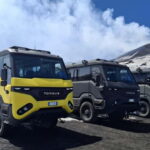
You travel by special 4×4 off-road vehicle up to 2900 meters, and that shift is part of the experience. The lower slopes look different as you gain height, and the volcanic ground becomes the main character long before you start walking.
During the ride, you’re in position to enjoy wider views of northern and eastern Sicily, plus the pull of the sea in the distance. It’s not just transport—it’s orientation. You get the lay of the area so the later hike feels connected, not random.
Transport quality matters here. The tour’s transport gets strong feedback, with many people scoring it perfectly, which is what you want when you’re traveling on rugged terrain and time is tight.
Trekking across lava fields: what your legs will feel first
Once you hit the trekking start near 2900 m, the hike begins in volcanic terrain. The route crosses lava fields, and that tells you two things immediately: you’ll be on uneven ground, and your pace will be guided by the team for safety and stability.
This is where your expectations should match the reality. You’re not just hiking “near” the volcano. You’re moving through it—across sand, rock, and crater approaches that can feel different underfoot than a mountain trail back home.
The duration of your time on the summit side can vary, depending on volcanic activity and weather. That means you should be mentally ready for a tour that prioritizes conditions over a fixed script.
Reaching the summit area and walking past active craters
The goal is the summit area and access to summit craters plus lateral craters. Being this high on Etna is the headline moment, but the more useful part for you is how the team manages the hike once you’re in crater country.
Walking near active craters changes how you listen to instructions. You’ll want to stay with the group, follow guide cues for footing, and keep your focus on your footing rather than only on the views. The good news: the guides’ job here isn’t just leading; it’s helping you move confidently in terrain that doesn’t behave like a paved path.
One important consideration: if conditions don’t allow it, you may not reach the exact highest point everyone hopes for. That’s not a failure of the tour—it’s how the operation stays safe on a living volcano.
Views from around 3400 m: Sicily, Aeolian Islands, and the Calabrian coast
When you’re at altitude—around 3400 meters—the views go big. On clear conditions, you get a sense of Etna as a giant centerpiece, with Sicily stretching out below and the sea lines pulling the eye toward distant islands.
The tour specifically highlights views over northern and eastern Sicily, the Aeolian Islands, and the Calabrian coast. Even when visibility shifts, you still get that classic high-volcano effect: distances feel compressed, and the coastline details stand out.
This part of the experience is why small group size helps. With a group capped at 10 people, there’s less waiting, less crowding at viewpoint areas, and more chance to actually take in what you came for.
The descent to Pizzi Deneri and Valle del Bove
After time at the summit area, the plan turns to descent. You’ll go down through sand gullies, and this is one of those moments where technique beats speed. Sand can shift underfoot, and it’s easier to manage if you move carefully and keep a steady, controlled pace.
You then reach the Pizzi Deneri area, where you’ll get a major viewpoint over Valle del Bove. This is a great payoff because it adds variety: instead of only “top of Etna” scenery, you also see the volcano’s larger structure and the dramatic valley shape.
Finally, you return to Piano Provenzana by 4×4 off-road vehicles. The ride back closes the loop: you’ve spent the day among volcanic features, and then you slide down into the more normal world of Sicily.
Fitness, clothing, and safety on a living volcano
This trek is not sold as easy, and you should treat it that way. It’s categorized as not suitable for people with low level of fitness, and it also isn’t recommended for pregnant women, people with heart problems, or people with respiratory issues. If you’re unsure about your fitness, be honest with yourself early.
Clothing is a big deal at altitude. The tour provides hiking boots, a jacket, and a helmet, which helps a lot. But you still need to bring long pants, and you should expect cold and changing conditions even when Sicily feels warm lower down.
One of the most practical tips from real experience is to dress for winter conditions at the summit. In November, people still walked on snow, so plan for cold air, wind, and slick patches. Think warm layers under your provided jacket, and long pants you can trust on rough ground.
Also, avoid this if you’ve been diving up to 24 hours prior. That’s specifically called out for safety.
Price and value: $65 is the base, but plan for on-site transport fees
The listed price is $65 per person for a 4.5-hour experience. What makes that price feel more reasonable is what’s included: a volcanological or alpine guide, insurance, helmet, plus hiking boots and a jacket. That’s not nothing. It’s a lot of support for an altitude trek.
Still, you should budget for additional vehicle-related costs. The tour notes that cable car ticket or 4×4 bus return ticket is 50 EUR, and that the 4×4 Unimog return requires a mandatory supplement of 50 EUR per person, paid on site, for the return trip from Piano Provenzana up to 2900 m.
Translation: your all-in cost may be more than the headline $65. You can treat the $65 as the hike and guide package, then add the expected return transport fees so you don’t get surprised at the start.
If you’re a traveler who hates figuring out gear and prefers having it handled, this tour can be good value. If you’re already fully geared and you’re watching every euro, it may feel pricier once you add the on-site vehicle charges.
Small groups and guide quality: what you should look for
With a maximum of 10 participants, you get a calmer experience than big-bus volcano days. This also supports the guiding style needed for crater terrain—less bottlenecking, more time for the guide to keep an eye on footing and pacing.
The tour includes a volcanological or alpine tour guide, and languages offered are Italian, English, and French. Clear communication makes a difference when you’re at altitude and trying to understand route choices and safety instructions.
One guide name that comes up is Fabio, and the praise is about preparation and cordial, step-by-step explanations during the hike. If you want to feel confident on volcanic ground, choose this tour partly for the way the guide helps you understand what’s happening as you go.
Should you book Etna Summit 3300 m with this 4×4-and-hike plan?
Book it if you want a real altitude volcano experience: active craters, lava fields, and high viewpoints that go beyond the usual photo spots. The combo of 4×4 up to 2900 m and then hiking lets you spend your energy where it counts—on the summit area and crater terrain.
You might skip it if you’re not comfortable with altitude, uneven volcanic ground, or if you fall into the tour’s not-suitable categories like respiratory or heart issues. And be practical about expectations: summit access can change with volcanic activity and weather, so think in terms of a top-side Etna trek, not a guarantee of the absolute highest point.
If you do book, come ready for cold. Bring long pants, layer up, and trust the provided jacket and helmet to help you handle wind and temperature shifts. This is the kind of trip that rewards good preparation with a day you’ll remember every time you see a volcano on the horizon.
FAQ
FAQ
How long is the Etna Summit 3300 m trek?
The duration is listed as about 4.5 hours, but your time on the mountain can vary depending on volcanic activity and weather conditions.
Where do I meet for the tour?
You meet at the Chalet Sole Neve Souvenir shop at the first parking lot after arriving at Piano Provenzana (Etna North).
What’s included in the price?
Included are the summit tour, hiking boots, a jacket, a volcanological or alpine tour guide, insurance, and a helmet.
What do I need to bring?
You should bring long pants. The tour also provides other key gear like boots, a jacket, and a helmet.
Is this tour suitable for everyone?
It is not suitable for pregnant women, people with heart problems, people with respiratory issues, people who have been diving up to 24 hours prior, or people with low fitness.
Does the tour always reach the very top?
The trekking may be modified depending on volcanic activity and weather conditions, based on the rules for the Etna summit area.
Are there extra costs besides the $65 price?
Yes. It does not include a cable car ticket or a 4×4 bus return ticket (50 EUR). If you use the 4×4 Unimog return, there is also a mandatory supplement of 50 EUR per person paid on site for the return trip up to 2900 m.