REVIEW · NUSA DUA
Bali: Jatiluwih Full-Day E-Bike and Trekking Tour
Book on GetYourGuide →Operated by Green Bikes Bali · Bookable on GetYourGuide
Jatiluwih feels bigger than the photos. This full-day Bali tour strings together a 2-hour e-bike ride from Pura Luhur Batukaru, a UNESCO rice-terrace lunch, and a walk through working farmland.
I like the mix: easy wheels for the long distances, then your legs for the up-close rice-terrace views.
Second, I really enjoy how the day is built around everyday life, not just photo stops. You cycle through villages, valleys, dense jungle, and even giant bamboo stands, then end with a Balinese compound chat about traditional farming life.
That’s the part that makes the scenery feel human.
One thing to think about: the tour is rated medium difficulty, and you do need solid footwear and the ability to ride a bike comfortably. If you hate walking or you’re not confident on two wheels, this isn’t the best match.
In This Review
- Key things to know before you go
- Why Jatiluwih and Batukaru make this a smart Bali day
- From Pura Luhur Batukaru to the e-bike countryside (first 2 hours)
- UNESCO Jatiluwih: what you’re really seeing from the terraces
- Lunch in the rice fields: how to make the meal part of the experience
- The 2.5-hour trek after lunch: medium effort with a countryside goal
- The end stop that makes it feel less touristy
- Group size, timing, and pacing (so you don’t feel rushed)
- What $99 gets you (and why that can be fair value)
- Who should book this Bali e-bike and rice-terrace trek
- Who should skip it
- Should you book this tour?
- FAQ
- How long is the Bali Jatiluwih e-bike and trekking tour?
- Where does the e-bike part start?
- Is hotel pickup included?
- What difficulty level is the tour?
- What’s included in the price?
- What should I bring?
- Is it suitable for everyone?
Key things to know before you go
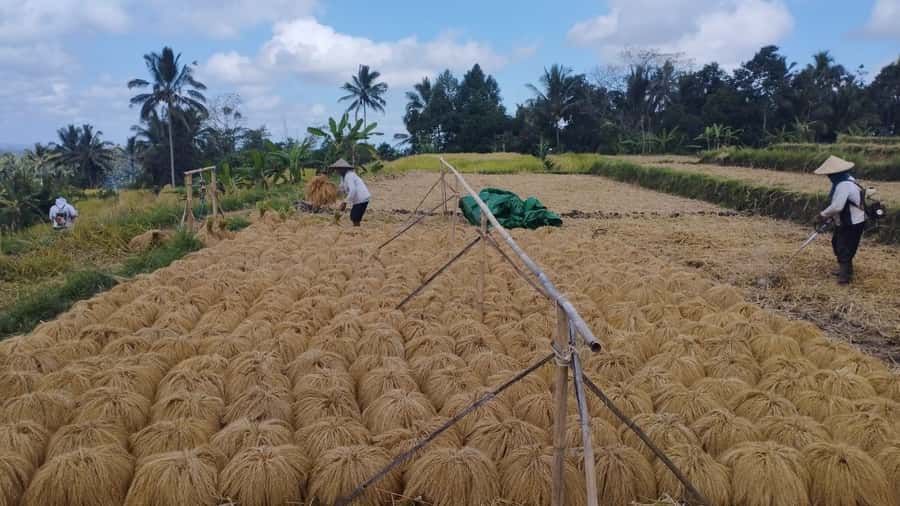
- UNESCO Jatiluwih views: You’re chasing the famous rice-terrace panorama, including sightlines toward four extinct volcanoes.
- E-bike starts at Pura Luhur Batukaru: The ride begins on the southern slopes of Bali’s second tallest volcano.
- Smaller group (max 6): Less waiting, more attention, and a calmer day in the countryside.
- Lunch in the terraces: Meal served in a café inside the rice fields, not beside a road.
- A real walk after lunch: A 2.5-hour trek through rice terraces, river terrain, and paths fewer tourists see.
Why Jatiluwih and Batukaru make this a smart Bali day
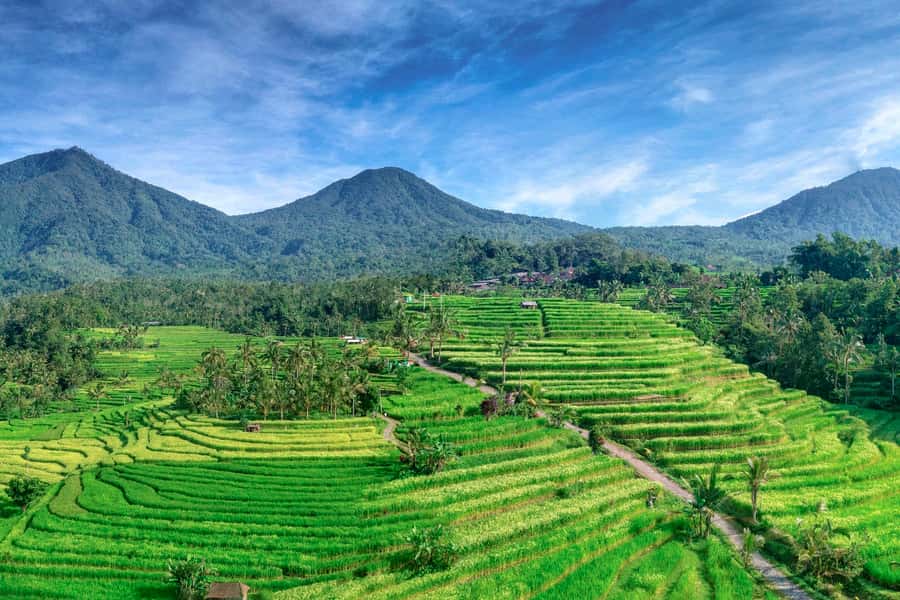
If you only do one rice-terrace visit in Bali, I’d point you toward Jatiluwih. This place isn’t just pretty from one angle. The terraces roll across the hills in long bands, so you keep finding new layers as the day moves along.
What makes this tour work well is the pairing. You start at Pura Luhur Batukaru, then spend the morning riding from temple-area countryside into the Jatiluwih region. That matters because you arrive at the UNESCO zone already warmed up by the scenery, not dropped there like a bus stop.
Also, Bali’s farming landscape here isn’t staged for tourists. You’ll pass working fields and local communities, and you get a guided walkthrough of traditional life at the end. It’s a far better way to understand what you’re looking at than simply snapping pictures and moving on.
You can also read our reviews of more tours and experiences in Nusa Dua.
From Pura Luhur Batukaru to the e-bike countryside (first 2 hours)
The day starts with hotel pick-up and a scheduled arrival at the temple area. You’re picked up from many common bases (Ubud, Sanur, Nusa Dua, Tanjung Benoa, Jimbaran, Uluwatu, Kuta/Seminyak, Canggu, Munduk, Lovina, and more on request). On average, pick-up runs about 1.5 hours before the tour start time, depending on where you’re staying.
Then you begin the 2-hour e-bike ride at Pura Luhur Batukaru, on the southern slopes of Bali’s second tallest volcano. Right away, the terrain shift helps you read the landscape. Instead of “big view, then nothing,” you ride through countryside where the scenery keeps changing—temple-area surroundings, village lanes, and open valleys.
You’re not just cruising smooth roads. The ride can include tiled streets, field paths, dense jungle sections, and giant bamboo forests. That variety is why an e-bike is a good choice here: it keeps the ride feeling doable without turning the day into a workout contest before lunch.
A practical note: you still need to ride confidently. This tour isn’t for people who can’t ride a bike. If you’re wobbly on two wheels, the e-bike doesn’t magically fix balance issues—it just reduces the effort.
UNESCO Jatiluwih: what you’re really seeing from the terraces
Jatiluwih Rice Terraces are a UNESCO World Heritage Site, and the big reason they deserve the hype is scale. The terraces here stretch across wide slopes, so your eyes keep traveling. You get those classic layered “green steps,” plus the sense that the hills are being shaped for a purpose.
One of the standout promises of this tour is the chance to take in views of four extinct volcanoes. Whether you catch every peak depends on cloud cover and the exact vantage points that day, but the overall plan is clearly designed to put you on view corridors rather than just drifting along at low altitude.
What I like about doing this with a guide is context. You’re not only looking at rows of rice; you’re learning how the terraces connect to water management and farming routines. That’s the difference between “cool photo” and “I understand what I’m looking at.”
Also, because you’ve already ridden into the area through valleys and vegetation, the UNESCO stop feels like a natural arrival instead of a sudden tourist checkpoint.
Lunch in the rice fields: how to make the meal part of the experience
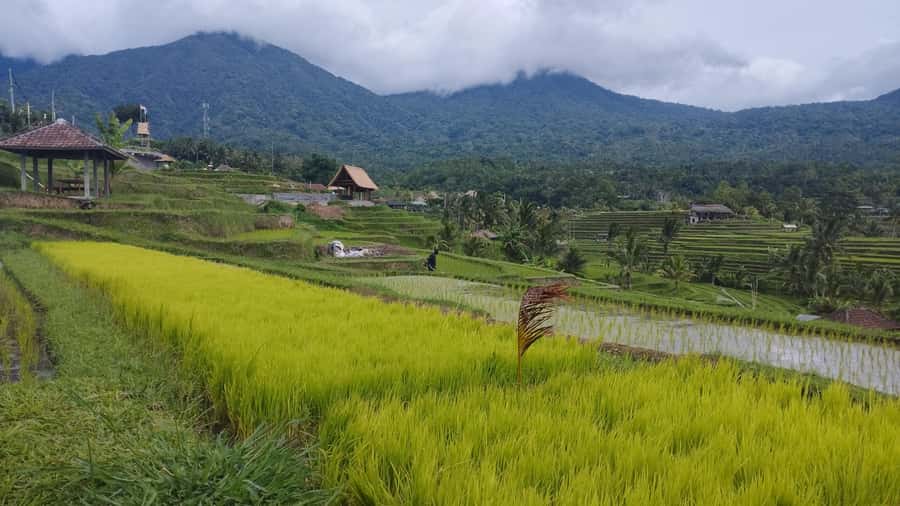
After your e-bike portion, you stop for lunch at a café in the middle of the rice terraces. This is one of those small details that changes the whole day. If lunch is out by the road, you eat, you leave, and the terraces become background. Here, the meal is surrounded by the environment you just explored.
Lunch timing is also strategic. Your next step is a 2.5-hour trek. So you’re not rushing through the rice terrace zone, and you’re not fully undercooked before the walking starts.
A detail worth flagging: one portion of the experience includes local warmth and family involvement, and in some versions the lunch includes live music. I can’t promise that every day will have the same entertainment, but if live music would matter to you, it’s worth checking with the operator when you book.
What to do: eat normally but don’t go heavy. You’ll walk afterward, including river terrain and natural paths. In other words, keep it delicious, not heavy.
The 2.5-hour trek after lunch: medium effort with a countryside goal
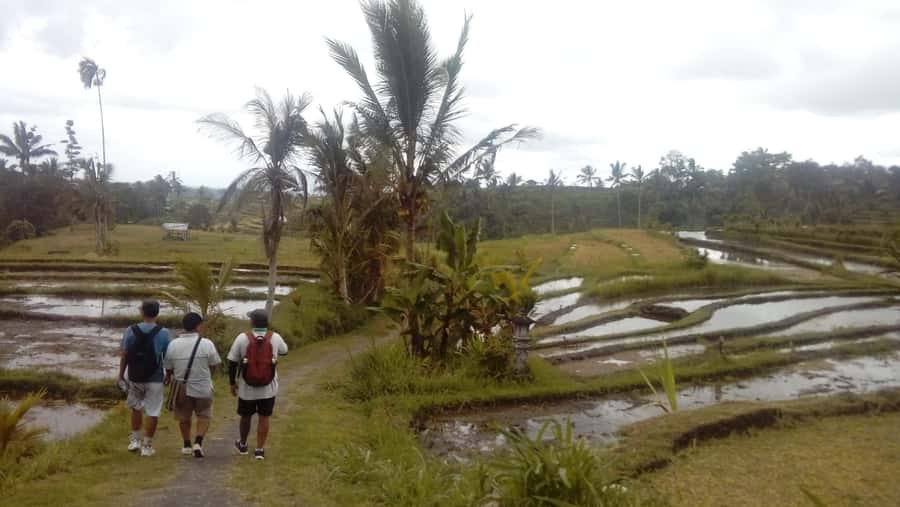
This is where the tour turns from scenic to memorable. The trek is scheduled for about 2.5 hours, and it’s designed to do more than walk you across the top edge of the terraces.
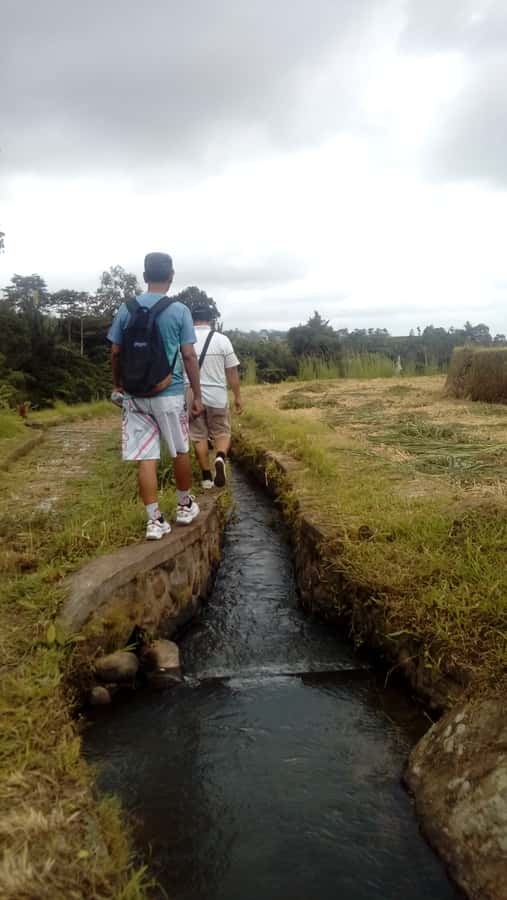
You’ll walk through Jatiluwih rice fields and along river areas. The goal is to see local farmers at work and take paths that few tourists typically reach. You’ll also go down toward the river and move through natural terrain, not just flat walkway routes.
Now, let’s talk about the “medium” difficulty label. The tour is rated medium, which usually means you can handle uneven ground and a sustained walk, but you’re not doing glacier-hike stuff. Still, you should plan for:
- uneven, potentially muddy sections after rain
- stretches where you’ll need steady footing
- a pace controlled by the guide and group comfort
So bring good trekking shoes, and treat them like part of your safety gear, not a style choice. Also pack a hat and sunscreen. You’ll be outside for a big chunk of the day, and that Bali sun can be sneaky.
One more practical point: the time you feel in the trek can vary depending on how often you stop for photos and explanations. Some people experience the walk as closer to an hour if the route stays tight; others feel every scheduled minute if the group moves slower. Plan mentally for a full walking block.
The end stop that makes it feel less touristy
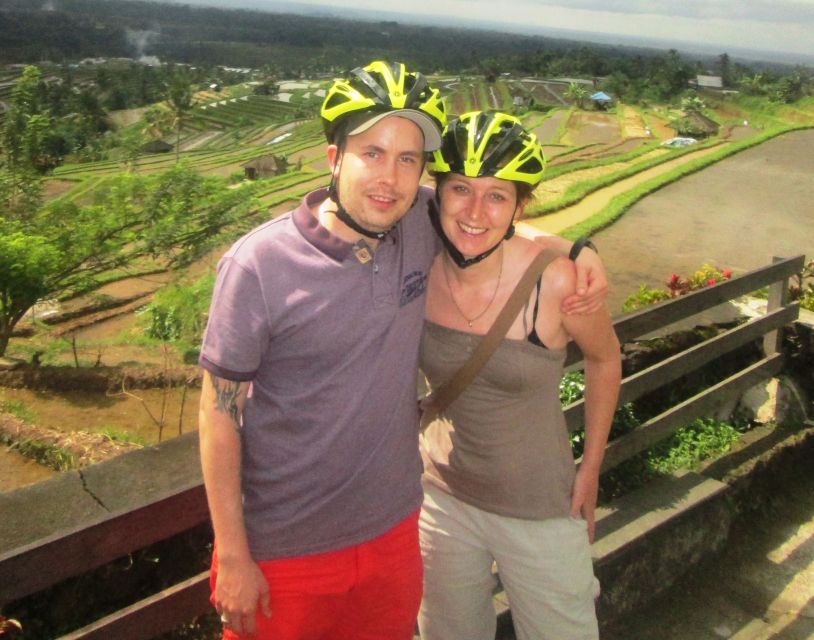
At the end of the trek, you finish at a Balinese compound in a rural village. This matters. It’s a chance to step out of the rice-field panorama and into the lived setting around it.
Here, the local guide and a farmer explain more about traditional life on the island. That conversation is the glue of the day. It connects the terraces you saw earlier to the daily rhythms that keep them working.
I like this structure because it prevents the common Bali pattern: see a thing, learn nothing, then leave. Instead, you end with a human-scale understanding of why the landscape exists.
Group size, timing, and pacing (so you don’t feel rushed)
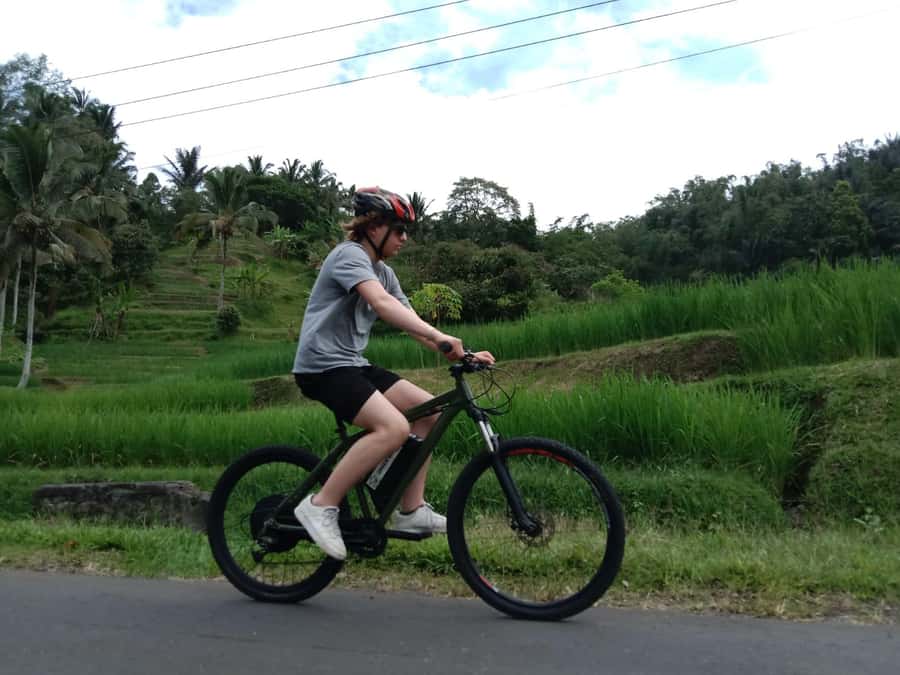
A big part of the value here is the small group size: limited to 6 participants. In a place like Jatiluwih, where paths can narrow and guides need to manage terrain, a small group keeps the experience calm.
Pacing-wise, this is a full day. You’re looking at 6 hours total for the activity window, plus hotel pick-up and drop-off. If you’re staying in a far-flung area, your actual pick-up time can shift, so build in buffer time at the start of the day.
Also, you’ll ride and trek, so think about your energy plan. The e-bike helps, but it’s still time outside on real roads and paths. Bring water habits into it. You’ll have water provided during the tour, but I still recommend drinking regularly so you don’t hit the trek underhydrated.
What $99 gets you (and why that can be fair value)
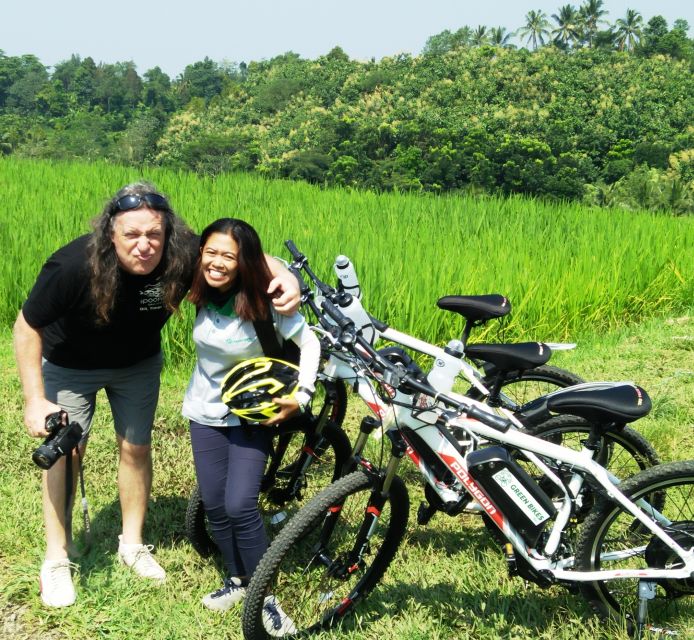
At $99 per person, the price feels reasonable because the day isn’t just “bike + entrance.” You get hotel pick-up and drop-off, a guide, the bike and helmet, entrance fees for Jatiluwih, insurance, water, and lunch.
Here’s the value breakdown in plain terms:
- You’re paying for a guided day that strings together the temple start, rice-terrace entry, lunch, and trekking. That saves you planning and transport headaches.
- The small group means the guide can actually manage the route and answer questions, instead of herding a crowd.
- Entrance fees and insurance are included, which reduces surprise costs.
- Lunch in the rice terraces keeps the day cohesive rather than turning it into a grab-and-go stop.
One caution: the operator provides live guides in English and Indonesian, but the strength of spoken English can vary by guide. If detailed English explanations are important to you, you might want to ask the operator what the guide situation looks like on your day.
Who should book this Bali e-bike and rice-terrace trek
This tour is a great fit if you want a balanced day outdoors:
- You can ride a bike comfortably and don’t mind uneven countryside paths.
- You’re happy with a medium walking effort after lunch.
- You want the mix of scenery plus real farming-life context.
- You prefer a small group day instead of a big bus-style schedule.
It’s also a strong option for people who want something beyond the usual Bali template. You’re not just seeing a waterfall or a temple and calling it a day. You’re moving through the farming heartland.
Who should skip it
Skip this one if any of these apply:
- You can’t ride a bike.
- You fall outside the size limits listed for the tour (over 264 lbs / 120 kg or under 4 ft 8 in / 145 cm).
- You dislike trekking or you’re not comfortable with a 2.5-hour walk on natural terrain.
Also, if you’re hoping for a purely e-bike experience with minimal walking, the day includes a real trek segment after lunch. You’ll be on your feet.
Should you book this tour?
I’d book it if you want the best shot at understanding Jatiluwih while still enjoying the effort-saver of an e-bike. The route is designed to give you the big UNESCO views, then earn that view with a walk through rice terraces and river terrain. Add the lunch in the fields and the rural compound ending, and you get more than a scenic highlight reel.
I wouldn’t book it if you’re chasing maximum cycling time, need very strong English guidance, or you’re not comfortable on both a bike and uneven walking paths. In those cases, you’d likely feel the day mismatch your expectations.
If you can ride confidently, bring trekking shoes, and show up ready for a medium day outside, this is a solid $99 way to see Bali’s farming landscape in a way that actually sticks with you.
FAQ
How long is the Bali Jatiluwih e-bike and trekking tour?
The duration is 6 hours, including pickup and drop-off.
Where does the e-bike part start?
The ride starts at the Hindu temple of Pura Luhur Batukaru on the southern slopes of Bali’s second tallest volcano.
Is hotel pickup included?
Yes. Pickup and drop-off are included, with service from areas such as Ubud, Sanur, Nusa Dua, Tanjung Benoa, Jimbaran, Uluwatu, Kuta/Seminyak, Canggu, Munduk, and Lovina (other areas are available on request).
What difficulty level is the tour?
It’s rated medium difficulty. You’ll be cycling and then doing a trek.
What’s included in the price?
Included items are hotel pickup and drop-off, a guide, bike and helmet, entrance fee for Jatiluwih, insurance, water during the tour, and lunch.
What should I bring?
Bring good trekking shoes, a hat, and sunscreen.
Is it suitable for everyone?
It’s not suitable for people who can’t ride a bike, people over 264 lbs (120 kg), or people under 4 ft 8 in (145 cm).