REVIEW · DJERBA
Desert tours and adventurous camel trekking through the Sahara
Book on Viator →Operated by Wüstentour - Tunesien - Douz - Kameltrekking · Bookable on Viator
Silence hits different in the Sahara. This 8-day trek feeds your curiosity with camel trekking, long dune walks, and evenings that trade screens for stars and Bedouin hospitality. You also get an easy geographic double-feature: the desert dunes near Douz plus Matmata cave dwellings later on.
I especially like the way the desert part is handled: Bedouin people are already there with the camels when you arrive, tents get set up, and the first night feels real fast. I also like that the guide team is flexible with food needs, including a note that they can think about vegetarian options.
One real consideration: the price is high, and at least some people felt it was poor value compared with other Sahara tour options. If you’re strict about price-performance, you’ll want to compare hard before booking.
In This Review
- Key things that make this Sahara trek worth your time
- Djerba start point: convenient, but don’t underestimate the travel days
- The dunes around Douz: your first taste of the Sahara rhythm
- Camel trekking and on-foot hikes: choosing your pace in the same day
- The desert stops named along the route: expect repeated camp-and-dune days
- Bedouin campfire evenings: the part that people remember
- Matmata cave dwellings: Berber life that makes the desert feel even deeper
- Douz souks and city center time: short local access, not a rushed stop
- Off-road transfer and a 20-minute ferry: why these logistics help the mood
- Price and value: is $1,110.18 per person justified?
- Who should book this Sahara trek (and who should think twice)
- If you’re deciding: my honest booking advice
- FAQ
- Where does the tour start?
- Is pickup included?
- Is this a private tour?
- About how long is the experience?
- Do I need decent fitness?
- Will I ride camels or hike on foot?
- Are vegetarian meals possible?
- Is the ferry part of the route?
Key things that make this Sahara trek worth your time
- Bedouin crew on-site with dromedaries so your desert days start without delays
- Sunset and sunrise timing in the dunes paired with evenings around the campfire
- Camel + on-foot hiking options so you can choose your effort level some days
- Guide Mounir (mentioned in feedback) and a team that aims to support different languages and needs
- Douz as the Gate of the Desert plus souks for a more local feel than just camp and dunes
- Troglodyte Houses in Matmata where you can visit a cave dwelling and ask questions
Djerba start point: convenient, but don’t underestimate the travel days
This tour starts in Djerba, Tunisia, with pickup offered, and it ends back at the meeting point. Having pickup matters because the logistics of getting yourself into the desert zone can be the annoying part of these trips. You’re also given a mobile ticket, which is one less thing to worry about.
The trade-off is simple: once you leave the island tempo, the schedule is built around moving between desert zones and then slowing down for camp life. That’s great if you want the trip to feel like an ongoing journey, not a single day of photos.
The dunes around Douz: your first taste of the Sahara rhythm
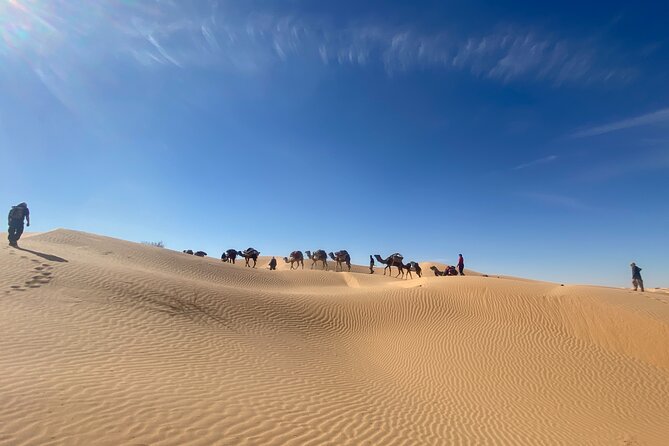
Early on, you’re connected to the Douz side of the Sahara story. Douz is often called the Gate of the Desert, and it sits near the Erg Oriental, a stretch of dunes that runs across countries in North Africa. If you like landscapes that look endless, this is exactly that kind of place—fine sand, long horizons, and light that changes fast.
In Douz, you’ll have a shared meal and you can buy a turban if you want that practical souvenir. Then you drive about 90 minutes directly into the desert, where the Bedouin team with dromedaries is waiting and camp gets prepared.
What I like about that structure is the speed to immersion. You don’t spend hours reading about the desert. You get there, you set up tents or find a spot outside under the stars, and the day closes with the kind of quiet that makes you pay attention.
Camel trekking and on-foot hikes: choosing your pace in the same day
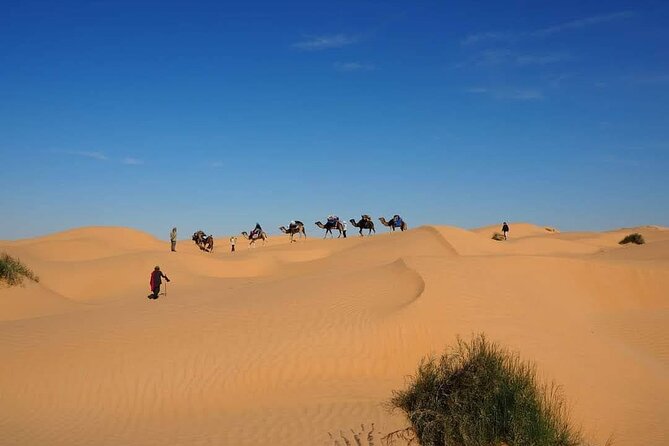
Across the trek, the big action is moving through the dunes either by camel or by foot. That choice sounds simple, but it changes how you experience the Sahara. On foot, you feel every change in sand texture and slope. On camel, you get longer stretches with less strain, while still being right inside the dunes.
Fitness needs are described as moderate, which is a useful flag. You don’t need to be a mountain athlete, but you should expect walking on sand and the reality of long, outdoor days. If you’re someone who hates uneven footing, bring that honesty into your planning.
The desert stops named along the route: expect repeated camp-and-dune days
Days 2 through 6 are built around several named desert areas (you’ll see names like El Hedan, La Ghuezza, Hashiat Erramal, Thuall Erbaier, and Bir Abdhull). The provided details don’t spell out each stop’s specific sights, but the overall pattern is clear: this is a multi-day trek with repeated time in dunes, then nights in camp.
So here’s what you can reliably expect between the named highlights:
- You’ll keep getting more comfortable with the desert rhythm (dune time, camp setup, evening meals).
- The route is not “one big hike then a hotel.” It’s built for staying outdoors.
- You’ll likely spend time both walking and using the camels, since that’s part of the core selling point.
When you’re planning, don’t anchor your expectations to one single viewpoint. The magic here is the accumulation: sunrise repeats, sky turns into a stronger version of itself each night, and the dunes keep shifting with wind.
Bedouin campfire evenings: the part that people remember
The best part of the trip is also the most human. Even when you’re exhausted, you’re still fed well and pulled into the camp’s social side—especially around the campfire with the Bedouin. The experience is described as authentic, with traditional home-cooked dishes and evenings that feel like a real pause, not a staged show.
One detail that matters: a review note says they can handle vegetarian requests. That doesn’t mean every meal will match a specific diet plan, but it does suggest the team takes food seriously enough to adjust.
And yes, the skies matter here. Feedback repeatedly points to that endless starry sky effect—big, sharp, and hard to describe until you’re under it. If you want a digital detox that actually works, this is the kind of setting where even thinking about your phone feels pointless.
Matmata cave dwellings: Berber life that makes the desert feel even deeper
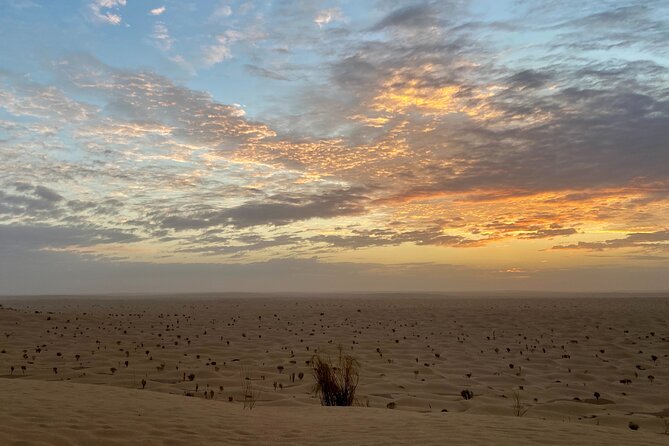
On the later part of the journey, you move toward Matmata and the famous Troglodyte Houses—Berber cave dwellings carved into the ground. This visit is listed as a chance to see how some people have retained their original way of living, and you can visit one house to get a feel for daily life.
I like this stop because it balances the desert’s silence with something grounded in routine. The desert makes you think about nature and survival. Matmata makes you think about how people adapt their homes, sleep, and community around the land.
You can also take photos and ask questions, which is a practical way to learn beyond watching. If you plan to bring a camera, do it politely. Keep questions simple and focused on daily life.
Douz souks and city center time: short local access, not a rushed stop
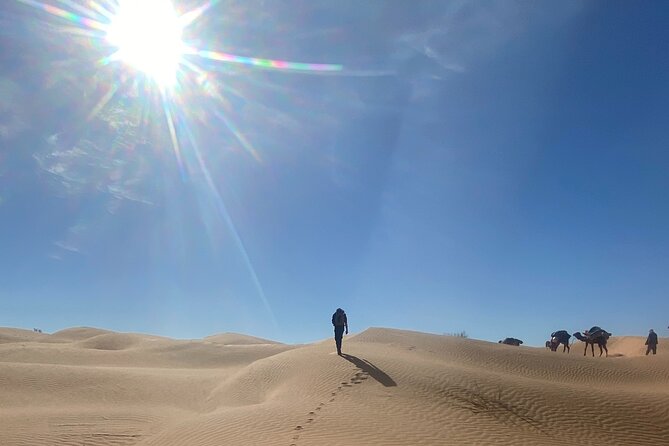
Douz isn’t just a checkpoint for camel life. You’ll also get time to see the city center and visit the traditional souks. That’s a nice contrast to camp life because it puts hands and faces back into the trip—spices, crafts, and everyday commerce.
It also helps you understand why Douz fits as the “Gate of the Desert.” It’s where trade and local wealth connect to the surrounding dunes. If you’re the kind of traveler who likes to buy a small, useful souvenir, this is where that instinct makes sense.
Off-road transfer and a 20-minute ferry: why these logistics help the mood
On the seventh day, you’re picked up in a 4×4 off-road vehicle around 9:00 a.m. from the Bedouin camp and continue toward Douz. That’s important because off-road travel sets expectations. You’ll feel the terrain instead of sliding over smooth roads that never touch reality.
Then comes the ferry crossing: about 20 minutes across the Mediterranean as you leave the mainland and head to Djerba. This isn’t just a transportation detail. The quick water segment acts like a reset button after several days of dunes and sand textures.
The last day includes breakfast and then transfer to the airport depending on flight time. That keeps the ending from turning into a half-day of waiting.
Price and value: is $1,110.18 per person justified?
This is the question you should ask early. At $1,110.18 per person for roughly 8 days, it’s not a budget desert trip. Some feedback calls out price and performance as disproportionate compared with other Sahara options, even when the crew works hard and the experience is still good.
So how do you judge value with your eyes open?
What supports the price:
- This isn’t only “a camel ride.” It’s described as an extended trek with camp life, dawn/dusk moments, and Bedouin evenings.
- Private format is stated: only your group participates, which can justify higher costs if you’re comparing against small-group or shared tours.
- You get a mix of desert time plus a Matmata visit, Douz souks, and the ferry—so it’s not purely dune-focused.
What challenges the price:
- If you’re comparing to shorter or cheaper desert options elsewhere, the cost can feel steep.
- The provided details don’t list a lot of “extra upgrades” (like specific camp comfort levels, private bathroom setups, or named premium inclusions). So you’re paying mainly for the core experience and the multi-day structure.
My practical advice: if you care about value, compare the duration, how many nights are actually spent in camp, and whether you’re getting guided camel time plus on-foot hiking. If those basics match what you want, this can be a memorable trip. If you’re mainly chasing a single highlight, you may feel the sticker shock.
Who should book this Sahara trek (and who should think twice)
This tour fits best if you want:
- A real desert week with repeated dunes, sunrise/sunset, and campfire evenings
- A guide-led setup with pickup, dromedary handling, and structured time
- A mix of nature and culture: desert silence plus Troglodyte Houses in Matmata
You might think twice if:
- You’re highly sensitive to price-performance and you’ve already seen cheaper Sahara options
- You hate moderate physical effort on sand and long outdoor days
- You’re traveling solo and want extra reassurance on how support is handled (one note questions suitability for women traveling alone, even while another couple still had a great experience). If that’s your situation, ask direct questions before you pay—how pairing, daily check-ins, and comfort are handled.
If you’re deciding: my honest booking advice
If your dream is to leave the noise behind and spend days trading screens for silence, wind over dunes, and Bedouin evenings, this trip has the right ingredients. The strongest signals are the camp atmosphere, the star-filled nights, and the combo of camel + walking that lets you experience the dunes your way.
But don’t ignore the money. If $1,110.18 per person feels high to you—and it’s likely to for many people—compare with other Sahara treks by night count and what’s actually included on the desert days. If you can verify you’re paying for the full multi-day camp experience you want, then booking makes sense.
If you want, tell me your travel month and whether you prefer more camel time or more walking, and I’ll help you sanity-check whether this plan matches your pace and expectations.
FAQ
Where does the tour start?
It starts in Djerba, Tunisia, and it ends back at the meeting point.
Is pickup included?
Yes. Pickup is offered.
Is this a private tour?
Yes. It’s listed as a private tour/activity, so only your group participates.
About how long is the experience?
It’s listed as 8 days (approx.).
Do I need decent fitness?
The tour notes a moderate physical fitness level requirement.
Will I ride camels or hike on foot?
The experience includes camel trekking and hikes through the dunes, either by foot or camel back.
Are vegetarian meals possible?
One review specifically notes they can think of vegetarian options.
Is the ferry part of the route?
Yes. There’s a 20-minute ferry across the Mediterranean as you leave the mainland and continue toward Djerba.