REVIEW · MUSCAT
Full Day Tour from Wakan to Jebel Akhdar Trekking
Book on Viator →Operated by WikiTours Adventures · Bookable on Viator
Wakan to Jebel Akhdar is a real climb. The full-day trek starts at Wakan Village (about 2,000 meters up) and works its way toward the Green Mountains, with terraced fields, farm paths, and big scenic breaks along the way. I especially love how the hike mixes workaday mountain scenery—terraces, waterways, and farms—with high-view photo stops at Wakan Horn and over Wadi Mistal.
I also like that this tour is built for small groups (max 12), with pickup from Muscat and enough team support to keep a hard hike from feeling chaotic. The one consideration: this is a trekking day with a steady ascent over long stretches, so you’ll want moderate fitness and weather awareness before you commit.
In This Review
- Key things I’d plan around before you go
- From Muscat to Wakan: the drive that shapes your hike
- Wakan Village at altitude: terraces, farms, and real mountain life
- The 9 km uphill through terraced fields and waterways
- Wakan Horn: rest, photos, and the Wadi Mistal viewpoint
- Continuing toward the Green Mountains and Jebel Akhdar’s food culture
- Price and value: what $850 per group really buys
- Logistics that matter on a day like this
- Who should book this trek (and who should think twice)
- Should you book the Wakan to Jebel Akhdar trekking day?
- FAQ
- How long is the Full Day Tour from Wakan to Jebel Akhdar?
- Where does the tour start and end?
- Is pickup from Muscat included?
- What fitness level do I need?
- How many people are in a group?
- What does the price include, and how much is it?
- What if the weather is bad or I need to cancel?
Key things I’d plan around before you go
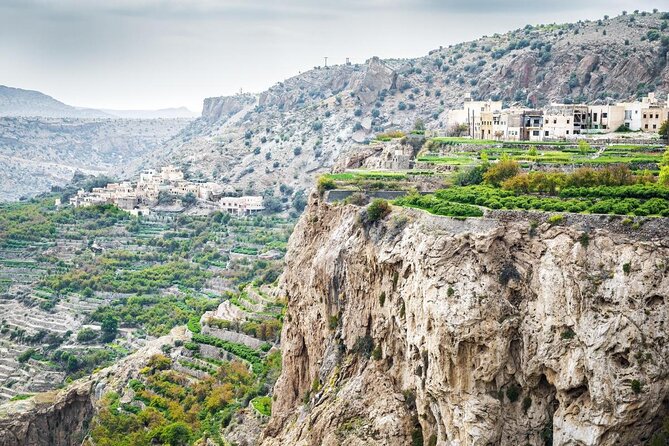
- Wakan Village (2,000m) to Green Mountain: you start high, climb through terraces, then keep moving toward Jebel Akhdar’s greener zones.
- About 9 km uphill through terraced fields: expect effort, not a casual walk with long flat stretches.
- Wadi Mistal photo-and-rest timing: there’s a planned stop near Wakan Horn to regroup and take in the view.
- Small-group feel (max 12): easier pace control and fewer bottlenecks on narrow mountain paths.
- Up to $850 per group for as many as 4: cost works best when you can share the group price.
From Muscat to Wakan: the drive that shapes your hike
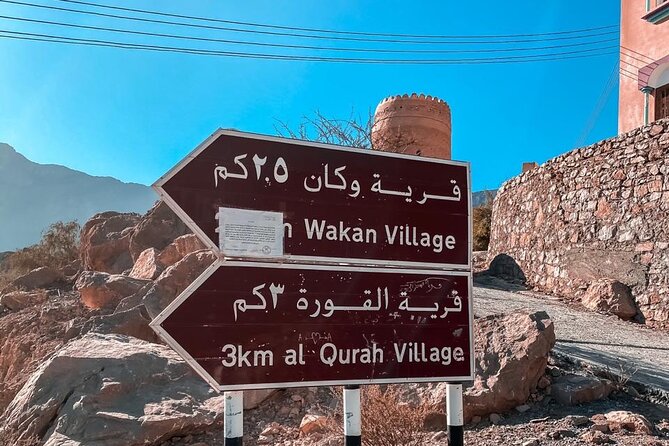
This tour is full-day, but it’s not all hiking time. You’ll be picked up in the Muscat area and spend roughly 2 hours driving to reach the Wakan starting point. That matters more than you’d think: by the time you step onto the trail, you’re ready to work your legs, not still mentally adjusting to a new altitude and terrain.
Your official start point is Al Sahwa Public Park in Seeb. The tour runs Monday through Thursday within the stated window, so plan your week around those days. Also, the activity ends back at the meeting point, which is convenient for not having to line up separate transport after a long trek.
The other thing to plan for is morning timing. Even if the hike itself feels like the headline, a trek like this lives and dies by the weather. The experience requires good weather, and that’s a good cue for you: bring layers and keep your expectations flexible if clouds or rain appear.
You can also read our reviews of more tours and experiences in Muscat.
Wakan Village at altitude: terraces, farms, and real mountain life
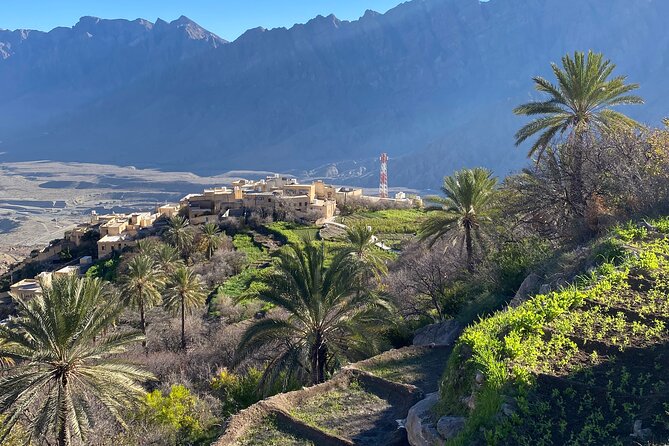
Wakan Village is the kind of place where the scenery has structure. You’re around 2,000 meters above sea level, sitting in the Western Hajar Mountains, and the village sits above Wadi Mistal. The view isn’t just scenic—it’s practical. Terraced gardens spread out on the slopes, showing you how people manage water and crops in steep terrain.
What makes this stop special is the way it gives you context. Before you start climbing, you get a sense of why this trail exists. You’re not walking past random rocks and trees; you’re moving through a lived-in agricultural area. The terraces overlook surrounding mountains, and the farms are part of how locals sustain life in a place where geography is the boss.
There’s also a nice human geography detail: Wakan is officially part of Wilayt Nakhal (South Batinah Governorate), even though it sits near the border with Al Dakhiliyah through the Hajar mountain range. That borderland position helps explain why the region feels like a crossroads of farming, water, and mountain routes.
One practical tip: this is a high-altitude start, so treat your first portion like a warm-up. Take the first stretches at a steady pace so you don’t gas out before the main climbing begins.
The 9 km uphill through terraced fields and waterways
Now for the work part. The trekking route climbs roughly 9 kilometers through terraced fields, farms, and waterways. This is exactly the sort of hiking where “moderate fitness” can mean different things depending on your experience. If you’re used to flat walking, the uphill grade will feel long. If you hike often, you’ll probably appreciate that the trail follows terrain that farmers shaped—so it’s purposeful, not random.
Expect the trail to feel like a sequence:
- Start climbing through terraces where the ground is managed in steps.
- Move along farm sections where the scenery keeps changing.
- Keep an eye on waterways and paths that reveal where water runs and why the terraces survive.
This is where the trek becomes more than a view hunt. You’re seeing mountain agriculture in motion. Even without a long guided lecture, you can read the landscape: terraces mean water control, farms mean careful survival planning, and the waterways mean people have built routes for both crops and travel.
The big drawback here is simple: it’s a long climb. You’ll want sturdy footwear and a pace you can maintain. Bring a water plan, take small breaks before you feel wrecked, and don’t try to sprint your way up just because the views look close.
Wakan Horn: rest, photos, and the Wadi Mistal viewpoint
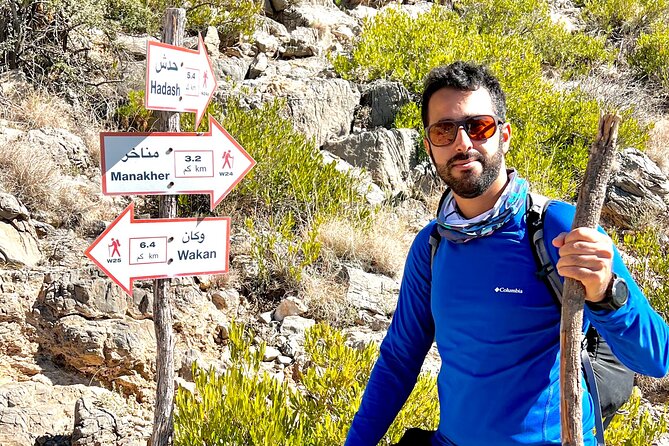
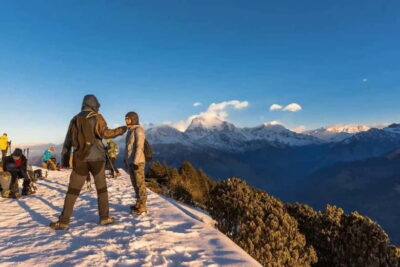
At the top section, you’ll reach Wakan Horn and pause for rest and pictures. This stop matters because it breaks up the day psychologically. The trek transitions from steady effort into a moment of reward, where you can look out over Wadi Mistal and re-center.
I like these built-in breaks because they prevent the classic mistake: pushing too hard early, then arriving at the view stop too tired to enjoy it. If you’re traveling with someone who wants photos and someone who wants pace, a planned stop like this is a fair compromise.
Also, this is the point in the day where your perspective changes. Early on, you see terraces and farms close up. From higher ground, those terraces become patterns—human engineering carved into steep slopes. Even if you’re not a serious photographer, you’ll feel the difference in scale.
After the rest, you continue onward toward the Green Mountains, so treat the Wakan Horn stop as a reset, not an end.
Continuing toward the Green Mountains and Jebel Akhdar’s food culture
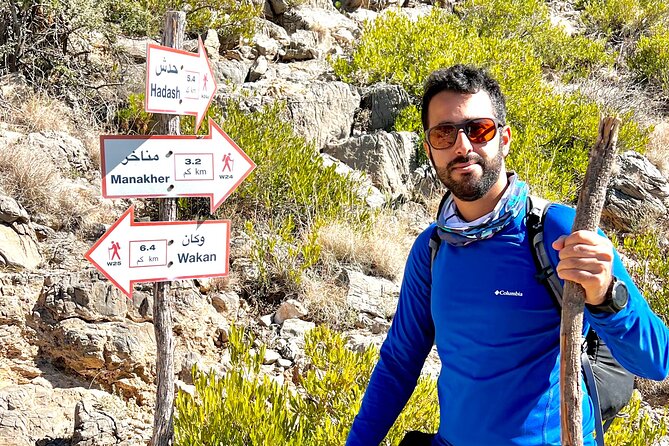
Once you move beyond the Horn viewpoint, the trail keeps going toward the Green Mountains, where you connect the Wakan story to the Jebel Akhdar story. This is the part that gives the day extra meaning.
Jebel Akhdar isn’t famous just for views. It’s known for agricultural diversity—especially pomegranate and rose water. The region is reputed for producing what’s described as the finest pomegranate for its delicious taste, and for locals known for making rose water. Even if you don’t spend hours in a market, that agricultural reputation gives you a lens as you hike through farm country. You’re not just moving through scenery; you’re moving through a place with crops that shape daily life and local identity.
In practical terms, the transition from terraced climbing to the Green Mountains section is where you may feel tired. But it’s also where the day can flip from effort-only to effort-with-purpose. You’ll likely find yourself noticing how the terrain and farming practices seem to change as the area shifts.
Price and value: what $850 per group really buys
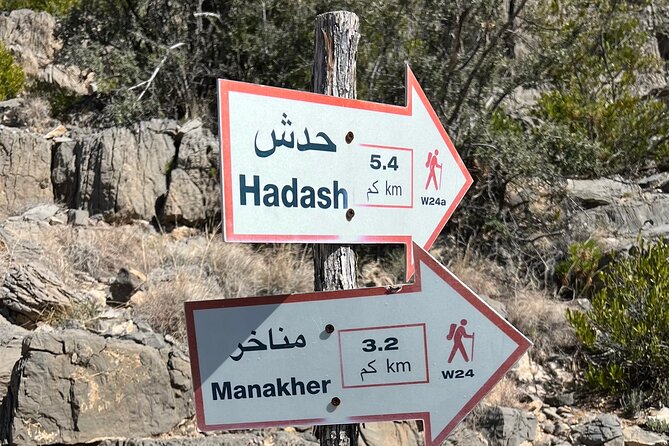
The tour is priced at $850 per group (up to 4 people). That’s not cheap on a per-person basis, but it can be strong value if you can share the group price. If you split four ways, you’re looking at about $212.50 per person for a full-day outing that includes pickup, a guided trekking route across high terrain, and admission ticket free for the activity segments.
Here’s the key value question: are you getting more than a “transport plus walk” day? The way this experience is set up—small group size up to 12, a route with planned viewpoint rest, and support that helps keep a tougher hike manageable—suggests you’re paying for guidance and a smoother logistics layer.
If you’re traveling solo, you may feel the cost more strongly since you can’t spread it across a bigger group. If you’re a duo or small family, it usually lands more comfortably.
One more angle: the reviews highlight that the team helps make a harder-level hike feel manageable. That kind of support is hard to quantify until you’re on the trail. When you’re spending a full day climbing, the difference between a rough, confusing day and a guided, steady day can be huge.
Logistics that matter on a day like this
This is a 10-hour day (approx.), and the driving is about 2 hours from Muscat to the trailhead, plus about 2 hours back. So even if you’re very fit, you’re committing to a long calendar block.
A few details help you plan:
- Mobile ticket means you don’t have to juggle paper, which is great in the field.
- Pickup offered removes one of the biggest headaches of rural trail access.
- Maximum 12 travelers reduces congestion on narrower parts of the trail.
- Moderate physical fitness is required, and the route includes significant uphill work.
Because the tour depends on weather, I treat this as a “weather-dependent hiking day.” If it’s rainy or stormy, expect changes. The experience is explicit that it needs good weather, and if it’s canceled for poor weather, you should be offered a different date or a full refund.
Who should book this trek (and who should think twice)
This tour is best for people who like hiking that lasts all day and don’t mind a steady climb. If you enjoy agriculture routes, terrace scenery, and viewpoint stops, you’ll likely have a great time here.
You might especially like it if:
- You’re comfortable with uphill hiking for most of the morning.
- You want a more local-feeling trail than a viewpoint-only outing.
- You like small-group travel with a team that can help you stay on track.
You might think twice if you:
- Hate long uphill efforts or get discouraged by high-altitude starts.
- Are looking for something light and flexible. This isn’t positioned as a gentle stroll.
The good news is that the reviews consistently praise the team for being helpful and making the journey easier. That doesn’t change the physical demands, but it can improve how you experience them.
Should you book the Wakan to Jebel Akhdar trekking day?
If you want a day that’s more than postcard sightseeing, I’d book it. The combination of Wakan Village at 2,000m, a substantial climb through terraced fields and farm waterways, and the viewpoint reset at Wakan Horn makes this a memorable trek for the right kind of traveler.
I’d only hold off if your fitness level is low for uphill hiking or if you know your schedule won’t tolerate weather shifts. Since the tour depends on conditions, it helps if your travel plan has some slack.
Overall, this is a strong fit for travelers who enjoy real terrain, clear route structure, and a guided experience that keeps things smooth even when the trail asks for effort.
FAQ
How long is the Full Day Tour from Wakan to Jebel Akhdar?
It runs for about 10 hours (approx.), including driving time from Muscat and back.
Where does the tour start and end?
The tour starts at Al Sahwa Public Park (H6RX+79R, Seeb, Oman) and ends back at the same meeting point.
Is pickup from Muscat included?
Yes, pickup is offered.
What fitness level do I need?
You should have a moderate physical fitness level, since the trek includes a steady climb.
How many people are in a group?
The tour has a maximum of 12 travelers.
What does the price include, and how much is it?
The price is $850 per group (up to 4), and admission ticket costs are listed as free for the activity segments.
What if the weather is bad or I need to cancel?
The experience requires good weather. If it’s canceled due to poor weather, you’ll be offered a different date or a full refund. You can cancel up to 24 hours in advance for a full refund.