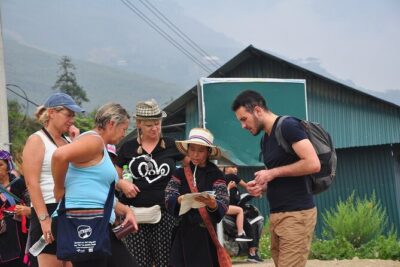
REVIEW · GENOA
Genoa: Columbus Trail Urban Trekking with Wine & Local Tastings
Book on GetYourGuide →Operated by BioTigullio5Terre - BioTigullio5Terre · Bookable on GetYourGuide
Christopher Columbus meets street-level Genoa.
This 3-hour urban trekking tour turns the city’s historic lanes into a slow, story-driven walk, with a final stop for Ligurian wine and local tastings at BioTigullio5Terre. I like that you get both big-city landmarks and the smaller, off-the-main-streets details, and I also love the food angle: pesto, focaccia, cheeses, and two specific local wine styles, built into the experience. One thing to consider: this is real walking on cobblestones with a climb to Spianata di Castelletto, so wear grippy shoes and plan for some uphill.
The route is a circular loop, so you’re not retracing your steps like a commuter. It’s guided by local operators from Tigullio Trekking and BioTigullio5Terre, and in recent groups the tour has been led by people like Gaia and Barbara, known for being energetic and city-focused. The tasting happens at the end, which is great for momentum—but if you’re sensitive to eating later in the day, you may want to time your Genoa plans around the finish.
In This Review
- Key highlights worth planning around
- The Columbus Trail as a Genoa reality check
- Before you go: shoes, slopes, and how 3 hours really feels
- Stop-by-stop: the Genoa loop that links Columbus to viewpoints
- 1) Via di Ravecca and the BioTigullio5Terre welcome
- 2) Piazza Sarzano and the sacred-urban texture
- 3) The Old Port and Palazzo San Giorgio
- 4) Past the Genoa Aquarium area and toward Via del Campo
- 5) Piazza Don Gallo and the Mazzini connection
- 6) The climb to Castelletto and the Spianata di Castelletto payoff
- 7) Descending by Castelletto Elevator
- 8) Back through Piazza Fontane Marose and UNESCO Via Garibaldi
- 9) Via XXV Aprile and Piazza De Ferrari
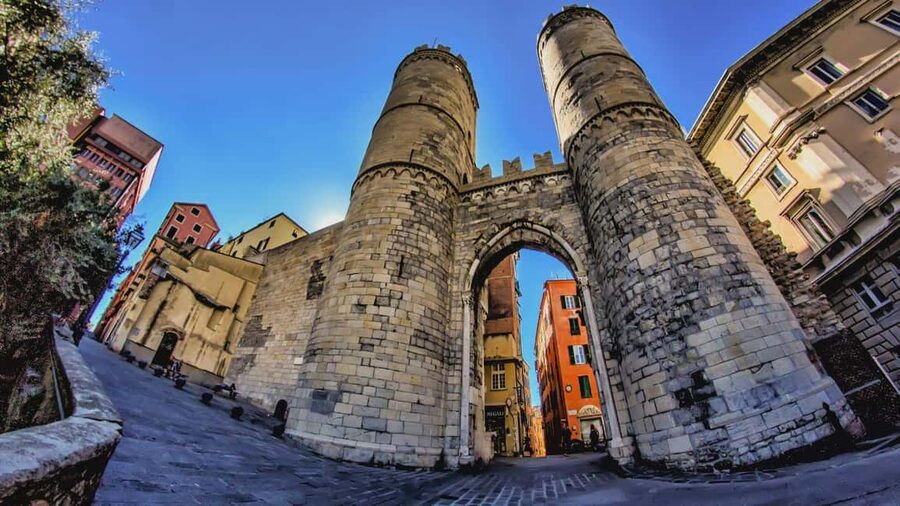
- 10) The finish around Porta Soprana
- The tasting at BioTigullio5Terre: pesto, wine, and practical local flavors
- Pricing and value: what $77 buys in the real world
- Who should book this Genoa trek (and who should skip it)
- Should you book the Genoa Columbus Trail with wine?
- FAQ
- How long is the Genoa Columbus Trail tour?
- How big is the group?
- What language is the tour guide?
- What’s included in the tasting?
- Where does the tour meet?
- Is the tour suitable for reduced mobility or young kids?
Key highlights worth planning around
- Small group (max 6) keeps the pacing relaxed and the conversations local
- Circular route takes you from ancient alleys to the Castelletto viewpoint
- Castelletto Elevator adds a classic Genoese twist to the descent
- UNESCO-listed Via Garibaldi appears in the second half, once you’ve worked up some steps
- Included tastings + two wine glasses means you’re not guessing what’s worth trying
- Official stamp and trail legend make it feel like a real “urban trek,” not just a walk
The Columbus Trail as a Genoa reality check
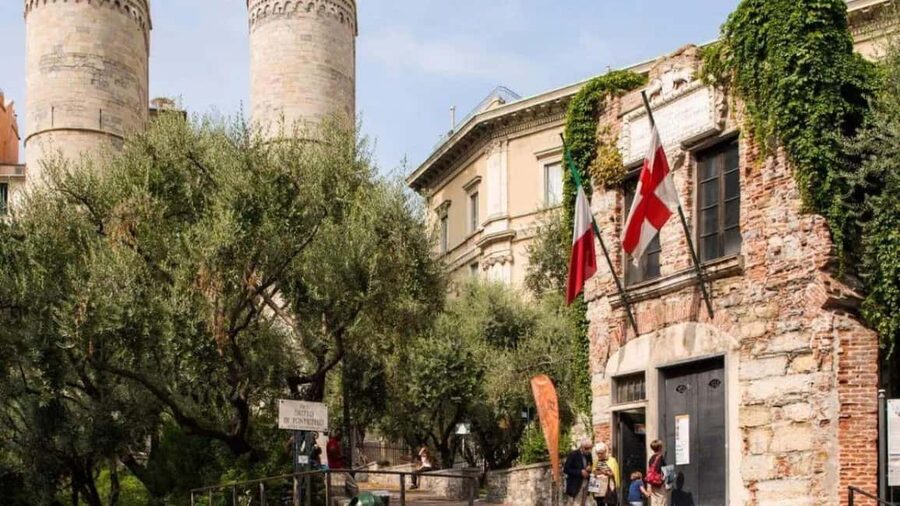
Genoa can feel like a city you either speed through… or you earn. This Columbus Trail does the second option well. You start near Porta Soprana, then follow a route that moves between famous names (Columbus, Mazzini, Garibaldi) and the physical texture of Genoa: narrow lanes, small squares, old churches, and walls with votive shrines.
What makes this experience click is the pacing. You’re not hiking in open countryside; you’re walking an active city. The tour is about 4 km, but the “distance” doesn’t tell the whole story because the route changes floors: flat-ish stretches, cobblestones, and at least one short but meaningful climb to Spianata di Castelletto. It’s a city-walker’s plan, not a museum checklist.
And yes, the food matters. The final stop at BioTigullio5Terre isn’t just a plate at the end. It’s your reward for choosing the slower way through Genoa—plus you get two glasses of regional wine types and Ligurian staples you’ll actually recognize.
Before you go: shoes, slopes, and how 3 hours really feels
The tour lasts about 3 hours, and that time is built for walking at an urban pace. You’ll be on cobblestones and you’ll handle some slopes. If you’ve ever tried to do “pretty alley photos” in sneakers with smooth soles, you know what I mean: it’s not the moment to wear anything new or slippery.
A few practical points that help your day go smoothly:
- Wear comfortable shoes with grip.
- Arrive about 10 minutes early so you can start together.
- The tour runs in light rain (bring an umbrella or raincoat).
- It’s not suitable for reduced mobility. The route involves uneven surfaces and slopes.
- It’s not designed for kids under 16, based on the stated age limits.
This is one of those tours where “light rain” can turn into “cobblestones get extra slick.” So plan like a local: practical layers, good footwear, and a small umbrella you won’t hate carrying.
Stop-by-stop: the Genoa loop that links Columbus to viewpoints
The tour has a start point near Casa di Cristoforo Colombo (also near Porta Soprana). You’ll also meet at Via di Ravecca 51/r at BioTigullio5Terre, where you get the legend of the walk and an official stamp.
From there, you move through the historic center like you’re being guided by someone who actually uses the city day to day.
1) Via di Ravecca and the BioTigullio5Terre welcome
Right away, you’re in the right mindset: this isn’t a “meet at the big monument and scatter” situation. You start with the trail legend and the stamp, which makes the experience feel official and intentional. It also sets expectations for the rest of the walk—history plus flavors, tied to specific places.
2) Piazza Sarzano and the sacred-urban texture
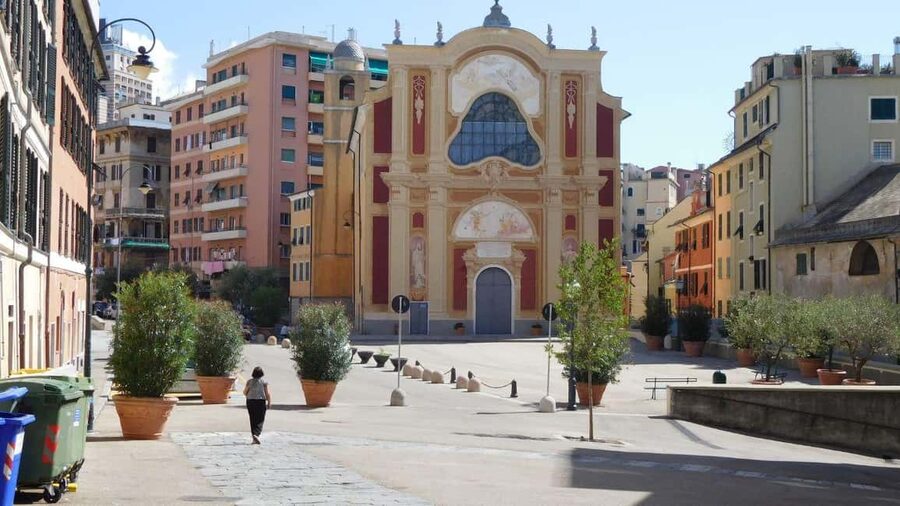
You’ll pass Piazza Sarzano and then into spaces that show Genoa’s layered identity. Expect religious stops like the Oratory of Sant’Antonio Abate, plus stops along Via Mura delle Grazie and churches such as San Giacomo della Marina and San Cosimo. You’ll also see votive shrines built into walls—tiny details that don’t show up on generic “top sights” lists, but they’re very Genoa.
This part is valuable because it trains your eyes. After a while, you start noticing the city’s cues: how neighborhoods mark identity, how architecture holds memory, and how Genoa’s history is literally built into everyday corners.
3) The Old Port and Palazzo San Giorgio
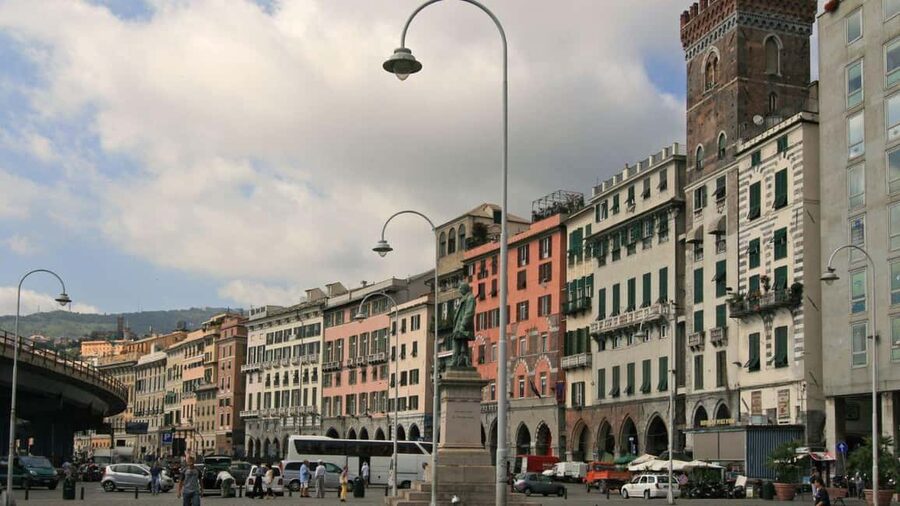
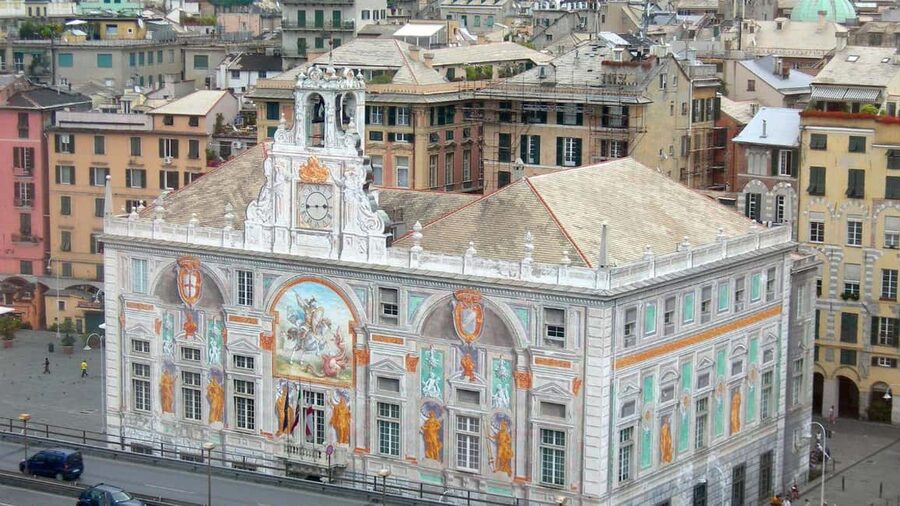
As you cross the heart of the Old Port, the scene shifts. The scale changes. You’re watching the city’s trading past in real space, and then you hit the Palazzo San Giorgio, a major landmark tied to Genoa’s power and maritime role.
There’s a break built around this segment, which helps because this is where walking can start feeling like “too much on foot” if you power through with no pauses. Here, the tour keeps you moving without rushing you.
4) Past the Genoa Aquarium area and toward Via del Campo
You’ll admire the majestic Palazzo San Giorgio, and the route also passes by the entrance to the Genoa Aquarium. Then you head along Via del Campo, a street made famous by Fabrizio De André. Even if you only know a few De André songs, the street name hits differently once you’re physically there.
This is a smart inclusion because it gives Genoa a modern artistic heartbeat, not just a museum vibe.
5) Piazza Don Gallo and the Mazzini connection
You’ll reach Piazza Don Gallo and the birthplace of Giuseppe Mazzini. This stop matters because Mazzini isn’t only a historical name—you’ll feel how the walk connects political and cultural identity to specific city corners.
6) The climb to Castelletto and the Spianata di Castelletto payoff
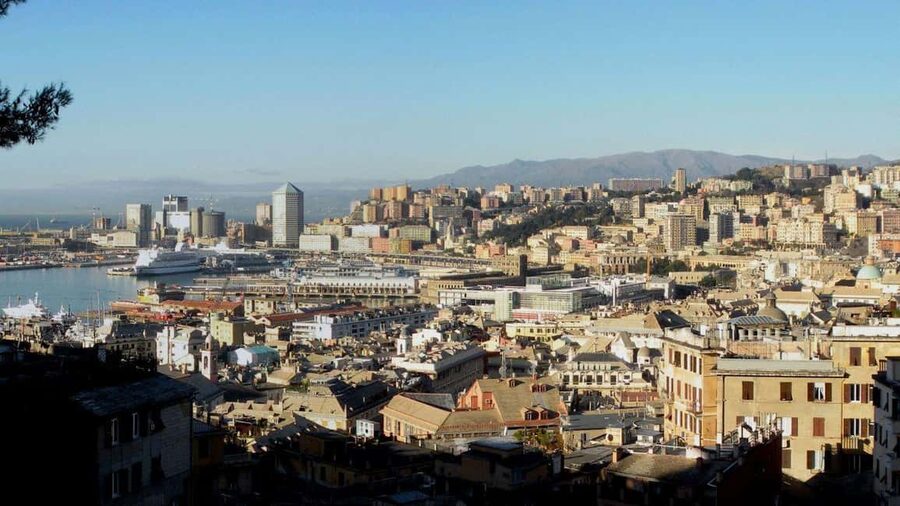
Then comes the short but intense climb toward Spianata di Castelletto. It’s the part where your calves may file a formal complaint, but it’s also where the city rewards you with a panorama.
From the viewpoint, your gaze can stretch from the sea to the hinterland. That’s the moment the whole loop makes sense: Genoa isn’t flat, and it isn’t one view. It’s stacked layers. The climb is the price of admission for seeing that.
7) Descending by Castelletto Elevator
Instead of doing the return walk the hard way, the route includes a descent by the Castelletto Elevator, mentioned by poet Giorgio Caproni. This adds variety and a touch of local character. It’s a small detail, but it breaks the rhythm so you’re not doing the same effort twice.
8) Back through Piazza Fontane Marose and UNESCO Via Garibaldi
In the lower part of the city, you cross Piazza Fontane Marose, then head along Via Garibaldi, which is recognized as a UNESCO World Heritage Site for its historic buildings.
You’re at a calmer stage now—more “admire and breathe” than “climb and focus.” If you’ve been taking photos during the earlier segments, you’ll appreciate this stretch because the architecture is more “frameable” when you’re not also fighting a slope.
9) Via XXV Aprile and Piazza De Ferrari
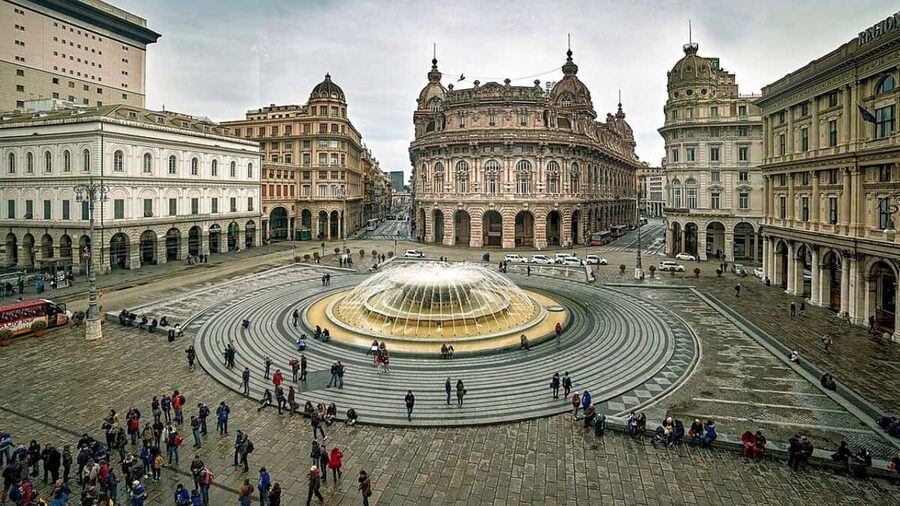
Next you climb Via XXV Aprile to Piazza De Ferrari, which is the heart of modern Genoa. After older alleys and port-adjacent streets, this gives you a clean contrast: old meets city life.
10) The finish around Porta Soprana
The walk ends with a drop-off at Porta Soprana, passing by Palazzo Ducale, Carlo Felice Theater, and the Palazzo della Borsa. It’s a satisfying close because you leave the city loop feeling like you’ve seen both eras—without needing separate tickets or a second day.
If you like planning ahead, there’s also a route map on Google Maps online that helps you picture the loop before you start.
The tasting at BioTigullio5Terre: pesto, wine, and practical local flavors
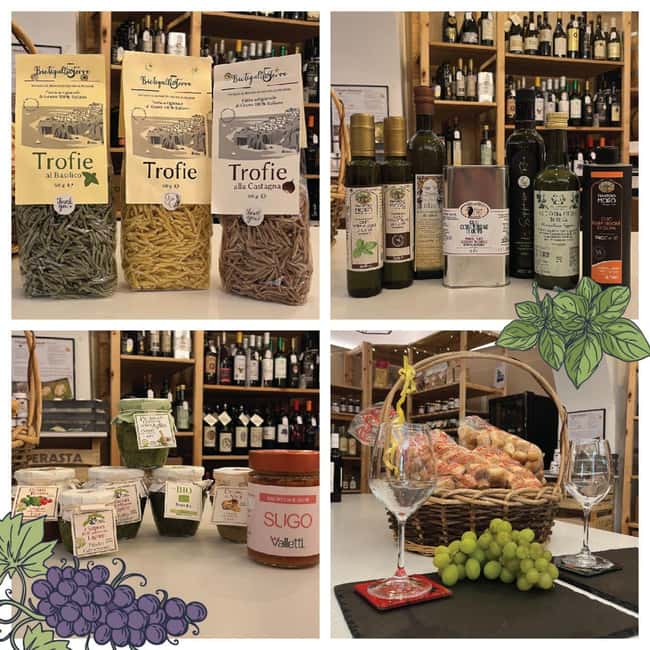
The tour culminates at BioTigullio5Terre (Via di Ravecca 51/r) for the included tasting. This is where the “Columbus Trail with wine & local tastings” stops being a marketing line and turns into a specific food program.
Here’s what you can expect as part of the included tasting:
- Genoese focaccia
- Pesto made in a mortar
- Artisanal cold cuts and cheeses
- Two glasses of Ligurian wine:
- one white (Vermentino/Pigato)
- one red (Ciliegiolo/Rossese)
Why this works for value: you get a real sampling set in about 20 minutes, and it’s paired to what you just walked through. The flavors feel tied to place, not like you got a generic “snack stop.”
One more smart detail: the operator also offers discounts at selected businesses along Via di Ravecca, so the tour can turn into an easy next step—if you want to buy something you tasted.
Pricing and value: what $77 buys in the real world
At $77 per person for about 3 hours, this isn’t the cheapest walking tour in Genoa. But it’s also not a “charge-by-the-hour” setup. Here’s where the price earns its keep:
- Small group (limited to 6) means less waiting, more attention, and smoother pacing on cobblestones.
- You’re getting a structured walking experience plus a trail legend and official stamp.
- The tasting isn’t vague: it includes specific Ligurian items and two glasses of wine (white plus red).
- The route includes key areas (old port landmarks, UNESCO Via Garibaldi, the Castelletto viewpoint) that would be harder to connect into a coherent story on your own.
If you’re the kind of traveler who values time—meaning you don’t want to spend half a day figuring out what’s worth seeing—this price is easier to justify. You’re paying for guidance and the built-in food finish.
Who should book this Genoa trek (and who should skip it)
This tour is a strong match if you:
- Want a guided walk in Genoa’s historic center that mixes art, landmarks, and local food
- Like viewpoint rewards and don’t mind a climb to Spianata di Castelletto
- Prefer small groups over large, slow-moving clusters
- Want wine and Ligurian staples without piecing together a tasting plan yourself
You might want to skip it if:
- You have trouble with uneven cobblestones or steep/sloped sections
- You want a mostly flat stroll with minimal effort
- You’re traveling with younger kids, since it’s not suitable for children under 16
The best part is that it aims to show you Genoa away from mass-tourism behavior. You’ll be moving through real streets and real neighborhoods, guided by people who treat the city like a living place—not a theme park.
Should you book the Genoa Columbus Trail with wine?
I’d book this if your Genoa wish list includes three things: a guided storyline, a real tasting payoff, and a route that makes you look up as well as around.
You’ll likely enjoy it most if you like learning while walking—especially if Genoa has been on your list as a “sounds interesting” city that you want to finally understand at street level. The small group size, the circular route, and the specific wine + pesto finish make it feel like you bought a proper experience, not just a stroll.
If you’re aiming for the safest choice in Genoa, this is it: you’ll get history and city texture, and you’ll end with something you can taste.
FAQ
How long is the Genoa Columbus Trail tour?
It lasts about 3 hours.
How big is the group?
The group is small, limited to 6 participants.
What language is the tour guide?
The live guide speaks Italian and English.
What’s included in the tasting?
You get Genoese focaccia, pesto made in a mortar, artisanal cold cuts and cheeses, plus two glasses of Ligurian wine: one white (Vermentino/Pigato) and one red (Ciliegiolo/Rossese).
Where does the tour meet?
It meets at Columbus’ House near Porta Soprana or at Via di Ravecca 51/r (BioTigullio5Terre).
Is the tour suitable for reduced mobility or young kids?
No. The route is not suitable for people with reduced mobility. It is also not suitable for children under 16 years.