REVIEW · LUANG NAMTHA
Hunter Trails, 3 days difficult trekking with Camping & Homestay
Book on Viator →Operated by The Hiker · Bookable on Viator
The jungle has a way of slowing you down. This 3-day Hunter Trails hike in Laos blends primary-forest walks, camping in the wild, and a calm village homestay, with guides who know where to find plants, tracks, and stories. I love the back-to-basics feel of walking old hunter paths under huge trees, and I also really like how the food is tied to place through market meals plus foraged finds. The main drawback is simple: this is difficult trekking, so you’ll want real stamina and good footwear.
One more thing I like: the group stays small, with a maximum of 8 people, which makes it easier to keep a steady pace and spot wildlife without everyone getting lost in a crowd. If you’re chasing a gentle nature walk, this likely isn’t your match.
In This Review
- Key points before you go
- Hunter Trails on paper vs. what it feels like in real life
- Getting oriented: start time, meeting point, and where you begin walking
- Day 1: Ban Prang rice fields, steep hills, and that first move into the wild
- Day 2: early start, fresh wash, wild tea, and the long forest hike
- Day 3: village rhythm, bamboo weaving, and how the homestay closes the loop
- Food in the jungle: foraged finds, open fires, and real satisfaction
- Guides and culture: names you might meet and what they do well
- Toughness level: when difficult trekking is actually difficult
- What to pack: what’s not included and what you’ll thank yourself for
- Price and value: is $175 fair for what you get?
- Should you book the Hunter Trails trek?
- FAQ
- FAQ
- How long is the Hunter Trails trek?
- What time does the trek start, and where do I meet?
- Where does the trek actually begin?
- Is this camping, a homestay, or both?
- What meals are included?
- How many people are in the group?
- What should I bring since it’s not included?
- Is the trek suitable for everyone?
- Can I cancel for a full refund?
Key points before you go
- Primary forest hunter trails with big-tree vibes, old paths, and lots of walking time
- Camping in the jungle plus a tranquil village homestay for a different kind of night
- Food focused on nature: lunches, dinners, breakfasts included, including foraged items cooked over open fire
- Small group size (max 8) so the guide can adapt the pace and pay attention to details
- Hilltop views and wildlife spotting built into the day’s route and timing
- Rain season changes the challenge: it can feel much harder than the drier months
Hunter Trails on paper vs. what it feels like in real life
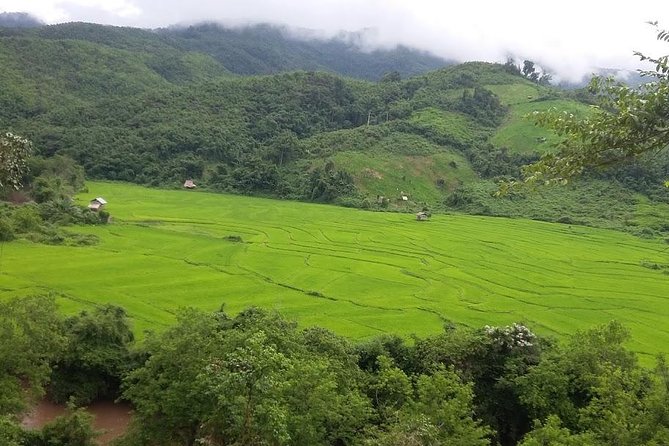
This trek is built around the idea that the best parts of northern Laos show up when you leave the main roads and follow older routes. You’re walking what feels like working trails: up-and-down ground, sections through rice fields and village edges, then deeper into the forest where the air cools and the pace becomes more about watching than rushing.
I like that the experience is split between two worlds. You get the wild night of jungle camping, then you trade that for village life during the homestay portion. It keeps the trip from blending into one long outdoor blur.
Still, you should not sugarcoat the difficulty. The trek is described as difficult, and at least one hiker reported around 6–7 hours of hiking per day including breaks. That means you’ll work. You don’t need to be an ultra-hiker, but you do need to be comfortable sweating, climbing, and staying steady on uneven ground.
You can also read our reviews of more tours and experiences in Luang Namtha.
Getting oriented: start time, meeting point, and where you begin walking
You meet at The Hiker Travel Agency Laos, 17A Main Street, Phonexay Village, Luang Namtha. The start time is 8:30 am. From there, the trek itself begins at Ban Prang village, about 35 km south of town.
Why this matters: a morning start helps you get into the best weather window for hiking and it gives the guide enough time to manage a tough route without pushing everyone beyond their limits. Also, arriving early gives you a buffer if you need to organize your gear.
The trip ends back at the same meeting point, so you’re not dealing with complex transport at the end of a long day.
Day 1: Ban Prang rice fields, steep hills, and that first move into the wild
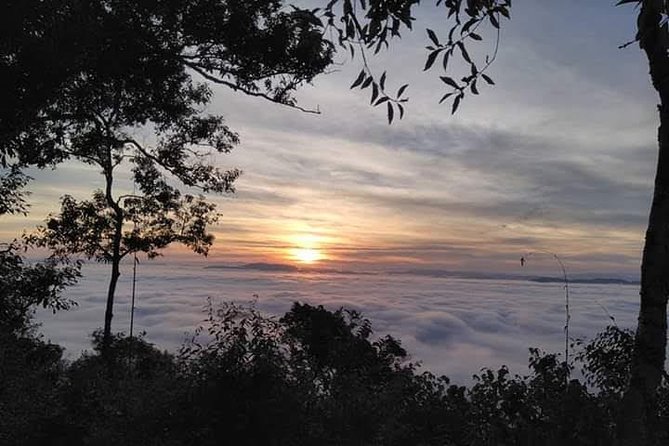
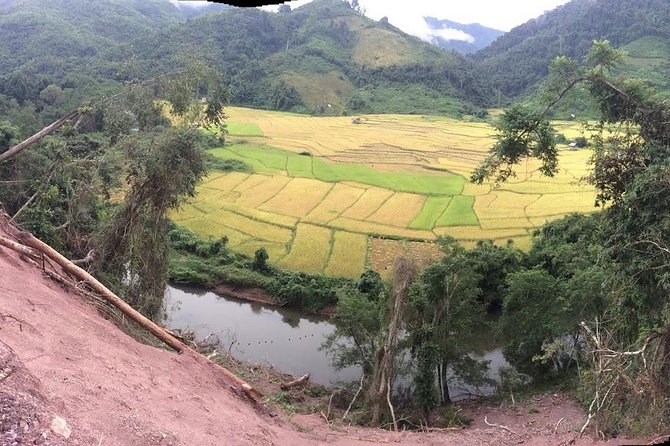
Day 1 starts with the walk out of Ban Prang village. Expect the early rhythm to be a mix of village life and field work as you head away from town: rice fields nearby, villagers working in agriculture, and some steep climbing.
That first leg is important because it sets the tone. You’ll feel the effort early, but you’ll also get the reward fast: changing scenery and a sense that you’re not just walking through jungle—you’re moving through a living rural area before the forest takes over.
Then the route continues deeper toward the primary forest, where you camp in the middle of the jungle. Camping here is part of the point. One review mentioned a dedicated jungle camp with basic but adequate huts, which is a big relief if you like hiking but don’t want to build your own shelter.
Night 1 is where the trip becomes real. Once you’re settled, you can expect campfire time and the feeling of being far from the road.
Day 2: early start, fresh wash, wild tea, and the long forest hike
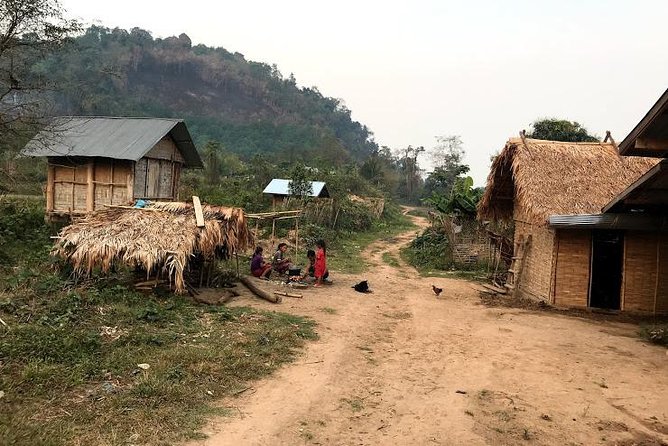
Day 2 begins with an early wake-up. Villagers are up first, so the trek keeps that rhythm. You’ll have a fresh wash and then breakfast is served with something warm—either coffee or wild tea, depending on what the guide is making that day.
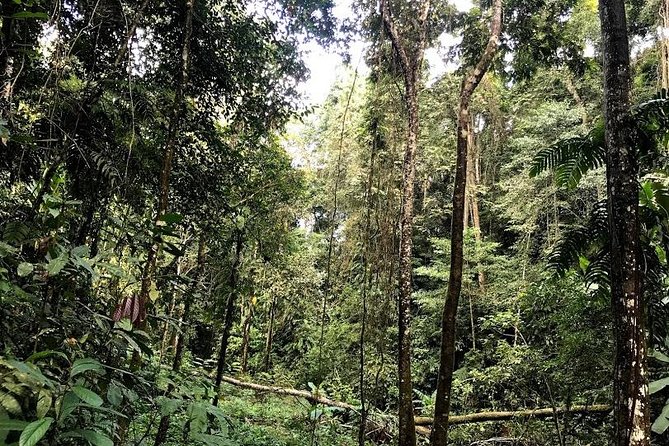
After breakfast, you continue hiking through an area of abundant forest. This is where you’re likely to notice the guide’s forest-reading skills. Reviews highlight guides explaining plants and fruits and pointing out what to watch for, so the trail doesn’t just feel like distance—it feels like learning what’s around you.
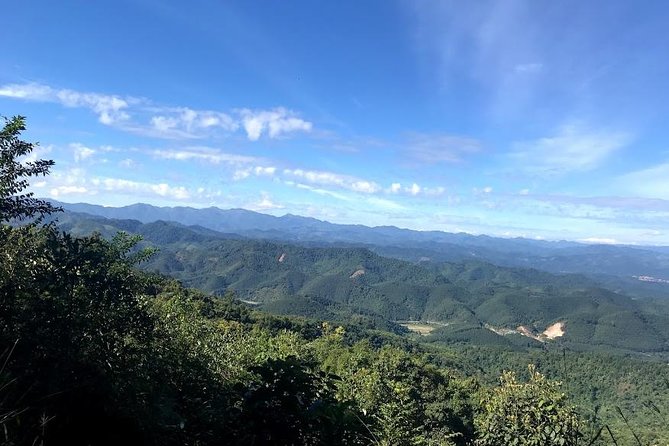
This is also a day for the scenic moments people remember: wildlife spotting opportunities and amazing hilltop views. Even if you don’t see something dramatic, the change in light and air at higher points helps you catch your breath and reset your energy.
By the end of the day, you’ll be back at camp for another night in the jungle setting.
Day 3: village rhythm, bamboo weaving, and how the homestay closes the loop
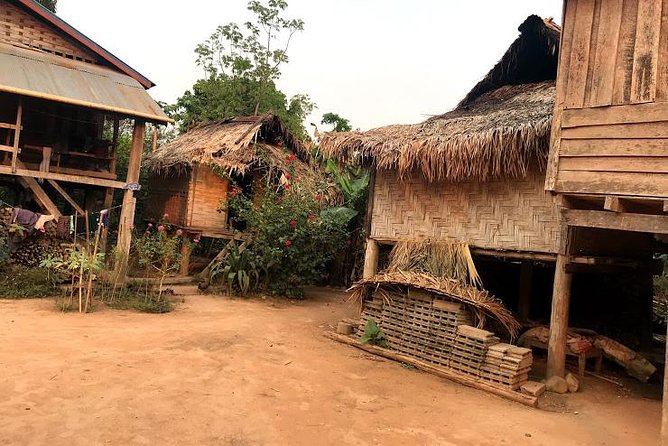
Day 3 is the gentler-feeling part, mainly because you’re shifting from primary forest hiking to village life. You’ll still start early. Then you take a walk around the village to see how people prepare for their day.
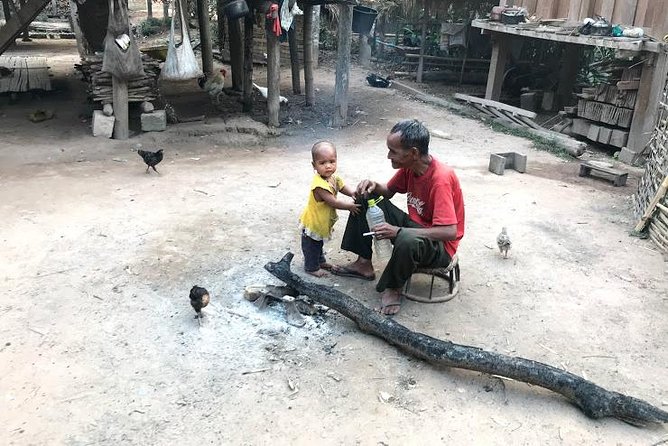
This is not a staged performance. You can expect to watch farm work and bamboo weaving—day-to-day tasks that make the homestay feel grounded, not like a box-check cultural stop.
The homestay adds a different kind of comfort. Instead of jungle camp basics, you get the calmer pace of a village setting before you head back toward the end point.
And then you return to the meeting point to wrap the trek.
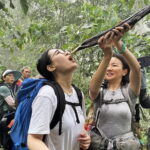
Food in the jungle: foraged finds, open fires, and real satisfaction
For me, the standout on this trek is food. You’re not just eating to survive. You’re eating as part of the experience.
Meals included are:
- Lunch: 3
- Dinner: 2
- Breakfast: 2
The style of food is described as wild organic and tied to nature, and multiple reviews specifically praised the food as a highlight. People talked about meals brought from the market and especially about food foraged while hiking.
You’ll also likely have meals cooked in an outdoor way. Reviews mentioned cooking beautifully on open fires, which gives the food a smoky, campfire comfort that you can’t replicate at home.
Practical take: if you tend to get picky when you’re tired, this trek is still worth considering, but you should go in with an open mind. The whole point is that the flavors come from the jungle and the village—not from a packaged menu.
Guides and culture: names you might meet and what they do well
The quality of the guidance is a big part of why this trek gets such strong scores. Reviews repeatedly mention guides being kind, attentive, and skilled at teaching.
You might be guided by people like:
- Kham and Mun, praised for deep explanations and caring support
- Thit, plus a Khmu fellow, praised for detailed nature/ancestral explanations and cooking on open fire
- Noy (and another guide mentioned alongside), noted for adapting trekking pace and sharing culture
- Xai, recognized for explanations about nature, the area, and animals
What this means for you: you’ll get more out of the forest if you’re the kind of person who likes to ask questions and look closely. The guide doesn’t just move you from point A to B; they help you notice details—plants, fruits, and wildlife—without turning the trip into a lecture.
Also, pace matters on a difficult trek. One review said the guide adapted speed, which is exactly what you want when your legs are already working hard on steep sections.
Toughness level: when difficult trekking is actually difficult
This is a hike built for people with strong physical fitness. That’s not marketing language here—it’s how the trek is framed.
One review gave a clear sense of effort: steep mountains and about 6–7 hours of hiking per day including breaks. Another review added seasonal reality: in rain season the trek is hard, while in dry season it can feel moderate. That lines up with what you’d expect from jungle trails: rain makes roots slick, footing changes, and steep climbs feel longer.
So here’s my practical advice:
- If you’re planning this during the wetter months, train for endurance and be mentally ready for slow, careful steps.
- If you’re going in the drier months, you still shouldn’t assume it’s easy. Even in dry seasons, expect steep climbs and uneven paths.
If you’re unsure where you land, be honest about your comfort with long days on foot. This trek rewards steady hikers more than sprinters.
What to pack: what’s not included and what you’ll thank yourself for
You’re not provided with many core hiking items. The listed non-inclusions include:
- rucksack
- hiking boots
- hat
- sun-cream
- mosquito spray
- torch
- change of (change of clothing)
That list is short, but it’s real. Here’s how it affects your comfort:
- Good boots matter because trails can be uneven and steep.
- A hat and sun cream help on the rice-field edges and exposed stretches.
- Mosquito spray is not overkill in jungle settings.
- A torch matters because evenings and jungle camp nights don’t run on street lighting.
- Bring a change of clothing because you’ll be hot, you’ll sweat, and you’ll want to reset.
Also, pack with the “small group, full days” mindset. You want gear that stays with you during the hike and that you can use fast when needed.
Price and value: is $175 fair for what you get?
At $175 per person for about 3 days, what you’re really paying for is more than a guide. You’re paying for:
- Access to the route and timing needed for hunter trail-style trekking
- Meals across multiple days (breakfast twice, dinner twice, lunches three times)
- Jungle camping arrangements (basic huts at the jungle camp)
- A village homestay experience that changes the feel of the trip
- Small-group attention, with a maximum of 8 travelers
Value gets tricky with outdoor trips because “cheap” can mean you end up doing more work: cooking, planning, sorting food logistics, and trying to find the right trail partner. This trek packages the hard parts.
If you’re a solo person, the price can feel heavier compared to bigger-group adventures. But with a small cap like 8, you’re not buying crowd energy—you’re buying focused time and a guide who can actually watch the trail.
In short: if you want jungle time with guided navigation, meals that feel connected to place, and a homestay contrast, this price can make sense.
Should you book the Hunter Trails trek?
Book it if you:
- want a 3-day difficult trek with real walking time and steep sections
- care about food that includes foraged items and campfire cooking
- like the idea of learning from local guides and seeing village life through everyday tasks like bamboo weaving
- are comfortable bringing your own hiking essentials, especially boots, hat, mosquito spray, and a torch
Skip it if you:
- want a light, casual hike with minimal effort
- get stressed by early starts and long days on foot
- aren’t ready for rain-season conditions if you travel then
FAQ
FAQ
How long is the Hunter Trails trek?
It runs for about 3 days.
What time does the trek start, and where do I meet?
You meet at 8:30 am at The Hiker Travel Agency Laos, 17A Main Street, Phonexay Village, Luang Namtha.
Where does the trek actually begin?
The hike starts with trekking from Ban Prang village, about 35 km south of town.
Is this camping, a homestay, or both?
It includes camping in the jungle and a tranquil village homestay as part of the experience.
What meals are included?
You get 3 lunches, 2 dinners, and 2 breakfasts included.
How many people are in the group?
The group has a maximum size of 8 travelers.
What should I bring since it’s not included?
Bring a rucksack, hiking boots, hat, sun-cream, mosquito spray, torch, and a change of clothing.
Is the trek suitable for everyone?
It’s meant for people with strong physical fitness, since it’s described as difficult trekking.
Can I cancel for a full refund?
Yes. You can cancel up to 24 hours before the experience starts for a full refund. The experience can also be rescheduled or refunded if it’s canceled due to poor weather.