REVIEW · UMM QAIS
Jordan Trail: Dana to Petra 4-Day Trekking Tour
Book on GetYourGuide →Operated by Jordan Hiking Experts. · Bookable on GetYourGuide
One first view of Petra hits different when you reach it by foot. This Dana to Petra trek follows part of the Jordan Trail, then brings you into Petra from a less obvious angle for a true wow moment. You’ll hike through canyons, mountains, and remote Bedouin country, with camping under the stars as the daily rhythm.
I especially like the mix of challenge and variety: about 84 km total, usually 6–8 hours of walking a day across shifting terrain. I also like that food is handled for you—traditional Jordanian meals (with vegetarian and vegan options) plus tea and coffee at camp.
One thing to consider is that guidance style can vary by guide and day. You’re paying for expertise, so if you want lots of explanation trail-side, ask directly what kind of commentary you can expect on hikes and at camp—so you get the version of guided you’re looking for.
In This Review
- Key highlights worth planning around
- Jordan Trail Dana to Petra: why this trek feels different
- Your hiking days: what you’ll do from Dana onward
- Day 1: Getting into Wadi Dana country
- Day 2: Mountains, canyon passages, and Bedouin valleys
- Day 3: Remote country and long views
- Final day(s): Little Petra, then the Petra reveal with a guide
- Camp life and meals: the part that keeps you sane
- Guides on the ground: Essa, Ahmad, and what good guiding looks like
- Petra via the back trail: why Little Petra changes the ending
- What to pack for a 15–20 km day
- Price and value: does $499 make sense for what’s included
- Who should book this Dana to Petra trekking tour
- Should you book this Jordan Trail: Dana to Petra trek?
- FAQ
- How long is the Jordan Trail Dana to Petra trek?
- How many kilometers will I hike each day?
- What difficulty level is the trek?
- Is Petra included at the end of the trek?
- Do you transfer luggage during the trek?
- What meals are included, and can I get vegetarian or vegan options?
- What should I pack for the trek?
Key highlights worth planning around
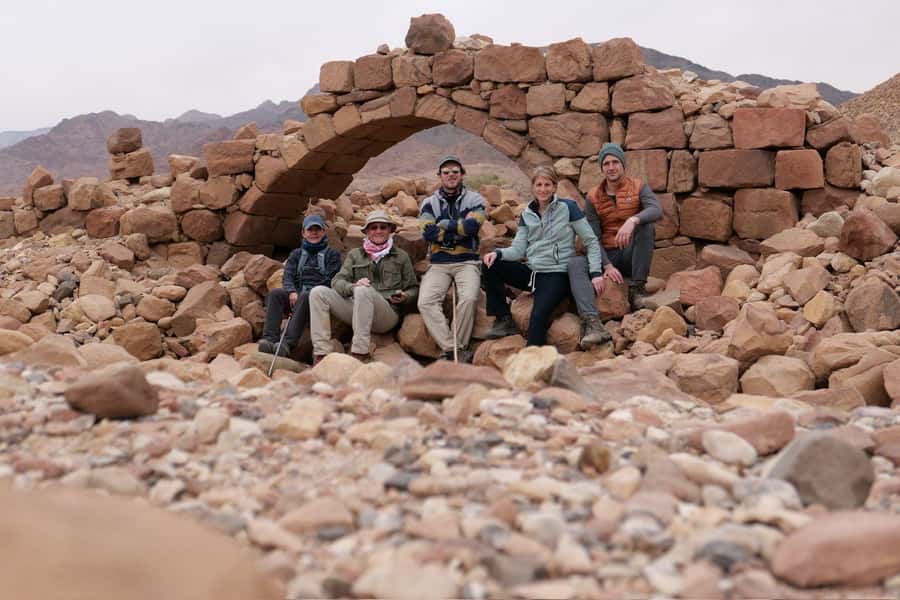
- Jordan Trail route for real wilderness time: days of hiking between Dana, canyons, and Bedouin valleys with remote-feeling nights.
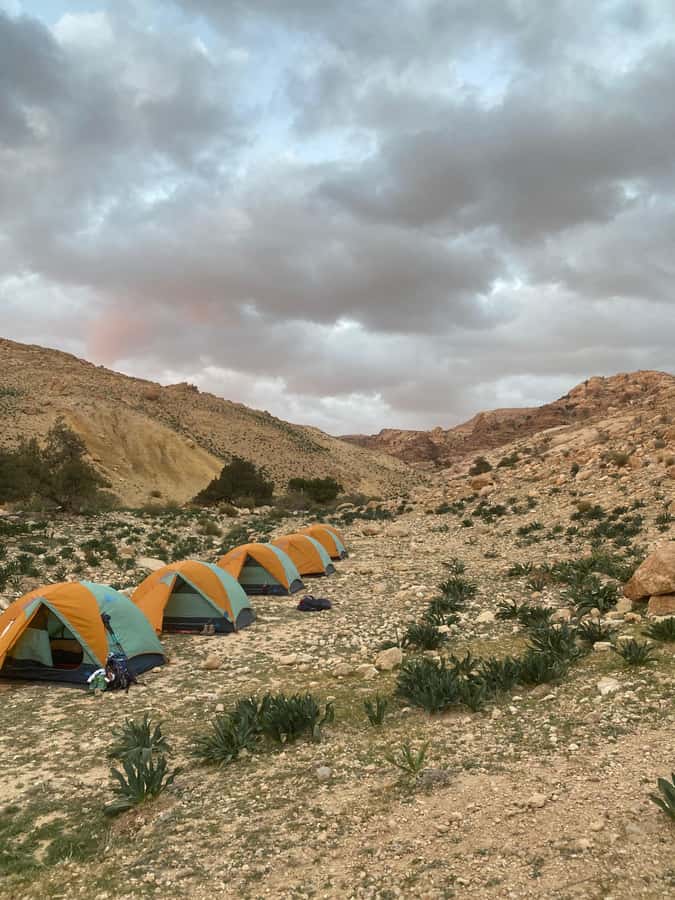
- Starry camps and simple comfort: tents and mattresses are provided, so you can travel light beyond your personal hiking gear.
- Hidden back-trail arrival into Petra: your first big Petra moments come after a long day of walking, not a bus drop-off.
- Local Bedouin guidance with culture talk: guides like Essa and Ahmad focus on more than directions.
- Jordanian meals that you actually look forward to: cooked meals, plus vegetarian/vegan options that stay within local flavors.
- A Turkish bath upon Petra arrival: a very welcome reset after hiking days.
Jordan Trail Dana to Petra: why this trek feels different
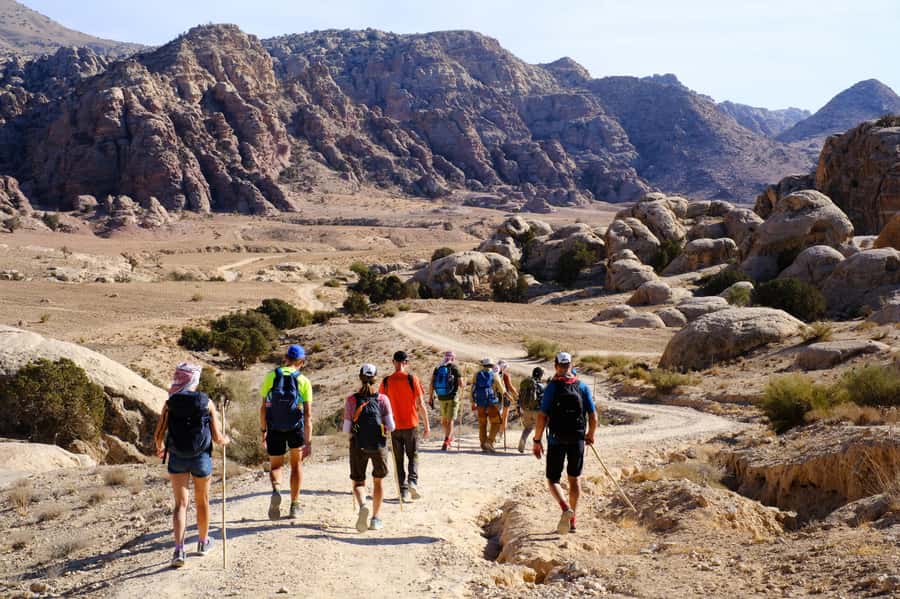
The Jordan Trail is one of those routes that earns its reputation the old-fashioned way: you earn your views. This 4-day Dana to Petra version keeps you moving through Wadi Dana country and then into the Petra approach, so the trip feels like a journey, not just a transport between sights.
What I like most is that the itinerary is built around walking hours and night-sky time. Most days land in the 15–20 km range, and you’re out there long enough to feel the rhythm of the region—sun on your shoulders, cooler evenings, and camp life that actually slows you down.
The other differentiator is how you enter Petra. The trek ends with an arrival that’s described as a hidden back trail into Little Petra, followed by a guided walk into Petra itself. That means your first emotional hit comes from getting there under your own power.
Your hiking days: what you’ll do from Dana onward
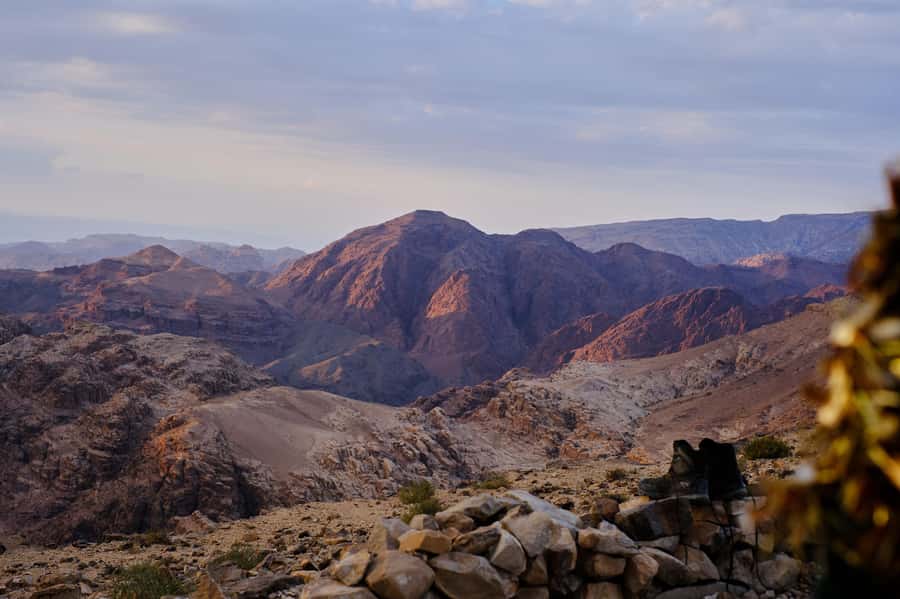
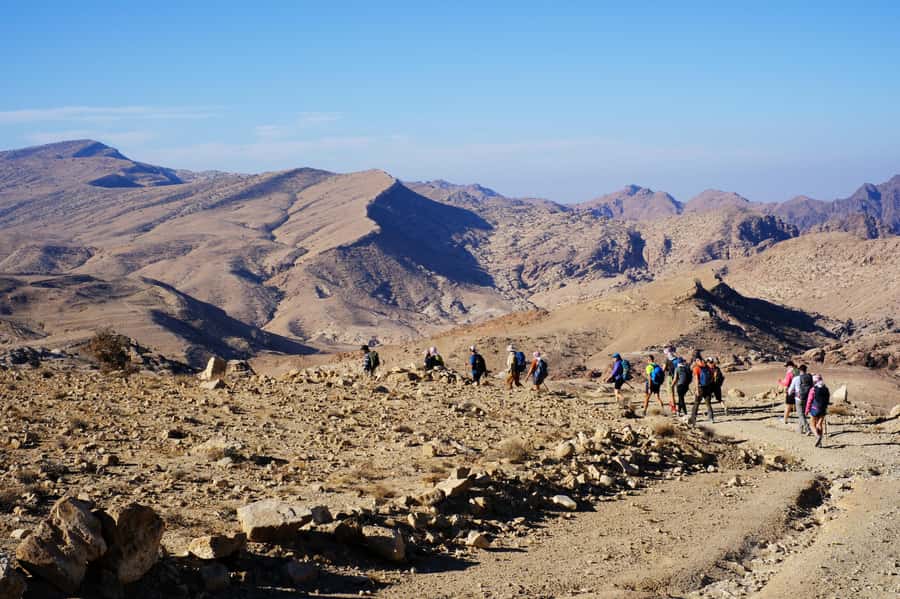
The trek follows a moderate to challenging level plan. Expect roughly 84 km total over 4 days (with a 4–5 day option depending on your booking), and plan your body around 6–8 hours of hiking most days.
Here’s what the route shape looks like, day by day, and what you should watch for.
Day 1: Getting into Wadi Dana country
You start in the Dana area (you’re provided accommodation in Dana). The first hiking day focuses on settling into the Wadi Dana terrain—often a mix of rocky trails and dramatic canyon edges.
This is the day for good footwear habits. Take it easy at the start, because your feet need time to learn the ground. By the time you reach camp, you’ll usually be ready for the meal and the quiet.
Day 2: Mountains, canyon passages, and Bedouin valleys
Day two is where the route starts to feel more “journey-like.” You’ll hike through mountain paths and rugged stretches that transition into valleys associated with Bedouin landscapes.
This is a good day to practice your pacing. You’ll be covering 15–20 km, and the hiking time matters more than the distance on paper. A steady rhythm plus breaks for water keeps you from spending the whole day above your comfort zone.
Day 3: Remote country and long views
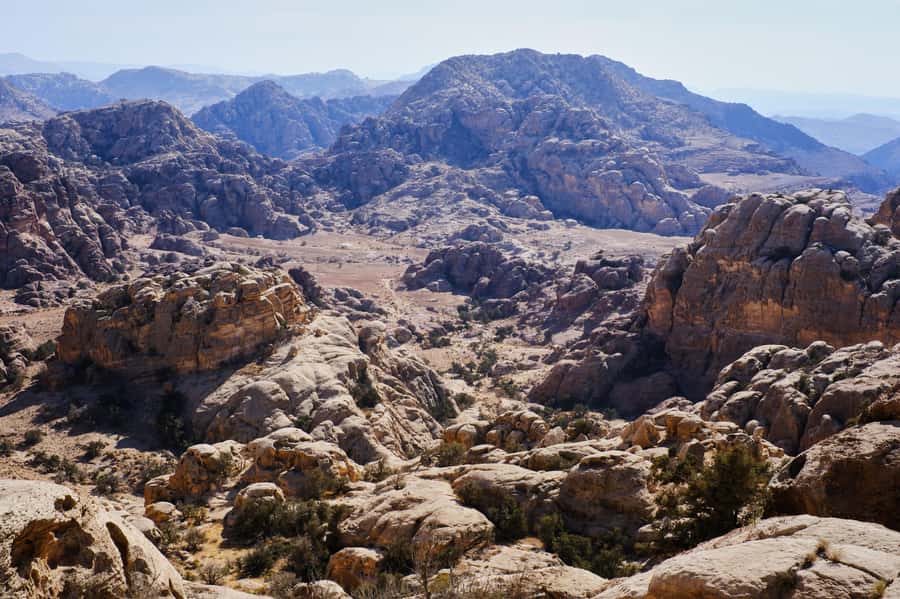
By day three, you’re in the kind of remote terrain that makes the Jordan Trail famous. Expect desert plateaus and wilderness feeling, plus another full day of trekking (again, typically 15–20 km).
If you book the longer option, you may add the Wadi Ghuweir hike—one of the more celebrated extra pieces in this route family. It’s the kind of side segment that can add more variety without turning the day into a suffer-fest.
Final day(s): Little Petra, then the Petra reveal with a guide
The trek’s ending sequence is the big emotional arc. You arrive at Little Petra first, and then enter Petra through a hidden back trail for a magical first view—before doing a full guided visit inside Petra.
Also, you’ll have a Turkish bath upon arrival in Petra. After multiple hiking days, this is one of those inclusions you don’t fully understand until you’re in it: sore legs relax, and you get your head back for exploring Petra at a human pace.
Camp life and meals: the part that keeps you sane
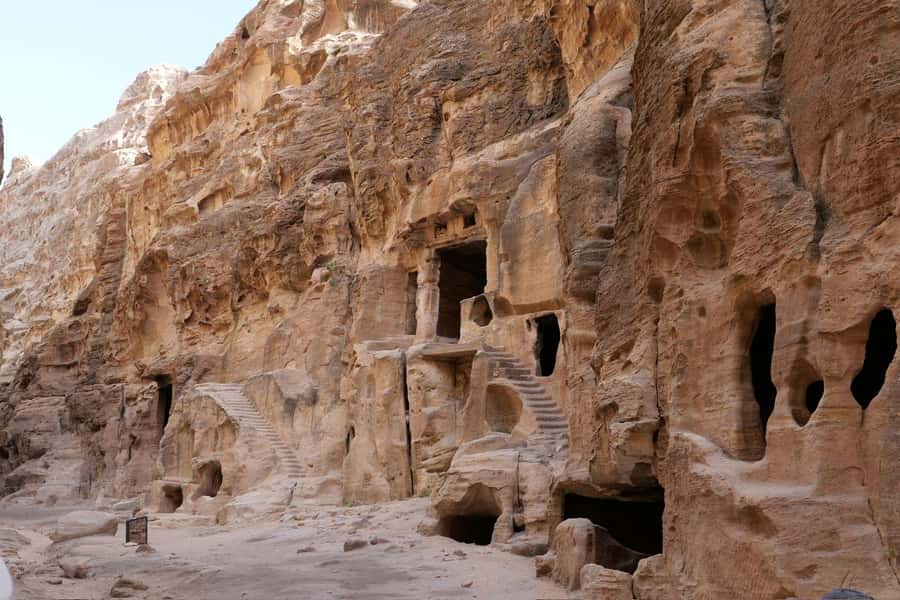
This is a trekking tour where meals and camp logistics are taken seriously, which is exactly what you want for a 4-day trail.
You’ll get 3 meals per day plus drinking water, and tea and coffee. The food is described as traditional Jordanian dishes, with vegetarian and vegan options available that still follow Jordanian-inspired flavors. That detail matters because many outdoor trips solve dinner with bland alternatives.
Camp gear is covered too: tents and mattresses are provided. That means you can bring a normal hiking backpack and pack sleep gear like you mean it—especially because the packing list includes a sleeping bag and a flashlight.
One practical note: nights can get cool. The tour info calls for warm days and chilly evenings, so pack layered clothing plus a light jacket or fleece. You don’t want your day-to-night clothes strategy to turn into a guessing game.
Guides on the ground: Essa, Ahmad, and what good guiding looks like
You’re hiking with a live English-speaking guide, and the group is small—limited to 15 participants. In a place like this, that small-group limit isn’t a luxury detail. It helps you keep together, ask questions without feeling rushed, and get real help when trail conditions shift.
From the guide names shared in the experience, Essa is one of the key faces, supported by his brother Ahmad (Ahmed) for logistics and cooking. In the best-case scenario, the guiding feels personal and upbeat—humor, conversation, and culture explanations that connect what you’re seeing to how people live here.
That human layer is where the tour earns extra value. One of the most positive themes is how the guides share daily life and Bedouin hospitality as more than a script. You’re not just collecting facts; you’re getting context for why the trail runs the way it does and what to notice while you walk.
Still, I’ll be straight about the risk. A small number of participants described a more transactional feel, with limited explanation and less engagement while hiking. That’s not something you can fully predict from the tour details alone, so your best move is to set expectations early: tell your guide what you want out of the walking (nature facts, culture context, navigation style), and ask how often they plan to stop and talk.
Petra via the back trail: why Little Petra changes the ending
Most Petra visits start with crowds and buses. This one starts with your legs. Reaching Little Petra first sets up a different kind of anticipation—less like arriving at a theme park, more like earning entry to a place that has been watched for thousands of years.
The tour’s stated approach is a hidden back trail, which usually means fewer obvious shortcuts and more sense of progression. Then you do a full guided visit inside Petra, so you’re not left to figure out the big sites on your own.
The Turkish bath inclusion makes the transition smoother too. It’s not just a nice perk; it helps you recover so you can actually enjoy Petra instead of moving stiffly and thinking about your next sleep.
What to pack for a 15–20 km day
This trek is built for people with good fitness, and it’s moderate to challenging. You’ll hike 6–8 hours most days, which means your gear choices directly affect whether you enjoy the day or survive it.
Bring:
- Sunglasses and a hat
- Sunscreen
- A sleeping bag
- A flashlight
- Comfortable hiking shoes (and plan for real trail friction)
- Layered clothing for warm days and cool nights
- A reusable water bottle (the tour provides water, but you’ll still want your own container)
Also plan your personal comfort. Walking days of this length can be a lot on your feet and legs, so take sock and shoe fit seriously. If you’re tempted to pack lightweight shoes that feel okay on flat ground, this is the tour where they’ll tell you otherwise.
You should also know what’s not allowed: alcohol and drugs are prohibited.
Price and value: does $499 make sense for what’s included
At $499 per person for 4–5 days, this trek sits in the “serious but not outrageous” category for a guided long-distance hike. The value comes from bundling the hard-to-manage parts: guide leadership, small-group organization, meals, camping gear basics, and daily luggage transfer.
Here’s what’s included that’s genuinely costly if you tried to DIY:
- Expert local guide and small group (up to 15)
- Accommodation in Dana and Little Petra
- Meals: 3 per day plus tea and coffee
- Drinking water
- Tents and mattresses
- Luggage transfer (you carry only a daypack)
- First aid kit and a welcome gift
- Turkish bath upon arrival in Petra
And here’s the part that can swing your final budget: entrance fees are listed as not included. At the same time, the tour info says Dana Biosphere Reserve national park and entry fees are included, and the final day includes entry to Petra with a guided visit. Because this is internally a bit mixed, I’d treat it like this: budget extra for any official ticketing you might be asked to cover for Petra day-of.
If you want a simple way to judge value, do this math in your head: guided multi-day trek + meals + camping setup + luggage logistics. Then compare that to what it would cost to hire a guide locally, arrange camps, and coordinate transport. That’s why the price often feels fair even when it’s not “cheap.”
Who should book this Dana to Petra trekking tour
Book it if you:
- Want an active hike with real time in remote terrain, not just short walks
- Prefer small-group guiding (max 15)
- Care about culture context and not only photos
- Like the idea of camping under the stars and eating Jordanian food at the end of each day
- Want a safer-feeling setup if you’re traveling solo (several experiences praised feeling looked after)
Skip it if you:
- Don’t have a good fitness base for 15–20 km days and 6–8 hours hiking
- Need step-free or mobility-friendly routing (it’s not suitable for people with mobility issues)
- Are traveling with kids under 10 (not suitable)
Should you book this Jordan Trail: Dana to Petra trek?
If your goal is to hike one of the world’s great long-distance routes and arrive at Petra with that first-view punch, I think this is an easy yes. The stars, the meals, the small-group setup, and the back-trail Petra arrival combine into a trip that feels built for walking from start to finish.
My only hesitation is the one inconsistency you could face with any trekking operator: the level of active explanation and day-to-day engagement can vary. If you care a lot about guided interpretation, message the operator ahead of time about how your guide will handle storytelling, breaks, and English-guided commentary.
If you match the fitness level and you’re excited about camping and long trail days, this is the kind of Jordan trip that leaves you with more than a checklist of ruins.
FAQ
How long is the Jordan Trail Dana to Petra trek?
The tour is listed as 4 to 5 days, depending on the option and availability. The hiking distance is approximately 84 km total.
How many kilometers will I hike each day?
You should expect about 15–20 kilometers of hiking per day. Daily hiking time is typically 6–8 hours.
What difficulty level is the trek?
It’s described as moderate to challenging. It’s recommended for travelers with good fitness levels.
Is Petra included at the end of the trek?
Yes. The final day includes entry to Petra with a full guided visit. You also arrive via a hidden back trail through Little Petra.
Do you transfer luggage during the trek?
Yes. You only carry a daypack while hiking, and daily luggage transfer is provided.
What meals are included, and can I get vegetarian or vegan options?
Meals are included three times per day, plus drinking water, tea, and coffee. Vegetarian and vegan options are available and are inspired by traditional Jordanian cuisine.
What should I pack for the trek?
You’ll want sunglasses, a hat, sunscreen, a sleeping bag, and a flashlight. Layered clothing is important because days can be warm and nights can be cool.