REVIEW · KATHMANDU
Annapurna Base Camp Trek
Book on Viator →Operated by Everest Trekking Routes Pvt. Ltd. · Bookable on Viator
Annapurna Base Camp is a trip you feel in your lungs. This 12-day private trek strings together Kathmandu temples, Pokhara lakeside time, and then the climb to the base of Annapurna and Machapuchare at about 4,130 meters. I like how the route changes day to day, from villages and forests to open high views, and you get that big-achievement feeling without needing technical climbing.
I also like that the important stuff is handled in advance, especially permits and meals during the trek. A lot of praise goes to the guide team, including names like Cecil and Sushil Gurung, plus porters such as Samu Gurung, Bishal, and Sujan Gurung, for being organized and genuinely careful with your pace.
One heads-up: altitude plus an early start. The listed start time is 1:15 am, and this trek is for people with moderate physical fitness, so go in ready to walk uphill every day.
In This Review
- Key highlights worth your attention
- Why Annapurna Base Camp feels real, not just a checklist
- Kathmandu temples and Pokhara lake time: your pre-trek warm-up
- Getting into the Annapurna Conservation area at Birethanti
- Ghorepani and Poon Hill: a smart early taste of high-country views
- Tadapani to Chhomrong and the rhythm of stone villages
- Bamboo trekking day: moderate walking that keeps you progressing
- The big finish: walking to Annapurna Base Camp
- Tea houses, meals, and the comfort trade-offs
- Guides and porters: where quality shows up fast
- Transport, hotels, and how the logistics affect your mood
- Price and what you’re really paying for ($935)
- Who should book this trek, and who should think twice
- Should you book Annapurna Base Camp with this team?
- FAQ
- How long is the Annapurna Base Camp trek?
- Where does the tour start and when?
- How do transfers work for Kathmandu and Pokhara?
- Are trekking permits included?
- What meals are included during the trek?
- Is accommodation included?
- Is Wi-Fi included during the trek?
- What isn’t included in the price?
- Can I get a refund if my plans change?
Key highlights worth your attention
- Private group trek with a licensed professional guide and expert local porter
- Permits included (TIMS and ACAP) plus government taxes taken care of
- Two big viewpoint days built into the route via Ghorepani Poon Hill and the Annapurna Base Camp area
- Tea-house trekking with all trek meals included (breakfast, lunch, dinner with tea/coffee)
- Solid up-front logistics: airport and hotel transfers, plus Kathmandu–Pokhara round-trip by tourist bus and hotel stays
Why Annapurna Base Camp feels real, not just a checklist
I like treks that have a beginning, middle, and payoff—and this one does. You get two full hotel nights each in Pokhara and Kathmandu before the main walking starts, so you’re not running on fumes the second you arrive. Then the walking days build toward Annapurna Base Camp in a way that feels logical: lower hills, then forest and stone villages, then the higher snowline vibes.
The value here is not only the trekking. It’s that the trip handles the parts that usually slow people down: permits, food, tea-house stays, and day-to-day coordination with a guide and porter team. For many first-timers, that means you can focus on walking, breathing, and taking photos instead of running around for paperwork.
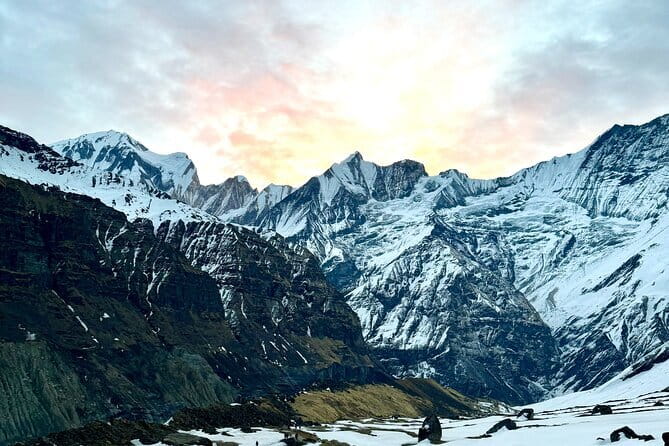
And yes, the viewpoint payoff is the point of Annapurna Base Camp. You’re walking to the base of Annapurna and Machapuchare, with panoramic mountain views as you gain altitude.
You can also read our reviews of more tours and experiences in Kathmandu.
Kathmandu temples and Pokhara lake time: your pre-trek warm-up
Your trip starts in Kathmandu, with Pasupatinath Temple listed as the first major stop. It’s one of the most beautiful and biggest temples in the city, and it’s a good way to get grounded fast in Nepal’s culture before you’re in trek mode. Even if you’re not a religious-history person, you’ll notice how Kathmandu’s life moves around major temples.
Next comes Pokhara and the Pokhara lake stop, described as one of the most beautiful lakes in the area. This is where you’ll likely shift gears mentally. In the city you think about getting to the mountains. In Pokhara you start thinking about the days ahead and what kind of weather you’re walking into.
You also get two nights in Pokhara (breakfast included) and two nights in Kathmandu (breakfast included). That matters because tea-house trekking can be cozy but simple. Having real hotel time first helps you feel rested when the trail begins.
Getting into the Annapurna Conservation area at Birethanti
The route includes Birethanti, your entry point into the Annapurna Conservation Area. This kind of stop is more than geography—it’s a reminder that you’re entering protected land with real environmental and local community rules. You’ll typically feel this in the way the route is organized and how permits are treated as part of the trek, not an afterthought.
From here, the trek shifts from “travel” into “trail.” You’ll start noticing how often you’re walking through small settlements, terraced areas, and paths that feel used by locals day after day. It’s the start of that rhythm you’ll keep for the rest of the hike.
Ghorepani and Poon Hill: a smart early taste of high-country views
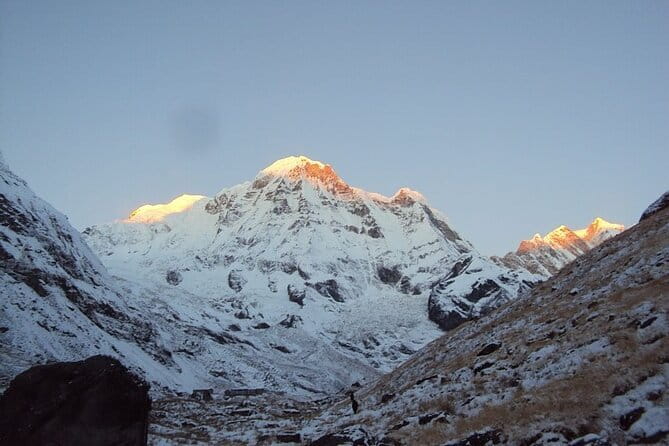
Ghorepani and Poon Hill are on the plan because this is one of the most famous short hiking/viewpoint routes in the Annapurna region. If you want a first strong view day without immediately jumping to the steepest stretches, this is exactly that. You get the excitement of high panoramas and a feel for how mornings change in the mountains.
After that, the plan calls for a ~5-hour walk from Ghorepani to Tadapani. This is a good pacing moment. It’s long enough to feel like you’re moving into serious trekking, but not so extreme that you blow yourself up early. If you tend to go out too fast when you’re excited, watch your pace here. You want energy for the later climbs.
Tadapani to Chhomrong and the rhythm of stone villages
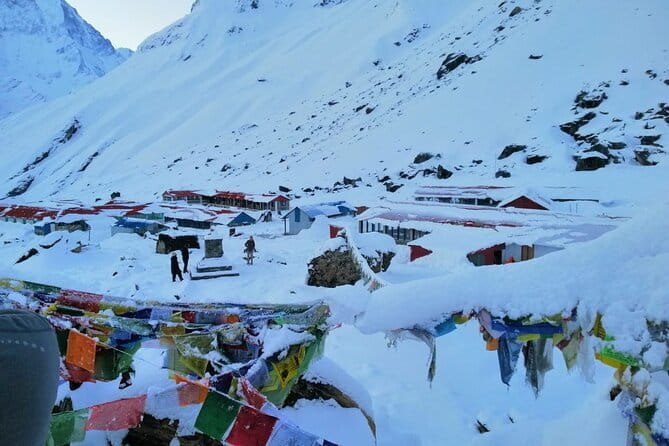
One of the listed highlights is the walk to Chhomrong. This day matters because it’s the bridge between forest-and-farms walking and the more intense high-country feel. Chhomrong is a place where you’ll likely notice the trail narrowing, the houses and stone paths feeling more permanent, and the mountains getting bigger behind you.
From a practical point of view, this stretch also teaches you how your body will handle repeated uphill days. The key is to keep your effort steady. If you rush uphill, the altitude will punish you later, even if the distance doesn’t look scary on paper.
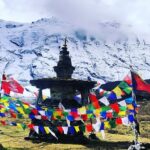
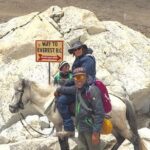
Bamboo trekking day: moderate walking that keeps you progressing
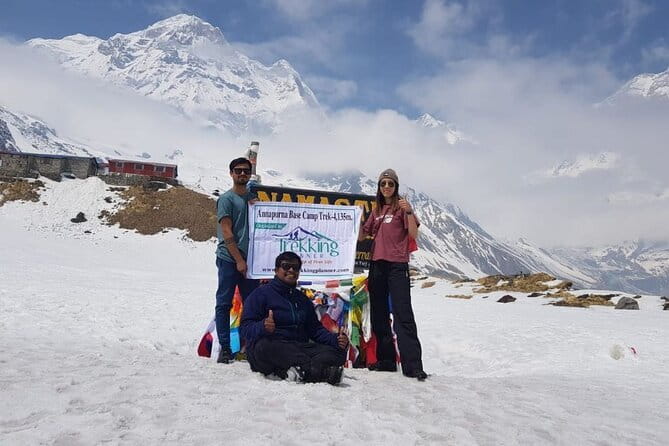
The plan includes a trek to Bambook, described as moderate walking. I like this kind of day because it keeps momentum without pretending the whole trek is one constant grind. Moderate walking also gives you room to learn your own tempo: how often to stop, how long to rest, and how to drink and eat without forgetting you’re working at altitude.
This part of the route helps set up the final phase. By the time you’re nearing Annapurna Base Camp, you’ve already been through enough changes in terrain and temperature to avoid that shock where everything feels harder than expected.
The big finish: walking to Annapurna Base Camp
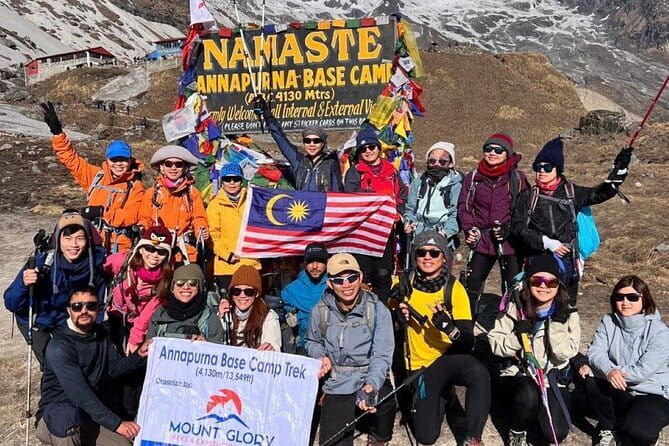
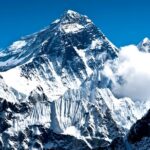
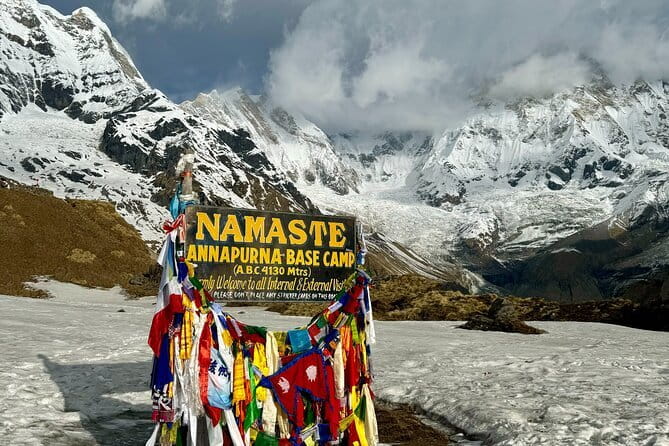
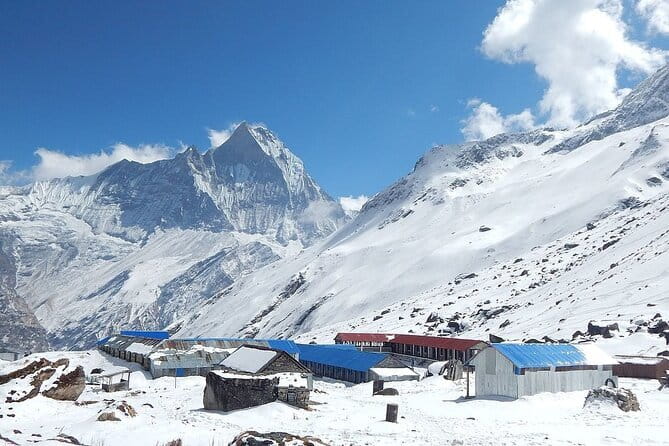
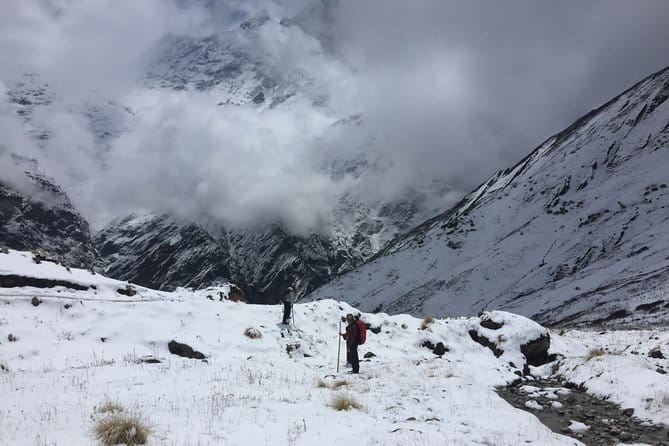
The core of the experience is the trek to Annapurna Base Camp and the next day’s hike around the base camp area. This is where you get the visual reward: the base camp setting under major peaks, with panoramic views including Annapurna and Machapuchare.
You’re reaching about 4,130 meters at the experience’s highest point. That’s high enough that breathing, pacing, and hydration matter. If you’ve never trekked at elevation before, treat this as a slow-andsteady mission. The goal isn’t speed. The goal is arriving with enough energy to enjoy the views and stay comfortable while temperatures drop.
The plan is built so you’re not arriving and immediately sprinting into discomfort. You trek there, then you get time to experience the area as a destination, not just a waypoint.
Tea houses, meals, and the comfort trade-offs
This trek uses tea house accommodation, and it includes all trek meals: breakfast, lunch, and dinner. Each meal includes a cup of tea or coffee, which sounds small, but it’s actually a huge help when you’re trying to keep warm and keep energy up.
What’s not included: all drinks hot and cold beyond what comes with your meals. That means you should expect to pay extra if you want more than the included tea/coffee, and you should plan to budget for water and any extra snacks you like.
The trade-off is simple: you get real trekking convenience and a steady rhythm, but it’s not the kind of comfort you’d expect from a five-star hotel. Still, the tea-house system is one of the reasons this trek is so doable for non-technical hikers.
Guides and porters: where quality shows up fast
This experience includes a licensed professional trekking guide and an expert local porter. That setup matters because the guide handles pacing, route choices, and day-to-day problem solving. The porter helps lighten your load so you can focus on your breathing and footing.
The strongest signals in the provided feedback are about professionalism and care. Guides named Cecil and Sushil Gurung are repeatedly praised, and porters like Samu Gurung, Bishal, and Sujan Gurung show up as part of the trusted team. Rabin is also mentioned as helpful with planning and communication before the trip.
Here’s how you can use that information. When you confirm your details, ask your guide how they pace the group at different elevations and what they recommend for your daily pack weight. Even if you’re already fit, you’ll benefit from following their judgment rather than trying to freestyle it.
Transport, hotels, and how the logistics affect your mood
Transfers are included: airport to hotel and back via private car/van/bus. Kathmandu to Pokhara and return to Kathmandu are included by tourist bus. Those choices help because they reduce the chance of your trek starting with unnecessary stress.
The start and end are also clearly handled. You’ll meet at Everest Trekking Routes Pvt. Ltd. on Timila Marg in Kathmandu. The end is back at the same meeting point. Start time is listed as 1:15 am, so plan for an early wake-up.
One more small thing that can make a big difference: the tour notes say you’re near public transportation. That’s useful if you need to add a bit of time in the city before or after the trek, as long as you’re okay coordinating your own extra lodging and meals.
Price and what you’re really paying for ($935)
At $935 per person, this trek isn’t cheap, but it’s also not just you paying for a walking route. You’re paying for a bundle: hotels (two nights each in Pokhara and Kathmandu), airport and hotel transfers, trekking permits (TIMS and ACAP), all meals during the trek, tea-house stays, and a guide/porter team. Government taxes are included as well.
Where people feel “why so much?” is usually in missed expectations. So here are the common extra costs you should account for:
- Extra meals or accommodation in Kathmandu (beyond the included breakfast hotel nights)
- Drinks on the trek (hot and cold) beyond what comes with included tea/coffee
- Travel insurance and evacuation insurance
- Tipping for the guide and porter
- If you’re traveling solo, porters are noted as an extra item
If you add up those items, the price starts to make more sense. You’re buying peace of mind. You’re also buying a partner team on the trail rather than trying to arrange everything line by line once you arrive.
Who should book this trek, and who should think twice
This trek is a good fit if you want an iconic Annapurna experience with solid support and you’re comfortable with moderate fitness. You don’t need technical skills, but you do need to be willing to walk uphill day after day and take elevation seriously.
It’s also a good match for people who like structure. It’s a private tour/activity, meaning only your group participates, and you’re not forced to share the experience with random strangers. That can make the trekking pace feel more natural.
Think twice if you dislike early starts, or if you want lots of included extras like Wi-Fi. Trekking Wi-Fi is specifically not included, so if you need constant internet, you’ll want to plan around that.
Should you book Annapurna Base Camp with this team?
If you’re aiming for Annapurna Base Camp with permits, meals, tea-house lodging, and guide/porter support handled, this is a strong option. The mix of Kathmandu and Pokhara first helps you ease in, and the trek structure includes famous viewpoint time like Poon Hill plus the Base Camp payoff.
I’d book if you want a well-run experience where you can trust the core logistics and let the mountains do the talking. I’d also book if you’re the type who values experienced people on the trail—names like Cecil, Sushil Gurung, and porters such as Samu Gurung show up often for a reason.
I wouldn’t book if you’re expecting lots of included comforts like extra drinks, Wi-Fi on the trek, or if you know you struggle with altitude even with a moderate fitness base. In that case, you’ll need a different plan.
FAQ
How long is the Annapurna Base Camp trek?
The duration is listed as 12 days (approximately).
Where does the tour start and when?
The meeting point is Everest Trekking Routes Pvt. Ltd., Timila Marg, Kathmandu 44600, Nepal, and the listed start time is 1:15 am.
How do transfers work for Kathmandu and Pokhara?
Airport to hotel pickup and drop are included by private car/van/bus. Kathmandu to Pokhara and return to Kathmandu are included by tourist bus.
Are trekking permits included?
Yes. The trek includes permits as a TIMS card and ACAP permit.
What meals are included during the trek?
All meals during the trek are included: breakfast, lunch, and dinner, with a cup of tea or coffee included.
Is accommodation included?
Yes. There are 2 nights of hotel in Pokhara (breakfast included) and 2 nights of hotel in Kathmandu (Kathmandu Suite Home, breakfast included). Tea house accommodation is included during the trek.
Is Wi-Fi included during the trek?
No. Trekking Wi-Fi is not included.
What isn’t included in the price?
Not included are extra meals and extra accommodation in Kathmandu, additional porter costs for single or solo trekkers, all drinks (hot and cold), personal expenses, travel and evacuation insurance, and tipping for guide and porter.
Can I get a refund if my plans change?
Yes, you can cancel for a full refund if you cancel at least 24 hours before the experience’s start time. If you cancel less than 24 hours before, the amount paid is not refunded.
If you want, tell me your hiking experience level and your rough fitness (for example, how many hours you can comfortably walk). I can help you sanity-check whether 12 days to Base Camp is a good match for you.