REVIEW · KATHMANDU
Annapurna Base Camp Trek
Book on Viator →Operated by Ace the Himalaya · Bookable on Viator
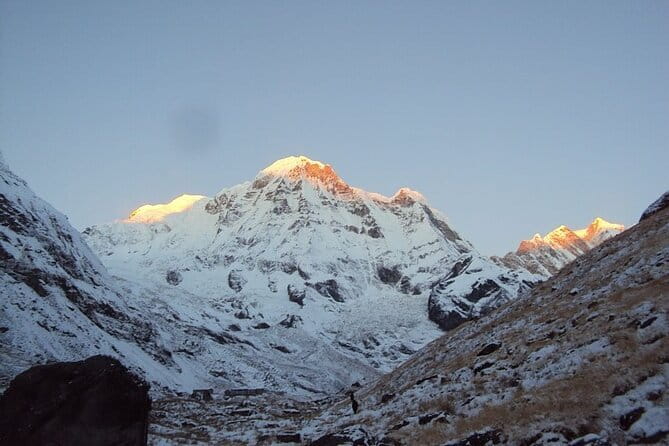
Your first sunrise over the Annapurnas feels unreal. This 13-day trek takes you through rhododendron forests, Gurung villages, and classic tea-house steps, finishing at Annapurna Base Camp (4,130 m) in the Annapurna Sanctuary. I like that Ace the Himalaya keeps the logistics tight with pickup, transport, permits, and a licensed English-speaking guide so you can focus on walking and the views.
My other big plus is how the route mixes mountain drama with everyday hill life. You’ll get the eye-popping Poon Hill sunrise early on, then settle into the long rhythm of day hikes between villages like Ghorepani, Chhomrong, and Bamboo. The main drawback to plan for is the physical grind: expect steep sections and lots of stairs even when the days look “short” on paper.
In This Review
- Key things to know before you go
- Entering Kathmandu: how the trek starts smoothly
- Pokhara Lakeside: your calm start before the steps
- Day-by-day walking: from Nayapul to Ghorepani and the Poon Hill sunrise
- Chhomrong to Khuldighar: forests, valleys, and the classic Annapurna rhythm
- Machapuchhre Base Camp and Annapurna Sanctuary: the big moment at 4,130 m
- Jhinu hot springs and the return through village trails
- Price and logistics: where the $1,350 really goes
- What the trek team is like on the ground
- Pacing, training, and packing tips that actually help
- Is this trek worth booking? A straight answer
- FAQ
- What’s the highest point on this trek?
- How long is the Annapurna Base Camp trek?
- Is airport pickup included?
- Do I get a guide, and is English included?
- Are permits included?
- How are meals handled during the trek?
- Do porters carry gear for you?
- Is travel insurance included?
- Is tipping expected?
- What if the weather is bad?
Key things to know before you go
A clear support setup: 1 porter for every two clients, plus a licensed English-speaking guide and team structure for day-to-day pacing.
High-value logistics: Kathmandu and Pokhara hotels (3-star), transport between cities, and trekking permits are included.
Real altitude milestones: Poon Hill (3,210 m), Machapuchhre area, and the big finish at ABC (4,130 m).
Nature highlights that aren’t just scenery: hot springs at Jhinu Danda and the Annapurna Sanctuary vibe around Machapuchhre.
Group size stays small: maximum of 15 travelers. That matters on narrow trails.
Packing matters more than you think: keep loads reasonable so porters aren’t forced into extra weight.
Entering Kathmandu: how the trek starts smoothly
Day 1 is all about getting your bearings. You land at Tribhuvan International Airport, then you’re met by an airport representative and transferred to your Kathmandu hotel in a private tourist vehicle.
On either Day 1 or Day 2, you’ll have a pre-trip meeting in their office. This is where you’ll meet your trek leader/guide, so it’s not just paperwork. Bring your passport, three copies of passport-size photos, and a readable copy of your travel insurance policy. You’ll also settle any remaining balance, sign the trip form, and review the non-liability disclaimer.
What I like here is the practical order: you handle admin while you’re still close to help, not 10 days later when you’re tired and altitude is in the picture.
You can also read our reviews of more tours and experiences in Kathmandu.
Pokhara Lakeside: your calm start before the steps
On Day 2, the day begins early. You’ll be picked up from the hotel around 6:30 am and escorted to the tourist bus station. The bus to Pokhara usually leaves around 7:30 am.
Pokhara is the breather between Kathmandu chaos and trekking reality. It’s set by Phewa Lake, and the views in clear weather can stretch toward Annapurna, Machapuchhre (the fish-tail shape), Dhaulagiri, and more. It’s smaller and less hectic, which matters because you want your energy for Day 3.
Day 2 keeps things simple: sleep, hydrate, eat well, and treat the next day like your first “real” workout.
Day-by-day walking: from Nayapul to Ghorepani and the Poon Hill sunrise
Day 3 starts with a short drive from Pokhara to Nayapul, then a quick warm-up walk along the Modi Khola. You pass through Birethanti (about 1,015 m), a village with shops and tea houses, then climb steadily to Hille and finally reach Tikhedhunga (1,570 m).
This is a smart start day. It doesn’t bully you, but you feel the altitude tick upward and you learn where your “walking pace” actually sits.
Day 4 continues upward. You climb toward Ulleri, then move through oak and rhododendron forests. The day finishes in Ghorepani (2,840 m) after stops like Banthanti (2,250 m) and Nangethanti (2,460 m).
Day 5 is the classic “wake up before the world.” You’ll start very early for a hike to Poon Hill (3,210 m). This is where people go for sunrise over the high Himalayas—and because Poon Hill sits high enough, the views can be broad and unobstructed.
After spending about an hour at the viewpoint, you come back for a hot breakfast. Then the trek shifts from sunrise drama to steady effort: ridges, pine and rhododendron forests, and a move toward Deurali (2,960 m). From there you descend to Banthanti and continue toward Tadapani.
Practical tip: if you want sunrise photos, keep your camera gloves-ready. Morning air at altitude can bite.
Chhomrong to Khuldighar: forests, valleys, and the classic Annapurna rhythm
Day 6 begins with descent—steep, but in a good “get comfortable with the trail” way. You move through rhododendron forests, reach Gurjung, and then walk into Chhomrong (2,140 m).
Chhomrong is one of those places that feels like a hub. You’re surrounded by villages and trails, and it’s where the trek starts to feel like a system: lodge, meals, rest, repeat.
Day 7 pushes into the middle of the Annapurna feel-good-versus-hard balance. The trail drops to the Chomrong Khola, then climbs up to Khuldighar (2,380 m), where there used to be an Annapurna Conservation Area check post. You’ll notice the terrain turning more intense: steep descents along rock banks, bamboo thickets, and forest walking that keeps you focused on footing.
The day ends at Himalayan Hotel. If you’ve been wondering whether you’re in for a “hard trek,” this is the kind of day that answers it without extra drama.
Machapuchhre Base Camp and Annapurna Sanctuary: the big moment at 4,130 m
Day 8 is the day you remember later. The trail climbs past Hinko Cave and through Deurali, then heads toward Machapuchhre Base Camp. A key detail: it isn’t really a typical base camp, because climbing Mt Machapuchhre is not permitted. That restriction creates a special kind of stillness around the area.
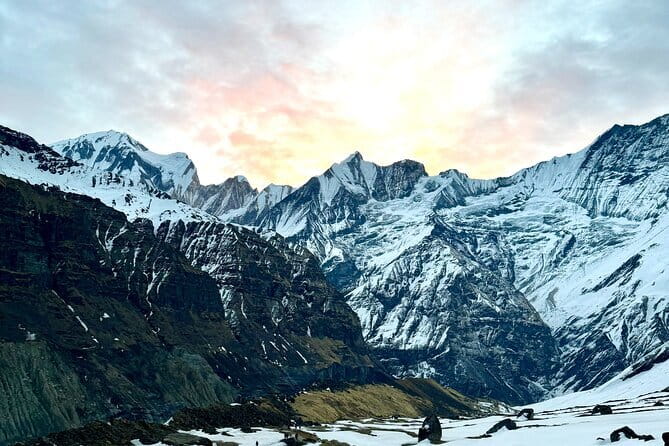
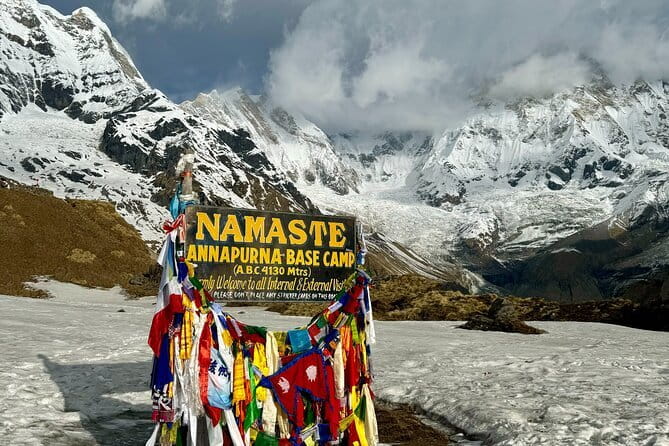
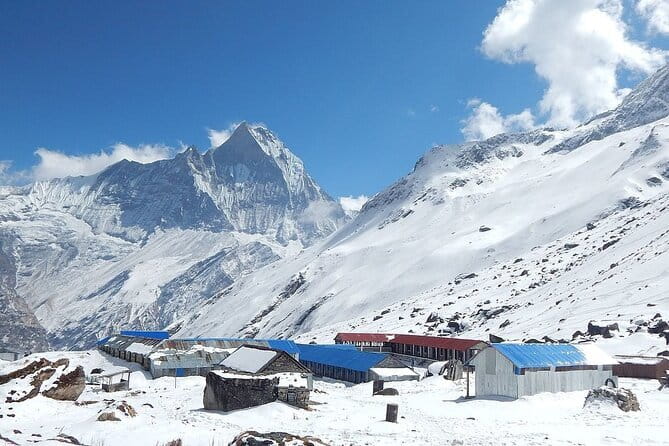
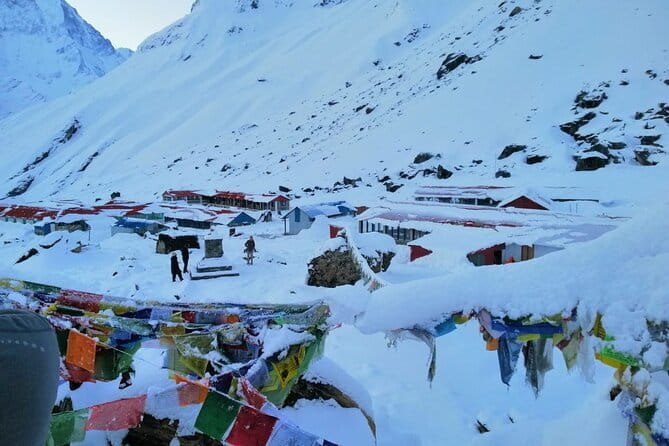
From Machapuchhre Base Camp, it takes about two hours to reach Annapurna Base Camp (4,130 m). This is your “wow” finish: dramatic peaks, open views from a high bowl, and the sensation of being surrounded by huge walls of rock and snow.
Day 9 is the descent day. You follow much of the same route down, losing about 1,700 m to the bank of the Modi Khola, then continuing to Bamboo (2,345 m). This is where trekking skill becomes mental: going down safely takes attention, not bravado.
Jhinu hot springs and the return through village trails
Day 10 keeps the rhythm. You follow the trail until Chhomrong again, passing Khuldighar and an experimental sheep farm along the way. Then you continue through rhododendron and bamboo fields before descending steeply to Jhinu Danda.
Jhinu Danda is your reward: you can bathe in natural hot springs. It’s not just relaxing; it’s also one of the few ways your legs feel “reset” before the journey fully ends.
Day 11 turns back toward the lowlands. You walk on the right side of the Modi Khola for about 4.5 hours to Birethanti, then to Nayapul, followed by an hour drive back to Pokhara. After checking into your hotel, you head to Fewa Lake for a boating trip to Barahi Temple.
This is a nice transition day because it lets you swap “tired feet” for “soft light and lake air.”
Day 12 drives back to Kathmandu in the morning. In the evening, there’s a farewell dinner in a traditional Nepalese restaurant with cultural performances—another practical closure so you can decompress before flights.
Day 13 ends with an airport drop at Tribhuvan International Airport.
Price and logistics: where the $1,350 really goes
At $1,350 per person, you’re paying for more than a walking route. This trek is built around covered movement and basic comfort:
Included:
- Airport transfers in Kathmandu
- 3-star twin-share/double rooms in Kathmandu (2 nights) and Pokhara (2 nights)
- Guesthouse accommodation during the 8 trekking nights (twin-share and dormitory rooms)
- A licensed English-speaking trekking guide
- 1 porter for every two clients
- Trekking permits
- Tourist bus Kathmandu ⇄ Pokhara and tourist vehicle Pokhara ⇄ Nayapul
- A free Ace the Himalaya duffel/kit bag and sun hat
- Meals: breakfast (12), lunch (9), dinner (9)
- All government taxes and official charges
Not included:
- Meals in Kathmandu and Pokhara (other than what’s specified)
- Travel insurance (and it’s specifically noted as important for emergency high-altitude rescue and evacuation)
- International airfare
- Nepal entry visa
- Alcohol and other personal drinks
- Personal trekking equipment
- Tips for trekking staff and driver (tipping is expected)
Value-wise, the standout is the structure: transport, permits, most meals, guide leadership, and porter support are baked in. That reduces the chance you’ll overspend on last-minute logistics or get stuck figuring out supplies while you’re already tired.
Also, the small group size (maximum 15) helps with trail flow. On popular routes, that can make the difference between a smooth day and constant stopping.
What the trek team is like on the ground
Ace the Himalaya lists a licensed English-speaking guide and uses an assistant-guide/porter team approach depending on the group. In past trekking groups, lead guides who were mentioned include Ramesh Karki, Raj Kumar, Ganesh, and also Maddy (as a leader). Assistant-guide names that came up include Bhawishya KC.
Porters mentioned in past groups include Prakash, Bhagwan, Tenzing, Shantiraj, plus others like Ram Prasad, Tika Ram, Lumbu Dai, and Dilip, among others. I can’t promise you’ll match those exact people, but it gives you a sense of the caliber and consistency you’re likely to see.
One practical takeaway from the feedback: this kind of support works best when you pack smart. Don’t turn your bag into a moving closet. If you overpack, porters suffer and you’ll feel it too.
Pacing, training, and packing tips that actually help
Based on what people emphasized, two things matter most before you arrive:
1) Stair training pays off. The route has lots of step-up walking and rough stone stair sections. If you can climb stairs at home or on a treadmill, start now. Even short sessions help.
2) Keep your load realistic. There’s a clear expectation that porters carry a lot, but you still need to carry your share and reduce the weight you put on them. You’ll feel better on steep downhills when your pack isn’t fighting gravity.
In terms of fitness, the operator expects you to have moderate physical fitness. That usually means you can hike for hours and handle altitude without needing heroic speed. Slow and steady usually wins here.
Is this trek worth booking? A straight answer
If you want a famous trek that mixes high Himalayan scenery with living villages, this is a strong choice. You’ll get a front-row seat to the Annapurna Sanctuary feel at 4,130 m, plus a memorable sunrise at Poon Hill, and a real recovery moment in the Jhinu hot springs.
I’d also lean toward this option if you like clear logistics: pickup, transport, permits, guide support, and most meals covered means less mental juggling.
I’d skip it or think hard before booking if you dislike steep walking and stairs, or if you’re not ready to commit to a moderate fitness base. This route doesn’t pretend it’s gentle.
FAQ
What’s the highest point on this trek?
The itinerary’s main summit-level point is Annapurna Base Camp at 4,130 m / 13,549 ft.
How long is the Annapurna Base Camp trek?
It’s listed as 13 days (approx.).
Is airport pickup included?
Yes. There are airport transfers in Kathmandu, including pickup on arrival and drop-off at the end.
Do I get a guide, and is English included?
Yes. You receive a licensed English-speaking trekking guide.
Are permits included?
Yes. Trekking permits are included.
How are meals handled during the trek?
Meals are included during the trek with breakfast (12), lunch (9), and dinner (9). Meals in Kathmandu and Pokhara are not included.
Do porters carry gear for you?
Yes. The plan includes 1 porter for every two clients.
Is travel insurance included?
No. Travel insurance is not included, and it’s specifically important for emergency high-altitude rescue and evacuation.
Is tipping expected?
Yes. Tipping for trekking staff and the driver is expected.
What if the weather is bad?
The experience requires good weather. If it’s canceled due to poor weather, you’ll be offered a different date or a full refund.