REVIEW · STEPANTSMINDA
Kazbegi – One Day Trekking Private Tour to Chaukhi Pass 3341 m
Book on Viator →Operated by Mountain Freaks · Bookable on Viator
Chasing a high pass above Kazbegi. This private trek takes you from Juta up toward Chaukhi Pass (3341 m) and on to Abudelauri lakes, plus the odd rock world of Roshka stones. I love the sweep of alpine scenery and the color story at the lakes, but the main consideration is that it’s a long day: plan for 8–9 hours of walking and changeable mountain weather.
I also really like how the day is set up for ease: 4×4 transport from Stepantsminda to the trail start, trekking poles included, and a guide who can keep you moving sensibly on a route under the Chaukhi massif. In their operation, you may work with guides such as David, Dato, or Keti, and that’s a big deal on a long pass hike where you want good pacing.
The last thing to know is that you’re responsible for the basics: you’ll want proper footwear, plus a jacket and rain cover because conditions can flip fast near the pass. Water and snacks are not included, so bring what you need to keep your energy steady through the return trek.
In This Review
- Key Things I’d Plan Around
- One Day, Big Altitude: How This Schedule Works
- Stepantsminda to Juta by 4×4: The Quick Start Advantage
- Juta Stops: Easter Island Statues and the Role of Sno
- Under the Chaukhi Massif: Walking the Georgian Dolomites
- Chaukhi Pass at 3341 m: What You Gain From Reaching the Divide
- Abudelauri Lakes and Roshka Stones: The Color Payoff
- Gear, Footwear, and Why the Guide Makes a Difference
- Price and Value: $310.67 for Up to 6, and What You’re Really Buying
- Timing, Season, and When to Go
- Who Should Book This Trek (and Who Might Skip It)
- Should You Book This Chaukhi Pass Trek?
- FAQ
- What height is Chaukhi Pass on this trek?
- Where does the trek start and end?
- How long is the day, and how much is walking?
- Is the hike technically difficult?
- What should I bring?
- What’s included in the tour price?
Key Things I’d Plan Around
- Juta is your high starting point: it cuts down on grunt-work before the actual pass hike
- Chaukhi Pass divides regions: you get a clear sense of crossing from Kazbegi toward Khevsureti
- Georgian Dolomites terrain: a trek under the Chauchi/Chaukhi massif that feels dramatic without being technical
- Roshka stones + Abudelauri Lakes: a change from sharp peaks to meadows and three lakes with different colors (green, blue, white)
- A long walking day, not a hard climb: not technically difficult, but still 8–9 hours on your feet
- Private 4×4 for up to 6: you keep the schedule tight and the group small
One Day, Big Altitude: How This Schedule Works
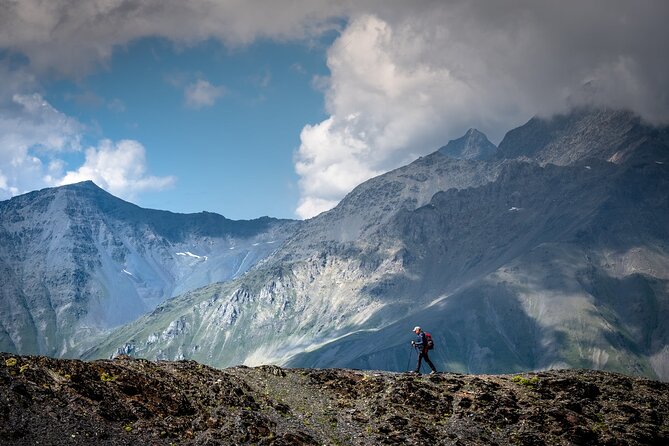
This is built as a full-day effort that fits into a “short visit” to Kazbegi. You’ll spend about 1 hour in the car and then most of the day on foot—around 8–9 hours of trekking total, with the hike beginning and ending back at Juta.
That split matters. If you only have a day or two in the area, you get a lot of altitude experience without needing to book multi-day trekking. At the same time, you should treat it like a true hiking day, not a light stroll. The pass is high enough that wind, temperature drop, and low clouds can change your plan on the fly, and you’ll feel it more when you’re already several hours into the hike.
Also, since it’s private, you’re not stuck behind a slow group or forced to speed up for others. Your guide can adjust pacing to your fitness, which is the most practical way to make a long day feel controlled.
You can also read our reviews of more tours and experiences in Stepantsminda.
Stepantsminda to Juta by 4×4: The Quick Start Advantage
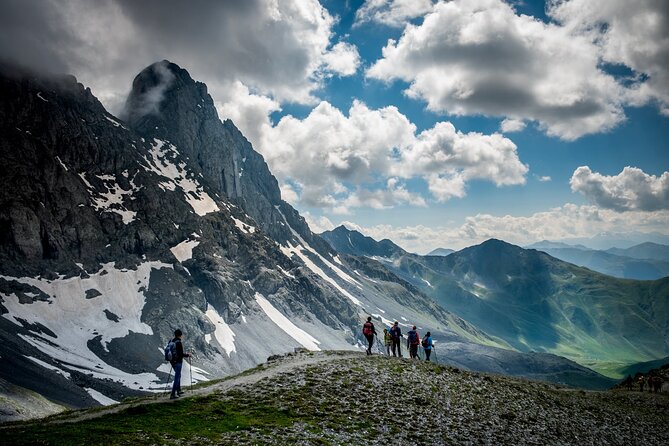
You meet at Mountain Freaks Kazbegi, 44, Stepantsminda. Then you’ll ride in a 4×4 to Juta, which sits about 20 km from Stepantsminda. This is one of the smartest parts of the setup: you’re not spending your best energy hiking up from the valley.
Juta is described as the highest village in the region, and that’s exactly what you want for this kind of trip. Higher start = less wasted time on elevation grind and more time on the views that make Chaukhi Pass worth it.
You’ll return by the same route. That means you don’t need to worry about complicated logistics at the end of your hike—you just close the loop and let the car take you back.
Juta Stops: Easter Island Statues and the Role of Sno
Before the main hiking begins, there are a couple of meaningful stops along the drive. One is the set of statues locals call the Georgian Easter Island. They’re mysterious by design: you’re looking at something unusual, far from the typical church-and-ruins rhythm of travel, and it’s a great mental warm-up for the day’s theme—Georgia as a place where strange things feel normal.
Another stop is the village of Sno, described as the most important village of the region because the Georgian Patriarch comes from there. I like this kind of pause because it makes the day feel grounded. You’re not just hiking for views; you’re moving through living geography and local identity.
These stops also give you something practical: a moment to regroup, use the restroom if needed, and get your water and layers sorted before you start walking for real.
Under the Chaukhi Massif: Walking the Georgian Dolomites
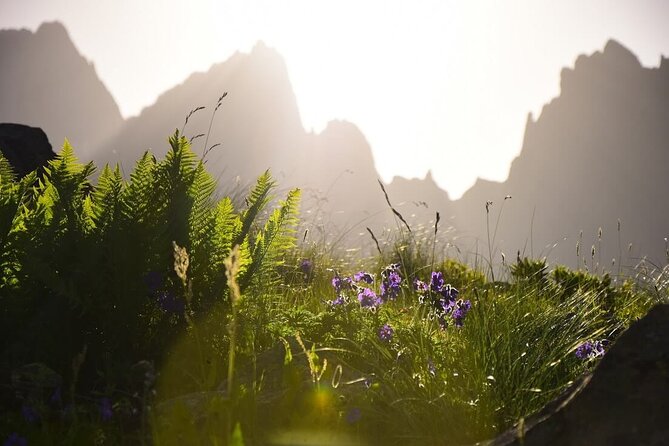
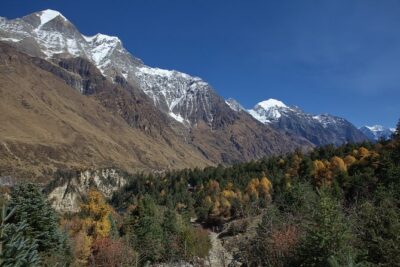
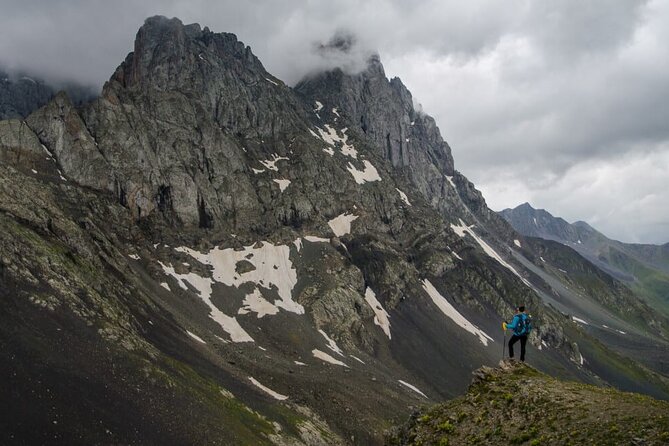
Once you reach Juta, the main trek starts. The route runs under the Chaukhi massif, and it’s commonly described as the Georgian Dolomites. That label isn’t just marketing—what you’re likely to notice is the way the rock walls and sharp forms dominate the feel of the path. Even when the walk itself is not technical, the terrain can look and feel steep and dramatic.
Why this part matters: you’re building altitude gradually while still getting the sense of approaching something big. It’s not just a straight line to the pass; it’s an approach along terrain that keeps the scenery changing.
Still, keep your expectations honest. The trekking itself is described as not technically difficult, but this is a long day with 8–9 hours of walking. That means a steady pace beats hero mode. If you start fast because you’re excited, you’ll pay later during the return.
Practical tip: use the included trekking poles right from the beginning. Even if you feel strong, poles help with endurance on uneven ground and reduce strain on knees once you’ve been walking for hours.
Chaukhi Pass at 3341 m: What You Gain From Reaching the Divide
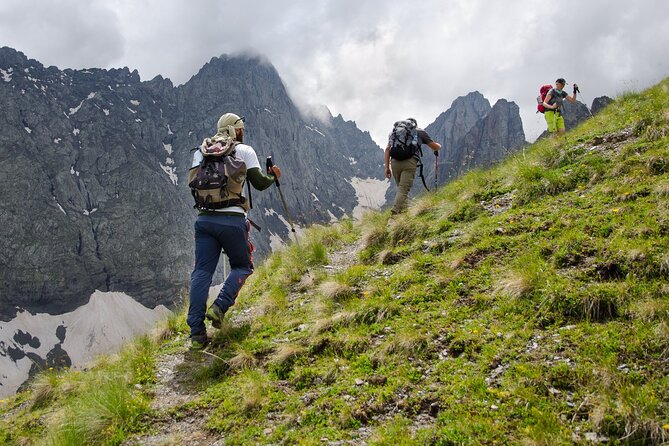
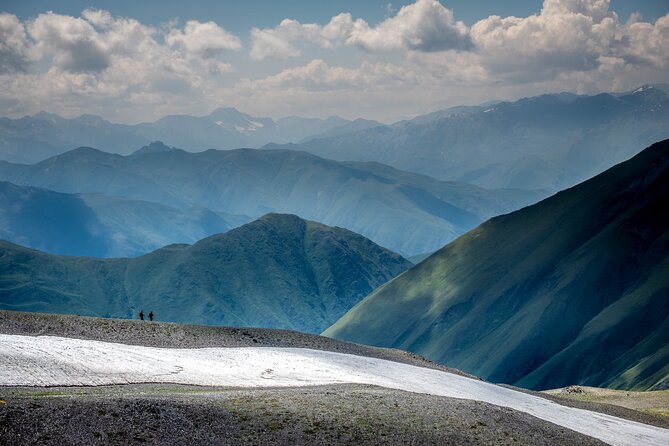
Chaukhi Pass is where the region shifts. It’s described as dividing the Kazbegi region and Khevsureti. That matters for your experience because it changes the character of what you see after you cross—less rugged peak dominance on one side, more open alpine meadows and distinctive rock features on the other.
This is also one of the reasons the pass is considered one of the highest and most beautiful in Georgia. You get the full sense of scale with the Chaukhi massif—its sharp peaks show up close enough to feel intense, but you’re walking at a human pace.
The pass is also where you’re most exposed to weather. Jackets stop being optional here. If clouds come in, you may lose some distance views, but your guide can often help you stay focused on what’s visible in front of you instead of chasing a horizon that might vanish.
If you’re deciding what kind of day this is, think of it like this: you’re not conquering a climbing objective. You’re reaching a high, dramatic crossing point and then using the view to reward the effort you already put in.
Abudelauri Lakes and Roshka Stones: The Color Payoff
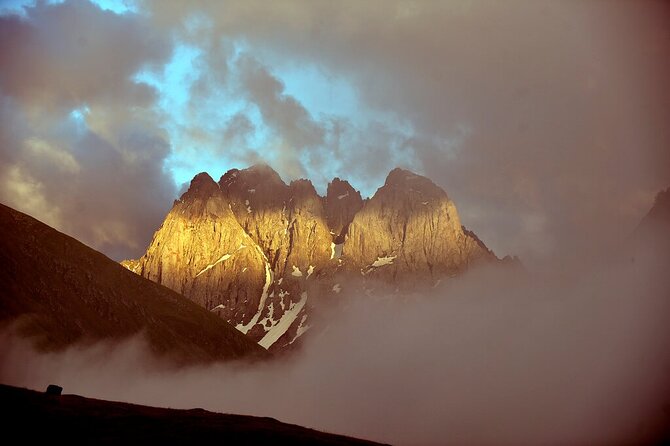
After the pass crossing, the scene changes. On the far side you’ll encounter meadows, intriguing rock formations called Roshka stones, and then the Abudelauri lakes—three alpine lakes with different colors: green, blue, and white.
I love this part because it keeps your attention moving beyond one viewpoint. If your eyes get tired from staring at peaks, the lakes re-center the day on details: water tone, reflections, and color variation that feels like a natural palette rather than a single postcard moment.
Why those colors matter for your enjoyment:
- Green can feel calmer and closer, like the lake is absorbing light.
- Blue tends to look deeper and more distant, even when it’s not.
- White can look bright and almost alpine-meteorological, especially if the light changes.
Also, Roshka stones add texture to the meadows. Instead of only seeing smooth grass, you’ll notice a rock-speckled world that feels sculpted by time and weather. Together, the stones and lakes create variety, which makes a long day easier to enjoy.
One note for your planning: since the day is long, you may not have unlimited time at every photo spot. Your guide will help you manage stops without turning the trek into a series of long pauses.
Gear, Footwear, and Why the Guide Makes a Difference
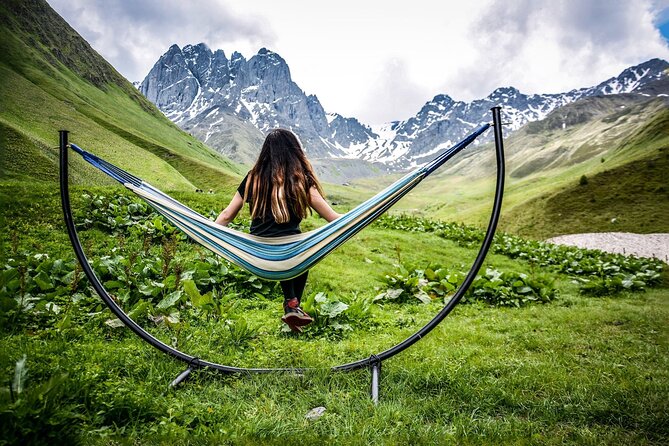
Included items are simple and useful: trekking poles and a trekking guide, plus private transportation. What’s not included is equally important: trekking shoes, trekking clothes, bottled water, and snacks.
So here’s the practical take. If your shoes are borderline, this day will feel harder. You’ll be on uneven ground for hours, and the comfort difference between average shoes and proper hiking footwear shows up by hour five.
For clothing, plan like you’re heading into a place where weather changes quickly. Bring layers and pack for rain, not just sunshine. A jacket is specifically recommended, which is a polite way of saying the pass can feel colder than you expect.
About the guides: guides such as David are singled out in their operations as being really necessary—especially on a hard day with great views. That matches what I’d tell you to do. In a long pass hike, a guide helps you move efficiently, keeps you safe in shifting conditions, and helps you time the best moments without wasting energy.
Price and Value: $310.67 for Up to 6, and What You’re Really Buying
The price is $310.67 per group, up to 6 people. That’s a private setup, which changes the value equation. You’re not paying per person for a bus tour. You’re paying for a dedicated guide plus private 4×4 transport to Juta and back.
Where the value shows:
- You get transportation into the mountains without having to figure it out on your own.
- Trekking poles are included, which saves you from hauling your own or renting elsewhere.
- You get a guide for a full long day, where navigation and pace matter more than you might think.
The “cost check” I’d do before booking: if you have even two or three people, this can feel very reasonable for a private pass hike. If you’re solo or a couple, it can still be worth it if you want privacy and a tight schedule—just know you’ll be paying group pricing rather than solo pricing.
Timing, Season, and When to Go
This trip runs during the open season listed as 06/01/2025 – 10/31/2025, with Monday through Sunday availability. The meeting window is 7:00 AM to 8:00 AM.
That early start is another reason this works as a one-day trek. With long walking hours and a high pass, you’ll want daylight and stable morning conditions. Starting early also gives you more flexibility if the weather nudges you later in the day.
Who Should Book This Trek (and Who Might Skip It)
This is a good fit if:
- you’re active and can handle 8–9 hours of trekking even if the route is described as not technically difficult
- you want a strong day in the Kazbegi area without booking multiple days
- you like variety: peaks on the approach, then meadows, Roshka stones, and the three-color Abudelauri lake scene
You might want to think twice if:
- you have limited hiking endurance for long days
- you dislike cold, wind, and the idea of changeable weather near a high pass
- you’re not ready to carry your own snacks and water
Should You Book This Chaukhi Pass Trek?
If you’re in Stepantsminda for only a short stretch and you want one big, memorable hiking day, I’d book this. The combination is strong: private 4×4 to Juta, a high-pass crossing experience, and then a distinct payoff with Roshka stones plus Abudelauri lakes in green, blue, and white.
Just be honest with yourself about the day length. This isn’t a quick hit. If you show up with decent shoes, a jacket for rain or wind, and the willingness to keep a steady pace, you’ll get a day that feels worth the effort.
If you prefer shorter hikes or you’re struggling with long walks, you’ll likely enjoy the region more with a gentler option. For the right fitness level, though, this one-day pass trek is a solid way to experience the Kazbegi and Khevsureti divide in a single shot.
FAQ
What height is Chaukhi Pass on this trek?
Chaukhi Pass is described as 3341 m in the overview, and the trek description also mentions 3431 m. Either way, you’re crossing a very high alpine pass.
Where does the trek start and end?
The trek starts and ends in Juta. Juta is about 20 km from Stepantsminda, and you’ll return to the same meeting point after the full day.
How long is the day, and how much is walking?
It’s about 10 hours total. Time in the car is around 1 hour, and trekking time is about 8–9 hours.
Is the hike technically difficult?
It’s described as not technically difficult, but it is a long day on foot, so you should have a moderate level of fitness.
What should I bring?
Bring water and snacks (not included), trekking shoes, and a jacket for changeable weather, including rain gear if needed.
What’s included in the tour price?
Included are trekking poles, a trekking guide, and private transportation. Bottled water, snacks, and trekking shoes/clothes are not included.