REVIEW · NAYA PUL
Pokhara: 7-Day Annapurna Base Camp Guided Trek
Book on GetYourGuide →Operated by Himalayan Nomad Treks Pvt. Ltd. · Bookable on GetYourGuide
You only need one goal to get excited: Annapurna Base Camp. This 7-day guided trek from Pokhara mixes big mountain payoff at 4,130m with real village hiking, plus the unwind factor of Jhinu Dada hot springs. I like that the pacing is built for you, not for a stopwatch, and that you’re not doing all the logistics yourself.
One thing to think about first is the climb. You’ll go up and down fast in altitude, so the trek is best for people who can handle long hiking days and take weather and rest seriously. Altitude is the only true wildcard here.
In This Review
- Key things I’d prioritize on this trek
- Why this 7-day Annapurna Base Camp trek feels “well built”
- Day 1: Lakeside Pokhara (800m) to Chhomrong (2,200m) via jeep and quick village altitude
- Day 2: Chhomrong to Dovan (2,400m) with suspension bridges and Modi River vibes
- Day 3: Dovan to Deurali (3,200m) through rhododendron and bamboo
- Day 4: Deurali to Annapurna Base Camp (4,130m) and the “amphitheater” feeling
- Day 5: Annapurna Base Camp to Sinuwa (2,200m) for the long, satisfying descent
- Day 6: Sinuwa to Jhinu Dada (1,600m) for hot spring recovery
- Day 7: Jhinu Dada back to Lakeside Pokhara—2-hour trek, jeep ride, and let-down closure
- Price and logistics: what $234 includes, and what you should budget extra
- Guides, safety, and pacing: why this trek feels calm in real life
- What to pack (and what matters most for the route)
- Who should book this trek, and who should think twice
- Should you book this Pokhara to Annapurna Base Camp trek?
- FAQ
- How long is the Annapurna Base Camp trek?
- What altitude do you reach at Annapurna Base Camp?
- Are meals included during the trek?
- Will I get to soak in hot springs?
- Is a porter included?
- What’s included in the price?
- What languages does the guide speak?
Key things I’d prioritize on this trek
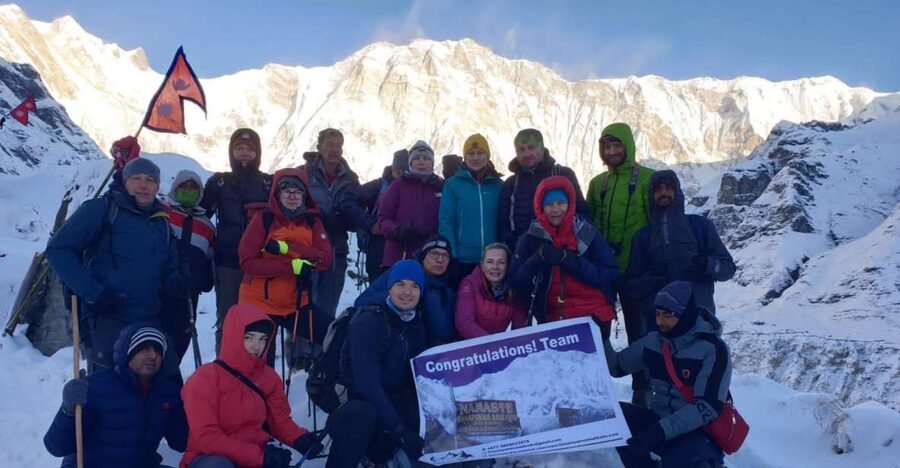
- A guided route with permits and TIMS handled so you can focus on hiking
- Hot springs at Jhinu Dada on Day 6 to reset after the long descent
- Day-by-day altitude progression that hits Annapurna Base Camp at 4,130m
- Forest and river scenery along the way, including rhododendron, bamboo, and suspension bridges
- Private group experience with an English/Hindi/Nepali speaking guide
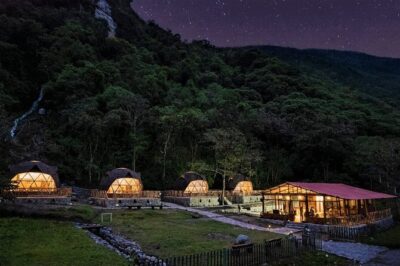
- Meals during the trek (full package) plus accommodation at tea houses along the route
Why this 7-day Annapurna Base Camp trek feels “well built”
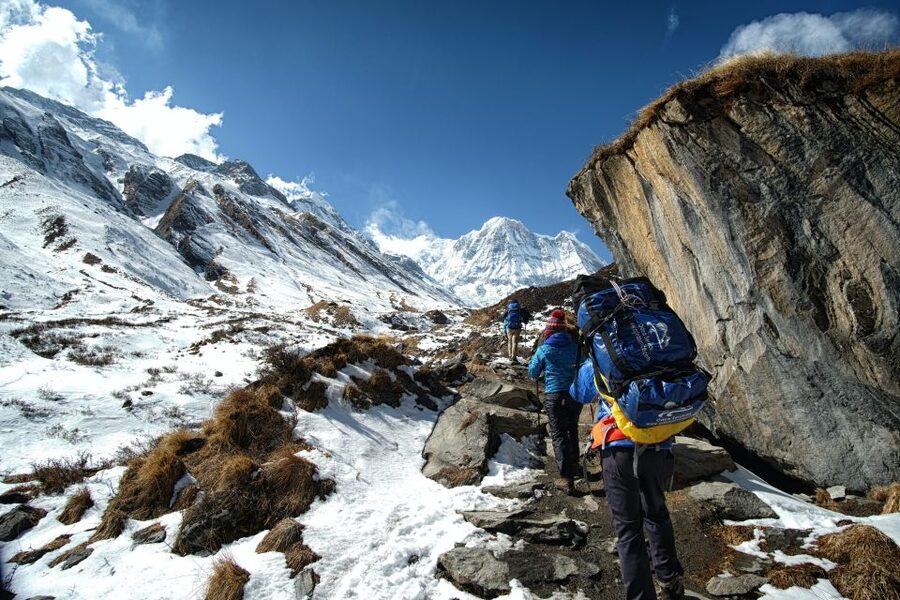
Pokhara is a great launch point because it’s relaxed at the start and energy-giving at the end. From there, this route gives you a clear rhythm: jeep when it saves time, hike when it matters, then recover when your legs want a break. It’s also a classic Annapurna journey—Chhomrong, Dovan/Deurali country, and the approach that leads to the amphitheater feeling at the base camp area.
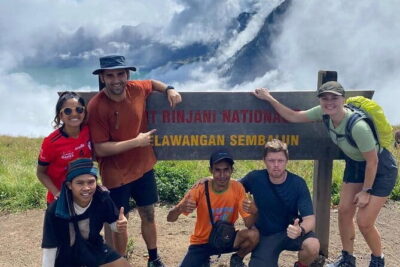
What makes this one practical is how it balances effort and reward. You’re not sprinting through huge distances every single day. The trek times are steady (often around 4–7 hours), and each day changes the scenery enough to keep you mentally fresh. Even better, the guide isn’t just there to point directions. Past trekkers praised guides who adjust pace to the group, keep the mood light (shared games and laughs at night), and handle issues calmly when someone needs extra support.
Value check: at $234 per person for a 7-day guided trek, you’re mostly paying for organization, permits/paperwork, a guide, and the core infrastructure (accommodation and meals during the trek on the full package). If you’re hoping to DIY permits, meals, and route planning, this is where you’re paying to save time and confusion.
You can also read our reviews of more tours and experiences in Naya Pul.
Day 1: Lakeside Pokhara (800m) to Chhomrong (2,200m) via jeep and quick village altitude
Your morning starts in Lakeside Pokhara with breakfast, then the route jumps into gear. You’ll do about 4 hours by jeep, with scenery along the way: Seti River views, mountains in the distance, and paddy fields. It’s a nice way to trade city time for mountain time without burning all your first-day energy immediately.
After the jeep transfer (you’ll continue up until around Matqui, described as about half an hour after Ghandruk), you switch to a 3-hour trek to Chhomrong. Chhomrong itself sits at a high, dramatic village altitude, so you feel like you’ve already arrived in the Himalayas even before the bigger climbs. The reward on this day is the combination of culture and first real hiking effort—good for getting your legs awake without overdoing it.
Potential drawback: Day 1 is a mix of long vehicle time plus hiking. If you’re prone to feeling stiff after rides, take a few minutes during stops to stretch and walk around so the trek part feels easier.
Day 2: Chhomrong to Dovan (2,400m) with suspension bridges and Modi River vibes
Day 2 is your “forest + water” day. You trek for about 5 to 6 hours, starting from Chhomrong and moving toward Dovan through lush forest sections. This is the kind of day where the route keeps you paying attention: suspension bridges break up the monotony, and the Modi River adds that constant moving-sound atmosphere that makes the trail feel alive.
You also start getting clearer, more iconic views in this stretch—Annapurna and Machhapuchhre are called out here. That matters because it gives you mental checkpoints: you’re not hiking in fog and guessing; you’re seeing why people come.
What to watch: suspension bridges can feel bouncy and exposed when the wind picks up. If heights bother you, slow down, keep your focus on your footing, and use the steady rhythm the guide will keep.
Day 3: Dovan to Deurali (3,200m) through rhododendron and bamboo
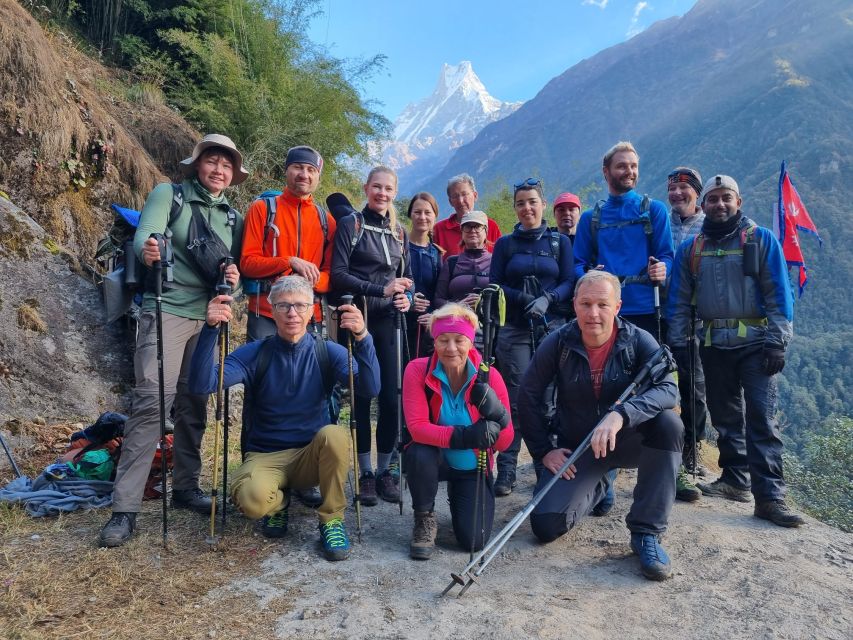
On Day 3 you gain more elevation, heading to Deurali at 3,200m over roughly 6 hours. The trail passes through rhododendron and bamboo forests, and the higher you go, the more the trekking becomes about “steady effort” rather than constant stops.
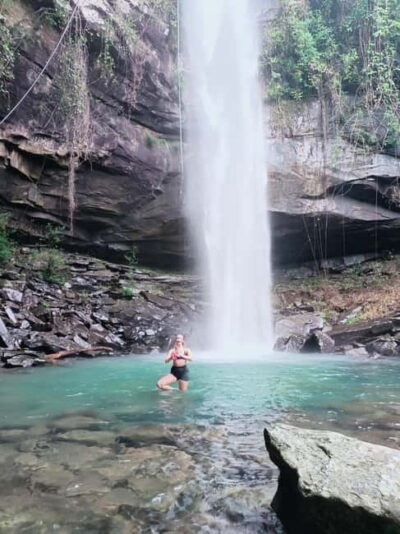
This is also where the route includes things that feel like bonus surprises—waterfalls and picturesque views are specifically part of what you can expect. Those natural breaks are helpful. When a trail adds water sounds, you get a psychological reset. Your legs keep working, but your brain feels like it’s getting variety.
Possible consideration: because you’re moving higher, you may feel the air getting thinner even if the trail isn’t overly steep all day. Hydrate early and often. Wear layers you can adjust without stopping for long.
Day 4: Deurali to Annapurna Base Camp (4,130m) and the “amphitheater” feeling
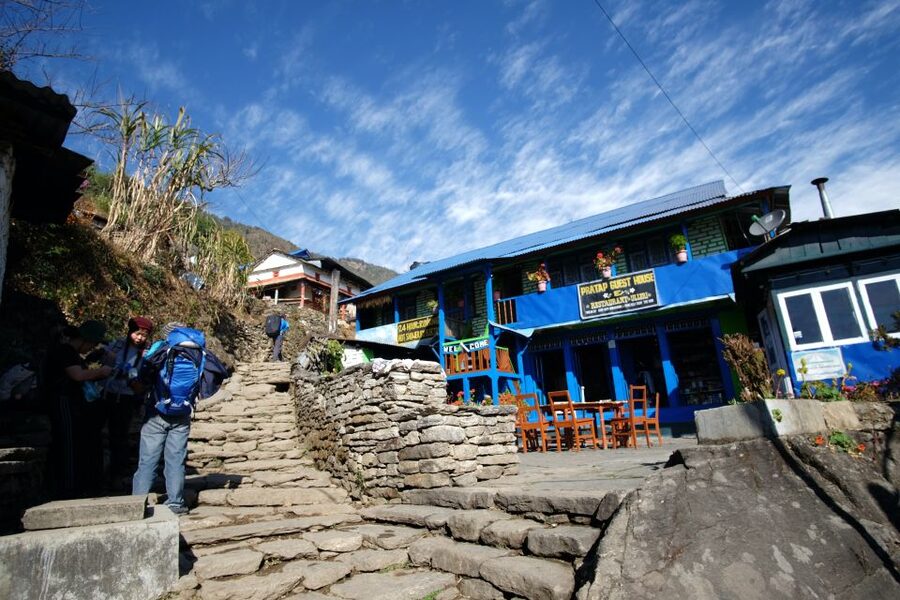
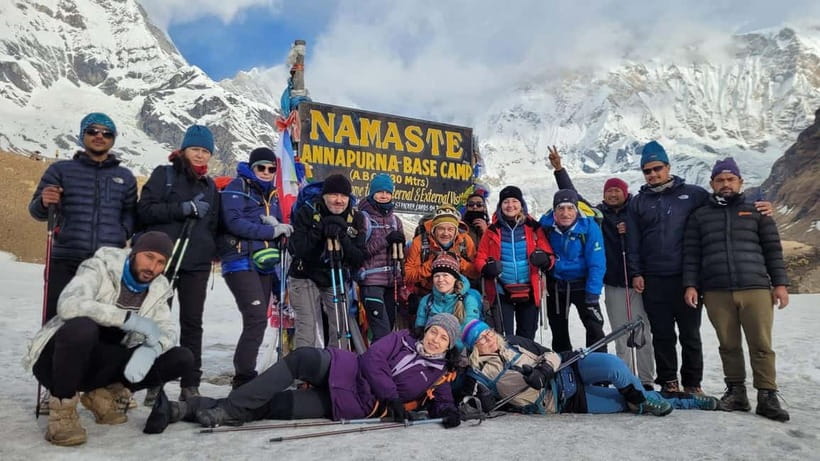
Day 4 is the big one: Deurali to Annapurna Base Camp at 4,130m in about 6 hours. This is when the trek turns from a hike into a moment you remember.
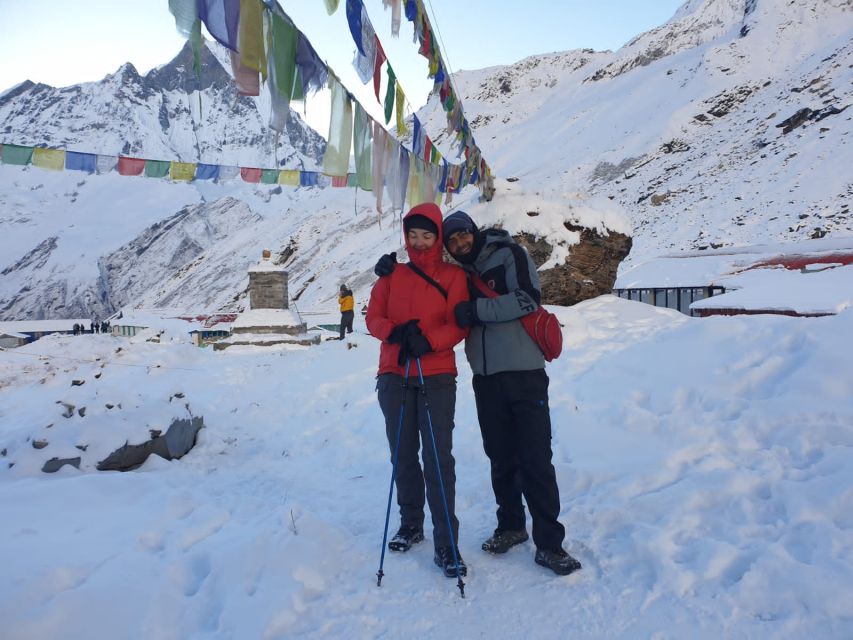
You’ll trek up into an area described as an amphitheater of mountains, with snow-capped peaks and dramatic glacier scenery around you. Practically, what you’re aiming for is the combination of high altitude effort and a payoff that feels concentrated. You don’t just reach a point—you reach a view.
Realistic tip: at this altitude, weather can shift fast. Even if you don’t get snow, temperatures can drop. Your provided packing list includes the basics that matter up high: a jacket, sunglasses, and a sleeping bag (for overnight cold). Bring a towel too—small things matter when you’re living outdoors.
Day 5: Annapurna Base Camp to Sinuwa (2,200m) for the long, satisfying descent
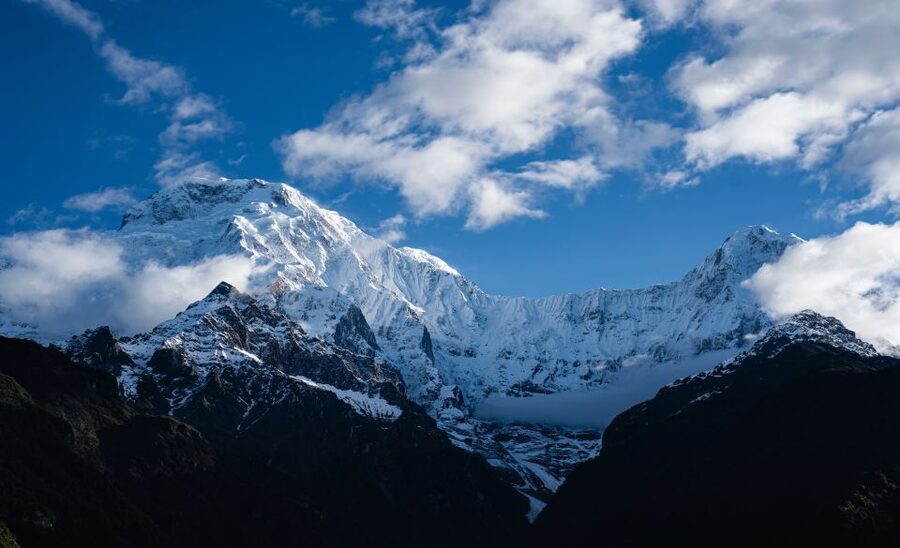
After the base camp day, you turn around and descend back toward Sinuwa for around 7 hours. That’s a long day on the legs, even if the direction is easier on your breathing. Downhill can be rough on knees and thighs, so the value here is that you get a full day to experience the region again with your brain reprocessing the views from a new angle.
You’ll retrace the route, which is a quiet advantage: navigation stays simple because you’re following what you already did. You also get time for reflection—this is where the trek starts feeling personal. You’ve earned the return view.
What to watch: downhill days punish shoe traction and pacing. Take it slow on stony sections, and make sure your hiking shoes have good grip.
Day 6: Sinuwa to Jhinu Dada (1,600m) for hot spring recovery
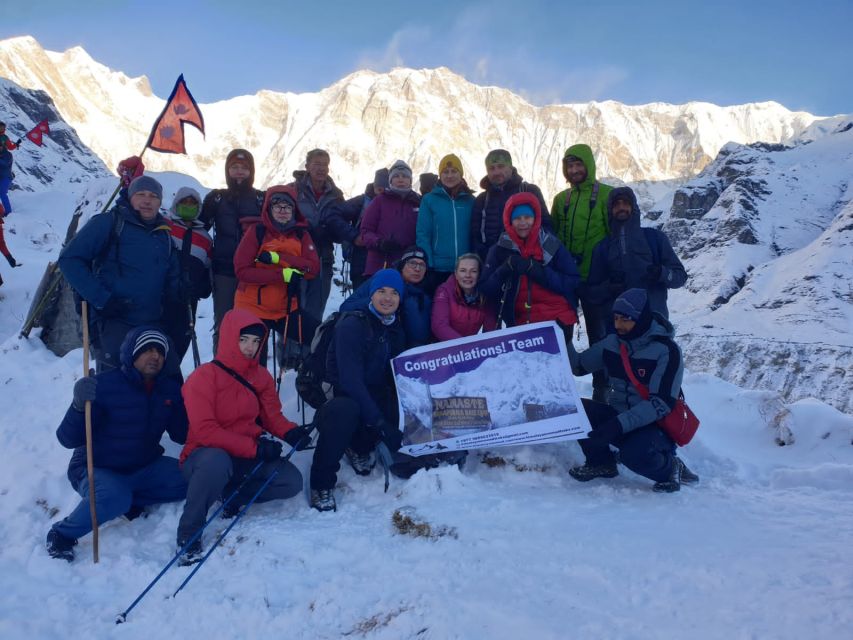
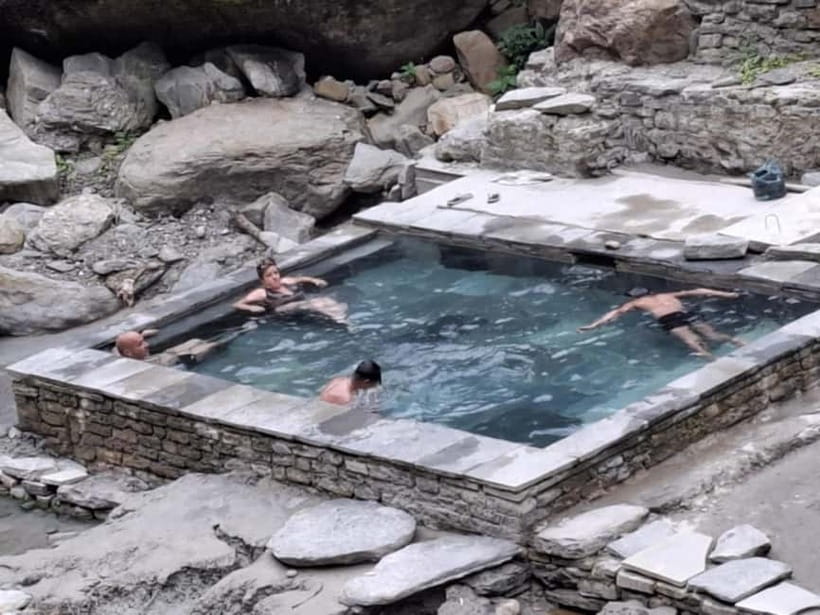
Day 6 drops to Jhinu Dada at 1,600m over about 5 hours. This day includes one of the most practical rewards on the whole trek: the natural hot springs.
Hot springs are more than a fun extra here. After multiple days of climbing and descending, your muscles will be begging for warmth. Soak time helps you feel human again, and it turns the trekking into a loop—effort, effort, then recovery.
Bring planning matters. Your packing list includes a towel, which you’ll want for this day. Also expect that your clothes and towel might dry more slowly at lower temperatures, especially early or late in the day.
Day 7: Jhinu Dada back to Lakeside Pokhara—2-hour trek, jeep ride, and let-down closure
Your final day starts with a 2-hour trek, then a jeep back to Pokhara. The route gives you a clean finish: you’re not hiking for hours at the end, and you don’t jump immediately from mountains to busy streets without a transition.
You also get time to think through what changed: your balance on trails, your endurance, and your mental stamina. By the time you’re back in Lakeside Pokhara, it’s usually not just about what you saw—it’s about how the trek rearranged your sense of time.
Price and logistics: what $234 includes, and what you should budget extra
At $234 per person, the value comes from the “hidden work” that you don’t want to manage yourself on a Himalayan trek.
What’s included in this experience:
- Hotel pickup and drop-off
- Trekking permits and paperwork, including TIMS fee(s
- A medical kit
- Accommodation during the trek
- All meals (breakfast, lunch, dinner) during the trek for the full package
- An English-speaking guide (guide expenses covered: meals, accommodation, salary, equipment, insurance, transportation)
- Deluxe transportation per the itinerary for the full package (and shared bus for non-full package)
- Taxes and organization fees
Not included (so you don’t get surprised):
- Soft and hard drinks
- Travel and rescue insurance
- Entrance fees during sightseeing
- Nepalese visa fee / international flights
- Porter (though it’s available for purchase)
- Lunch and evening meals in Pokhara
- Personal expenses like phone calls, laundry, battery recharge, and extra snacks
- Any extra night in Pokhara if you need it due to timing issues outside the scheduled plan
My practical advice: if you’re doing the full package, the included meals reduce one of the biggest friction points on the trail. If you’re doing anything less than that, budget for food costs each day. And plan a little buffer in Pokhara for evening meals and drinks, since those are not included.
Guides, safety, and pacing: why this trek feels calm in real life
A trek can be beautiful and still feel stressful if the guide runs the show like a military drill. The best thing about this experience is that the guide is part of the plan, not an afterthought.
You’ll travel with an authorized guide who speaks English, Hindi, and Nepali, and you’ll have guide insurance covered as part of the experience. There’s also a medical kit on hand, and you’ll have someone managing paperwork and permits so you don’t waste time at checkpoints.
In addition, multiple named guides associated with this trek type have been praised for safety-first decision-making and adjusting pace to fit the hikers. One guide was highlighted for adapting the hike based on the day and how people were feeling, and for helping quickly when someone wasn’t feeling well. Another guide was praised for years of local area experience that kept the trek smooth.
Two more practical pieces that matter:
- Evening downtime can be part of the fun. Games and light conversation were mentioned as a morale boost.
- Consider a porter if you’ll be carrying a full load. One experience described a porter as a real lifesaver on more than one occasion.
What to pack (and what matters most for the route)
You don’t need a flashy kit, but you do need the right basics for altitude and daily hiking. Your packing list already points to the essentials:
- Passport or ID
- Hiking shoes
- Sunscreen and sunglasses
- Jacket and long pants
- Trekking gear and a T-shirt
- Sleeping bag
- Towel (especially for Jhinu Dada hot springs)
- Camera
- Cash
- Shorts (for lower-altitude comfort)
If you’re thinking about comfort, prioritize shoes and layers. When temperatures drop near base camp, good outerwear matters more than extra gadgets.
Who should book this trek, and who should think twice
This is a strong fit if you:
- Want a guided, organized route with permits and daily planning handled
- Like hiking days that are challenging but not designed to destroy you
- Want a clear mountain goal (Annapurna Base Camp) plus a recovery reward (Jhinu Dada hot springs)
- Prefer a private group setting so the guide can pace you
Think twice if you:
- Struggle with altitude hikes and downhill strain, especially if you’ve had trouble with high-elevation travel before
- Don’t plan for cold temperatures at higher elevations (your jacket and sleeping bag are essential)
- Expect fully effortless days—this is still a mountain trek with serious elevation changes
Should you book this Pokhara to Annapurna Base Camp trek?
If your goal is Annapurna Base Camp with a guide, good organization, and a satisfying recovery day at Jhinu Dada, this itinerary makes a lot of sense. The route’s structure is practical: jeep-to-trail transitions, steady hiking blocks, and a real payoff at 4,130m. The price is also reasonable when you factor in permits, meals during the trek (full package), accommodation, and guide support.
If you’re unsure, your best decision tool is your fitness comfort with altitude and long hiking days. If that’s solid for you, I’d book it and focus on pace, hydration, and using the hot springs like they’re part of the plan.
FAQ
How long is the Annapurna Base Camp trek?
It’s a 7-day trek with day-by-day hiking and transport included as described in the route.
What altitude do you reach at Annapurna Base Camp?
The trek reaches Annapurna Base Camp at 4,130m.
Are meals included during the trek?
Yes—meals (breakfast, lunch, dinner) are included during the trek for the full package. Lunch and evening meals in Pokhara are not included.
Will I get to soak in hot springs?
Yes. You visit Jhinu Dada Hot Spring on Day 6 as part of the itinerary.
Is a porter included?
Porter service is not included, but it’s available for purchase.
What’s included in the price?
The included items cover hotel pickup/drop-off, trekking permits and paperwork (including TIMS fee(s)), a medical kit, accommodation during the trek, a guide with insurance, and the trek meals for the full package, plus applicable government tax.
What languages does the guide speak?
The guide speaks English, Hindi, and Nepali.