REVIEW · NAYA PUL
Pokhara: 2-Day Short & Sweet Ghorepani Poon Hill Guided Trek
Book on GetYourGuide →Operated by Himalayan Nomad Treks Pvt. Ltd. · Bookable on GetYourGuide
Two days, one unforgettable Himalayan sunrise. I love the tight route that gets you from Pokhara to Ghorepani and up to Poon Hill sunrise, plus the day-one climb through rhododendron forests where every turn brings new mountain angles. The trade-off: mornings can start in mist, so you might see clouds instead of sharp peaks.
At about 3,210m, Poon Hill is the headliner, but you’ll still feel the altitude on the way up from Ghorepani through Ulleri. You sleep in a tea house near Ghorepani, then end with a steep, careful descent back toward Nayapul before the jeep ride returns you to Lakeside.
For $117, you’re not just buying mountain views. You’re getting a licensed English-speaking local guide, trekking permits/TIMS paperwork, meals on the trek (on the full package), and a final night at Hotel Orchid in Pokhara—so the whole trip feels organized and worth your time.
In This Review
- Why This Short Poon Hill Trek Feels Like a Full Mountain Trip
- From Pokhara to Nayapul: The Scenic Start by Jeep and River Road
- Day 1: Tikhedhunga, Ulleri, and the Long Climb to Ghorepani
- Tikhedhunga to Ulleri: Where Your Legs Start Talking
- Ulleri to Ghorepani: Rhododendron Forest Walking
- Overnight at a tea house in Ghorepani
- Day 2: Poon Hill Sunrise, Dhaulagiri Views, and the Steep Return
- The sunrise climb to Poon Hill at ~3,210m
- The payoff: Annapurna range views from the viewpoint
- Ulleri descent: go-slow, not fast
- Tea House Basics and Pokhara Comfort: Hotel Orchid After the Mountains
- Value Check: Is $117 a Good Deal for This 2-Day Trek?
- Guides, Pace, and Real-World Help When Things Go Wrong
- What to Pack for 3,210m Sunrise (Without Overpacking)
- Who This Trek Suits Best (and Who Should Skip It)
- Should You Book This 2-Day Poon Hill Trek?
- FAQ
- What altitude do you reach on this trek?
- How long is the hiking each day?
- Is the guide included, and what languages do they speak?
- Are meals included?
- Where do you stay overnight?
- Do I need to arrange permits or TIMS paperwork?
- Can I cancel for a full refund?
Why This Short Poon Hill Trek Feels Like a Full Mountain Trip
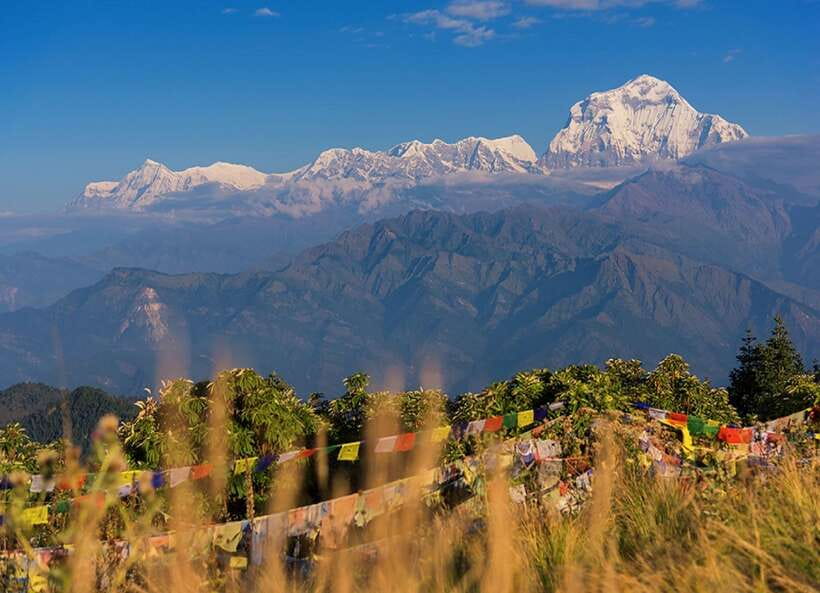
This is a classic shortcut to the Annapurna region’s best payoff. In two days, you’ll hike high enough to feel the air change, see the Annapurna range from the viewpoint people set alarms for, and still spend your last night comfortably back in Pokhara.
The best part is how the route mixes effort with payoff. Day 1 is steady climbing and village-to-village walking. Day 2 starts before dawn and then shifts into a satisfying downhill grind—good legs work, but not an ultra-long endurance test.
You also get the practical stuff handled: your guide, the permits/TIMS fee, and your Pokhara transfer. That matters because trekking in Nepal goes smoother when logistics don’t eat your energy.
From Pokhara to Nayapul: The Scenic Start by Jeep and River Road
You begin with a scenic drive (about 3 hours) from Pokhara to Nayapul, then transition into the trekking start area. The road ride is not just “getting there.” You’ll pass mountains, rivers, and green fields, then follow a river corridor that gives you early glimpses of the Annapurna foothills.
A key detail: the drive is part of the experience. It sets your expectations. You’ll see the rhythm of small villages and the kind of forest life you’ll walk through the next day—especially the rhododendron areas that show up on the climb to Ghorepani.
If you’re prone to car sickness, bring what you normally use. The trip is not all winding-bottle turns, but Nepal’s roads can still test your stomach.
You can also read our reviews of more tours and experiences in Naya Pul.
Day 1: Tikhedhunga, Ulleri, and the Long Climb to Ghorepani
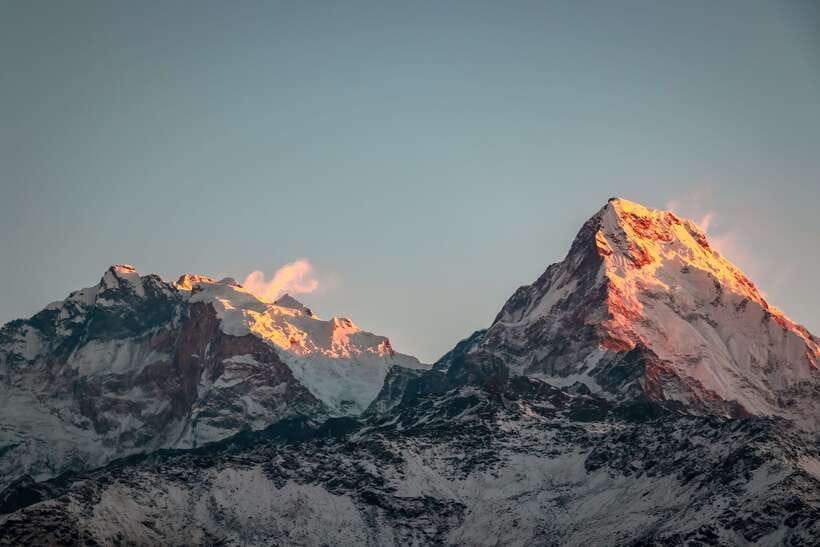
Day 1 is a mix of travel and hiking (about 5 hours trekking after the drives). The classic sequence goes: Tikhedhunga (around 1,570m) → Ulleri (around 2,000m) → Ghorepani (around 2,840m)—with the big focus on getting yourself into the right “starting position” for sunrise.
Tikhedhunga to Ulleri: Where Your Legs Start Talking
Tikhedhunga is where you begin to feel the altitude climb, even before you reach the viewpoint zone. Ulleri sits higher, and the step-up from town level to trekking level is what makes this route work for a short trek: you’re gaining elevation in a way that still feels manageable.
This segment matters because it prepares your body for the next stretch. If you pace too aggressively here, you’ll feel it later when the forest walking ramps up.
Ulleri to Ghorepani: Rhododendron Forest Walking
From Ulleri you trek on toward Ghorepani for roughly five hours total for the day, with rhododendron forests along the way. That’s where the trek earns its charm.
You’ll likely notice three things as you go:
- the air cools gradually as you gain height
- the trail alternates between shaded forest and open angles
- you get frequent “wait, look at that” moments as peaks peek through
By the time you reach Ghorepani, the view isn’t just scenery. It’s your reward for getting up and over the first day’s effort.
Overnight at a tea house in Ghorepani
You spend the night in a tea house/lodge at Ghorepani. Tea houses in this area typically offer basic comforts, and you should plan on simple, warm meals and a no-frills room. The value here is that it puts you close to Poon Hill early the next morning.
If you’re worried about sleep quality, bring earplugs or a light sleep mask. Mountains and guesthouses can mean early wake-ups, thin walls, and shared spaces.
Day 2: Poon Hill Sunrise, Dhaulagiri Views, and the Steep Return
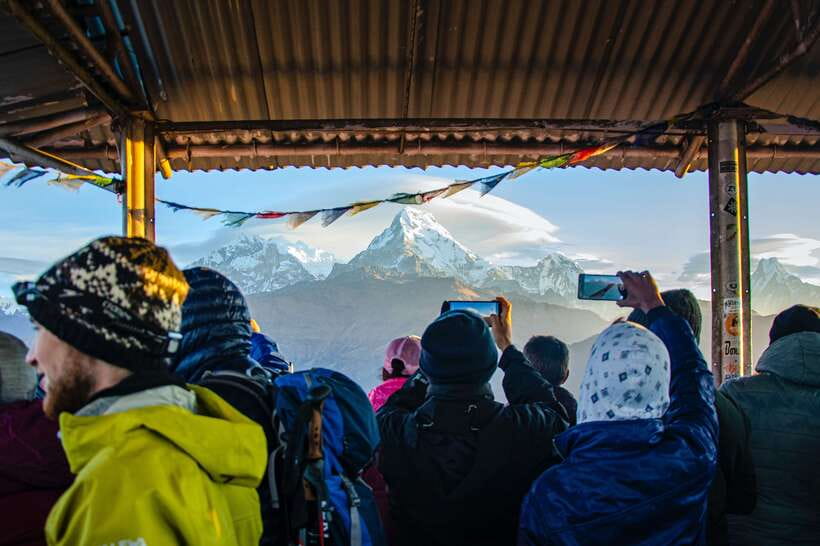
Day 2 is where this trek earns its reputation. You hike up to Poon Hill for sunrise, then descend back along the same route to Ulleri—followed by a continuation down toward Hile (around 1,500m), and then you head back to Nayapul by jeep and on to Pokhara (about 3 hours drive).
The sunrise climb to Poon Hill at ~3,210m
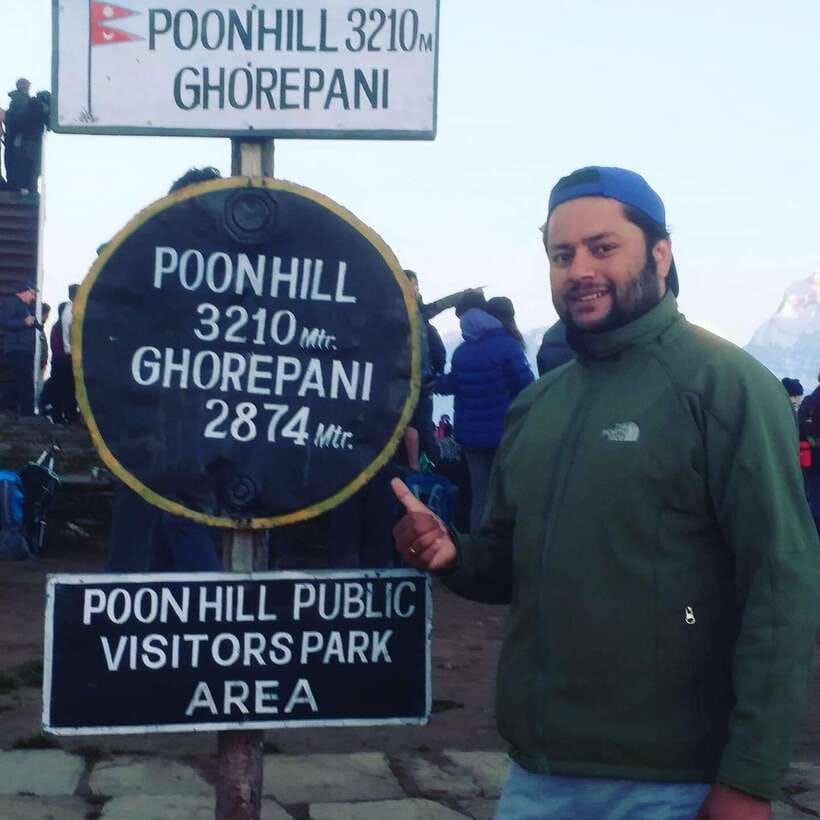
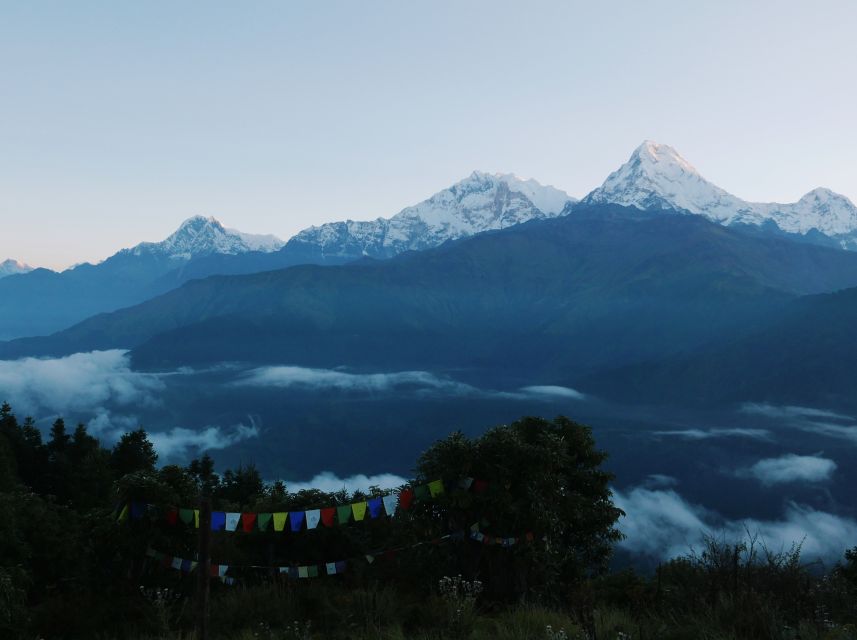
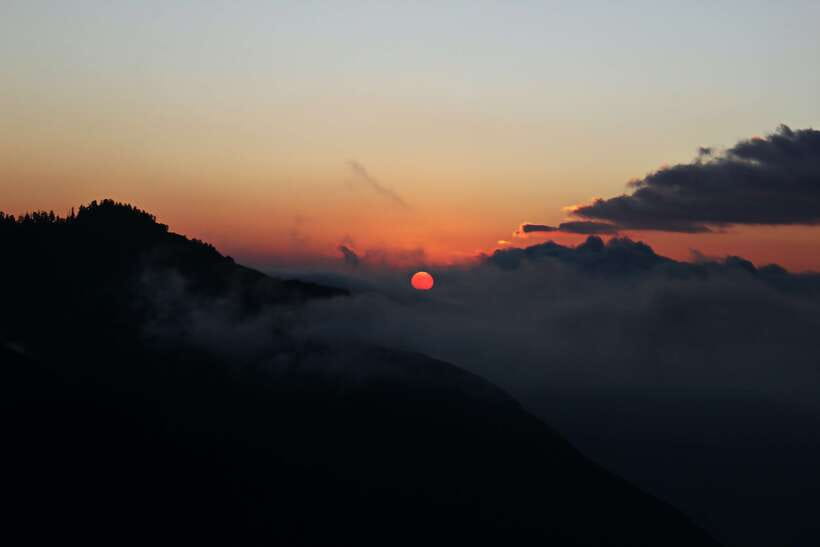
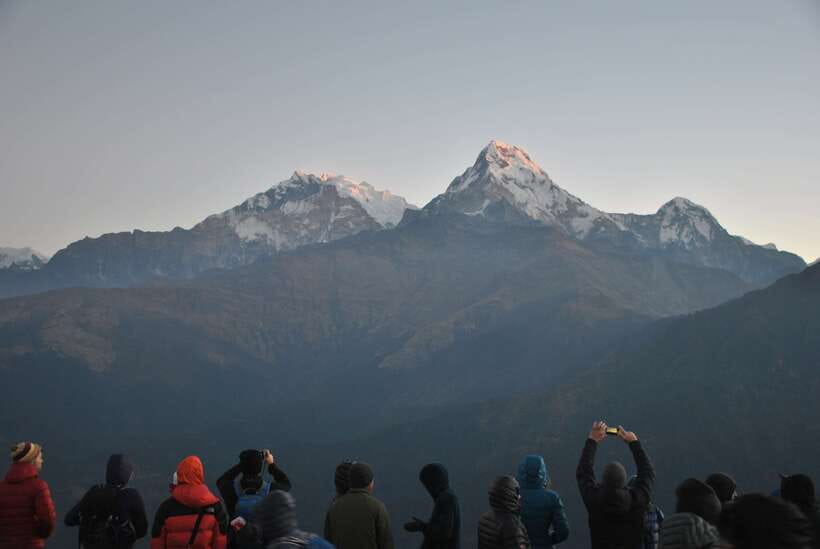
Poon Hill is the moment. The plan is built around catching the early light over the Annapurna range and also the broader mountain views, including Dhaulagiri.
But sunrise plans depend on weather. One thing you should know upfront: the viewpoint can be clear and dramatic, or it can be muted by mist. If visibility is limited, you may still enjoy the atmosphere—just don’t assume a perfect panorama every time.
What helps: bring warm layers and use a headlamp. Early mornings at altitude can feel sharp, even when you’re moving.
The payoff: Annapurna range views from the viewpoint
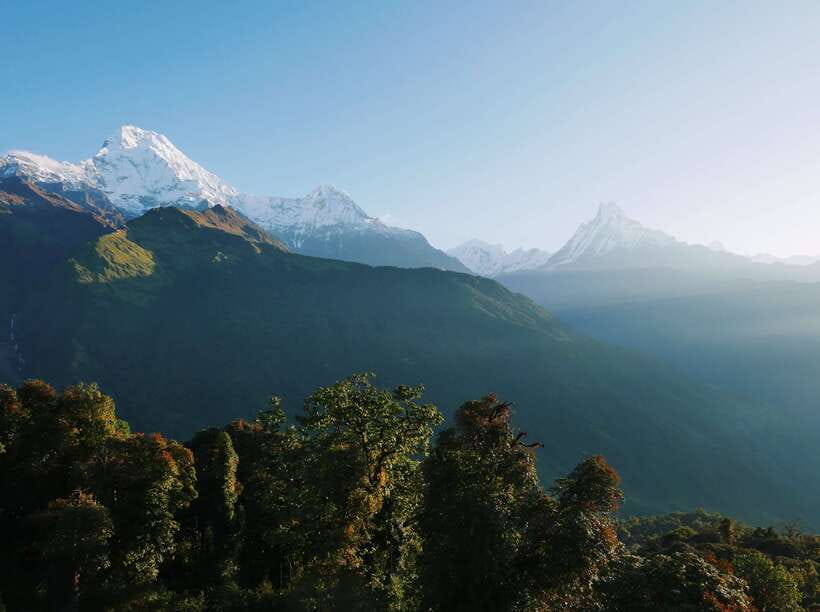
When conditions cooperate, the view is the whole point. You’ll see why people do this even on short schedules: you’re up high enough that the mountain mass feels close, and wide enough that the horizon looks endless.
If clouds roll in, keep expectations flexible. You can still enjoy the hike itself—forest turns, ridge angles, and the way the mountains shape the light.
Ulleri descent: go-slow, not fast
After Poon Hill, the route descends steeply back to Ulleri. This is the part where your trekking poles can become your best friend. Descents are where people overdo it and end up with sore knees.
Then you continue to Hile and down through jungle and forest zones with a river connection (the Modi river area is part of the broader route feel). This section gives you a calmer pace after the sunrise rush, and it sets you up for the final jeep ride.
Tea House Basics and Pokhara Comfort: Hotel Orchid After the Mountains
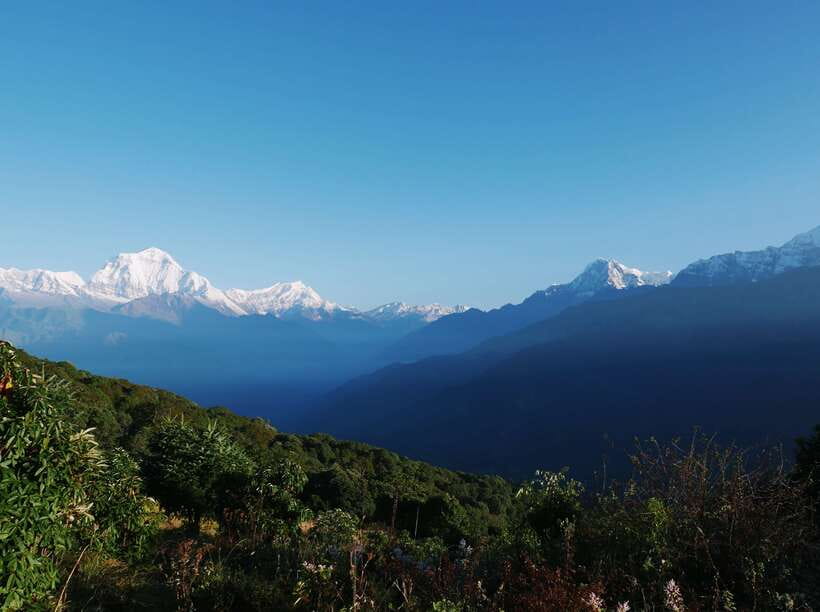
You get two different kinds of lodging on this trek:
- a tea house night at Ghorepani
- a final night at Hotel Orchid in Pokhara
That Pokhara night is not a small detail. It helps the trip feel complete. After two days of uphill work and early starts, you want a proper bed and a real bathroom setup rather than scrambling for comfort.
On the trail, expect simple meals and basic tea house comforts. You’ll probably eat Nepal-friendly staples like dal bhat (lentils & rice), plus other available options. Breakfast, lunch, and dinner during the trek are included with the full package, which helps you avoid decision fatigue when you’re already tired.
Value Check: Is $117 a Good Deal for This 2-Day Trek?
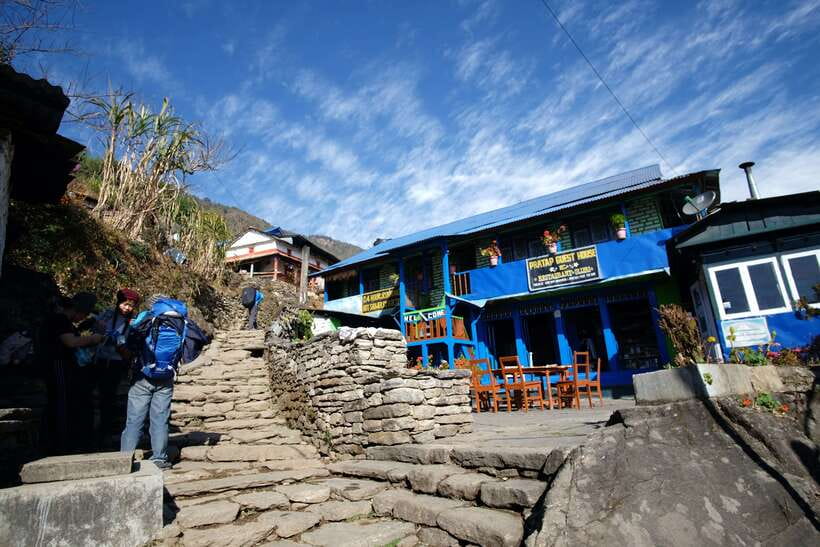
Price is always tricky. With a short trek, it’s easy to overpay for “views only.” This one is closer to the better side of the equation because several major costs are already included.
Here’s what you’re getting that you’d otherwise have to buy or figure out:
- Licensed English-speaking local guide
- Trekking permits and TIMS paperwork fees
- Meals during the trek (for the full package)
- Private accommodation for the tea house night
- Hotel Orchid for the last night
- 4WD jeep transportation for the start and finish (with the full package rules, and different shared vs. meal-included options depending on package type)
- luggage storage facility
When you compare that to the usual cost of a guide + permits + transfers alone, the price starts looking more reasonable. The biggest thing you’re not getting is comfort extras: soft/hard drinks, travel and rescue insurance, and porters are not included.
If you’re traveling light and comfortable carrying your own daypack, this is strong value. If you’d rather not carry anything at all, budget for a porter on top (since porter is listed as not included).
Guides, Pace, and Real-World Help When Things Go Wrong
The guide is a big part of a short trek. When you have only two days, you don’t want someone who slows you down or doesn’t explain what you’re actually walking toward.
Your guide here is authorized/licensed and can work in English, Hindi, and Nepali. The best guides also adjust pace. On a route like this, pacing is everything: you want to avoid arriving fried at Ghorepani, and you want to be ready for the early push to Poon Hill.
There’s also practical support. For example, one past traveler shared that if luggage was forgotten back at a jeep stage, the team helped deliver it onward to the hotel. That’s the kind of “small but huge” support you only notice when something goes slightly sideways.
What to Pack for 3,210m Sunrise (Without Overpacking)
For this trek, your packing list matters more than people think. You’re going high enough for cold mornings, then hiking hard enough to need sun protection later.
Bring:
- passport or ID card
- hiking shoes (good grip helps on the steep descent)
- a jacket, plus layers for early morning
- hat and sunscreen (sun can hit harder than you expect at altitude)
- socks and long pants (plus shorts if you like)
- headlamp (sunrise starts before it’s light)
- trekking poles (especially helpful for the downhill)
- water bottle
- cash (for small purchases and tips)
Change of clothes is worth it. One dry set after the trek makes the Pokhara hotel night feel truly restful.
Not allowed:
- scooter
- fireworks
If you’re planning a Nepal trip, keep your phone charged too. The views at Poon Hill are why you came, and you’ll want photos once the light hits.
Who This Trek Suits Best (and Who Should Skip It)
This is ideal if you want a taste of the Annapurna region without committing to a week of hiking. It’s also good if you’re okay with walking 5 hours most of day 1, then a second day that includes a pre-dawn climb and then a steep descent.
You might love it if:
- you’re short on time but want high-altitude sunrise
- you like structured plans with a real guide
- you want a tea house night plus a comfortable Pokhara hotel finale
You should think twice if:
- you have knee issues or fear steep downhill walking
- you’re not comfortable hiking early in the morning
- you’re traveling with very small children (it’s not suitable for babies under 1 year) or you’re very elderly (it’s not suitable for people over 95 years)
Should You Book This 2-Day Poon Hill Trek?
Book it if you want a short, high-reward trek that ends with both mountain time and Pokhara comfort. The included guide, permits/TIMS, trekking meals (on the full package), tea house lodging, and Hotel Orchid night make it feel like a complete package rather than a bundle of separate purchases.
Skip it or choose a different plan if you need a more flexible hiking pace or you’re strongly dependent on perfect weather for your main photo. Morning mist happens, and this route can’t change that.
If you’re the type who enjoys walking through rhododendron forest and wants that first-real-mountain-feeling at 3,210m, this one fits neatly into your Nepal trip.
FAQ
What altitude do you reach on this trek?
You’ll reach about 3,210m above sea level at Poon Hill, with other stops along the way such as Tikhedhunga (~1,570m), Ulleri (~2,000m), Ghorepani (~2,840m), and Hile (~1,500m).
How long is the hiking each day?
Day 1 is about 5 hours trekking, and Day 2 is about 5 hours trekking, plus driving time around the hikes (about 3 hours driving each direction).
Is the guide included, and what languages do they speak?
Yes. The experience includes an authorized/licensed English-speaking local guide who can work in English, Hindi, and Nepali.
Are meals included?
For the full package, breakfast, lunch, and dinner during the trek are included. Soft and hard drinks are not included.
Where do you stay overnight?
You’ll have one night in a tea house/lodge during the trek at Ghorepani, and the last night in Pokhara at Hotel Orchid.
Do I need to arrange permits or TIMS paperwork?
No. Trekking permits, the required paperwork, and TIMS fees are included.
Can I cancel for a full refund?
Yes. You can cancel up to 24 hours in advance for a full refund.