REVIEW · MATERA
Trekking towards Torrente Gravina and Rupestrian Churches of the Murgia
Book on Viator →Operated by Altieri Viaggi · Bookable on Viator
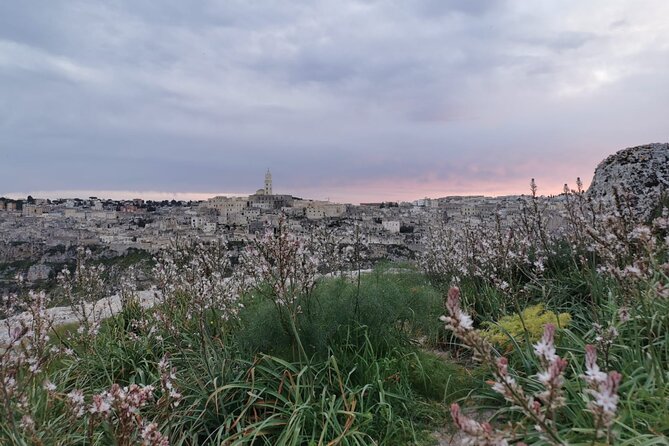
Ravines, rock churches, and those Matera views. This trek across the Murgia plateau and down toward Torrente Gravina is special because you’re literally walking in the same World Heritage story that shaped Matera’s stone dwellings and churches. I love how the route leads you from the high Parco della Murgia Materana down into the karst “Gravine,” then brings you back with big sightlines over the Sassi of Matera.
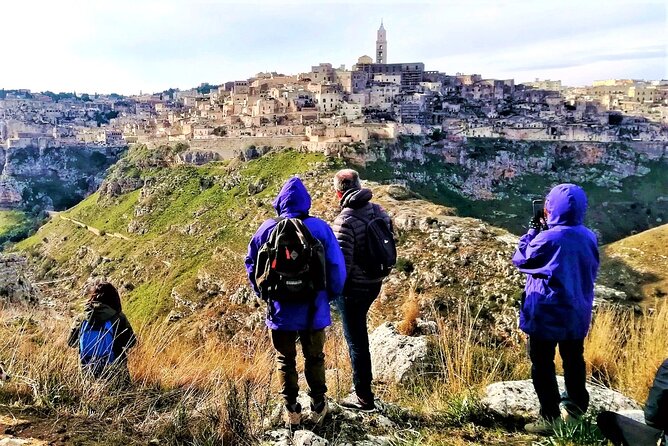
Two things I like a lot: first, the view moments when you look up from the valley and suddenly see the Sassi beyond the ravine; second, the way the guide connects places you can see to people from different eras, from older settlements through Neolithic villages in Murgia Timone and on to later rock communities. On recent departures, guides such as Tania and Benedetto have stood out for being genuinely helpful and ready with advice that makes the walk feel more personal and less like a checklist.
One consideration: the trail includes an initially steep section and you’re walking outdoors for about 2 hours 45 minutes, so plan on moderate fitness and good shoes. Also, the experience depends on good weather, and if conditions are poor the operator will reschedule or refund.
In This Review
- Key highlights worth planning for
- Matera’s Murgia Gravina: why the park is more than a pretty walk
- Getting to the trail and why the small group matters
- Walking down toward Torrente Gravina: the steep start and the big “look up” moment
- Rock churches and the human timeline etched into stone
- The Our Lady of Monteverde rock church stop (quick, but focused)
- Guide power: why Tania and Benedetto come up again and again
- Price and value: what $86.82 gets you in real terms
- Timing your Matera day: where the start and end help you
- Who should book this trek, and who might want to skip it
- Should you book the trekking to Torrente Gravina and the Rupestrian Churches?
- FAQ
- How long is the trek in Matera?
- What is the price per person?
- What meeting point is used for the tour?
- Where does the tour end?
- Is there a mobile ticket?
- What is included in the price?
- What should my fitness level be?
- How large is the group?
- Is weather important?
- Can I cancel for free?
Key highlights worth planning for
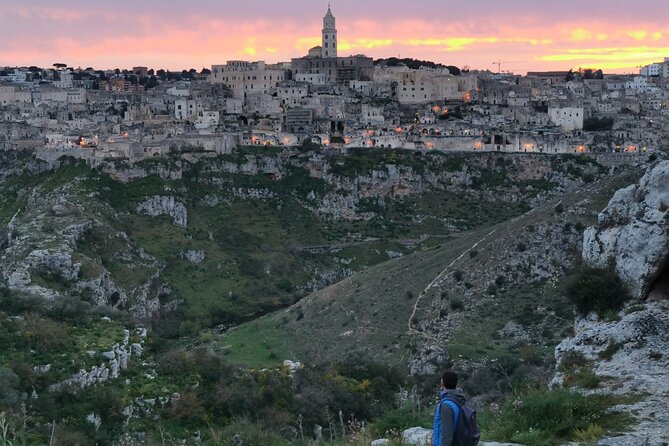
- Gravine karst ravines: the dramatic geology that frames Matera’s stone heritage
- World Heritage setting (since 2007): a protected park made for walking, not just looking
- A valley-to-plateau route: you descend, look up, then skirt the ravine on the way back
- Rock-church stops: the “speaks to us” feeling you get when you stand near these sites
- Small-group feel: a maximum of 20 travelers, led by a licensed hiking guide
- Guide names to watch for: Tania and Benedetto have received standout praise
Matera’s Murgia Gravina: why the park is more than a pretty walk
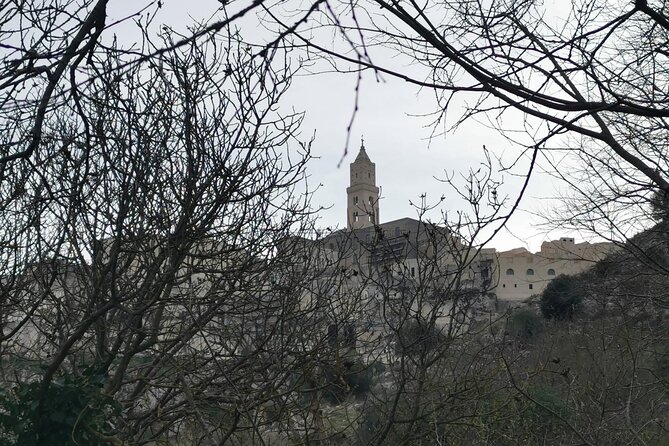
Matera’s Murgia plateau is a rocky, hilly area with deep karst fissures called Gravine. That geology matters here because it shapes everything: the way water runs in torrents, the way the ground forms natural routes, and the way early communities found both shelter and places to build.
This is also a Regional Park of the Rupestrian Churches of Matera and part of the World Heritage designation since 2007. So you’re not just doing an outdoorsy stroll. You’re walking through a living outline of how people used the land—from early settlements to later villages, then on to medieval pastoral life and Greek-Byzantine hermit communities that established monasteries and rock churches.
What I like about this kind of route is the cause-and-effect feeling. You can see why a ravine would hide people, protect them, or force certain paths. Then, when you stop near a church carved into rock, the site stops being random. It becomes a human decision made in a very specific terrain.
Getting to the trail and why the small group matters
The day starts in central Matera at Via Domenico Ridola, 61 and ends at Piazza Giacomo Matteotti. You’ll get an air-conditioned vehicle as part of the experience, which is a smart comfort boost before you start walking (especially if you’re visiting in warmer months).
The group size is capped at 20 travelers, which helps on a trek like this. Smaller groups tend to move with less bunching, so you spend more time actually seeing and listening rather than waiting for everyone to catch up. It also makes a difference when the guide is explaining how the Gravine connects to what you’re looking at—those details are easier to follow when you’re not swallowed by a crowd.
One more practical note: this experience is near public transportation, so it’s not locked into a hard-to-reach meeting point. Still, I’d plan to arrive a bit early so you can get oriented before the walk begins.
Walking down toward Torrente Gravina: the steep start and the big “look up” moment
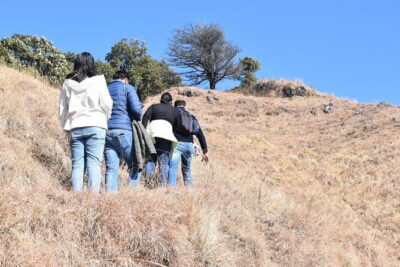
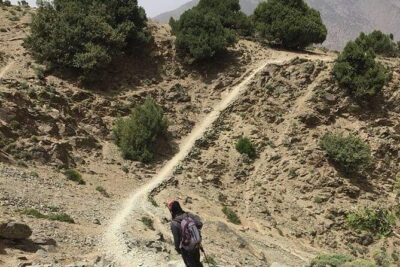
The best way to understand this trek is as a controlled descent. The route begins with an initially steep path, and you’re walking with environmental naturalistic guides who help you make sense of the ground as you go.
Then you descend toward the Gravina stream area, where the terrain shifts. The description makes a point of the vegetation that shows up closer to the stream, and that’s one of those “you feel the place change” moments. The air and light can feel different when you go from open plateau to the valley edge.
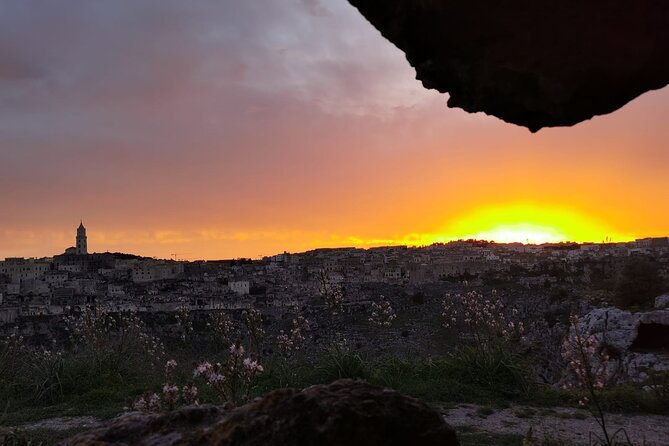
Here’s the payoff: at the bottom, you get a moment of amazement when you look up. The Sassi of Matera appears across the ravine in full view. That “wait, that’s Matera right there” sensation is exactly what makes this kind of route worth it. You’re not only walking through the park; you’re getting a new angle on the city you’ve likely already seen from streets and viewpoints.
Some routes may include the Ponte Tibetano (a Tibetan-style pedestrian bridge). If your day’s path includes it, it’s one of those quick photo stops that adds a playful, memorable beat to an otherwise rugged geology-focused walk. Even if your route doesn’t feature it, the ravine-to-city views remain the heart of the experience.
Rock churches and the human timeline etched into stone
Matera’s rupestrian churches are compelling because they’re both spiritual and practical. They’re built into rock, which means you can often “read” the landscape alongside the architecture: where people could gather, where they could hide, and how they adapted to the Gravine terrain.
On this trek, the guide’s role is huge. They follow the path of man through the landscape—moving from earlier settlements to entrenched Neolithic villages in Murgia Timone, then to pastoral communities in the Middle Ages. After that, you reach the period of Greek-Byzantine hermitic communities, which founded monasteries and rock churches across the plateau.
When you’re near the rock church by the valley/stream area, it’s framed as something that speaks to the past. That’s not just poetic language; it’s a way of telling you to pay attention. Notice the rock setting, the placement, and how you’d approach it if you lived there rather than just visiting it.
A practical caution: churches like these can be quiet and atmospheric, but the walk around them is still outdoors. If it’s warm, you’ll likely want to pace yourself on the steep parts, because the “slow down, look around” moments often come after the hardest slope.
The Our Lady of Monteverde rock church stop (quick, but focused)
After the main trekking segment, you also visit Our Lady of Monteverde rock church. This is a short stop—about 10 minutes—but it’s purposefully timed, which keeps the day from dragging.
The key detail for planning: admission for this church is free, so you’re not spending extra just to step inside or view what’s there. It also means you can treat the visit as a final highlight rather than another long, ticketed obligation.
In terms of vibe, think of this stop as a concentrated “wrap-up” moment. You’ve already been learning the park’s bigger story while descending through the Gravine. Here you get to connect that story to one specific site tied to the Matera rock-church tradition.
If you’re the type who likes photos, aim to use this short time well: pause, take a steady look, and don’t rush just because the schedule is brief. With rock churches, the best images usually come from taking one calm moment rather than snapping ten while moving.
Guide power: why Tania and Benedetto come up again and again
A trekking tour lives or dies on the guide. In the feedback for this experience, names like Tania and Benedetto show up with praise that’s consistent: they’re prepared, helpful, and ready to add context so you understand what you’re seeing.
That matters because Matera’s caves and churches can look similar at first glance if you’re only half paying attention. A good guide helps you sort what’s where and why it matters. You hear why the park’s geology is tied to human settlement patterns, not just why it’s scenic.
I also like that the experience doesn’t pretend the walk is effortless. The guides help you manage the steep start and keep the pace reasonable, which is especially helpful if you’re traveling with your own questions—where people lived, how the ravines shaped routes, why certain rock churches were placed the way they were.
Price and value: what $86.82 gets you in real terms
At $86.82 per person, this trek is priced like a guided package rather than a self-guided hike. And that’s exactly what you’re buying.
You get an air-conditioned vehicle, a licensed hiking guide, and admission is included for the main park portion. Then the Our Lady of Monteverde visit is ticket-free. Put simply, you’re paying for two things that add up: expert interpretation and access to the park experience without extra hassle.
Is it cheap? Not really. But it’s also not the kind of price where you wonder if the operator skipped the hard parts. A small group, a real guide, and entry included are the components that make the difference between walking through a park and walking with understanding.
Also, booking tends to be done in advance (on average about 55 days), which suggests this route is a common favorite. If you like your plans locked in early, this is the type of excursion to reserve sooner rather than later.
Timing your Matera day: where the start and end help you
The trek starts at Via Domenico Ridola and ends at Piazza Giacomo Matteotti. That ending location is useful because it’s back in the area where you can continue exploring without needing another long transfer.
The full experience is about 2 hours 45 minutes (with the guided trek portion described as about 2 hours 35 minutes). That timing is ideal if you want a nature break without sacrificing your time for the city itself. Matera is compact enough that you can often pair this with a morning or late afternoon plan.
One more practical tip: because the experience requires good weather, you should keep the rest of your day flexible if you can. If clouds or rain move in, the operator may offer a different date or a full refund. Planning with a bit of breathing room makes the whole trip feel less stressful.
Who should book this trek, and who might want to skip it
This is a great match if you want the outdoors view of Matera’s heritage. If you like understanding places by seeing how the terrain shapes the story, you’ll enjoy it. The ravine-to-Sassi perspective is the kind of viewpoint that changes how you picture the city in your mind.
It’s also a good choice if you value guide-led interpretation. The route is set up for listening—Palaeolithic through Neolithic villages in Murgia Timone, then medieval pastoral life, then Greek-Byzantine hermit communities with monasteries and rock churches. That only really clicks when someone helps connect the dots.
If you don’t like steep starts, you might find the early slope too demanding. The tour says moderate physical fitness, so it’s not a couch-to-views situation. Also, if your travel dates are fixed no matter what and you hate any uncertainty around weather, you may want to plan a backup day for Matera’s rock-church theme.
Should you book the trekking to Torrente Gravina and the Rupestrian Churches?
If you want a guided way to see Matera from inside its landform story, I’d book this. The value sits in the combination: World Heritage park setting, guided descent into the Gravine, and then a focused church visit that rounds out the picture.
I’d especially recommend it if you’re the kind of traveler who doesn’t want to just photograph stones, but also wants the “why” behind where they are. And if you get a guide like Tania or Benedetto, this sounds like the type of experience that can turn a good walk into a memorable one.
You might skip it if you’re expecting an easy stroll the whole time, or if you need guaranteed outdoor conditions regardless of weather. For most people, though, this is a strong choice for seeing Matera in a way that feels different from the street-level views.
FAQ
How long is the trek in Matera?
The experience lasts about 2 hours 45 minutes (approx.).
What is the price per person?
It costs $86.82 per person.
What meeting point is used for the tour?
The start point is Via Domenico Ridola, 61, 75100 Matera MT, Italy.
Where does the tour end?
The tour ends at Piazza Giacomo Matteotti, 75100 Matera MT, Italy.
Is there a mobile ticket?
Yes, the tour uses a mobile ticket.
What is included in the price?
Included are an air-conditioned vehicle and a licensed hiking guide. Admission is included for the main park portion, and the Our Lady of Monteverde rock church stop is listed as admission free.
What should my fitness level be?
You should have a moderate physical fitness level.
How large is the group?
The maximum group size is 20 travelers.
Is weather important?
Yes. The experience requires good weather, and if it’s canceled due to poor weather, you’ll be offered a different date or a full refund.
Can I cancel for free?
Free cancellation is available. You can cancel up to 24 hours in advance for a full refund.