REVIEW · KATHMANDU
Manaslu, Nar Phu and Annapurna Three Passes Trek
Book on Viator →Operated by Touch The Himalaya Treks & Expedition · Bookable on Viator
Three high passes make this trek memorable. This 34-day trek strings together Manaslu, Tsum Valley, Nar Phu, and the Annapurna Three Passes route, with big-altitude days at Larkya La (5,160m), Kang La (5,306m), and Thorung La (5,416m). You’ll also work in Tilicho Lake, described on this route as the highest lake in Nepal and even the world.
I like how the trek mixes two different cultural styles. The Tsum Valley section leans Tibetan Buddhist, with mani walls, prayer wheels, gompas, and the kind of village rhythm that feels removed from the main trekking lanes. Then Nar Phu switches the mood again: restricted areas, chortens, and quieter scenery around Phu and Himlung Base Camp.
One drawback to plan for: this is not a casual hike. You’ll be dealing with repeated altitude exposure, long travel days, and early mornings for pass country—so you need solid fitness and a calm pace.
In This Review
- Key highlights worth knowing before you go
- Why this Manaslu–Nar Phu route fits the Annapurna Three Passes dream
- Price and value: what $2,426.67 covers (and what you should budget anyway)
- Kathmandu warm-up: Durbar Square and Swayambhunath before the trail
- From Arughat into the river valleys: getting your first Ganesh Himal hints
- Entering Tsum Valley: Philim, Lokpa, and the Tibetan-style trail world
- Mu Gompa and Milarepa Cave: a calm high-mountain detour
- Retracing toward Ghap and Deng: why the route sometimes goes back
- Samagaun and Samdo: acclimatization that doesn’t feel random
- Larkya La to Dharapani: your first big pass, plus sunrise rewards
- Nar Phu: Koto, Meta, Phu, Himlung Base Camp, and the spiritual side of the trek
- Kang La and the Manang edge: Kang Phedi to Nawal, then down toward Khangsar
- Tilicho Lake from Tilicho Base Camp: the highest lake day needs stamina
- Thorung La and Muktinath: early morning payoff, then a cultural stop with real meaning
- Jomsom, Kagbeni apple country, and your Pokhara reset by flight
- How the support system helps on a 34-day trek
- Fitness and weather reality check: what will make or break your days
- Should you book this trek?
- FAQ
- What is the duration of the Manaslu, Nar Phu and Annapurna Three Passes trek?
- Where does the trek start and how do you get there?
- Which high passes are crossed and at what elevations?
- Are permits included in the price?
- Are airport transfers included?
- How many nights are included in Kathmandu?
- Are meals and mountain accommodations included?
- Is there a guide and porter support on the trek?
- Is rescue or medical support included?
- How do you return from Jomsom to Pokhara?
Key highlights worth knowing before you go
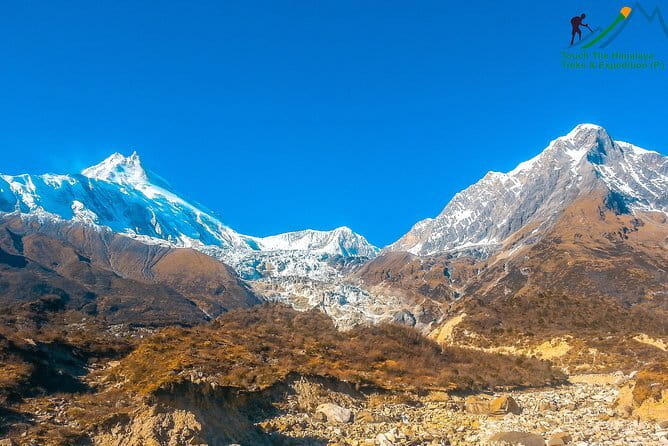
- Three passes at 5,000m+: Larkya La (5,160m), Kang La (5,306m), Thorung La (5,416m).
- Tsum Valley’s Tibetan feel: gompas, prayer wheels, mani walls, and time at Mu Gompa (including Milarepa Cave).
- Nar Phu’s special access: the trek includes Naar Phu restricted special permits and time around Phu.
- Tilicho Lake as a “real day”: early start from Tilicho Base Camp, then a dedicated push to the lake.
- Practical support on the ground: a Manaslu local guide, each two clients per porter, and each five trekkers per assistance guide.
- Meaningful big-mountain payoff: Muktinath’s 180 healing water taps after Thorung La.
Why this Manaslu–Nar Phu route fits the Annapurna Three Passes dream
Most big treks in Nepal try to do one main thing well. This one tries to do two: it gives you the Manaslu/Tsum Valley world first, then shifts into the Annapurna Three Passes sequence. The benefit for you is variety. You’re not just climbing mountain after mountain with the same view pattern every day.
The route also makes sense geographically. You start in the river valleys feeding the Manaslu region, you move through Tibetan-influenced Tsum Valley villages, you reach Manaslu’s high-elevation staging areas (Samagaun/Samdo), and later you connect into the Annapurna side toward Manang, Tilicho, and finally Thorung La. That progression helps you think in stages: cultural valleys first, big altitude later, then a finish through iconic places like Muktinath.
And yes, the pass numbers matter. Cross Larkya La, then later Kang La, then the big finale Thorung La. Each one is a mental marker. If you like having goals you can feel in your legs, this trek is built for you.
You can also read our reviews of more tours and experiences in Kathmandu.



Price and value: what $2,426.67 covers (and what you should budget anyway)
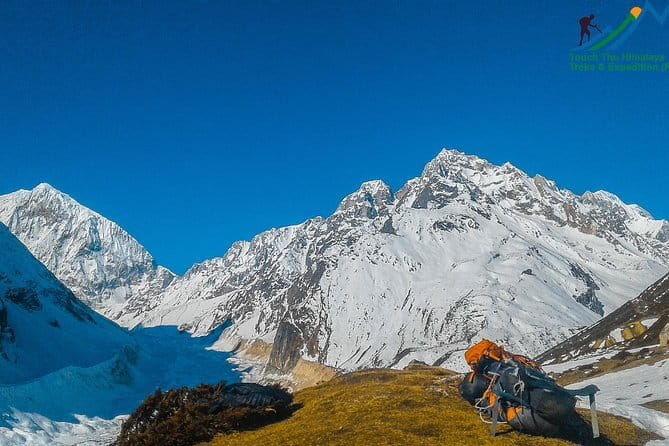
At $2,426.67 per person for about 34 days, this is priced like a full-service guided trek, not a shoestring DIY plan. The value comes from the stuff you’d otherwise spend time juggling: permits, transfers, guides, and a porter system.
What’s covered in the package includes:
- Airport pickup and drop-off
- Two nights in Kathmandu in tourist-standard hotel (twin share)
- Transfers into the trekking starting area (bus to the trek start region and then vehicles as needed)
- Permits: TIMS, ACAP/MCAP, plus Tsum Valley, Manaslu, and Naar Phu restricted special permits
- An expert Manaslu local guide, plus his meal, accommodation, salary, and insurance
- Porter/assistance structure: each two clients one porter, and each five trekkers one assistance guide
- Rescue arrangements if necessary, plus a basic first-aid kit carried by your guide
- Government and local taxes, agency service charge, and VAT
- An achievement certificate
- A welcome or farewell dinner depending on timing
What’s not included (and can change your real total):
- International airfare and Nepal visa fee
- Drinks and things like Wi‑Fi/charging/hot shower on your own
- Lunch and dinner in Kathmandu (and any extra Kathmandu nights beyond the two included)
- Mountain meals and accommodations as a blanket statement: the data notes these are not included, though they can be arranged as part of the package agreement for an added cost
- Personal insurance (medical and emergency evacuation), plus personal gear
- Sightseeing entry fees in Kathmandu
- Tips
So here’s the practical takeaway: if you want fewer headaches and smoother logistics in high-altitude regions, this price looks like a fair package. If you already have your own gear, insurance, and a plan for mountain meals, you might still want to compare totals carefully because mountain food/lodging can add up.
Kathmandu warm-up: Durbar Square and Swayambhunath before the trail
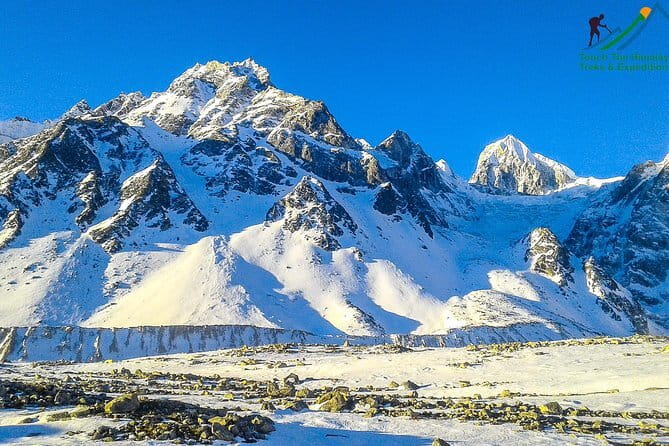
You start with an airport greeting in Kathmandu, then a transfer to your hotel. Day two is built for orientation and morale: you get a trek briefing at the office, then you head out for sightseeing.
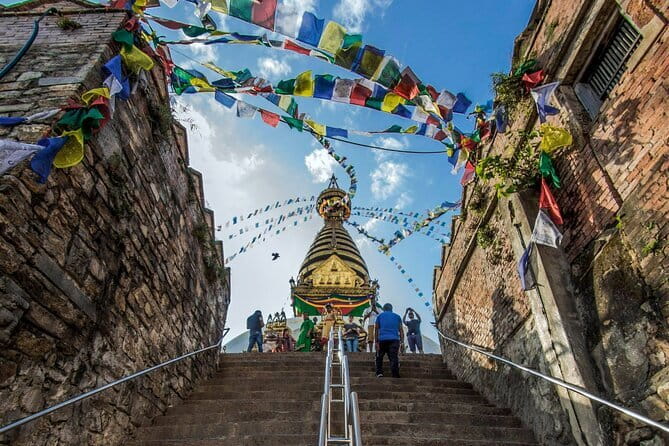
You’ll visit Kathmandu Durbar Square (UNESCO) and Swayambhunath Stupa, also called Monkey Temple. That matters because it helps you adjust from travel fatigue into a trekking mindset. You’re walking, you’re looking around, and you’re getting city context before you disappear into remote valleys.
Two practical notes:
- Admission tickets for sightseeing are listed as not included, so bring some cash for entry fees.
- This is your last day to settle, ask questions, and sanity-check your packing. High-altitude trekking punishes sloppy organization.
From Arughat into the river valleys: getting your first Ganesh Himal hints
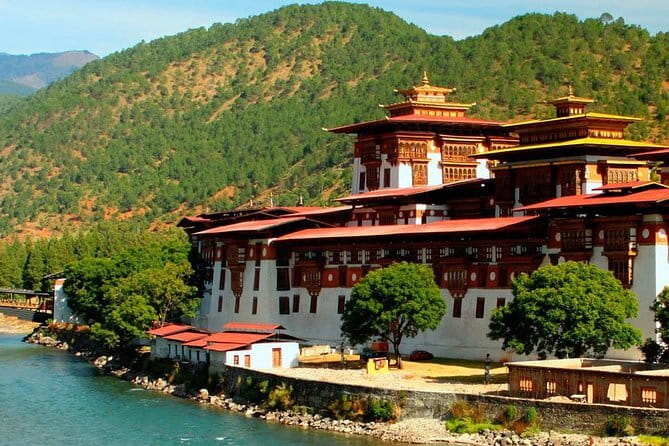
After breakfast and check-out, you travel by bus toward the trek start area, reaching Arughat. From there, you move onward by local vehicle up to Sotikhola along the banks of the river. This first section is not about summiting. It’s about easing into altitude slowly and letting your body learn the walking rhythm.
Weather can play a big role early. The route notes that on the way today, if conditions allow, you might catch early views of Ganesh Himal plus waterfalls and even monkeys around the trail.
You continue onward to Machhakhola, then to Jagat. The trek description highlights a day where Ganesh Himal is in clear view, with passable views opening up around waterfalls, stone-paved sections, and mani walls. Another day notes that Jagat is where a previously restricted trekking area starts—so the character changes from “approach” to “real trekking.”
Entering Tsum Valley: Philim, Lokpa, and the Tibetan-style trail world
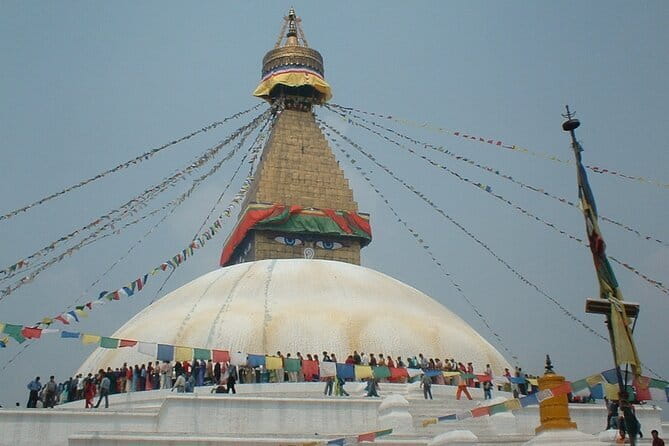
Once you cross into the Tsum Valley section, the trek’s tone shifts. You start with gentle uphill hiking and a flatter plateau segment, then a suspension bridge crossing over the Bhudi Gandaki to Philim village. After that, you climb uphill toward Ekle Bhatti and continue into Lokpa village.
This is the section where you’ll notice the Tibetan Buddhist markers clearly:
- mani walls
- gompas and prayer wheels
- Tibetan-influenced village layouts
- long sightlines toward the Shingri Himal area
Then comes Chumling. You hike uphill for about four hours and can visit gompas and enjoy the views. Chumling is specifically described as a place where you can see Ganesh Himal from a south-of-the-Shingri-Himal angle, with great picture opportunities.
From there you can pass through Chhokan Paro, described as two settlements forming the biggest town in the Tsum Valley. The point for you isn’t just the label. It means the tea-house rhythm changes. Supplies and social energy tend to feel more available than in tiny villages.




Mu Gompa and Milarepa Cave: a calm high-mountain detour
The Mu Gompa day is a favorite kind of trek day: not the biggest altitude push, but a meaningful stop with cultural payoff.
You head north toward Mu Gompa, passing rustic villages and mani walls. At Mu Gompa, the route notes ceremonies, choterns, and a visit to Milarepa Cave. That’s a unique cultural stop in the Tsum Valley arc and a good day for your camera battery and your attention span.
Then you turn back toward Chumling. The trail is mostly downhill, which gives your legs a break without removing you from the overall trek story.
Retracing toward Ghap and Deng: why the route sometimes goes back
There’s a section where you retrace steps toward Philim, then head in the direction of Ghap and onward to Deng. If you dislike backtracking, this is your moment to check expectations.
But here’s the practical logic: retracing can reduce logistics stress when the region’s trail network forces you through limited junctions. It also gives your body a chance to adjust if you’re feeling the early altitude cumulative effect.
From Deng, the next movement is more forward: you go down toward the riverside, cross a bridge, climb up to Ranagoan, then continue toward Bihi Phedi. The route includes a trail split where you take the right side toward Ghap, then climb up to Namrung. A note for you here: this is highlighted as a day with clear views of Ganesh, Shingri, and Kutang Himal.
Samagaun and Samdo: acclimatization that doesn’t feel random
Once you reach Lho and then Sama (also known as Samagaon), you start working in acclimatization. You’ll check a permit checkpoint and then continue along the path into the Manaslu region.
Samagaun days are thoughtfully paced:
- A short trek to Sama after passing through Lihi Gaon and stopping near Shyala for a 360-degree Himalayan view.
- A full acclimatization day in Samagaun with options:
- hike around Birendra Lake and Manaslu Base Camp, or
- hike up to Pungen Gumpa
- A slower climb to Samdo village due to the elevation.
- Option to rest in the afternoon or hike to Samdo Peak for incredible Manaslu views (if you have the stamina).
- Samdo is described as a well-known Tibetan refugee camp, adding cultural meaning to the altitude stage.
This is where your “toughness” becomes “how smart you hike.” The route keeps you moving but not rushing. That’s what you want before your pass days.
Larkya La to Dharapani: your first big pass, plus sunrise rewards
The trek builds to Larkya La at 5,160m. You head from Dharmasala (Larkya Phedi) with a slow climb, early breakfast, and a planned break at the pass for views. The route notes that from Larkya La you can see peaks including Cheo Himal, Gyaji Kung, Kang Guru, and Annapurna II above 6,000m.
After crossing, you go downhill to Bhimtang. The next stage continues downhill, reaching Gho, then Dharapani. There’s a very practical note here: if you wake up early, you can get an amazing sunrise view from the teahouse.
This matters. High-altitude treks can feel like a cycle of effort, eat, sleep, repeat. A sunrise moment is a small reset that keeps the whole trip satisfying instead of just exhausting.
Nar Phu: Koto, Meta, Phu, Himlung Base Camp, and the spiritual side of the trek
As you shift toward the Annapurna region side, the trek includes pine forests and small villages. You’ll pass through Koto, described as the last good place to restock on goods and shop items. In the forests, the route notes a chance to see gray langur monkeys.
Then you head north along the Nar Khola (river) to Singenge Dharmasla, including a noted waterfall, and on to Meta. After that, you continue to Phu via the Nar Phedi fork, turning left toward Phu.
Phu is where Nar Phu becomes more than scenery. It’s described as a spiritual place with chortens, mani prayer wheels, and an 18th-century old stupa. This is also noted as good country for bird watching, and possibly seeing the elusive snow leopard along blue sheep herds (when you’re lucky).
Your acclimatization rhythm continues too. You’ll do a day hike east to Himlung Base Camp and then return to Phu. You get base-camp views without needing an all-day grinder.
Later you retrace to Nar Phedi and head west to Naar, crossing the Phu Khola bridge before reaching Naar. The route notes that the Nepalese government discovered the local people of this area relatively recently, which hints at the sense of “this place isn’t overly packaged.”
Kang La and the Manang edge: Kang Phedi to Nawal, then down toward Khangsar
Now the trek turns toward Kang La at 5,306m. You start by heading out to Kang Phedi, then climb up toward the pass. After crossing, you go steeply down to Nawal (Ngawal).
This is a classic pattern: long, focused effort up high, then a controlled descent. If you’ve never done a steep down day at altitude, be gentle with your knees and take your time.
You then descend about two hours toward Braga village, pass through the big town of Manang, and continue onward to Khangsar. Manang is called a good place to refill supplies, which matters because you’ll appreciate having basic comforts and restocking options before the Tilicho and Thorung La sequence ramps up.
Tilicho Lake from Tilicho Base Camp: the highest lake day needs stamina
Tilicho is one of the reasons this trek stands out in planning terms. You move to Tilicho Base Camp (described as including Hotel New Tilicho). The trail follows west with a big gumpa landmark and along the Marshayangdi River.
Then comes the dedicated Tilicho Lake day:
- Start early (about 6am)
- Walk gradually upward for about three hours to reach Tilicho
- Spend time for views
- Return to Base Camp
- Take a northern trail to Siri Kharka afterward
The route notes Tilicho Lake as the highest lake in Nepal, and also described as the highest lake in the world. Even without making it a “someday I’ll do that” fantasy, it still means you should treat it like a real climbing day, not a casual side trip.
Thorung La and Muktinath: early morning payoff, then a cultural stop with real meaning
From Tilicho/Siri Kharka, the route continues toward the final pass sequence.
You have a day to Yak Kharka, then a day to Thorung High Camp. Yak Kharka includes a practical note: there’s a safe drinking water station there, so it’s a good place to refill water stock.
Then Thorung High Camp. You climb along the east bank of the Kone Khola, reach Thorung Phedi, and continue to the high camp for dinner and sleep. The route notes you might see blue sheep and, if lucky, snow leopards.
Finally, Thorung La day:
- Early breakfast (about 4 to 4.30am)
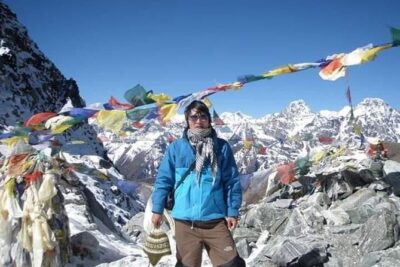
- Climb up and cross Thorung La at 5,416m
- Descend through barren lands down to Muktinath
Muktinath is a major cultural and spiritual stop. It’s described as named after the Hindu God of salvation, and famous for 180 healing and purifying water taps. Horse riding can also be organized from there. That makes the finish feel more like a transition into a “place” rather than just an exit from the mountains.
Jomsom, Kagbeni apple country, and your Pokhara reset by flight
After Muktinath, you move toward Jomsom. You continue down, potentially by jeep or by following the pitch road, and reach Kagbeni on the Kali Gandaki River, then continue to Jomsom.
Jomsom and Kagbeni are specifically noted for apple orchards and good photo opportunities. That’s a nice contrast after weeks of high-altitude rock and weather.
Then you end with Pokhara:
- Either fly about 25 minutes, or
- drive for about half a day
You’ll spend the night in Pokhara, and the route notes that you’ll have plenty of time to explore if you fly back.
Pokhara is also one of the best “you survived” cities in Nepal. It’s a place where you can stop thinking about altitude and start thinking about good meals, lakeside walks, and resetting your sleeping pattern.
How the support system helps on a 34-day trek
This kind of trek works best when logistics don’t steal your energy. Here, the support structure is clearly defined:
- An expert Manaslu local guide leads the route.
- Each two clients share one porter.
- Each five trekkers get an assistance guide.
- There are rescue arrangements if necessary, plus a basic first-aid kit carried by your trekking guide.
In practice, this means you’re less likely to arrive at camp with heavy loads that slow you down for the next day’s walk. It also means you’re not making all the decisions alone on trail conditions, pace, and timing.
The group is private: only your group participates. That can be a real plus if you’re trying to keep a steady pace and avoid getting stuck behind mismatched walking rhythms.
Fitness and weather reality check: what will make or break your days
You need good fitness for this route. The altitudes alone tell you that. But the bigger point is repetition: you’re dealing with altitude, then pass after pass, then long trekking days.
The route also notes that the trek requires good weather. If conditions are poor, you’ll either get a different date or a full refund. That’s not a weakness in the plan. It’s Nepal telling you that mountain days are weather-controlled, not schedule-controlled.
A smart strategy is to respect acclimatization days and keep your breathing calm on climbs. When the plan gives you slower days, use them to recover, not to rush.
Should you book this trek?
You should book if you want:
- a long trek that blends Tsum Valley Tibetan culture with Nar Phu’s restricted-feeling remote country,
- a full pass challenge at Larkya La, Kang La, and Thorung La,
- and a guided support setup that includes permits, an expert local guide, and a porter system.
You might skip (or choose a shorter route) if you’re not comfortable with repeated high-altitude trekking or you don’t like early starts. Also, if you’re trying to keep costs tight, confirm how mountain meals and accommodations are handled for your exact booking so there are no surprises.
If you’re aiming for an authentic, high-effort Nepal trek with strong organization, this one is a solid bet. And if you can keep your ego smaller than your oxygen needs, you’ll be rewarded with some unforgettable high-mountain moments.
FAQ
What is the duration of the Manaslu, Nar Phu and Annapurna Three Passes trek?
The trek is about 34 days.
Where does the trek start and how do you get there?
You travel from Kathmandu and take a bus to Arughat, then continue onward by local vehicle to the trek starting area.
Which high passes are crossed and at what elevations?
The trek crosses Larkya La (5,160m), Kang La (5,306m), and Thorung La (5,416m).
Are permits included in the price?
Yes. The package includes TIMS Card, ACAP/MCAP permits, and restricted special permits for Tsum Valley, Manaslu, and Naar Phu.
Are airport transfers included?
Yes. The package includes airport pick up and drop off by car, jeep, Hiace, or bus depending on group size.
How many nights are included in Kathmandu?
Two nights in Kathmandu are included on arrival in tourist-standard hotel (twin share basis).
Are meals and mountain accommodations included?
All meal and accommodations in the mountain are listed as not included, though they can be arranged by the company based on the package agreement. Kathmandu lunch and dinner are also listed as not included.
Is there a guide and porter support on the trek?
Yes. An expert Manaslu local guide is included, with each two clients one porter and one assistance guide for each five trekkers.
Is rescue or medical support included?
Rescue arrangements if necessary are included, along with a basic first-aid kit carried by your trekking guide.
How do you return from Jomsom to Pokhara?
You can fly to Pokhara (about 25 minutes) or drive (about half a day), based on your booking.