REVIEW · IZUMISANO
Mt. Inunaki Trekking and Hot Springs in Izumisano, Osaka
Book on Viator →Operated by icpトラベル · Bookable on Viator
Autumn hiking, then hot springs. What makes this day special is the walk up Mt. Inunaki toward the Shipporyuji Temple through forest paths tied to Yamabushi training culture.
I especially like how the timing is built around seasonal scenery: mid-November turns the mountain trails into a red-and-gold corridor of fallen leaves and crisp air. And once you reach the temple approach, you get that Shugendo-style feel with red and black flags and stone pillars framing the way in.
The other big win for me is the finish: a long soak at Fudoguchikan onsen, plus a kaiseki lunch in a private room. One consideration: the hike is part of the experience, so you’ll want moderate fitness and shoes that can handle uneven, leaf-strewn ground—and the whole plan depends on workable weather.
In This Review
- Key Highlights at a Glance
- Getting to Mt. Inunaki: A Simple Start From Izumisano
- Mt. Inunaki: A Sacred Mountain Walk in Red-and-Gold Autumn
- Shipporyuji Temple: Stone Pillars, Flags, and the Shugendo Look
- Fudoguchikan Onsen and Kaiseki Lunch: The Most Comfortable Part of the Day
- Guides Make the Hike: Local Stories You Can Actually Use
- Price and Value: How $143.07 Adds Up in Real Terms
- Timing, Weather, and What to Expect on a 7-Hour Day
- Who Should Book This and Who Might Prefer Something Else
- Should You Book Mt. Inunaki Trekking and Hot Springs?
- FAQ
- What time does the tour start?
- Where does the tour begin and end?
- How long is the experience?
- What’s included in the price?
- How long do I spend at the main stops?
- What happens if the weather is poor?
Key Highlights at a Glance
- Mid-November autumn colors on Mt. Inunaki’s sacred trails
- Shipporyuji Temple with Shugendo character and Shinto-Buddhist mix
- Open-air onsen at Fudoguchikan with a view of a mountain stream
- Seasonal kaiseki served in your own private Japanese-style room
- Private group experience (only your group participates)
- Guide storytelling as you hike, then you’re free to enjoy onsen at your own pace
Getting to Mt. Inunaki: A Simple Start From Izumisano
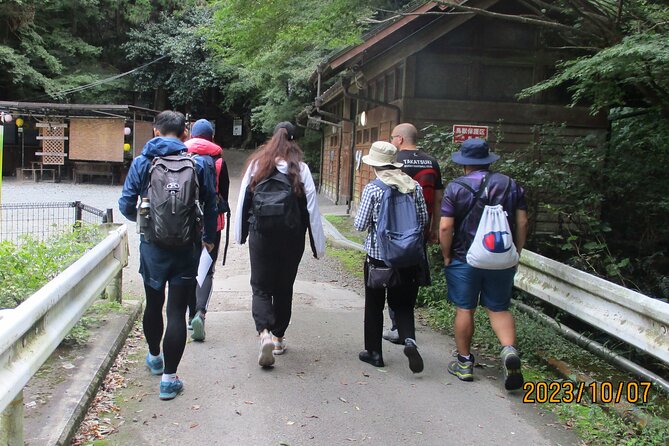
This is one of those Osaka-area trips that doesn’t feel like a whole production. You meet at Izumisano Station at 8:45am, then you ride a public bus included in the price between the station and Mt. Inunaki. That matters because it keeps your morning smooth and lets you focus on the hike, not transit stress.
The experience runs about 7 hours, with the hiking portion doing most of the work. After that, the day slows down in a very Japanese way: dinner-style pacing without being overly formal—tea, kaiseki courses, and then onsen time.
One more detail I like: it uses a mobile ticket, which helps if you don’t want to juggle paper tickets while you’re moving through stations. And even though it’s a guided plan, you’re not stuck in a bus all day. The flow is hike first, then temple, then onsen and lunch back near the mountain entrance.
Because it’s a private tour/activity for your group only, you can expect less crowding and a more personal pace for questions—especially on a topic like Shugendo, where the guide’s explanations can turn statues and shrine symbols into something you actually understand while you’re standing there.
You can also read our reviews of more tours and experiences in Izumisano.
Mt. Inunaki: A Sacred Mountain Walk in Red-and-Gold Autumn
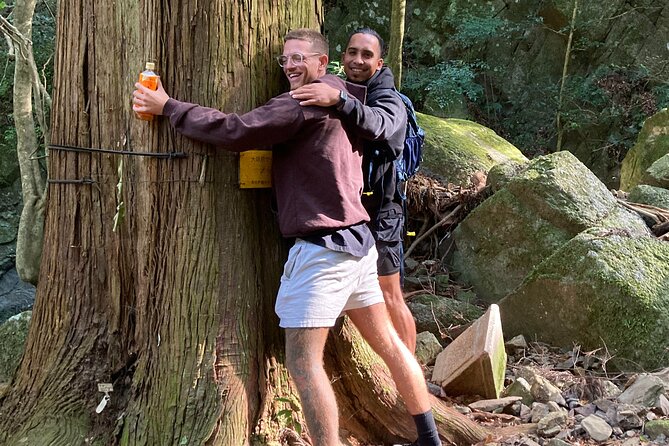
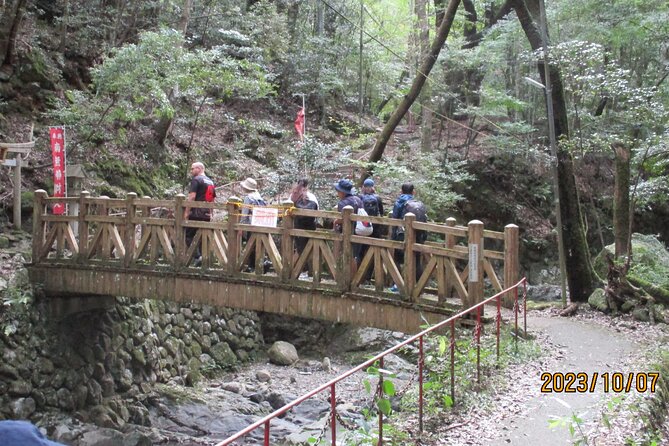
Mt. Inunaki is regarded as one of Japan’s oldest sacred mountains, and that label isn’t just marketing. Even before you hit the temple, the area has that “people have cared about this place for a long time” feeling—through the route itself, the forest setting, and the way your guide frames what you’re seeing.
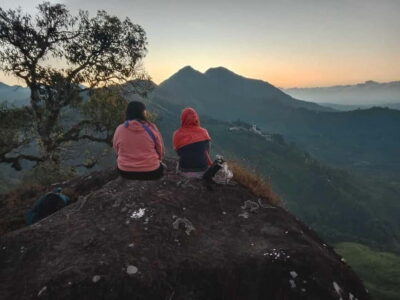
In mid-November, this mountain becomes a seasonal showcase. Expect paths shaded by trees, with red and yellow leaves covering parts of the trail. The air tends to feel sharper up the slope, and the scent of the forest gives the hike a different texture than a city walk. It’s not just scenery; it’s sensory tourism.
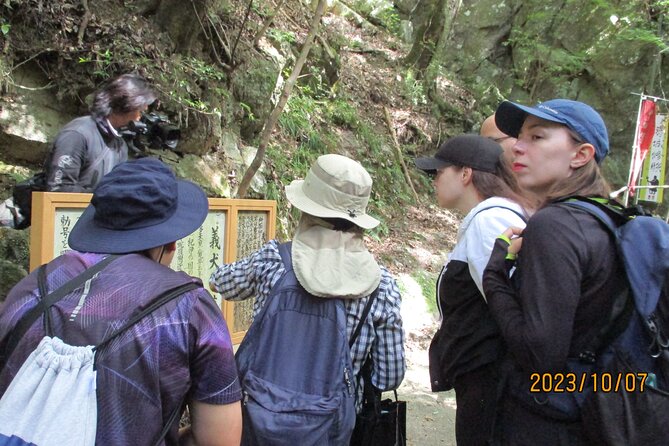
You’ll spend about 4 hours at Mt. Inunaki, and the tour style is active: you’re hiking up with a guide rather than doing a quick photo stop. The big theme your guide brings is the connection to Yamabushi, the Buddhist monks associated with Shugendo training. You’ll hear how the primeval forest functioned as a training base, which helps the mountain feel less like a random hike and more like a living spiritual landscape.
Practical tip: plan on shoes you trust. Leaf-covered ground can be slick in spots, and the trail isn’t described as a paved promenade. If you have hiking footwear with decent grip, you’ll feel more relaxed. The hike is described for moderate physical fitness, so this is doable for many people—but it’s still a hike.
Possible drawback here: since this is a 7-hour day, you’re not getting a lazy stroll. The schedule is set so you can reach Shipporyuji Temple and then return in time for lunch and onsen. If you want a super slow, long scatter-of-time nature walk, you may feel the pace is a bit structured.
Shipporyuji Temple: Stone Pillars, Flags, and the Shugendo Look
Once you’re up on the mountain and moving toward the temple, the setting changes in a good way. Shipporyuji Temple is described as Shugendo-style, with many shrines and Buddhist statues. That means you’re not just looking at one main hall—you’re walking through a cluster of religious spaces that reflect the Shugendo tradition’s blend of practices.
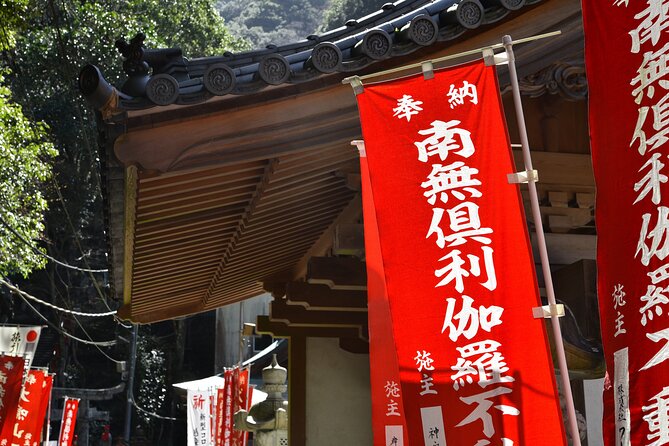
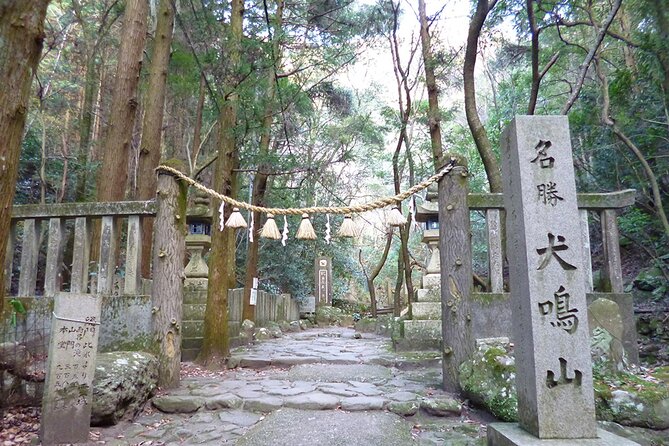
What I like is the way the approach sets the mood. You’ll see stone pillars lined up along the path and red and black flags erected as you get closer. It’s a visual “you’re entering something” moment, and it helps you understand why people treat the temple as part of the pilgrimage experience rather than an optional stop.
The tour sets this temple visit at about 30 minutes, and that’s a fair amount of time for what you’re doing. You’re not stuck for an hour and a half inside a quiet room, but you also get enough time to slow down, read what you can, and listen to your guide explain the blend of influences.
One more angle your guide will likely focus on is the syncretism of Shinto and Buddhism in Japan, since this temple is specifically described that way. When you understand that mixing, the religious objects around you stop feeling like random decorations and start feeling like a system. It’s the difference between seeing a scene and understanding it.
Drawback to consider: 30 minutes can fly by if you’re the type who loves reading every plaque and lingering in every doorway. If you’re really into temple details, you may want to plan for a quick return photo-round later—but your onsen schedule will still keep the day moving.
Fudoguchikan Onsen and Kaiseki Lunch: The Most Comfortable Part of the Day
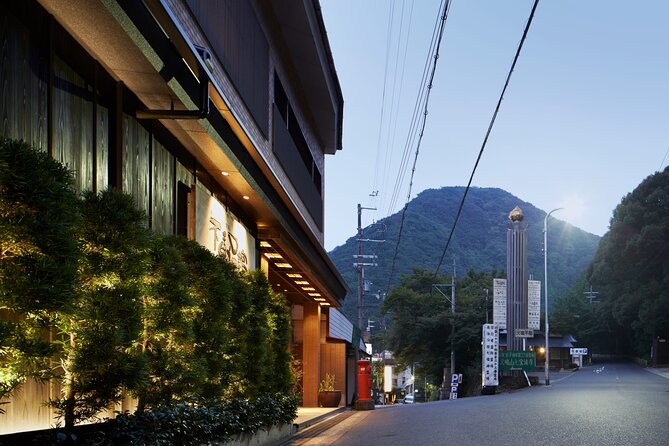
After the temple, the tour returns you to Fudouguchikan, an onsen Japanese inn located at the entrance of Mt. Inunaki. This is where the day’s energy drops. You’ve hiked, you’ve walked the temple grounds, and now you get a real reset.
You’ll have about 2 hours at Fudouguchikan, and it includes the onsen admission. The onsen setup is designed for different moods: you can choose between two types of hot spring pools. One is the open-air bath with a view of a mountain stream, which is the kind of scenery that makes you stop thinking about time. There’s also another bath option for comfort—useful if you prefer warmth without dealing with outdoor exposure.
I also love that this is not just a soak-and-go. Your lunch is handled like a proper Japanese meal. You’ll enjoy seasonal kaiseki cuisine in a private Japanese-style room that’s for your group.
Based on what guests reported, the meal can feel extremely generous—described as an 11-course meal and also as more than 30 dishes with seasonal vegetables. That sounds contradictory until you realize kaiseki often includes multiple small plates that count differently depending on how the courses are grouped. Either way, what you should expect is a long, varied meal where you’re not eating the same thing three times in a row.
One more practical upside: because the guide’s service is terminated when you arrive at Fudoguchikan, you can take your time. Nobody is rushing you through lunch and bathroom breaks. You can settle in, eat slowly, and then focus fully on the soak.
If you’re wondering what the highlight is, it’s usually this combination: kaiseki + onsen after a real climb. It’s not just relaxation; it’s the reward mechanism that makes the earlier effort feel worth it.
Guides Make the Hike: Local Stories You Can Actually Use
This tour is built around a guide, and that matters here more than on some generic sightseeing days. The experience centers on sacred mountain traditions, Shugendo temple culture, and Yamabushi training. If you show up with no context, you’ll still see a beautiful place. But the difference is that you’ll enjoy it more deeply with a guide explaining what you’re looking at.
In guest comments, guides such as Yoshimoto, Masa, and Ken are singled out for being helpful and friendly. The way this helps you is simple: when they share local stories while you walk, you stop treating the hike as exercise and start treating it like guided reading you get to walk through.
That’s also why the temple visit feels more meaningful. When a guide explains the Shugendo-style approach—shrines, statues, and the Shinto-Buddhist blend—you’re more likely to remember what you saw after you leave. Instead of a quick visual memory, you walk away with a framework.
A practical consideration: ask questions during the hike, not after you arrive at the inn. The schedule shifts quickly once you’re at Fudoguchikan, and you’ll want time to enjoy the meal and onsen without feeling like you’re rushing to catch the guide.
Price and Value: How $143.07 Adds Up in Real Terms
At $143.07 per person, this tour doesn’t look like a bargain on paper—until you list what’s covered. You’re getting a guided hike, plus transportation help via a included public bus ticket between Izumisano Station and Mt. Inunaki, plus onsen admission at Fudouguchikan.
Then comes the big value lever: lunch. A seasonal kaiseki meal in a private room is not a quick set lunch. It’s a structured dining experience. If you’ve ever paid for kaiseki-style meals in Japan, you know the pricing can climb fast, especially when it’s served in a nicer setting.
You also get the benefit of a private setup: the tour is described as private for your group, and that usually means less waiting around and more flexibility. Add in that it includes guide service for the trek portion, and you start to see why the price is what it is.
One more thing I like: it’s a limited-season autumn experience starting mid-November. Limited-time timing often raises cost, but it also means you’re not paying for something you could replicate any random weekend.
If you’re the type who wants a mix of culture + nature + hot springs without planning a whole day yourself, this is a straightforward way to get it done.
Timing, Weather, and What to Expect on a 7-Hour Day
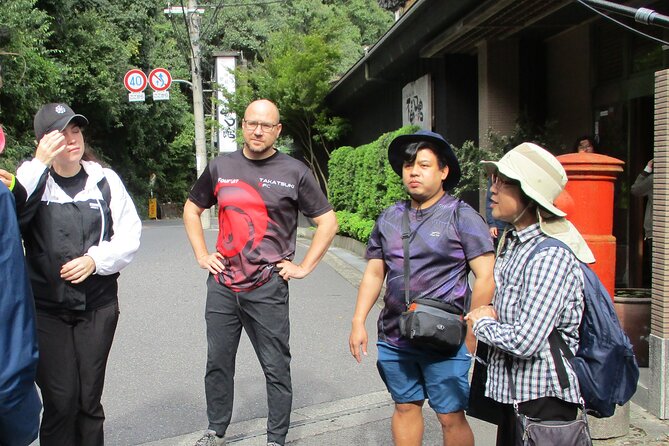
The schedule is tight enough to feel like a true day trip, not a “we’ll see what happens” outing. You start at 8:45am, hike up and visit the temple, then settle into lunch and onsen by the time you’re back at the inn area.
The experience is tied to the season: it’s offered when Mt. Inunaki transforms with autumn colors, mid-November. So if you’re visiting Osaka in another month, you may need to look at other options. The tour is also described as dependent on good weather. If conditions are poor, you’ll be offered a different date or a full refund.
What that means for you: check the forecast the day before, and pack in a way that handles cool air. Even in autumn, mountains can feel colder than the city, and onsen is best when you arrive ready to relax rather than shiver.
A small scheduling note: the temple stop is only about 30 minutes, and the inn time is about 2 hours, so don’t plan on squeezing in extra sightseeing beyond what the tour already covers.
Who Should Book This and Who Might Prefer Something Else
This tour fits best if you want three things in one package:
- a guided hike with cultural meaning
- a Shugendo temple visit (not just random sightseeing photos)
- onsen time followed by kaiseki in a private setting
If you like nature walks, you’ll appreciate the forest trekking. If you like Japanese culture, you’ll likely enjoy the Shinto-Buddhist Shugendo context and the temple approach details like stone pillars and red/black flags. And if you love the classic Japan formula of soaking after walking, the Fudoguchikan open-air bath with mountain stream views is the kind of payoff you remember.
Who might skip it? If you hate structured itineraries, the day can feel a bit “done in order.” Also, if you have trouble walking uneven trails, you may find the 4-hour mountain portion too demanding, since the description calls for moderate fitness.
Lastly, if you’re traveling with people who only want a quick stop and no physical effort, this is probably not their kind of day. This is a hiking + temple + onsen day, and the hike is the anchor.
Should You Book Mt. Inunaki Trekking and Hot Springs?
I’d book it if you’re coming to Osaka and want an experience that feels very Japanese without needing to plan everything yourself. This tour has a rare balance: the morning gets you out into the sacred mountain atmosphere, and the afternoon rewards you with kaiseki and onsen in a place designed for slow enjoyment.
Two reasons I think it’s a smart value: first, the price includes the bus ride, the guide, the onsen admission, and a kaiseki meal in a private room. Second, it’s timed for autumn when Mt. Inunaki looks like a seasonal transformation rather than the same mountain you’d see in any other month.
If you can handle moderate hiking and you’re visiting in mid-November when the colors are on, this is the kind of day trip that doesn’t feel like a checkbox. It feels like a full reset—mountain air first, temple culture second, hot spring comfort last.
FAQ
What time does the tour start?
The start time is 8:45am at Izumisano Station.
Where does the tour begin and end?
It begins at Izumisano Station (3-chōme-11-41 Uemachi, Izumisano, Osaka 598-0007) and ends back at the meeting point.
How long is the experience?
It runs about 7 hours (approximately).
What’s included in the price?
Included are the public bus ticket between Izumisano Station and Mt. Inunaki, onsen admission at Fudouguchikan, guide service for the guided portion, and a seasonal Kaiseki lunch in a private Japanese-style room.
How long do I spend at the main stops?
Mt. Inunaki is about 4 hours, Shipporyuji Temple about 30 minutes, and the onsen/inn time at Fudouguchikan about 2 hours.
What happens if the weather is poor?
The experience requires good weather. If it’s canceled due to poor weather, you’ll be offered a different date or a full refund.