REVIEW · KATHMANDU
Mt. Everest Base Camp Trek Nepal – 16 Days
Book on Viator →Operated by Himalayan Planet Adventures · Bookable on Viator
Everest Base Camp feels real only after you start walking. This 16-day private trek mixes big-mountain drama with practical logistics—Lukla flights, teahouse stays, permits, and included trekking gear—plus Sherpa culture along the way. I particularly like the way the trip is set up to reduce decision-making stress, with airport pickup, a pre-trek briefing, and a welcome/farewell dinner. You’ll also spend time in places that matter culturally, not just for photos, with Sherpa villages and monastery stops. The one thing to think hard about is the biggest reality check: Lukla flights can delay or cancel, and you’ll want buffer days.
Here’s the good news: the plan builds in acclimatization days (Namche Bazaar and Dingboche) so you’re not just racing uphill. Still, you should go in with moderate fitness and real respect for altitude, and you’ll need proper trekking gear since the cold can hit fast at elevation.
In This Review
- Key things that make this Everest Base Camp trek tick
- What You’re Actually Paying For: $1,900 and the value inside
- Kathmandu first: briefing, welcome dinner, and getting your footing
- Day-by-day on trail: the rhythm you’ll feel from Lukla onward
- Day 2: Lukla’s 35-minute flight and the hike to Phakding
- Day 3: Sagarmatha National Park gate and the push toward Namche Bazaar
- Day 4: Namche acclimatization day (with options)
- Tengboche/Tyangboche day: monasteries, forests, and peak views
- Dingboche: why the rest day here is a big deal
- Lobuche and Gorakshep: memorials, icefall proximity, and tough terrain
- Kala Patthar: the classic viewpoint day
- Downhill days: Tyangboche/Tengboche monasteries and the long return to Namche
- Lukla day again: the 7–8 hour push back and the last-night mood
- Flying back to Kathmandu: morning departures and an extra day in Thamel if needed
- Gear and comfort: what’s included and what you still need
- Who this trek suits best (and who should rethink it)
- The guide/crew factor: why organization matters in Everest country
- Should you book this Everest Base Camp trek?
- FAQ
- How long is the Everest Base Camp trek?
- What’s included in the $1,900 price?
- Are meals included while you’re in Kathmandu?
- Does the tour include permits and park fees?
- What about travel insurance and evacuation?
- Is the trek private or shared?
- Will the Lukla flights definitely run on time?
- How many days of acclimatization are built in?
- What time does the trek start each day?
Key things that make this Everest Base Camp trek tick
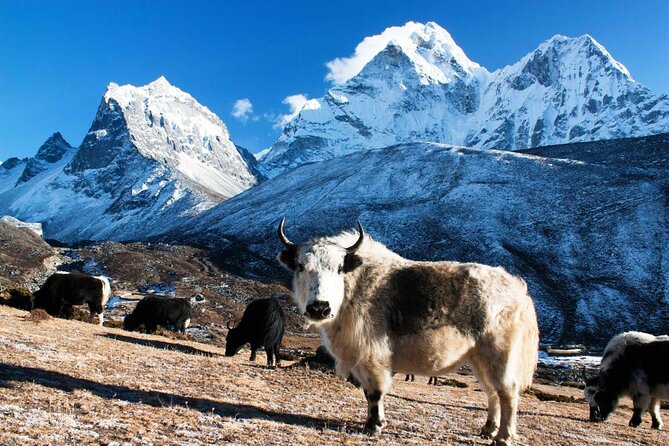
- All-inclusive from Kathmandu to Lukla to return: flights, teahouses, guide/porter, permits, and meals on the trek
- Comfort gear included: sleeping bag, duffel bag, down jacket, and trekking poles
- Sherpa villages and monasteries, not just checkpoints: Namche, Tengboche/Tyangboche area, and more
- Two built-in acclimatization breaks: Namche Bazaar and Dingboche
- Kala Patthar timing focus: the classic high viewpoint day with big payoff views
- Weather-aware backup thinking: flight timing risk is acknowledged, with extra options in Kathmandu
What You’re Actually Paying For: $1,900 and the value inside
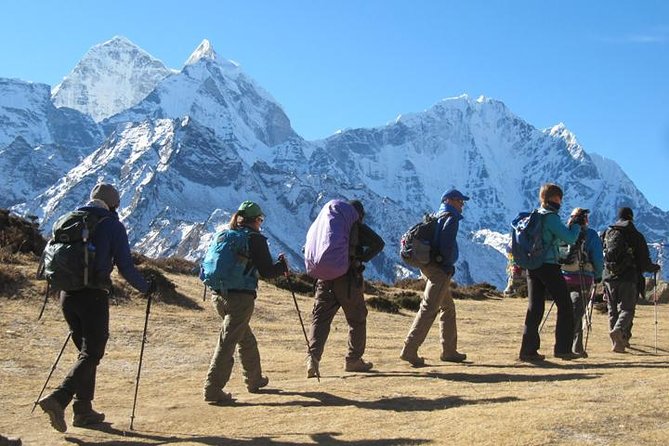
At $1,900 per person, this trek isn’t just a “guided hike.” It’s mostly a logistics package: Kathmandu airport pickup, Kathmandu–Lukla flights and return, 3 nights twin sharing in Kathmandu, and 12 nights in teahouses. Then you add permits/fees, a trekking guide, a Sherpa porter, and full-board meals on trek days.
That matters because Everest Base Camp is where small costs stack up. Here, you’re not left piecing together permits, meals, and basic gear rental at the last minute. You’re also not stuck doing the math on guides and porters separately.
The trade-off: some things still aren’t included. Kathmandu lunches/dinners (other than the welcome and farewell dinners) are extra, along with personal expenses like laundry, hot shower access, Wi‑Fi, and drinks. Travel insurance (including emergency evacuation) is also not included—this is one of those “don’t skip it” items on a remote trek.
You can also read our reviews of more tours and experiences in Kathmandu.



Kathmandu first: briefing, welcome dinner, and getting your footing
Your trip begins in Kathmandu with pickup to your hotel after landing at Tribhuvan International Airport. In the lobby area, there’s a program briefing—exact timing can vary, but the point is you get your plan before you scatter into Thamel chaos.
Then there’s a welcome dinner at a typical Nepalese restaurant, with cultural programs. It’s a smart reset after flying in: you eat, you understand the schedule, and you’re not guessing what comes next.
If you’re the type who likes a clear beginning, this works well. You also get an overnight in Kathmandu so you can rest, rather than jumping straight into altitude hiking the moment you arrive.
Day-by-day on trail: the rhythm you’ll feel from Lukla onward
Day 2: Lukla’s 35-minute flight and the hike to Phakding
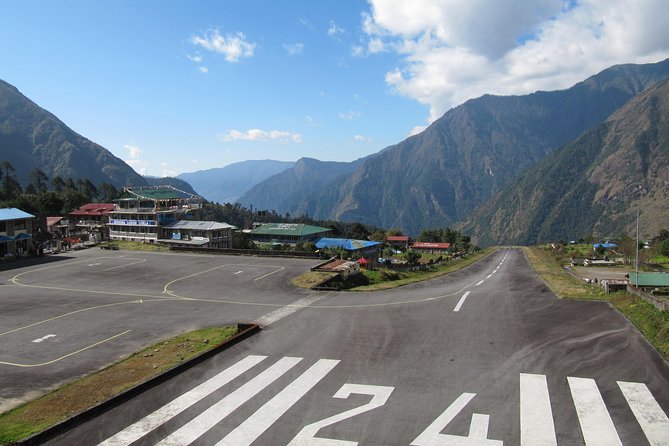
You start early and fly to Lukla (about 2,800 m / 9,186 ft). The flight time is short—around 35 minutes—but the feeling changes fast because you arrive already in mountain country.
Once you land, the trekking setup kicks in: porters/droghers help manage loaded luggage, and your first hiking day begins with scenic views of peaks like Number Himal and Mt. Phari. The route follows the Dudh Koshi river area. Along the way, you pass Sherpa farm settlements, and you cross into a world where trails connect villages rather than just sights.
This first walking day is also where you learn the basics: how your legs handle constant turns and short climbs, and how quickly the air feels different once you’re moving.
Day 3: Sagarmatha National Park gate and the push toward Namche Bazaar
The trail continues with suspension bridge crossings over the Dudh Koshi. As you hike toward Namche Bazaar, you pass through the Sagarmatha National Park area where your trekking permit is checked.
Then it’s a mix of gentle walking and short ups and downs. You’ll also spot views of peaks like Mt. Thamserku from villages along the way.
Namche is where the Everest trek “feels official.” You trade the river-valley flow for a busier high-mountain hub. It’s also your entry point into the Sherpa village world in a way that’s easy to appreciate even if you’re tired.




Day 4: Namche acclimatization day (with options)
This is a full day to adjust. The plan gives you space to breathe and recover rather than squeezing in another long climb.
If you want activities, there are a few directions you can go:
- Stroll through Namche Bazaar and its Saturday market energy (if your timing matches).
- Visit the Sherpa Museum to understand Sherpa culture and mountaineering history.
- Take a viewpoint-style outing toward the Everest View Hotel and Syangboche airstrip area.
The practical value here is simple: you’re already at high altitude, and this day helps your body handle the next stages without turning the whole trek into one long fatigue spiral.
Tengboche/Tyangboche day: monasteries, forests, and peak views
As you head toward the Tengboche region, the trek shifts from village rhythm to forest edges and monastery drama. The route includes stretches through trees such as silver fir, blue pine, rhododendron, magnolia, and birch—so it’s not only stone and sky.
The big “wow” part is the monastery (Gumba) area—the views of Everest-region giants tend to hit hard here, and you’ll likely see Everest, Nuptse, Lhotse, plus nearby peaks like Ama Dablam depending on cloud cover.
One small drawback: these days can feel longer mentally than their timeline suggests because the climbs come with frequent viewpoint stops. If you want photos, plan for slower pacing. If you want steady energy, just keep moving and save your best pauses.
Dingboche: why the rest day here is a big deal
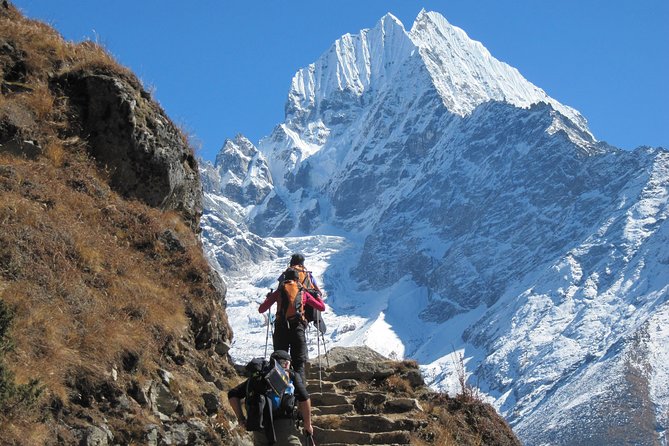
After moving through Deboche and Pangboche areas (including prayer wall passes), you reach Dingboche, where the valley opens up with huge mountain views—Amadablam, Nuptse, Lhotse, and the broader eastern Khumbu panorama.
The next day is a rest day in Dingboche. You can take it totally easy, or you can go for a hike to Chukung (about 4,730 m) for better acclimatization and glacier-and-summit views, then return the same evening.
This is the stage where altitude planning matters most. The trek description specifically notes how thin air feels as you rise slowly, even on a gradual hike. That’s your signal to listen to your body, pace yourself, and treat “walking” as work, not a race.
Lobuche and Gorakshep: memorials, icefall proximity, and tough terrain
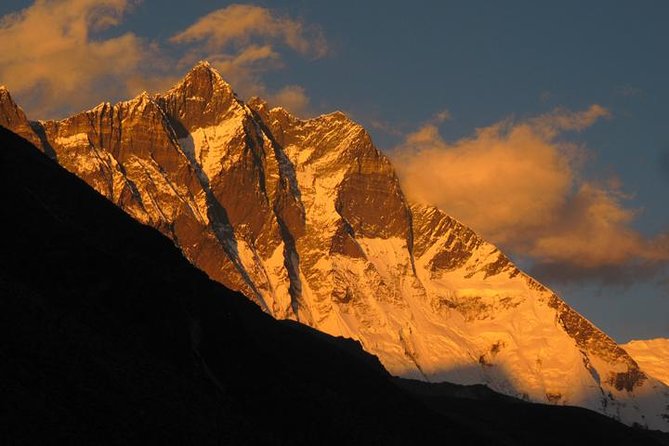
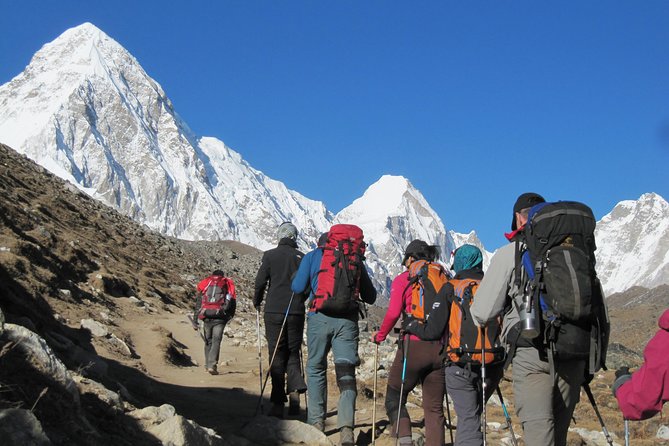
The route to Lobuche trends toward the north with gradual uphill walking. You’ll pass mani-prayer stupa moments and gain views toward Pheriche, plus distant summits like Mt. Pumori.
One emotional and memorable stop is the section connected to climber memorials near the higher trekking points. It’s not a “fun photo spot,” but it adds meaning to what you’re walking toward.
Then you push toward Gorakshep. This day involves early dawn walking on windy, rocky paths. The payoff is that you’re close to the Everest Base Camp approach zone—views of Mt. Pumori, Mt. Nuptse, and the base area itself, plus Kalapathar in the distance.
From Gorakshep, the plan continues toward Everest Base Camp and also toward the Khumbu icefall area. Expect the terrain to feel tougher here. Thin air plus rough ground makes you slow down even when you think you’re “in shape.”
Kala Patthar: the classic viewpoint day
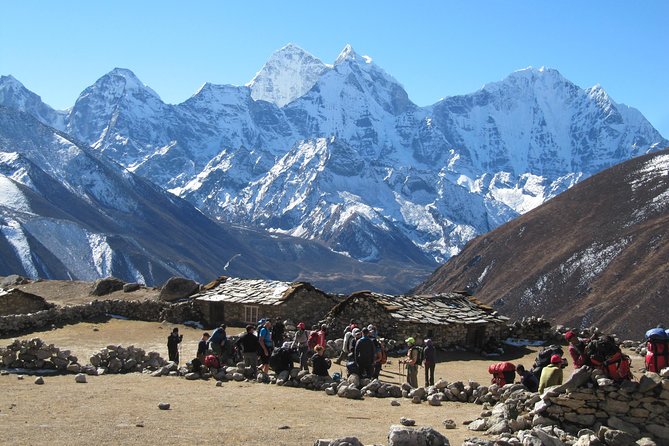
Your Kala Patthar day starts early with a walk of about 2 hours, paced on your own. Once you reach the top, the views are the whole reason this trek exists. The Everest viewpoint from Kala Patthar is described as the moment you’ve been waiting for—Everest looks close, and you can see Everest Base Camp below and the Khumbu Glacier features underfoot.
You’ll also take in a wide sweep of surrounding peaks from that rocky summit area. Then you head back to Gorakshep.
This day is typically where trekking energy is either still strong or already running thin. If you’re prone to overheating early, slow your pace at the start. If you get cold fast, keep layers ready. It’s a classic high-altitude push: short distance, serious effort.
Downhill days: Tyangboche/Tengboche monasteries and the long return to Namche
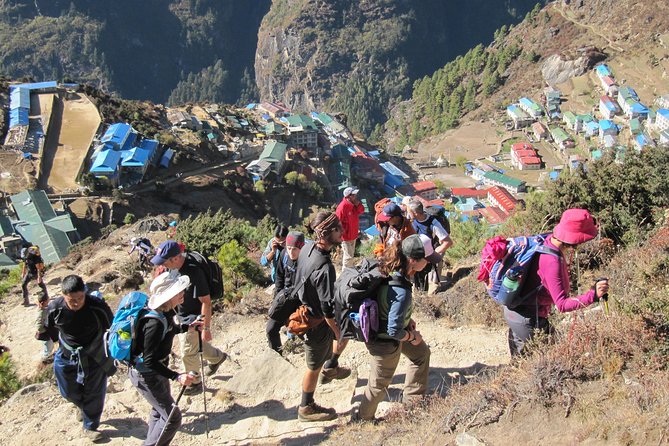
After Kala Patthar, the trek begins its descent rhythm. The path from Gorakshep heads downhill toward Pheriche and then into Tyangboche/Tengboche area. The monastery complex remains the emotional anchor here again—big Gumba presence, plus campsites and tea houses, with massive views of Amadablam, Everest, Lhotse, and nearby peaks.
Then you descend back toward Namche Bazaar via places like Phungithanka and Sasana, crossing the Dudh Koshi suspension bridge on the way. You’re walking through the same kind of forests—silver fir, blue pine, rhododendron, magnolia, birch—but now you’re working at “recovery pace.”
That’s where the trek feels like a circuit: the same region, just easier on the legs. If your knees get cranky, this is where trekking poles earn their keep (and yes, they’re included).
Lukla day again: the 7–8 hour push back and the last-night mood
The return to Lukla is a long day. The plan describes descending for a long stretch, then passing back through villages for lunch breaks (like the Monju/Phakding area). You’ll hike around 7–8 hours, enjoying the shift from high-altitude bustle back toward lower valley greenery.
Near Lukla, your escorts re-confirm your air ticket. Then there’s time to stroll and a final supper celebrating with the crew before the overnight in Kathmandu-ready mode.
It’s a quiet kind of satisfaction. You’re tired, you’ve earned it, and the trek stops feeling abstract.
Flying back to Kathmandu: morning departures and an extra day in Thamel if needed
The schedule on the flight back to Kathmandu is planned for the morning when possible, because afternoon wind can affect operations. Still, weather and other factors can cause delays.
Your guide/usher handles the transfer back to your Kathmandu hotel. Then the plan gives you a backup approach:
- If your flight gets canceled, you don’t lose the whole day.
- You can spend time in Kathmandu, including Thamel for browsing and shopping.
A farewell dinner wraps things up, plus overnight at the hotel. The last free day is built in for last-minute shopping and souvenirs—or starting a different trip in Nepal.
Gear and comfort: what’s included and what you still need
This trek includes practical items that actually reduce packing stress:
- Sleeping bag
- Duffel bag
- Down jacket
- Trekking poles
That’s valuable because many EBC trekkers end up renting or buying gear late and then realizing they didn’t pack the right gloves, hat, or base layers. Here, the big cold-weather items are already covered.
You’ll still want to bring what isn’t listed: personal clothing layers, any essentials you need day-to-day, and items for comfort. Also note: hot shower access and laundry may be extra, along with drinks and Wi‑Fi.
The good part is you don’t need to carry everything yourself. Your porter supports luggage, and the trek follows a teahouse rhythm instead of camping through every night.
Who this trek suits best (and who should rethink it)
This experience says it works for people with moderate physical fitness and requires proper trekking gear. It’s also set up as a private trek, meaning you’ll only be trekking with your group rather than blending into a large crowd.
It’s a great fit if:
- you want an Everest Base Camp trek but don’t want to build every detail yourself,
- you like Sherpa culture stops and monastery visits,
- you appreciate acclimatization days instead of “send it” pacing.
It’s less ideal if:
- you can’t handle possible flight disruptions around Lukla weather,
- you’re not comfortable with high-altitude trekking effort, even with rest days.
One more note: you should plan extra time. The trek information gives a clear warning—if the Lukla flight situation turns ugly, helicopter options can become necessary, and those have significant costs.
The guide/crew factor: why organization matters in Everest country
From prior Nepal trek experiences with this company, the pattern is consistent: pickup handled smoothly, and return flight coordination stays organized. In one instance, the guide Hari was mentioned as top-organized from airport pickup through the return flight, and the company’s leadership connection was credited to Naba and his team as well-connected and experienced.
Even without getting fancy, this kind of coordination is a big deal in Nepal’s mountain flight system. Everest treks are hard enough. You want your logistics to be the part that runs like clockwork.
Should you book this Everest Base Camp trek?
I’d book it if you want an Everest Base Camp plan that treats logistics like part of the journey: flights, permits, teahouses, meals on trek days, and key gear handled. The acclimatization breaks and monastery-and-village pacing make it feel human, not just a checklist toward Everest.
I’d be cautious if you can’t handle delays tied to Lukla flights. This trek is weather-dependent, and the plan even mentions helicopter contingencies at added cost, which means you should keep your schedule flexible and budget for real-life mountain operations.
If you’re ready for altitude effort and want Sherpa country done the practical way, this is a solid value path into the Everest region.
FAQ
How long is the Everest Base Camp trek?
The trek runs for about 16 days.
What’s included in the $1,900 price?
It includes Kathmandu hotel nights (3 nights twin sharing), 12 nights in teahouses, trekking guide and Sherpa porter, permits and fees, flights from Kathmandu to Lukla and return, meals on the trek (full board) plus breakfast in the city, and trekking gear like a sleeping bag, duffel bag, down jacket, and trekking poles.
Are meals included while you’re in Kathmandu?
Kathmandu breakfast is included, but Kathmandu lunch and dinner are not included except for the welcome and farewell dinners.
Does the tour include permits and park fees?
Yes. Permits and fees are included.
What about travel insurance and evacuation?
Travel insurance, including emergency evacuation, is not included.
Is the trek private or shared?
It’s private. Only your group will participate.
Will the Lukla flights definitely run on time?
No. Lukla flights may delay or cancel due to weather or technical issues. The operator may try another similar airline based on seat availability. If a helicopter is needed, you may have to pay an additional amount.
How many days of acclimatization are built in?
There are rest/acclimatization days in Namche Bazaar and again at Dingboche.
What time does the trek start each day?
The meeting/start time is listed as 5:00 am.