REVIEW · SAO VICENTE
Santo Antão: Day Trip by Car or Trek
Book on Viator →Operated by Green Line Tours Cabo Verde · Bookable on Viator
Santo Antão in one day is a workout for your eyes. This full-day route strings together coast, mountains, crater views, and working valleys with a local guide who keeps the day moving.
I like that you get real variety without needing a plan of your own: ferry time plus drives, viewpoint stops, and optional walking or trekking. I also like the focus on everyday life, not just scenic stops, including a grogue rum visit with tastings.
The only real catch is timing: you start early for the ferry, and the day can feel a bit scheduled, so if you want to linger for hours at viewpoints, bring patience.
In This Review
- Key Highlights You Should Know
- Why Santo Antão Works So Well as a Day Trip
- Choosing Your Start: São Vicente Ferry vs Santo Antão Launch
- Start in São Vicente (most common)
- Start on Santo Antão (no ferry tickets)
- The Morning Ferry From Mindelo: Time on the Water Matters
- Porto Novo to Pico da Cruz: Above the Clouds, Then Back Down
- Pico da Cruz
- Cova Crater and Delgadinho: Two Stops That Explain the Island
- Ribeira Grande, Povacao, and Lunch: Where the Route Becomes a City Day
- Xôxô Valley and Ponta do Sol: Fertile Farming and Fishing Life
- Xôxô
- Ponta do Sol
- Grogue Stops: The Rum Part Isn’t Just a Gift Shop Stop
- Beth d’Kinha
- Paúl / Eito area
- Paúl Views and the Return via Janela and Farol de Fontes Pereira de Melo
- Guide Quality and Group Size: Why Madu and Danny Get Called Out
- Price and Value: What You’re Actually Paying For
- What to Pack (Because This Is a Long Mountain Day)
- Should You Book This Santo Antão Day Trip?
- FAQ
- How long is the Santo Antão day trip?
- Does the price include ferry tickets?
- What’s included in the tour besides transport?
- Is lunch included?
- Is trekking part of the trip?
- How big are the groups?
- Is there free cancellation?
Key Highlights You Should Know
- Two start options (with or without ferry tickets) so you can match your time in Cape Verde
- Ferry crossing with wildlife odds and a stop for Ilhéu dos Pássaros (Bird’s Island)
- Cova crater and Pico da Cruz for high views plus cooler mountain air
- Delgadinho ridge photo stop where the terrain “breaks” the valleys into distinct layers
- Grogue distillery visits with an included entry and a chance to taste rum
- Small-group feel with a maximum of 12 travelers and local guiding in multiple languages
Why Santo Antão Works So Well as a Day Trip
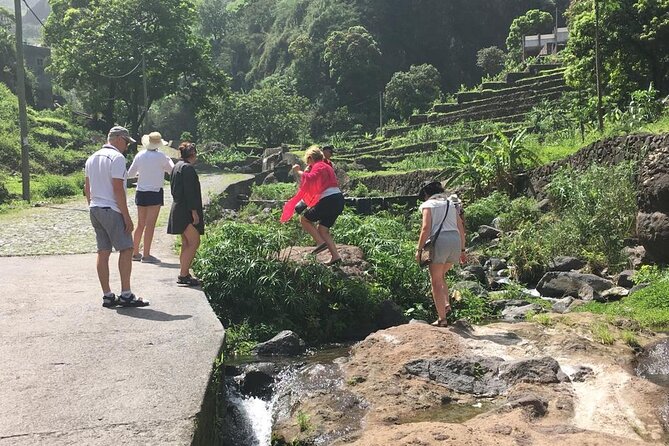
Santo Antão earns its nickname as the island of mountains, but the magic is how quickly the island changes. In a single day you can go from ocean water to cloud-level ridges to deep, green valleys where people grow food and live at a slower pace. That mix is exactly why this trip makes sense if your time on Cape Verde is limited.
The structure also helps. You’re not trying to figure out where to go next on your own, and you’re not stuck waiting around either. The guide keeps you moving through a route that hits major highlights while still leaving room for photos and short breaks.
And if you’re the type who worries about tours feeling generic, this one leans local. You’re passing through farming communities, seeing small roads and village life, and learning why these spots matter to how the island works.
Choosing Your Start: São Vicente Ferry vs Santo Antão Launch
This tour gives you two ways to start, and that choice affects everything about the day.
Start in São Vicente (most common)
You get an early pickup in Mindelo, a transfer to the ferry terminal, and roundtrip ferry tickets included. That means you’re scheduling around the ocean crossing, and you’ll spend part of your day on the water—often worth it for the views and the wildlife chances.
Start on Santo Antão (no ferry tickets)
You arrive on Santo Antão via your own method, and then the local guide meets you at the Gare Marítima terminal area to run the highlights route by car. The day still follows the same overall “island highlights” logic, but you remove the ferry timing from your stress.
If you’re staying in Mindelo and want the easiest plan, start in São Vicente. If you already have a morning on Santo Antão and want to minimize transit time, start there.
The Morning Ferry From Mindelo: Time on the Water Matters
The day begins at the Mindelo ferry terminal, then the ferry crosses to Santo Antão. The crossing can take up to about an hour, depending on conditions, and you can stand on deck if you want. When conditions line up, this crossing can come with surprises like dolphins, pilot whales, flying fish, and sea birds.
A small but memorable detail is the lighthouse on the rock in the middle of the ocean: Ilhéu dos Pássaros, also called Bird’s Island. It’s the kind of landmark you might miss if you travel by a route that never points it out, but it’s a great marker for the start of the adventure.
Practical note: plan on an early start. Several people find it worthwhile, but it is still a wake-up-early type of day.
Porto Novo to Pico da Cruz: Above the Clouds, Then Back Down
Once you reach Santo Antão, you’ll spend the day climbing into the island’s mountain zones.
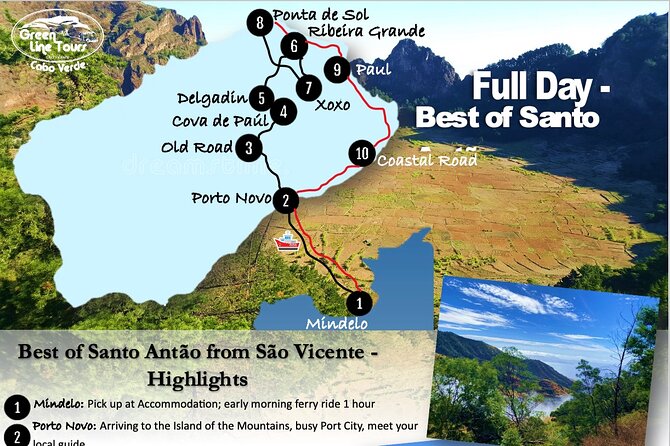
From Porto Novo, the route starts ascending through the mountains along an old cobblestone road. This section is less about one single viewpoint and more about the slow reveal of island life: small communities, traditional thatched-roof homes, donkeys carrying water, farmers working the land, and people doing their daily jobs without much performance for visitors.
Pico da Cruz
Then you hit Pico d Cruz, and the tone changes. This stop is above the clouds, with cool breeze and green pine and eucalyptus trees. You’ll also get a view toward Paúl from up top. It’s a good place to pause, breathe, and take in how the island’s weather affects what you see.
If you get even a bit of mist, that’s normal up here. It makes the light softer and can add drama to photos—just don’t plan on crisp clear views every minute.
Cova Crater and Delgadinho: Two Stops That Explain the Island
After Pico da Cruz, you go for Cova Crater. This stop focuses on the farming community living inside the crater. The mist from clouds helps the area self-sustain, and that simple idea makes the viewpoint more than a photo. You understand why people put down roots where they do.
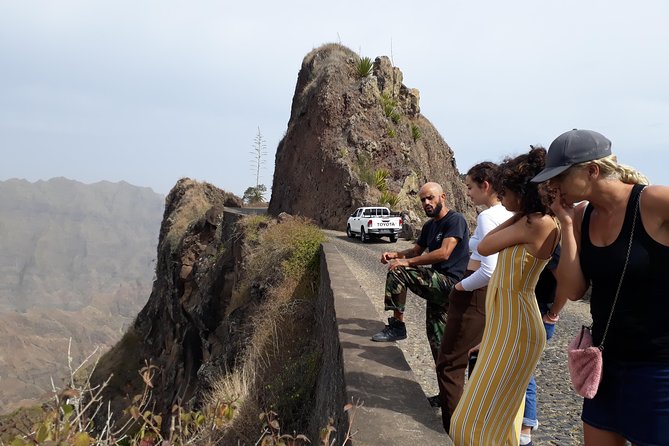
Next comes the Delgadinho mountain ridge, a narrow mountaintop crossing separating major valleys: Ribeira Grande and Ribeira da Torre. The route here is famous for photographs, mainly because the view shows the valleys as distinct spaces, not one flat background. If you like contrast in your pictures—green valley vs. rocky ridgeline—this is one of the better moments.
Time-wise these stops are short (think minutes, not hours), so bring your phone battery and take a few careful shots instead of rushing through.
Ribeira Grande, Povacao, and Lunch: Where the Route Becomes a City Day
You’ll reach Ribeira Grande, and the route makes a switch from viewpoint stops to a more town-based feel.
The tour includes an arrival in Povacao, a colorful area within Ribeira Grande with colonial and modern homes and street art. This is also where you stop for lunch in town. Lunch is not included in the package price, so you’ll pay on your own, but having a guided lunch stop still helps—especially if you want to avoid choosing among menus quickly while you’re hungry and tired.
This segment is also a good mental reset. After hours of mountain roads and lookout points, you get a chance to stretch, walk a bit in town, and use a real restroom stop.
Xôxô Valley and Ponta do Sol: Fertile Farming and Fishing Life
After lunch, the route heads toward Ribeira de Torre and the green valley area known for farming.
Xôxô
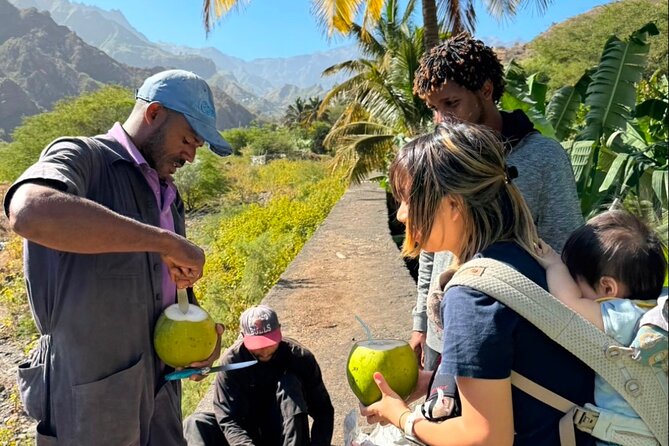
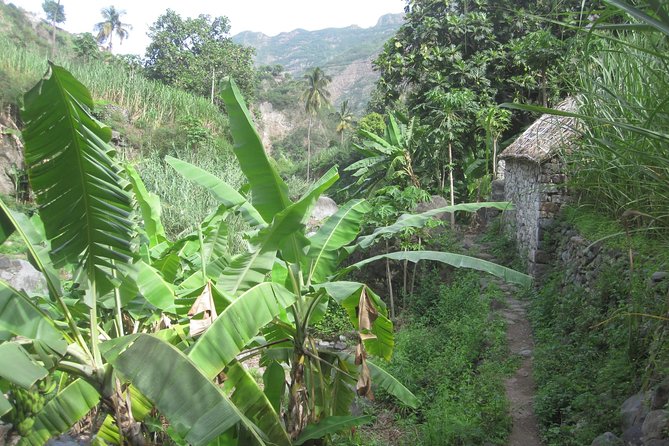
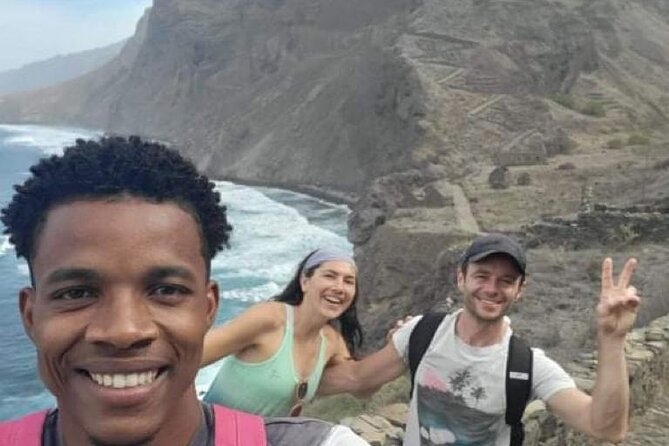
At Xôxô, you’re in a valley with bananas, mangos, sugar cane, and breadfruit trees. You’ll also find a large tank pool used by locals for swimming and fun. Even if you don’t swim, it’s a practical reminder that people live here year-round in ways that depend on water and fertile ground.
Ponta do Sol
Then you go to Ponta do Sol, a fishing village. You’ll see the old port of Boca de Pistola (Mouth of the Pistol), and the stop is designed around the rhythm of fishermen and the catch of the day. It’s a small, human-scale end to a day that otherwise leans dramatic and high.
If you’re sensitive to heat, bring light layers anyway. Even when it’s warm in town, the mountain air can feel cooler earlier in the day.
Grogue Stops: The Rum Part Isn’t Just a Gift Shop Stop
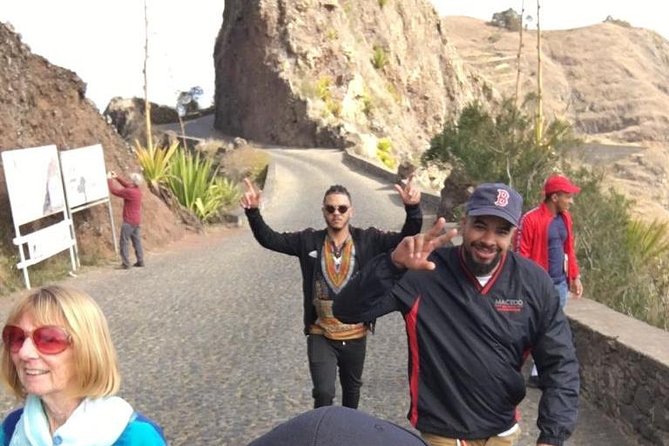
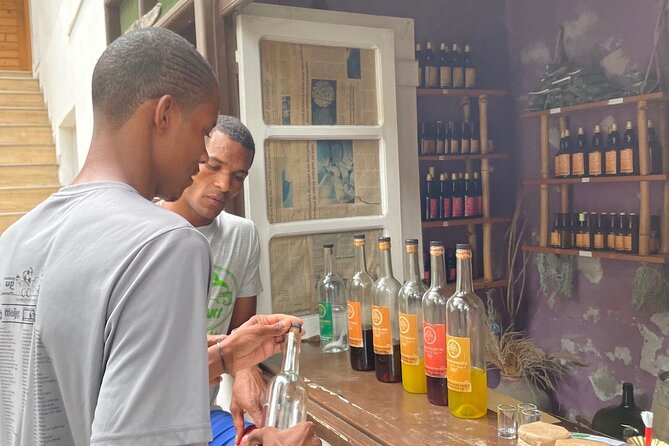
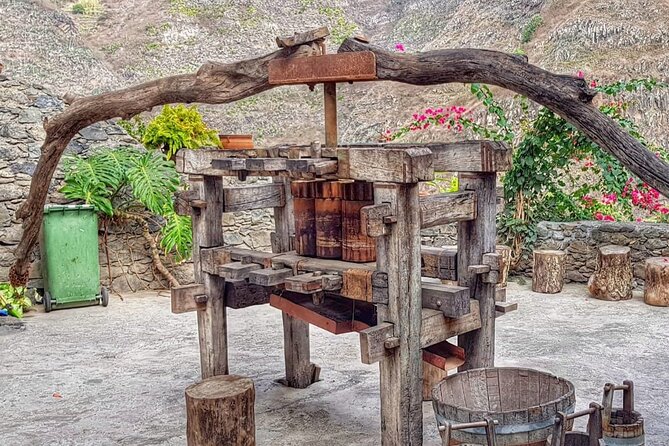
One of the best-value parts of this day trip is that it includes a grogue distillery visit. It’s not only about tasting something—it’s about seeing how it’s made and hearing the story tied to the island.
Beth d’Kinha
At Beth d’Kinha, you’ll visit a distillery where grogue is produced. Entrance is included, and you get time for a tasting.
Paúl / Eito area
Later, the route goes to the municipality of Paúl and then to the village of Eito for another rum distillery visit, with an opportunity to taste again.
Not every tour has this kind of stop built in, and it adds a local-food angle that makes the day feel more like an encounter than a checklist.
A quick tip: if you plan to drive-sleep on the return ferry, keep your tasting small or pace yourself. The afternoon can catch up with you.
Paúl Views and the Return via Janela and Farol de Fontes Pereira de Melo
Paúl is where the tour shifts toward a wider “island overview” feeling. You’ll pass a grand Saint Anthony statue overlooking Villa das Pombas, positioned as protection. It’s a striking marker in the setting and a reminder that this isn’t just scenery—it’s belief and community identity.
Then you head back toward Porto Novo via Janela, on a new coastal road. This return includes mountain tunnels, plus a lighthouse stop: Farol de Fontes Pereira de Melo. It’s a great closer because it gives you a sense of the island’s edges and the way roads snake through the terrain.
Finally, you arrive at the Gare Marítima porto de Porto Novo (ENAPOR) in time for the afternoon ferry back to São Vicente. Back on São Vicente, there’s a transfer to Mindelo accommodation.
Guide Quality and Group Size: Why Madu and Danny Get Called Out
This tour’s reviews are heavy on one theme: the guide matters. People consistently mention Madu for being passionate about his island and for doing a great job explaining what you’re seeing. Others mention Danny and highlight the smooth, friendly way the day was managed.
Two practical takeaways for your booking decision:
- Your guide can make the route feel faster in a good way. If they’re good at pacing stops and choosing when to walk vs. when to drive, the day won’t feel like a rushed blur.
- The group size stays small—maximum 12—so you’re not lost in a herd.
Language coverage also varies. Guides can speak English, French, Spanish, or Portuguese, and open group days can be bilingual depending on who booked. One downside mentioned in feedback was that expectations for a Spanish-only day weren’t met on a group with mixed languages. If Spanish-only (or any single language) is important to you, message before booking and ask how they handle language on that departure.
Price and Value: What You’re Actually Paying For
At $104.68 per person, this isn’t a cheap quick trip. But you are paying for several pieces that add up fast if you do them separately: ferry tickets (when starting in São Vicente), private transportation, pickup and drop-off, a local guide, and entry to a grogue distillery.
Also, the day is long (about 7 to 11 hours). Long days tend to cost more because you’re covering transport time, guide time, and the ferry schedule. If you’re using São Vicente as your base, a day trip like this often gives you more highlights than trying to wing it with taxis and uncertain timing.
Where the value can drop is also simple: lunch is not included. If you eat a more expensive meal or drink more than you planned, the final total can creep up. But if you budget for lunch and keep purchases reasonable, it stays good value for what you get.
What to Pack (Because This Is a Long Mountain Day)
Even without a trekking-heavy day, you’ll spend a lot of hours outside or at viewpoints. Bring the basics seriously.
- Comfortable walking shoes (you might step on uneven pavement or rocky edges at viewpoints)
- Light layers (Pico da Cruz can feel cool, and mountain air shifts fast)
- Sun protection (high points plus long daylight)
- Water and snacks if you don’t love relying on lunch timing
- Phone battery or a small power pack for photo stops
And remember: if you choose car highlights only, you’ll still see a lot. If you choose add-on walking or trekking, your shoes and pacing matter more.
Should You Book This Santo Antão Day Trip?
Book it if:
- You’re staying in Mindelo or São Vicente and want to see Santo Antão without planning ferry + routing yourself
- You want a balanced mix of viewpoints, villages, and working valley life in one push
- You like having a guide explain what you’re looking at, and you’re open to a day that follows a schedule
Skip it (or at least ask questions first) if:
- You need a private, just-for-you arrangement. This runs as an open group with up to 12.
- Language needs are very specific for you. Ask how language is handled on mixed departures.
- You hate early mornings. The ferry timing can mean an early wake-up and a bit of rush.
FAQ
How long is the Santo Antão day trip?
It lasts about 7 to 11 hours.
Does the price include ferry tickets?
If you start in São Vicente (Mindelo pickup), roundtrip ferry tickets are included. If you start on Santo Antão, ferry tickets are excluded.
What’s included in the tour besides transport?
Private transportation, a local professional guide (English, French, Spanish, Portuguese), pickup and drop-off at the starting point, and entrance to a grogue (rum) distillery.
Is lunch included?
Lunch is not included.
Is trekking part of the trip?
There’s an option to add a walk, hike, or trek, and you can also do the highlights mainly by car. The amount of walking can vary with the option you choose.
How big are the groups?
There is a maximum of 12 travelers.
Is there free cancellation?
Yes. You can cancel up to 24 hours in advance for a full refund.