REVIEW · NAIROBI
4 Day Mount Kenya Trek Up Chogoria Down Sirimon
Book on Viator →Operated by wilderness Alternative Expedition · Bookable on Viator
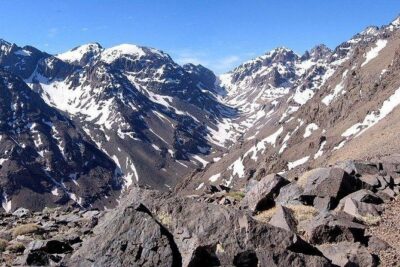
A dawn summit is pure Kenya. This Mount Kenya trek uses the Chogoria route up and Sirimon down, so you spend four days bouncing between montane forest, moorland, and high camps like Lake Michaelson and Austrian Hut. It’s the kind of route where the scenery changes for a reason, not just for show.
I love the way the Chogoria climb curves around the Temple area, with Hall Tarns perched above and Lake Michaelson sitting down in the Amphitheatre. I also like the people factor: the team running this trek is consistently praised by name, including Kenny (plus Joseph, Loki, JJ, and Willy).
The main drawback to plan for is the effort level. You’ll start the summit day early (around 4:30am), deal with loose scree on the ascent, and finish with a via ferrata section that’s described as the highest in the world—exciting, but not a casual walk.
In This Review
- Key Things That Make This Trek Worth Your Time
- Entering Mount Kenya National Park Through Chogoria Town
- Day 1: Chogoria Banda to Lake Ellis (Forest, Falls, and the Giant Billiard Table)
- Day 2: Montane Forest Glades to Lake Michaelson at 4,200m
- Day 3: The Temple Cliff Drop to Austrian Hut at 4,790m
- Day 4: 4:30am Summit Push, Rope Path, and the Via Ferrata
- Sirimon Descent: Forest Tracks After the Alpine Grind
- The Guide Team: Knowledge, Pace, and Real Organization
- Meals, Tents, and What’s Actually Included
- Timing, Altitude, and How to Prepare Without Overthinking It
- Price and Value: Is $900 Reasonable for 4 Days on Mount Kenya?
- Who Should Book This Trek (and Who Might Want Another Option)
- Should You Book This Mount Kenya Chogoria to Sirimon Trek?
- FAQ
- How long is the Mount Kenya trek?
- Which routes are used to go up and down Mount Kenya?
- What is the maximum group size?
- What’s included in the price?
- What isn’t included?
- Do I need a specific fitness level?
- Where is the start point and when does it begin?
- Is cancellation allowed?
Key Things That Make This Trek Worth Your Time
- Chogoria’s Temple-area route gives you standout views around the head of the Amphitheatre rather than a straight glacial-valley slog
- Lake Ellis, Lake Michaelson, and Austrian Hut act like dramatic “checkpoints” at increasing altitude
- Nithi Falls and River Nithi add a legit water-and-forest moment on Day 1
- Rope-lined steep sections + via ferrata on summit day make the last push feel more structured
- Small group size (max 12) keeps the pace manageable and the guide attention real
Entering Mount Kenya National Park Through Chogoria Town
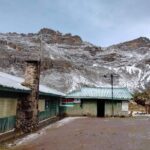
Most Mount Kenya treks start with a long drive, then an immediate jump into the hike mindset. Here, you leave Nairobi at 08:00, ride through agricultural country, and reach Chogoria town for lunch. After that meal, the trek switches gears: you’ll do a 4×4 journey up to the Chogoria Banda, where the real walking begins.
This matters more than it sounds. Getting some of the elevation-and-distance grind done by vehicle helps you start Day 1 feeling like you’ve got energy for the forests, tussock grass, and first big views.
You can also read our reviews of more tours and experiences in Nairobi.
Day 1: Chogoria Banda to Lake Ellis (Forest, Falls, and the Giant Billiard Table)
Day 1 is your “get oriented” day, and it’s more than a warm-up. You hike from Chogoria Banda to Lake Ellis, and along the way you pass through Hargenia forest and tussock grass. You’ll also pick up some early high-country drama—views of Mugi Hill and the Giant Billiard Table show up as memorable landmarks rather than random points on a trail.
Water features are part of the day too. You’ll visit River Nithi and Nithi Falls en route to Lake Ellis. That’s a good contrast to the dry, high scree world you’ll likely see later, and it makes the day feel like a mini tour of ecosystems instead of just a single climb.
By the time you reach Lake Ellis for camp, the vibe shifts toward camp-life: you’ll have supper and a bonfire moment. It’s a small detail, but after a day of moving uphill, it helps you actually enjoy the high-altitude evening rather than just “surviving” it.
Day 2: Montane Forest Glades to Lake Michaelson at 4,200m
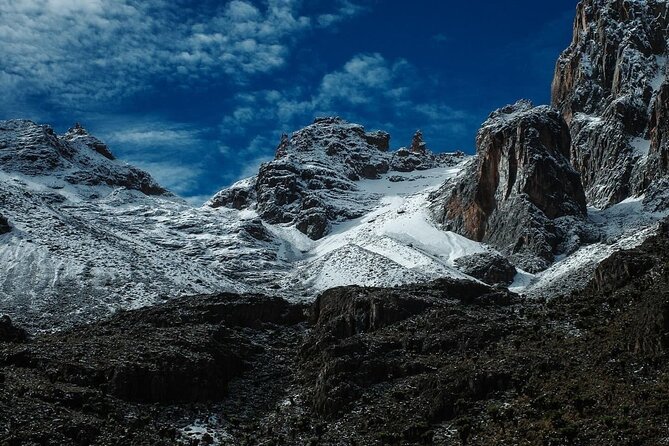
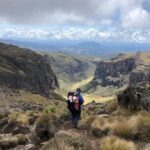
After breakfast, you follow the trail through glades of montane forest, climbing away from Lake Ellis on its west side. Then the terrain starts changing: you move across moorland and gain a ridge that eventually reconnects you with the main Chogoria trail.
This day is all about the transition. It’s where you’ll feel the air getting thinner and the views opening up over places like the Gorges Valley, plus perspectives back toward Ithanguni and the Northern Moorlands.
Lunch happens at a small stream crossing, which is practical. Stream crossings usually mean a slightly calmer stop where you can drink, refill if your guide allows it, and reset your legs without turning lunch into a rushed event.
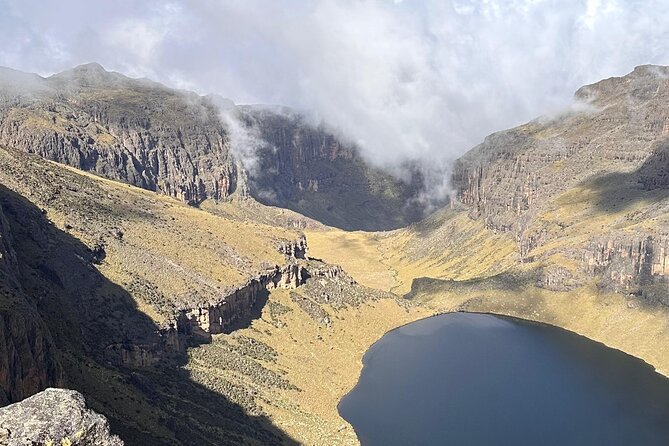
You finish the day at Lake Michaelson (4,200m). Resting here matters for two reasons:
- It’s a high-altitude acclimatization step before the Temple-to-hut zone.
- It sets you up for the big emotional moment of Day 3, where the views become much more dramatic.
Dinner and overnight are at Lake Michaelson camp.
Day 3: The Temple Cliff Drop to Austrian Hut at 4,790m
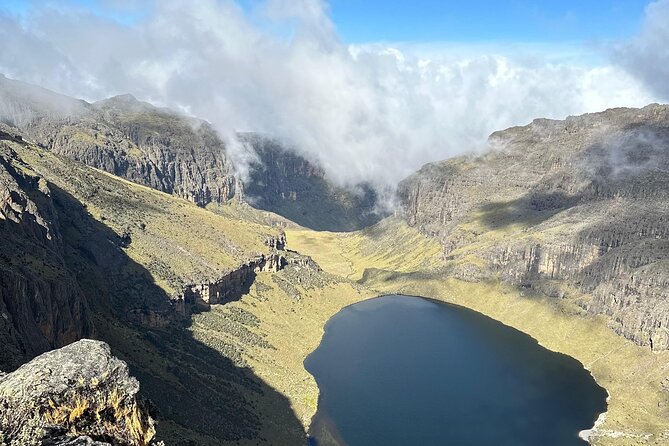
Day 3 starts with a payoff. From Lake Michaelson, you walk through the Temple cliff drop, which gives you a stunning view of Lake Michaelson. This is the sort of moment where you stop without being told to stop, because the terrain does the talking for you.
Then you keep moving along the rim—circumnavigating the peaks around the mountain—until you reach Austrian Hut at 4,790m. The hut has a specific advantage: it’s a vantage point, and it makes the summit distance feel shorter than you’d expect.
If you’re wondering why this overnight is such a big deal, it’s because it changes the feel of summit day. Instead of starting from a low camp and hoping for the best, you’re already positioned close enough that the summit push becomes a focused effort.
Dinner and overnight are at Austrian Hut.
Day 4: 4:30am Summit Push, Rope Path, and the Via Ferrata
Summit day begins early—around 04:30. The route up starts with a rope-lined steep path. Loose scree is part of this segment, so caution isn’t optional. You’ll want steady footwork and the kind of pacing that prevents rushing.
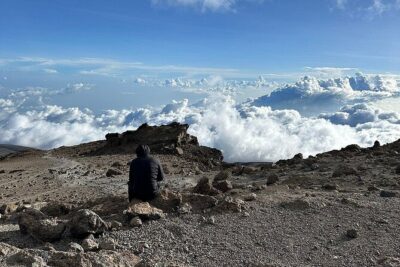
Then comes the sensory part: you’re walking into dawn and you’ll get to watch sunrise from the eastern side of the Chogoria route. It’s one of those moments where the work pays you back in a very simple way: light turning the mountain into a stage.
The last section includes a via ferrata segment that’s described as the highest in the world. A via ferrata is a protected climbing route with ropes to assist you, and it’s generally set up to be safer for people who are not hardcore climbers. You still need attention and care, but it’s not a free-for-all.
Once you reach the summit, you’ll take photos and enjoy the view briefly, then start down.
The descent continues west via the Sirimon route, and you’ll stop for breakfast at Shipton’s Camp. From there, you walk down 14km to Old Moses Camp, arriving later in the afternoon. After a short farewell ceremony, you head back to Nairobi, typically arriving late evening.
Sirimon Descent: Forest Tracks After the Alpine Grind
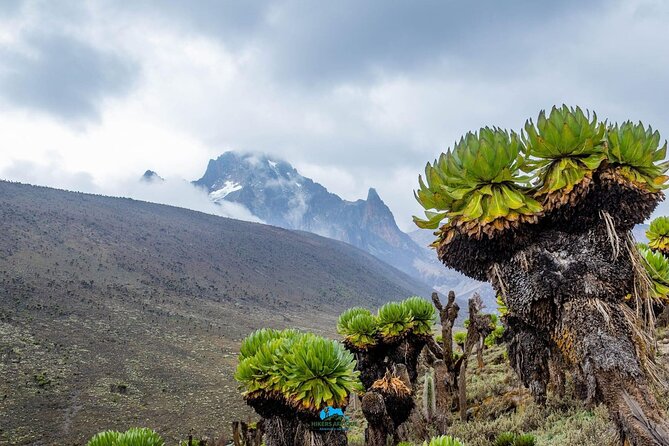
A lot of high mountain routes end with a long descent that feels like unfinished business. The Sirimon side of this traverse helps because it shifts you from harsh high terrain toward beautiful forest tracks.
That’s not just comfort. Forest walking can help your legs recover psychologically too. After days above the tree line, the change in temperature and the steadier trail feel makes the final part feel like you’re leaving the mountain rather than just grinding through it.
The Guide Team: Knowledge, Pace, and Real Organization
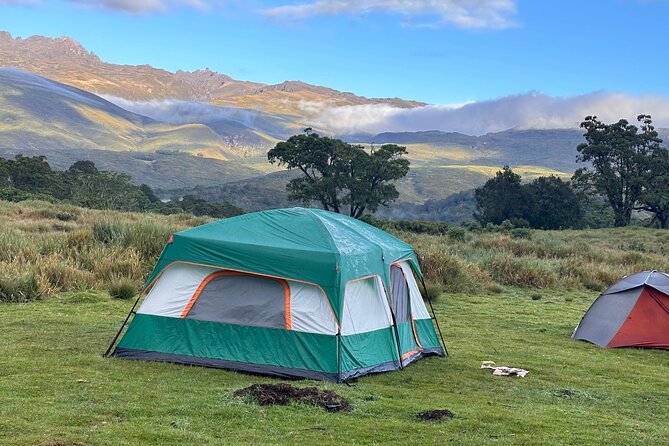
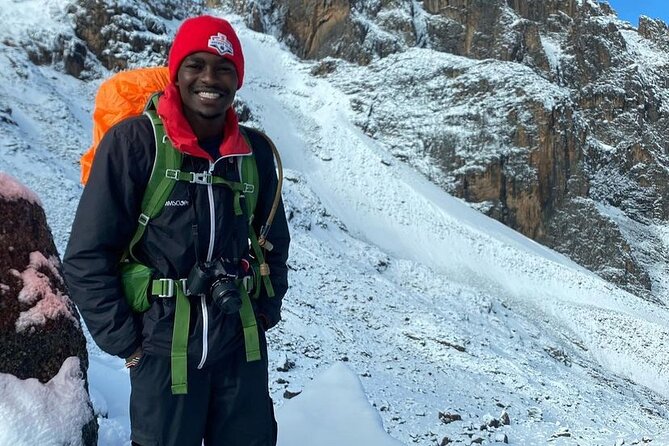
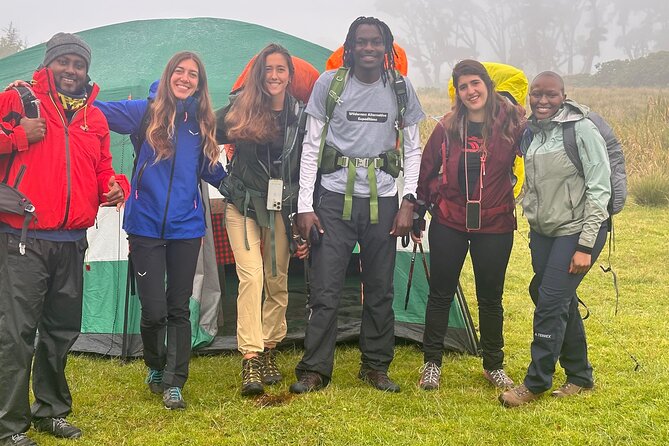
One big strength here is how the trek is run. In feedback about this experience, the guide Kenny is repeatedly credited for strong organization and for being knowledgeable about what you’re seeing. That matters on Mount Kenya, where the route is not just a line on a map—it’s a chain of ecosystems, ridges, and high points.
You’ll also see praise for teamwork, with names like Joseph, Loki, JJ, and Willy coming up. When a trek runs smoothly, it usually means:
- camp setup and timing works
- people aren’t guessing what comes next
- the group stays together in a manageable rhythm
And in at least one case, the team adjusted the plan due to timing constraints, even doing fewer nights than expected. That kind of flexibility is a real quality signal when weather or schedules shift.
Meals, Tents, and What’s Actually Included
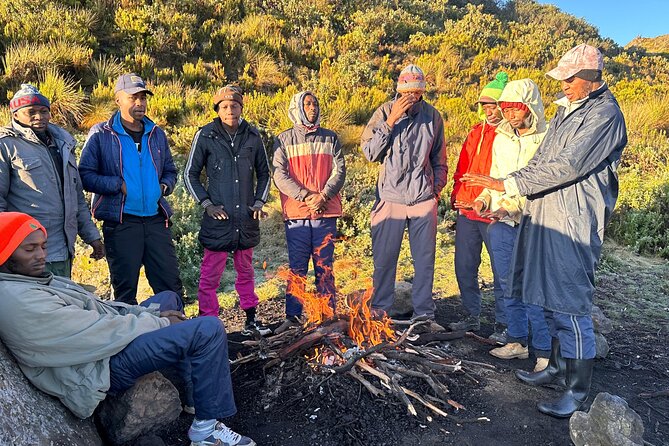
This trek includes a good baseline package:
- Licensed guide
- Tents (so you’re not arranging camp gear)
- Transport from Nairobi
- Meals: Breakfast (3), Lunch (4), Dinner (4)
That meal count is worth noticing because it shows you’re fed on the days you’re likely most active. It also means you can pack less food of your own and focus on essentials like water and a warm layer.
Also, admission fees vary by day in the way the trip is structured: Day 1 is noted as free entry, Day 2 and Day 4 are noted as included, and Day 3 is also noted as free entry. Either way, you’re not expected to figure out park payment on the fly.
You’ll also get a mobile ticket, and you should expect pickup.
Timing, Altitude, and How to Prepare Without Overthinking It
This is a “moderate physical fitness level” trek, but don’t mistake that for easy. You’re moving at altitude and you’ll be on steep, uneven ground—especially around summit day with loose scree and the rope-lined steep path.
If you want to stack the odds in your favor:
- Train for consistent uphill walking (not just speed)
- Practice good pacing so you don’t blow out on Day 1 and Day 2
- Plan for early starts and cool nights since high camps can feel sharp even when the day is sunny
One more practical note: the trek runs with a maximum of 12 travelers. That’s a meaningful detail because it typically means the guide can manage the group and slow down when needed.
Price and Value: Is $900 Reasonable for 4 Days on Mount Kenya?
At $900 per person, you’re paying for more than a hike guide. This price covers:
- round-trip transport from Nairobi
- tents
- licensed guidance
- a full set of meals (breakfasts, lunches, dinners)
- the structured route over multiple high-altitude camps (Lake Ellis, Lake Michaelson, Austrian Hut, plus the Sirimon descent stops)
For a 4-day trek at high altitude, that can represent good value if you’d otherwise have to price out similar support—especially the tent setup and the logistics of carrying you to and between trailheads.
The one extra cost you should plan for is tips, which are listed as not included. If you want your budget to feel calm, set a realistic tipping amount aside early rather than treating it as a last-minute decision.
Who Should Book This Trek (and Who Might Want Another Option)
This trek is a strong fit if you want:
- the Chogoria route because it’s praised for its scenery around the Temple and Amphitheatre area
- summit day that includes both a rope-lined path and a via ferrata section
- a traverse feel—ascent up one side, descent down another—instead of out-and-back
You might reconsider if you know you struggle with:
- very early mornings (summit push around 04:30)
- loose scree on steep slopes
- high-altitude nights at camps like 4,200m and 4,790m
That said, the trek includes rope assistance and a protected via ferrata approach, so it’s not built for only extreme climbers.
Should You Book This Mount Kenya Chogoria to Sirimon Trek?
I’d book it if you’re motivated by route variety and you want to experience Mount Kenya as a connected circuit: forests and falls on the way up, big high-camp views, then a structured summit approach, followed by a calmer-feeling forest descent.
I’d think twice if your goal is a low-effort day hike or if early starts and steep terrain make you anxious. In that case, you’d likely feel more stress than joy.
If you do book, choose this trip for the right reason: you’re not just buying a summit. You’re choosing the Chogoria approach around the Temple and then finishing the job through Sirimon—a real sense of journey.
FAQ
How long is the Mount Kenya trek?
The trek runs for 4 days (approx.).
Which routes are used to go up and down Mount Kenya?
You go up via the Chogoria route and down via the Sirimon route.
What is the maximum group size?
The group is limited to a maximum of 12 travelers.
What’s included in the price?
The price includes transport from Nairobi, tents, a licensed guide, and meals: Breakfast (3), Lunch (4), Dinner (4).
What isn’t included?
Tips are not included.
Do I need a specific fitness level?
The trip is described as suitable for travelers with moderate physical fitness.
Where is the start point and when does it begin?
The meeting/start point is Jomo Kenyatta International Airport, Embakasi, Nairobi. The provided start time is 12:00 am, and the driving to Chogoria is listed as departing Nairobi at 08:00.
Is cancellation allowed?
Yes. There is free cancellation up to 24 hours in advance for a full refund.