REVIEW · NAIROBI
Mount Kenya Trek
Book on Viator →Operated by Bushtroop Tours and Safaris · Bookable on Viator
Mount Kenya earns every step. This 5-day Mount Kenya trek turns Nairobi into a real climbing experience, moving from forest trail to high moorlands and ending with a sunrise moment near Lenana. I like that the experience is guided by a friendly, attentive crew, with guide names like Michael and Peterson showing up in past groups, and with chef Steven handling the cooking (including vegan meals).
The main thing to consider is effort: this is not a flat walk, and you’ll face altitude plus a very early start on summit morning. The payoff is big, but you should plan for 3am climbing and a moderate fitness level for the steep, stony sections.
In This Review
- Key things to know before you go
- Mount Kenya’s Sirimon-to-Chogoria Route: what you’re signing up for
- Day 1: Nairobi to Nanyuki, Sirimon Gate, and Judmier Camp
- Day 2: Old Moses area, moorlands, and Shipton Camp at 4200m
- Day 3: Acclimatization day to Kami Hut and the Hauseberg Lakes
- Day 4: 3am start to Lenana sunrise, then Mintos and Meru Bandas
- Day 5: A fast descent, a 4×4 to Chogoria, and back to Nairobi
- Guides and camp life: where this trip earns its praise
- Pace, altitude, and who this trek fits best
- Price and value: is $840 a fair deal?
- Tips that matter most for Mount Kenya
- Should you book this Mount Kenya Trek with Bushtroop?
- FAQ
- How long is the Mount Kenya Trek?
- What’s the maximum group size?
- Is pickup offered from Nairobi, and do I get a mobile ticket?
- What fitness level is required?
- Are admission or entrance tickets included?
- Is there free cancellation?
Key things to know before you go
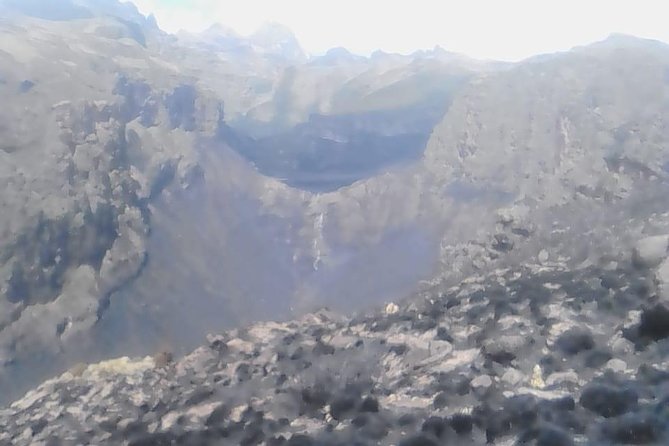
- Sirimon Gate to Lenana-style summit timing: a steep early push with a sunrise target
- Camp-by-camp pacing: overnight stops at Judmier Camp (3300m), Shipton Camp (4200m), and others
- Acclimatization built in: a full day to walk to Kami Hut and the Hauseberg Lakes
- Small group feel: maximum of 12 people, so the guides can keep an eye on everyone
- Food support matters: praised vegan meals and careful cooks/porters to keep you fueled
- Logistics that reduce stress: pickup offered and a 4×4 transfer to Chogoria for the Nairobi ride back
Mount Kenya’s Sirimon-to-Chogoria Route: what you’re signing up for
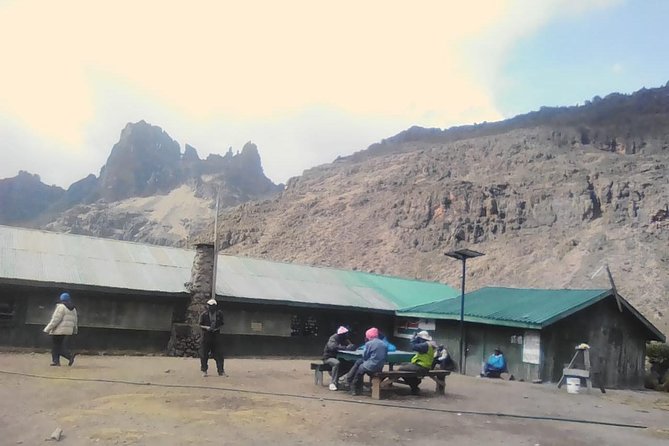
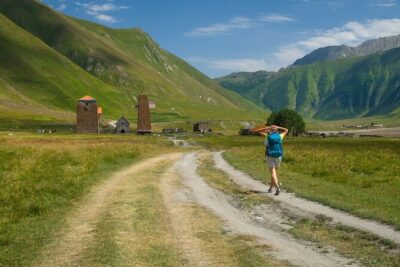
Mount Kenya is the kind of mountain that doesn’t do “one-size-fits-all.” This trek plan spends five days working your body up in altitude without pretending it’s easy. The route starts from Nanyuki and heads in via Sirimon Gate, which is a classic way to experience the mountain’s changing terrain—forest first, then heath land, then open moorland at higher elevations.
What makes this trip feel worth it is the structure: you don’t just climb and collapse. You move upward on Day 1 and Day 2, you take a deliberate acclimatization walk on Day 3, then you go for the big early-morning push on Day 4. That rhythm is exactly what helps a lot of hikers stay steady on a mountain like this.
You’ll also appreciate that this isn’t sold as a solo adventure. With a small group (up to 12) and guides who focus on keeping you taken care of, the experience is more about good decisions and safe pacing than just chasing photos.
You can also read our reviews of more tours and experiences in Nairobi.
Day 1: Nairobi to Nanyuki, Sirimon Gate, and Judmier Camp
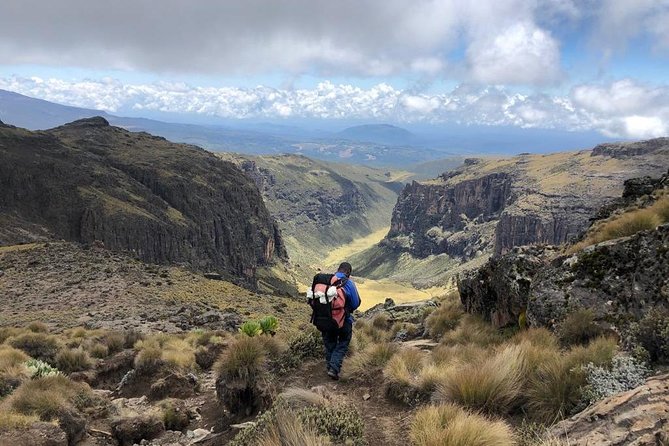
You start with a straightforward Nairobi-to-mountain transition. You leave Nairobi at 8:00am, drive about 4 hours to Nanyuki town for lunch, then continue toward Sirimon Gate (about 1 hour). You reach the gate around 2440m, which is a smart early stage to let your body adjust before the steep work begins.
From Sirimon Gate, the trail winds uphill through forest, then gradually shifts into heath land after about 3 hours on the track. That change matters. Forest sections can feel more forgiving underfoot, while heath land can be more exposed—so the hike teaches you to expect different footing and air feel as you climb.
About three and a half hours after the gate, the route turns right toward Judmier Camp (3300m). You finish the day with dinner and an overnight there. Day 1 is scheduled around 6 hours, which is plenty of time to start building rhythm without burning every match before acclimatization even begins.
Possible downside: if you’re the type who likes to move super fast, this day may feel like it’s setting you up slowly. But for altitude trekking, that conserves energy for what’s coming next.
Day 2: Old Moses area, moorlands, and Shipton Camp at 4200m
After breakfast, you continue uphill following the track and take the fork left at the junction. About an hour after Old Moses Camp, the trail crosses the Ontulili River. Then it’s about contouring through the moorland, with additional river crossings mentioned along the way.
This is the day where Mount Kenya starts to feel more like high-altitude terrain. Moorland walking can be both beautiful and demanding. Winds can be stronger. The air can feel thinner faster. And because the day climbs toward higher camps, your body needs steady pace more than big bursts of speed.
You head up to Mackinders Valley, where you get panoramic views up the valley toward the main peaks. Those views aren’t just scenery—they’re motivation for the altitude you’re earning. Then you settle in for dinner and overnight at Shipton Camp (4200m). Day 2 is built around getting you to serious height without pretending you’ll feel great the whole time.
What I like here: the shift from river crossings to valley views makes the day feel like progress, not just uphill slog. You’ll know you’re moving toward something.
Day 3: Acclimatization day to Kami Hut and the Hauseberg Lakes
Day 3 is the secret sauce of this whole trek. Instead of simply pushing higher, you acclimatize with a walk that goes to Kami Hut, then down toward the Hauseberg Lakes, including the Hauseberg Tarn and Nanyuki Tarn. After that, you walk back to Shipton for dinner and overnight.
This pattern—walk higher or around higher ground, then come back—helps a lot on mountains. It gives your body a chance to adapt before the summit morning strain. It also changes the feel of the trek. After two climbing days, you get a more balanced day that still feels like effort, just smarter effort.
You should expect the day to test your legs, even when it isn’t described as a “summit attempt.” The upside is you’ll likely feel more confident on Day 4 because your body has already practiced being at altitude.
Tip based on real-world experience: wear footwear that can handle wet sections. One of the standout practical notes from prior groups is the importance of waterproof shoes—especially with swampy-looking ground around the moorlands.
Day 4: 3am start to Lenana sunrise, then Mintos and Meru Bandas
Day 4 is the high-drama day. You leave at 3:00am for a steep stony quarry section that cuts through a cliff clearing that you can see from below. The route then brings you to Lenana with a scheduled arrival around 6:30am, taking about 3 hours for the ascent.
This timing is key. You’re going up early, then you’re rewarded after sunrise. For many hikers, this is the moment that turns a multi-day trek into a memory you can’t stop telling people about—quiet, cold air, and the sense that you’re standing on a real summit day.
After sunrise, you descend to Mintos Hut in about 2 hours, grabbing breakfast there, then continue further down to Mount Meru Bandas (2950m) for dinner and overnight. Day 4 is the longest “emotional loop” of the trip: you climb hard in the dark, then you come down fast enough that altitude fatigue can hit in a different way.
Drawback to plan for: going up at 3am can be rough if you’re not used to early wake-ups or you run cold easily at altitude. The trek is worth it, but you’ll want to treat the night before as recovery time, not a chance to stay up.
Day 5: A fast descent, a 4×4 to Chogoria, and back to Nairobi
On the final day, you descend for about 2 hours and 15km to reach a forest clearance where you catch a 4×4 transfer vehicle. Then you connect to your transfer back toward Nairobi via Chogoria Village.
That 4×4 leg is more than convenience—it’s a relief after a trek day. When your legs are tired, being able to switch from knee-busting descent to vehicle travel helps you arrive back feeling human instead of wrecked.
The overall day ends with breakfast and lunch noted in the schedule (B and L), and your ride back. It’s a good way to close the loop: summit effort done, descent accomplished, and you don’t spend the last hours walking when the goal is actually already achieved.
Guides and camp life: where this trip earns its praise
A lot of treks look good on paper. What you remember is how you’re treated when things get hard—when you’re tired, when the weather changes, or when someone in the group needs extra encouragement.
This Mount Kenya trek is built around a strong team: guides described as dedicated, knowledgeable in action, hospitable, and friendly. Past groups have specifically praised guide Michael, Peterson/Petersen, Julius Kinuthia, and the on-the-ground crew, including chef Steven. The cooking and the team’s attention to comfort also come up repeatedly, including vegan meals.
That matters because hiking is never only physical. It’s hydration, timing, morale, and getting the small things right—like getting meals to the right people at the right time, or keeping the group together without rushing anyone.
You should also expect organization to show up at the edges. Some previous hikers called out smooth coordination, including support with things like hotel in Nairobi and airport transfer. So if your goal is to focus on the climb instead of managing details, this is the kind of operator that helps you do that.
Pace, altitude, and who this trek fits best
This is listed for moderate physical fitness, and that’s a fair description. You’ll hike multiple days, with steep sections and high elevations, including Shipton Camp at 4200m and Judmier Camp at 3300m. You’re also looking at river crossings and terrain changes from forest to heath to moorland.
If you’ve done shorter hikes before and want a serious step up, this can be a strong fit—especially because Day 3 is built for acclimatization rather than forcing you straight to the summit. If you haven’t trekked at altitude at all, you should take the acclimatization day seriously and follow your guide’s pace guidance.
The small group size (up to 12) is also part of why the trek can work for a wide range of hikers. Smaller groups can mean fewer people competing for attention when a person is struggling to settle their breathing or keep moving steadily.
Price and value: is $840 a fair deal?
At $840 per person for about five days, you’re not just paying for a hike. You’re paying for a packaged mountain operation: pickup offered, a mobile ticket, and—most importantly—admission tickets are included in the schedule.
That inclusion matters because park or trekking entry costs can add up fast, and they’re easy to underestimate when you budget for a mountain trip. Also, the trek includes planned meals tied to each day (with breakfast/lunch/dinner indicated across the schedule) plus overnight stays at mountain camps.
So the value question comes down to this: are you getting real guidance and camp support, or are you just buying a route? Based on the strong emphasis on guides, meal quality (including vegan meals), and careful attention from the crew, this trek looks priced for a guided, supported climb—not a bare-bones hiking day with a “good luck” send-off.
What to budget outside of the listed inclusions is not specified in your data, so you’ll want to plan for your own personal gear and any optional extras in Nairobi.
Tips that matter most for Mount Kenya
The trek gives you structure, but you still control how comfortable you are.
- Wear waterproof shoes. One practical note that came up in past experiences is the need for waterproof footwear, linked to damp or swampy sections.
- Plan for early darkness on Day 4. The 3am start is real, so treat sleep the night before as part of the hike.
- Expect changing terrain. You’ll go from forest to heath land and then into moorland, so don’t pack your expectations like the trail will feel the same all five days.
- Go for steady effort over speed. The plan already gives you a summit push window and an acclimatization day. Chasing pace for the sake of it doesn’t help on altitude.
You’ll enjoy the trek more if you think like a climber, not a tourist. Your job is to keep moving steadily, eat when it’s time, drink often, and trust the crew’s pacing.
Should you book this Mount Kenya Trek with Bushtroop?
If you want a Mount Kenya trek that’s organized around safety and smart altitude pacing, I think this one makes sense. The mix of camp nights at key elevations, a real acclimatization day, and a structured summit-morning schedule gives you a clear path from day one onward.
This is especially a good fit if you care about the human side: friendly guides, reliable meal support (including vegan options), and crews that keep things smooth so you can focus on walking, breathing, and taking in the views.
You might pause if you want an easy, low-effort hike. This is a climbing trek with a steep early start and real altitude work. Go anyway—but only if you’re comfortable meeting the moderate fitness requirement and you’re ready for steep, stony sections.
FAQ
How long is the Mount Kenya Trek?
The trek is listed as 5 days (approx.).
What’s the maximum group size?
The maximum group size is 12 people.
Is pickup offered from Nairobi, and do I get a mobile ticket?
Yes, pickup is offered and you’ll receive a mobile ticket.
What fitness level is required?
The tour is designed for people with moderate physical fitness.
Are admission or entrance tickets included?
Yes. Admission tickets are included (listed for the days of the trek).
Is there free cancellation?
Yes, free cancellation is offered. You can cancel up to 24 hours in advance for a full refund.