Snow, pine, and a summit worth the grind. This 5-day trek is interesting because you get end-to-end trekking support (transport, tents, meals, gear), then you earn big winter views from Kedarkantha. I love the pacing built into the route: short-to-moderate walking days with time to enjoy pine forests and camp. I also love the winter camping vibe at Juda Ka Talab, where it freezes and snowfall is part of the season.
One drawback to plan for: even with the beginner label, the trek still climbs in altitude and cold. If you’re not comfortable with winter conditions (and the “not long, but steep” summit push), it can feel tough.
In This Review
- Key highlights you’ll notice fast
- Why this Kedarkantha trek itinerary feels “doable”
- From Dehradun to Sankri: a scenic start with a long drive
- Day 2 to Juda Ka Talab: pine forest climbing and real winter camp
- Day 3: Kedarkantha base camp and the shepherd meadow moment
- Day 4: Kedarkantha summit—short hike, big payoff
- Camp comfort in the snow: tents, toilets, and warm-water style care
- Guides make or break winter trekking—and the names here are a strong sign
- Price and value: what $120 covers (and what it doesn’t)
- Fitness level check: what “beginner” really means here
- Weather and safety: oxygen is included, but your attitude still matters
- Should you book this 5-day Kedarkantha trek with Himalaya Shelter?
- FAQ
- What is the total duration of the Kedarkantha trek?
- Where is the meeting point and what time does it start?
- What is included in the trek package?
- What accommodation do I get during the trek?
- How much trekking is on Day 2 and Day 3?
- What safety and medical support is included for altitude?
- Is there an extra charge for mule support for personal luggage?
- What happens if the trek can’t run due to poor weather or too few travelers?
Key highlights you’ll notice fast
- Dehradun to Sankri transport included on Day 1 and return on Day 5, so you’re not figuring out logistics mid-trip
- Juda Ka Talab camps can freeze hard in winter, and that makes the experience feel real
- Base camp to summit views are the headline: a 360-degree panorama over peaks in Uttarakhand and ranges in Himachal
- Camp setup is practical, with tents, sleeping bags/mattresses, and toilet tents with portable toilet seats
- Altitude safety kit included, including an oximeter and a portable oxygen cylinder
Why this Kedarkantha trek itinerary feels “doable”
This trek is designed around a classic winter rhythm: drive in, hike in stages, then do the summit with enough time to breathe and reset your legs. Distances on the main trekking segments are not huge on paper—Day 2 is around 4 km, and Day 3 is around 3 km—but winter terrain makes every step count.
You’re also not just hiking for the top. Each camp location has its own “why we’re here” moment. You start in Sankri, then move into pine forests and climb toward higher camps, where the air feels sharper and the views start opening up. The final day is short on walking time to the summit, but it’s the emotional payoff day—the one where your jaw actually has to do extra work.
You can also read our reviews of more tours and experiences in Rishikesh.
From Dehradun to Sankri: a scenic start with a long drive
You begin at Prince Chowk, Dehradun (start time listed as 12:00 am). That early start matters. It gives you daylight later when you’re tired and eager—so you don’t waste the first hours in the dark or stress about timing.
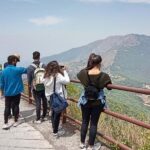
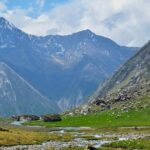
The drive heads toward Sankri via Mussoorie. Along the way, you stop around Kempty Falls, and you’ll pass through the Yamuna valley area, including time with views over the Yamuna river. Once you cross Mori, the route turns greener and wilder, including forest scenery along the Tons river—also known for rafting and kayaking rapids. Later, Netwar marks the gateway to the Govind Wildlife sanctuary area.
You arrive in Sankri by early evening, at about 1,920 meters. That’s a comfortable altitude to warm up at—still chilly, but not yet “high camp” cold.
Practical note: a long road day can make you feel stiff. I’d treat it like the first stage of training—hydrate, eat your breakfast-style breakfast when it’s offered, and don’t over-stretch in cold air.
Day 2 to Juda Ka Talab: pine forest climbing and real winter camp
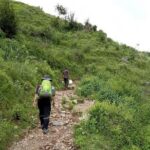
Day 2 starts early from Sankri after breakfast. You trek toward Juda Ka Talab, about 4 km and roughly 2–3 hours of walking time.
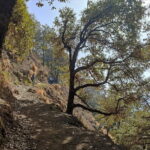
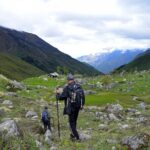
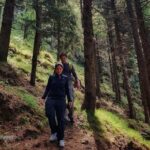
The trek begins right from village life. On the route you pass smaller crossings and trails where kids are going to school and local women are working their daily errands. It’s a nice reality check: this isn’t some sealed-off hiking bubble. Then the trail funnels into pine and maple forests, and the climb gets steeper for a while.
After the ridge, the trail widens and the forest canopy helps keep the sun from baking you. By winter, that same forest can feel like a cold tunnel of shade. Juda Ka Talab also freezes in winters, and the camp site can see significant snowfall during the season.
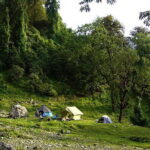
You camp overnight alongside Juda Ka Talab at about 2,774 meters. This is the first night where the cold becomes the main character. The plus? You’re in camp with proper tents, sleeping bags, and mattresses, so you can actually recover. The downside? You’ll feel the altitude and the drop in temperature, even if you feel fine mid-hike.
Day 3: Kedarkantha base camp and the shepherd meadow moment
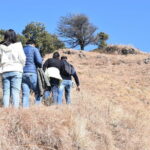
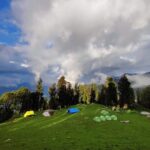
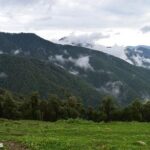
Day 3 continues deeper into dense pine forests. After the trail work, you finally hit a meadow dotted with shepherd’s huts—one of those “wait, where did this open space come from?” moments.
From Juda Ka Talab to Kedarkantha base camp, it’s about 3 km, typically 2–3 hours. The route is often described as beautiful and photogenic, and you can see why: you get long lines of trees fading into mountain light, then suddenly a wider sky at the meadow.
You climb another thousand feet to reach camp around 3,429 meters. And here’s an important detail: base camp can feel colder than the summit because you’re less insulated at base. So even if you’re thinking summit soon, you still need to treat this day like a cold-weather night.
At the base camp, people enjoy the visibility of well-known peaks across Uttarakhand. It’s also the camp where you’re likely to see the sky and weather change over minutes—exactly the kind of scene that makes winter hiking addictive.
Day 4: Kedarkantha summit—short hike, big payoff
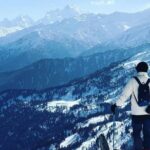
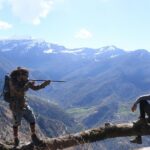
Day 4 is the summit day. The climb from base camp to Kedarkantha’s summit is not long, but it’s the kind of effort where the last stretch matters. Once you reach the top, you get the full payoff: a 360-degree view of peaks of Uttarakhand and also the Chaainsheel Pass and Kailash ranges of Himachal. You can even see Har Ki Dun valley below from the summit.
At the summit, there’s a stone arrangement marked with a Trishul pointing to the sky. That physical marker matters because it ties the place to the local story. Kedarkantha’s name is connected to the throat of Lord Shiva—Kedar for Lord Shiva and Kantha for throat. The legend links it to a story of Lord Shiva disguising himself as a cow while hiding from the Pandava.
After the summit, you head back down and spend the night again at Juda Ka Talab. That makes Day 4 feel complete: you do the big moment, then you return to the camp base where you started.

Camp comfort in the snow: tents, toilets, and warm-water style care
This is where good trip operators earn their keep. Your package includes camp setup with kitchen tents and common tents, plus toilet tents with portable toilet seats. That’s not glamorous, but it’s the difference between “I can keep going” and “I’m miserable.”
Sleeping setup is also covered:
- Guesthouse stay for 1 night on Day 1 on a triple-sharing basis
- Alpine tent stay for 3 nights on a twin-sharing basis
- Sleeping bags and mattresses are provided, along with camping stools and tables
In deep winter, small comforts become huge. In the experiences I read through, guides and staff are praised for staying on top of participant comfort—even in very cold temps, including warm water being served. That kind of practical care makes a real difference when the cold is squeezing your fingers.
You’ll also be trekking with equipment included like crampons (important for snow/ice traction) and support for carrying camping equipment via mules. Personal luggage on mules costs extra at INR 500 per bag/day, so pack like you’ll carry your own essentials unless you’re ready for that add-on.
Guides make or break winter trekking—and the names here are a strong sign
You’re not traveling solo in a vacuum. The trek includes a professional guide and support staff, plus a cook. And the guide experience seems to be a recurring strength.
I saw multiple mentions of guides who keep things calm and push people when needed:
- Aarya and Arjun are specifically called out for caring attention and support, with Aarya described as a strong, helpful guide focused on comfort.
- Sonu is mentioned as very helpful and pushing participants through to the summit.
- Rocky Ji and Kamesh Bhardwaj are praised for professionalism and support to reach safely.
- Megha is noted as caring and polite, especially around the camp experience.
What this tells me for your trip: in winter treks, you want someone who can manage pace, cold fatigue, and group energy. Based on the names and comments tied to this trek, that support looks consistent.
Group size stays limited: maximum 25 travelers. That’s small enough that you’re not lost in a crowd, and big enough that you’re not lonely on tough stretches.
Price and value: what $120 covers (and what it doesn’t)
At $120 per person, the value comes from what’s already handled for you. You’re not just buying a “guide and good luck.” Your package includes:
- Transport from Dehradun to Sankri on Day 1 and return to Dehradun on Day 5
- Guide, cook, and support staff
- A first-aid kit with oximeter and a portable oxygen cylinder
- Tents and sleeping gear (sleeping bags, mattresses, common and kitchen tents)
- Meals: breakfast (4), lunch (3), dinner (4)
- Trekking fees and forest entry charges for Indian nationals
- Mule support for camping equipment
What you should budget for separately:
- Adventure insurance is not included
- Personal expenses like tips, medicines, and phone calls
- Last day accommodation in Dehradun (you can choose hotels, ranging from ₹1600–₹3000 per room)
- Personal-mule luggage service at INR 500 per bag/day
- A lunch box for packed meals/breakfast to avoid using polythenes (you may want to plan for this)
Is $120 a bargain? For a winter trek with transport, food, and all the camp infrastructure, it’s a fair deal—especially if you’d otherwise have to rent gear and pay separately for logistics. If you already own all gear and don’t want to rely on a cook/staff, you might feel you’re paying for convenience. But if you want the smooth version of Kedarkantha, this pricing structure makes sense.
Fitness level check: what “beginner” really means here
The trek is often described with a beginner-friendly label, but the reality is that Kedarkantha still demands effort. The itinerary uses short distance days—great—but the climb still hits your lungs as altitude rises. By Day 2 you’re already above 2,700 meters, and by Day 3 camp you’re around 3,429 meters.
So I’d treat this as:
- Suitable for people with moderate fitness
- Not ideal for anyone who hates cold or gets discouraged by steep snow paths
A good sign in the experience: many people mention reaching the summit because guides keep pace and motivation steady. But even with strong guidance, you still need to show up prepared and walk consistently.
Cold fitness is a real thing. You’ll likely do better if you can walk on inclines for an hour or two without needing frequent stops.
Weather and safety: oxygen is included, but your attitude still matters
Winter trekking requires weather windows. This experience specifically notes it needs good weather. If it can’t run due to poor conditions, you’ll be offered a different date or a full refund.
For safety, I like that the trek includes a first-aid kit with an oximeter and a portable oxygen cylinder. That’s not a guarantee you’ll never feel altitude effects, but it shows the operator plans for the reality of cold and altitude.
I’d still do the smart basics:
- Dress in layers so you can vent while climbing
- Stay hydrated even when it feels like you’re sweating less
- Don’t race the first climb—pace is your best altitude tool
Should you book this 5-day Kedarkantha trek with Himalaya Shelter?
I’d book it if you want a winter trek where the hard parts are managed for you: transport, meals, camp setup, traction support, and altitude safety gear. It’s especially a good fit if you’re trekking with a group of at least 6 people and want a customized group experience.
Skip or reconsider if you’re not comfortable with cold camping, altitude, or snow walking. The route isn’t “long distances forever,” but it’s still a mountain trip, not a stroll.
If you do book: pack for real winter. Then trust the system—follow the guide’s pace, use the gear they provide, and give yourself time to enjoy the forest-to-meadow-to-summit progression. Kedarkantha delivers when you treat it as a winter hike, not a checklist.
FAQ
What is the total duration of the Kedarkantha trek?
The trek is listed as approximately 5 days.
Where is the meeting point and what time does it start?
The meeting point is Prince Chowk, Dehradun (Uttarakhand 248001, India). The start time is listed as 12:00 am.
What is included in the trek package?
The package includes transport from Dehradun to Sankri (Day 1) and return to Dehradun (last day), a professional guide, cook, support staff, first-aid kit with oximeter and portable oxygen cylinder, tents and toilet tents with portable toilet seats, sleeping bags and mattresses, crampons, and trekking fees/forest entry charges for Indian nationals, plus meals (breakfast, lunch, and dinner).
What accommodation do I get during the trek?
You get a guesthouse stay for 1 night on a triple-sharing basis, and alpine tent stays for 3 nights on a twin-sharing basis.
How much trekking is on Day 2 and Day 3?
Day 2 trekking toward Juda Ka Talab is about 4 km (about 2–3 hours). Day 3 trekking to Kedarkantha base camp is about 3 km (about 2–3 hours).
What safety and medical support is included for altitude?
A first-aid kit is included with an oximeter and a portable oxygen cylinder.
Is there an extra charge for mule support for personal luggage?
Yes. Mule support for personal luggage is INR 500 per bag/day.
What happens if the trek can’t run due to poor weather or too few travelers?
The experience requires good weather. If it’s canceled due to poor weather, you’ll be offered a different date or a full refund. If the minimum number of travelers isn’t met, you’ll be offered a different experience/date or a full refund.